Best Assault Bikes 2026: 5 Compared
An assault bike (also called air bike or fan bike) uses a large fan as the resistance mechanism — the harder you pedal and push/pull the moving handlebars, the more air resistance the fan creates. Resistance feel and footprint fit matter more than maximum resistance specs.
Quick answer
The best assault bike for most CrossFit training is the Assault AirBike Classic: most published benchmark and interval times were developed on this exact bike, so your numbers are comparable to the programming. For data-driven pacing, the Concept2 BikeErg's PM5 monitor and chain drive are better, and the Rogue Echo is the home-gym pick with heavier build quality.
This comparison is desk research. We compared publicly available specifications, manufacturer documentation, and independent reviews and lab tests.
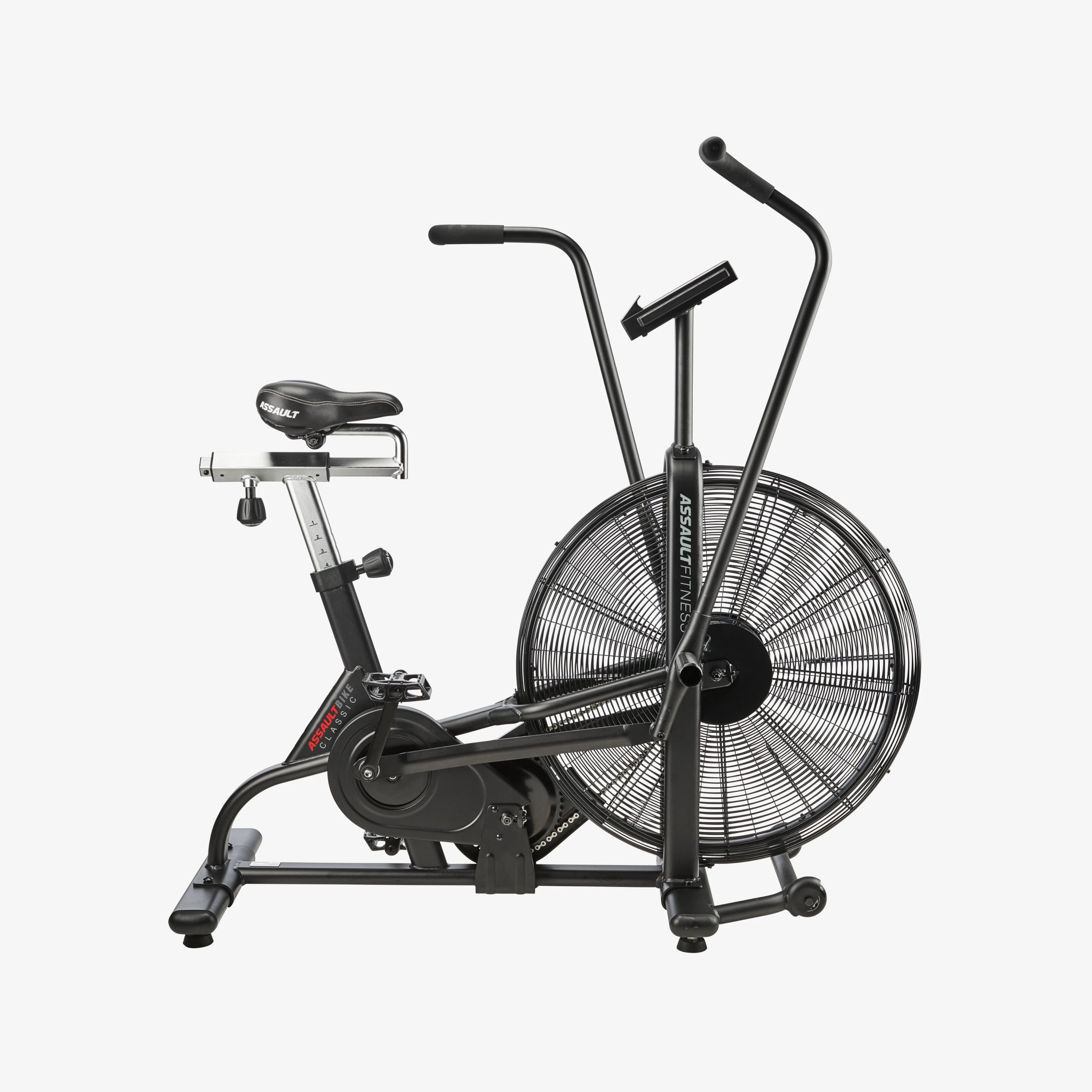
Assault Fitness AssaultBike Classic
Best Overall: The Assault AirBike Classic is the reference assault bike for CrossFit and commercial gyms — most published interval programming was developed and timed on this exact machine. The 25-inch steel fan, sealed cartridge bearings, and foam-covered moving handles are commercial-grade and built for daily heavy use.
Top picks ↓| Product | Price | Link |
|---|---|---|
| $700Reference price | ||
| $1,100Reference price | ||
| $700Reference price | ||
| $500Reference price | ||
| $200Reference price |
Top picks
Related articles
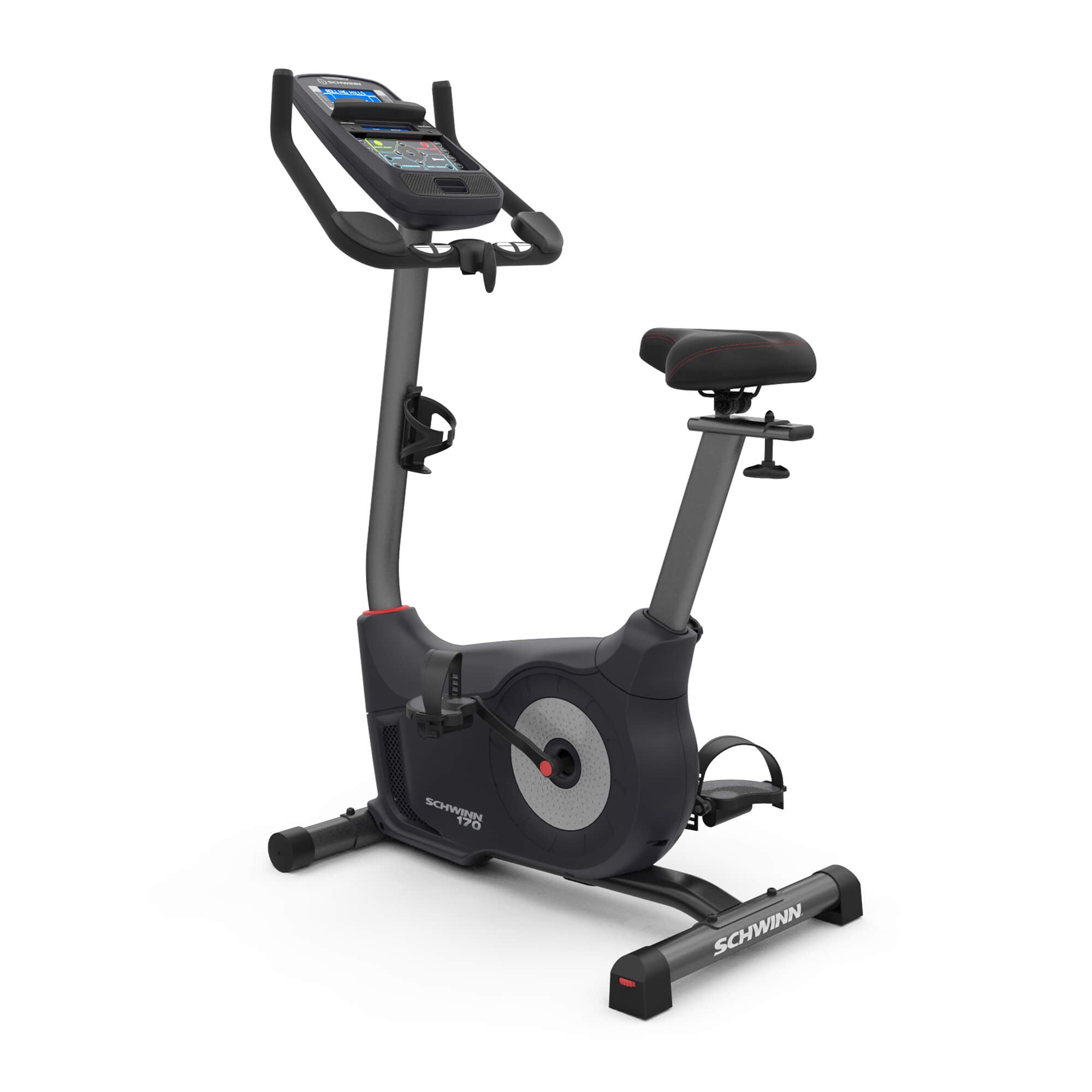

25-inch fan, commercial grade, ~99 lbs. $700-800. Most widely used assault bike in CrossFit/commercial fitness — reference bike for programming. Correct for serious daily training. Loud at high effort.
The Assault AirBike Classic is the reference assault bike for CrossFit and commercial gyms — most published interval programming was developed and timed on this exact machine. The 25-inch steel fan, sealed cartridge bearings, and foam-covered moving handles are commercial-grade and built for daily heavy use. The display covers the essentials (calories, time, RPM, distance) without the over-engineered software that bloats home cardio equipment. For home gym athletes it is arguably over-built, but that same over-engineering is why it stays standing after a decade of abuse. Loud at high RPM, which is the honest tradeoff.
Pros
- ✓25-inch steel fan with sealed cartridge bearings
- ✓Reference machine for most published CrossFit interval programming
- ✓Commercial-grade frame rated for daily heavy use
- ✓Foam-covered moving handles for full-body engagement
Cons
- ✗Loud fan noise at high RPM
- ✗Over-built for casual home gym training
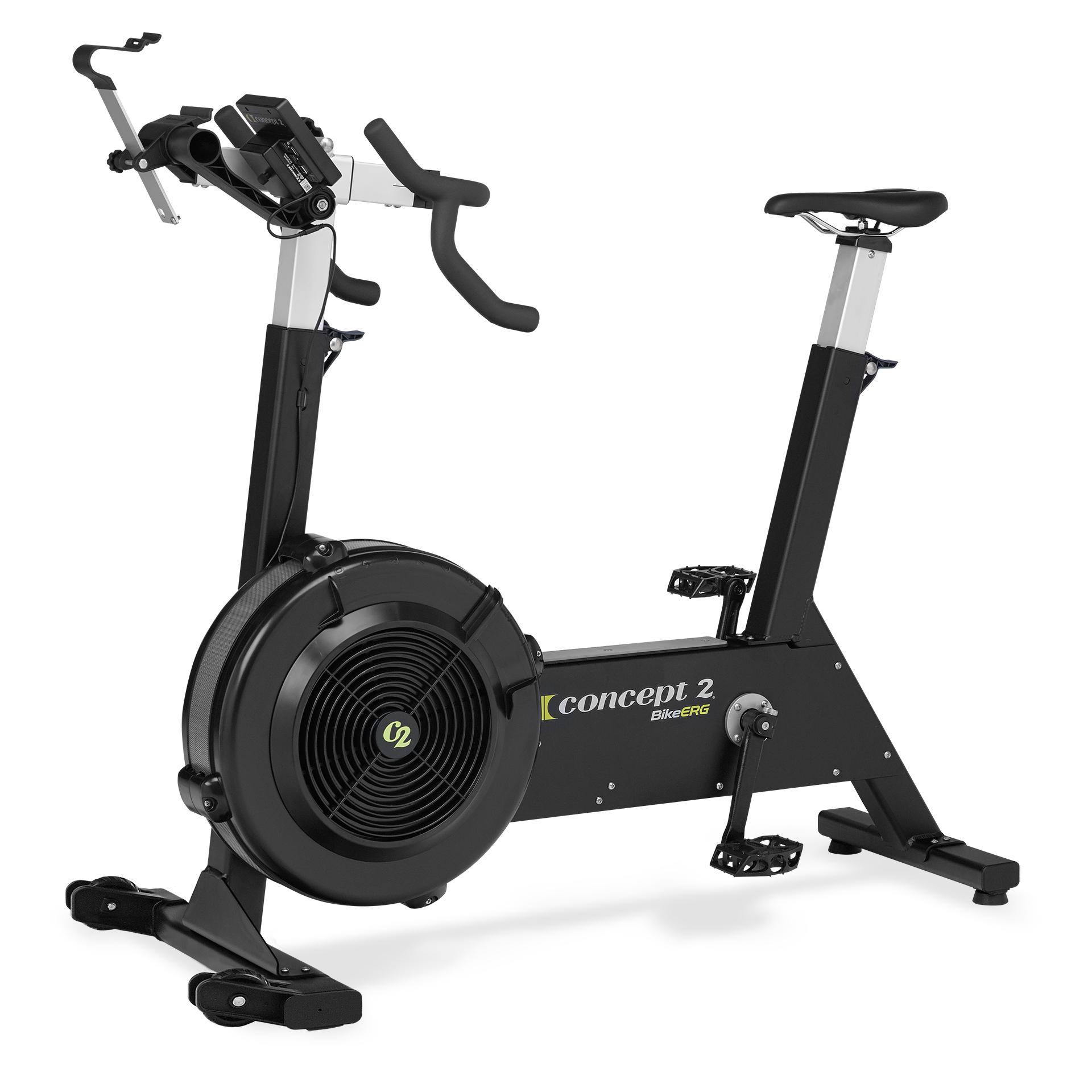
Chain drive, Concept2 flywheel, PM5 display, lower-body only. $1,100-1,200. Best display and quietest premium bike — PM5 is best conditioning monitor available. Different movement pattern (no moving handles). Correct for cycling-focused training or precision pacing.
The BikeErg is technically not an assault bike — Concept2 grafted their RowErg flywheel and damper system onto a bike frame and used a chain drive instead of a fan. The result is a much quieter, smoother machine and the PM5 performance monitor, which is the best conditioning display on any cardio equipment. The trade is real: no moving handles, so it is lower-body only and does not produce the total-body fatigue that defines an assault bike workout. For cycling-focused athletes or anyone who wants precision pacing and data-driven training, this is the correct machine. For pure assault-bike-style intervals, it is a different tool.
Pros
- ✓PM5 performance monitor — best display on any cardio machine
- ✓Chain drive runs quieter than fan-driven bikes
- ✓Excellent for precision pacing and data-driven training
- ✓Smooth ride feel closer to road cycling
Cons
- ✗No moving handles — lower-body only
- ✗Highest price in the lineup
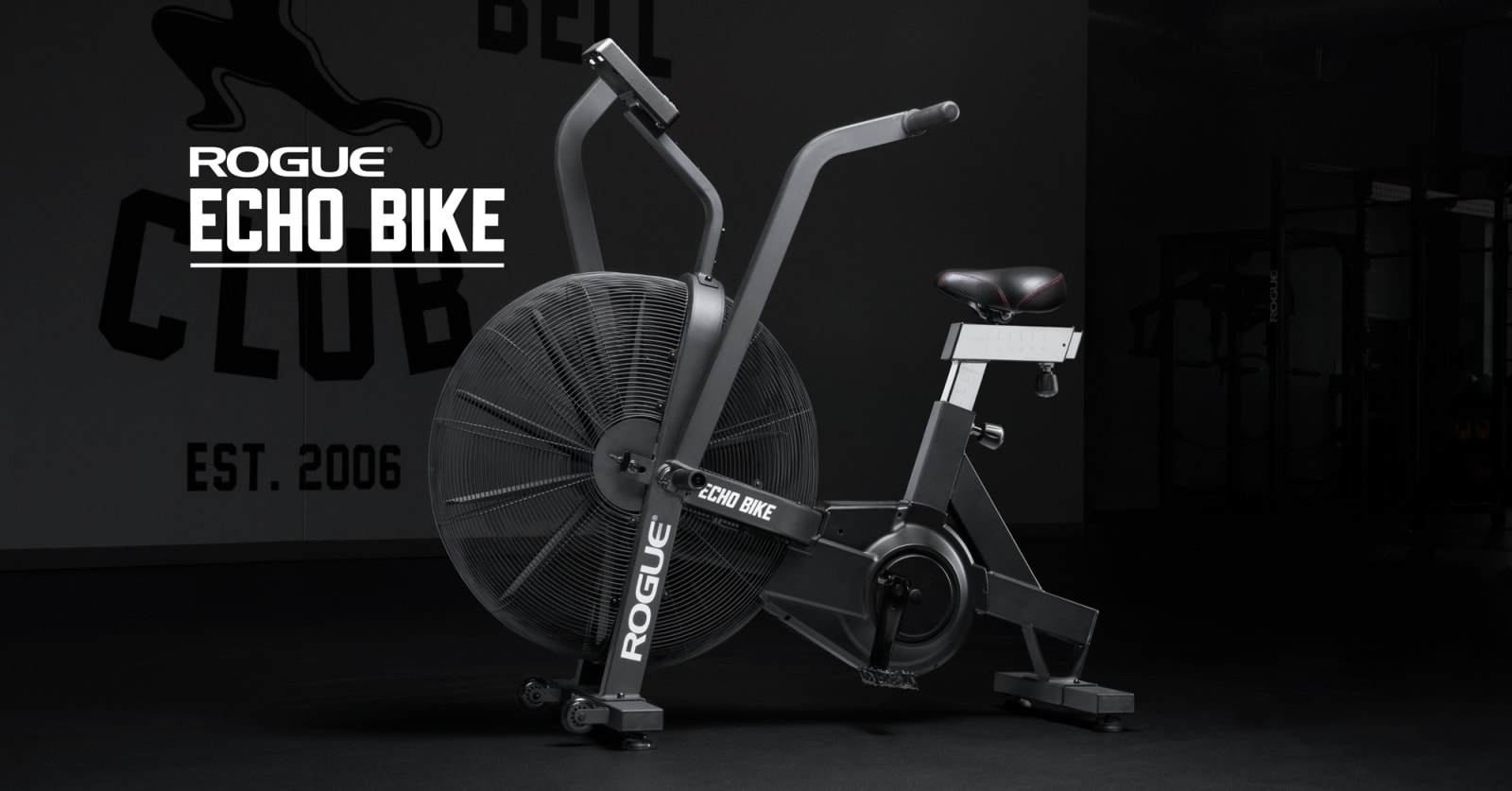
Belt drive, 127 lbs, larger fan, Rogue frame quality. $700-800. Best home gym assault bike — belt drive reduces maintenance, heavier construction means more stability, Rogue build quality. Slightly quieter than Assault Classic.
The Rogue Echo is the home gym pick for athletes who want the Assault Classic's training quality with Rogue's frame construction. At 127 lbs vs the Assault's 99 lbs, it is heavier and noticeably more stable at all-out sprint efforts. The larger fan produces slightly smoother resistance per stroke and runs marginally quieter than the Assault at the same effort. Belt drive instead of chain reduces maintenance to checking belt tension every few months rather than chain lubrication. Same price tier as the Assault Classic, so the decision between them comes down to maintenance preference and weight tolerance.
Pros
- ✓127 lb frame stays stable at all-out sprint efforts
- ✓Belt drive reduces maintenance vs chain
- ✓Slightly quieter and smoother than Assault Classic
- ✓Rogue frame construction holds up under heavy use
Cons
- ✗Heaviest bike in the lineup — relocation is a two-person job
Subscribe to our newsletter
Occasional updates and new releases — no spam.

Fan bike, ~90 lbs, commercial bearings, good display. $500-600. Best value assault bike — more accessible price than Rogue/Assault, commercial-grade durability. Slightly less construction quality than Echo or Assault Classic.
The Airdyne Pro is Schwinn's commercial fan bike and the budget bridge between toy-grade air bikes and the Assault/Rogue premium tier. At roughly 90 lbs it is lighter than the Rogue Echo but uses commercial-quality bearings and a robust frame. The fan feel is slightly different from the Assault or Echo — Schwinn's traditional fan geometry — but the resistance still self-scales the same way. The display tracks calories and RPM. The price advantage over Rogue Echo and Assault Classic is real, and for home gym athletes who do not need the absolute top tier, it is the most rational purchase in the category.
Pros
- ✓Commercial bearings and frame at a sub-premium price
- ✓More accessible price than Rogue Echo or Assault Classic
- ✓Schwinn's traditional fan geometry is proven over decades
Cons
- ✗Slightly lighter construction than Echo or Assault Classic
- ✗Display less feature-rich than Concept2's PM5

Fan + magnetic resistance, lighter construction, quieter. $200-350. Budget air bike option — adequate for occasional intervals. Not a substitute for commercial assault bikes. Quieter than pure fan bikes. Correct for home use at moderate intensity.
The Sunny Health combines fan resistance with magnetic resistance, which makes it functionally different from a true assault bike: there is baseline resistance even at zero pedaling speed, and the magnetic component is quieter than a pure fan. The construction is lighter and not built for commercial use, but at a third the price of the premium options it puts a usable air bike in reach of home users who cannot justify $700+. For occasional intervals and moderate-intensity cardio it is adequate. It is not a substitute for a commercial assault bike for daily hard training.
Pros
- ✓Roughly a third the price of premium options
- ✓Magnetic resistance component runs quieter than pure fan
- ✓Adequate for occasional intervals and moderate cardio
Cons
- ✗Lighter frame not built for daily commercial-intensity use
- ✗Fan + magnetic mechanism feels different from true assault bikes
Which one is right for you?
For CrossFit-style WOD programming
Assault Fitness AssaultBike Classic
Most published CrossFit interval times and benchmarks were developed on this exact bike, so the equipment matches the programming.
For cycling and precision pacing training
Concept2 BikeErg
The PM5 monitor and chain-drive smoothness make it the best machine for data-driven intervals and zone training.
For home gym athletes who train hard daily
Rogue Echo Bike
The 127 lb frame and belt drive deliver commercial durability at the same price as the Assault Classic with less maintenance.
For budget-conscious commercial-grade buyers
Schwinn Airdyne Pro Fan Bike
It delivers commercial bearings and a robust frame at a price well below the Rogue and Assault premium tier.
For occasional cardio and apartment use
Sunny Health Magnetic Resistance Air Bike
At a third the price of premium options and with a quieter magnetic component, it suits moderate use in noise-sensitive homes.
How air resistance creates unlimited intensity
Fan resistance physics: the fan blades push through air, and air resistance scales with the cube of velocity. This means doubling your pedaling speed produces eight times the resistance. There are no levels, no dials, and no ceiling — the bike responds to your output. This self-regulating resistance is the assault bike's primary feature: you can sprint at maximum effort and the bike provides maximum resistance automatically, or you can pedal gently for active recovery and resistance drops to near zero.
Full-body engagement: assault bikes have long, moving handlebars that connect to the fan mechanism. Unlike stationary bikes with fixed handlebars, you push and pull the handles while pedaling — engaging the chest, back, shoulders, triceps, and biceps along with the legs. Total-body energy expenditure on an assault bike significantly exceeds a lower-body-only stationary bike. This is why short assault bike intervals feel much harder than longer sessions on a traditional bike: you're working a much larger proportion of total muscle mass.
Caloric output and intensity: assault bikes produce some of the highest instantaneous caloric expenditure of any cardio equipment when used for intervals. Common assault bike protocols: Tabata (20 seconds all-out, 10 seconds rest, 8 rounds), 10-20 calorie sprints with rest between, and 1-minute max-effort intervals. The resistance's self-scaling means the bike is useful for both beginner conditioning (pedal at comfortable pace, resistance stays low) and elite athlete HIIT where riders hit 80-100 RPM.
Assault AirBike Classic and Concept2 BikeErg: the standard choices
Assault Fitness AssaultBike Classic ($700-800) is the most widely used assault bike in CrossFit and commercial fitness — the reference bike for most programming. It uses a 25-inch steel fan, sealed cartridge bearings, and foam-covered handles. The Classic has a straightforward display showing calories, time, RPM, and distance. Build quality is commercial-grade and appropriate for daily heavy use in a gym setting. For home gym use, it's over-built for most athletes but the construction means it'll last decades.
Concept2 BikeErg ($1,100-1,200) is a different class of machine — Concept2 adapted their RowErg flywheel technology to a bike format. The BikeErg uses a chain drive (like a road bike) connected to the Concept2 damper and flywheel, which produces a very smooth, quiet ride compared to the fan noise of the Assault or Echo bike. The BikeErg has no moving handles — it's lower-body only, like a traditional cycling position. This makes it more like a road cycling training machine than an assault bike, which is a meaningful difference. The PM5 performance monitor is the best display on any conditioning machine.
Rogue Echo Bike ($700-800) is Rogue's version of the assault bike — heavier than the Assault Classic (127 lbs vs 99 lbs), larger fan for slightly smoother resistance, and Rogue's typically superior frame construction quality. The Echo uses a belt drive rather than chain, which reduces maintenance. The heavier construction makes the Echo more stable at high RPM efforts. For home gym athletes who want commercial durability without a commercial gym budget, the Echo is the standard recommendation.
Schwinn Airdyne Pro and budget alternatives
Schwinn Airdyne Pro ($500-600) is Schwinn's commercial-grade fan bike — lighter construction than Rogue Echo or Assault Classic at approximately 90 lbs, but commercial-quality bearings and a robust frame. The Airdyne Pro uses Schwinn's traditional fan design (which is slightly different in feel from the Assault or Echo) and has a good display with calorie and RPM tracking. The price point makes it more accessible than the Rogue Echo for home gym budgets while maintaining commercial-grade durability.
Sunny Health Magnetic Resistance Air Bike ($200-350) uses a different mechanism than true assault bikes — a combination of fan resistance and magnetic resistance rather than pure fan resistance. The Sunny Health is quieter than pure fan bikes and provides some resistance even at zero pedaling speed (the magnetic component). The construction is lighter and less durable than commercial options. For athletes who want occasional cardio intervals and can't justify the $700+ price of a commercial assault bike, the Sunny Health provides basic air bike functionality at significantly lower cost. It is not a substitute for commercial-grade use.
Noise consideration: all fan-driven air bikes are loud at high effort — the fan creates significant noise at high RPM. The Rogue Echo's larger fan runs slightly quieter than the Assault Classic per unit of effort. The Concept2 BikeErg (chain drive) is the quietest of the premium options. For home gym setups in apartments or with noise-sensitive environments, this matters significantly.
Assault bike programming: how to use it effectively
HIIT protocols: the assault bike's unlimited resistance ceiling makes it ideal for interval training. Common effective protocols: (1) Tabata — 20 seconds max effort, 10 seconds rest, 8 rounds (4 minutes total). All-out effort on the bike should feel unsustainable. (2) 10-calorie sprints — sprint to 10 calories as fast as possible, rest 2-3x the sprint time, repeat 6-10 rounds. (3) 1-minute intervals — 1 minute all-out, 2-3 minutes easy recovery, 4-8 rounds.
Steady-state conditioning: at lower intensities, assault bikes provide good aerobic conditioning work. Zone 2 training (conversational pace, HR around 60-70% max) on an assault bike builds aerobic base without the impact of running. The resistance self-scales to keep Zone 2 easy — you simply pedal at a comfortable pace and the fan resistance stays proportionally low.
Form on the assault bike: keep a tall spine, drive through the pedals with legs, and push/pull the handles actively rather than just holding them. The arms and legs should work simultaneously, not alternately. For maximum power output, think about driving the handles forward and back with full force while simultaneously driving through the pedals — the bike should feel like total-body resistance on every stroke.
Frequently asked questions
How many calories does an assault bike burn?▼
Assault bike vs rowing machine: which is better for cardio?▼
How do you maintain an assault bike?▼
Prices change. Check the retailer for the current price.
Comments & questions
Discussion happens on nattzy, our community forum. Sign in with Google to post — it takes a second.