Best Baby Food Storage 2026: Glass vs Silicone vs Trays
WriterPickly Editorial
Updated 2026-06-13
Top baby food storage containers of 2026 — glass blocks, silicone pods and freezer trays compared on portion size, leak-proof lids, and freezer and dishwasher safety.
Quick answer
Glass blocks, silicone pods, and freezer trays each suit a different stage. Freezer trays make the standard 1-2 oz starter portions and pop out cleanly; silicone pods survive drops and go from freezer to dishwasher; glass stains least and reheats without absorbing odors. Portion size, a genuinely leak-proof lid, and freezer-to-dishwasher tolerance decide the choice.
📋How we compared
This comparison is desk research. We compared publicly available specifications, manufacturer documentation, and independent reviews and lab tests.

Best Overall: The OXO Tot Glass Baby Blocks are the easiest recommendation on this list — glass construction means no leaching, no staining, and no odor retention even after months of carrot puree. The press-and-lock lids create a reliably airtight seal, and owners report the lids and glass coming through repeated dishwasher cycles without degradation.
Top picks ↓This button opens Amazon search results, not a specific product page.
This button opens Amazon search results, not a specific product page.
Related articles


1★ Best PickA+Best OverallOXO Tot Glass Baby Blocks Food Storage Containers
The OXO Tot Glass Baby Blocks are the easiest recommendation on this list — glass construction means no leaching, no staining, and no odor retention even after months of carrot puree. The press-and-lock lids create a reliably airtight seal, and owners report the lids and glass coming through repeated dishwasher cycles without degradation. Available in 2oz and 4oz sizes, stackable in both the freezer and fridge, and the clear glass lets you see exactly what's inside without opening anything. The lids are dishwasher-safe on the top rack.
Pros
- ✓Glass construction eliminates staining, odor absorption, and chemical leaching
- ✓Press-lock lids stay sealed when inverted and hold up through repeated dishwasher cycles
- ✓Stackable in freezer and fridge — 2oz and 4oz sizes cover the full first year
Cons
- ✗Heavier than silicone — awkward to pack more than 4-5 for daycare or travel
- ✗Glass can crack if moved directly from freezer to microwave without thawing first
2ABest Freezer Trayb.box Silicone Baby Food Freezer Tray
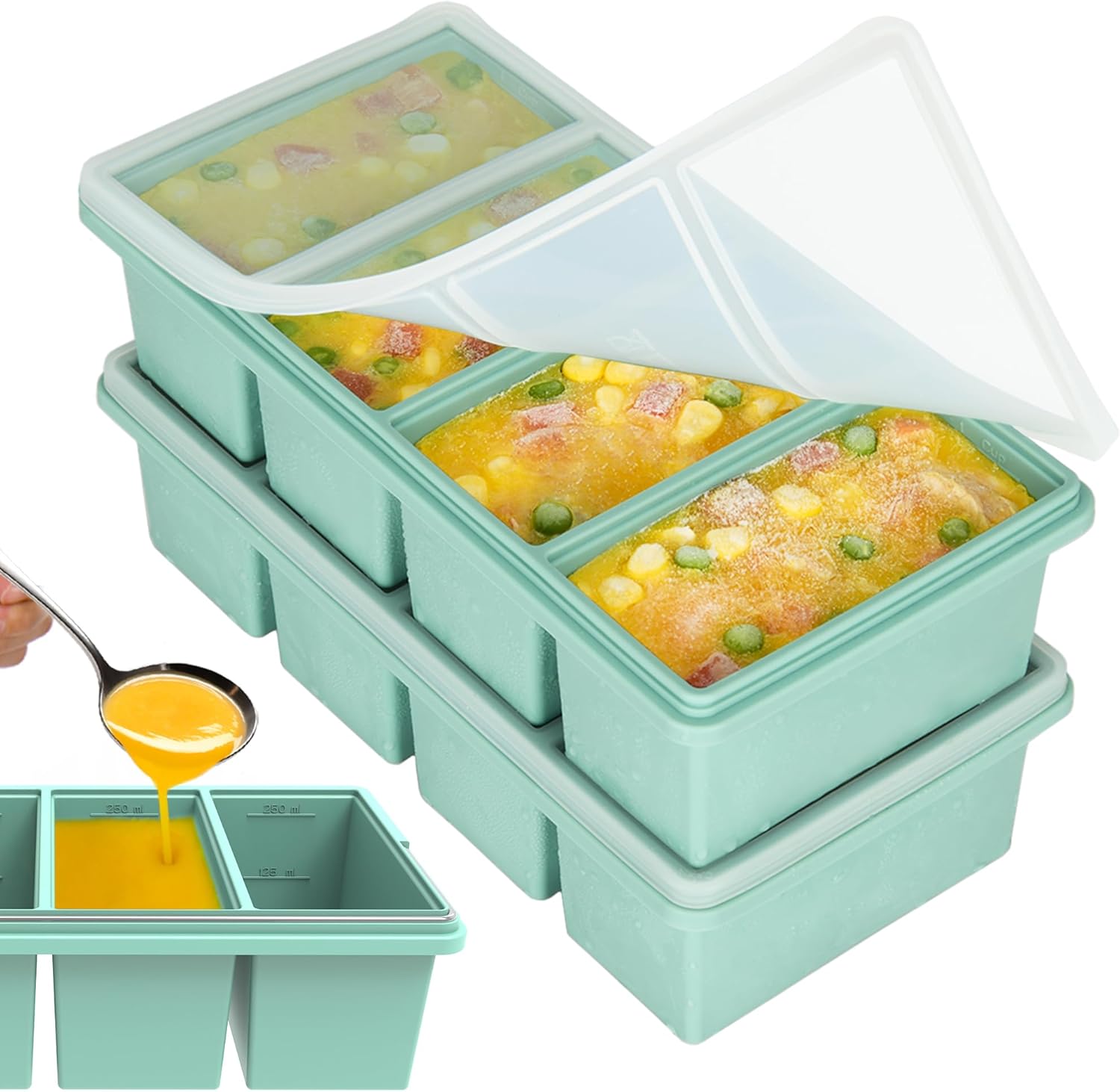
The b.box Freezer Tray produces 15 individual 1oz cubes in a single prep session, and the silicone material is thick enough that cubes pop out cleanly even when frozen solid — a problem with thinner silicone trays that flex around the cube instead of releasing it. The lid snaps on securely for freezer storage before you transfer cubes to bags. Owners report no cracking or deformation after repeated freeze/thaw cycles. The 15ml (0.5oz) sizing is accurate for first-taste portions at 4-6 months.
Pros
- ✓Thick silicone produces clean cube pop-out even when fully frozen
- ✓15 cubes per tray gives efficient batch prep in one session
- ✓Lid snaps securely for stacking trays during freezing
Cons
- ✗1oz cubes are too small once baby is eating 3-4oz portions — need 2+ cubes per meal
- ✗Silicone absorbs bright vegetable colors (beet, carrot) permanently over time
3ABest Glass-Only OptionWean Green Glass Baby Food Cubes Storage

Wean Green makes the case for glass-only storage most convincingly — tempered glass cubes with snap-lock lids, no plastic anywhere in contact with food, available in 4oz and 8oz sizes for the older baby eating real portions. The glass handles microwave heating better than plastic or silicone in terms of even heat distribution, which reduces the hot-spot problem. Heavy (don't drop these), but the quality is evident. The snap lids don't seal as positively as OXO's press-lock system, which is the main reason it sits behind the OXO in our ranking.
Pros
- ✓Tempered glass with zero plastic in food contact — purest material option
- ✓Even microwave heat distribution reduces dangerous hot spots
- ✓4oz and 8oz sizes suit older babies eating larger portions
Cons
- ✗Snap lids less secure than OXO's press-lock — not ideal for bag transport
- ✗Heaviest option on this list — inconvenient for travel or daycare packing
Subscribe to our newsletter
Occasional updates and new releases — no spam.
4B+Best for On-the-GoMumi & Bubi Solids Starter Kit Silicone Pods

The Mumi & Bubi Solids Starter Kit is the most travel-oriented system on this list — the 3oz flexible silicone pods nest into a zippered carry case that fits in a diaper bag without leaking. The pods are freezer, dishwasher, and microwave safe. The flexible walls make squeezing food out easy, which is useful for thicker purees. The 3oz size is ideal for the 6-9 month stage and handles chunky purees better than the rigid glass options. If you send food to daycare daily or travel regularly, this kit pays for itself in convenience.
Pros
- ✓Carry case with individual pod slots eliminates loose container chaos in diaper bag
- ✓Flexible silicone walls make squeezing thick purees out of pods easy
- ✓3oz size ideal for 6-9 month meal portions — fills easily from a prep bowl
Cons
- ✗Silicone absorbs beet and carrot pigments permanently after extended use
- ✗3oz size too small for babies eating 4-6oz portions at 9+ months
5B+Best BudgetWeeSprout Silicone Baby Food Freezer Tray with Lid

The WeeSprout Silicone Baby Food Tray produces 2oz portions in 12 compartments — a useful middle ground between the 1oz b.box cubes and the 4oz glass options. The stackable design with lid means you can build a tower of trays in the freezer without wasting space. Silicone quality is adequate — noticeably softer than the b.box but still produces clean pop-outs after freezing. For parents starting batch prep for the first time and not wanting to invest heavily before they know if the routine will stick, it's an honest starter option.
Pros
- ✓2oz portions are practical for the 6-8 month eating stage
- ✓Stackable with lid design maximizes freezer real estate
- ✓Budget price makes it a low-risk entry into batch prep
Cons
- ✗Softer silicone than premium options — cubes stick more on partial thaw
- ✗Lid doesn't seal as securely as b.box — not ideal for transport
What to Look for in Baby Food Storage
The material choice — glass vs silicone vs plastic — drives most other decisions. Glass is the most stable for reheating and doesn't stain or absorb odors, but it's heavier and breakable. Silicone is flexible, freezer-friendly, and safe, but quality varies wildly. Plastic is lightest but requires careful BPA/BPS screening.
Glass vs Silicone vs Plastic
Glass containers are microwave-safe without chemical leaching concerns and don't absorb carrot-orange stains that ruin silicone permanently. Silicone's flexibility makes pop-out portions effortless for frozen cubes. Avoid polycarbonate plastic entirely — opt for BPA-free Tritan or polyethylene if you need lightweight.
Freezer-to-Microwave Safety
Not all containers that claim freezer-to-microwave safety are equal. Glass containers can crack from thermal shock if moved from freezer directly to microwave — thaw in fridge first or use 50% power. Silicone is genuinely microwave-safe at all temperatures. Most hard plastic containers require thawing before microwaving regardless of labeling.
Portion Sizes
Portion sizes matter at each stage: 1-2oz for first tastes at 4-6 months, 2-4oz for 6-8 months, and 4-6oz for older babies eating meals. Freezer tray cubes are typically 1oz each — useful for mixing and matching. The OXO Tot blocks come in 2oz and 4oz, which covers most of the first year.
Leak-Proof Seals
Leak-proof matters for the freezer bag, the diaper bag, and the fridge shelf. A container that seals well for a static fridge shelf may leak when jostled in a bag. Test any candidate by filling with water and inverting it over a white towel before using it with food.
How These Five Stack Up
The OXO Tot Glass Baby Blocks are the most practical all-around option if you're willing to pay for glass quality. The snap lids create a genuinely airtight seal, the 2oz and 4oz sizes cover the entire first year, and owners report no warping or seal degradation after months of dishwasher use. The b.box Freezer Tray produces 15 individual 1oz cubes that pop out cleanly even when frozen solid — the silicone is thick enough to resist the cracking that owners report on cheaper trays after repeated freeze/thaw cycles.
The Wean Green Glass Cubes are the alternative for parents committed to glass-only storage — tempered glass with snap lids in 4oz size, no plastic components in contact with food. The Mumi & Bubi Solids Kit has the most comprehensive range, including 3oz pods in a carry case designed to travel, making them the best option for parents who need to bring food to daycare or grandparents' homes. The WeeSprout silicone tray is the budget-friendly choice with stackable design that saves freezer space.
Bottom Line
Start with the OXO Tot Glass Baby Blocks if budget allows — they'll outlast the baby food stage and become snack containers for years. Add the b.box Freezer Tray for batch-freezing sessions where you need to produce 15 portions at once. If portability is a priority (daycare, travel), the Mumi & Bubi kit is worth the investment. The WeeSprout tray is the right choice if you want to try batch prepping without committing significant money upfront.
Frequently asked questions
How long can homemade baby food be stored in the freezer?▼
Are all baby food containers BPA-free?▼
Can I reheat baby food in glass containers?▼
How do I sterilize baby food storage containers?▼
How many containers do I need to batch prep a week of baby food?▼
Check the details of the products in this article
- OXO Tot Glass Baby Blocks Food Storage Containers$25.99Price as of 2026-10-27
- b.box Silicone Baby Food Freezer Tray$18〜25Reference price
This button opens Amazon search results, not a specific product page.
- Wean Green Glass Baby Food Cubes Storage$19〜28Reference price
- Mumi & Bubi Solids Starter Kit Silicone Pods$29〜39Reference price
This button opens Amazon search results, not a specific product page.
- WeeSprout Silicone Baby Food Freezer Tray with Lid$14.98Price as of 2026-10-27
Prices change. Check the retailer for the current price.
Comments & questions
Discussion happens on nattzy, our community forum. Sign in with Google to post — it takes a second.
View the discussion thread on nattzy ↗
Still deciding? Ask the community your own question — Post a question on nattzy ↗