Best Boxing Gloves 2026: 5 Compared
Boxing gloves differ in purpose, construction, and price in ways that affect both training effectiveness and wrist safety. There are three primary use cases with different requirements. Weight range and build quality determine long-term value far more than feature lists.
Quick answer
Weight is the first decision: 12oz for bag and pad work, 14-16oz for sparring. The Hayabusa T3 is the best boxing glove for most people, and its dual-X wrist strap is the clearest structural advantage here. Everlast ProStyle at $20-35 is the entry point, and Title Classic is the cleanest mid-range pick.
This comparison is desk research. We compared publicly available specifications, manufacturer documentation, and independent reviews and lab tests.
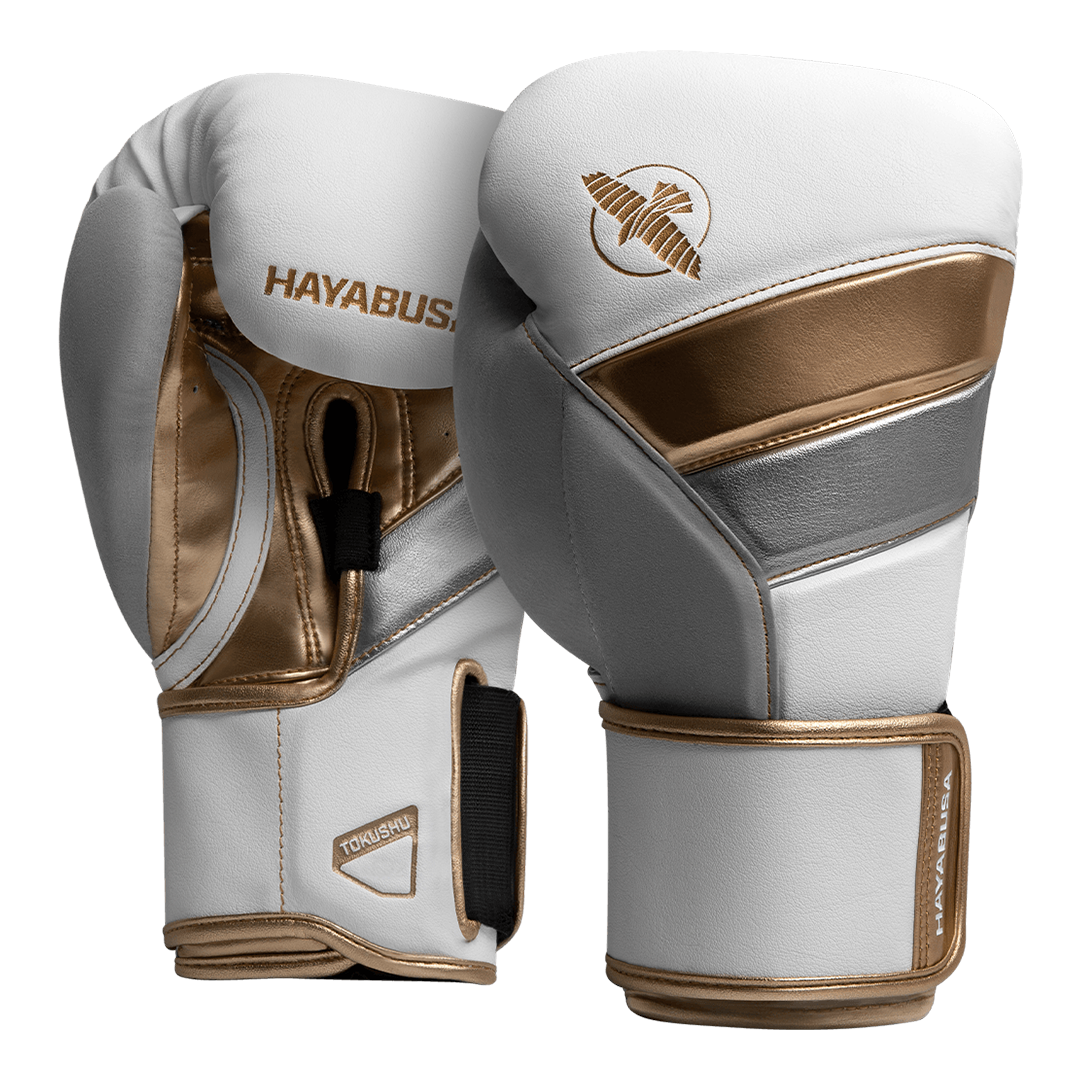
Hayabusa T3 Boxing Gloves
Best Overall: The Hayabusa T3 sits at the top of the comparison on the strength of its dual-X wrist strap design — two velcro closures that distribute compression across a wider surface area than single-strap gloves and produce noticeably better wrist support under impact. The Vylar synthetic leather shell holds up to sweat and impact for three to five years of regular bag and pad work, several times the lifespan of vinyl entry gloves.
Top picks ↓| Product | Price | Link |
|---|---|---|
| $159.00Reference price | ||
| $44.99Reference price | ||
| $40Reference price | ||
| $80Reference price | ||
| $175Reference price |
| Product | Material | Padding | Closure | Weight options | Use type |
|---|---|---|---|---|---|
| Hayabusa T3 Boxing Gloves | Vylar engineered leather (synthetic/animal-free) | Deltra-EG multi-layered foam (5-layer knuckle padding) | hook & loop (Dual-X dual-strap) | 10/12/14/16/18 oz | training/sparring |
| Everlast ProStyle Training Gloves | synthetic leather | two-layer foam | hook & loop | 8/12/14/16 oz | bag/training |
| Title Boxing Classic Training Gloves | synthetic leather | multi-layer high- and low-density foam | hook & loop (two-ply wrist strap) | 8/10/12/14/16 oz | bag/training/sparring |
| Everlast 1910 Training Gloves | leather | triple-layer (4-layer) closed-cell foam | hook & loop | 12/14/16 oz | bag/training |
| Cleto Reyes Hook & Loop Training Gloves | top-grain cowhide leather | latex foam | hook & loop | 12/14/16/18 oz | training/sparring |
Top picks
Related articles
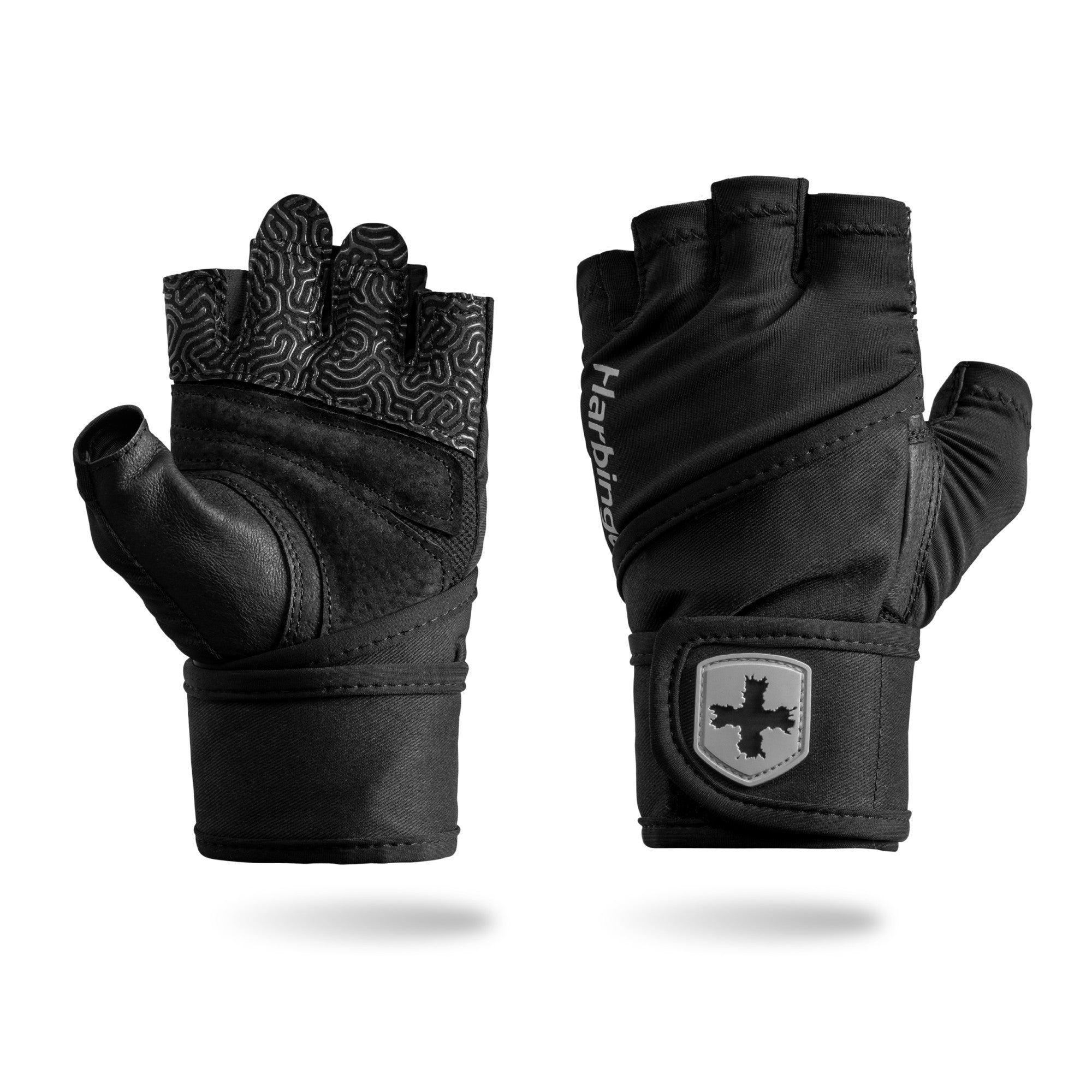

Premium training glove, dual-X wrist strap, Vylar leather, multi-layer foam, 12/14/16oz. $100-130. Best training glove for regular use — dual closure for superior wrist support, 3-5 year lifespan. Correct for serious home gym users training 3+ sessions/week.
The Hayabusa T3 sits at the top of the comparison on the strength of its dual-X wrist strap design — two velcro closures that distribute compression across a wider surface area than single-strap gloves and produce noticeably better wrist support under impact. The Vylar synthetic leather shell holds up to sweat and impact for three to five years of regular bag and pad work, several times the lifespan of vinyl entry gloves. Multi-layer foam keeps its shape under repeated impact instead of compressing flat within a year. The hand compartment locks the fist into a natural alignment under the foam, which translates into safer knuckle contact on hard shots. For three-plus sessions a week, the premium over budget gloves pays for itself.
Pros
- ✓Dual-X wrist strap distributes compression for superior wrist support
- ✓Multi-layer foam maintains shape after years of regular use
- ✓Vylar shell resists sweat damage far longer than vinyl
- ✓Hand compartment locks the fist in natural striking alignment
Cons
- ✗Price sits above casual hobbyist budgets at $100-130
- ✗Tighter hand compartment runs narrower than Everlast or Title
| Material | Vylar engineered leather (synthetic/animal-free) |
| Padding | Deltra-EG multi-layered foam (5-layer knuckle padding) |
| Closure | hook & loop (Dual-X dual-strap) |
| Weight options | 10/12/14/16/18 oz |
| Use type | training/sparring |

Entry training glove, vinyl, single-layer foam, velcro, 12/14/16oz. $20-35. Best budget entry point — appropriate for beginners or light use. Expect 6-18 months before foam compression becomes a problem.
The Everlast ProStyle is the most widely available entry point into boxing gloves, and at $20-35 with a vinyl shell and single-layer foam, it does exactly what it should: cover the cost of trying boxing for the first time. The velcro closure is functional, the size availability across 12/14/16oz is solid, and the gloves work fine for one or two sessions a week of light bag work. The honest tradeoffs sit in the shell and the foam. Vinyl cracks with sweat exposure inside six to eighteen months of regular use, and the single-density foam loses compression resistance faster than multi-layer foam in any of the premium picks. For beginners, this is a sensible bridge to a better glove later.
Pros
- ✓Lowest entry price in the comparison at $20-35
- ✓12/14/16oz size range matches most beginner and intermediate needs
- ✓Velcro closure allows solo putting on and taking off
- ✓Widely stocked at general sporting goods retailers
Cons
- ✗Vinyl shell cracks with sweat exposure within 6-18 months
- ✗Single-layer foam compresses faster than multi-layer alternatives
| Material | synthetic leather |
| Padding | two-layer foam |
| Closure | hook & loop |
| Weight options | 8/12/14/16 oz |
| Use type | bag/training |
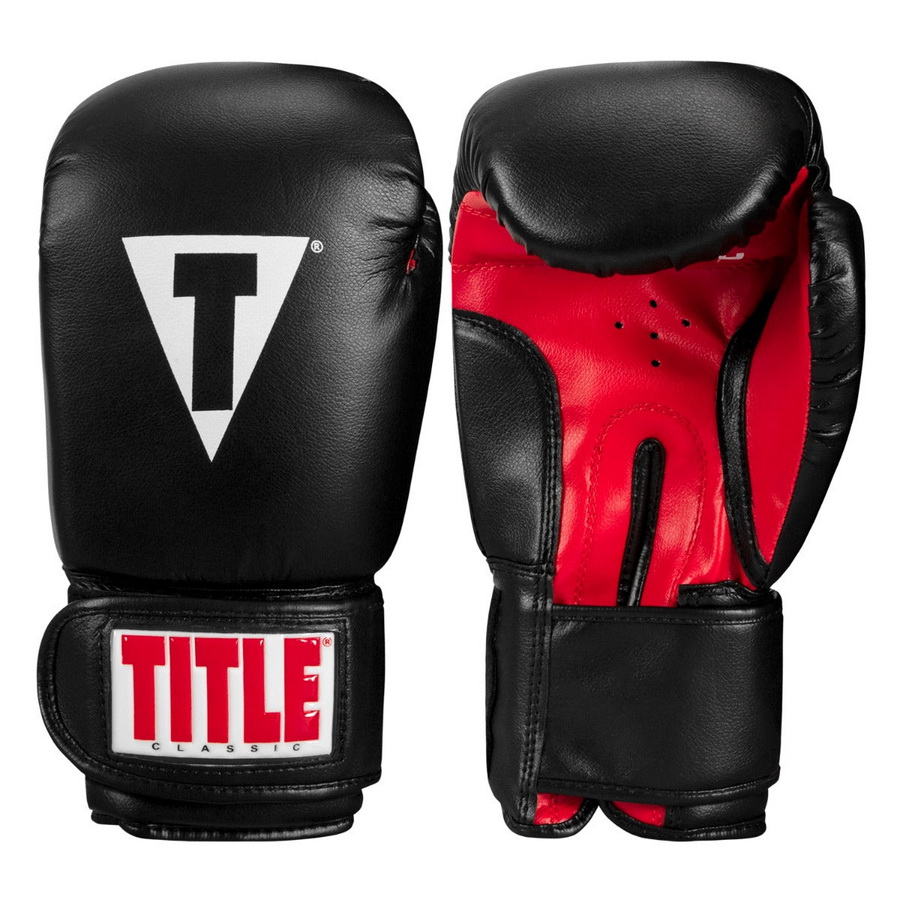
Mid-tier training glove, synthetic leather, multi-layer foam, velcro, 12/14/16oz. $40-60. Best mid-range training glove — better foam than Everlast ProStyle, boxing-specific brand. Correct for regular training without the Hayabusa premium.
Title Boxing Classic at $40-60 is the cleanest mid-range pick because Title is a dedicated boxing brand — the gloves are designed specifically for boxing rather than rebadged from general fitness equipment. Multi-layer foam puts the distribution closer to Hayabusa than to Everlast's single-density approach, which matters as soon as you push past three sessions a week. The synthetic leather shell holds up better than the ProStyle's vinyl but will not match the longevity of genuine leather. Sizing across 12/14/16oz follows industry norms. For trainees who want better foam quality than budget gloves without the Hayabusa price tag, Title Classic sits in the right place.
Pros
- ✓Multi-layer foam outperforms single-density Everlast ProStyle
- ✓Boxing-specific brand with construction tuned for the sport
- ✓Synthetic leather lasts longer than vinyl under regular training
- ✓12/14/16oz range fits both heavy bag and light sparring use
Cons
- ✗Synthetic leather still falls short of genuine leather longevity
- ✗Wider hand compartment fits less precisely than Hayabusa or Cleto Reyes
| Material | synthetic leather |
| Padding | multi-layer high- and low-density foam |
| Closure | hook & loop (two-ply wrist strap) |
| Weight options | 8/10/12/14/16 oz |
| Use type | bag/training/sparring |
Subscribe to our newsletter
Occasional updates and new releases — no spam.
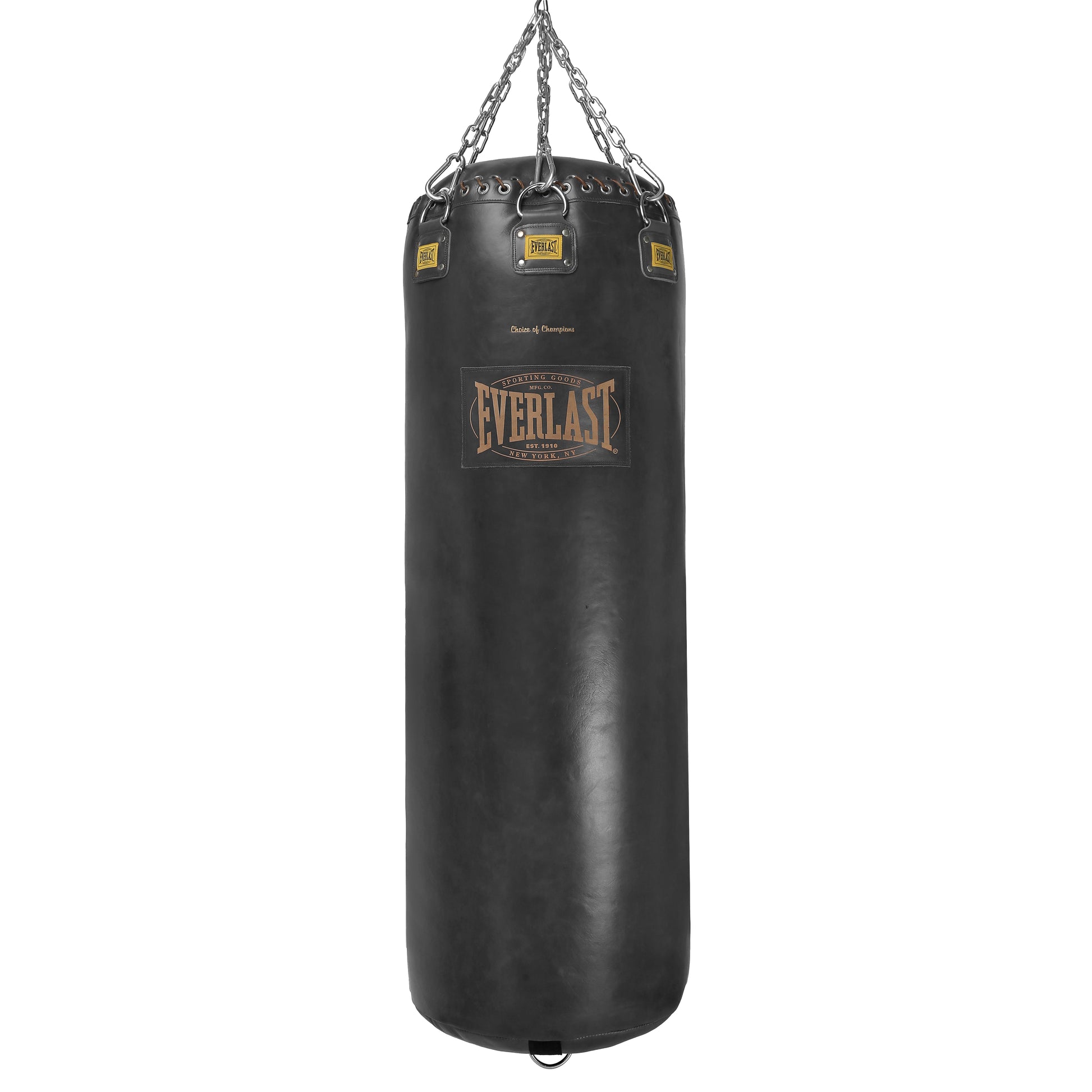
Mid-tier training glove, genuine leather, improved foam, wide wrist strap. $60-90. Best leather upgrade at accessible price — leather durability extends glove life significantly. Correct for regular trainers who want leather quality without $100+ premium.
The Everlast 1910 brings genuine leather into the $60-90 band, which is meaningfully cheaper than the Hayabusa T3 leather equivalents. The wider wrist strap improves on the ProStyle's narrower closure, and the improved foam distribution sits between the ProStyle and Title Classic in compression resistance. The headline value is the shell: leather, conditioned periodically with standard leather treatment, lasts three to five years of regular training where vinyl manages a quarter of that. For home gym users who want leather construction but cannot justify $100-plus, the 1910 is the practical pick.
Pros
- ✓Genuine leather shell lasts 3-5 years with regular conditioning
- ✓Wider wrist strap improves on the basic ProStyle closure
- ✓Available in standard 12/14/16oz training sizes
- ✓Sits well below premium leather pricing at $60-90
Cons
- ✗Foam distribution is a step below Hayabusa T3 multi-layer
- ✗Requires periodic leather conditioning that synthetic shells do not
| Material | leather |
| Padding | triple-layer (4-layer) closed-cell foam |
| Closure | hook & loop |
| Weight options | 12/14/16 oz |
| Use type | bag/training |
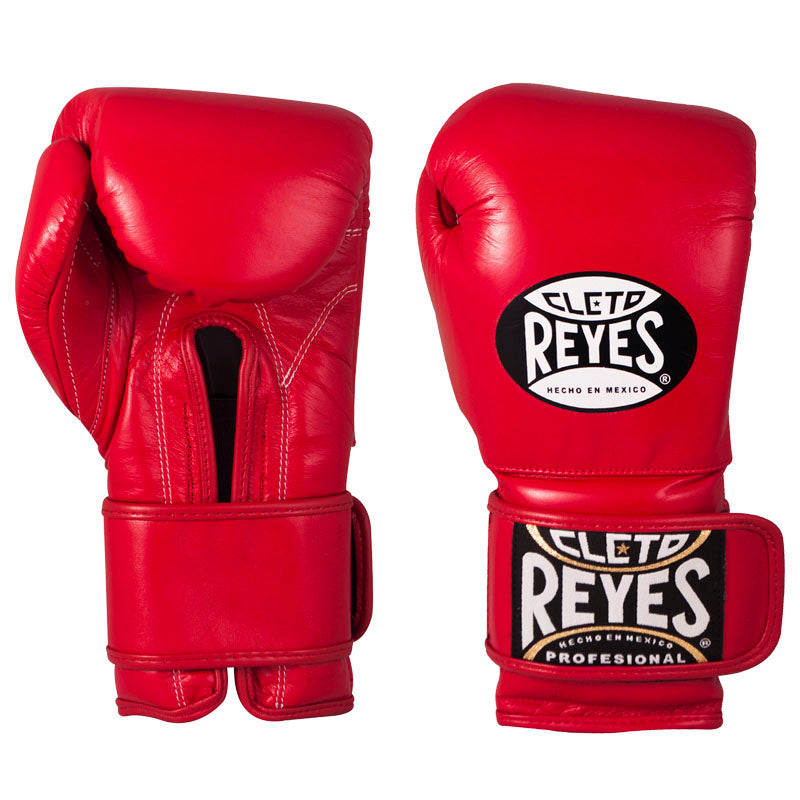
Premium Mexican-made training glove, genuine leather, lace-up or hook-loop, 14/16oz. $150-250. Best premium sparring and competition training glove — competition pedigree, tight hand compartment. Correct for competitive boxers who want pro-grade construction for daily training.
Cleto Reyes carries genuine Mexican competition pedigree — these are gloves designed around the working preferences of professional fighters in 14/16oz training weights. Genuine leather shell, tight hand compartment that pulls the fist into a punching shape, and foam profile that runs firmer than Hayabusa or Everlast. The firmer foam transfers more impact through to the knuckles, which is intentional for sparring partners who want to feel the punch as the fighter would land it. At $150-250 the price sits in premium territory, and the lace-up option requires a training partner to tie. For competitive boxers who train daily, the construction justifies the cost.
Pros
- ✓Genuine Mexican competition pedigree and construction
- ✓Tight hand compartment locks the fist for precise striking
- ✓Firm foam matches what competitive sparring partners expect
- ✓Genuine leather shell built for 5-10 year lifespan with care
Cons
- ✗Firmer foam transfers more impact through to the knuckles
- ✗Lace-up models require a partner to tie before training
| Material | top-grain cowhide leather |
| Padding | latex foam |
| Closure | hook & loop |
| Weight options | 12/14/16/18 oz |
| Use type | training/sparring |
Which one is right for you?
For serious home trainers (3+ sessions per week)
Hayabusa T3 Boxing Gloves
Dual-X wrist strap and multi-layer foam justify the premium for anyone training hard enough to outgrow budget gloves quickly.
For first-time boxing buyers
Everlast ProStyle Training Gloves
Lowest-cost entry point that covers casual heavy bag work for a year before you commit to a better glove.
For regular training under $60
Title Boxing Classic Training Gloves
Multi-layer foam from a boxing-specific brand outperforms Everlast ProStyle without the Hayabusa price tag.
For leather construction on a budget
Everlast 1910 Training Gloves
Genuine leather shell at $60-90 lasts years longer than synthetic gloves with regular conditioning.
For competitive boxers and sparring
Cleto Reyes Hook & Loop Training Gloves
Mexican competition pedigree, tight fist alignment, and firm foam built for daily training at competition intensity.
Glove construction: what makes a quality boxing glove
Wrist support is the most important structural variable in a training glove — a rigid, wide wrist strap stabilizes the wrist joint under impact, preventing the hyperextension injuries that occur when the wrist rolls sideways on contact. Velcro (hook-and-loop) wrist closure is the standard for training gloves — it allows solo putting on and taking off without help. Lace-up gloves (like Cleto Reyes competition models) provide a custom, tight wrist compression but require a training partner to tie and untie. For solo training (bag work without a partner), velcro is practical. For sparring, both velcro and lace are used depending on preference.
Padding construction: most quality gloves use layered foam — typically a hard foam layer next to the hand with a softer shock-absorbing layer over it. The distribution of padding matters: knuckle padding protects your hands, wrist foam protects on push-back, inner padding protects hand metacarpals. Single-layer foam gloves (common in budget gloves $15-40) compress over time and lose protective properties after 6-12 months of regular use. Multi-layer foam gloves (Hayabusa, Cleto Reyes, Winning) maintain shape longer under repeated impact.
Attached thumb construction: the thumb on a quality glove is either fully attached (connected to the hand compartment through the full length) or semi-attached. Fully attached thumbs prevent thumb hyperextension — a common injury when the thumb separates from the fist on impact and bends backward. Open thumb gloves (rare in quality training gloves) maximize airflow but sacrifice thumb protection. For bag and sparring use, attached thumb is the standard.
Hayabusa T3 and the premium training glove category
Hayabusa T3 ($100-130 in 12oz/14oz/16oz) is the leading premium training glove for the $100+ market — dual-X wrist strap design (two velcro closure straps for tighter wrist compression than single-strap gloves), Vylar leather exterior, multi-layer foam. The T3's dual closure distributes wrist compression across a wider surface area, which produces noticeably better wrist support than standard single-strap gloves. The hand compartment design keeps the hand in a natural fist position under the foam. For regular bag work and pad work (3+ sessions per week), the T3's durability justifies the premium over entry-level gloves — it will last 3-5 years of training versus 1-2 years for budget gloves.
Hayabusa T3 Kanpeki ($150-180) uses genuine leather and upgraded foam composition — marginally better tactile feel than the T3 but not meaningfully better protection for most training contexts. The T3 non-leather is the value position within Hayabusa's lineup. For competition fighters who train in leather gloves daily, the Kanpeki difference is perceptible. For recreational and serious amateur training, T3 is the practical upper bound.
Competing premium options: Winning (Japanese, $250-400), Cleto Reyes (Mexican, $150-250), and Grant Boxing ($250+) represent the elite competition and professional training tier. Winning is used by a significant portion of top amateur and professional boxers — the foam construction is widely regarded as superior for hand protection during sparring. At $300 for Winning, the price is prohibitive for most home gym users but appropriate for serious competitive boxers who spend 10+ hours per week in gloves.
Everlast, Title Boxing, and the accessible training glove tier
Everlast ProStyle Training Gloves ($20-35 in 12oz/14oz/16oz) are the most widely available entry-level boxing gloves — vinyl exterior, single-layer foam, velcro closure. Appropriate for beginners starting heavy bag training. The ProStyle's limitations: the vinyl exterior cracks with sweat exposure over time (typically 6-18 months of regular training), the foam is single-density and loses compression resistance faster than multi-layer. For someone trying boxing for the first time or training 1-2x per week, ProStyle is a valid starting point. For regular training (3+ sessions per week), they require replacement within a year.
Everlast 1910 ($60-90) is Everlast's mid-tier offering with genuine leather exterior, improved foam distribution, and wider wrist strap. The 1910 represents a meaningful quality step up from the ProStyle at still-accessible pricing. Leather durability significantly extends glove lifespan compared to vinyl — a leather glove with regular conditioning (leather treatment) can last 3-5 years. For home gym users who want quality without the Hayabusa premium, the Everlast 1910 is a reasonable choice.
Title Boxing Classic ($40-60) is a mid-market training glove with multi-layer foam and a leather-like synthetic exterior. Title Classic is a step up from Everlast ProStyle — better foam distribution, more durable exterior. Title is a dedicated boxing brand (not a general sports brand like Everlast) and their gloves are designed specifically for boxing training. For the $40-60 price point, Title Classic produces good training results. The synthetic leather won't last as long as genuine leather, but the foam quality is better than budget gloves in this price range.
Choosing boxing gloves by training type
For heavy bag work (solo training): 12oz for average adults (up to 170 lb), 14oz for heavier adults or people who train hard. Velcro closure for solo gloves. Any quality glove in the 12-14oz range works for bag training — the wrist strap quality matters most. Entry level: Title Boxing Classic ($40-60). Mid-tier: Everlast 1910 ($60-90). Premium: Hayabusa T3 ($100-130).
For sparring: 16oz minimum, 14oz for smaller fighters sparring lighter partners. Sparring requires more padding to protect both participants. If you spar 1-2x per month, a quality 16oz training glove (Hayabusa T3 16oz, Title Sparring 16oz) covers both bag and sparring use. If you spar regularly (2+ per week), dedicated sparring gloves with softer outer foam (to protect partners) are the standard.
Size and fit: gloves should fit snugly with hand wraps on. Without wraps, the hand should have visible space — wraps fill that space. Fingers should reach the finger compartment without bunching. If fingers don't fill the compartment, the glove is too large and punches land with incorrect knuckle alignment. Hayabusa and Winning gloves are known for narrower hand compartments that fit tighter — Everlast and Title run slightly wider.
Frequently asked questions
What oz boxing gloves should I get?▼
How long do boxing gloves last?▼
Do I need hand wraps with boxing gloves?▼
Can I use the same gloves for bag work and sparring?▼
Is genuine leather worth it over synthetic or vinyl?▼
How do I keep boxing gloves from smelling?▼
Should the glove fit snug or loose, and how do wraps factor in?▼
Who should skip the premium gloves like Hayabusa or Cleto Reyes?▼
Prices change. Check the retailer for the current price.
Comments & questions
Discussion happens on nattzy, our community forum. Sign in with Google to post — it takes a second.