Best Fitness Tracker 2026: 5 Compared
Five fitness trackers at five price points. Weight range and build quality determine long-term value far more than feature lists.
Quick answer
For runners who train without a phone, the Fitbit Charge 6 is the pick — it is the only tracker here with built-in GPS, so it logs an accurate route and pace phone-free. Choose the Xiaomi Smart Band 9 at 33 g to test the habit on a budget; the Garmin Vivosmart 5 for Body Battery and HRV-based recovery analytics; and the Apple Watch SE 2nd gen if you want a true smartwatch inside the Apple ecosystem.
This comparison is desk research. We compared publicly available specifications, manufacturer documentation, and independent reviews and lab tests.

Fitbit Charge 6
Best GPS Tracker: The Charge 6 is the only tracker in this comparison with built-in GPS, which is the single feature that justifies its position at the top for anyone who runs or cycles without a phone. The optical heart rate sensor has been updated from previous Charge generations and resting heart rate readings align with chest-strap references within 2–4 bpm during steady-state activity.
Top picks ↓| Product | Price | Link |
|---|---|---|
| $124.90Price as of 2026-09-24 | ||
| $46.99Price as of 2026-09-24 | ||
| $154.99Price as of 2026-09-23 | ||
| $149Price as of 2026-09-24 | ||
| — |
Top picks
Related articles


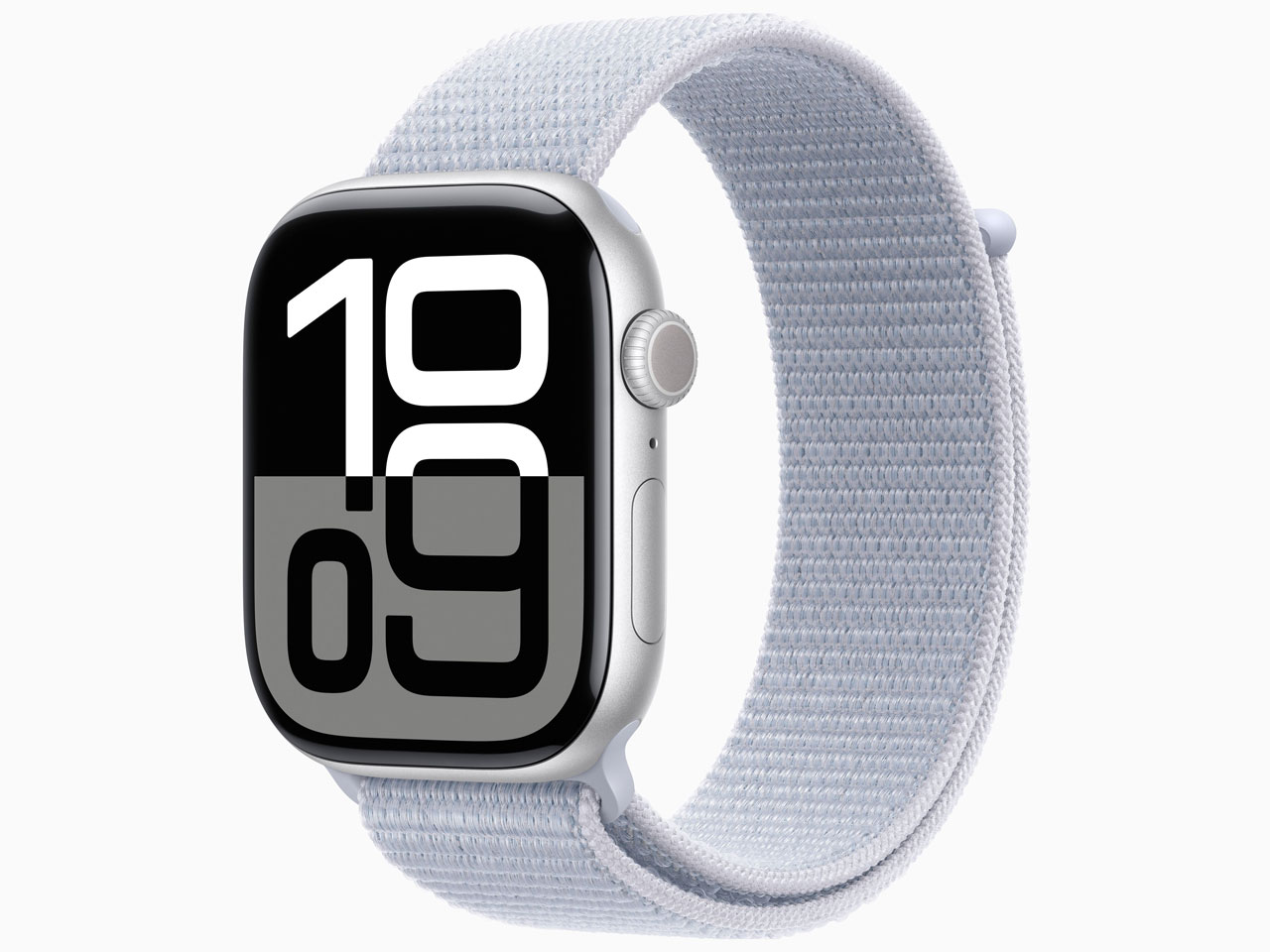
The only tracker in this comparison with built-in GPS — essential if you run without a phone. Google integration brings Maps notifications and YouTube Music control. ECG hardware is present but the feature is disabled for Japan-region accounts as of May 2026; Fitbit Premium is required for deep sleep and readiness analytics; Google Pay coverage at Japanese conbini and transit gates is less complete than Apple Pay.
The Charge 6 is the only tracker in this comparison with built-in GPS, which is the single feature that justifies its position at the top for anyone who runs or cycles without a phone. The optical heart rate sensor has been updated from previous Charge generations and resting heart rate readings align with chest-strap references within 2–4 bpm during steady-state activity. Google integration brings Maps turn-by-turn notifications and YouTube Music control on the wrist. Real-world battery life is 4–5 days with continuous HR and sleep tracking enabled, which is more than acceptable for the feature set. The honest caveats: ECG hardware is present but the feature is geographically disabled for JP-region accounts as of mid-2026, and Fitbit Premium is required for the deeper readiness and stress analytics.
Pros
- ✓Only tracker here with built-in GPS antenna
- ✓Google Maps and YouTube Music integration on wrist
- ✓4–5 day real-world battery with continuous HR
- ✓Informed Sport-tier optical HR for steady-state work
Cons
- ✗ECG feature disabled for Japan-region accounts
- ✗Fitbit Premium required for full analytics depth
| Display | 1.04 in AMOLED color touchscreen |
| Battery life | Up to 7 days |
| OS | Fitbit OS (proprietary) |
| GPS | Built-in GPS + GLONASS |
| Water resistance | 50 m (5 ATM, ISO 22810:2010) |
| Health sensors | Heart rate, ECG, SpO2 (red/IR), EDA (stress), skin temperature |
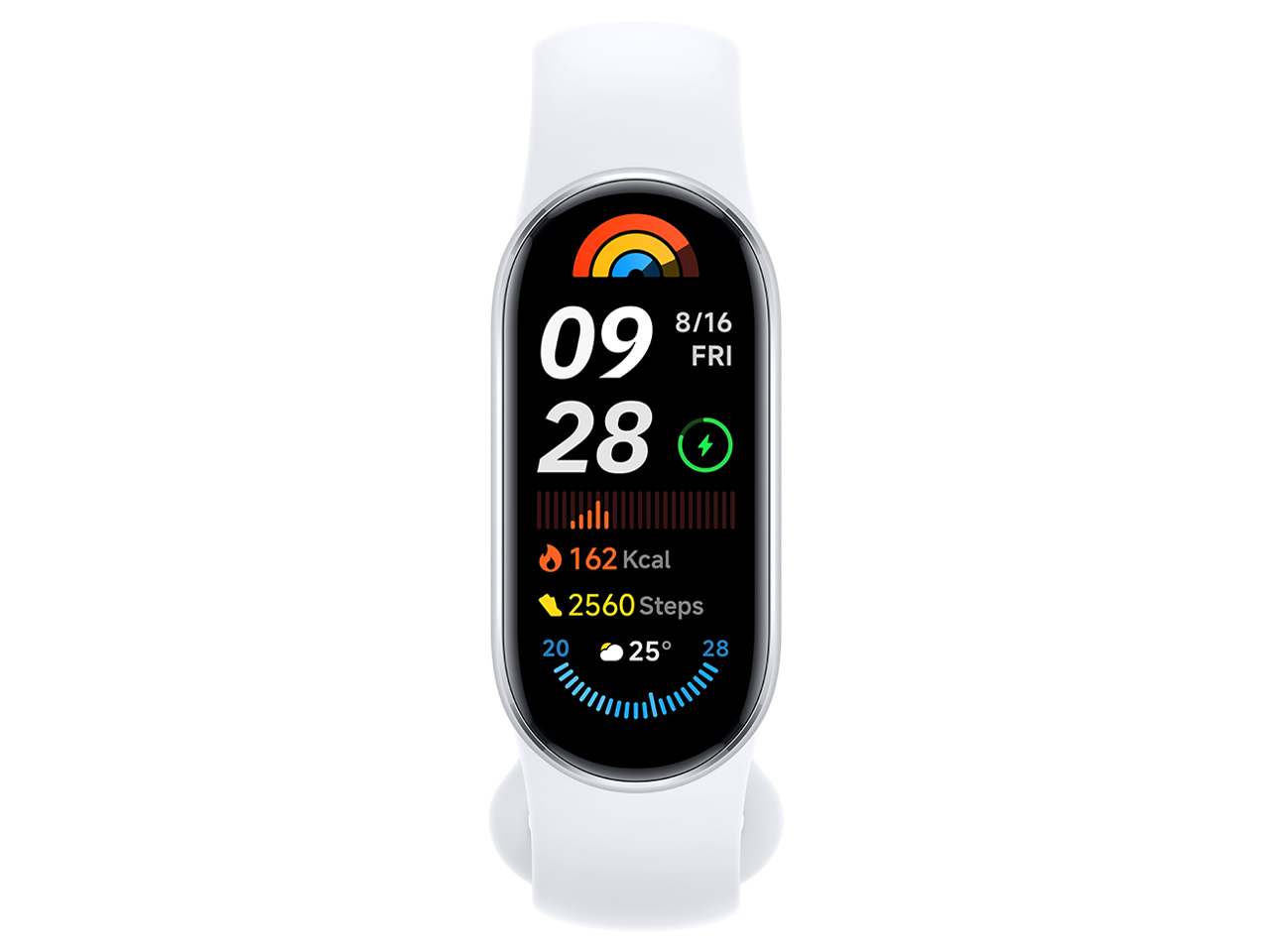
Best value-per-gram in this comparison: 33 g, 1.62-inch AMOLED, 14-day claimed battery (8–10 days realistic with continuous HR) at a budget price. For step counting, notification display, and sleep duration tracking, it is hard to beat at this price. Not suited for training-load analysis, GPS route logging, or gym workout accuracy — the sensor array and analytics depth reflect the price point.
At roughly one-quarter the price of the next cheapest option in this group, the Smart Band 9 covers the core daily-activity-tracker job competently. The 1.62-inch AMOLED is bright and readable, the band weighs just 33 g so it disappears on the wrist during sleep tracking, and the claimed 14-day battery delivers 8–10 days under realistic continuous-HR use. Heart rate accuracy at rest and during steady-state walking is reasonable; during weight training and HIIT the smaller optical sensor array shows motion artifacts more often than premium trackers. Connected GPS only — it piggybacks on the paired phone for route logging. The Mi Fitness app is thinner on workout analytics than Fitbit, Garmin, or Samsung Health, and Xiaomi's Japan service network is light if a warranty issue ever comes up.
Pros
- ✓Excellent value for daily tracking basics
- ✓33 g body disappears during sleep tracking
- ✓1.62-inch AMOLED is the brightest in budget tier
- ✓8–10 days realistic battery with HR enabled
Cons
- ✗Mi Fitness app weaker for training analytics
- ✗Sensor accuracy drops during gym workouts
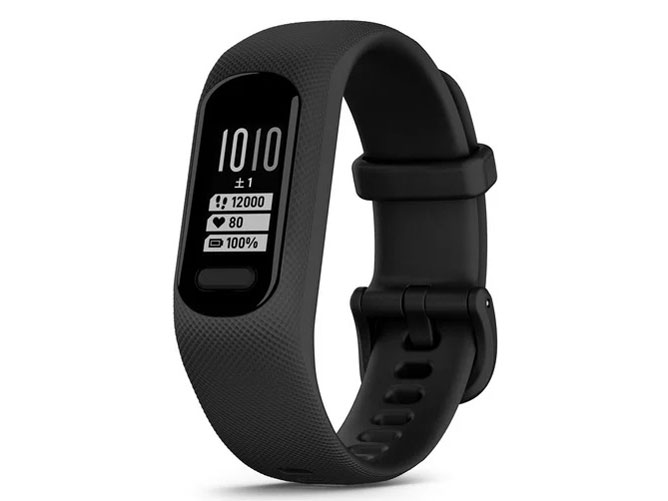
The strongest health-analytics feature set in this price range: Body Battery energy management, HRV stress score, SpO2, and Garmin's mature sleep analysis platform, all in a slim band. Unusual trade-off at its mid-range price: no built-in GPS in a product positioned above the Fitbit Charge 6. Right pick if health monitoring and recovery analytics matter more to you than outdoor route tracking.
The Vivosmart 5 delivers the strongest health and recovery analytics in this price range, anchored by Garmin's Body Battery score — a 0–100 readiness metric derived from HRV during sleep, sleep quality, daytime stress patterns, and activity load. Long-term Garmin users consistently report Body Battery becomes a meaningfully actionable daily signal after 2–4 weeks of calibration. The slim band wears discreetly, works equally well with iOS and Android via Garmin Connect, and supports SpO2, all-day stress score, and Garmin's mature sleep analysis platform. The unusual trade-off at its mid-range price: no built-in GPS in a product priced above the Fitbit Charge 6. Garmin positions it as a health-and-activity monitor rather than a running watch, but the missing GPS is a real limitation for runners who train without a phone.
Pros
- ✓Body Battery becomes useful after 2–4 weeks of calibration
- ✓Mature HRV-based sleep and stress analytics
- ✓Slim, discreet form factor for all-day wear
- ✓Full feature parity on Android and iOS
Cons
- ✗No built-in GPS despite premium pricing
- ✗Smartwatch features limited compared to Apple Watch
Subscribe to our newsletter
Occasional updates and new releases — no spam.
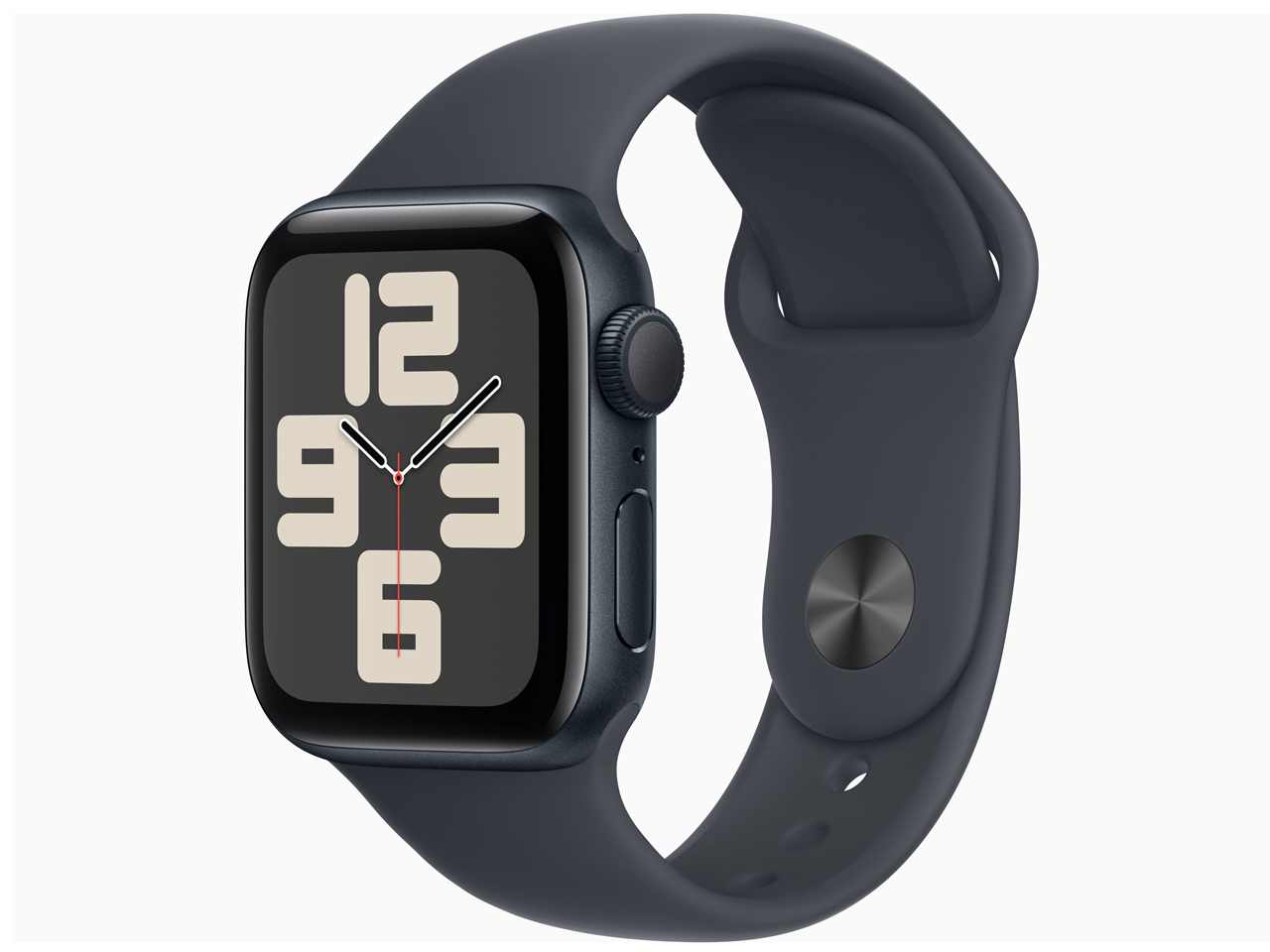
The only device in this comparison that functions as a full smartwatch: crash detection, Emergency SOS, Suica + Apple Pay at every Japanese conbini, watchOS app store, message replies on the wrist. Requires iPhone — non-negotiable, not a workaround available. 18-hour real-world battery means charging every night without exception; it is nearly twice the price of the next most expensive option in this list.
Apple Watch SE 2nd generation is the only device in this comparison that functions as a full smartwatch rather than a fitness tracker with watch features. Crash detection, Emergency SOS, full watchOS app store access, message replies on the wrist, and Suica integration that works at every conbini in Japan separate it from everything else here. As a fitness tracker it does the job — heart rate, GPS via phone, swim tracking with stroke detection, sleep tracking — but the 18-hour real-world battery means daily charging without exception, which breaks the consistent wear that drives most of a tracker's behavioral benefit. The hard requirement for an iPhone is non-negotiable — there is no Android pairing mode. It's nearly twice the price of the Vivosmart 5, justified only by the smartwatch features rather than fitness capability.
Pros
- ✓Full smartwatch with watchOS app store
- ✓Suica + Apple Pay at every Japanese conbini
- ✓Crash detection and Emergency SOS
- ✓MagSafe/Qi charging compatibility
Cons
- ✗iPhone required — no Android workaround
- ✗18-hour battery demands daily charging
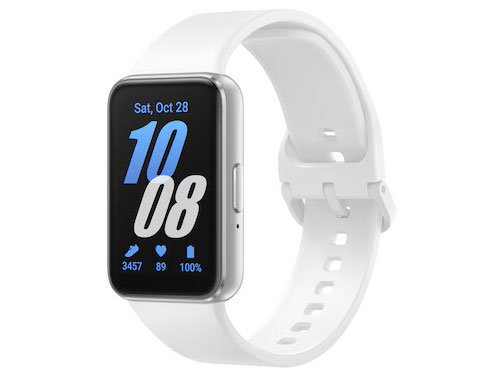
Largest display in this comparison at 1.6 inches — readability advantage for notifications and workout data over the narrower Fitbit and Xiaomi bands. Works with any Android phone, not just Samsung. 13-day claimed battery (8–11 days realistic). No built-in GPS. The Galaxy Wearable app's full analytics depth requires a Samsung phone; on non-Samsung Android the feature set is reduced. The pragmatic budget Android tracker.
The Galaxy Fit 3 carries the largest display in this comparison at 1.6 inches, which makes a real difference if you read notifications or workout data from the wrist during exercise. Built for Android users — works with any Android phone, not just Samsung, via Google Play's Galaxy Wearable app — it offers a 13-day claimed battery (8–11 days realistic), 50 m water rating for swim tracking, and a SpO2 sensor for overnight blood-oxygen trending. No built-in GPS, only connected GPS, so route logging requires carrying a paired phone. The Galaxy Wearable app's deeper analytics work fully only on Samsung phones; on non-Samsung Android the feature set is reduced to step counting, sleep, and notifications. It slots between the Xiaomi budget tier and Fitbit's mid-range price.
Pros
- ✓Largest 1.6-inch display in this comparison
- ✓Works with any Android phone, not just Samsung
- ✓8–11 day realistic battery
- ✓50 m water resistance for swim tracking
Cons
- ✗Full analytics require a Samsung phone
- ✗No built-in GPS at this price tier
Which one is right for you?
For runners who train without a phone
Fitbit Charge 6
Built-in GPS is the differentiator here — only the Charge 6 logs an accurate route and pace when you leave the phone at home.
For first-time tracker buyers on a budget
Xiaomi Smart Band 9
At just 33 g and a budget price it covers steps, sleep, and notifications without overcommitting before you know whether you'll wear a tracker daily.
For data-driven recovery and stress tracking
Garmin Vivosmart 5
Body Battery and Garmin's HRV-based stress analytics provide the most actionable recovery signal in this price range, regardless of phone platform.
For iPhone users who want a true smartwatch
Apple Watch SE 2nd Generation
The watchOS app store, Suica at every conbini, and crash detection make sense only if you already live in the Apple ecosystem and accept nightly charging.
For Android users who read data from the wrist
Samsung Galaxy Fit 3
The 1.6-inch display is the most readable mid-budget option and pairs cleanly with any Android phone, not just Samsung.
How we compared
We did not run independent heart-rate accuracy tests. Meaningful HR accuracy comparison requires a cycle ergometer or treadmill, a calibrated chest-strap reference (Polar H10 or Garmin HRM-Pro), a standardised protocol across exercise intensities from 60% to 90% of maximum heart rate, and enough participants to average out individual wrist anatomy differences (hairy wrists, tattoos, low perfusion skin types all affect optical sensors differently). That test protocol is 40–60 hours of structured work per model. We did not run it. What we did: read the published sensor specifications, cross-referenced current pricing from major online retailers as of May 2026, and read several hundred long-term owner reviews per model, paying particular attention to complaints that cluster consistently — motion-artifact errors during weight training, ECG feature geographic availability, battery degradation at 12 and 24 months, and 'stopped syncing after phone upgrade' reports.
The five comparison axes: (1) Heart-rate and SpO2 sensor type, sampling rate, and published accuracy claims. (2) GPS configuration — built-in antenna vs connected GPS using the paired phone, and what each means for route accuracy without carrying a phone. (3) Ecosystem dependency — what you lose if you switch from iPhone to Android or vice versa. (4) Battery life under realistic use (continuous heart-rate monitoring + sleep tracking + 3–5 connected notifications per hour), not the spec-sheet figures that assume most features are off. (5) Long-term wearability — strap replacement availability, battery service options, and the software support track record over 2–3 years of daily use.
GPS built-in vs connected — what it means for outdoor exercise
Built-in GPS means the tracker has its own antenna and records a route without your phone. Fitbit Charge 6 has built-in GPS. The other four trackers in this comparison — Xiaomi Smart Band 9, Garmin Vivosmart 5, Apple Watch SE 2nd generation, and Samsung Galaxy Fit 3 — use connected GPS, meaning they piggyback on your phone's GPS signal to record a route. If you run or cycle without your phone, a connected-GPS tracker logs elapsed time and step count but does not record a map route or calculate pace by distance.
In practical terms: if you run with your phone in your pocket or arm band, connected GPS is invisible — the watch shows you your pace and a route map just as if it had built-in GPS. If you prefer to leave your phone at home or in a locker, only Fitbit Charge 6 gives you an accurate distance and pace reading. Garmin Vivosmart 5 is the counterintuitive case here — it is the most expensive tracker in this comparison and does not have built-in GPS, while one of the cheaper options (Fitbit Charge 6) does. Garmin's reasoning is that the Vivosmart 5 is positioned as a health-and-activity monitor rather than a running watch, and for that use case, connected GPS is sufficient. If GPS-without-phone matters for your training, Fitbit Charge 6 is the only option in this comparison.
GPS accuracy quality also differs by hardware generation. Single-frequency L1 GPS (which is what a consumer fitness tracker uses) drifts 15–25 m in dense urban environments and under heavy tree cover. Dual-frequency L1/L5 GPS (found in premium dedicated sports watches like the Garmin Fenix 8) reduces that drift to 3–8 m. For runners tracking performance on a measured course, single-frequency will log a 5.0 km route as 4.85–5.15 km. For a casual morning jog where you want a rough distance, single-frequency is fine. Neither the Fitbit Charge 6 nor any tracker at this price point uses dual-frequency GPS.
Health sensors — which numbers you can trust
All five trackers use optical photoplethysmography (PPG) heart-rate sensors — green LEDs on the back of the band illuminate the skin, a photodetector measures how blood flow changes with each heartbeat, and firmware converts that into a beats-per-minute figure. The fundamental physics of optical PPG is the same across all five products. What differs is the sensor array size, the LED wavelength configuration, the sampling algorithm, and how aggressively the firmware smooths the signal to reduce motion noise. None of these specifications are published in a form that allows direct comparison between brands.
What you can trust: resting heart rate measured during a still overnight sleep period, typically within 2–4 bpm of a clinical ECG. Moderate-intensity steady-state exercise (brisk walking, easy jogging at a consistent pace), typically within 3–6 bpm of a chest-strap reference. What you cannot trust: heart-rate readings during weight training, HIIT intervals, rowing, or any activity where your wrist moves independently of cardiac effort. Errors of 10–20 bpm during a bench press set are normal and expected from any optical wrist sensor — it is not a defect, it is a physical limitation of the sensor modality.
SpO2 (blood oxygen saturation) readings from any wrist tracker have wider error bars than a clinical fingertip pulse oximeter. Wrist optical SpO2 sensors are affected by skin tone, wrist hair, ambient light, fit tightness, and skin temperature. A clinical fingertip oximeter is accurate to ±1–2%; wrist SpO2 from consumer trackers is roughly ±3–5% under optimal conditions and wider under non-optimal conditions. None of the five trackers here are medical devices approved for clinical SpO2 monitoring. Use SpO2 trends (is the overnight average consistent?) rather than individual readings.
Fitbit Charge 6 includes an ECG sensor — a single-lead ECG that can detect atrial fibrillation patterns. Important caveat for Japan buyers: Fitbit's ECG feature has geographic availability restrictions and is not available in Japan as of May 2026. The hardware is present but the ECG feature in the Fitbit app is disabled for JP-region accounts. Verify current status before buying if ECG is your reason for choosing Charge 6 over alternatives.
Ecosystem lock-in — the hidden cost of Apple Watch
Apple Watch SE 2nd generation requires an iPhone. This is a hard technical dependency, not a software preference — Apple Watch is designed to function as an iPhone peripheral, and setting up, updating, and using the watch requires an iPhone running iOS 16 or later. There is no official Android pairing mode, no workaround, and no sign that Apple intends to change this. If you use a Samsung Galaxy phone, a Google Pixel phone, or any Android device, you cannot use an Apple Watch.
The lock-in goes the other direction too: once you build history in the Apple Health app — sleep records, activity rings, workout history, heart-rate trends — switching from iPhone to Android means leaving that data behind. Apple Health does not export to Google Fit or Samsung Health in any automated way. Long-term users who switch platforms effectively restart their health data history. This is not unique to Apple — Fitbit's Fitbit Premium subscription ties your health analytics to the Fitbit/Google ecosystem in a similar way — but Apple Watch's total iPhone dependency is the most constraining in this comparison.
Samsung Galaxy Fit 3 and Xiaomi Smart Band 9 are the most ecosystem-agnostic options in this group. Galaxy Fit 3 pairs with any Android phone (not just Samsung phones) via Bluetooth and the Galaxy Wearable app, which is available on the Google Play Store. Xiaomi Smart Band 9 pairs with Android and iOS via the Mi Fitness app. Neither works optimally with every phone — Galaxy Fit 3's deep health integration is strongest with Samsung phones — but both can be used without owning a specific brand's phone. Garmin Vivosmart 5 works with both Android and iOS via the Garmin Connect app, with no meaningful feature reduction on either platform.
Where each fits
Fitbit Charge 6 is the right pick if you want the only tracker in this comparison with built-in GPS, Google Maps navigation, and Google Wallet support, and you accept the trade-offs. The trade-offs: ECG is not available in Japan as of May 2026 despite the hardware being present; Google Pay support in Japan is inconsistent compared to Apple Pay's universal conbini coverage; and the Fitbit Premium ecosystem charges a monthly fee for deeper sleep and stress analytics that are available free on competing platforms. Fitbit Charge 6 is the pick for runners who occasionally leave their phone at home and want a distance-accurate workout log, and for Google Workspace users who want wrist-accessible navigation.
Xiaomi Smart Band 9 is the right pick if your requirements are step and sleep tracking, smartphone notifications, and a readable screen at minimal cost and minimal wrist weight. At 33 g and 1.62 inches of AMOLED with 14-day battery, it does the everyday-activity-tracker job competently for a fraction of the price of the next cheapest option. The honest weaknesses: heart-rate accuracy is lower during exercise than premium trackers due to a smaller sensor array; the Mi Fitness app ecosystem is thinner than Fitbit, Garmin, or Samsung Health for workout analytics; and Xiaomi's after-sales support network in Japan is thinner than domestic or US brands. Smart Band 9 is not a tracker for people who follow their training load or analyse their VO2 max trends — it is a step counter and notification display that also logs sleep.
Garmin Vivosmart 5 is the right pick for people who want Garmin's Body Battery energy management, stress score, and sleep tracking in a slim, discreet form factor, and who do not need built-in GPS. Body Battery is a distinctive feature — it synthesises heart-rate variability, sleep quality, and activity data into a 0–100 energy score that tells you whether today is a good day to train hard or a day to recover. Garmin's implementation of this feature is meaningfully more actionable than the competitors' stress and recovery scores. The weaknesses: a mid-range price with no built-in GPS is an unusual trade-off, and the Vivosmart 5 form factor is deliberately modest — a small display with limited smartwatch functionality. If you want an outdoor GPS workout tracker, look at the Garmin Forerunner line instead.
Apple Watch SE 2nd generation is the right pick if you use an iPhone and want crash detection, Emergency SOS via satellite (in supported regions), a full watchOS app store, and Apple Pay at every conbini in Japan via Suica integration. It is also the only device in this comparison that functions as a meaningful smartwatch beyond basic notifications — you can reply to messages, stream audio, download apps, and navigate with the watch alone. The honest weaknesses: 18-hour battery means daily charging without exception; it does not work with Android at all; and it is significantly more expensive than the other four options. Apple Watch SE is not a fitness tracker with watch features — it is a smartwatch with fitness tracking, and the price reflects that.
Samsung Galaxy Fit 3 is the right pick for Android users who want a large-screen tracker with 13-day battery and a 50 m water rating at a budget price. The 1.6-inch display is the largest in this comparison, which matters if you read notifications on the wrist or navigate workout data during exercise. Works with any Android phone, not just Samsung. The weaknesses: no built-in GPS (connected GPS only); the Galaxy Wearable app's deep analytics require a Samsung phone for full functionality; and the budget price reflects genuine compromises in sensor quality and software polish compared to Fitbit and Garmin. Galaxy Fit 3 is the pragmatic pick for someone who wants a larger, more readable band than the Xiaomi but does not want to pay Fitbit or Garmin prices.
The Japan market context
Fitbit's Japan situation changed materially after Google completed its acquisition of Fitbit in 2021. The product line continues under the Fitbit brand but Google's infrastructure now handles account management, data storage, and app integration. The practical implication for Japan buyers: Fitbit Premium requires a Google account, health data is stored on Google servers (subject to Google's privacy policy), and some health features have Japanese regulatory or business-availability constraints. ECG is the clearest example — the hardware is in every Charge 6, but the feature is geographically disabled in Japan. Whether that changes is Google's decision, not a hardware limitation.
Xiaomi Smart Band 9 is widely available through major online retailers. The Mi Fitness app is available on the App Store and Google Play. Xiaomi's direct-service support network is thin — warranty claims typically go through retailers or marketplace sellers rather than a branded service centre. This is standard for budget import electronics and most users will not encounter a warranty issue, but it is worth knowing if you buy at the lower end of the market.
Garmin's Japan presence is strong. Vivosmart 5 is sold through major retailers and Garmin's own Japan website, with a local warranty and service network. Samsung Galaxy Fit 3 is sold through Samsung's Japan retail channel and major electronics retailers with standard warranty coverage. Apple Watch SE 2nd generation is sold through Apple Store Japan (online and Omotesando, Shinjuku, Shibuya, Osaka retail stores) and all major Japanese electronics retailers, with AppleCare+ available as an extended warranty.
Our pick and honest caveats
For most people who want a capable fitness tracker and do not have a specific iPhone dependency or GPS-without-phone requirement, Garmin Vivosmart 5 is the pick with the most distinctive value. Body Battery energy management, the stress and sleep analytics quality, and Garmin's software support track record over multi-year device lifespans justify the price over the cheaper Samsung and Xiaomi options. It works equally well with Android and iOS. The caveat: no built-in GPS is a genuine limitation for runners who train without a phone, and the price-to-feature ratio looks worse next to the Fitbit Charge 6 if GPS tracking matters to you.
If GPS-without-phone is a requirement, Fitbit Charge 6 is the pick. Accept that ECG is currently unavailable in Japan, that Fitbit Premium costs extra for full analytics, and that Google Pay integration in Japan is less complete than Apple Pay.
If budget is the main constraint, Xiaomi Smart Band 9 delivers the basic daily-tracking and notification-display function at a price that requires no justification. The gap in analytics depth versus Garmin and Fitbit is real, but for a step-and-sleep tracker, the gap does not matter.
Do not buy Apple Watch SE 2nd generation as a fitness tracker unless you already own an iPhone and the smartwatch features — crash detection, SOS, full app store, Suica payments — justify the premium over the other four options. As a pure fitness tracker, its 18-hour battery is a daily charging obligation that no other option in this comparison requires.
Battery and charging habits
Spec-sheet battery figures assume conservative use: backlight off or on a short timeout, heart-rate monitoring at 30-minute intervals rather than continuous, no GPS tracking, minimal notifications. Real-world battery life with continuous heart-rate monitoring, sleep tracking, and 20+ notifications per day is typically 50–70% of the spec-sheet figure for all five trackers. The practical numbers: Fitbit Charge 6 claims 7 days, real-world with continuous HR and sleep tracking is 4–5 days. Xiaomi Smart Band 9 claims 14 days, real-world is 8–10 days with continuous HR enabled. Garmin Vivosmart 5 claims up to 7 days, real-world with Body Battery and stress monitoring active is 4–6 days. Apple Watch SE claims 18 hours, real-world with always-on off, continuous HR, and notifications is 14–17 hours. Samsung Galaxy Fit 3 claims 13 days, real-world is 8–11 days.
Charging time matters almost as much as battery life. Fitbit Charge 6 charges from 0 to 100% in about 2 hours via a magnetic puck. Xiaomi Smart Band 9 charges via a magnetic 2-pin charger in about 1.5 hours. Garmin Vivosmart 5 charges via a proprietary clip charger in about 1–1.5 hours. Apple Watch SE charges via MagSafe or any Qi wireless charger in about 1.5 hours to 80% and 2.5 hours to 100%. Samsung Galaxy Fit 3 charges via a magnetic puck in about 1.5 hours. The Apple Watch SE is the only one that uses a standard charging ecosystem (MagSafe/Qi), which is convenient if you already own Apple charging hardware; all others use proprietary pucks or clips that require the included charger.
Battery degradation over time follows the same lithium-ion curve as phones: roughly 90% capacity after 1 year, 80% after 2 years, 65–70% after 3–4 years of daily charging cycles. Xiaomi Smart Band 9's 14-day battery at purchase becomes a roughly 9-day battery at 3 years — still long enough to go a week without charging. Apple Watch SE's 18-hour battery at purchase becomes roughly 12–13 hours at 3 years, which is borderline for all-day wear with sleep tracking. Battery replacement: Apple offers paid service; the others are not designed for battery replacement, and most owners replace the full device at the end of life.
Frequently asked questions
Which is better for weight loss tracking — Fitbit or Apple Watch?▼
Can I use Apple Watch SE with an Android phone?▼
How accurate is sleep tracking on budget trackers vs premium ones?▼
Are these trackers waterproof enough for swimming?▼
Does Garmin Vivosmart 5 work with iPhone?▼
What is Body Battery and is it useful?▼
Prices change. Check the retailer for the current price.
Comments & questions
Discussion happens on nattzy, our community forum. Sign in with Google to post — it takes a second.
Related articles

Best JP rental server 2026: 5 hosts ranked
Best Noise Cancelling Headphones 2026: 5 Flagships
Best Air Purifier 2026: 5 models compared honestly
Best LED Face Masks 2026: 3 Light Therapy Devices Compared
Best Robot Vacuums 2026: 5 Models Compared Honestly
Best Hair Dryers 2026: 5 high-end models compared honestly