Best Glute Resistance Bands 2026: 5 That Don't Roll or Snap
Resistance bands for glutes are one of the most copied product categories in fitness. Every third Amazon listing claims "non-slip" and "anti-roll" — most don't deliver. The real split is between fabric bands (wider, warmer against skin, better for heavy hip thrusts) and latex loop bands (more portable, easier to find specific resistance levels, better for physical therapy work). These five cover both camps and actually perform as described.
Quick answer
For home gym lifters, the Victorem Hip Resistance Bands are the pick — wide fabric stays put during loaded hip thrusts and three clearly different resistance levels let you progress without a new set. Choose Fit Simplify's five latex loops under $15 to start a collection; Peach Bands for a hexagonal non-slip pattern woven into the fabric rather than printed on; and TheraBand for clinical-grade rehab resistance levels.
This comparison is desk research. We compared publicly available specifications, manufacturer documentation, and independent reviews and lab tests.

Victorem Hip Resistance Bands
Best Overall: Victorem's fabric bands have earned their bestseller status through a simple combination: wide construction that stays put during hip thrusts, three clearly differentiated resistance levels, and fabric that doesn't dig into bare skin during high-rep sets. The non-slip silicone grip pattern actually works on both gym shorts and leggings — unlike some competitors where the grip only holds on one fabric type.
Top picks ↓| Product | Price | Link |
|---|---|---|
| $24.99Reference price | ||
| $9.98Price as of 2026-09-24 | ||
| $24.95Reference price | ||
| $19.98Reference price | ||
| $20.00Reference price |
Top picks
Related articles

Victorem's fabric bands have earned their bestseller status through a simple combination: wide construction that stays put during hip thrusts, three clearly differentiated resistance levels, and fabric that doesn't dig into bare skin during high-rep sets. The non-slip silicone grip pattern actually works on both gym shorts and leggings — unlike some competitors where the grip only holds on one fabric type. Durable through heavy washing.
Pros
- ✓Wide fabric stays in place during hip thrusts
- ✓Heavy resistance options for progressive overload
- ✓Durable stitching outlasts thin latex bands
Cons
- ✗Fabric requires more careful washing
- ✗Heavier than latex for travel packing

Fit Simplify Resistance Loop Exercise Bands
Five latex bands from extra-light to extra-heavy, color-coded, at a price point where you can replace the whole set without wincing. They're the right choice if you want a wide resistance range for varied exercises — glute kickbacks, clamshells, lateral walks, and warm-up activation all work better when you can fine-tune the band to the movement. The latex rolls slightly during hip thrusts, which is the tradeoff for portability and price.
Pros
- ✓5-band set covers light to extra-heavy resistance
- ✓Under $15 — lowest entry point in category
- ✓Color-coded for quick selection
Cons
- ✗Latex can roll up during exercises
- ✗Lighter bands wear out faster with heavy use
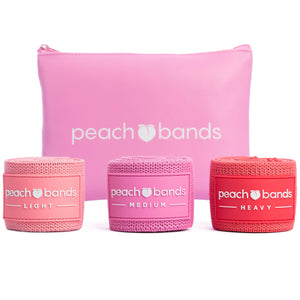
Peach Bands is a dedicated glute-training brand, and the design shows it. Three bands, each wider than a standard loop, with a hexagonal non-slip pattern printed directly into the fabric — not a silicone overlay that peels. The medium band hits a useful resistance level for most users' hip thrust warm-up sets. The aesthetic appeal isn't irrelevant: you're more likely to grab a band that looks good hanging in your gym space.
Pros
- ✓Wider coverage reduces skin pressure during workouts
- ✓Stays in place on hips and thighs
- ✓Three resistance levels in one set
Cons
- ✗Fewer resistance levels than Fit Simplify set
- ✗Premium price for a fabric band set
Subscribe to our newsletter
Occasional updates and new releases — no spam.

TheraBand Professional Resistance Band Loop
TheraBand is what physical therapists actually stock on their shelves. The latex loops come in a standardized color-coded resistance system used consistently across healthcare settings — if your PT prescribed a specific TheraBand resistance, this is the exact product. The bands are thin and roll more than fabric alternatives, but for targeted glute activation work following injury or surgery, the precisely calibrated resistance matters more than comfort.
Pros
- ✓Clinical-grade resistance used by physical therapists
- ✓Gentle progression for rehab and recovery
- ✓Available in 6 resistance levels
Cons
- ✗Thin latex — not ideal for heavy glute loading
- ✗Less comfortable than fabric options
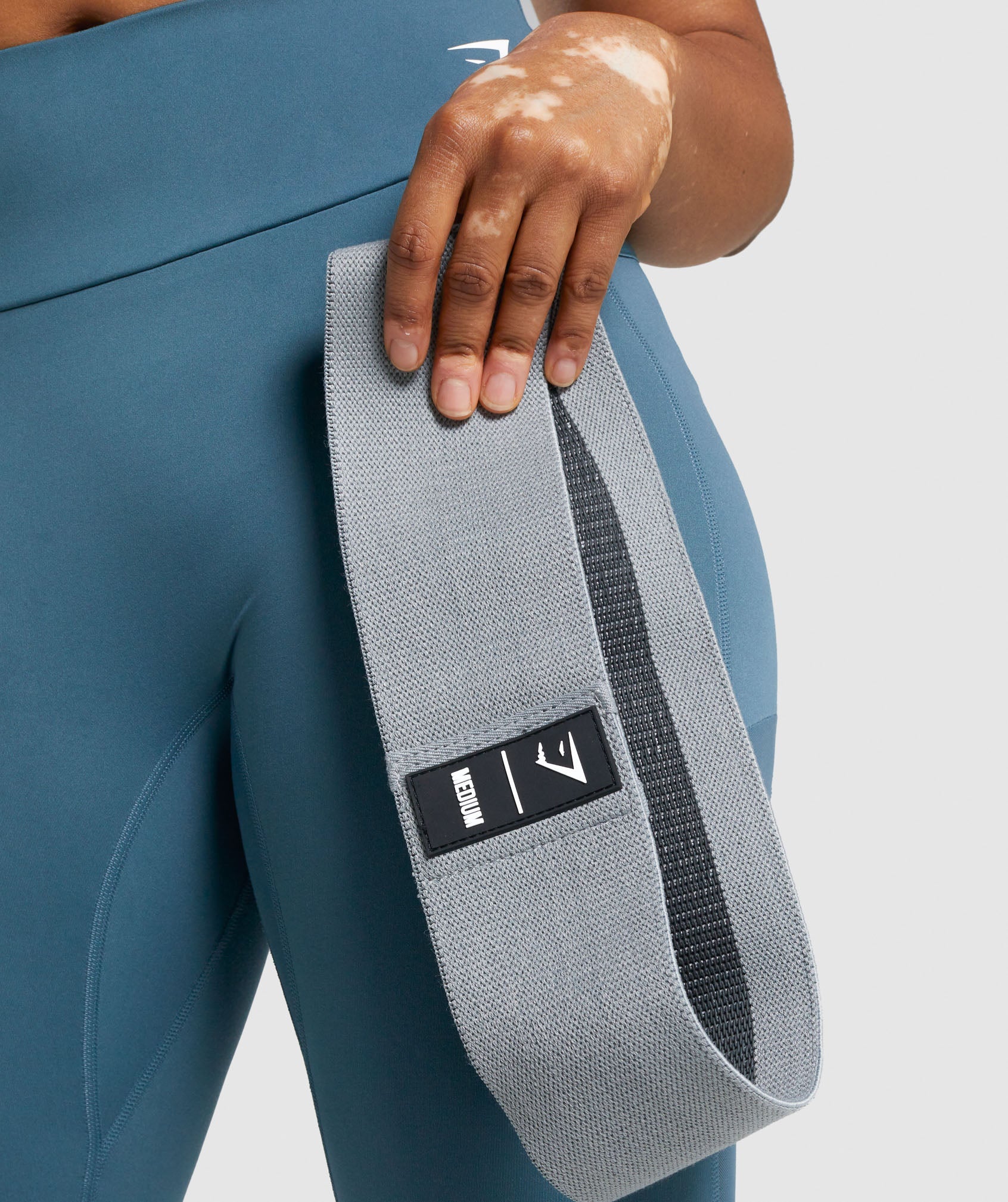
Gymshark's resistance band is the one you buy when you already own their shorts. The knit construction is noticeably more refined than most fabric competitors — no fraying after heavy use, consistent resistance across the full band rather than just the center. Color-matched to Gymshark's current apparel lines if that matters. The premium is mostly for build quality and brand cohesion; the actual training performance is solid but not meaningfully better than Victorem.
Pros
- ✓Knit construction won't roll or snap
- ✓Premium build quality matches workout apparel
- ✓Strong brand consistency for Gymshark users
Cons
- ✗Single band — no set options
- ✗Highest price in category for one band
Which one is right for you?
Home gym lifters progressing on hip thrusts
Victorem Hip Resistance Bands
Wide fabric stays put during loaded hip thrusts and three resistance levels let you progress without buying a new set.
Budget-conscious beginners building a band collection
Fit Simplify Resistance Loop Exercise Bands
Five color-coded bands from extra-light to extra-heavy for under $15 means you can replace the whole set when latex wears out without stressing the cost.
Glute-focused lifters who train in leggings daily
Peach Bands Resistance Bands Set
The hexagonal non-slip pattern is woven into the fabric itself — not a peelable overlay — so it holds on leggings and shorts session after session.
People returning to training after hip or knee injury
TheraBand Professional Resistance Band Loop
Standardized clinical-grade resistance levels match what physical therapists prescribe, making it easy to follow a rehab protocol exactly.
Gymshark apparel owners wanting a matching kit
Gymshark Resistance Band
Knit construction resists fraying and color-matches current Gymshark apparel lines, giving a cohesive look with better durability than most fabric bands.
Fabric vs. Latex: How to Choose a Glute Band
The fabric-versus-latex decision drives most other choices. Each has a legitimate use case, and the wrong pick for your training style leads to a band that sits in a drawer.
Bottom line
Victorem handles the daily driver role for most users — the fabric stays put and the three resistance levels cover warm-up through moderate loading. Fit Simplify covers the physical therapy and varied-exercise use case at a price where replacing the set when latex degrades isn't painful. If you want the best available and don't mind paying for brand quality, Gymshark's band is genuinely well-made.
Frequently asked questions
What's the best resistance band for hip thrusts?▼
How do I stop my resistance band from rolling?▼
Can resistance bands replace weights for glutes?▼
Are fabric or latex resistance bands better?▼
How long do resistance bands last?▼
Prices change. Check the retailer for the current price.
Comments & questions
Discussion happens on nattzy, our community forum. Sign in with Google to post — it takes a second.