Best Grip Strength Trainers 2026: 5 Compared
Grip strength training is divided into two largely separate disciplines. Weight range and build quality determine long-term value far more than feature lists.
Quick answer
For crush grip progression, the IronMind Captains of Crush gripper is the pick — its numbered tiers from #T to #4 give a precise progression path no other gripper here matches. Choose Fat Gripz if you will not add dedicated grip sessions, since they expand a barbell to 2 inches during your existing lifts; the Harbinger wrist roller for forearm flexors and extensors; and the Metolius Grip Saver Plus for climbers.
This comparison is desk research. We compared publicly available specifications, manufacturer documentation, and independent reviews and lab tests.
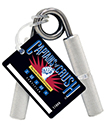
IronMind Captains of Crush Gripper
Best for Crush Grip: The IronMind Captains of Crush gripper is the documented standard in competitive grip sports for a reason: the spring-and-machined-aluminum construction holds its rated resistance across decades of use, and the numbered tiers (#T trainer through #4) give a clear progression path. The #1 at around 140 lb is a reasonable starting point for an adult with no grip training, the #2 at 195 lb is a legitimate strength benchmark, and the #3 at 280 lb is competition-level.
Top picks ↓| Product | Price | Link |
|---|---|---|
| $41.95Price as of 2026-09-24 | ||
| $35Reference price | ||
| $15Reference price | ||
| $15Reference price | ||
| $30Reference price |
Top picks
Related articles
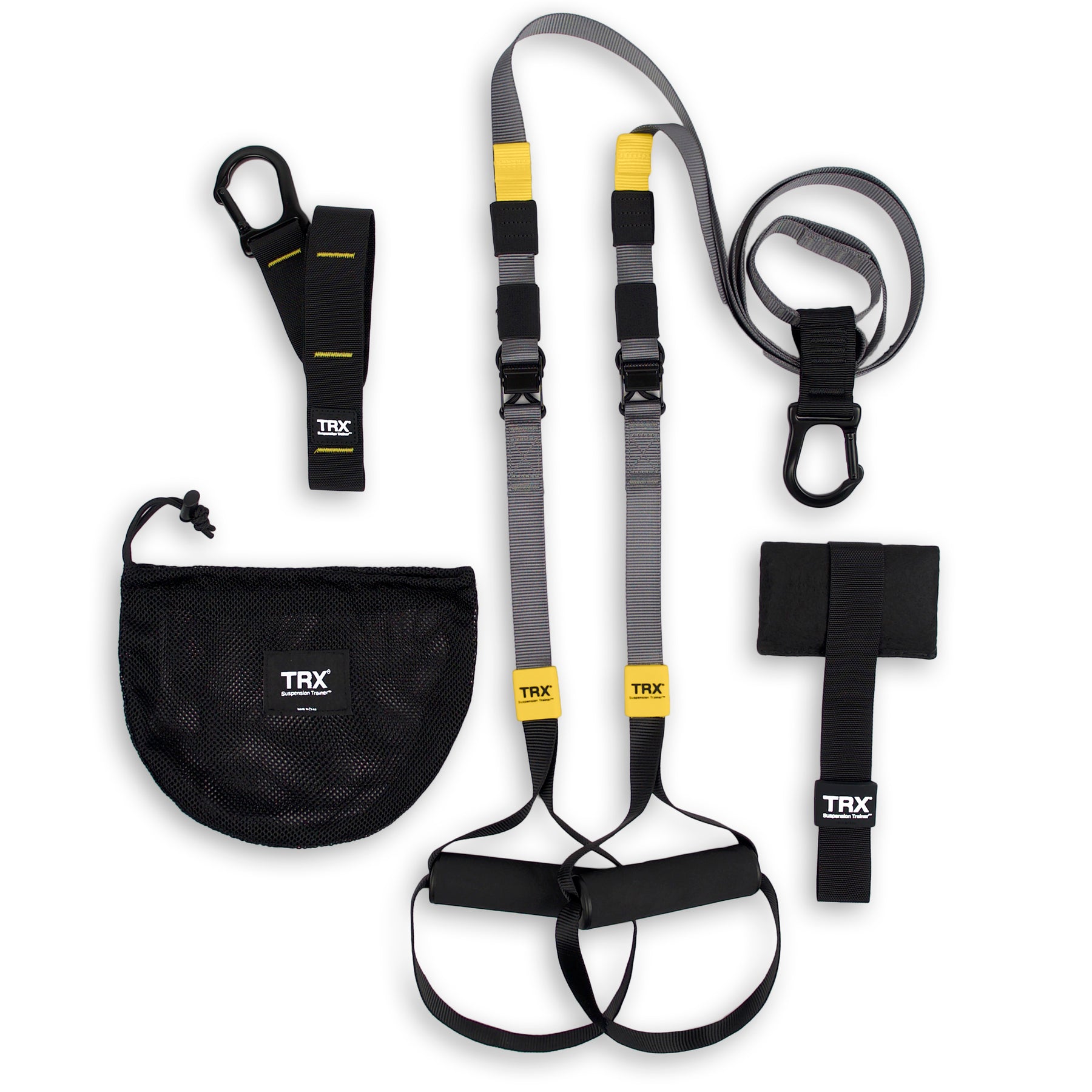


IronMind Captains of Crush Gripper
Machined aluminum and spring, consistent resistance ratings (#1=140 lb, #2=195 lb, #3=280 lb). $20-30 per gripper. Best for crush grip development and progressive overload. The standard in competitive grip sports. Buy #1 and #2 to start.
The IronMind Captains of Crush gripper is the documented standard in competitive grip sports for a reason: the spring-and-machined-aluminum construction holds its rated resistance across decades of use, and the numbered tiers (#T trainer through #4) give a clear progression path. The #1 at around 140 lb is a reasonable starting point for an adult with no grip training, the #2 at 195 lb is a legitimate strength benchmark, and the #3 at 280 lb is competition-level. There are no moving parts to wear out and no battery to fail — the gripper you buy today is the same gripper in ten years. For lifters specifically training crush grip strength, nothing else in this lineup matches the precision of the progression.
Pros
- ✓Numbered tiers from #T to #4 provide a clear progression path
- ✓Rated resistance holds consistent across decades of use
- ✓Machined aluminum and spring — no parts to wear out
- ✓Documented standard in competitive grip sports
Cons
- ✗Trains crush grip specifically — not pinch or wrist strength
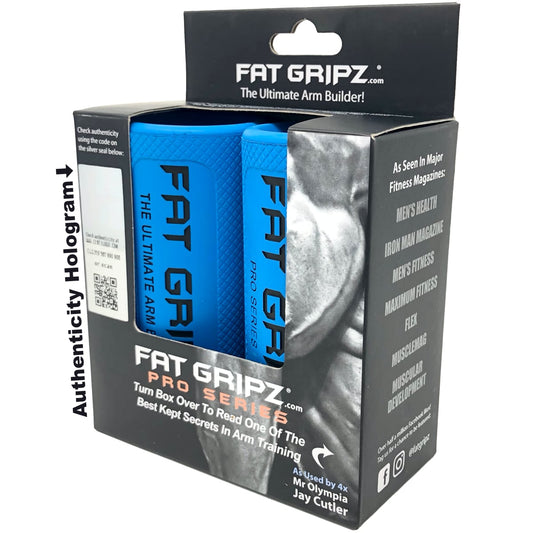
Rubber sleeve, 2-inch diameter, fits standard barbells/dumbbells/pull-up bars. $35-45. Best for integrating grip training into existing workouts. Trains grip simultaneously with compound movements — efficient for athletes who won't add dedicated grip sessions.
Fat Gripz are rubber sleeves that slip over a barbell, dumbbell, or pull-up bar to expand the grip diameter from the standard 1-inch to 2 inches (or 2.25 inches on the Extreme version). The principle is straightforward: a larger handle activates more of the hand, increases thumb engagement, and forces the forearms to work harder during every lift you already do. A deadlift session with Fat Gripz trains grip and legs simultaneously, which makes them efficient for lifters who don't want to add dedicated grip work to their program. The limitation is positional — Fat Gripz train grip in the patterns you're already lifting, so they don't fully replace crush gripper work or wrist roller training.
Pros
- ✓Trains grip simultaneously with compound lifts
- ✓Fits barbells, dumbbells, and pull-up bars universally
- ✓2-inch diameter forces full hand activation and thumb engagement
- ✓Adds no time to existing training sessions
Cons
- ✗Doesn't fully replace dedicated crush or wrist work

Wooden dowel with rope and weight plate attachment. $15-25. Best for forearm flexor and extensor development. The most effective forearm-specific tool per dollar. Complements crusher training for complete forearm development.
The Harbinger wrist roller is the most effective forearm-specific tool per dollar in this lineup. A wooden dowel about 12 inches long with a central rope and a weight plate hung from it — you hold it at arm's length and alternate wrist rotations to roll the plate up, then reverse to lower it. The motion trains forearm flexors and extensors simultaneously through a movement that no other exercise replicates well. Even strong athletes often fail their first plate roll with only 10 lb of load — the burn is immediate and obvious. The tool itself is essentially indestructible: wood, rope, and a bolt. At the price point, there's no better single addition for forearm development.
Pros
- ✓Trains forearm flexors and extensors in a single movement
- ✓Immediate burn — load is harder than it looks on paper
- ✓Essentially indestructible construction
- ✓Lowest-cost tool with the highest forearm-specific impact
Cons
- ✗Single-purpose tool — only trains the wrist roll pattern
Subscribe to our newsletter
Occasional updates and new releases — no spam.
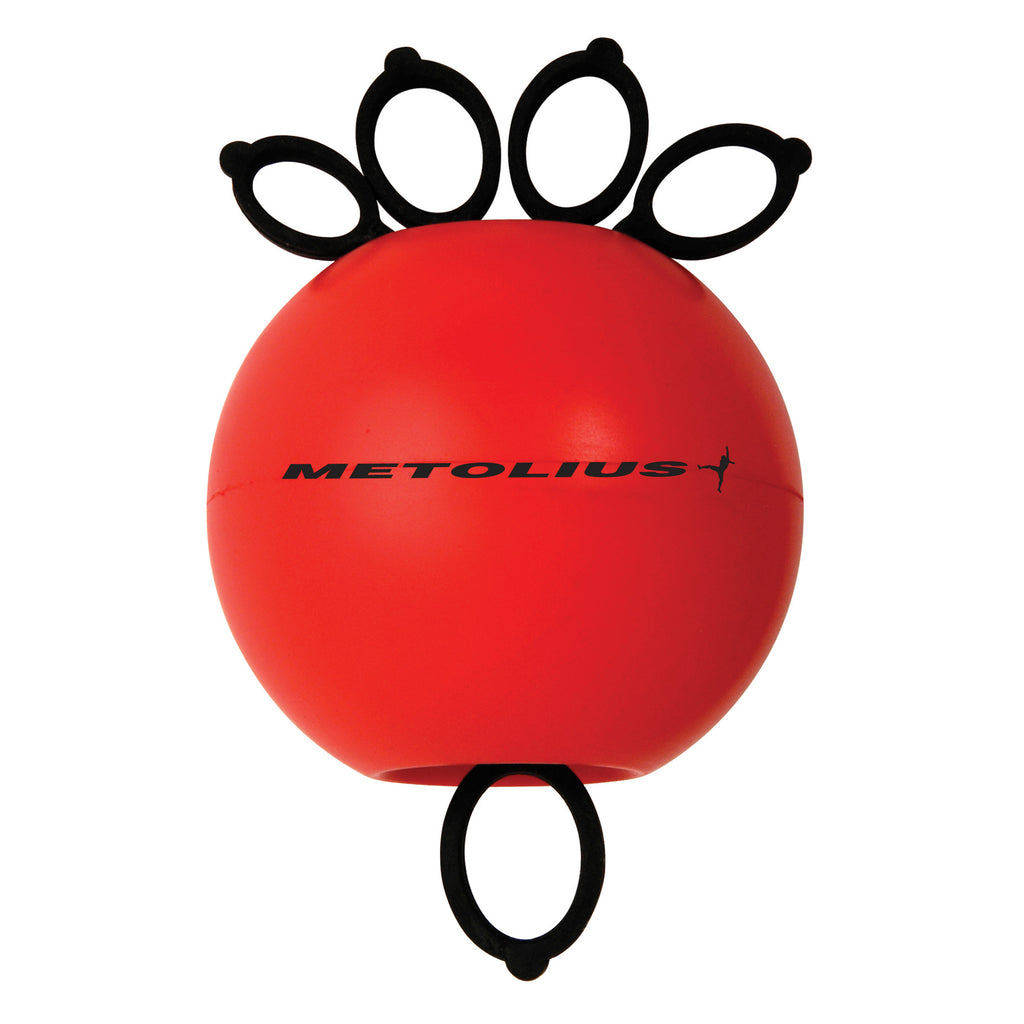
Rubber ring for finger closure training. $15-20. Best for climbers — specifically strengthens antagonist muscles to prevent climber's elbow. Less relevant for non-climbers seeking pure strength vs CoC grippers.
The Metolius Grip Saver Plus is a rubber ring specifically designed for climbers rather than general grip athletes. It trains the closing muscles of the hand against repeated squeeze cycles, but its real purpose is rehabilitation and injury prevention — it specifically targets the antagonist muscles that prevent climber's elbow (medial epicondylitis), which is one of the most common chronic injuries in climbing. Used as a warm-up before climbing sessions or as part of an antagonist-training routine, the Grip Saver Plus addresses a problem that pure strength tools like CoC grippers don't. For non-climbers seeking raw grip strength, a CoC is the better pick; for climbers managing forearm injury risk, the Grip Saver fills a specific gap.
Pros
- ✓Strengthens antagonist muscles to prevent climber's elbow
- ✓Useful as a warm-up before climbing sessions
- ✓Compact and portable — fits in a chalk bag pocket
- ✓Addresses a specific climbing injury pattern
Cons
- ✗Less effective for raw strength development than a CoC gripper

Grip4Force Grip Trainer Pull-Up Bar Attachment
Thick rubber pull-up bar attachment, 2.25-inch grip diameter. $30-40. Best for pull-up-centric grip training. Similar function to Fat Gripz but specific to pull-up bars. For athletes whose primary compound is pull-ups, not barbells.
Grip4Force is a thick rubber attachment built specifically for pull-up bars, expanding the bar diameter to roughly 2.25 inches and forcing the open-hand grip patterns that climbers and pull-up athletes actually use. It functions similarly to Fat Gripz but is shaped for pull-up bars rather than universal application — the attachment seats cleanly on a standard horizontal bar and stays put through dynamic movements. For lifters whose primary grip-training vehicle is the pull-up bar rather than barbells, Grip4Force is more focused than Fat Gripz; for lifters who train across barbells and dumbbells, Fat Gripz is more versatile. The choice between them is application-specific.
Pros
- ✓Built specifically for pull-up bars with secure seating
- ✓2.25-inch diameter trains open-hand grip patterns
- ✓Stays put during dynamic kipping or muscle-up work
- ✓Good fit for climbing-style grip development
Cons
- ✗Less versatile than Fat Gripz for barbell and dumbbell training
Which one is right for you?
For dedicated crush grip strength progression
IronMind Captains of Crush Gripper
Numbered tiers from #T to #4 provide a precise progression path that no other gripper in this lineup matches.
For lifters who won't add dedicated grip sessions
Fat Gripz Barbell Attachment
Trains grip simultaneously with deadlifts, rows, and pull-ups — adds no time to existing training while forcing thumb engagement.
For forearm-specific flexor and extensor work
Harbinger Wrist Roller
Trains both forearm flexors and extensors in a single movement that no other exercise replicates effectively.
For climbers managing forearm injury risk
Metolius Grip Saver Plus
Targets antagonist muscles to prevent climber's elbow — a specific gap that pure strength tools like the CoC don't fill.
For pull-up-centric grip development
Grip4Force Grip Trainer Pull-Up Bar Attachment
Built specifically for pull-up bars with secure seating that holds through dynamic kipping or muscle-up movements.
Crush grip vs pinch grip vs wrist strength: the three components and which tools develop each
Crush grip is the force exerted when closing the fingers toward the palm — the grip type used in deadlifts, pull-ups, and barbell exercises. It's the most commonly undertrained element in weight training because most people use lifting straps to compensate for grip weakness rather than developing the grip directly. IronMind Captains of Crush grippers and similar spring-loaded hand grippers develop crush grip specifically: you close the handles, resistance increases as you close, and you hold the closed position or perform repeated repetitions.
Pinch grip involves holding weight between thumb and fingers rather than closing the full hand — used in plate pinching, rock climbing (particularly slab and face climbing), and certain throws in martial arts. Fat Gripz and thick bar attachments develop pinch grip indirectly by increasing the diameter of the bar you're holding, forcing the thumb into opposition against the fingers throughout the lift. Direct pinch training requires plate pinching or specific pinch trainers.
Wrist and forearm strength covers wrist flexion, extension, radial/ulnar deviation, and forearm rotation (pronation/supination). A wrist roller develops these systematically: you roll a weight up on a rope through repeated wrist rotations. This is distinct from grip strength per se but is often weak in people who grip grip-train without wrist work — and wrist injury prevention requires balanced development across all these planes.
IronMind Captains of Crush: the crush grip standard
The IronMind Captains of Crush (CoC) gripper set is the grip strength tool with the most documented use in competitive grip sports, powerlifting, and strength sports generally. The grippers are rated in precise increments from #T (trainer, ~100 lb) through #4 (365 lb) — the #2 (195 lb) is considered a legitimate strength benchmark, and the #3 (280 lb) is a standard competition-level achievement. The spring-and-aluminum construction is machined to consistent resistance tolerances, so a #2 is a #2 across decades of manufacture.
The CoC gripper trains closing strength specifically. Unlike cheap hand grippers that are inconsistently rated and often too light to provide progressive overload, the CoC system allows years of progression by moving from lower to higher number grippers. The #1 (140 lb) is a reasonable starting point for someone who has never trained grip; most untrained adults can't close a #2 initially. The #3 is a strong goal for serious grip training.
At $20-30 per gripper, CoC grippers are not cheap, but they last indefinitely — the spring does not lose tension significantly with use, and there are no moving parts to wear out. Buying the #1 and #2 to start, then adding the #2.5 and #3 as you progress, is the standard progression protocol.
Fat Gripz: the indirect grip training tool
Fat Gripz are rubber sleeves that slip over a standard barbell, dumbbell, or pull-up bar, increasing the grip diameter from the standard 1-inch to 2 inches (or 2.25 inches for Fat Gripz Extreme). The principle: a larger diameter handle activates more of the hand, increases thumb engagement, and reduces the mechanical advantage of the fingers — making any exercise harder on the grip without adding load. A pull-up with Fat Gripz is significantly harder on the forearms than a standard pull-up at the same bodyweight.
The benefit of Fat Gripz over direct grip training is integration: instead of adding a separate grip workout, you train grip simultaneously with compound movements. A deadlift session with Fat Gripz trains grip and legs simultaneously. This is efficient for athletes who don't want to add dedicated grip work to their program. The limitation is that Fat Gripz train grip in the positions of the exercises you're already doing — they don't fully replace specific crush grip training or wrist work.
At $35-45, Fat Gripz are in the useful tool price range for anyone who already trains with barbells or dumbbells regularly. For climbers specifically, training on thick bar attachments during pull-ups develops the open-hand grip strength patterns used in climbing more specifically than standard bar training.
Harbinger wrist roller, Metolius, and Grip4Force: the specialized tools
The Harbinger wrist roller is a 12-inch wooden dowel with a central bolt for attaching a rope and weight plate. You hold it at arm's length and alternate wrist rotations to roll the weight up, then reverse to lower it. This develops forearm flexors and extensors simultaneously in a way that no other exercise replicates. The motion is simple but the burn is immediate — even strong athletes often can't complete a full plate roll with 10 lbs on first attempt. At $15-25, it's the most effective forearm-specific training tool for the price.
Metolius Grip Saver Plus is a rubber device designed for climbers — a thick rubber ring that you squeeze repetitively to train the closing muscles of the hand and fingers. It's specifically designed to train the muscles that prevent climber's elbow (medial epicondylitis) by strengthening the antagonist muscles to the finger flexors. For climbers, the Grip Saver Plus is a rehabilitation and injury prevention tool as much as a strength tool. Non-climbers will find it less interesting than a CoC gripper for pure strength development.
Grip4Force is a thick rubber attachment for standard pull-up bars that functions similarly to Fat Gripz — it increases bar diameter and trains grip alongside the pull-up movement. At $30-40, it's priced similarly to Fat Gripz but is specific to pull-up bars rather than universal. For athletes whose primary grip-training vehicle is the pull-up bar, Grip4Force is the right choice; for those who train with barbells and dumbbells, Fat Gripz is more versatile.
Frequently asked questions
How often should you train grip strength?▼
Will grip training help my deadlift?▼
What is the Captains of Crush #2 certification, and how hard is it?▼
Prices change. Check the retailer for the current price.
Comments & questions
Discussion happens on nattzy, our community forum. Sign in with Google to post — it takes a second.