Best Lat Pulldown Machines 2026: 5 Compared
A lat pulldown machine provides cable resistance for vertical pulling movements — lat pulldowns, straight-arm pulldowns, tricep pushdowns — that free weights and bands cannot replicate with the same f. Weight range and build quality determine long-term value far more than feature lists.
Quick answer
For most home gyms, the Body-Solid lat pulldown is the pick — heavy-gauge steel and a 200+ lb stack give a commercial gym feel that survives years of progressive overload, with dual pulleys for pulldowns and rows. The Marcy dual-station covers pulldown and low row under $450, the Valor CB-12 fits a 3x3 ft footprint, and the Force USA functional trainer replaces pulldown, crossover and row in one frame.
Each machine was evaluated on cable quality, effective resistance range, build durability, exercise versatility, and value per dollar — weighted toward performance and longevity, since a cable machine that caps your progress or breaks down is worse than no machine.
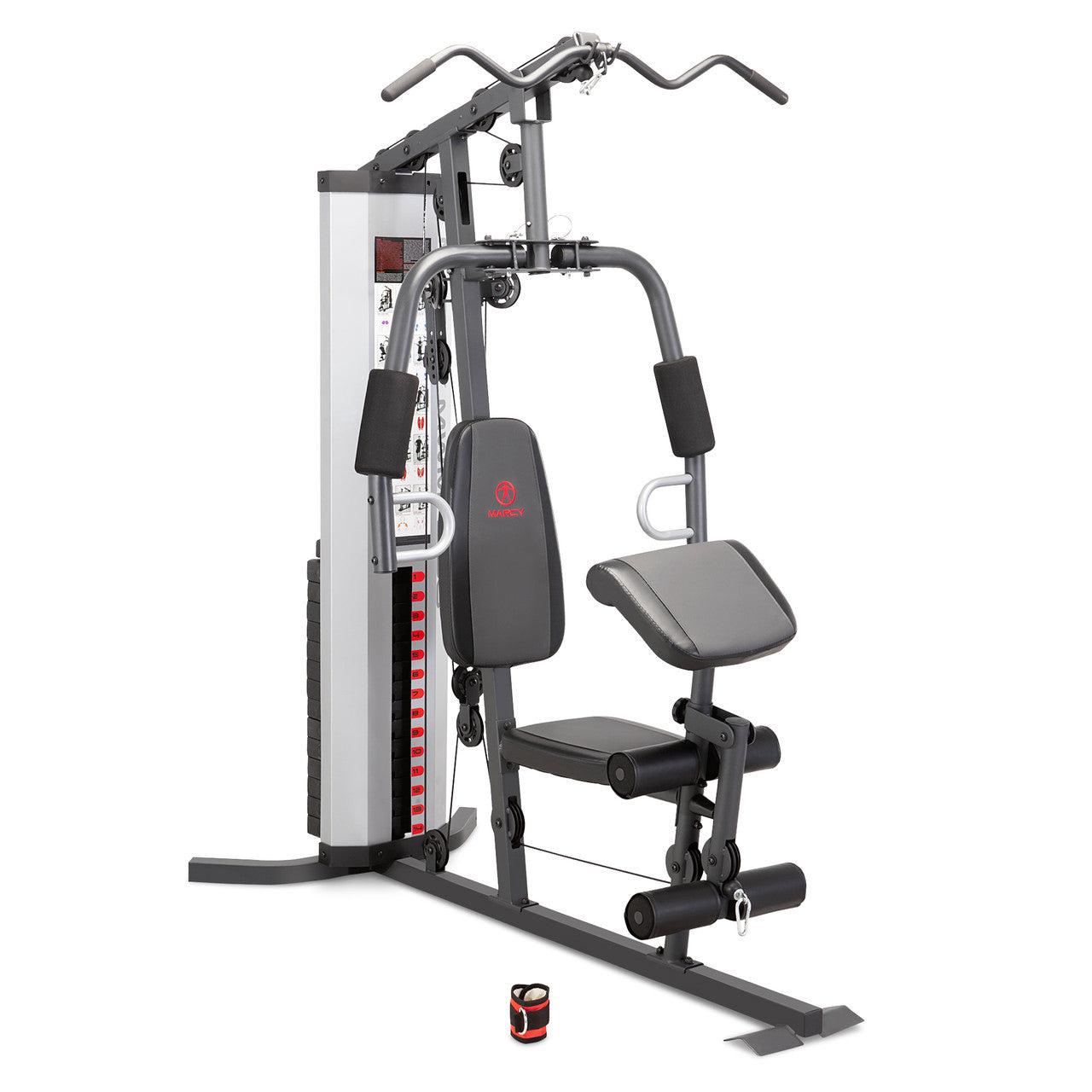
Marcy Lat Pulldown Machine
Best Budget Pick: The Marcy dual-station (lat pulldown + low row) is the entry-level answer for home gyms with space and budget limits. The 150 lb stack with 2:1 ratio delivers 75 lb effective resistance — adequate for beginners, limiting for intermediate athletes within 12–18 months.
Top picks ↓| Product | Price | Link |
|---|---|---|
| $350Reference price | ||
| $500Reference price | ||
| $300Reference price | ||
| $800Reference price | No partner store here — this opens an Amazon search. | |
| $700Reference price |
| Product | Weight stack | Pulley ratio | Stations | Footprint | Price range | Pulley system | Frame | Best for | Cable positions | Weight stacks | Ceiling required | Accessories |
|---|---|---|---|---|---|---|---|---|---|---|---|---|
| Marcy Lat Pulldown Machine | 150 lb | 2:1 (~75 lb effective) | Lat pulldown + low cable row | ~4x4 ft | ~$350–450 | — | — | — | — | — | — | — |
| Body-Solid Lat Pulldown Machine | 200+ lb | — | — | — | ~$500–700 | Dual pulley | Heavy-gauge steel | Primary training tool | — | — | — | — |
| Valor Fitness CB-12 Cable Station | 150 lb | 2:1 (~75 lb effective) | — | ~3x3 ft | ~$300–400 | — | — | — | High and low | — | — | — |
| Force USA Functional Trainer | — | 2:1 (~75–100 lb per arm) | — | ~4x6 ft | ~$800–1,200 | — | — | — | Height-adjustable, floor to overhead | 150–200 lb dual independent | — | — |
| Titan Fitness Functional Trainer | — | — | — | — | ~$700–1,000 | — | — | — | Height-adjustable | Dual independent | 8 ft minimum | More options than Force USA |
Top picks
Related articles
.png?v=1640040616)


Dual station (lat pulldown + low row), 150 lb stack, 2:1 pulley ratio (~75 lb effective). $350-450. Budget dedicated lat pulldown — correct for entry-level home gym. Compact footprint. Limited to vertical pull and row movements.
The Marcy dual-station (lat pulldown + low row) is the entry-level answer for home gyms with space and budget limits. The 150 lb stack with 2:1 ratio delivers 75 lb effective resistance — adequate for beginners, limiting for intermediate athletes within 12–18 months. Compact footprint (~4x4 ft) is a genuine advantage. Cable tolerances are acceptable at moderate loads but show noise at maximum stack.
Pros
- ✓Dual lat pulldown + low row stations
- ✓Compact footprint for small spaces
- ✓Affordable entry point under $450
Cons
- ✗75 lb effective resistance limits long-term progression
Score breakdown
| Weight stack | 150 lb |
| Pulley ratio | 2:1 (~75 lb effective) |
| Stations | Lat pulldown + low cable row |
| Footprint | ~4x4 ft |
| Price range | ~$350–450 |
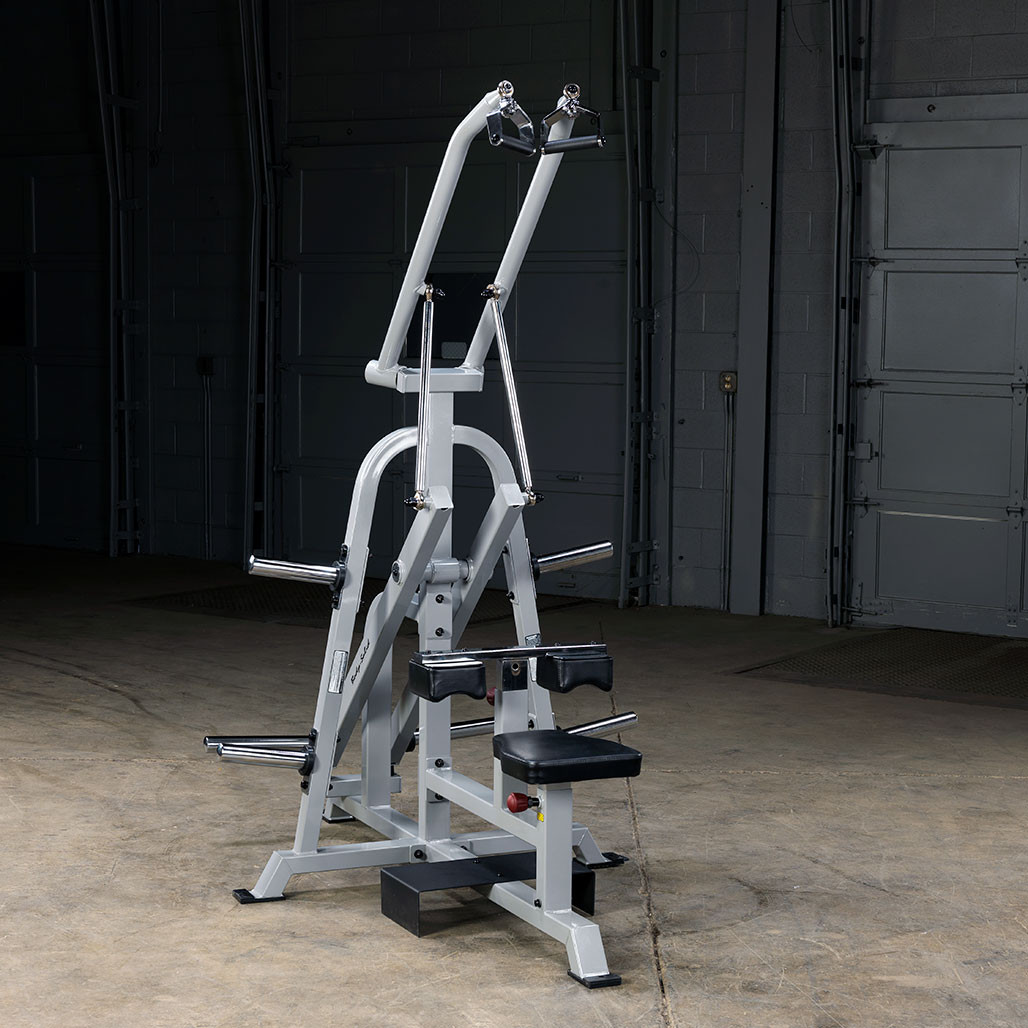
Heavy-gauge steel, 200+ lb stacks available, dual pulley system. $500-700. Best dedicated lat pulldown machine — commercial feel, better cable quality, heavier stack. Worth premium for athletes using lat pulldown as primary training tool.
Body-Solid's heavy-gauge steel construction and 200+ lb stacks put it at a commercial gym feel in a home setting. The dual pulley system enables lat pulldowns and seated rows without repositioning. At $500–700 the premium over Marcy is justified for athletes who use lat pulldowns as a primary training tool and will push the resistance ceiling within a year.
Pros
- ✓Heavy-gauge steel feels commercial-grade
- ✓200+ lb stacks available
- ✓Better cable quality than budget alternatives
Cons
- ✗Premium price not warranted for casual or beginner users
Score breakdown
| Weight stack | 200+ lb |
| Pulley system | Dual pulley |
| Frame | Heavy-gauge steel |
| Best for | Primary training tool |
| Price range | ~$500–700 |

150 lb stack, compact 3x3 ft footprint, high and low cable positions. $300-400. Most space-efficient lat pulldown — lowest cost purpose-built option. Adequate for beginner to early intermediate. 75 lb effective resistance limits long-term use for stronger athletes.
The Valor CB-12 packs into a 3x3 ft footprint — the smallest purpose-built lat pulldown available at this price. The 150 lb stack at 2:1 ratio matches the Marcy's effective resistance, but the CB-12 is lighter construction. Cable noise develops over time under heavy loads. Right pick for athletes where square footage is the hard constraint.
Pros
- ✓3x3 ft footprint — smallest in category
- ✓Lowest cost purpose-built option
- ✓High and low cable positions included
Cons
- ✗Lighter construction than Body-Solid
- ✗Cable vibration at maximum load
Score breakdown
| Weight stack | 150 lb |
| Pulley ratio | 2:1 (~75 lb effective) |
| Footprint | ~3x3 ft |
| Cable positions | High and low |
| Price range | ~$300–400 |
Subscribe to our newsletter
Occasional updates and new releases — no spam.

Dual independent stacks, height-adjustable cables, 2:1 ratio, 150-200 lb stacks. $800-1,200. Best functional trainer for home gym — full cable exercise library, replaces multiple machines. Better warranty and support than comparable competitors.
Force USA's dual independent stacks with height-adjustable cables replace a lat pulldown, cable crossover, and cable row machine in one footprint. The 2:1 ratio on 150–200 lb stacks yields 75–100 lb per arm — enough for most intermediate athletes. Better warranty and customer support than Titan at comparable price points. Requires 8 ft ceiling clearance for full overhead work.
Pros
- ✓Full cable exercise library from one machine
- ✓Dual independent stacks for unilateral work
- ✓Better warranty than comparable competitors
Cons
- ✗Requires 8 ft ceiling for overhead cable work
Score breakdown
| Weight stacks | 150–200 lb dual independent |
| Pulley ratio | 2:1 (~75–100 lb per arm) |
| Cable positions | Height-adjustable, floor to overhead |
| Footprint | ~4x6 ft |
| Price range | ~$800–1,200 |
No partner store here — this opens an Amazon search.
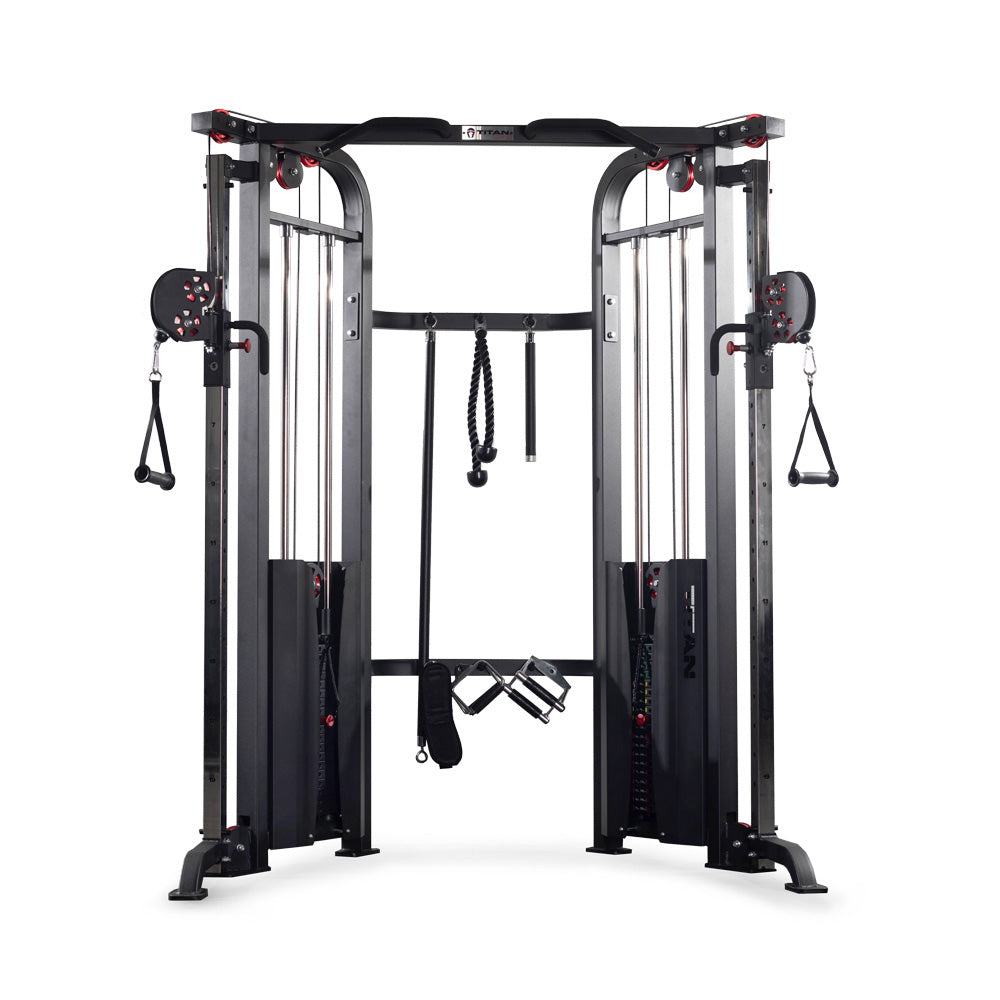
Full functional trainer, adjustable cable heights, dual independent stacks. $700-1,000. Titan alternative to Force USA — more accessory options, comparable build quality. Requires 8 ft ceiling. Correct if you want all cable exercises from one machine.
Titan's functional trainer offers more accessory options than Force USA, with adjustable cable heights and dual independent stacks. Build quality sits slightly below Force USA's fit and finish but the frame is structurally adequate for rated loads. More exercise flexibility through accessories justifies the choice for athletes who want to customize their cable exercise library. Same 8 ft ceiling requirement.
Pros
- ✓More accessory options than Force USA
- ✓Dual independent adjustable cable stacks
- ✓Full cable crossover exercise library
Cons
- ✗Requires 8 ft ceiling height
- ✗Fit and finish slightly below Force USA
Score breakdown
| Weight stacks | Dual independent |
| Cable positions | Height-adjustable |
| Ceiling required | 8 ft minimum |
| Accessories | More options than Force USA |
| Price range | ~$700–1,000 |
Which one is right for you?
For entry-level home gym
Marcy Lat Pulldown Machine
Dual station at a compact footprint and under $450 covers lat pulldown and row for beginners
For serious lat training
Body-Solid Lat Pulldown Machine
200+ lb stack with commercial build quality handles years of progressive overload
For tight spaces
Valor Fitness CB-12 Cable Station
3x3 ft footprint is the smallest purpose-built lat pulldown at this price point
For full cable versatility
Force USA Functional Trainer
Replaces multiple cable machines with a single unit and better warranty support
For accessory variety
Titan Fitness Functional Trainer
More attachment options than any competitor at this price makes exercise variety easy
Why cable machines feel different from free weights and bands
Cable machines provide constant tension throughout the full range of motion. In a lat pulldown with free weights, the resistance curve changes based on lever arm — there's less tension at the top and bottom of the movement. Cable resistance remains consistent from the starting position to full contraction. This constant tension increases time under tension per rep and makes isolation exercises (tricep pushdowns, face pulls, cable flyes) more effective because the muscle is never unloaded.
Pulley ratio is the key specification that many buyers overlook: a 2:1 pulley ratio means you're actually lifting half the weight shown on the stack. A machine with a 200 lb stack and 2:1 ratio allows a maximum of 100 lb of actual resistance per side. Most home gym lat pulldown machines use 1:1 or 2:1 ratio. Functional trainers often use 2:1 ratio (so a 150 lb stack produces 75 lb actual resistance per arm). Verify the actual resistance range before purchasing based on your current pulling strength.
The practical test: can the machine be loaded heavy enough that you'll challenge yourself for the next few years? For lat pulldowns, most intermediate athletes need 100-140 lb of actual resistance. Beginners need 50-80 lb. If you're currently doing 5-8 pull-ups, you'll need the upper end of this range within 12-18 months of consistent training.
Marcy and Body-Solid: dedicated lat pulldown machines
Marcy Lat Pulldown and Low Row Cable Machine ($350-450) is a dedicated two-station machine: seated lat pulldown on top, low cable row at the bottom with a foot platform. 150 lb weight stack with 2:1 pulley ratio — providing up to 75 lb actual resistance. Adjustable seat height and knee pad. The lat bar is standard attachment; the cable terminates at a hook for accessories.
Body-Solid Lat Pulldown Machine (various models, $400-700) is the more robustly constructed option — heavier-gauge steel, 200+ lb weight stacks available, tighter cable tolerances. The Body-Solid Pro Lat Machine includes a dual pulley system for seated row without repositioning. At $500-700 it's significantly more expensive than Marcy but provides better cable quality, heavier stack, and a more commercial feel. For home gym athletes who will use a lat pulldown machine as a primary training tool (not just supplementary), the Body-Solid build quality is worth the premium.
Dedicated lat pulldown machines (Marcy, Body-Solid) are the correct choice for home gyms where the lat pulldown is the primary cable exercise and space is limited. These machines have a minimal footprint — roughly 4x4 feet — and do one thing well. The downside is limited exercise variety: you can do lat pulldowns, cable rows, tricep pushdowns, and cable curls. Exercises requiring adjustable height cable positions (cable flyes, face pulls, woodchops) require a functional trainer instead.
Valor Fitness CB-12: compact cable station
Valor Fitness CB-12 Lat Pulldown and Low Row Machine ($300-400) is a compact cable station with 150 lb weight stack, foam roller knee pad, and dual cable positions (high and low). The CB-12 is the most space-efficient option at roughly 3x3 feet floor space. Cable quality and pulley tolerance are acceptable for the price — smooth at moderate loads, some cable vibration at maximum stack.
The CB-12 is the correct budget option for home gym athletes who primarily need lat pulldowns and cable rows without the space or budget for a full functional trainer. At $300-400 it's the lowest-cost purpose-built lat pulldown machine that provides adequate resistance range for beginner to early-intermediate lifters. Maximum 75 lb effective resistance limits long-term utility for stronger athletes.
Valor's build quality is the trade-off: the CB-12 is lighter construction than Body-Solid and the weight stack guide rods can develop noise over time. For home gym use with 3-5 sessions per week this is acceptable; for heavier daily use, the Body-Solid construction holds up better.
Force USA and Titan Fitness: functional trainers
Force USA MyRack Functional Trainer ($800-1,200) and Titan Fitness Functional Trainer ($700-1,000) are full functional trainers — two independent weight stacks with cable pulleys that adjust to multiple heights on both sides. This design enables the full range of cable exercises: cable flyes at any height, face pulls, diagonal woodchops, single-arm cable exercises, and bilateral movements. Both machines use 2:1 pulley ratio with 150-200 lb stacks, providing 75-100 lb actual resistance per arm.
The functional trainer's advantage is exercise versatility — one machine replaces a dedicated lat pulldown plus a cable crossover plus a cable row machine. The footprint is larger than a dedicated lat pulldown (roughly 4x6 feet) but replaces multiple machines. For home gyms building a complete training setup, a single functional trainer is more space-efficient than multiple single-function cable machines.
Force USA and Titan Fitness are comparable in quality at similar price points. Force USA has a better warranty and customer service reputation; Titan Fitness has more accessory options. Both require ceiling height of approximately 8 feet for full overhead cable work. Either is the correct purchase for home gym athletes who want the full range of cable exercise options from one machine.
Frequently asked questions
What's the difference between a lat pulldown machine and a functional trainer?▼
How do lat pulldowns compare to pull-ups for back development?▼
What attachments do you need with a lat pulldown machine?▼
Prices change. Check the retailer for the current price.
Comments & questions
Discussion happens on nattzy, our community forum. Sign in with Google to post — it takes a second.