Best Travel Neck Pillow 2026: 5 Compared
A good neck pillow is the difference between landing functional and landing stiff. Density and size matching your body type matter more than brand or feature count.
Quick answer
Density and size matched to your body matter far more than brand or feature count. The Cabeau Evolution S3 is the best all-rounder for long-haul economy, with memory foam and headrest clips covering both lateral lean and moderate forward tilt. The Trtl weighs 145 g and rolls to pocket size, which makes it the window-seat one-bagger's pick. BCozzy's chin cradle solves the forward head drop that U-shapes leave unaddressed, Tempur is the premium checked-bag option, and Lewis N. Clark covers short flights cheaply.
We assessed each option on coverage breadth, real-traveler review consistency, value vs alternatives, customer service responsiveness, and limitations buried in fine print.
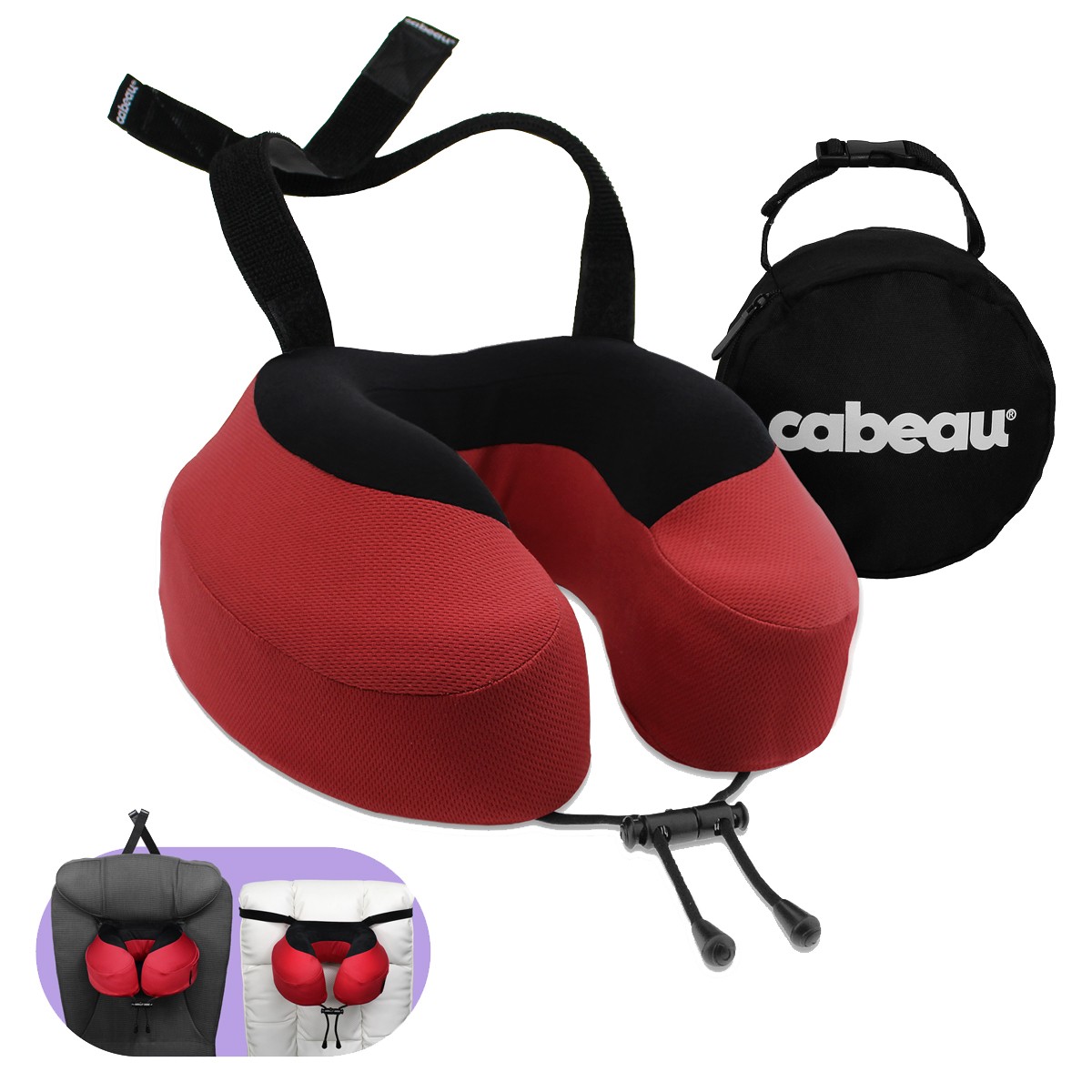
Cabeau Evolution S3 Travel Neck Pillow
Best All-Rounder: The Cabeau Evolution S3 is the best general-purpose pick for travelers who don't want to overthink it. Memory foam conforms to your neck geometry from the moment you put it on — no inflation, no setup, no mid-flight adjustment.
Top picks ↓| Product | Price | Link |
|---|---|---|
| $39.99Reference price | ||
| $74.99Reference price | ||
| $49.95Reference price | ||
| — | ||
| $9.99〜$24.99Reference price |
Top picks
Related articles
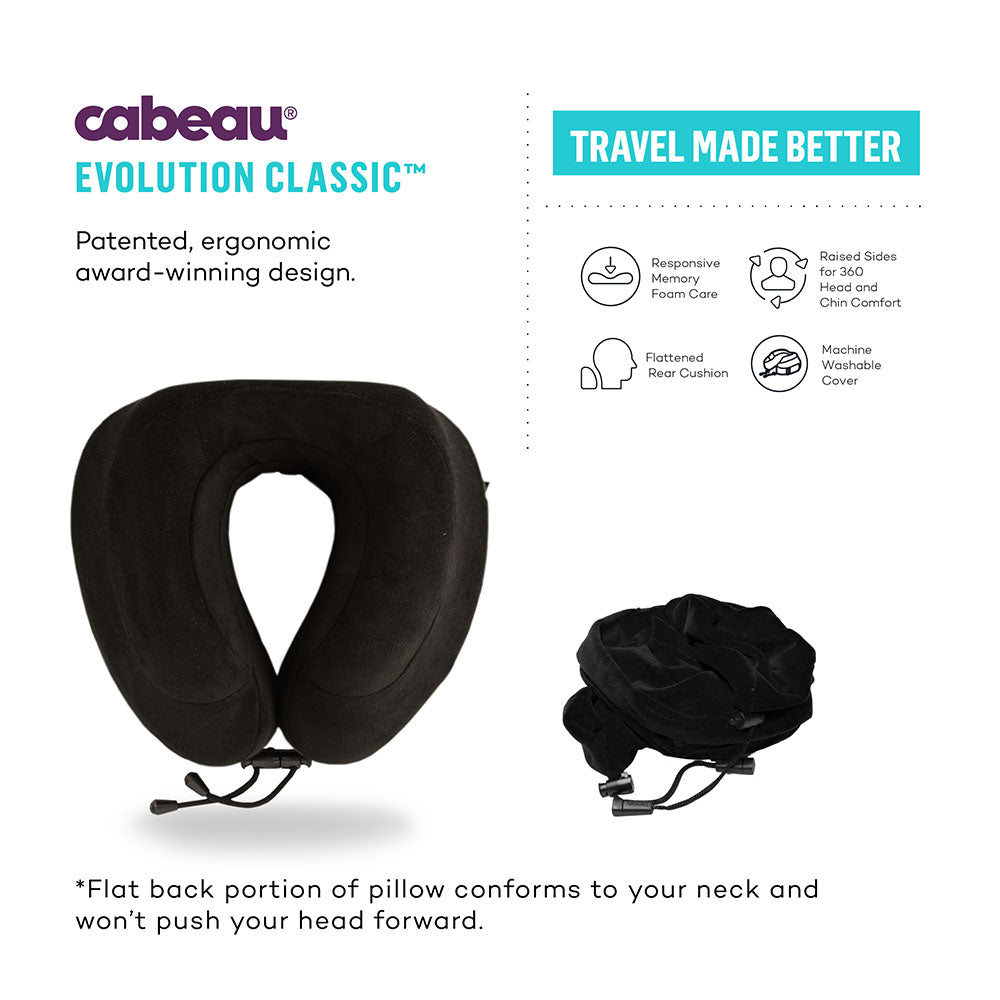

Best all-rounder — memory foam with headrest anchor clips, velour removable cover, compresses to roughly 13 × 13 × 8 cm. Works for lateral lean and moderate forward tilt. Clips require an adjustable headrest to function properly; compressed size is larger than the Trtl.
The Cabeau Evolution S3 is the best general-purpose pick for travelers who don't want to overthink it. Memory foam conforms to your neck geometry from the moment you put it on — no inflation, no setup, no mid-flight adjustment. The defining feature is the headrest anchor clips, which attach the pillow to a seat's headrest wings or pillars so your head doesn't roll away from window-side support while you sleep. The velour cover zips off for machine washing, and the included compression bag squashes the pillow down to roughly 13 × 13 × 8 cm — smaller than most foam alternatives. The honest limitation: the anchor clips need an adjustable headrest to work properly, which most economy seats lack, and it still doesn't compress to Trtl pack-size.
Pros
- ✓Memory foam holds neck position without adjustment
- ✓Headrest anchor clips prevent head-roll during sleep
- ✓Velour cover zips off for machine washing
- ✓Compression bag reduces to ~13 × 13 × 8 cm for packing
Cons
- ✗Anchor clips need adjustable headrests that most economy seats lack
- ✗Compressed size still larger than the Trtl or inflatable options

Best for window-seat travelers who value pack size — rigid scaffold in fleece scarf, 145 g, rolls to jacket-pocket size. Genuine one-sided lateral support. Only works leaning one direction; switching sides mid-flight requires re-wrapping and wakes you up.
The Trtl is the pack-size winner of this comparison and the right pick for window-seat travelers who value bag space above all else. A rigid internal scaffold is sewn into a fleece scarf that wraps around your neck and locks via the fleece itself — once secured, it provides genuine one-sided lateral support at the right height for most adults. At 145 grams and rolling to roughly the size of a large sock, it slips into a jacket pocket where nothing else here fits. The fleece cover is machine-washable after removing the scaffold insert. The honest limitation: it only supports leaning in one direction, so switching sides mid-flight means re-wrapping the scarf and waking yourself up, and the rigid insert can leave pressure marks on ultra-long flights.
Pros
- ✓145 g — lightest pillow here, fits in a jacket pocket
- ✓Rigid scaffold provides one-sided lateral neck support
- ✓Fleece cover is machine-washable when scaffold is removed
- ✓Doubles as a scarf for cold cabins
Cons
- ✗Supports leaning in only one direction at a time
- ✗Rigid insert can leave pressure marks on ultra-long flights
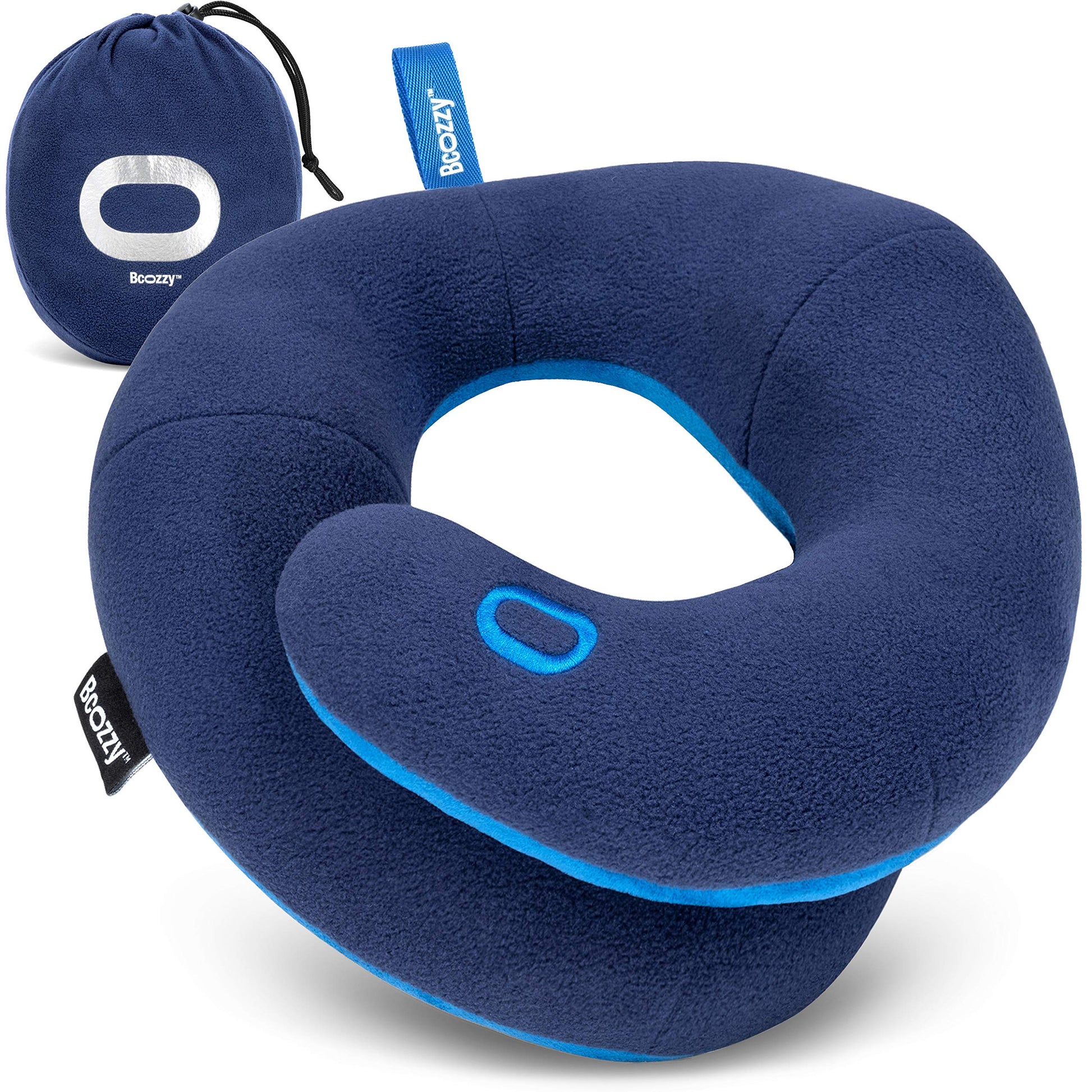
BCozzy Adult Chin Supporting Travel Pillow
Best for upright middle/aisle-seat sleepers who struggle with forward head drop — chin-support channel at the front of the U-shape cradles the chin rather than letting it drop. More compressible than memory foam. Chin support becomes awkward for lateral lean positions.
The BCozzy is built around a specific problem that standard U-shape pillows don't solve: forward head drop. On upright economy seats — typical middle and aisle positions where the seatback doesn't recline enough to fully support the head — the chin tilts down, eventually pulling the head forward and waking you up. The BCozzy's U-shape curves forward at the base so the chin rests in a cradle rather than dropping freely. It's more compressible than memory foam alternatives, with a removable machine-washable cover, and it works for travelers who've tried standard neck pillows without success. The honest limitation: the chin support gets in the way for lateral-lean positions, and support quality depends on how you position the pillow.
Pros
- ✓Chin-support cradle prevents forward head drop on upright seats
- ✓Compressible to roughly large-apple volume for packing
- ✓Removable cover is machine-washable
- ✓Better than standard U-shape for middle and aisle seats
Cons
- ✗Chin support gets in the way of lateral-lean sleeping
- ✗Support quality varies with how you position the pillow
Subscribe to our newsletter
Occasional updates and new releases — no spam.

Premium slow-rebound foam with best support quality in this comparison — machine-washable cover, TEMPUR conformity holds position through long flights. Does not compress; only practical for travelers who check luggage. The priciest option here, hard to justify unless comfort is the primary concern.
The Tempur Travel Neck Pillow is the premium pick for travelers who check luggage and want the best possible support quality without compromise. TEMPUR slow-rebound foam conforms to your neck geometry and holds position through long flights with a stability that bouncier memory foams can't match — the same technology that built TEMPUR's mattress reputation translates directly to travel use. The cover is removable and machine-washable, which matters at this price tier. The honest limitation: it doesn't compress meaningfully. At roughly 28 × 28 × 12 cm full-size, it occupies real bag space, which is why it only makes practical sense if you check luggage. It's the most expensive option here.
Pros
- ✓TEMPUR slow-rebound foam holds position through long flights
- ✓Highest support quality of any pillow in this comparison
- ✓Removable machine-washable cover at premium price tier
- ✓Durable construction outlasts cheaper foam alternatives
Cons
- ✗Does not compress — full ~28 × 28 × 12 cm in your bag
- ✗The highest price in this comparison
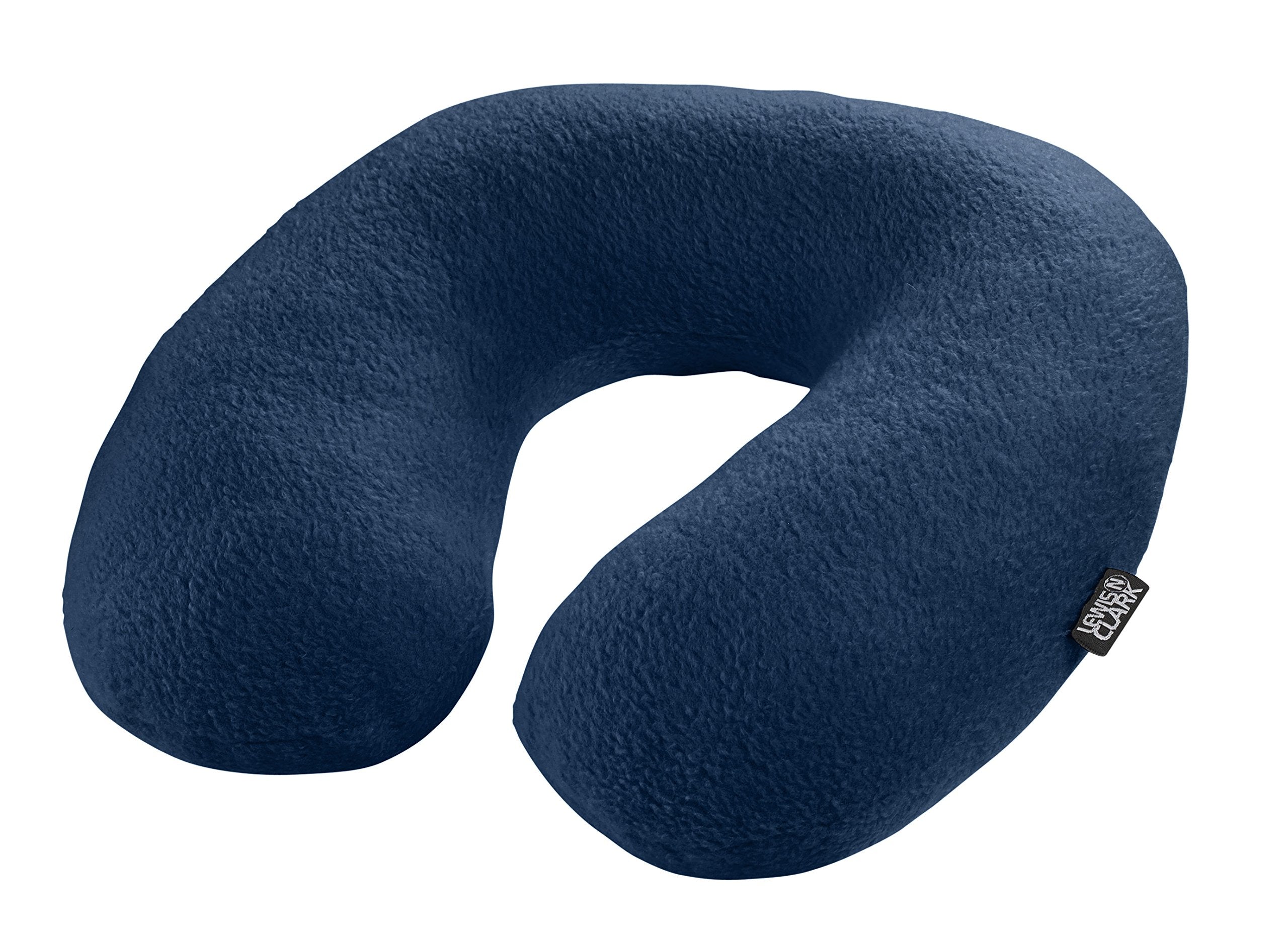
Budget utility pick — inflatable, folds to wallet size, weighs under 100 g. Adequate for flights under 6 hours. Valve reliability degrades over time; support quality below memory foam; right for occasional travelers who need something functional and cheap.
The Lewis N. Clark inflatable is the budget utility pick — inexpensive, fits anywhere, works adequately for flights under six hours. Deflated, it folds to wallet size and weighs under 100 grams, which means it slides into a jeans pocket and doesn't compete with anything else in your carry-on for space. Inflated, it provides reasonable support for short-to-medium routes. The fabric cover can be hand-washed and air-dried. The honest limitation: inflatable support quality is below memory foam — there's a slight give and bounce that becomes noticeable after three hours, the inflation valve is a single point of failure that eventually leaks, and it's not the right tool for a 14-hour transpacific route.
Pros
- ✓Under 100 g and folds to wallet size when deflated
- ✓The lowest price in this comparison
- ✓Adjustable inflation lets you tune firmness
- ✓Fits in a jeans pocket — no carry-on space used
Cons
- ✗Inflation valve eventually leaks with repeated use
- ✗Support quality below memory foam on flights over 6 hours
Which one is right for you?
For most long-haul economy travelers
Cabeau Evolution S3 Travel Neck Pillow
Memory foam with headrest anchor clips covers both lateral lean and moderate forward tilt on most seat types.
For window-seat one-baggers
Trtl Travel Pillow
145 g and rolls to jacket-pocket size — the only pillow here that fits where nothing else does.
For upright sleepers on middle/aisle seats
BCozzy Adult Chin Supporting Travel Pillow
The forward chin-support cradle solves head-drop that standard U-shapes leave unaddressed.
For checked-bag travelers chasing comfort
Tempur-Pedic Travel Neck Pillow
TEMPUR slow-rebound foam holds position through 12+ hour flights when packability isn't a constraint.
For occasional short-haul travelers
Lewis N. Clark Comfort Neck Pillow
Budget inflatable folds to wallet size — adequate for flights under 6 hours.
Memory foam vs inflatable vs wrap-style: what you're actually choosing between
Memory foam U-shape pillows (Cabeau, Tempur) give you consistent support from the moment you put them on — no inflation, no setup, no adjustment mid-sleep. The foam conforms to your neck geometry and holds position. The trade-off is pack size: a standard memory foam neck pillow compresses to about the size of a paperback book at best, and the Tempur doesn't compress at all. If you're carrying on only, memory foam pillows take up real estate in your bag that a T-shirt could occupy.
Inflatable pillows (Lewis N. Clark) solve the pack problem. Deflated, they fold to wallet size and weigh under 100 grams. Inflated, they provide reasonable support for short-to-medium flights. The honest limitation: inflatable pillows feel different from foam — there's a slight give and bounce that some travelers find comfortable and others find annoying after three hours. Support quality is lower than memory foam, and the inflation valve is a single point of failure that eventually leaks.
Wrap-style pillows (Trtl) are a distinct category that looks nothing like the others. A rigid internal plastic scaffold is sewn into a fleece scarf that wraps around the neck. The scaffold provides one-sided lateral support — you lean your head against it the way you'd lean against a window. This makes the Trtl the best option for window-seat sleepers who want to lean sideways rather than tilt forward. The limitation is that it only works leaning one direction; switching sides requires re-wrapping the scarf, which wakes you up.
Neck support angle: the question most pillow reviews don't address
Most travelers sleep in one of three positions: forward tilt (chin toward chest on an upright seat), lateral lean (head against window or headrest wing), or some unstable combination of both. The right pillow depends on which position you're actually targeting.
Forward tilt sleepers on upright seats need chin support, not just neck support. A standard U-shape memory foam pillow holds the neck but lets the chin drop, which eventually pulls the head forward and wakes you up. The BCozzy's chin-support channel at the front specifically addresses this — the U-shape curves forward at the base so the chin rests in a cradle rather than dropping freely. For middle and aisle seat travelers who sleep sitting relatively upright, the BCozzy's design is more effective than a standard U-shape.
Lateral lean sleepers need one-sided support rather than bilateral U-shape support. The Trtl's rigid scaffold provides genuine lateral support at the right height for most adults. The Cabeau Evolution S3 addresses lateral lean differently: the headrest anchor clips attach the pillow to the seat's headrest wings or pillars, which prevents the head from rolling away from the window-side support. On seats with adjustable headrest wings (most international business and premium economy seats), the Cabeau clips work well. On economy seats with fixed headrests, the clips have less to grip.
Pack size and weight: what actually fits in your carry-on
The Trtl is the pack-size winner at 145 grams and rolling to roughly the size of a large sock. If pack space is the constraint — you're a one-bag carry-on traveler with every cubic centimeter accounted for — the Trtl fits where nothing else does. The BCozzy is compressible down to about the volume of a large apple, lighter than memory foam alternatives. The Lewis N. Clark inflatable, when deflated and folded, fits in a jeans pocket.
The Cabeau Evolution S3 compresses reasonably for memory foam, reaching about 13 × 13 × 8 cm with its included compression bag. That's smaller than many foam pillows but still noticeably larger than the Trtl or a deflated inflatable. The Tempur is the outlier: it doesn't compress meaningfully. You're fitting it in your bag full-size or you're gate-checking it. At roughly 28 × 28 × 12 cm, it occupies meaningful bag space, which is why the Tempur only makes practical sense for travelers who check luggage.
Weight matters less than volume for most travelers, but if you're on a route with a strict carry-on weight limit (common on Asian carriers), the difference between the Trtl at 145 g and the Tempur at 700 g adds up alongside other gear. For most long-haul economy travelers, the Cabeau or BCozzy hits the right balance: better support than the Trtl, meaningfully more packable than the Tempur.
Machine washability: a practical concern most reviews skip
A neck pillow sits against your face and neck for hours. The cover gets oily, collects hair product residue, and absorbs the general atmosphere of an airplane cabin. Washability matters for anyone who uses their pillow more than a few times per year.
The Trtl fleece cover is machine-washable after removing the rigid scaffold insert. The Cabeau Evolution S3's velour cover zips off and is machine-washable. The BCozzy's cover is removable and machine-washable. The Lewis N. Clark inflatable pillow with its fabric cover can be hand-washed and air-dried; the inflation mechanism should not be submerged. The Tempur's cover is removable and machine-washable, which is notable given the premium price — you're not stuck hand-washing a flagship-priced pillow cover.
The practical recommendation: if you travel more than once a month, prioritize a pillow with a removable machine-washable cover. The Cabeau, BCozzy, and Tempur all meet this standard; the Trtl and Lewis N. Clark require more care but can be kept clean with some effort.
Where each fits
The Cabeau Evolution S3 is the best general-purpose choice for travelers who don't want to overthink it. Memory foam, reasonable compression, headrest anchor clips, washable cover. It works on most seat types, suits both lateral lean and moderate forward tilt, and the anchor system adds security that a loose U-shape can't match. The honest limitation: it's not the cheapest option; the anchor clips require an adjustable headrest to work properly; the compressed size is larger than the Trtl.
The Trtl is for window-seat travelers who value pack size above all else. If you always take the window seat, always lean against the fuselage wall or the seat wing, and want a pillow that fits in your jacket pocket, the Trtl is designed exactly for your use pattern. The honest limitation: you only get support leaning one direction; re-wrapping mid-flight wakes you; the rigid insert can leave pressure marks on ultra-long flights.
The BCozzy is for upright sleepers on middle and aisle seats who struggle with their chin dropping. The chin-support design addresses a specific problem that standard U-shapes don't solve. If you've tried standard neck pillows and still wake up with a stiff neck from forward head drop, the BCozzy is worth trying. The honest limitation: the chin support gets in the way when you try to lean sideways; support quality depends on how you position the pillow.
The Tempur is the premium pick for travelers who check luggage and want maximum support quality without compromise. TEMPUR foam has the best slow-rebound conformity of any material in this category. The honest limitation: it doesn't compress; it's the most expensive option; it only makes sense if you check a bag.
The Lewis N. Clark is the budget utility pick — inexpensive, fits anywhere, works adequately for flights under six hours. The honest limitation: inflatable support quality is below memory foam; the valve will eventually leak; it doesn't replace a good foam pillow for longer routes.
Verdict
For most economy-class travelers on flights of 6–14 hours, the Cabeau Evolution S3 is the right balance of support, pack size, and durability. The headrest anchor clips genuinely prevent the common problem of a loose U-shape pillow shifting while you sleep, and the velour cover is comfortable on bare skin.
If your constraint is pack space, the Trtl is the answer. If your problem is forward head drop on upright seats, try the BCozzy. If you check luggage and want the best possible support, the Tempur is worth the price. The Lewis N. Clark is the right choice when you need something functional and inexpensive.
Frequently asked questions
What's the difference between a neck pillow and a travel pillow?▼
Do neck pillows actually work for sleeping on planes?▼
Can I bring a neck pillow through airport security?▼
Are memory foam neck pillows worth the extra price over inflatable ones?▼
What neck pillow is best for tall people?▼
Prices change. Check the retailer for the current price.
Comments & questions
Discussion happens on nattzy, our community forum. Sign in with Google to post — it takes a second.