Best Belt Bags for Travel 2026: 5 Packs Compared
WriterPickly Editorial
Updated 2026-06-12
The best travel belt bag is the one you actually wear — not the one that sits in the closet because it's too stiff, too small, or digs into your hip after an hour of walking. Belt bags and small slings have replaced the bulky daypack for urban exploration, and the market now spans $38 athletic bags to $90 technical hiking slings. The five here cover different use cases honestly: the casual city walker, the active hiker, the security-conscious traveler, and the minimalist who wants to carry as little as possible.
Quick answer
The best travel belt bag is the one you actually wear, so comfort over a full walking day beats capacity on a spec sheet. The market now spans $38 athletic bags to $90 technical hiking slings, and the five here split cleanly by use case: the casual city walker, the active hiker, the security-conscious traveler wanting slash resistance and hidden pockets, and the minimalist carrying as little as possible. Strap comfort and how the bag sits against your hip decide whether it leaves the closet.
📋How we compared
Each belt bag and sling was evaluated for capacity versus stated volume, strap comfort over 4+ hour carry, organization quality, weather resistance, construction durability, and value against comparable alternatives in the same price range.

Best Overall: The Everywhere Belt Bag became a cultural phenomenon for a reason: it's 1L of genuinely well-designed storage in a package light enough that you forget it's there. The water-repellent ripstop fabric handles rain, the zipper is smooth after heavy use, and the strap adjusts cleanly for waist or crossbody wear.
Top picks ↓Related articles


1★ Best PickA+Best OverallLululemon Everywhere Belt Bag 1L
The Everywhere Belt Bag became a cultural phenomenon for a reason: it's 1L of genuinely well-designed storage in a package light enough that you forget it's there. The water-repellent ripstop fabric handles rain, the zipper is smooth after heavy use, and the strap adjusts cleanly for waist or crossbody wear. It's not the most organized bag on this list — one main compartment plus a front pocket — but that simplicity is the point. For travelers who want essentials accessible without bulk, this is the answer at $38.
Pros
- ✓Lightest option at 1L — genuinely forget-it-while-wearing
- ✓Water-repellent ripstop holds up to daily use
- ✓Converts between waist and crossbody wear
Cons
- ✗1L only — not for carrying a water bottle
- ✗Limited organization (2 compartments total)
2ABest for Active TravelPatagonia Atom Sling 8L

The Atom Sling 8L is the adult version of the belt bag — it carries enough for a full day out while staying body-close and movement-friendly. The main compartment holds a hydration bladder (sold separately), a light layer, and a full day's snacks. The front organizational panel has card slots, a key clip, and a phone pocket. Recycled nylon fabric with DWR coating. Patagonia's Fair Trade certification and repair program make it worth the $79 for travelers who want gear that lasts years, not seasons.
Pros
- ✓8L capacity — handles full day out with a layer and water
- ✓Organizational front panel with card and key slots
- ✓Patagonia repair program extends lifespan
Cons
- ✗Heavier than belt bags — noticeable on long days
- ✗More expensive than casual alternatives
3ABest for Hiking TravelOsprey Seral 7l
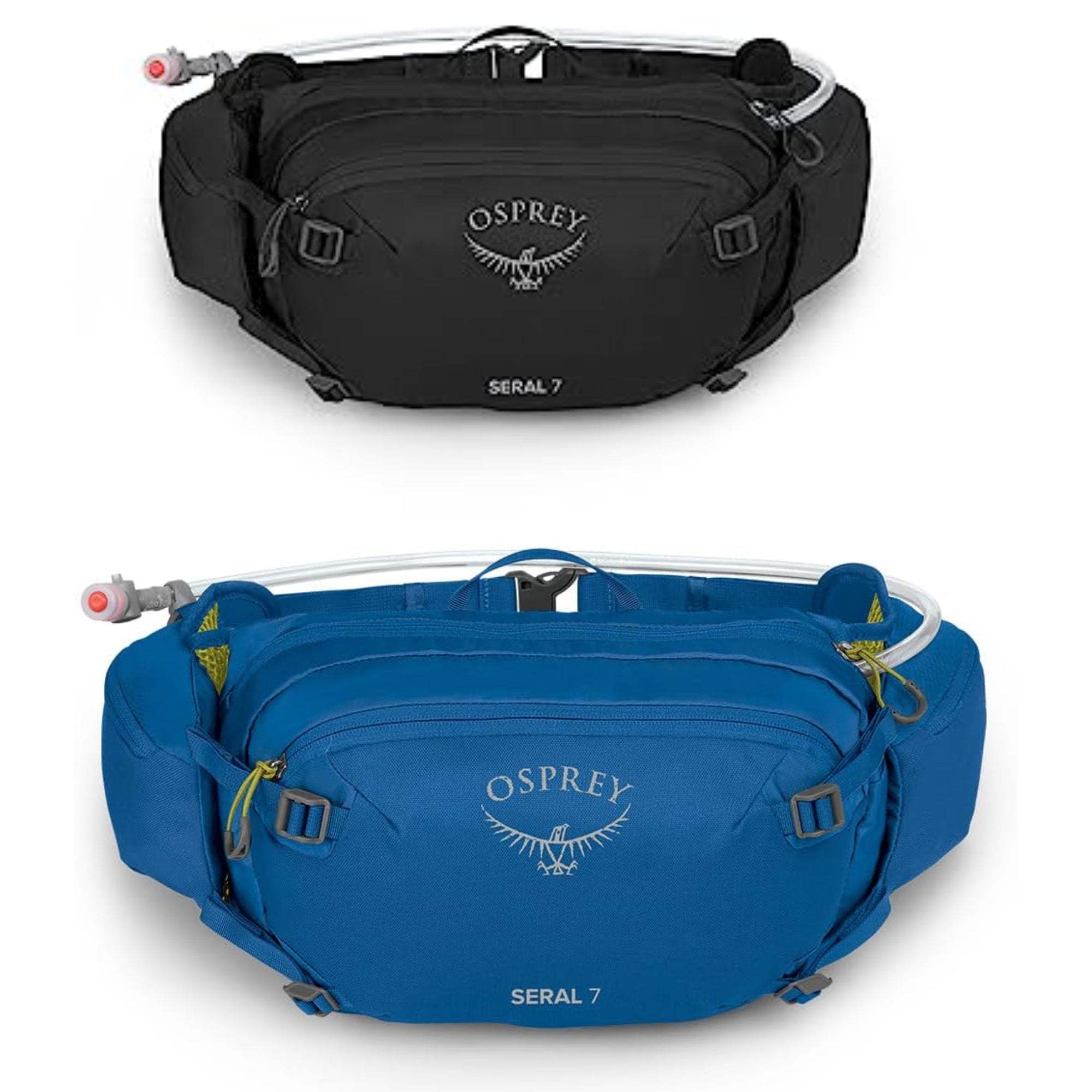
The Osprey Seral 7L is built for trails but works just as well on city streets. The padded back panel and ergonomic sling strap distribute weight better than flat-backed competitors, which matters after hour four of walking. Fits a 1.5L hydration reservoir, has external stretch pockets for quick-access water, and the build quality is typical Osprey — everything is sewn to a standard that assumes the bag will be used hard for years. At $90 it's the priciest option, and the bulk shows.
Pros
- ✓Best load distribution for extended walking
- ✓Hydration-compatible with external bottle pockets
- ✓Osprey lifetime guarantee
Cons
- ✗Bulkier than casual belt bags
- ✗Highest price on this list
Subscribe to our newsletter
Occasional updates and new releases — no spam.
4B+Best LookingFjallraven Ulvo Lumbar Bag

Fjallraven's Ulvö Hip Pack 4L is built from water-resistant Vinylon F fabric — a material that improves with exposure to moisture rather than degrading. At 4L it holds a day's essentials without becoming a sling. The design is minimal and distinctly Scandinavian; it looks as appropriate in a museum as on a hiking path. The strap system is clean and adjustable. At $90 it's priced at the top of this range for a smaller bag, but the build quality and material choice justify it for people who prioritize longevity.
Pros
- ✓Vinylon F fabric — improves with use and moisture
- ✓Clean design works in urban and outdoor settings
- ✓Above-average build quality for the category
Cons
- ✗Highest price-to-capacity ratio here
- ✗4L limits what you can carry
5B+Best Budget PickCotopaxi Bataan 3l

Cotopaxi's Bataan 3L is made from leftover fabric scraps from other production runs — which means every bag has a unique color pattern. At $50 it punches above its price with a padded internal sleeve (fits a 10" tablet or slim laptop), a water-bottle side pocket, and a chest strap for stability on the move. Suitable for city days and light hiking. Not as refined as Osprey or Patagonia, but for travelers who want a distinctive, affordable, practically useful sling, the Bataan delivers.
Pros
- ✓Unique colorway from recycled fabric scraps
- ✓Padded internal sleeve fits a small tablet
- ✓Best value on this list at $50
Cons
- ✗Less refined construction than Osprey or Patagonia
- ✗Smaller brand means harder to find for replacement
How to Choose a Travel Belt Bag
Belt bags and slings serve different purposes despite looking similar. A belt bag sits at the waist and is best for quick-access items; a sling crosses the chest and holds more but moves less naturally. Neither replaces a daypack for a full day out — but for exploring a city, hitting a market, or moving through an airport with your essentials, they beat a backpack completely.
Capacity and Organization
The practical range is 1–8 liters. Under 2L means phone, wallet, and keys only. 4–5L fits a water bottle, a light layer, snacks, and your essentials. Above 6L starts to feel like a small backpack worn differently. Most travelers find 3–5L to be the sweet spot for day use without overthinking what to leave behind.
Security Features
High-foot-traffic tourist areas have pickpocket risk. A bag worn across the chest or kept in front is harder to access without detection than a waist bag worn at the back. Look for zippers that face inward when the bag is positioned, or secondary zip-off pockets for valuables. Full RFID-blocking pockets are increasingly common in travel-focused designs.
Strap Comfort and Adjustability
A bag that works for a 5-minute grocery run may not work for 6 hours of walking. Padded straps, width adjustability, and clean strap routing (no twisting under heat) matter for sustained use. Athletic-focused bags like Lululemon are designed for movement; hiking-specific slings like Osprey are built for load distribution over distance.
Weatherproofing
Travel happens in rain. A water-resistant exterior saves your phone and documents on the days you didn't expect to need an umbrella. True waterproofing is overkill for most travelers; DWR coating or water-resistant fabric handles the realistic scenario of getting caught in a shower.
Bottom line
The Lululemon Everywhere Belt Bag is the most practical choice for most travelers: it's light, stylish enough for city use, comfortable for hours, and available everywhere for easy replacement if lost. For active travel with more gear, the Patagonia Atom Sling or Osprey Seral step up in capacity and durability. Cotopaxi Bataan is the budget-conscious pick that doesn't feel cheap. Fjallraven's Ulvö trades capacity for a distinctive look and above-average build quality.
Frequently asked questions
Belt bag vs. crossbody sling — what's the difference for travel?▼
How do I keep a belt bag from getting stolen while traveling?▼
Can a belt bag go through airport security?▼
What can actually fit in a 1L vs. 4L belt bag?▼
Are belt bags worth it for international travel?▼
Check the details of the products in this article
- Lululemon Everywhere Belt Bag 1L$38〜48Reference price
- Patagonia Atom Sling 8L$79〜89Reference price
- Osprey Seral 7l$99.98Price as of 2026-10-27
- Fjallraven Ulvo Lumbar Bag$90Reference price
- Cotopaxi Bataan 3l$50Reference price
Prices change. Check the retailer for the current price.
Comments & questions
Discussion happens on nattzy, our community forum. Sign in with Google to post — it takes a second.
View the discussion thread on nattzy ↗
Still deciding? Ask the community your own question — Post a question on nattzy ↗