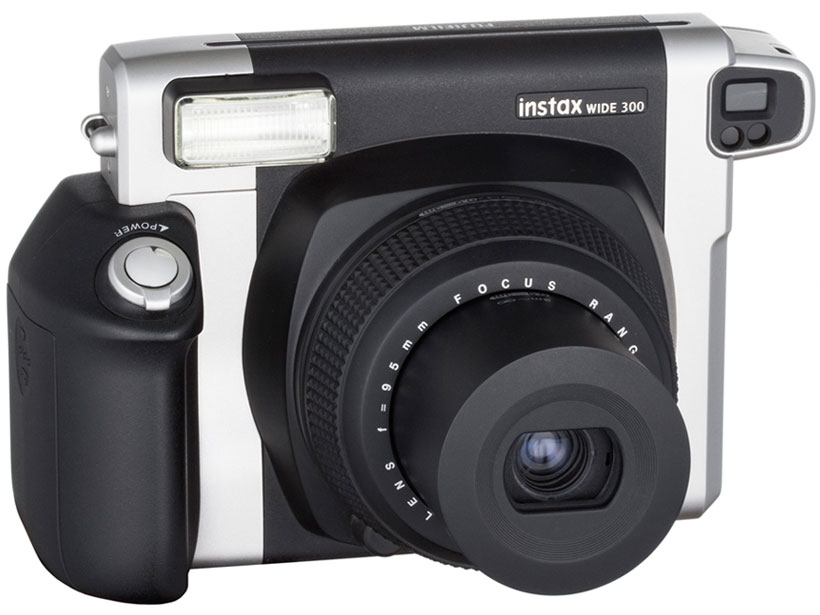
Fujifilm Instax Wide 300
- Categories
- Tech
Wide-format instant camera. 99×62mm Wide film prints (60% larger than Mini), 5-position dial exposure compensation, group and landscape capable, AAA batteries. Explicit weakness: large non-pocketable body, film costs ¥90–¥110/print, dated design, no smartphone connectivity, no close-up mode.
Fujifilm Instax Wide 300 — 99×62mm image area (Wide film format, 60% larger than Mini), five-position dial exposure compensation, group-photo capability, AAA batteries, no smartphone connectivity, mid-range price. the camera body is large and heavy — not pocketable, a bag camera; film cost per print is higher than Mini film; no close-up mode makes arm's-length selfies difficult; the design is visually dated compared to the Mini 12 or Polaroid Now+; no Bluetooth or app features of any kind.
Instax Wide 300 prints are 99×62mm — approximately 60% larger image area than Instax Mini — making it the right choice for group photos, landscapes, and situations where print size matters. The 5-position exposure dial adds manual compensation the Mini 12 lacks. The concrete limitations: large non-pocketable body and no smartphone connectivity.
Pros
- 99×62mm Wide prints — 60% more image area than Instax Mini, right for groups and landscapes
- 5-position exposure compensation dial — manual control the Mini 12 lacks
- Wide film per-print cost competitive with Mini film cost
Cons
- Large non-pocketable body; dated exterior design; no smartphone connectivity; no close-up mode
Score breakdown
Fuji Instax WIDE 300 vs 400 real world review | Which is best?
Related articles
This article contains affiliate links.