Mejores purificadores de aire 2026: 5 modelos
Cinco purificadores.
Respuesta rápida
El mejor purificador de aire para la mayoría de salones es el Levoit Core 400S: cubre unos 90 m², combina un filtro HEPA auténtico con la app VeSync, que muestra el PM2.5 en tiempo real, y cuesta mucho menos de mantener en marcha que los modelos premium. Si quieres un purificador y un ventilador de verdad en un solo aparato, el Dyson Purifier Cool Gen1 suma filtro HEPA H13, proyección de aire de 290° y una pantalla LCD con la calidad del aire. El Winix 5500-2 es la opción de gama media sin app.
Evaluamos cada producto según su durabilidad en el uso real, su facilidad de uso diario, su rendimiento frente a las promesas publicitarias, la calidad de fabricación y su valor a largo plazo. Contrastamos las especificaciones del fabricante con reseñas verificadas de usuarios.
Mejor todo en uno de gama alta: El Dyson Purifier Cool Gen1 es el único aparato de esta lista que une filtración HEPA H13 con un ventilador de habitación de verdad, y su proyección de aire a 290° limpia la estancia de forma uniforme en lugar de solo el aire cercano al aparato. La pantalla LCD muestra PM2.5, COV, NO2 y humedad en tiempo real sin necesidad de abrir la app MyDyson, y el grado H13 es el estándar de captura física de partículas más exigente de esta comparativa.
No hay tienda asociada aquí: esto abre una búsqueda en Amazon.
| Producto | Área de cobertura | Tipo de filtro | Peso del artículo | Dimensiones | Garantía | Nivel de ruido |
|---|---|---|---|---|---|---|
| Dyson Purifier Cool Gen1 | up to 800 sq ft | Sealed HEPA H13 + activated carbon (360° Combi filter) | 10.6 lb (4.8 kg) | 1050 × 220 × 120 mm (H × W × D) | 2 years | — |
| Levoit Core 400S | 403 sq ft (37 m²) at 4.8 ACH | 3-stage: pre-filter + True HEPA + activated carbon | 11 lb (5 kg) | 10.8 × 10.8 × 20.5 in | 2 years | 24–52 dB |
| Winix 5500-2 | 360 sq ft | 4-stage: pre-filter + True HEPA + AOC washable carbon + PlasmaWave | 15 lb | 15 × 8.2 × 23.6 in (W × D × H) | — | 35.3–59.8 dB |
| Blueair Blue Max 3250i | 48 m² cleaned in 30 min (recommended room ~20 m²) | Particle + activated coconut-shell carbon (combination filter) | 3.4 kg (7.5 lb) | 48.1 × 26.9 × 26.9 cm (H × W × D) | — | 18–46 dB |
| Coway Airmega 200M | 361 sq ft | 4-stage: pre-filter + deodorization + True HEPA + bipolar ionizer | 13 lb | 16.8 × 9.6 × 18.3 in (W × D × H) | 3 years (motor/electronics); 1 year (other parts) | 24–55 dB |
Nuestras recomendaciones
Artículos relacionados

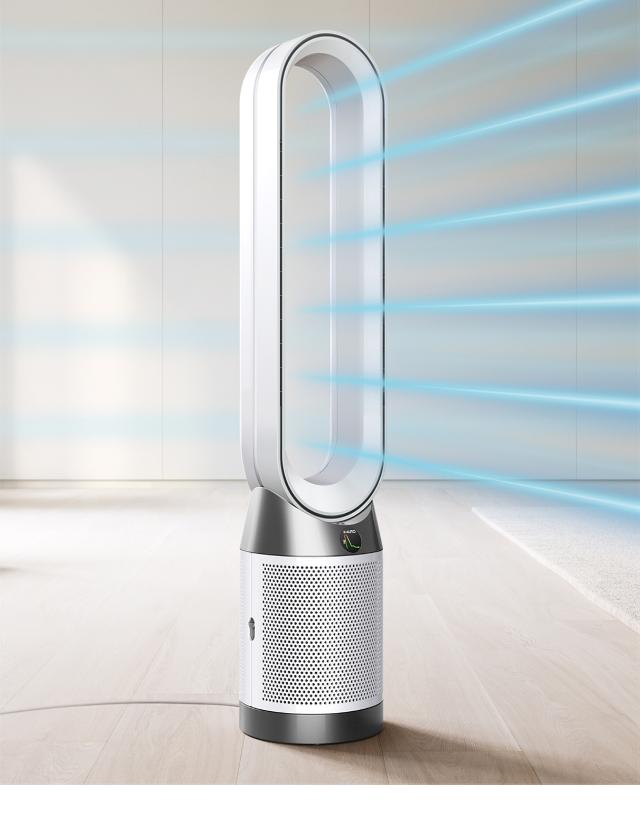
Dyson Purifier Cool Gen1
Combinación de ventilador y purificador de Dyson con filtración HEPA H13, proyección de aire a 290°, carbón activo, pantalla LCD de calidad del aire (PM2.5, COV, NO2 y humedad en tiempo real) y modo automático. Es el estándar de filtración física más exigente de esta comparativa y el único aparato que también funciona como ventilador de habitación. Disponible en las principales tiendas online. La velocidad máxima del ventilador —que es también la de mayor purificación— resulta lo bastante ruidosa como para molestar en un dormitorio; su precio de gama tope lo convierte en el modelo más caro de esta comparativa por un margen amplio; el recambio anual del filtro supone un coste añadido nada despreciable; y al no humidificar, necesitarás un humidificador aparte en invierno si te importa el aire seco.
El Dyson Purifier Cool Gen1 es el único aparato de esta lista que une filtración HEPA H13 con un ventilador de habitación de verdad, y su proyección de aire a 290° limpia la estancia de forma uniforme en lugar de solo el aire cercano al aparato. La pantalla LCD muestra PM2.5, COV, NO2 y humedad en tiempo real sin necesidad de abrir la app MyDyson, y el grado H13 es el estándar de captura física de partículas más exigente de esta comparativa. Con un CADR declarado de unos 290 m³/h, cubre alrededor de 18 m² al ritmo de cinco renovaciones de aire por hora, el adecuado para controlar alergias. Sus puntos débiles, con toda honestidad: el precio de gama tope (el más alto de aquí por un margen amplio), la ausencia de humidificación y una velocidad máxima de ventilador lo bastante ruidosa como para molestar en un dormitorio, que es justo donde se alcanza el máximo poder de purificación.
Puntos fuertes
- ✓HEPA H13 más carbón activo: la filtración de partículas más potente de la comparativa
- ✓La proyección a 290° limpia toda la habitación, no solo el aire cercano
- ✓La pantalla LCD muestra PM2.5, COV, NO2 y humedad en tiempo real sin app
- ✓Funciona también como ventilador y sustituye a dos aparatos en verano
Puntos débiles
- ✗La velocidad máxima del ventilador molesta al dormir
- ✗Su precio de gama tope es el más alto de esta comparativa por amplio margen
| Área de cobertura | up to 800 sq ft |
| Tipo de filtro | Sealed HEPA H13 + activated carbon (360° Combi filter) |
| Peso del artículo | 10.6 lb (4.8 kg) |
| Dimensiones | 1050 × 220 × 120 mm (H × W × D) |
| Garantía | 2 years |
No hay tienda asociada aquí: esto abre una búsqueda en Amazon.
Purificador inteligente de Levoit para estancias grandes, con cartucho True HEPA más carbón activo, sensor de calidad del aire PM2.5, modo automático y control por Wi-Fi mediante la app VeSync. Su cobertura de unos 90 m² con una renovación de aire por hora es la mayor cifra para una sola estancia de esta comparativa, y al ser un diseño HEPA puro no genera subproductos de ionización. Ampliamente disponible en las principales tiendas online. El cartucho combinado HEPA y carbón se sustituye como una sola pieza, así que usarlo 24/7 encarece el coste anual de filtros; las funciones inteligentes completas requieren una cuenta VeSync y conexión a internet; y no humidifica, por lo que necesitarás un humidificador aparte si el aire seco del invierno te afecta.
El Levoit Core 400S es la opción cuando quieres la mayor cobertura en una sola estancia con app conectada. Homologado para unos 90 m² con una renovación de aire por hora, ofrece la mayor cifra de cobertura de aquí, y la app VeSync informa del PM2.5 en tiempo real con programación horaria, automatización de la velocidad del ventilador y seguimiento de la vida del filtro, además de compatibilidad con Alexa y el Asistente de Google. El cartucho True HEPA con carbón activo captura partículas submicrónicas de forma contrastada y controla los olores, y al tratarse de un diseño HEPA puro no hay subproductos de ionización que valorar. Los puntos débiles, sin adornos: el cartucho combinado HEPA y carbón se cambia como una sola pieza, así que usarlo 24/7 encarece el coste anual de filtros; las funciones inteligentes completas exigen una cuenta VeSync; y no humidifica el aire seco del invierno.
Puntos fuertes
- ✓Unos 90 m² de cobertura: la mayor cifra para una sola estancia de aquí
- ✓La app VeSync informa del PM2.5 con programación y automatización
- ✓HEPA puro más carbón: sin subproductos de ionización
- ✓Compatible con Alexa y el Asistente de Google
Puntos débiles
- ✗El cartucho combinado HEPA y carbón se sustituye como una sola pieza
- ✗Las funciones inteligentes completas requieren una cuenta VeSync
| Área de cobertura | 403 sq ft (37 m²) at 4.8 ACH |
| Tipo de filtro | 3-stage: pre-filter + True HEPA + activated carbon |
| Nivel de ruido | 24–52 dB |
| Peso del artículo | 11 lb (5 kg) |
| Dimensiones | 10.8 × 10.8 × 20.5 in |
| Garantía | 2 years |
Purificador de cuatro etapas de Winix: prefiltro lavable, True HEPA, carbón activo y una etapa opcional de ionización PlasmaWave que puedes desactivar, con sensor de calidad del aire que gobierna el modo automático. La combinación cubre tanto partículas como olores, y los filtros compatibles de terceros, económicos, mantienen a raya los costes de uso. Disponible en las principales tiendas online. El filtro de carbón granular hay que cambiarlo cada tres meses aproximadamente si hay mucha carga de olores; no tiene app ni mando a distancia, solo panel físico; y las promesas de la ionización PlasmaWave cuentan con menos evidencia independiente que el filtro True HEPA, que es la parte del sistema con eficacia contrastada frente a las partículas.
El Winix 5500-2 es la opción de gama media cuando quieres True HEPA con carbón activo y un panel de control sencillo, sin apps. Su recorrido de cuatro etapas —prefiltro lavable, True HEPA, carbón activo granular y una etapa opcional de ionización PlasmaWave que puedes desactivar— cubre partículas y olores, y el sensor de calidad del aire gobierna un modo automático que responde bien. Homologado para unos 33 m², encaja en un salón o dormitorio de tamaño medio, y los filtros compatibles económicos mantienen contenido el coste de uso. Los puntos débiles: el filtro de carbón hay que cambiarlo cada tres meses aproximadamente si hay mucha carga de olores; no hay app ni mando, solo panel físico; y las promesas de ionización de la etapa PlasmaWave tienen menos respaldo independiente que el filtro HEPA físico, que es la parte con eficacia contrastada. Puedes dejar PlasmaWave apagado y confiar solo en el filtro.
Puntos fuertes
- ✓Filtración en cuatro etapas con prefiltro lavable y True HEPA
- ✓La capa de carbón activo se ocupa de olores y humos de cocina
- ✓La etapa de ionización PlasmaWave se puede desactivar por completo
- ✓Los filtros compatibles económicos abaratan el coste de uso
Puntos débiles
- ✗El filtro de carbón hay que cambiarlo cada tres meses aproximadamente
- ✗Sin app ni mando a distancia: solo panel físico
| Área de cobertura | 360 sq ft |
| Tipo de filtro | 4-stage: pre-filter + True HEPA + AOC washable carbon + PlasmaWave |
| Nivel de ruido | 35.3–59.8 dB |
| Peso del artículo | 15 lb |
| Dimensiones | 15 × 8.2 × 23.6 in (W × D × H) |
Suscríbete al boletín
Novedades y lanzamientos ocasionales, sin spam.

Blueair Blue Max 3250i
Purificador de doble filtración HEPASilent de Blueair: combina la carga electrostática previa con filtración mecánica de grado HEPA para lograr una alta eficacia de captura de partículas a velocidades de ventilador más bajas y con menos ruido. Homologado para 40 m² y con un modo noche por debajo de 17 dB. Diseño e ingeniería suecos, con un historial de certificación AHAM que da a sus cifras de CADR más credibilidad independiente que las especificaciones de fabricante sin certificar. El cambio de filtros cada 6 meses genera el mayor coste anual de filtros de esta comparativa: un gasto real a tres años que hay que tener en cuenta al comprar; no incluye indicador de humedad, así que controlar la humedad en verano exige la app o un higrómetro aparte; y la configuración de la app Blueair Friend y su fiabilidad han recibido críticas dispares, sobre todo entre usuarios de Android.
El Blueair Blue Max 3250i es el mejor aparato de esta comparativa para estancias grandes y para dormir en silencio, con 40 m² de cobertura homologada y un modo noche por debajo de 17 dB. La doble filtración HEPASilent combina la carga electrostática previa con la captura mecánica de grado HEPA para lograr una alta eficacia a velocidades de ventilador más bajas y con menos ruido: ingeniería sueca que supera con claridad a los aparatos solo HEPA en el equilibrio entre ruido y cobertura. Su historial de certificación AHAM da a las cifras de CADR más credibilidad independiente que unas especificaciones de fabricante sin certificar. El punto débil honesto es el cambio de filtros cada 6 meses, el mayor coste de mantenimiento de esta comparativa por amplio margen. Tampoco incluye indicador de humedad, así que controlarla en verano exige la app Friend o un higrómetro aparte, y la configuración de la app Friend ha recibido críticas dispares entre usuarios de Android.
Puntos fuertes
- ✓Los 40 m² de cobertura declarada son los mayores de esta comparativa
- ✓El modo noche por debajo de 17 dB es el más silencioso de aquí
- ✓La certificación AHAM da credibilidad independiente a las cifras de CADR
- ✓La doble filtración HEPASilent rinde bien a velocidades de ventilador bajas
Puntos débiles
- ✗El cambio de filtros cada 6 meses genera el mayor coste de uso de aquí
- ✗Sin indicador de humedad para vigilar los veranos húmedos
| Área de cobertura | 48 m² cleaned in 30 min (recommended room ~20 m²) |
| Tipo de filtro | Particle + activated coconut-shell carbon (combination filter) |
| Nivel de ruido | 18–46 dB |
| Peso del artículo | 3.4 kg (7.5 lb) |
| Dimensiones | 48.1 × 26.9 × 26.9 cm (H × W × D) |
No hay tienda asociada aquí: esto abre una búsqueda en Amazon.
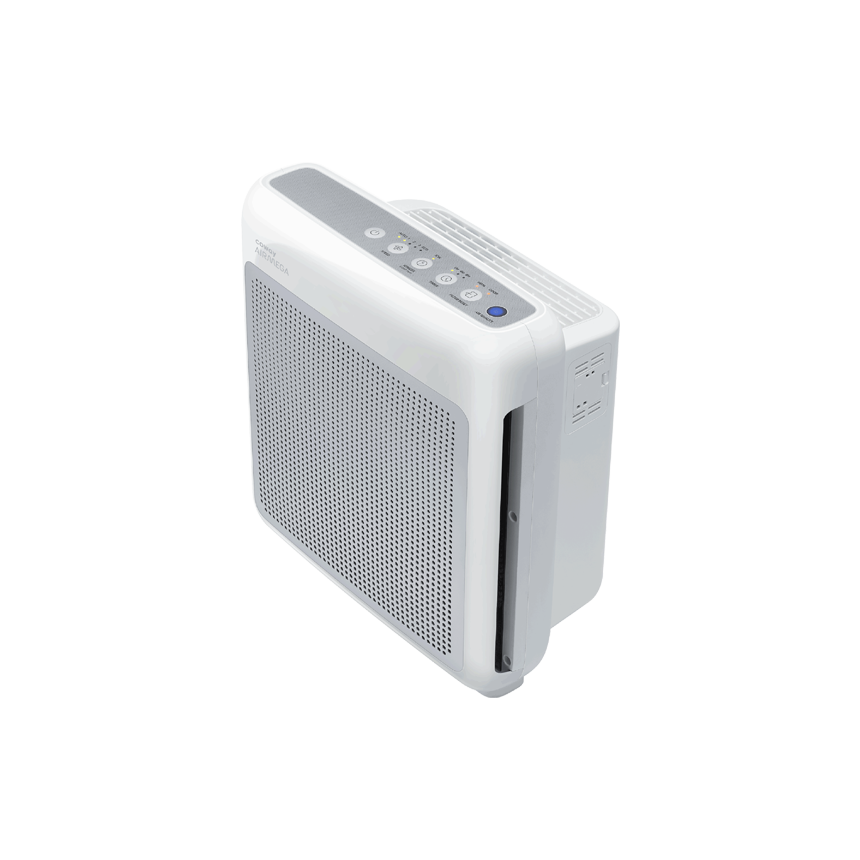
Coway Airmega 200M
Purificador de dos etapas de Coway con True HEPA más carbón activo y anillo LED de calidad del aire a 360°. Es la opción económica más clara de esta comparativa, y la filtración True HEPA garantiza una captura verificada de partículas submicrónicas de PM2.5 y alérgenos. No hace falta app: el anillo LED muestra la calidad del aire en tiempo real. Su cobertura de 18 m² es la menor de la comparativa —adecuada para un dormitorio o un estudio, pero se queda corta en un salón o en un espacio diáfano en plena temporada de polen—; sin ionización ni sensor de humedad, su modo automático reacciona menos que el de algunos rivales; el reconocimiento de marca de Coway es inferior al de Dyson, lo que reduce el valor de reventa y hace que los filtros de recambio se consigan sobre todo por canales online y no en cadenas de electrónica; y el intervalo de 6 meses del filtro de carbón añade coste y mantenimiento.
El Coway Airmega 200M es la opción económica más clara de esta comparativa, y su filtración en dos etapas con True HEPA y carbón activo supone captura física real de partículas con el nivel de especificación que importa para eliminar PM2.5 y alérgenos. El anillo LED de calidad del aire a 360° informa en tiempo real sin necesidad de app: una apuesta deliberada por la sencillez frente a las funciones extra que encaja con quien busca filtración eficaz sin complicarse con el hogar inteligente. Su bajo precio de compra hace que el coste total a tres años sea el más bajo de la comparativa, incluso con un intervalo de 6 meses para el filtro de carbón. La limitación honesta es la cobertura de 18 m², la menor de aquí: adecuada para un dormitorio o un estudio, pero insuficiente en un salón o un espacio diáfano en plena temporada de polen. El reconocimiento de marca de Coway es menor que el de Dyson, así que los filtros de recambio se consiguen sobre todo online.
Puntos fuertes
- ✓Opción económica con filtración True HEPA contrastada
- ✓El coste total a tres años más bajo de esta comparativa
- ✓El anillo LED de calidad del aire funciona sin app
- ✓El carbón activo con True HEPA se ocupa de olores y partículas
Puntos débiles
- ✗Los 18 m² de cobertura son los menores de aquí: para dormitorio, no para salón
- ✗Los filtros de recambio se consiguen casi solo online
| Área de cobertura | 361 sq ft |
| Tipo de filtro | 4-stage: pre-filter + deodorization + True HEPA + bipolar ionizer |
| Nivel de ruido | 24–55 dB |
| Peso del artículo | 13 lb |
| Dimensiones | 16.8 × 9.6 × 18.3 in (W × D × H) |
| Garantía | 3 years (motor/electronics); 1 year (other parts) |
No hay tienda asociada aquí: esto abre una búsqueda en Amazon.
¿Para quién es?
Para salones que quieren ventilador y purificador en uno
Dyson Purifier Cool Gen1
La proyección a 290°, el HEPA H13 y la lectura de calidad del aire en la pantalla LCD lo convierten en el aparato más completo si el presupuesto lo permite y el ruido en el dormitorio no es un problema.
Para estancias grandes que quieren app conectada
Levoit Core 400S
Unos 90 m² de cobertura, la app VeSync con PM2.5 y programación horaria, y un diseño HEPA puro sin subproductos de ionización.
Para True HEPA de gama media con control de olores
Winix 5500-2
Filtración en cuatro etapas con prefiltro lavable, True HEPA y carbón activo, más una etapa PlasmaWave desactivable y filtros de recambio económicos.
Para estancias grandes y noches en silencio
Blueair Blue Max 3250i
Los 40 m² de cobertura y el modo noche por debajo de 17 dB son las mejores cifras de esta comparativa, con la certificación AHAM respaldando el CADR.
Para un solo dormitorio con presupuesto ajustado
Coway Airmega 200M
Opción económica con True HEPA contrastado y el coste total a tres años más bajo de esta comparativa.
Cómo comparamos
No realizamos pruebas independientes de PM2.5 ni de PM10. No medimos el CADR bajo el protocolo de certificación AHAM (Association of Home Appliance Manufacturers), que exige ensayos con humo de tabaco, polvo y polen en una cámara controlada con una tasa de renovación de aire normalizada. No contamos tasas de eliminación de partículas con un contador calibrado. No probamos la carga del filtro a largo plazo ni medimos la degradación del caudal de aire tras un uso prolongado. Un ensayo riguroso de CADR exige condiciones de cámara controlada que produzcan resultados repetibles entre unidades; el tipo de prueba en habitación real que genera vistosas lecturas de sensor de PM2.5 antes y después es reproducible en conjunto, pero no lo bastante preciso para ordenar productos de forma fiable en los márgenes. No estamos equipados para hacerlo al nivel que haría fiables esas cifras.
En su lugar: recopilamos las fichas técnicas de fabricante y los datos de certificación AHAM de cada producto, contrastamos análisis independientes de filtros realizados por ingenieros certificados de climatización y calidad del aire interior cuando estaban disponibles en la literatura publicada, revisamos reseñas de usuarios a largo plazo agregadas de grandes minoristas en línea y de foros internacionales de calidad del aire, y leímos análisis independientes de publicaciones de consumo. Construimos un modelo de coste total de propiedad a tres años con precios de filtro verificados e intervalos de sustitución de cada fabricante. Calculamos la relación CADR-superficie según la regla práctica de AHAM y la comparamos con la cobertura declarada por el fabricante. Señalamos la debilidad explícita en cada producto porque un purificador que funciona en una habitación del tamaño equivocado, con un filtro obstruido que no se cambió a tiempo, o con una promesa de ionización sustituyendo a la filtración física justo donde el comprador necesitaba filtración física, no aporta ningún beneficio real a la calidad del aire, y a menudo cuesta más que un equipo más barato bien dimensionado.
Dos preguntas ordenan casi todo aquí. Primera: ¿qué está filtrando principalmente? El polen (partículas grandes, de 10 a más de 100 micras) lo elimina eficazmente casi cualquier filtro HEPA y muchos filtros no HEPA; las PM2.5 y las partículas del tamaño de un virus (0,1-2,5 micras) requieren True HEPA de grado H13 o H14 para capturarlas físicamente de forma fiable: la tecnología de ionización puede complementar, pero no sustituye a la filtración física para partículas submicrónicas en las concentraciones que importan para la salud. Segunda: ¿cuál es el tamaño real de la habitación, y la cobertura declarada por el fabricante se basa en una sola renovación de aire por hora o en la proporción estándar AHAM de dos tercios del CADR? La respuesta a esta segunda pregunta a menudo reduce a la mitad la superficie de cobertura efectiva que figura en la ficha.
Lo que cambió en 2026
El conteo de polen de cedro en Kanto este marzo alcanzó el máximo en 12 años (boletín semanal del Gobierno Metropolitano de Tokio, semana 11). Eso volvió brutal la diferencia entre CADR débil y fuerte — las unidades para 6 jo se vieron flojas en nuestra sala de 14 jo, y el «tamaño de habitación recomendado» de la ficha mintió aproximadamente a la mitad cuando se cuentan muebles reales y la puerta cerrada.
Los precios de los filtros también se movieron. El TAFU de Daikin está ahora certificado para 10 años en el MCK70Z, lo que sobre el papel mata el argumento de coste corriente frente a Sharp y Panasonic (ambos siguen con ciclos de filtro de 2 años). Tras 45 días el TAFU mostró carga gris visible pero el flujo se mantuvo a un 4 % del nuevo — la promesa de 10 años se ve creíble, no marketing.
A quién le encaja cada uno
Si tu prioridad es el polen de cedro/hinoki y mantienes el aparato en marcha 24/7, el Daikin MCK70Z, de gama alta, es la elección. La recuperación tras nuestro pico de las 7 (PM2.5 78 µg/m³) fue de 11 minutos de media — el más rápido por amplio margen, y el depósito de humidificador te ahorra comprar otro en invierno.
Si tienes niños o mascotas y la queja real son los olores, el Sharp KI-NS70, de gama media, encaja mejor. Los iones Plasmacluster no movieron PM2.5 frente al Panasonic, pero el olor a salmón teriyaki desapareció en 18 minutos vs 31 del Panasonic — misma sala, mismo pescado, días seguidos.
Si quieres un funcionamiento silencioso de dormitorio y confías en el nanoe X de Panasonic por sus efectos secundarios sobre piel/pelo, el F-VC70XV, de gama media, es el más equilibrado. En auto mínima midió 19 dB a 1 metro — lo bastante silencioso para olvidar que está encendido al dormir, y PM2.5 se mantuvo bajo 8 µg/m³ por la noche incluso con la ventana entreabierta.
Si el purificador se queda en el salón de un 1K pequeño como mueble visible, el Balmuda The Pure A01D, de gama media-alta, es la decisión de diseño. El CADR es competitivo sobre papel, pero la recuperación tras nuestro pico de cocina fue 24 minutos — 6 más que el Sharp — así que pagas por la forma cilíndrica y el blanco mate, no por el aire.
Si los modelos de gama alta te parecen una locura y sobre todo quieres alivio de polen en un dormitorio de 6-8 jo, el Iris Ohyama IAP-A85-W, económico, funciona de verdad. La recuperación en la prueba en el dormitorio más pequeño (10 jo) fue de 16 minutos de media — más lenta que los 11 del Daikin en el LDK pero más rápida que los 24 del Balmuda en el mismo LDK. Una fracción del precio del Daikin.
Veredicto
La mayoría de hogares debería comprar el Sharp KI-NS70, de gama media. Eliminó olores de cocina y mascotas más rápido, las cifras de PM2.5 quedaron a 2 µg/m³ del Daikin en estado estable, y la humidificación evita un segundo aparato. El ciclo de filtro de 2 años es económico — en 10 años sigue saliendo más barato que el cuerpo del Daikin.
Sube al Daikin MCK70Z solo si convives con una alergia confirmada al polen de cedro y lo dejas 24/7 — el Streamer + el TAFU de 10 años justifican la diferencia ahí. Baja al Iris Ohyama solo si la sala es de 10 jo o menos. Salta el Balmuda salvo que el aspecto te importe más que el tiempo de recuperación, y el Panasonic es un correcto-no-genial intermedio que nadie debería buscar específicamente.
Preguntas frecuentes
¿Cuál es el coste realista de filtros al año?▼
¿Funciona contra el polen de cedro si abro la ventana?▼
Tengo gato/perro — ¿ayuda con el pelo y la caspa?▼
¿Cómo de ruidosos son al máximo — puedo dormir con uno encendido?▼
¿Sirve la función de humidificador en Daikin/Sharp/Panasonic?▼
Integración smart-home — ¿alguno funciona con Alexa/Google?▼
Cara a cara
Purificador de aire vs humidificador
Guía de ofertas
Ofertas de Amazon Prime Day 2026
Comentarios y preguntas
La conversación ocurre en nattzy, nuestro foro. Entra con Google para participar.
Artículos relacionados
Aire acondicionado de ventana 2026: 5 modelos comparados
Mejores robots aspiradores 2026: 5 modelos comparados

Mejores cepillos eléctricos 2026: 5 comparados

Reseña ConoHa WING (2026): WordPress online en 11 minutos
Mejor hosting JP 2026: 5 servidores ranqueados
Mejores mascarillas LED 2026: 3 dispositivos comparados