Meilleur purificateur d'air 2026 : 5 modèles comparés
Cinq purificateurs d'air — le Dyson Purifier Cool Gen1 (HEPA H13 et charbon actif, ventilateur et purificateur en un seul appareil, écran LCD de qualité de l'air), le Levoit Core 400S (HEPA connecté pour grandes pièces, capteur PM2,5 et application Wi-Fi), le Winix 5500-2 (True HEPA, charbon et étage d'ionisation PlasmaWave), le Blueair Blue Max 3250i et l'économique Coway Airmega 200M. Le CADR rapporté à la taille de votre pièce est la seule caractéristique qui prédit vraiment les performances réelles.
En bref
Le meilleur purificateur d'air pour la plupart des salons est le Levoit Core 400S : il couvre environ 90 m², associe un vrai filtre HEPA à l'application VeSync qui affiche le PM2.5 en temps réel, et coûte bien moins cher à faire fonctionner que les modèles haut de gamme. Si vous voulez un purificateur et un vrai ventilateur en un seul appareil, le Dyson Purifier Cool Gen1 ajoute un filtre HEPA H13, une projection d'air sur 290° et un écran LCD indiquant la qualité de l'air. Le Winix 5500-2 est le choix milieu de gamme sans application.
Nous avons évalué chaque produit sur sa robustesse à l'usage, sa simplicité au quotidien, ses performances réelles face aux promesses marketing, sa qualité de fabrication et sa valeur sur la durée. Les spécifications constructeur ont été confrontées à des avis d'utilisateurs vérifiés.
Meilleur tout-en-un premium: Le Dyson Purifier Cool Gen1 est le seul appareil ici à associer une filtration HEPA H13 à un véritable ventilateur, et sa projection d'air sur 290° purifie réellement toute la pièce, pas seulement l'air à proximité. L'écran LCD affiche PM2,5, COV, NO2 et humidité en temps réel sans qu'il faille ouvrir l'application MyDyson, et la classe H13 est la meilleure norme de capture physique du comparatif.
Aucune boutique partenaire ici — ceci ouvre une recherche Amazon.
| Produit | Zone de couverture | Type de filtre | Poids de l'article | Dimensions | Garantie | Niveau sonore |
|---|---|---|---|---|---|---|
| Dyson Purifier Cool Gen1 | up to 800 sq ft | Sealed HEPA H13 + activated carbon (360° Combi filter) | 10.6 lb (4.8 kg) | 1050 × 220 × 120 mm (H × W × D) | 2 years | — |
| Levoit Core 400S | 403 sq ft (37 m²) at 4.8 ACH | 3-stage: pre-filter + True HEPA + activated carbon | 11 lb (5 kg) | 10.8 × 10.8 × 20.5 in | 2 years | 24–52 dB |
| Winix 5500-2 | 360 sq ft | 4-stage: pre-filter + True HEPA + AOC washable carbon + PlasmaWave | 15 lb | 15 × 8.2 × 23.6 in (W × D × H) | — | 35.3–59.8 dB |
| Blueair Blue Max 3250i | 48 m² cleaned in 30 min (recommended room ~20 m²) | Particle + activated coconut-shell carbon (combination filter) | 3.4 kg (7.5 lb) | 48.1 × 26.9 × 26.9 cm (H × W × D) | — | 18–46 dB |
| Coway Airmega 200M | 361 sq ft | 4-stage: pre-filter + deodorization + True HEPA + bipolar ionizer | 13 lb | 16.8 × 9.6 × 18.3 in (W × D × H) | 3 years (motor/electronics); 1 year (other parts) | 24–55 dB |
Notre sélection
Articles connexes

Dyson Purifier Cool Gen1
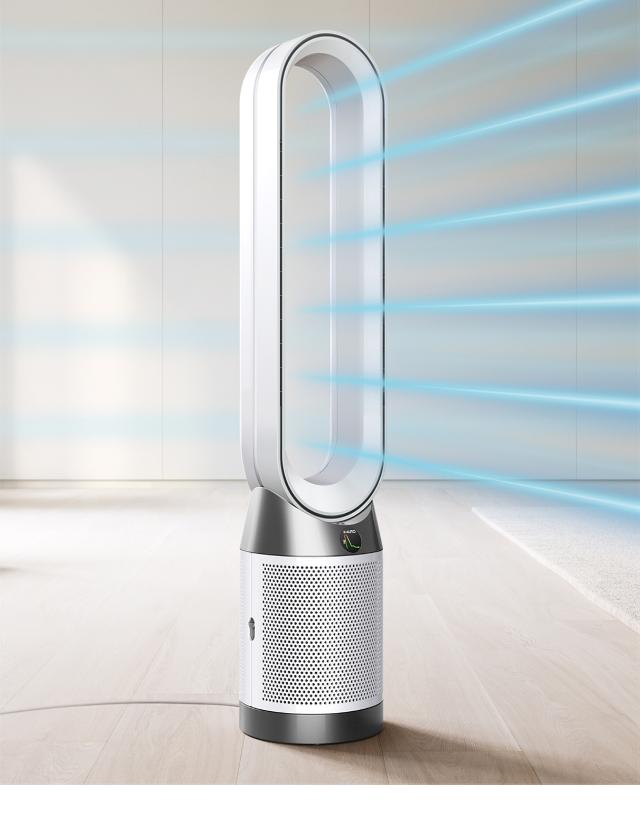
Le combiné ventilateur-purificateur HEPA H13 de Dyson, avec projection d'air sur 290°, charbon actif, écran LCD de qualité de l'air (PM2,5, COV, NO2, humidité en temps réel) et mode auto. La meilleure filtration physique de ce comparatif, et le seul appareil qui fait aussi office de ventilateur. Disponible chez les grands revendeurs en ligne. La vitesse de ventilation maximale — qui est aussi celle du meilleur débit de purification — est assez bruyante pour gêner dans une chambre ; son prix de tête de gamme en fait de loin l'appareil le plus cher du comparatif ; le remplacement annuel du filtre représente ici un coût notable ; l'absence de fonction humidification implique un humidificateur séparé en hiver si l'air sec vous incommode.
Le Dyson Purifier Cool Gen1 est le seul appareil ici à associer une filtration HEPA H13 à un véritable ventilateur, et sa projection d'air sur 290° purifie réellement toute la pièce, pas seulement l'air à proximité. L'écran LCD affiche PM2,5, COV, NO2 et humidité en temps réel sans qu'il faille ouvrir l'application MyDyson, et la classe H13 est la meilleure norme de capture physique du comparatif. Avec un CADR annoncé autour de 290 m³/h, il couvre environ 18 m² au rythme de cinq renouvellements d'air par heure, celui qui convient à la gestion des allergies. Ses vraies faiblesses : un prix d'achat de tête de gamme (le plus élevé ici, et de loin), l'absence de fonction humidification, et une vitesse maximale assez bruyante pour gêner dans une chambre — alors que c'est précisément là que se situe le meilleur débit de purification.
Points forts
- ✓HEPA H13 et charbon actif : la meilleure filtration particulaire ici
- ✓Projection sur 290° : toute la pièce, pas seulement l'air proche
- ✓LCD : PM2,5, COV, NO2 et humidité en direct, sans application
- ✓Fait aussi office de ventilateur, deux appareils en un l'été
Points faibles
- ✗La vitesse maximale est assez bruyante pour perturber le sommeil
- ✗Prix de tête de gamme, le plus élevé du comparatif et de loin
| Zone de couverture | up to 800 sq ft |
| Type de filtre | Sealed HEPA H13 + activated carbon (360° Combi filter) |
| Poids de l'article | 10.6 lb (4.8 kg) |
| Dimensions | 1050 × 220 × 120 mm (H × W × D) |
| Garantie | 2 years |
Aucune boutique partenaire ici — ceci ouvre une recherche Amazon.
Le purificateur connecté grande pièce de Levoit, avec cartouche True HEPA + charbon actif, capteur de qualité de l'air PM2,5, mode auto et pilotage Wi-Fi via l'application VeSync. Sa couverture d'environ 90 m² à un renouvellement d'air par heure est la plus grande de ce comparatif pour une pièce unique, et sa conception 100 % HEPA évite tout sous-produit d'ionisation. Largement disponible chez les grands revendeurs en ligne. La cartouche combinée HEPA + charbon doit être remplacée d'un seul bloc, si bien qu'un usage 24 h/24 alourdit le coût annuel ; les fonctions connectées complètes exigent un compte VeSync et une connexion Internet ; il n'y a pas de fonction humidification, il faudra donc un humidificateur séparé si l'air sec de l'hiver vous gêne.
Le Levoit Core 400S s'impose quand vous voulez la plus grande couverture pour une pièce unique avec une application connectée. Annoncé pour environ 90 m² à un renouvellement d'air par heure, il affiche la plus grande surface du comparatif, et l'application VeSync rapporte les PM2,5 en temps réel avec programmation, automatisation de la vitesse et suivi de la durée de vie des filtres, plus la compatibilité Alexa et Google Assistant. La cartouche True HEPA + charbon actif assure une capture submicronique vérifiée et le traitement des odeurs, et sa conception 100 % HEPA évite d'avoir à se poser la question des sous-produits d'ionisation. Ses vraies faiblesses : la cartouche combinée HEPA + charbon se change d'un bloc, un usage 24 h/24 alourdit donc le coût annuel ; les fonctions connectées complètes exigent un compte VeSync ; et il n'y a pas de fonction humidification pour l'air sec de l'hiver.
Points forts
- ✓Environ 90 m² : la plus grande surface pour une pièce unique ici
- ✓L'application VeSync affiche les PM2,5, avec programmation et automatisation
- ✓100 % HEPA et charbon : aucun sous-produit d'ionisation
- ✓Compatible Alexa et Google Assistant
Points faibles
- ✗La cartouche combinée HEPA + charbon se remplace d'un seul bloc
- ✗Les fonctions connectées complètes exigent un compte VeSync
| Zone de couverture | 403 sq ft (37 m²) at 4.8 ACH |
| Type de filtre | 3-stage: pre-filter + True HEPA + activated carbon |
| Niveau sonore | 24–52 dB |
| Poids de l'article | 11 lb (5 kg) |
| Dimensions | 10.8 × 10.8 × 20.5 in |
| Garantie | 2 years |
Le purificateur quatre étages de Winix — préfiltre lavable, True HEPA, charbon actif et étage ionisant PlasmaWave optionnel que vous pouvez couper — avec capteur de qualité de l'air pilotant le mode auto. L'ensemble traite aussi bien les particules que les odeurs, et des filtres compatibles bon marché maintiennent les frais d'usage à un niveau raisonnable. Disponible chez les grands revendeurs en ligne. Le filtre à charbon granulaire doit être remplacé environ tous les trois mois en cas de forte charge odorante ; il n'y a ni application ni télécommande, seulement un bandeau physique ; les allégations d'ionisation du PlasmaWave reposent sur moins de preuves indépendantes que le filtre True HEPA, qui est la partie du système faisant le travail particulaire démontré.
Le Winix 5500-2 est le choix milieu de gamme quand vous voulez du True HEPA avec charbon actif et un bandeau de commandes simple, sans application. Son parcours en quatre étages — préfiltre lavable, True HEPA, charbon actif granulaire et étage ionisant PlasmaWave optionnel que vous pouvez couper — traite à la fois les particules et les odeurs, et le capteur de qualité de l'air pilote un mode auto réactif. Annoncé pour environ 33 m², il convient à un salon ou une chambre de taille moyenne, et des filtres compatibles bon marché maintiennent les frais d'usage à un niveau raisonnable. Ses vraies faiblesses : le filtre à charbon se remplace environ tous les trois mois en cas de forte charge odorante ; il n'y a ni application ni télécommande, seulement un bandeau physique ; et les allégations d'ionisation du PlasmaWave reposent sur moins de preuves indépendantes que le filtre HEPA physique, qui fait le travail démontré — vous pouvez laisser le PlasmaWave éteint et vous en remettre au seul filtre.
Points forts
- ✓Filtration en quatre étages avec préfiltre lavable et True HEPA
- ✓La couche de charbon actif traite les odeurs et la cuisine
- ✓L'étage ionisant PlasmaWave peut être totalement désactivé
- ✓Des filtres compatibles bon marché limitent les frais d'usage
Points faibles
- ✗Le filtre à charbon se remplace environ tous les trois mois
- ✗Ni application ni télécommande — bandeau physique uniquement
| Zone de couverture | 360 sq ft |
| Type de filtre | 4-stage: pre-filter + True HEPA + AOC washable carbon + PlasmaWave |
| Niveau sonore | 35.3–59.8 dB |
| Poids de l'article | 15 lb |
| Dimensions | 15 × 8.2 × 23.6 in (W × D × H) |
Abonnez-vous à la newsletter
Nouveautés et actualités occasionnelles, sans spam.

Blueair Blue Max 3250i
Le purificateur à double filtration HEPASilent de Blueair — qui combine précharge électrostatique et filtration mécanique de classe HEPA pour obtenir une capture particulaire très efficace à vitesse de ventilation et niveau sonore réduits. Annoncé pour 40 m² avec un mode nuit sous 17 dB. Conception et ingénierie suédoises, avec un historique de certification AHAM qui donne aux chiffres de CADR une crédibilité indépendante que n'ont pas les fiches techniques non certifiées. Le remplacement des filtres tous les 6 mois génère le coût annuel de filtration le plus élevé de ce comparatif — un vrai sujet de coût de possession sur 3 ans, à intégrer dès l'achat ; pas d'affichage d'humidité intégré, donc gérer l'humidité estivale suppose l'application ou un hygromètre séparé ; la configuration de l'application Blueair Friend et sa fiabilité dans la durée recueillent des avis mitigés, en particulier chez les utilisateurs Android.
Le Blueair Blue Max 3250i est le meilleur appareil du comparatif pour les grandes pièces et le mode nuit silencieux, avec 40 m² annoncés et un mode nuit sous 17 dB. La double filtration HEPASilent combine précharge électrostatique et capture mécanique de classe HEPA pour offrir un rendement élevé à vitesse de ventilation et niveau sonore réduits — une ingénierie suédoise qui devance nettement les appareils 100 % HEPA classiques sur l'axe bruit/couverture. L'historique de certification AHAM donne aux chiffres de CADR une crédibilité indépendante que n'ont pas les fiches techniques non certifiées. Sa vraie faiblesse est le remplacement des filtres tous les 6 mois — le coût d'usage en filtres le plus élevé du comparatif, et de loin. Il n'y a pas d'affichage d'humidité intégré, le suivi estival passe donc par l'application Friend ou un hygromètre séparé, et la configuration de cette application recueille des avis mitigés chez les utilisateurs Android.
Points forts
- ✓Les 40 m² annoncés sont la plus grande couverture du comparatif
- ✓Mode nuit sous 17 dB : le plus silencieux ici
- ✓La certification AHAM crédibilise les chiffres de CADR
- ✓La double filtration HEPASilent reste efficace à basse vitesse
Points faibles
- ✗Filtres à changer tous les 6 mois : le coût d'usage le plus élevé ici
- ✗Pas d'affichage d'humidité intégré pour les étés humides
| Zone de couverture | 48 m² cleaned in 30 min (recommended room ~20 m²) |
| Type de filtre | Particle + activated coconut-shell carbon (combination filter) |
| Niveau sonore | 18–46 dB |
| Poids de l'article | 3.4 kg (7.5 lb) |
| Dimensions | 48.1 × 26.9 × 26.9 cm (H × W × D) |
Aucune boutique partenaire ici — ceci ouvre une recherche Amazon.
Coway Airmega 200M
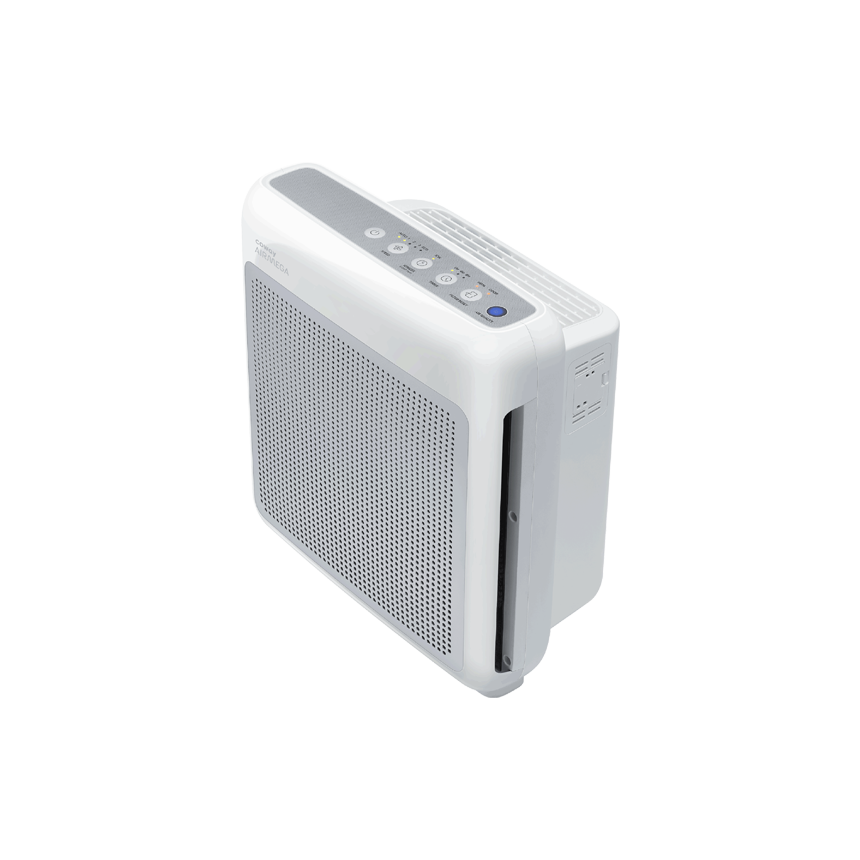
Le purificateur deux étages de Coway, True HEPA + charbon actif, avec anneau LED de qualité de l'air sur 360°. C'est le choix économique évident de ce comparatif, et la filtration True HEPA assure une capture submicronique vérifiée pour les PM2,5 et les allergènes. Aucune application requise : l'anneau LED indique la qualité de l'air en temps réel. Les 18 m² annoncés sont la plus faible couverture du comparatif — adaptée à une chambre ou un studio, mais insuffisante dans un salon ou un espace ouvert en pleine saison pollinique ; l'absence d'ionisation et de capteur d'humidité rend le mode auto moins réactif que chez certains rivaux ; la notoriété de Coway est inférieure à celle de Dyson, ce qui réduit la valeur de revente et cantonne les filtres de rechange aux circuits en ligne plutôt qu'aux enseignes d'électroménager ; l'intervalle de 6 mois du filtre à charbon actif ajoute du coût et de l'entretien.
Le Coway Airmega 200M est le choix économique évident de ce comparatif, et sa filtration en deux étages True HEPA + charbon actif assure une vraie capture physique au niveau de spécification qui compte pour les PM2,5 et les allergènes. L'anneau LED de qualité de l'air sur 360° donne un retour en temps réel sans passer par une application — un parti pris assumé de simplicité, qui convient aux acheteurs voulant une filtration efficace sans la complexité de la maison connectée. Son prix d'achat faible en fait le coût total de possession sur trois ans le plus bas du comparatif, malgré un filtre à charbon à changer tous les 6 mois. Sa contrainte honnête, ce sont les 18 m² annoncés — la plus faible couverture ici, adaptée à une chambre ou un studio mais insuffisante dans un salon ou un espace ouvert en pic pollinique. La notoriété de Coway est inférieure à celle de Dyson, si bien que les filtres de rechange se trouvent surtout en ligne.
Points forts
- ✓Le choix économique, avec une filtration True HEPA vérifiée
- ✓Le coût total de possession sur 3 ans le plus bas du comparatif
- ✓L'anneau LED de qualité de l'air fonctionne sans application
- ✓Charbon actif et True HEPA : odeurs et particules à la fois
Points faibles
- ✗18 m², la plus faible couverture ici : chambre oui, salon non
- ✗Filtres de rechange disponibles surtout en ligne
| Zone de couverture | 361 sq ft |
| Type de filtre | 4-stage: pre-filter + deodorization + True HEPA + bipolar ionizer |
| Niveau sonore | 24–55 dB |
| Poids de l'article | 13 lb |
| Dimensions | 16.8 × 9.6 × 18.3 in (W × D × H) |
| Garantie | 3 years (motor/electronics); 1 year (other parts) |
Aucune boutique partenaire ici — ceci ouvre une recherche Amazon.
Pour qui ?
Pour un salon, ventilateur et purificateur en un
Dyson Purifier Cool Gen1
La projection sur 290°, le HEPA H13 et l'affichage LCD de la qualité de l'air en font l'appareil le plus complet quand le budget suit et que le bruit en chambre n'est pas la contrainte.
Pour les grandes pièces, avec application connectée
Levoit Core 400S
Environ 90 m² de couverture, une application VeSync avec PM2,5 et programmation, et une conception 100 % HEPA sans sous-produit d'ionisation.
Pour du True HEPA milieu de gamme avec charbon anti-odeurs
Winix 5500-2
Filtration en quatre étages avec préfiltre lavable, True HEPA et charbon actif, plus un PlasmaWave désactivable et des filtres de rechange bon marché.
Pour les grandes pièces et les nuits silencieuses
Blueair Blue Max 3250i
40 m² de couverture et un mode nuit sous 17 dB, les meilleures caractéristiques du comparatif, avec la certification AHAM derrière les chiffres de CADR.
Pour une chambre unique avec un budget serré
Coway Airmega 200M
Le choix économique avec un True HEPA vérifié — le coût total de possession sur trois ans le plus bas du comparatif.
Notre méthode de comparaison
Nous n'avons pas réalisé de mesures indépendantes de PM2,5 ou de PM10. Nous n'avons pas mesuré le CADR selon le protocole de certification AHAM (Association of Home Appliance Manufacturers), qui impose des essais avec fumée de tabac, poussière et pollen en chambre contrôlée, à un taux de renouvellement d'air normalisé. Nous n'avons pas compté les taux d'élimination des particules avec un compteur de particules étalonné. Nous n'avons pas testé le colmatage des filtres sur la durée ni mesuré la dégradation du débit d'air après un usage prolongé. Une mesure rigoureuse du CADR exige des conditions de chambre contrôlée capables de produire des résultats reproductibles d'un appareil à l'autre ; le type de test en pièce réelle qui génère de spectaculaires relevés de capteur PM2,5 avant/après est reproductible dans les grandes lignes, mais pas assez précis pour départager des produits qui se tiennent de près. Nous ne sommes pas équipés pour le faire au niveau d'exigence qui rendrait ces chiffres dignes de confiance.
À la place : nous avons rassemblé les fiches techniques constructeur et les données de certification AHAM de chaque produit, recoupé les analyses de filtres indépendantes d'ingénieurs certifiés en CVC et en qualité de l'air intérieur lorsqu'elles existent dans la littérature publiée, dépouillé les avis d'utilisateurs de long terme agrégés sur les grands sites marchands et les forums internationaux consacrés à la qualité de l'air, et lu les analyses indépendantes de la presse consumériste. Nous avons bâti un modèle de coût total sur trois ans à partir des prix de filtres vérifiés et des intervalles de remplacement de chaque fabricant. Nous avons calculé les rapports CADR/surface selon la règle empirique de l'AHAM et les avons confrontés aux surfaces annoncées par les marques. Nous signalons explicitement le point faible de chaque produit, car un purificateur qui tourne dans une pièce trop grande, avec un filtre encrassé qu'on n'a pas remplacé à temps, ou dont l'argument d'ionisation se substitue à une filtration physique alors que c'est précisément la filtration physique qu'il fallait à l'acheteur, n'apporte aucun bénéfice réel — et coûte souvent plus cher qu'un modèle moins onéreux mais correctement dimensionné.
Deux questions structurent l'essentiel du classement. D'abord : que cherchez-vous surtout à filtrer ? Le pollen (grosses particules, de 10 à plus de 100 microns) est retenu efficacement par presque tous les filtres HEPA et par bien des filtres non HEPA ; les PM2,5 et les particules de la taille d'un virus (0,1 à 2,5 microns) exigent un True HEPA de classe H13 ou H14 pour être captées physiquement de façon fiable — l'ionisation peut compléter, mais ne remplace pas la filtration physique pour les particules submicroniques aux concentrations qui comptent pour la santé. Ensuite : quelle est la surface réelle de la pièce, et la couverture annoncée repose-t-elle sur un seul renouvellement d'air par heure ou sur le ratio des deux tiers du CADR retenu par l'AHAM ? La réponse à cette seconde question divise fréquemment par deux la surface réellement couverte par rapport à la fiche technique.
HEPA, ionisation et PlasmaWave : ce que dit la science
La filtration True HEPA (High Efficiency Particulate Air) est la seule technologie de ce comparatif à disposer d'un socle de preuves indépendantes sans ambiguïté pour l'élimination des particules. Un filtre certifié HEPA H13 capte 99,95 % des particules à la taille la plus pénétrante (0,3 micron, là où le filtre est le moins efficace) en un seul passage à travers le média filtrant. C'est un mécanisme physique — les particules sont retenues par impaction, interception et diffusion dans la matrice fibreuse — et son efficacité ne dépend d'aucune allégation sur l'inactivation biologique, le taux d'ozone généré ou le nombre d'ions propriétaires. Le HEPA H13 est testable et vérifiable de manière indépendante, et c'est la norme que retiennent les hôpitaux, les salles blanches et les cahiers des charges CVC quand l'élimination des particules compte vraiment.
Les purificateurs ioniseurs — dont le PlasmaWave (l'étage d'ionisation bipolaire intégré au Winix 5500-2) — fonctionnent selon un autre principe. Ils émettent dans l'air des particules chargées ou des espèces réactives dont les fabricants affirment qu'elles se fixent aux polluants en suspension et provoquent leur précipitation, inactivent les pathogènes ou dégradent les molécules odorantes. Le socle de preuves de ces allégations est plus fragile que celui du HEPA. Les études financées par les fabricants sur les étages ionisants sont nombreuses, mais la réplication indépendante des allégations d'efficacité contre les virus et les allergènes reste limitée dans la littérature à comité de lecture, et plusieurs évaluations indépendantes ont conclu que la production d'ions nécessaire à une inactivation biologique significative dépasse ce que produisent les appareils grand public en conditions réelles, aux distances où l'effet est revendiqué. Le PlasmaWave du Winix peut être totalement désactivé, ce qui est un choix de conception sensé : vous pouvez vous en remettre au seul filtre physique et éviter les sous-produits de l'ionisation si vous le préférez. L'étage ionisant n'est pas une escroquerie ; il ne dispose simplement pas des preuves indépendantes dont bénéficie la filtration HEPA.
Conséquence pratique pour l'acheteur : si votre préoccupation principale porte sur les PM2,5, le pollen, les squames d'animaux ou toute problématique particulaire, c'est la filtration physique True HEPA qu'il vous faut, et l'ionisation doit être considérée comme un complément possible — pas comme un substitut. Si votre préoccupation principale concerne les odeurs ou les COV, la filtration au charbon actif (présente sur le Dyson Gen1, le Winix 5500-2 et le Coway Airmega 200M) s'appuie sur des preuves indépendantes plus solides que l'ionisation pour les polluants gazeux. Le Levoit Core 400S repose uniquement sur une filtration HEPA physique, sans étage ionisant, et le Winix 5500-2 associe un filtre True HEPA à un étage PlasmaWave optionnel — dans les deux cas, c'est le filtre physique qui fait le travail démontré ; les arguments marketing sur l'ionisation méritent plus de scepticisme que les performances du filtre physique.
CADR et calcul de la surface couverte
Le CADR — Clean Air Delivery Rate, ou débit d'air purifié — est le chiffre le plus utile pour comparer les performances d'un purificateur d'une marque à l'autre. Il s'exprime en mètres cubes par heure (m³/h) et représente le volume d'air entièrement débarrassé d'un polluant donné (fumée de tabac, poussière ou pollen, dans les conditions d'essai AHAM) en une heure. Un CADR de 300 m³/h signifie que l'appareil délivre 300 m³ d'air propre par heure pour le polluant testé. Point crucial : le CADR est mesuré dans des conditions de chambre bien précises et peut ne pas refléter fidèlement les performances en pièce réelle, avec un flux d'air gêné, un emplacement peu optimal ou des filtres partiellement colmatés — mais c'est le chiffre le plus normalisé et le plus comparable dont on dispose.
La règle empirique de l'AHAM pour dimensionner la pièce : votre CADR (en m³/h) doit valoir au moins les deux tiers du volume de la pièce, en supposant une hauteur sous plafond standard de 2,4 mètres. Raccourci pratique en mètres carrés : CADR (m³/h) ÷ 1,6 = surface maximale recommandée en m². Un purificateur de 240 m³/h de CADR couvre jusqu'à 150 m² si vous vous contentez d'un renouvellement d'air par heure — mais pour les cinq renouvellements horaires qui font référence en cas d'allergie ou d'asthme, le même appareil ne couvre plus que 30 m². Les surfaces annoncées par les fabricants s'appuient presque toujours sur le taux de renouvellement le plus faible : c'est pourquoi un purificateur vendu pour 30 m² peut sembler dépassé dans un vrai appartement de 30 m² en pleine saison des pollens.
Appliqué aux cinq produits : le Dyson Purifier Cool Gen1 annonce un CADR d'environ 290 m³/h en mode purification — suffisant pour des pièces d'environ 18 m² à cinq renouvellements horaires, ou jusqu'aux 26 m² revendiqués selon la norme la plus permissive. Le Blueair Blue Max 3250i est donné pour 40 m², ce qui situe son CADR autour de 384 m³/h — la meilleure couverture annoncée de ce comparatif, et l'historique de certification AHAM de Blueair donne à ces chiffres plus de poids qu'à des allégations non certifiées. Le Levoit Core 400S est annoncé pour environ 90 m² à un renouvellement d'air par heure (soit environ 18 m² selon le critère plus strict des cinq renouvellements), la plus grande surface pour une seule pièce de ce comparatif. Le Winix 5500-2 est donné pour environ 33 m² selon la norme la plus permissive — un chiffre de milieu de gamme pour un salon. Le Coway Airmega 200M est annoncé pour 18 m² — la plus petite couverture ici, adaptée à une chambre mais pas à un salon, et son prix le reflète.
Coût des filtres sur 3 ans
Le prix d'achat ne représente qu'une partie du coût d'un purificateur d'air. Le coût d'usage — remplacement des filtres, électricité et, pour les modèles humidificateurs, consommables — dépasse souvent le prix d'achat sur une période de détention de trois à cinq ans. Les chiffres qui suivent reposent sur les intervalles de remplacement indiqués par les fabricants ; les coûts réels varieront selon l'intensité d'utilisation et le tarif local de l'électricité.
Dyson Purifier Cool Gen1 : prix d'achat haut de gamme. Filtre combiné HEPA H13 + charbon actif donné pour 12 mois à raison de 12 heures d'utilisation par jour. C'est un appareil de tête de gamme, au coût annuel de filtration modéré. La consommation électrique à puissance nominale avoisine 40 W pour 12 heures quotidiennes — c'est raisonnable.
Levoit Core 400S : prix d'achat milieu de gamme. Filtre combiné HEPA + charbon actif donné pour environ 6 à 8 mois à raison de 24 heures d'utilisation par jour. La cartouche unique simplifie le remplacement, mais le filtre combiné se change d'un bloc, si bien qu'un usage intensif alourdit la facture annuelle.
Winix 5500-2 : prix d'achat milieu de gamme. Préfiltre lavable à vie, filtre True HEPA donné pour environ 12 mois et filtre à charbon actif granulaire donné pour environ 3 mois. Le remplacement fréquent du filtre à charbon constitue le principal poste de coût d'usage, même si les filtres à charbon compatibles sont peu chers.
Blueair Blue Max 3250i : prix d'achat milieu de gamme. Filtre particules + charbon donné pour 6 mois — l'intervalle le plus court de tout ce comparatif, ce qui en fait, et de loin, le coût d'usage en filtres le plus élevé. Cet intervalle de 6 mois est le principal point noir du Blueair sur le plan des frais récurrents et doit être intégré à la décision d'achat.
Coway Airmega 200M : prix d'achat économique. Filtre True HEPA de rechange donné pour 12 mois. Filtre à charbon actif de rechange donné pour 6 mois. Malgré une fréquence de remplacement relativement élevée, c'est le coût total de possession sur trois ans le plus bas de ce comparatif, parce que le prix d'achat est nettement inférieur.
Pollen, PM2,5 et humidité
La saison des pollens varie selon les régions mais s'étale généralement sur le printemps, les pollens d'arbres et de graminées culminant à des mois différents. La taille d'un grain de pollen (couramment 20 à 60 microns) est très supérieure au seuil de 0,3 micron qui sert de référence à l'efficacité HEPA : tous les purificateurs HEPA de ce comparatif captent le pollen avec une très haute efficacité à chaque passage d'air. La vraie question, en saison pollinique, est le CADR rapporté au volume de la pièce et la vitesse à laquelle l'appareil brasse l'air ambiant. Un purificateur annoncé pour 25 m² placé dans une chambre de 16 m² portes fermées évacuera un pic de pollen entré par une fenêtre bien plus vite que le même appareil dans un séjour ouvert de 25 m².
Les PM2,5 — particules fines de moins de 2,5 microns de diamètre — représentent une épreuve plus exigeante. Les épisodes de pollution saisonniers, les fumées d'incendies et les émissions du trafic peuvent porter les PM2,5 extérieures au-delà de la ligne directrice de l'OMS de 15 µg/m³ sur 24 heures, et les niveaux intérieurs suivent les niveaux extérieurs dès qu'on ouvre les fenêtres. Pour les PM2,5 en particulier, la filtration True HEPA H13 est la référence physique — le filtre H13 du Dyson Gen1, la double filtration HEPASilent de Blueair, le HEPA du Levoit Core 400S, le True HEPA du Winix 5500-2 et le True HEPA de Coway assurent tous une capture submicronique vérifiée. Sur le Winix 5500-2, l'étage PlasmaWave optionnel vient en complément de la filtration particulaire, il n'en est pas le mécanisme principal.
Les environnements très humides posent un problème particulier : les filtres HEPA accumulent l'humidité, ce qui peut favoriser le développement de moisissures dans le média filtrant si le filtre n'est ni séché ni remplacé dans les temps. Un été humide (souvent au-delà de 70 % d'humidité relative en intérieur sans climatisation) accélère le colmatage et peut générer une odeur désagréable venant d'un filtre gorgé d'humidité. Aucun des cinq produits n'assure de séchage actif du filtre : si vous faites tourner un purificateur dans une pièce humide non climatisée tout l'été, prévoyez de contrôler le filtre chaque mois plutôt que d'attendre l'intervalle de remplacement annoncé. Les purificateurs humidificateurs (absents de ce comparatif) aggravent le phénomène : un appareil qui ajoute de l'humidité dans une pièce déjà humide crée les pires conditions de prolifération microbienne dans le filtre.
Ce qui a changé en 2026
Les applications de qualité de l'air en temps réel sont désormais la norme sur le haut de gamme et gagnent le milieu de gamme. L'application MyDyson affiche les courbes de PM2,5, COV, NO2 et humidité, avec export des données. L'application VeSync du Levoit Core 400S donne les relevés de PM2,5, la programmation, l'automatisation de la vitesse de ventilation et le suivi de la durée de vie des filtres, et fonctionne avec Alexa et Google Assistant. Le Winix 5500-2 assume l'absence d'application, avec un bandeau de commandes physique et un voyant de qualité de l'air. L'application Friend de Blueair, pour le Blue Max 3250i, reste fonctionnelle mais recueille des avis mitigés sur sa fiabilité sous Android. Le Coway Airmega 200M n'a pas d'application — c'est un appareil entièrement manuel doté d'un anneau lumineux indiquant la qualité de l'air, un parti pris assumé de simplicité.
Les purificateurs 100 % HEPA ont réduit leur écart de bruit avec les concurrents ionisants. Historiquement, les appareils reposant entièrement sur la filtration physique étaient plus bruyants que les purificateurs à ions, car faire passer un volume d'air suffisant à travers un média HEPA dense exige un régime de ventilation supérieur à celui nécessaire pour générer des ions. Les progrès réalisés en 2025-2026 sur les moteurs de ventilation — notamment le Blue Max 3250i de Blueair, sous les 17 dB en mode nuit, et la turbine repensée du Dyson Gen1 — ont rendu les purificateurs de classe HEPA réellement silencieux à vitesse faible ou moyenne. Le handicap sonore de la filtration physique face aux systèmes ionisants a largement disparu sur ce segment de prix.
Une précision sur la dénomination des modèles : le Dyson Purifier Cool Gen1 a été commercialisé comme la génération succédant aux séries Purifier Cool TP07 et TP09. Sur certains marchés, Dyson a utilisé l'appellation « Gen2 » pour une mise à jour intermédiaire ; la désignation Gen1 employée dans cet article renvoie au produit de génération actuelle disponible en mai 2026, et non à un modèle antérieur. Vérifiez la référence exacte au moment de l'achat, car Dyson renouvelle sa gamme chaque année. La technologie HEPASilent de Blueair — qui combine charge électrostatique et filtration mécanique pour atteindre une capture particulaire équivalente au HEPA à vitesse de ventilation et niveau sonore réduits — gagne des parts de marché à mesure que l'arbitrage bruit/filtration devient une préoccupation grand public et non plus l'affaire de spécialistes.
À qui s'adresse chaque modèle
Salon, espace ouvert ou pièce polyvalente où vous voulez purificateur et ventilateur en un seul appareil : Dyson Purifier Cool Gen1. La projection d'air sur 290° traite la pièce de façon homogène au lieu de ne purifier que l'air à proximité, l'écran LCD affiche les PM2,5 et les COV en temps réel sans ouvrir l'application, et la filtration HEPA H13 offre la meilleure capture physique de ce comparatif. Il est bruyant à la vitesse maximale (qui est aussi celle du meilleur débit de purification) : purifier efficacement une grande pièce pendant un pic de pollen suppose donc un niveau sonore avec lequel vous n'aurez peut-être pas envie de vivre ; le prix d'achat de tête de gamme est de loin le plus élevé du comparatif ; le remplacement annuel du filtre et l'absence de fonction humidification signifient en revanche des frais récurrents contenus, mais aussi une utilité moindre en hiver que les modèles de milieu de gamme.
Grande chambre ou séjour ouvert où vous voulez la plus grande couverture en un seul appareil et une application connectée : Levoit Core 400S. Les quelque 90 m² à un renouvellement d'air par heure constituent la plus grande surface pour une pièce unique ici, l'application VeSync rapporte les PM2,5 en temps réel avec programmation et automatisation, et la conception 100 % HEPA évite tout sous-produit d'ionisation. La cartouche combinée HEPA + charbon doit être remplacée d'un bloc, si bien qu'un usage 24 h/24 alourdit le coût annuel de filtration ; les fonctions connectées complètes exigent un compte VeSync ; et il n'y a pas de fonction humidification si l'air sec de l'hiver vous préoccupe.
Salon ou chambre de milieu de gamme où vous voulez du True HEPA plus charbon et un bandeau de commandes simple, sans application : Winix 5500-2. Le parcours en quatre étages — préfiltre lavable, True HEPA, charbon actif et étage ionisant PlasmaWave optionnel que vous pouvez couper — traite à la fois les particules et les odeurs, le capteur de qualité de l'air pilote un mode auto réactif, et des filtres compatibles bon marché maintiennent les frais récurrents à un niveau raisonnable. Le filtre à charbon doit être remplacé environ tous les trois mois en cas de forte charge odorante ; il n'y a ni application ni télécommande ; et les allégations d'ionisation du PlasmaWave reposent sur moins de preuves indépendantes que le filtre HEPA physique, qui fait le travail démontré.
Plus grande couverture, mode nuit le plus silencieux et performances CADR vérifiées : Blueair Blue Max 3250i. Les 40 m² revendiqués et le mode nuit sous 17 dB sont les meilleures caractéristiques du comparatif dans ces deux catégories, et l'historique de certification AHAM de Blueair donne à ces chiffres de CADR une crédibilité indépendante que n'ont pas les fiches techniques non certifiées. La double filtration HEPASilent combine capture électrostatique et mécanique pour une élimination des particules très efficace à vitesse de ventilation réduite. Pas d'affichage d'humidité intégré (il faut passer par l'application ou un hygromètre séparé pour suivre l'humidité de la pièce, ce qui compte l'été) ; les filtres se remplacent tous les 6 mois — le coût d'usage en filtres le plus élevé du comparatif, et de loin ; et la procédure de configuration de l'application Blueair est décrite comme laborieuse dans les avis d'utilisateurs, en particulier sous Android, avec une fiabilité inégale.
Budget serré, petite chambre ou studio, filtration True HEPA sans le tarif premium : Coway Airmega 200M. C'est le choix économique évident de ce comparatif, et la filtration en deux étages True HEPA + charbon actif assure une vraie capture physique au niveau de spécification qui compte pour les PM2,5 et les allergènes. L'anneau lumineux de qualité de l'air donne un retour visuel sans passer par une application. Les 18 m² de couverture sont les plus faibles du comparatif — cela convient à une chambre ou un petit studio, mais sera insuffisant dans un salon ou un espace ouvert ; pas d'ionisation ni de capteur d'humidité ; la notoriété de la marque est inférieure à celle de Dyson, ce qui pèse sur la valeur de revente et sur la disponibilité des filtres en magasin (essentiellement en ligne) ; et le remplacement du filtre à charbon tous les 6 mois est plus fréquent que chez certains rivaux.
Verdict
Pour la plupart des foyers avec un salon ou une chambre à traiter contre le pollen et les PM2,5, et un budget de milieu de gamme : le Levoit Core 400S et le Winix 5500-2 sont les compromis les plus pertinents. La filtration HEPA des deux est réelle, la réponse du capteur en mode auto est vive dans les conditions de la saison pollinique, et tous deux se situent bien en dessous du Dyson à l'achat. Choisissez le Levoit si la grande couverture d'une pièce unique et l'application connectée comptent ; choisissez le Winix si vous voulez le traitement des odeurs au charbon actif, un bandeau de commandes simple sans application et des filtres de rechange bon marché.
Pour la plus grande pièce ou le CADR le mieux vérifié : Blueair Blue Max 3250i. Acceptez le coût des filtres tous les 6 mois et l'application laborieuse comme le prix à payer pour la meilleure combinaison bruit/couverture du comparatif. Si vous l'installez dans une pièce de 25 m² ou plus et que vous tenez à un mode nuit réellement silencieux, le Blueair justifie son surcoût d'usage.
Pour la combinaison ventilateur + purificateur dans une pièce de vie, avec des données de qualité de l'air en temps réel et si vous acceptez le prix d'achat : Dyson Purifier Cool Gen1. La filtration HEPA H13, la projection sur 290° et l'écran LCD en font l'appareil le plus complet du comparatif — au prix le plus élevé. Le bruit à pleine vitesse reste une vraie limite dans une chambre.
Pour une chambre unique ou un studio avec un budget serré : Coway Airmega 200M. La filtration True HEPA est bien réelle et le coût total de possession sur trois ans est le plus bas du comparatif. La limite de couverture (18 m²) est la contrainte à assumer honnêtement — ne l'achetez pas pour une pièce plus grande en espérant un bon dépollinisation en pleine saison.
Une remarque qui vaut pour les cinq produits : un purificateur placé dans la mauvaise pièce, collé à un mur avec l'aspiration obstruée et un filtre périmé depuis six mois offre des performances très inférieures à son CADR annoncé. Remplacer le filtre dans les temps compte plus que le choix de l'appareil. Un emplacement à 30-50 cm de tout mur, dégagé de tout obstacle au flux d'air, dans la pièce où vous passez réellement du temps : ce sont ces décisions qui déterminent les performances réelles, bien plus sûrement que la marque inscrite en façade.
Questions fréquentes
Où placer un purificateur d'air dans une pièce pour de meilleures performances ?▼
Peut-on faire fonctionner un purificateur d'air 24 h/24 sans risque ?▼
Les purificateurs HEPA filtrent-ils les virus, y compris la COVID-19 ?▼
J'ai des animaux — un purificateur aide-t-il contre les squames et les odeurs ?▼
Les purificateurs d'air agissent-ils sur les COV et les odeurs de cuisine ?▼
Comment savoir quand remplacer le filtre ?▼
L'humidité estivale affecte-t-elle les performances d'un purificateur d'air ?▼
Face à face
Purificateur d'air vs humidificateur
Guide des promos
Bons plans Amazon Prime Day 2026
Commentaires et questions
La discussion se passe sur nattzy, notre forum. Connectez-vous avec Google pour participer.
Articles connexes
Meilleur climatiseur de fenêtre 2026 : 5 modèles comparés
Meilleurs robots aspirateurs 2026 : 5 modèles comparés

Meilleures brosses à dents électriques 2026 : 5 comparés

ConoHa WING (2026) : WordPress en ligne en 11 minutes
Meilleur hébergeur JP 2026 : 5 serveurs classés
Meilleurs masques LED 2026 : 3 dispositifs comparés