Best Battle Rope 2026: 5 for HIIT and Strength
A battle rope sits in the corner of most gyms but rarely gets picked up — usually because the rope is either too short, too heavy, or missing an anchor. These five ropes cover every common setup. Weight range and build quality determine long-term value far more than feature lists.
Quick answer
Diameter and length set the difficulty: 1.5-inch is the standard trainable size and 2-inch is a serious step up in grip demand. Battle Rope Co.'s 50-foot poly dacron is the best battle rope for home and small-gym use; the 30-foot Power Guidance suits tight spaces, needing only about 15 feet of clear floor from the anchor.
This comparison is desk research. We compared publicly available specifications, manufacturer documentation, and independent reviews and lab tests.
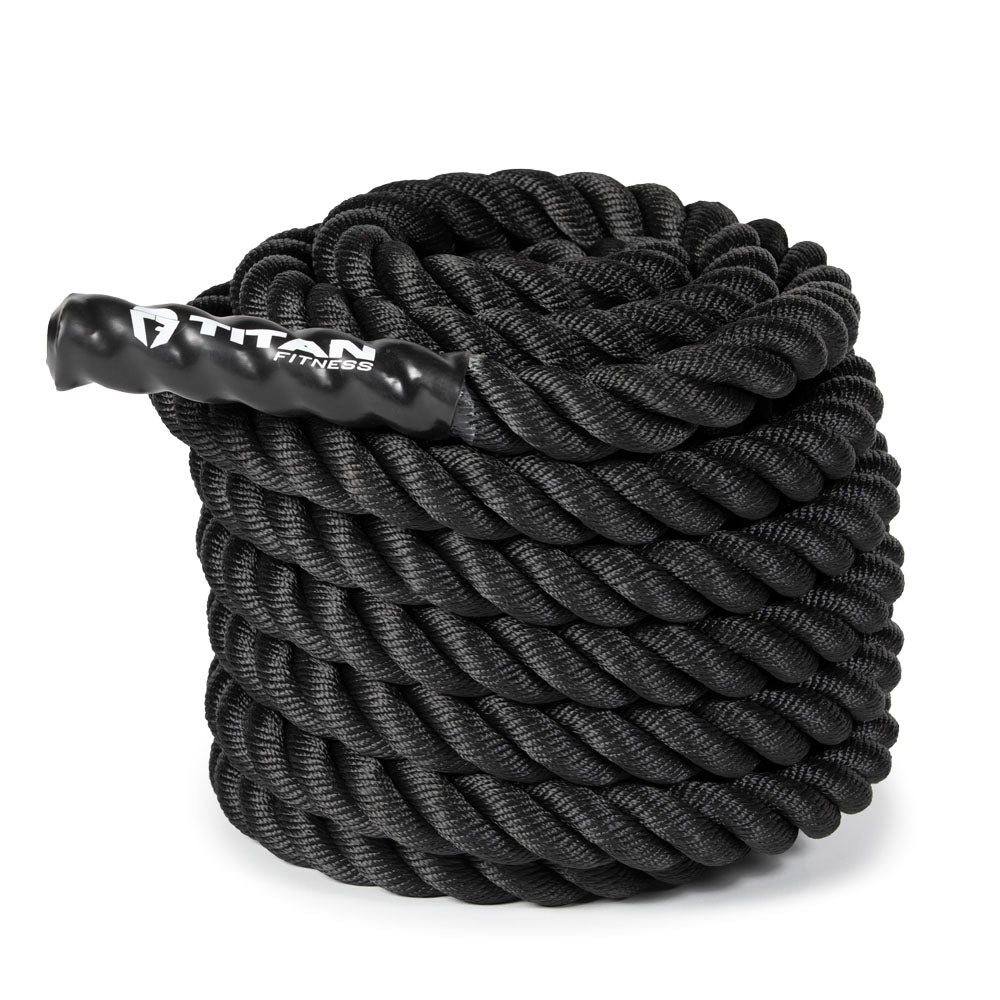
Battle Rope Co. 1.5-Inch x 50-Foot Poly Dacron Rope
Best Overall: Battle Rope Co.'s 50-foot poly dacron rope hits the sweet spot for home and small-gym HIIT work. The 1.5-inch diameter at roughly 26 lbs generates meaningful wave resistance without burning out your grip in the first minute.
Top picks ↓| Product | Price | Link |
|---|---|---|
| $89.99Reference price | ||
| $164.99Reference price | ||
| $65.99Reference price | No partner store here — this opens an Amazon search. | |
| $29.95Reference price | ||
| $89.99Reference price |
Top picks
Related articles


Battle Rope Co. 1.5-Inch x 50-Foot Poly Dacron Rope
50-foot length requires about 20 feet of workout space. Poly dacron construction. Approx 26 lbs.
Battle Rope Co.'s 50-foot poly dacron rope hits the sweet spot for home and small-gym HIIT work. The 1.5-inch diameter at roughly 26 lbs generates meaningful wave resistance without burning out your grip in the first minute. Poly dacron — polyester and dacron co-woven — resists fraying at the anchor and drag points far better than plain nylon. Heat-shrink end caps keep the fiber bundle tight without bulking up the grip. The rope holds its shape and snap after months of regular use, which is what separates the long-term picks from the throwaway options at this price.
Pros
- ✓Poly dacron weave resists fraying at anchor and drag points
- ✓1.5-inch diameter is the most versatile for both HIIT and strength work
- ✓Heat-shrink end caps stay tight without thickening the grip
- ✓50-foot length supports the widest exercise variety
Cons
- ✗Requires roughly 20 feet of clear space from the anchor
- ✗Anchor strap not included — add roughly $15 separately
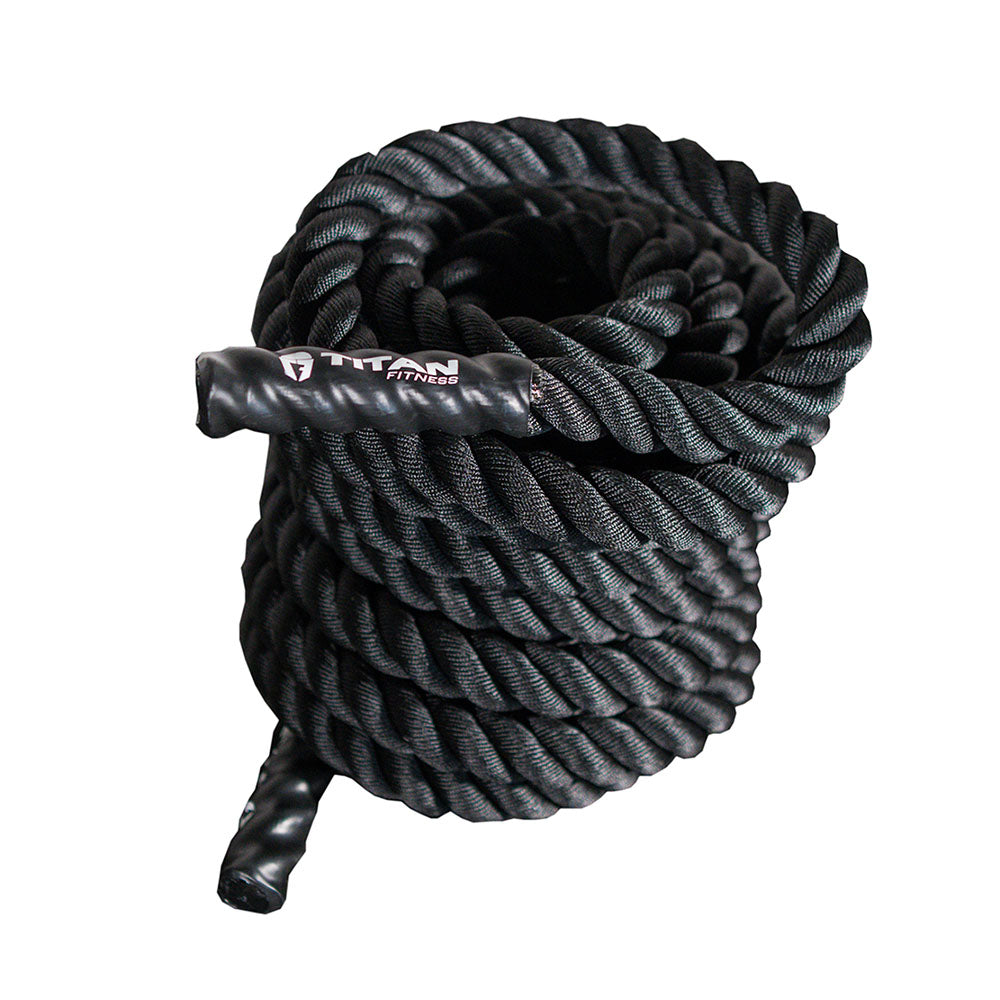
Titan Fitness Battle Rope 1.5-Inch x 50-Foot
Commercial-grade nylon end caps. Good for high-traffic gym environments. Approx 24 lbs.
Titan Fitness builds this 50-foot, 1.5-inch poly dacron rope around the harder realities of commercial use. The nylon end caps are noticeably more impact-resistant than the heat-shrink caps on lighter-duty ropes, which matters when the rope gets thrown and dragged across concrete daily. The texture sits slightly coarser than Battle Rope Co. — some users prefer it for grip security on long wave intervals. At about 24 lbs, the weight is close to the category standard. It is the right rope for CrossFit boxes, garage gyms with rotating users, and anywhere the rope sees multi-person traffic.
Pros
- ✓Hard nylon end caps survive repeated drops and drag on concrete
- ✓Coarser texture gives a more secure grip during long wave intervals
- ✓Built for daily commercial-volume use, not occasional sessions
- ✓Standard 1.5-inch, 50-foot dimensions work with most anchor setups
Cons
- ✗Coarser texture can feel rough on bare hands for some users
- ✗Same 20-foot clearance requirement as other 50-foot ropes

Fits in 15 feet of space. Woven protective sleeve reduces fraying. Approx 14 lbs.
The Power Guidance 30-foot rope at 1.5-inch diameter weighs around 14 lbs and only needs about 15 feet of clear floor from the anchor. That makes it the rope to consider for basement gyms, studio spaces, and apartment workout areas where a 50-foot rope physically does not fit. A woven polyester outer sleeve extends over the high-abrasion sections, which is the practical differentiator at this price point. Exercise variety drops slightly — full-body slams need more travel — but alternating waves, side-to-side, and power slams all work cleanly inside the shorter footprint.
Pros
- ✓Only needs about 15 feet of clear space from the anchor
- ✓Woven polyester protective sleeve reduces fraying in high-wear zones
- ✓Lighter 14-lb weight keeps wave speed up for longer intervals
- ✓Lower entry price than full 50-foot poly dacron options
Cons
- ✗Shorter length limits full-body slam patterns and travel work
- ✗Lighter weight loses to 50-foot ropes for raw conditioning load
No partner store here — this opens an Amazon search.
Subscribe to our newsletter
Occasional updates and new releases — no spam.
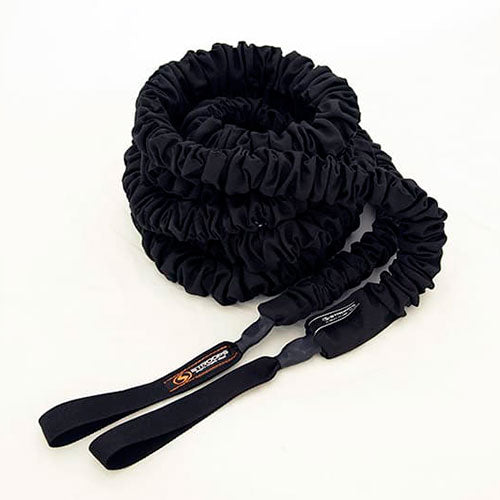
Anchor kit (strap + carabiner) included — no drilling required. Approx 20 lbs for 40-ft version.
Stroops solves the most-skipped problem in battle rope setups: the anchor. The kit ships with a looped strap and carabiner that clips onto squat rack posts, weight trees, or structural columns with no drilling. The nylon rope at 1.5-inch diameter feels softer in the hand than dacron but still transmits waves cleanly. The 40-foot version weighs about 20 lbs, putting it in the mid-range of the category. The real value is for renters and home gym owners who refuse to bolt anchors into walls — the strap loops around almost any structural post and is operational in under a minute.
Pros
- ✓Anchor strap and carabiner included — no separate purchase needed
- ✓No drilling required for setup
- ✓Softer nylon feel is friendlier on bare hands than dacron
- ✓Carabiner mount transfers between rack posts and weight trees quickly
Cons
- ✗Nylon stretches slightly under heavy waves, reducing snap versus poly dacron
- ✗40-foot length sits in the middle — not the longest, not the most compact
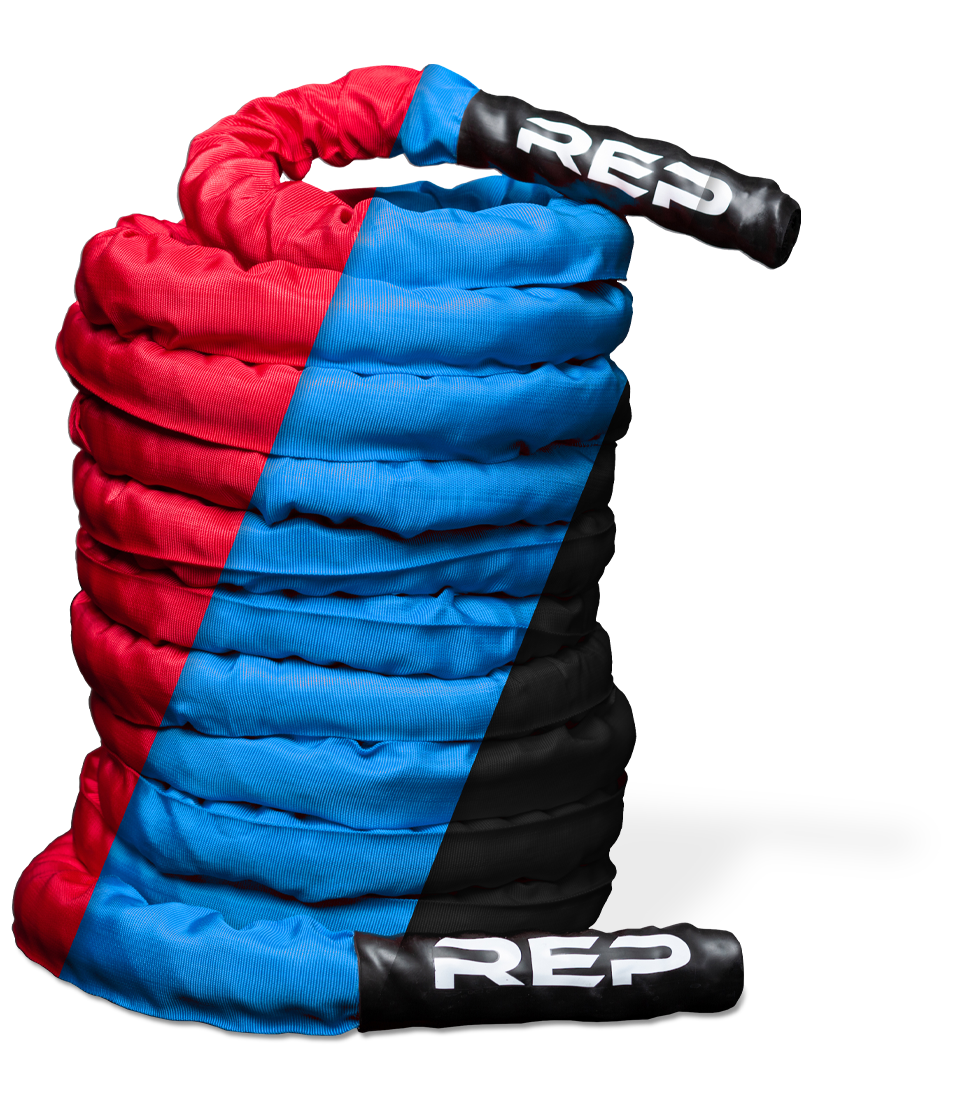
2-inch diameter is significantly harder than 1.5-inch. Best for strength athletes. Approx 32 lbs.
Rep Fitness's 2-inch, 40-foot rope is the strength-athlete pick. At roughly 32 lbs, it sits well above the 1.5-inch options, and wave speed drops sharply after the first 15 seconds — that is the design intent, not a flaw. The extra thickness turns the rope into a hand and forearm grip tool alongside its cardiovascular role. Construction is poly dacron with reinforced heat-shrink ends. Rep Fitness builds for strength-sport environments, and the rope reflects that. It is not the right choice for beginners or sustained HIIT circuits — best used in short, powerful sets where load matters more than duration.
Pros
- ✓2-inch diameter drives serious grip and forearm strength gains
- ✓32-lb mass produces the highest training load in the comparison
- ✓Reinforced heat-shrink ends hold up to high-impact slam work
- ✓Built for strength-sport athletes who train short, powerful sets
Cons
- ✗Too heavy for sustained HIIT intervals or beginners
- ✗Wave speed drops quickly past the 15-second mark
Which one is right for you?
For most home HIIT setups
Battle Rope Co. 1.5-Inch x 50-Foot Poly Dacron Rope
1.5-inch poly dacron at 50 feet gives the broadest exercise range without burning out grip in the first set.
For multi-user and commercial gyms
Titan Fitness Battle Rope 1.5-Inch x 50-Foot
Hard nylon end caps and a coarser texture hold up to daily drops, drags, and rotating users.
For basements and apartments
Power Guidance Battle Rope 1.5-Inch x 30-Foot
30-foot length works inside 15 feet of clearance, where a 50-foot rope simply will not fit.
For renters who can't drill anchors
Stroops Battle Rope (Includes Anchor Kit)
Included strap-and-carabiner kit clips onto rack posts or columns with zero hardware modification.
For strength athletes
Rep Fitness Battle Rope 2-Inch x 40-Foot
2-inch diameter at 32 lbs trains grip and forearm strength alongside conditioning in short, heavy sets.
Battle Rope Co. 1.5" x 50-Foot: The Full-Length Standard
Titan Fitness 1.5" x 50-Foot: Built for Commercial Volume
Power Guidance 1.5" x 30-Foot: The Compact Option That Still Works
Stroops Battle Rope with Anchor Kit: The Friction-Free Setup
Rep Fitness 2" x 40-Foot: Maximum Load for Strength Athletes
Frequently asked questions
What length and diameter should I choose for a home gym?▼
Do battle ropes need a special anchor, or can I use what I already have?▼
How does poly dacron compare to plain nylon or manila?▼
Prices change. Check the retailer for the current price.
Comments & questions
Discussion happens on nattzy, our community forum. Sign in with Google to post — it takes a second.