Best Speed Ropes 2026: 5 Compared
A speed rope is minimally a bearing-equipped jump rope with a light PVC or wire cable — but the difference between a $10 hardware store rope and a $60 speed rope is entirely in the bearing system. Weight range and build quality determine long-term value far more than feature lists.
Quick answer
The RX Smart Gear Bullet Comp leads on the spec that matters, sealed ball bearings giving the lowest-friction rotation in the category, which you feel past 50 consecutive double-unders where lesser bearings drag, on a 2.5 mm PVC cable. The Elite Surge 3 puts ball bearings at $25 to $35, Crossrope's magnetic quick-connect swaps weighted cables from a quarter to a half pound for progressive overload, the Buddy Lee Aero adds dual bearings and 5.5-inch handles, and WOD Nation's 3 mm cable teaches timing.
This comparison is desk research. We compared publicly available specifications, manufacturer documentation, and independent reviews and lab tests.
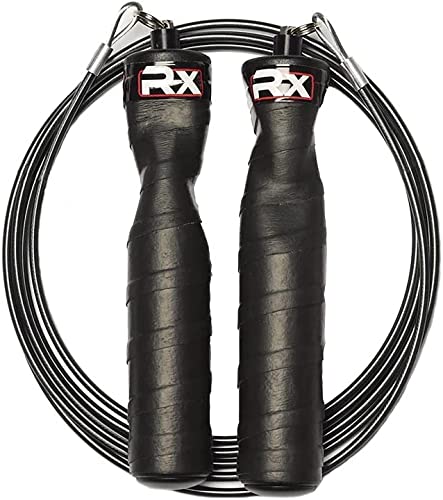
Elite Jumps Bullet COMP Speed Rope
Best Overall: The Bullet Comp's sealed ball bearings produce the lowest-friction rotation in this category — you can feel the difference during 50+ consecutive double-unders where inferior bearings start to drag. The 2.5 mm PVC cable hits the sweet spot between feedback weight and swing speed.
Top picks ↓| Product | Price | Link |
|---|---|---|
| $55Reference price | ||
| $298.00Reference price | No partner store here — this opens an Amazon search. | |
| $30Reference price | ||
| $20Reference price | ||
| $21.99Price as of 2026-09-24 |
| Product | Cable type | Handle material | Bearing type | Adjustable length | Weighted | Cable options |
|---|---|---|---|---|---|---|
| Elite Jumps Bullet COMP Speed Rope | 2.4 mm USA nylon-coated stainless steel | aluminum | dual stainless steel ball bearings per handle | yes (patented self-adjusting head, no tools; fits up to 6'4") | no | 2 (2.4 mm nylon-coated cable + 1.6 mm bare steel spare cable) |
| Crossrope Get Lean Set | coated steel cable core | — | — | no (sized by user height, not adjustable) | yes | 2 (1/4 lb rope and 1/2 lb rope) |
| Buddy Lee Aero Speed Jump Rope | PVC-coated steel wire (9'3" cable) | aluminum (with removable silicone grips) | patented Sonic Rocket Speed Swivel bearing | yes (cut-to-fit with included L-wrench and wire cutters) | no | 2 (4.0 mm and 4.5 mm PVC-coated cables included) |
| WOD Nation Speed Jump Rope | 2.5 mm PVC-coated steel | ABS plastic | 4 ball bearings (2 per handle, articulating swivel system) | yes (10 ft default, cut-to-fit) | no | 2 (includes 1 spare cable) |
| Elite Surge 3 Speed Jump Rope | 2.4 mm USA nylon-coated stainless steel | aluminum (with foam grip) | dual stainless steel ball bearings per handle | yes (self-adjusting Phillips-head screw/key system; fits up to 6'4") | no | 1 (single 10 ft 2.4 mm cable; spare cables sold separately) |
Top picks
Related articles

Sealed ball bearings, 2.5 mm PVC cable, 5-inch aluminum handles. $55-65. Best for advanced athletes who have learned double-unders and want maximum speed consistency. Competition standard in CrossFit.
The Bullet Comp's sealed ball bearings produce the lowest-friction rotation in this category — you can feel the difference during 50+ consecutive double-unders where inferior bearings start to drag. The 2.5 mm PVC cable hits the sweet spot between feedback weight and swing speed. Trade-off: at $55-65 it's a premium buy, and beginners won't notice the bearing advantage until they've built consistent double-under rhythm.
Pros
- ✓Sealed ball bearings for friction-free rotation
- ✓Competition-standard 2.5 mm PVC cable
- ✓5-inch aluminum handles with grip texture
Cons
- ✗Bearing advantage not felt until double-unders are consistent
Score breakdown
| Cable type | 2.4 mm USA nylon-coated stainless steel |
| Handle material | aluminum |
| Bearing type | dual stainless steel ball bearings per handle |
| Adjustable length | yes (patented self-adjusting head, no tools; fits up to 6'4") |
| Weighted | no |
| Cable options | 2 (2.4 mm nylon-coated cable + 1.6 mm bare steel spare cable) |
Weighted cable system with magnetic quick-connect, multiple cable weights (1/4 lb, 1/2 lb). $80-150. Best for cardiovascular training with progressive overload. Not optimal for double-under speed work — use a lighter rope for that.
Crossrope's magnetic quick-connect and interchangeable weighted cables make this the only rope system that supports genuine progressive overload — you increase cable weight (1/4 lb to 1/2 lb) as conditioning improves, exactly like adding plates. Caloric burn per session measurably increases with heavier cables. Trade-off: the system costs $80-150 and the heavier cables are too slow for double-under work; this is a cardio tool, not a speed tool.
Pros
- ✓Interchangeable weighted cables for progressive overload
- ✓Magnetic quick-connect swaps cables in under 10 seconds
- ✓Backed by research on increased caloric burn
Cons
- ✗Too heavy for double-under speed work
Score breakdown
| Cable type | coated steel cable core |
| Adjustable length | no (sized by user height, not adjustable) |
| Weighted | yes |
| Cable options | 2 (1/4 lb rope and 1/2 lb rope) |
No partner store here — this opens an Amazon search.
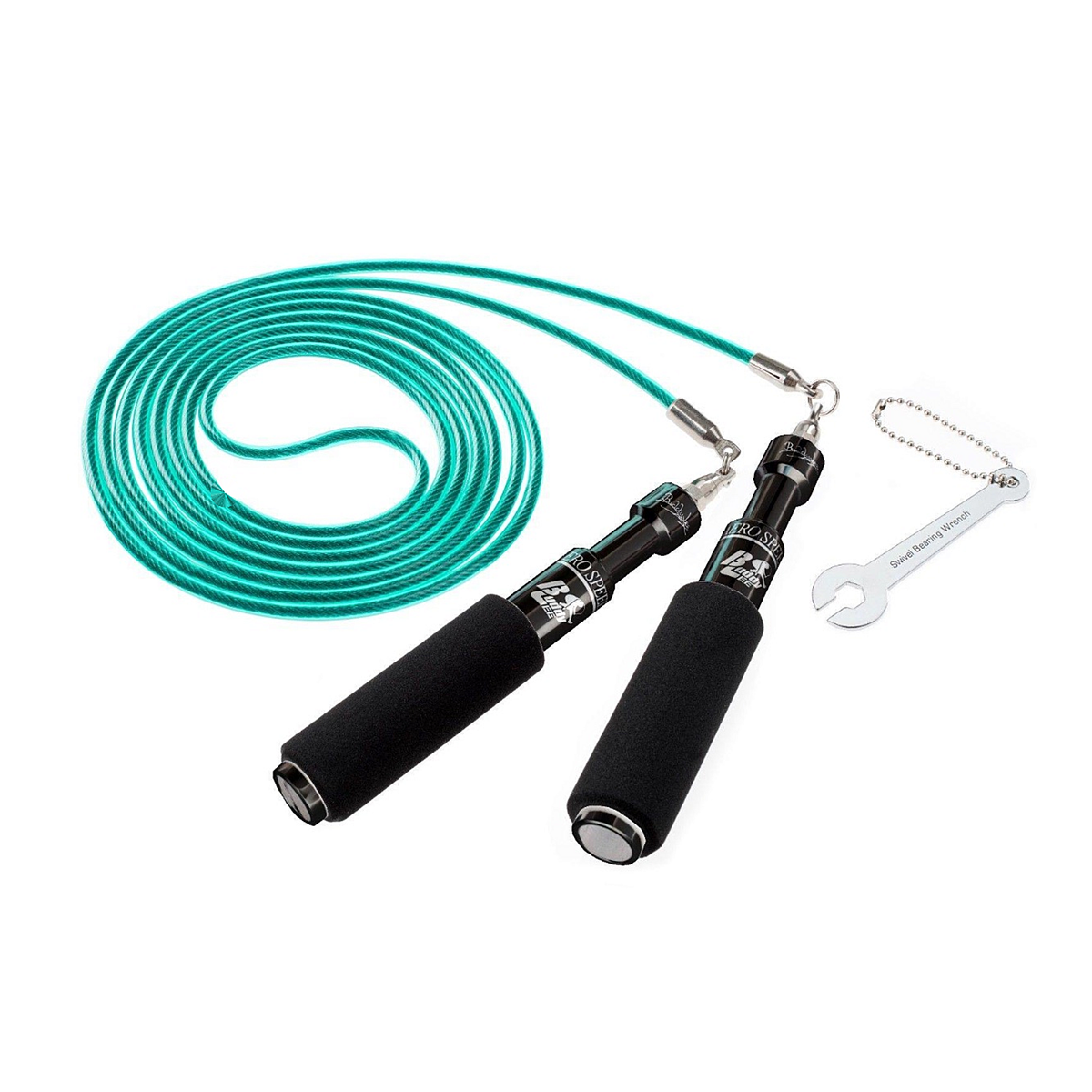
Dual-ball bearing, thin wire cable, 5.5-inch handles. $30-45. Best mid-range option for athletes who have learned double-unders and want quality bearings without premium pricing.
Buddy Lee's dual-ball bearing system and thin wire cable make this a genuine performance rope at $30-45 — the dual bearing reduces friction noticeably compared to bushing ropes. The 5.5-inch handles suit larger hands and provide leverage for faster wrist flicks. Trade-off: the longer handles create a wider arc that limits maximum rotation speed compared to 5-inch standard handles.
Pros
- ✓Dual-ball bearings at mid-range price
- ✓Wire cable for fast rotation
- ✓5.5-inch handles suit larger hands
Cons
- ✗Longer handles limit peak rotation speed
Score breakdown
| Cable type | PVC-coated steel wire (9'3" cable) |
| Handle material | aluminum (with removable silicone grips) |
| Bearing type | patented Sonic Rocket Speed Swivel bearing |
| Adjustable length | yes (cut-to-fit with included L-wrench and wire cutters) |
| Weighted | no |
| Cable options | 2 (4.0 mm and 4.5 mm PVC-coated cables included) |
Subscribe to our newsletter
Occasional updates and new releases — no spam.

Bushing bearing, 3 mm PVC cable (heavier for better timing feedback), video tutorials included. $20-30. Best starting speed rope for beginners learning double-unders. The heavier cable provides tactile cues for timing.
The 3 mm PVC cable is heavier than competition ropes by design — the extra weight creates tactile timing cues that teach beginners when the rope is overhead and when to jump. Video tutorials included with purchase shorten the double-under learning curve measurably. Trade-off: the bushing bearing creates friction that limits peak speed; once you're consistently hitting 30+ double-unders per set, you'll want a ball-bearing upgrade.
Pros
- ✓Heavier 3 mm cable for clear timing feedback
- ✓Video tutorials included
- ✓Most affordable option in this comparison
Cons
- ✗Bushing bearing limits peak rotation speed
Score breakdown
| Cable type | 2.5 mm PVC-coated steel |
| Handle material | ABS plastic |
| Bearing type | 4 ball bearings (2 per handle, articulating swivel system) |
| Adjustable length | yes (10 ft default, cut-to-fit) |
| Weighted | no |
| Cable options | 2 (includes 1 spare cable) |

Ball bearings at mid-range price, 2 mm PVC cable, 5-inch handles. $25-35. Best value ball-bearing speed rope. Recommended for most intermediate athletes — ball-bearing quality without the premium price of the Elite Jumps.
Ball bearings at $25-35 is the Elite Surge 3's defining value proposition — you get the low-friction rotation of premium ropes without the premium price. The 2 mm PVC cable is nearly identical in diameter to the Elite Jumps's 2.5 mm, and most athletes can't feel the difference below 100+ rep sets. Trade-off: the performance gap to the Bullet Comp becomes real at competition speeds (triple-unders, 150+ consecutive double-unders); for training purposes it's negligible.
Pros
- ✓Ball bearings at bushing-bearing price
- ✓2 mm PVC cable for fast rotation
- ✓Competitive with Bullet Comp below 100-rep sets
Cons
- ✗Performance gap to Bullet Comp emerges at competition speeds
Score breakdown
| Cable type | 2.4 mm USA nylon-coated stainless steel |
| Handle material | aluminum (with foam grip) |
| Bearing type | dual stainless steel ball bearings per handle |
| Adjustable length | yes (self-adjusting Phillips-head screw/key system; fits up to 6'4") |
| Weighted | no |
| Cable options | 1 (single 10 ft 2.4 mm cable; spare cables sold separately) |
Which one is right for you?
For CrossFit competitors
Elite Jumps Bullet COMP Speed Rope
Competition-standard bearings and 2.5 mm cable match what's used in sanctioned events; no adjustment period between training and competition.
For cardio-focused home athletes
Crossrope Get Lean Set
Progressive cable weight builds cardiovascular demand systematically, and caloric burn per session exceeds standard rope at equal time investment.
For beginners learning double-unders
WOD Nation Speed Jump Rope
The heavier cable and included video tutorials create the fastest path from zero double-unders to consistent sets of 10+.
For most intermediate athletes
Elite Surge 3 Speed Jump Rope
Ball-bearing quality at $25-35 covers every training need below competition level; the $20-30 savings vs Bullet Comp is hard to justify for non-competitors.
Bearing systems, cable weight, and handle length: the specs that separate speed ropes
Ball bearings vs bushing bearings: the highest-quality speed ropes use sealed ball bearings at the junction between handle and cable. Ball bearings provide the lowest friction rotation, allowing the cable to spin at maximum speed with minimal handle movement. Bushing bearings (a simpler sleeve-type bearing) are adequate for moderate-speed training but create more friction at very high RPMs. Budget ropes use no bearing at all — just a fixed attachment. For learning double-unders, a basic bushing bearing is sufficient; for advanced training and competition, ball bearings provide a meaningful difference in feel.
Cable weight and diameter directly affect rope speed and the feel of turns. A lighter, thinner cable (1.5-2 mm wire-core or thin PVC) swings faster but provides less feedback. A slightly heavier cable (4 mm PVC or weighted cable) swings slower but is easier to feel and time. Beginners typically learn faster on slightly heavier ropes because the weight provides tactile cues for timing — you can feel the turn as it comes over your head. Advanced athletes often prefer lighter cables for maximum speed. The Crossrope system takes this further by offering interchangeable weighted cables calibrated in ounces.
Handle length affects wrist mechanics. Standard handles are 4.5-5 inches. Longer handles (6+ inches) provide more leverage, which can help users with poor wrist flexibility but creates a larger sweep arc that slows maximum speed. For most users, standard 5-inch handles are correct. Handle material matters for grip — foam handles absorb moisture better than bare aluminum; aluminum is more durable but can become slippery in sweaty conditions.
Elite Jumps Bullet Comp: the competition standard
The Elite Jumps Bullet Comp is the closest thing to a competition standard in CrossFit and fitness competitions. The sealed ball bearing system provides the smoothest, lowest-friction rotation available in consumer speed ropes. The 2.5 mm PVC cable provides enough weight for feedback without slowing rotation significantly. The handles are 5 inches, aluminum with slight texturing for grip.
The Bullet Comp is designed for double-unders and higher: the bearing system allows cable speeds high enough for triple-unders and consecutive double-unders without the rope slowing at the peak of each revolution. This is the relevant distinction from bushing-bearing ropes — at very high speeds, even small amounts of bearing friction create perceptible inconsistency in the rope's rhythm.
At $55-65, the Elite Jumps is in the premium speed rope price range. For athletes who have already learned double-unders and want to optimize for speed and consistency, the Bullet Comp is the correct tool. For beginners learning double-unders, the bearing quality difference is less relevant than getting enough practice repetitions.
Crossrope Get Lean Set: the weighted cable system
The Crossrope Get Lean Set is different from other speed ropes in this comparison because it is a weighted rope system rather than a speed rope in the traditional sense. The set includes handles (with a quick-connect magnetic attachment mechanism) and multiple cable weights (typically a 1/4 lb and 1/2 lb cable, sometimes also 1 lb and 2 lb cables). The idea is that heavier cables increase the training stimulus per revolution — a 2 lb cable provides more upper body work per jump than a 1/4 lb cable.
The weighted rope approach is supported by research: heavier jump ropes increase caloric expenditure per unit time compared to standard ropes at equivalent effort. The Crossrope system allows progressive overload (increasing cable weight as you adapt) and variety within one handle system. The quick-connect magnetic system works reliably — cable swaps take under 10 seconds.
At $80-150 for the full set, Crossrope is more expensive than single speed ropes. The value is in the cable progression system rather than any specific cable. For users who want to use jump rope as a cardiovascular training tool and want progressive difficulty rather than maximum speed, the Crossrope Get Lean is the correct choice. For double-under work and speed training, a lighter speed rope like the Elite Jumps or Elite Surge is more appropriate.
Buddy Lee Aero Speed and WOD Nation: the mid-range options
The Buddy Lee Aero Speed Jump Rope is made by Buddy Lee, a jump rope world champion who has produced speed rope systems for 20+ years. The Aero Speed uses a dual-ball bearing system and a thin wire cable. The handles are longer than average (5.5 inches) which provides more leverage and suits users with larger hands. At $30-45, it is priced in the mid-range.
The WOD Nation Speed Jump Rope is a bushing-bearing rope targeted at CrossFit athletes learning double-unders. The rope is explicitly beginner-friendly: the slightly heavier 3 mm PVC cable provides more feedback for timing, and the rope is sold with video tutorials. At $20-30, it is the most affordable option in this comparison and the correct starting speed rope for someone new to double-unders who doesn't yet know if they'll stick with the training.
Both Buddy Lee and WOD Nation are legitimate speed ropes at their price points. The Buddy Lee is appropriate for intermediate athletes who have learned double-unders and want better bearing quality without paying premium prices. WOD Nation is appropriate for absolute beginners who want a feedback-friendly rope to develop basic double-under timing.
Elite Surge 3: the value bearing rope
The Elite Surge 3 is a ball-bearing speed rope at a mid-tier price ($25-35) — the important distinction being that it uses ball bearings (not bushings) despite being priced like a bushing-bearing rope. The cable is a 2 mm PVC, similar to the Elite Jumps in diameter. Handle length is 5 inches.
The Elite Surge 3 is the recommendation for most intermediate athletes who want ball-bearing quality at a reasonable price. The performance gap between the Surge 3 and the Elite Jumps Bullet Comp is real but small — at the speed levels required for double-unders and moderate triple-unders, the difference is not perceptible to most athletes. The gap becomes perceptible at very high consecutive repetition counts (100+ double-unders per set) and competition speeds.
At $25-35, the Elite Surge 3 undercuts the Bullet Comp by $20-30 with comparable performance for most training contexts. It is the recommended choice for the majority of athletes: good enough for advanced training, not an unnecessary expense for the performance gains it provides.
Frequently asked questions
How long should a speed rope be?▼
How do you learn double-unders?▼
Are speed ropes only for CrossFit? Can boxers and regular people use them?▼
Prices change. Check the retailer for the current price.
Comments & questions
Discussion happens on nattzy, our community forum. Sign in with Google to post — it takes a second.