Best Swim Fins 2026: Training Fins for Every Stroke & Level
WriterPickly Editorial
Updated 2026-10-31
Swim fins in training overload the legs to build kick strength, ankle flexibility, and speed — but blade length, material, and heel design decide what a fin actually trains. This guide compares 5 fins on the same terms using the makers' published descriptions and major retailers' copies of them.
Quick answer
FINIS Zoomers Gold are the training default: FINIS describes a short natural-rubber blade with a closed heel that keeps the kick fast and compact, closer to freestyle tempo than a long fin. The Speedo Biofuse Training Fin pairs a stiff blade with a soft foot pocket and side rails for propulsion on both kick beats; the Arena Powerfin Pro is a short, open-heel silicone fin with slits in the blade, built for power and leg-technique work; the FINIS Foil monofin builds hip-driven undulation for butterfly and dolphin kick; and the TYR Crossblade uses an intermediate-length natural-rubber blade between short and long fins.
📋How we compared
This comparison is desk research. We compared each fin's blade class, material, heel, design, and stated use from the makers' official product pages and guides, plus major retailers' copies of the same descriptions, checked in October 2026. Pickly did not test these products.
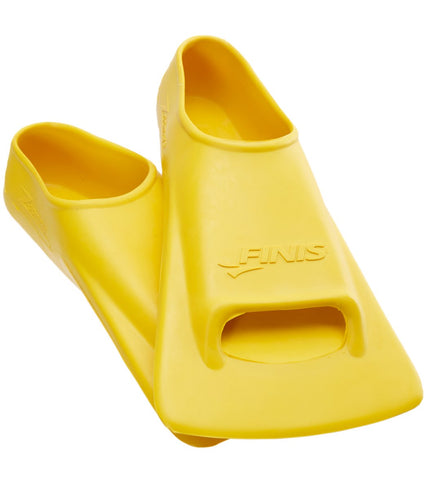
Best for Technique: Zoomers are a long-standing benchmark in competitive swim training. FINIS describes a short blade made of natural rubber that keeps the kick cycle fast and compact, closer to freestyle tempo, where long fins let a lazy kick hide.
Top picks ↓This button opens Amazon search results, not a specific product page.
This button opens Amazon search results, not a specific product page.
This button opens Amazon search results, not a specific product page.
This button opens Amazon search results, not a specific product page.
Which one is right for you?
Related articles
1★ Best PickA+Best for TechniqueFINIS Zoomers Gold
Zoomers are a long-standing benchmark in competitive swim training. FINIS describes a short blade made of natural rubber that keeps the kick cycle fast and compact, closer to freestyle tempo, where long fins let a lazy kick hide. The closed heel gives a secure fit and, per FINIS, inhibits hyperflexion, and FINIS's training-fin guide lists the Zoomers Gold for leg strength and kick sets for intermediate swimmers. They can feel demanding if you have stiff ankles — short blades ask for ankle flexibility you may still be building.
Pros
- ✓Short blade keeps the fast, compact kick that transfers to freestyle technique
- ✓Closed heel for a secure fit (natural rubber)
- ✓Maker positions it for leg strength and kick sets
Cons
- ✗Demanding at first with stiff ankles; FINIS lists it for intermediate swimmers
Specifications
- Blade type
- short
- Material
- rubber
- Foot pocket
- closed heel
- Use type
- training
- Blade type
- short
- Material
- rubber
- Foot pocket
- closed heel
- Use type
- training
2ABest All-Round Training FinSpeedo Biofuse Training Fin
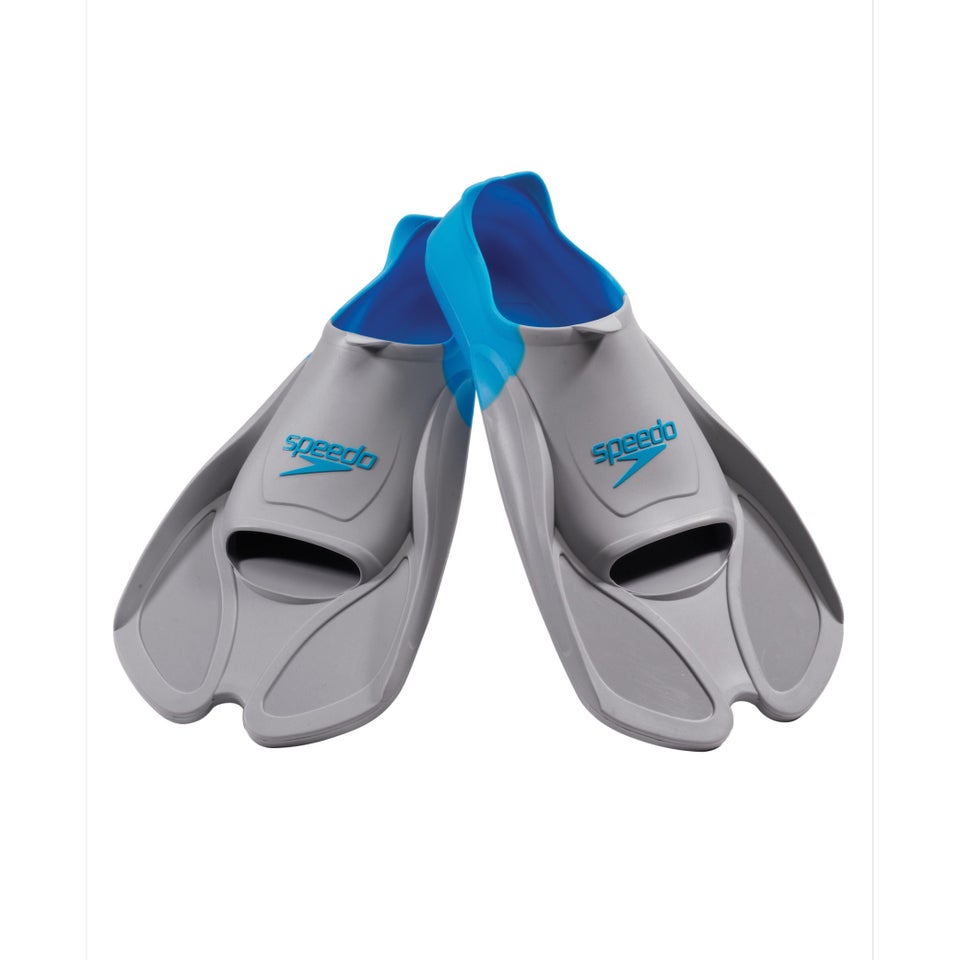
Speedo's Biofuse Training Fin is the all-rounder here. Speedo describes a dual-density design that pairs a stiff blade with a soft foot pocket, and dual rails down each side of the fin that give propulsion on both the up and down beat of the kick, to help elongate the kick and improve technique and speed. Speedo's UK listing gives the material as 100% silicone, while its US listing describes natural rubber, so check the listing for your region. Retailers list it for front crawl, backstroke, and butterfly kick sets and drills, but not breaststroke. Good for mixed sets without changing fins between drills.
Pros
- ✓Stiff blade on a soft foot pocket (dual density)
- ✓Side rails for propulsion on both kick beats
- ✓Covers freestyle, backstroke, and fly kick drills
Cons
- ✗Material and blade length vary or are unstated by region — check the listing
Specifications
- Blade type
- short
- Material
- silicone
- Foot pocket
- closed heel
- Use type
- training
- Blade type
- short
- Material
- silicone
- Foot pocket
- closed heel
- Use type
- training
This button opens Amazon search results, not a specific product page.
3ABest for Kicking SetsArena Powerfin Pro

The Arena Powerfin Pro is a short-blade fin that Arena designs for power training and leg technique. Arena's current Powerfin Pro II page describes a short, sloping blade with hydrodynamic slits in the top, notches on the bottom ribs to help kick faster, side grooves for control, and left- and right-specific shaping. It is made of 100% silicone, which Arena says is comfortable and reduces the chance of blisters, and it has an open heel for ankle mobility. A good choice for masters swimmers or anyone doing high-volume kick work who prefers an open heel.
Pros
- ✓Short sloping blade with slits, built for power and leg technique
- ✓Soft 100% silicone; maker says it reduces blister risk
- ✓Open heel and left/right-specific shaping
Cons
- ✗Sits in a higher price band than the rubber training fins
Specifications
- Blade type
- short
- Material
- silicone
- Foot pocket
- open heel
- Use type
- training
- Blade type
- short
- Material
- silicone
- Foot pocket
- open heel
- Use type
- training
This button opens Amazon search results, not a specific product page.
Subscribe to our newsletter
Occasional updates and new releases — no spam.
4B+Best MonofinFINIS Foil Monofin
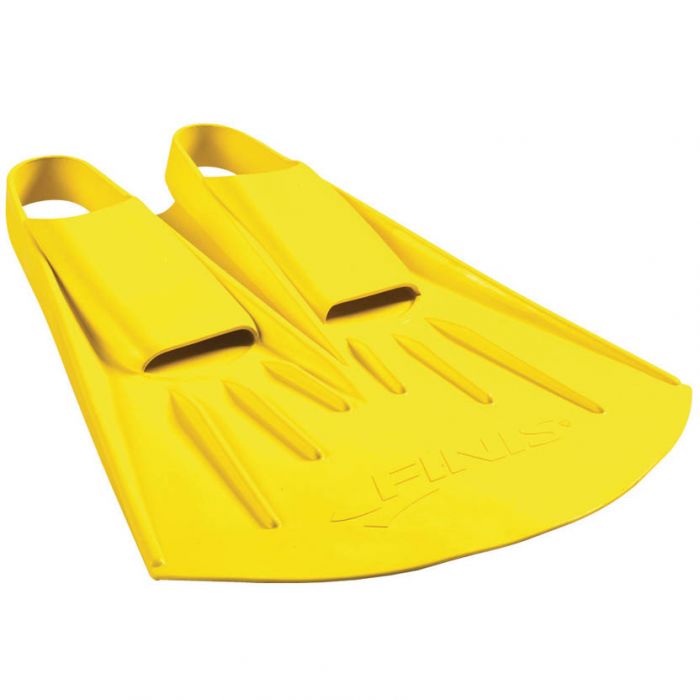
Unlike the other four fins here, the Foil is a monofin, and it serves a different purpose: dolphin kick development and undulation drills. The connected blade makes the body move in a wave from the hips, which is the foundation for butterfly and underwater dolphin kick; FINIS developed it for Coach Bob Gillett's Full Body Motion technique. FINIS describes a natural-rubber build with an open heel and open toe space for comfort. It is not for casual training — it requires deliberate drills and good body awareness — but if you're serious about butterfly or underwater dolphin kick, the Foil targets the hip-driven undulation that separate fins don't train in the same way.
Pros
- ✓Connected blade trains hip-driven undulation
- ✓Foundation work for butterfly and underwater dolphin kick
- ✓Natural rubber with open heel and open toe space
Cons
- ✗Requires deliberate drills and body awareness — not for casual training
Specifications
- Blade type
- mono
- Material
- rubber
- Foot pocket
- open heel
- Use type
- training
- Blade type
- mono
- Material
- rubber
- Foot pocket
- open heel
- Use type
- training
This button opens Amazon search results, not a specific product page.
5B+Best Intermediate-Blade FinTYR Crossblade Trainer
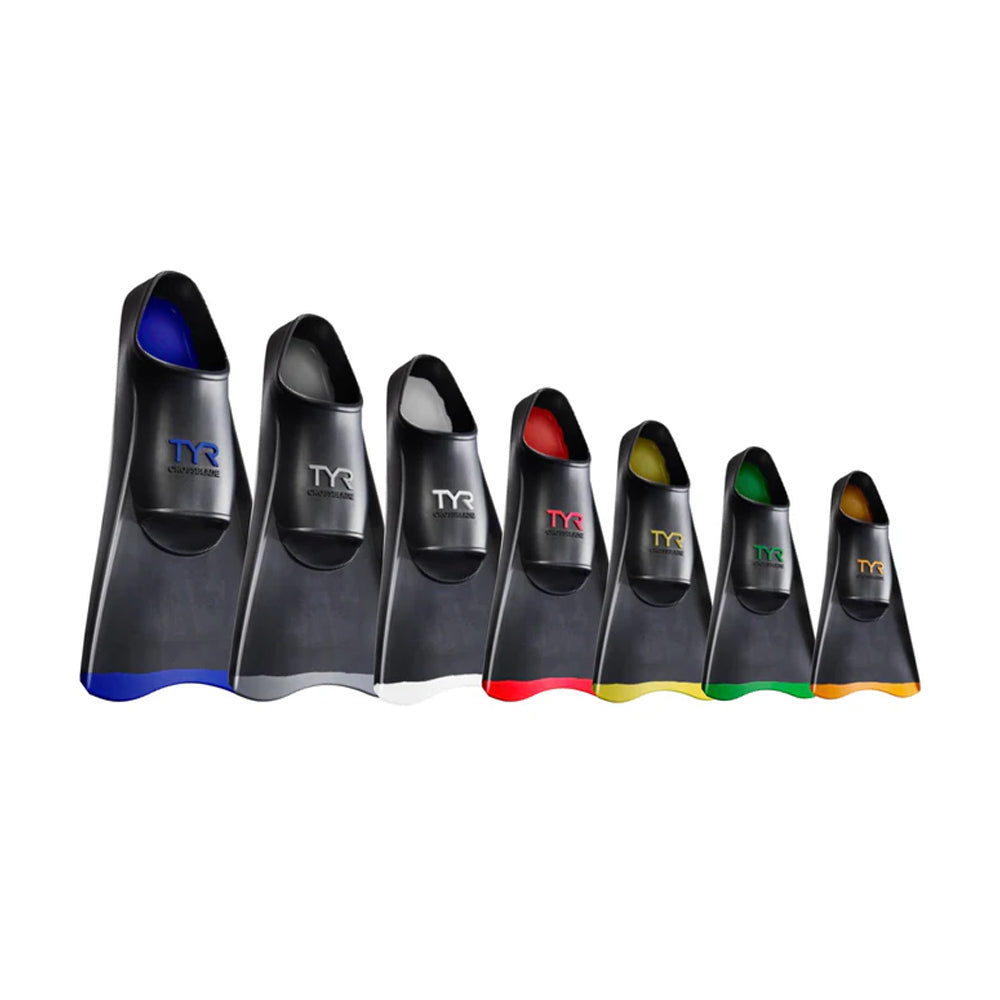
The TYR Crossblade sits between short and long fins. Retailers' copies of TYR's description list an intermediate-length blade, 100% natural rubber, thickened foot pockets, and a no-slip heel grip on the 2.0 version, with the blade aimed at raising leg tempo and speed while keeping enough resistance to build leg power and technique. That makes it a fit for swimmers moving up from longer fins, or for teams equipping several athletes with one model. It is not a true short-blade technique fin like the Zoomers or Powerfin Pro, and swimmers with a latex allergy should note the natural-rubber build.
Pros
- ✓Intermediate blade between short and long fins
- ✓Natural rubber with thickened foot pockets (2.0)
- ✓No-slip heel grip
Cons
- ✗Not a short-blade technique fin; natural rubber contains latex
Specifications
- Blade type
- short
- Material
- rubber
- Foot pocket
- closed heel
- Use type
- training
- Blade type
- short
- Material
- rubber
- Foot pocket
- closed heel
- Use type
- training
This button opens Amazon search results, not a specific product page.
Side-by-side on the same scale
| Product | Blade type | Material | Foot pocket | Use type |
|---|---|---|---|---|
| FINIS Zoomers Gold | short | rubber | closed heel | training |
| Speedo Biofuse Training Fin | short | silicone | closed heel | training |
| Arena Powerfin Pro | short | silicone | open heel | training |
| FINIS Foil Monofin | mono | rubber | open heel | training |
| TYR Crossblade Trainer | short | rubber | closed heel | training |
How to read this table: values come from each maker's official product pages and guides (a few from major retailers' copies of the same descriptions), checked in October 2026. Swim-fin makers rarely publish blade lengths or stiffness ratings, so the table compares blade class, material, heel, and design as each maker describes them. “—” means the value could not be confirmed from those sources. Pickly did not test these products.
Table checked 2026-10-31
How to Choose Swim Fins
Blade length and stiffness determine what a fin trains. Here's how to match fins to your goals.
Short Blade vs Long Blade
Short blade fins (like Zoomers) keep kick turnover fast, closer to freestyle cadence, so they suit technique and tempo work. Long blade fins allow a slower, bigger kick that builds propulsion but can let a lazy freestyle kick hide. Long blades suit snorkeling, open water, and beginners getting comfortable; short blades suit competitive technique training. Intermediate blades, like the TYR Crossblade, sit between the two. None of the fins in this comparison is a long-blade fin.
Stiffness
Stiffer fins demand more force per kick and give stronger feedback, which builds strength but is harder on ankles and calves. Softer fins are more comfortable but provide less overload. If you have tight ankles, starting with softer fins and progressing to stiffer short blades is a common approach, and many swimmers keep two pairs: softer fins for long kick sets, stiffer short fins for technique work. Makers rarely publish a stiffness figure, so read their descriptions — FINIS, for example, describes the Zoomers Gold as low-impact on the down-kick, while Speedo describes a stiff blade on a soft foot pocket.
Split Blade vs Solid Blade
Some fins add slits, rails, or channels to change how water flows over the blade — the Arena Powerfin Pro has hydrodynamic slits in the top of the blade, and the Speedo Biofuse Training Fin has rails down each side. Solid blades give more uniform resistance through the kick. Neither is definitively better; it depends on what your training emphasizes. A monofin, such as the FINIS Foil, joins both feet to one blade and trains a different movement altogether: the full-body undulation of butterfly and dolphin kick.
Material and Durability
The fins here use one of two materials. Natural rubber (FINIS Zoomers Gold, FINIS Foil, TYR Crossblade) is the traditional training-fin material; silicone (Arena Powerfin Pro, and the Speedo Biofuse Training Fin per Speedo's UK listing) is softer to the touch, and Arena says its silicone reduces the chance of blisters. Natural rubber contains latex, so swimmers with a latex allergy should check the material before buying. Chlorine and UV exposure degrade all fin materials over time, so rinse and dry fins after use. Check the foot-pocket size chart carefully: fins should fit snugly without causing blisters.
Matching the five fins to your training
Start with blade class, because it decides what you train. For freestyle tempo and technique, the two short-blade fins in the table — the FINIS Zoomers Gold (closed heel, natural rubber) and the Arena Powerfin Pro (open heel, silicone) — are the core choices. The TYR Crossblade's intermediate blade gives more propulsion than a short fin while keeping some tempo, which suits swimmers moving up from longer fins.
Then choose the heel. A closed heel, like the Zoomers Gold's, holds the foot securely and, according to FINIS, limits hyperflexion; an open heel, like the Powerfin Pro's and the Foil's, gives the ankle more freedom of movement, according to the makers. If you have had heel-strap or pocket blisters before, the soft silicone of the Arena or Speedo may be the more comfortable starting point.
Pick by stroke. For butterfly and underwater dolphin kick, the FINIS Foil is the specialist: FINIS designed it for the Full Body Motion technique. It is not a general training fin, so swimmers who mainly do freestyle sets should skip it. For mixed sets across freestyle, backstroke, and butterfly kick drills, the Speedo Biofuse Training Fin suits that mix; retailers list it for those kick drills but not for breaststroke.
Who should skip which: swimmers with very stiff ankles or no fin experience may find the Zoomers Gold demanding at first and could start with a longer or softer fin; swimmers with a latex allergy should look at the silicone Arena or Speedo rather than the natural-rubber FINIS and TYR fins; and anyone shopping on price should compare current prices, since list prices for these fins overlap and change often.
Bottom line
FINIS Zoomers Gold remains the benchmark for short-blade technique training — demanding by design, aimed at developing a fast, compact kick. For mixed training sets without fin changes, the Speedo Biofuse Training Fin is the versatile pick. Arena's Powerfin Pro suits swimmers who want a short, open-heel silicone fin for power and leg-technique work. Butterfly and dolphin-kick work benefits most from the FINIS Foil monofin, and the TYR Crossblade's intermediate blade suits swimmers who want more propulsion than a short fin gives.
Frequently asked questions
Should I use fins for freestyle training?▼
Do swim fins help with butterfly?▼
How do I prevent fins from causing blisters?▼
Can beginners use training fins?▼
Are silicone or natural rubber swim fins better?▼
Check the details of the products in this article
- FINIS Zoomers Gold$44Price as of 2026-11-10
- Speedo Biofuse Training Fin$34.99Reference price
This button opens Amazon search results, not a specific product page.
- Arena Powerfin Pro$59.99Reference price
This button opens Amazon search results, not a specific product page.
- FINIS Foil Monofin$113.36Reference price
This button opens Amazon search results, not a specific product page.
- TYR Crossblade Trainer$29.99Reference price
This button opens Amazon search results, not a specific product page.
Prices change. Check the retailer for the current price.
Comments & questions
Discussion happens on nattzy, our community forum. Sign in with Google to post — it takes a second.
View the discussion thread on nattzy ↗
Still deciding? Ask the community your own question — Post a question on nattzy ↗