Best Pickleball Paddles 2026: 5 Compared
Pickleball paddles are more technically differentiated than they appear. Fit and waterproof rating for your specific climate type matter most.
Quick answer
Paddles are more technically differentiated than they look, and weight is the specification to settle first. A lighter paddle around 7.3-7.8 oz gives faster hands at the kitchen line and suits players who volley; a heavier one near 8.0-8.5 oz adds power and stability on drives at the cost of maneuverability. Core thickness follows: 16mm cores are more forgiving and control-oriented, 13mm cores hit harder. Grip circumference should match your hand, since a wrong grip causes elbow strain.
Each paddle was assessed on core and face material, power-to-control balance, sweet spot size, durability under regular play, and price-to-performance ratio across beginner to advanced skill levels.
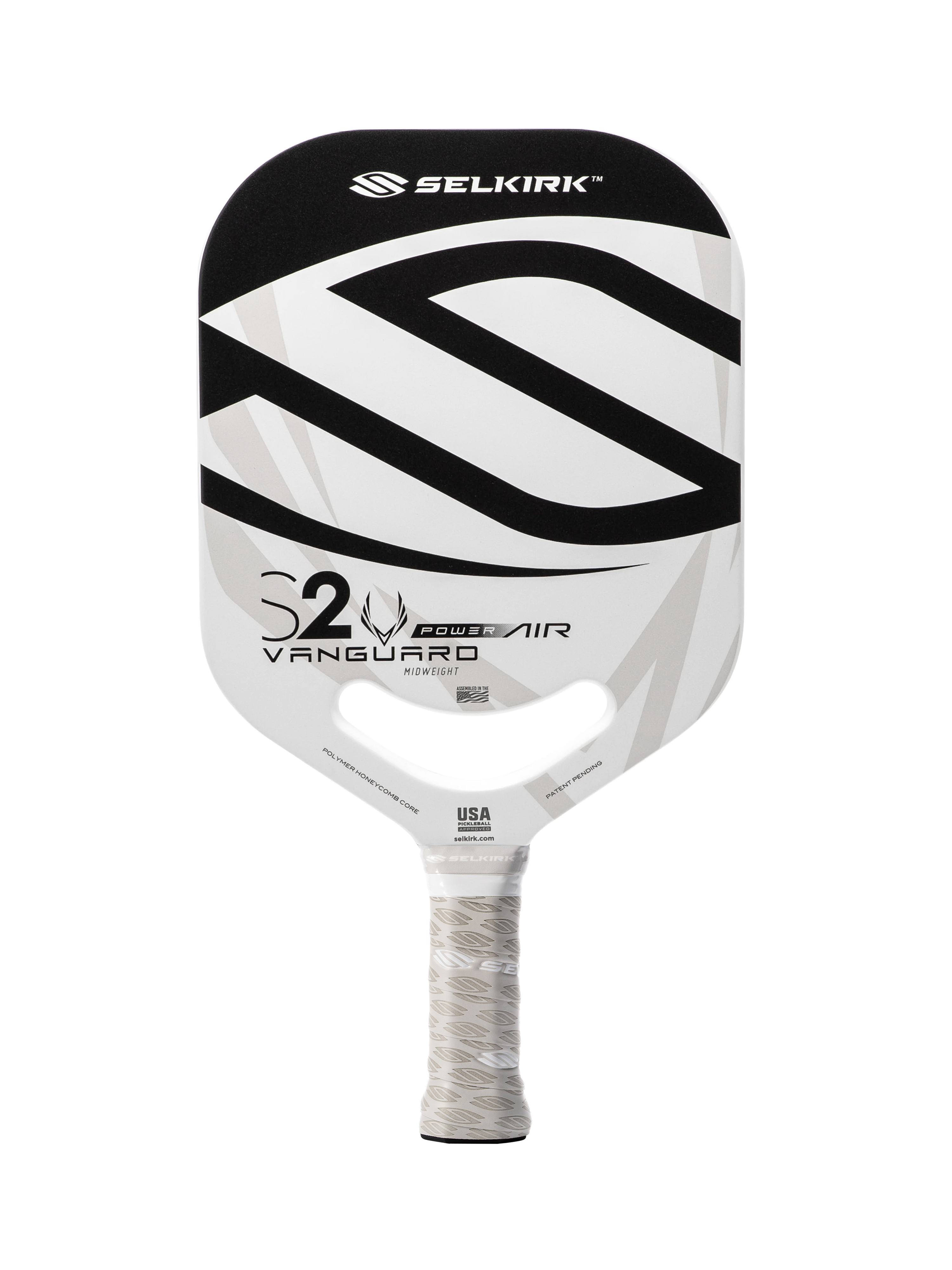
Selkirk Vanguard Power Air Pickleball Paddle
Best Overall Premium: The Vanguard Power Air's Aero-Tec carbon face and 16mm polymer core deliver the best combination of spin and control in the premium tier. The air-dynamic perforated edge reduces swing drag — a real advantage for fast hands at the kitchen.
Top picks ↓| Product | Price | Link |
|---|---|---|
| $250.00Reference price | ||
| $219.95Reference price | ||
| $30〜$80Reference price | ||
| $99.95Reference price | ||
| $149.99Reference price |
| Product | Face material | Core | Weight | Grip length | Price (US) | Grip circumference | Includes |
|---|---|---|---|---|---|---|---|
| Selkirk Vanguard Power Air Pickleball Paddle | Aero-Tec carbon fiber | Polymer honeycomb 16mm | 7.4–7.6 oz | 5.25 in | ~$220 | — | — |
| Joola Ben Johns Hyperion CFS 16 Pickleball Paddle | Carbon Friction Surface (CFS) | Polymer honeycomb 16mm | 7.5–8.0 oz | — | ~$220 | 4 1/4 in | — |
| Franklin Sports X-40 Pickleball Paddle Set (2 Paddles + 4 Balls) | Fiberglass composite | Polymer honeycomb | 7.8 oz | — | ~$40–50 | — | 2 paddles + 4 X-40 balls |
| Head Extreme Tour Pickleball Paddle | Graphite | Polymer honeycomb | 7.6 oz | — | ~$100 | — | — |
| Paddletek Tempest Wave Pro Pickleball Paddle | Textured fiberglass | Polymer honeycomb 14mm | 7.6–8.0 oz | — | ~$150 | — | — |
Top picks
Related articles


Selkirk Vanguard Power Air Pickleball Paddle
Premium carbon paddle, polymer honeycomb core, Aero-Tec face, 16mm, 7.4-7.6 oz. $200-230. Best premium pickleball paddle — pro tour brand, maximum spin and control. Correct for intermediate/advanced players who play 3+ per week and want top-tier technology.
The Vanguard Power Air's Aero-Tec carbon face and 16mm polymer core deliver the best combination of spin and control in the premium tier. The air-dynamic perforated edge reduces swing drag — a real advantage for fast hands at the kitchen. The $200+ price is steep for casual players who will not feel the difference from mid-tier paddles.
Pros
- ✓Aero-Tec carbon face generates elite spin on dinks and drives
- ✓16mm core depth maximizes dwell time for control shots
- ✓Aerodynamic edge reduces swing resistance for quick exchanges
Cons
- ✗At $200–230, the performance gap vs mid-tier paddles is only felt at intermediate+ skill levels
Score breakdown
| Face material | Aero-Tec carbon fiber |
| Core | Polymer honeycomb 16mm |
| Weight | 7.4–7.6 oz |
| Grip length | 5.25 in |
| Price (US) | ~$220 |
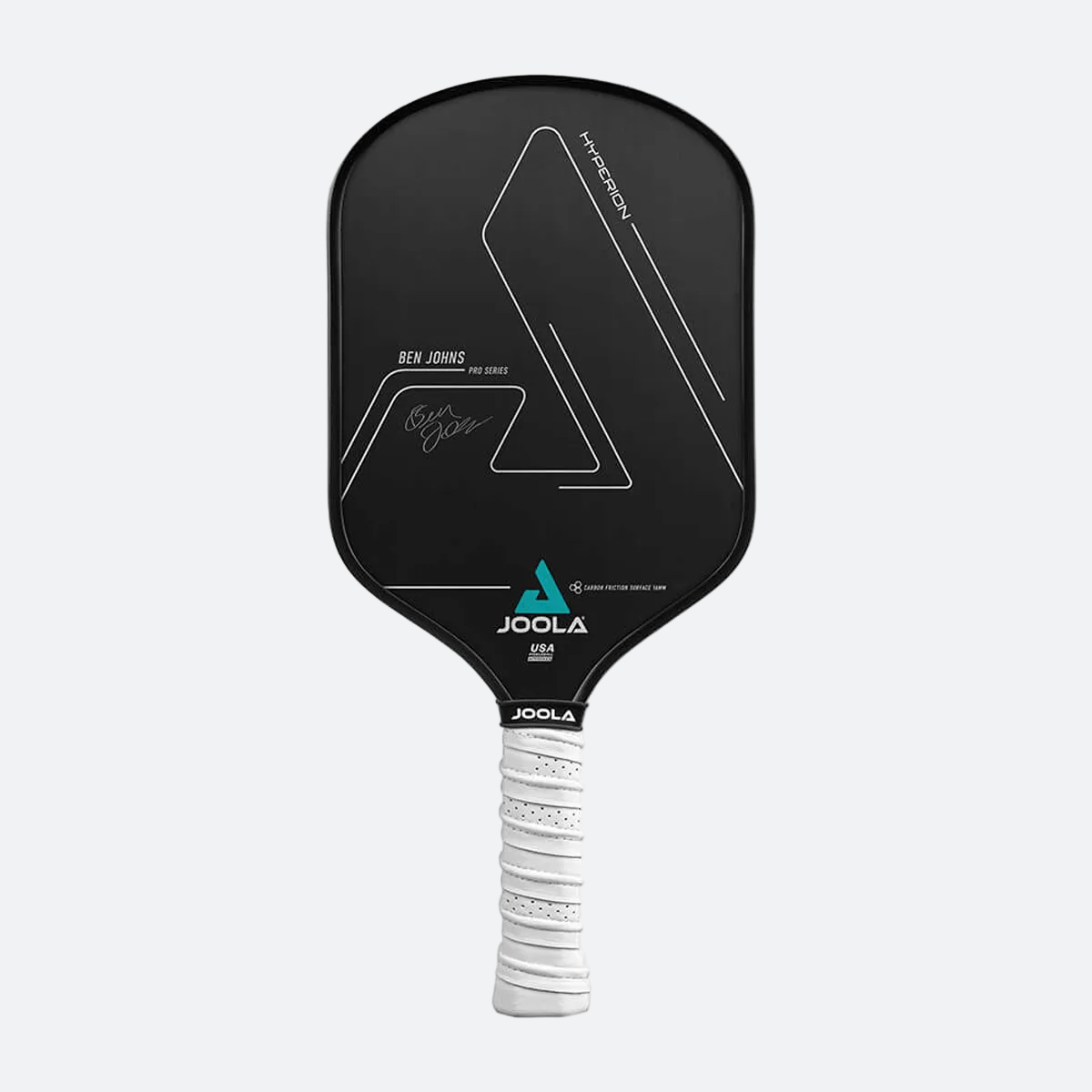
Joola Ben Johns Hyperion CFS 16 Pickleball Paddle
Carbon fiber face (CFS), 16mm polymer core, co-designed with world #1 Ben Johns. $200-230. Best spin-forward premium paddle — CFS texture maximizes topspin development. Correct for intermediate players developing spin game who want pro-endorsed paddle design.
Co-designed with world #1 Ben Johns, the Hyperion CFS16's carbon friction surface delivers the highest spin generation in this comparison. The 16mm core keeps it control-oriented even at fast swing speeds. The trade-off: the small sweet spot is unforgiving on off-center hits — a real concern for developing players.
Pros
- ✓CFS carbon face for maximum topspin on third-shot drops
- ✓Designed with input from world #1 Ben Johns
- ✓16mm thickness for soft touch at the kitchen line
Cons
- ✗Smaller sweet spot punishes off-center contact more than the Selkirk
Score breakdown
| Face material | Carbon Friction Surface (CFS) |
| Core | Polymer honeycomb 16mm |
| Weight | 7.5–8.0 oz |
| Grip circumference | 4 1/4 in |
| Price (US) | ~$220 |

Franklin Sports X-40 Pickleball Paddle Set (2 Paddles + 4 Balls)
2 composite paddles + 4 X-40 balls, fiberglass face, polymer core. $30-50. Best beginner set — includes tournament-standard balls, no commitment required. Correct for new players who want a complete starter package.
The Franklin X-40 set delivers two composite paddles plus four X-40 tournament-standard balls in one purchase — the right starting point before committing to a personal paddle. The included balls are genuine USA Pickleball approved balls, not generic. The paddles are beginner-appropriate but will feel limiting once you're playing regularly.
Pros
- ✓Two paddles plus four X-40 tournament-approved balls in one kit
- ✓Lowest entry cost to learn the game with legitimate equipment
- ✓Franklin is an official USA Pickleball ball supplier
Cons
- ✗Beginner paddle performance will feel limiting once technique develops past 3 months
Score breakdown
| Face material | Fiberglass composite |
| Core | Polymer honeycomb |
| Weight | 7.8 oz |
| Includes | 2 paddles + 4 X-40 balls |
| Price (US) | ~$40–50 |
Subscribe to our newsletter
Occasional updates and new releases — no spam.

Graphite face, polymer core, 7.6 oz. $80-100. Best mid-tier for tennis players — familiar feel, forgiving sweet spot. Correct for tennis players transitioning to pickleball who want equipment that translates their racket skills.
The Head Extreme Tour's graphite face and traditional feel make it the natural entry point for tennis players transitioning to pickleball. The forgiving sweet spot and familiar weight (7.6 oz) reduce the learning curve. The trade-off is less spin generation than carbon competitors at the same price point.
Pros
- ✓Traditional feel familiar to tennis players
- ✓Forgiving sweet spot reduces penalty for off-center contact
- ✓Mid-tier price at a respected racket brand
Cons
- ✗Graphite face produces less spin than carbon fiber faces in the $80–100 range
Score breakdown
| Face material | Graphite |
| Core | Polymer honeycomb |
| Weight | 7.6 oz |
| Price (US) | ~$100 |

Paddletek Tempest Wave Pro Pickleball Paddle
Textured fiberglass face, polymer core, 14mm, 7.6-8.0 oz. $120-150. Best mid-tier all-rounder — between beginner and premium, more spin texture than basic composite. Correct for players who've been playing 6+ months and want better feedback without $200 spend.
The Tempest Wave Pro's textured fiberglass face and 14mm polymer core hit the sweet spot between beginner and premium. It rewards developing spin technique without the unforgiving feedback of carbon face paddles. Best for players at the 6-month-to-2-year stage who want more than a beginner paddle without the full premium price.
Pros
- ✓Textured fiberglass provides spin feedback without carbon's steeper learning curve
- ✓14mm core balances power and control for intermediate players
- ✓Strong reputation in recreational and club-level play
Cons
- ✗Not enough face texture to satisfy advanced spin players transitioning from carbon
Score breakdown
| Face material | Textured fiberglass |
| Core | Polymer honeycomb 14mm |
| Weight | 7.6–8.0 oz |
| Price (US) | ~$150 |
Which one is right for you?
For advanced players prioritizing control and spin
Selkirk Vanguard Power Air Pickleball Paddle
Aero-Tec carbon face and 16mm core deliver the best dwell time and spin generation in the lineup.
For intermediate players developing a spin game
Joola Ben Johns Hyperion CFS 16 Pickleball Paddle
CFS carbon face is the highest spin-generating surface in the comparison, co-designed with the world's top-ranked player.
For tennis players switching to pickleball
Head Extreme Tour Pickleball Paddle
Graphite face and familiar weight feel like a natural extension of a tennis racket.
For players at 6 months to 2 years looking to upgrade
Paddletek Tempest Wave Pro Pickleball Paddle
Textured fiberglass rewards improving technique without the steep learning curve of carbon.
For complete beginners who need everything to start
Franklin Sports X-40 Pickleball Paddle Set (2 Paddles + 4 Balls)
Two paddles plus tournament-approved balls in one kit — the lowest-friction way to try pickleball.
Paddle core materials and how they affect play
Polymer honeycomb core: the standard construction for mid-tier and recreational paddles. The hexagonal honeycomb cell structure compresses under impact, providing a soft feel and consistent ball return. Thicker polymer cores (16mm+) increase dwell time and give more control — the ball stays on the paddle face longer, giving you more opportunity to direct it. Thinner polymer cores (13mm and under) produce a livelier, more 'pop'-oriented feel with more power but less control. Most beginner and intermediate players do better with a thicker polymer core (control) than a thin core (power) — control errors at lower levels are more costly than power.
Carbon fiber face: carbon fiber faces provide better texture for topspin generation than fiberglass or composite faces. The rougher carbon texture bites into the ball and increases spin RPM. This is significant because topspin drives and drop shots are core third-shot mechanics in intermediate and advanced pickleball. The Joola Ben Johns Hyperion uses a carbon fiber face — it's the primary reason it's recommended for players developing their spin game. Carbon fiber paddles typically cost $100-200+.
Fiberglass/composite face (beginner/mid-tier): fiberglass faces are smoother than carbon fiber and produce less spin texture but are appropriate for beginners who aren't generating significant topspin. They're also more forgiving — hitting off-center doesn't punish as severely as carbon. Franklin X-40 recreational and many sub-$80 paddles use fiberglass or composite faces. Perfectly adequate for learning mechanics and social play.
Selkirk, Joola, and the premium paddle category
Selkirk Vanguard Power Air ($200-230) is Selkirk's flagship premium paddle — polymer honeycomb core with an air dynamic design (edge perforations to reduce air drag on swing), Aero-Tec face material, 16mm thickness. Selkirk is one of the most respected brands in competitive pickleball — used by multiple pro tour players. The Vanguard Power Air is aimed at intermediate to advanced players who want maximum spin and control. The price reflects both the technology and the brand cachet in the competitive pickleball market.
Joola Ben Johns Hyperion CFS 16 ($200-230) is co-designed with Ben Johns (world #1 ranked pro player for multiple years). CFS stands for Carbon Friction Surface — a textured carbon fiber face optimized for spin. The 16mm thickness favors control over power. The Hyperion is regarded as one of the best all-around paddles in the $200 range for intermediate and advanced players who want a spin-forward game. Ben Johns' signature on a paddle does meaningfully reflect paddle design input — Joola worked with him on face texture specification.
Engage Pursuit MX ($150-180) is positioned as the control-oriented choice — thick polymer core with a minimal sweet spot focus on precision. Engage is a smaller brand compared to Selkirk and Joola but has a strong following among control-first players. The Pursuit MX is recommended by instructors for players with technical backgrounds who want touch over power.
Franklin, Head, and mid-tier paddles for recreational play
Franklin Sports X-40 Pickleball Paddle Set ($30-50 for 2 paddles + 4 balls) is the standard beginner set — fiberglass composite faces, polymer core, 7.8 oz, available in 2-paddle bundles. Franklin is one of the official ball suppliers for USA Pickleball and USAPA tournaments. The X-40 paddle is not a performance tool but is appropriate for learning the game and social play. The included balls are Franklin X-40 pickleballs, which are the tournament standard outdoor ball — this bundle legitimately includes quality balls.
Head Extreme Tour Pickleball Paddle ($80-100) is a mid-tier option from a tennis-focused brand — graphite face, polymer core, 7.6 oz. Head's tennis pedigree shows in the construction: the paddle has a traditional feel that tennis players transitioning to pickleball often prefer. The Extreme Tour doesn't have the spin texture of carbon fiber paddles but is more forgiving on off-center hits. For tennis players picking up pickleball, the Head paddle provides a familiar feel during the transition.
Paddletek Tempest Wave Pro ($120-150) is a widely used mid-tier option — textured fiberglass face, polymer core, 14mm thickness, 7.6-8.0 oz. Paddletek has a strong reputation in recreational and club pickleball. The Tempest Wave Pro is a good choice for players who have played for 6+ months and want better feedback than a beginner paddle without spending $200. The texture on the face is more pronounced than budget paddles, which helps with spin development.
Choosing a pickleball paddle for your level
Beginner (learning rules, social play): Franklin X-40 2-paddle set ($30-50) or single composite paddle under $60. At this stage, paddle technology doesn't matter — fundamentals (dinking, serve, third-shot drop) are the bottleneck, not equipment. Don't spend $150+ on a paddle until you're playing 3x+ per week and understand what you want.
Intermediate (playing regularly, working on spin): Joola Ben Johns Hyperion ($200) or Paddletek Tempest Wave Pro ($120-150) depending on budget. Carbon fiber face develops spin habits; the Hyperion's texture is one of the best for topspin development. Alternatively: Selkirk Amped Epic at $100-130 is a step down in price from the Vanguard but maintains the Selkirk build quality.
Weight and grip considerations: 7.5-8.0 oz is the standard recreational range. Below 7 oz is very light (fast hands, less power, can cause elbow strain from overworking muscles to generate power). Above 8.5 oz is heavy (more power, less maneuverability). Grip circumference (4" is standard small, 4.25" is standard medium) affects wrist involvement — grip too small can cause over-gripping and forearm fatigue. Most adults with medium or larger hands prefer 4.25" grip.
Frequently asked questions
What's the best pickleball paddle for beginners?▼
Does pickleball paddle weight matter?▼
What is the difference between indoor and outdoor pickleball paddles?▼
Prices change. Check the retailer for the current price.
Comments & questions
Discussion happens on nattzy, our community forum. Sign in with Google to post — it takes a second.
Related articles
Best Water Bottle 2026: Stanley vs Hydro Flask vs Thermos

Best Posture Corrector 2026: Wearable Tech vs Brace
Best Air Purifier 2026: 5 models compared honestly

ConoHa WING review (2026): setup, speed and pricing
Best JP rental server 2026: 5 hosts ranked
Best LED Face Masks 2026: 3 Light Therapy Devices Compared