Best Smart Scale 2026: 5 Body-Fat Scales
Five smart scales at five price points. The decision comes down to one or two factors — the rest is noise.
Quick answer
The Withings Body Comp stands out as the only scale here measuring vascular age through pulse wave velocity, a cardiovascular metric BIA alone cannot produce, and it has the most open data policy with CSV export and API access. The Tanita RD-906 uses InBody-licensed multi-frequency 4-electrode BIA that reads arms, legs and trunk separately, the Garmin Index S2 pushes body composition straight into Garmin Connect for up to 16 users, the Eufy Smart Scale P2 Pro adds Wi-Fi sync mid-range, and the Xiaomi Mi Scale 2 tracks trends cheaply.
Each scale was assessed on BIA electrode configuration (2- vs 4-electrode), stated temperature precision, app ecosystem data export policy, ecosystem lock-in risk, after-sales service quality in Japan, and long-term owner reports of reading consistency under identical morning measurement conditions.
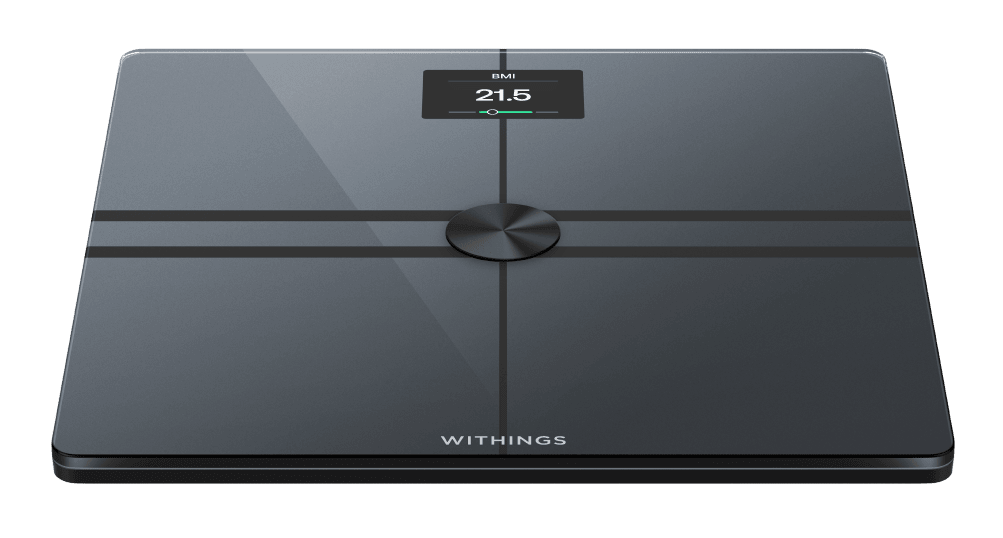
Withings Body Comp
Best Overall: The Withings Body Comp is the only consumer scale in this comparison that measures vascular age via pulse wave velocity — a cardiovascular health metric that BIA alone cannot provide. Its data export policy (CSV export, API access) is the most open in this group, and the Apple Health / Google Fit sync is reliable.
Top picks ↓| Product | Metrics | Connectivity | Max capacity | App | User profiles | Power source |
|---|---|---|---|---|---|---|
| Withings Body Comp | Weight, BMI, body fat %, body water %, muscle mass, bone mass, visceral fat, basal metabolic rate, standing heart rate, vascular age, electrodermal activity (nerve health) score | Wi-Fi (802.11 b/g/n) + Bluetooth | 200 kg (440 lb) | Withings (Health Mate) | Up to 8 users (automatic recognition) | 4 × AAA alkaline batteries (non-rechargeable, ~15–18 months) |
| Garmin Index S2 | Weight (lb/kg/st), BMI, body fat %, body water %, muscle mass, bone mass | Wi-Fi (2.4 GHz) + Bluetooth Low Energy / ANT | 181.4 kg (400 lb) | Garmin Connect | Up to 16 users | 4 × AAA batteries (up to ~9 months) |
| Tanita RD-906 | Weight, body fat %, visceral fat level, muscle mass, muscle quality score, basal metabolic rate, body (metabolic) age, body water %, estimated bone mass, BMI, pulse rate (dual-frequency BIA) | Bluetooth | 180 kg | Health Planet / TANITA Record | 4 users + guest mode (athlete mode supported) | 4 × AA alkaline batteries (DC6V) |
| Xiaomi Mi Body Composition Scale 2 | Weight, BMI, body fat %, muscle mass, body water %, protein %, visceral fat rating, bone mass, basal metabolism (13 body-composition metrics) | Bluetooth 5.0 | 150 kg (range 100 g – 150 kg) | Mi Fit / Zepp Life | Up to 16 users | 4 × AAA (1.5 V) batteries (up to ~12 months) |
| Anker Eufy Smart Scale P2 Pro | Weight, body fat, heart rate, BMI, muscle mass, bone mass, water, protein, BMR, visceral fat, body fat mass, lean body mass, body age, body type, skeletal muscle mass, subcutaneous fat (16 measurements) | Wi-Fi + Bluetooth (dual-mode) | 180 kg (397 lb) | EufyLife | Unlimited users | 4 × AAA batteries (included) |
Top picks
Related articles
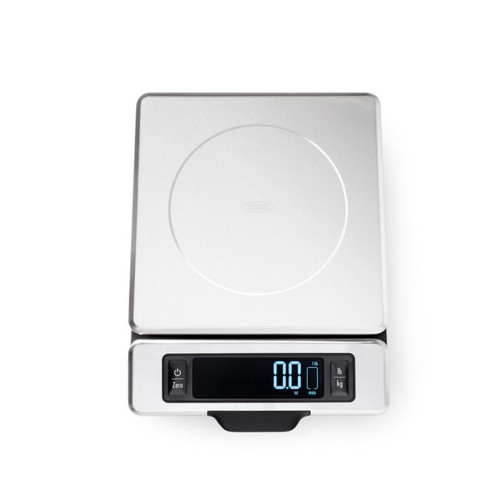
The only scale in this comparison that measures vascular age (pulse wave velocity) alongside body fat, muscle mass, visceral fat index, and bone mass. Withings Health Mate has the best data export policy in this group (CSV export, API access) and reliable Apple Health and Google Fit sync. Weakness: foot-to-foot BIA shares the same ±3–8% accuracy class as cheaper scales for body fat percentage; Withings has undergone multiple ownership changes and the long-term software support trajectory carries uncertainty; it is the joint-highest price in this comparison.
The Withings Body Comp is the only consumer scale in this comparison that measures vascular age via pulse wave velocity — a cardiovascular health metric that BIA alone cannot provide. Its data export policy (CSV export, API access) is the most open in this group, and the Apple Health / Google Fit sync is reliable. The foot-to-foot BIA for body fat shares the same ±3-8% accuracy class as cheaper scales.
Pros
- ✓Only scale measuring vascular age (pulse wave velocity)
- ✓Best data export policy — CSV export and API access
- ✓Reliable Apple Health and Google Fit sync
Cons
- ✗Foot-to-foot BIA carries same ±3-8% body fat accuracy as cheaper scales
Score breakdown
| Metrics | Weight, BMI, body fat %, body water %, muscle mass, bone mass, visceral fat, basal metabolic rate, standing heart rate, vascular age, electrodermal activity (nerve health) score |
| Connectivity | Wi-Fi (802.11 b/g/n) + Bluetooth |
| Max capacity | 200 kg (440 lb) |
| App | Withings (Health Mate) |
| User profiles | Up to 8 users (automatic recognition) |
| Power source | 4 × AAA alkaline batteries (non-rechargeable, ~15–18 months) |
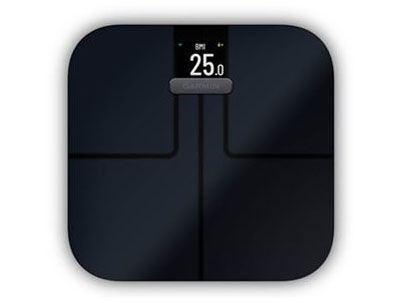
The strongest pick if you already use a Garmin device — body composition data appears directly in Garmin Connect alongside your activities, sleep, and recovery metrics, creating a single-platform health dashboard. Supports 16 simultaneous users, useful for households with multiple Garmin users. Weakness: the ecosystem premium is only valuable if you use Garmin; for non-Garmin users, the Index S2 is a foot-to-foot BIA scale in the same accuracy class as the cheaper Eufy P2 Pro. No direct Google Fit integration without a third-party bridge app.
The Garmin Index S2's ecosystem advantage is real and specific: body composition data appears directly in Garmin Connect alongside activity, sleep, and HRV metrics — no third-party bridge needed. For households with multiple athletes, 16-user support is a genuine differentiator. For non-Garmin users, it's a foot-to-foot BIA scale in the same accuracy class as the cheaper Eufy.
Pros
- ✓Body composition syncs directly into Garmin Connect
- ✓16 simultaneous users — best for multi-athlete households
- ✓No third-party bridge needed for Garmin ecosystem
Cons
- ✗Ecosystem premium disappears entirely if you don't use Garmin devices
Score breakdown
| Metrics | Weight (lb/kg/st), BMI, body fat %, body water %, muscle mass, bone mass |
| Connectivity | Wi-Fi (2.4 GHz) + Bluetooth Low Energy / ANT |
| Max capacity | 181.4 kg (400 lb) |
| App | Garmin Connect |
| User profiles | Up to 16 users |
| Power source | 4 × AAA batteries (up to ~9 months) |
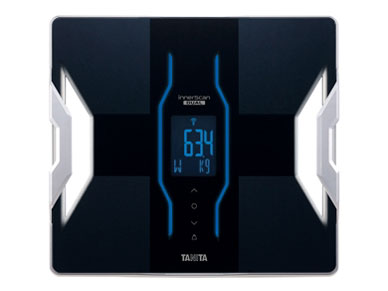
The most rigorous consumer BIA in this comparison: InBody-licensed multi-frequency four-electrode technology measures arms, legs, and trunk separately rather than estimating upper body from lower-body impedance. Tanita has clinical credibility in Japan that no foreign brand matches — hospitals, clinics, and sports facilities use Tanita professional equipment. Weakness: requires holding handle electrodes during each measurement (a step foot-only scales do not need); the Health Planet app is Japan-focused and less internationally polished than Withings or Garmin; no vascular age measurement despite the price parity with Withings Body Comp.
The Tanita RD-906 is the most rigorous consumer BIA in this comparison: InBody-licensed multi-frequency 4-electrode technology measures arms, legs, and trunk separately rather than estimating upper-body composition from foot-to-foot impedance. In Japan, Tanita's clinical credibility — hospitals and sports facilities use Tanita professional equipment — is a real consideration for users monitoring health alongside medical professionals.
Pros
- ✓Multi-frequency 4-electrode BIA measures each body segment directly
- ✓InBody-licensed technology — highest consumer BIA standard available
- ✓Tanita has clinical credibility in Japan that no foreign brand matches
Cons
- ✗Requires holding handle electrodes during each measurement — extra step vs foot-only scales
Score breakdown
| Metrics | Weight, body fat %, visceral fat level, muscle mass, muscle quality score, basal metabolic rate, body (metabolic) age, body water %, estimated bone mass, BMI, pulse rate (dual-frequency BIA) |
| Connectivity | Bluetooth |
| Max capacity | 180 kg |
| App | Health Planet / TANITA Record |
| User profiles | 4 users + guest mode (athlete mode supported) |
| Power source | 4 × AA alkaline batteries (DC6V) |
Subscribe to our newsletter
Occasional updates and new releases — no spam.
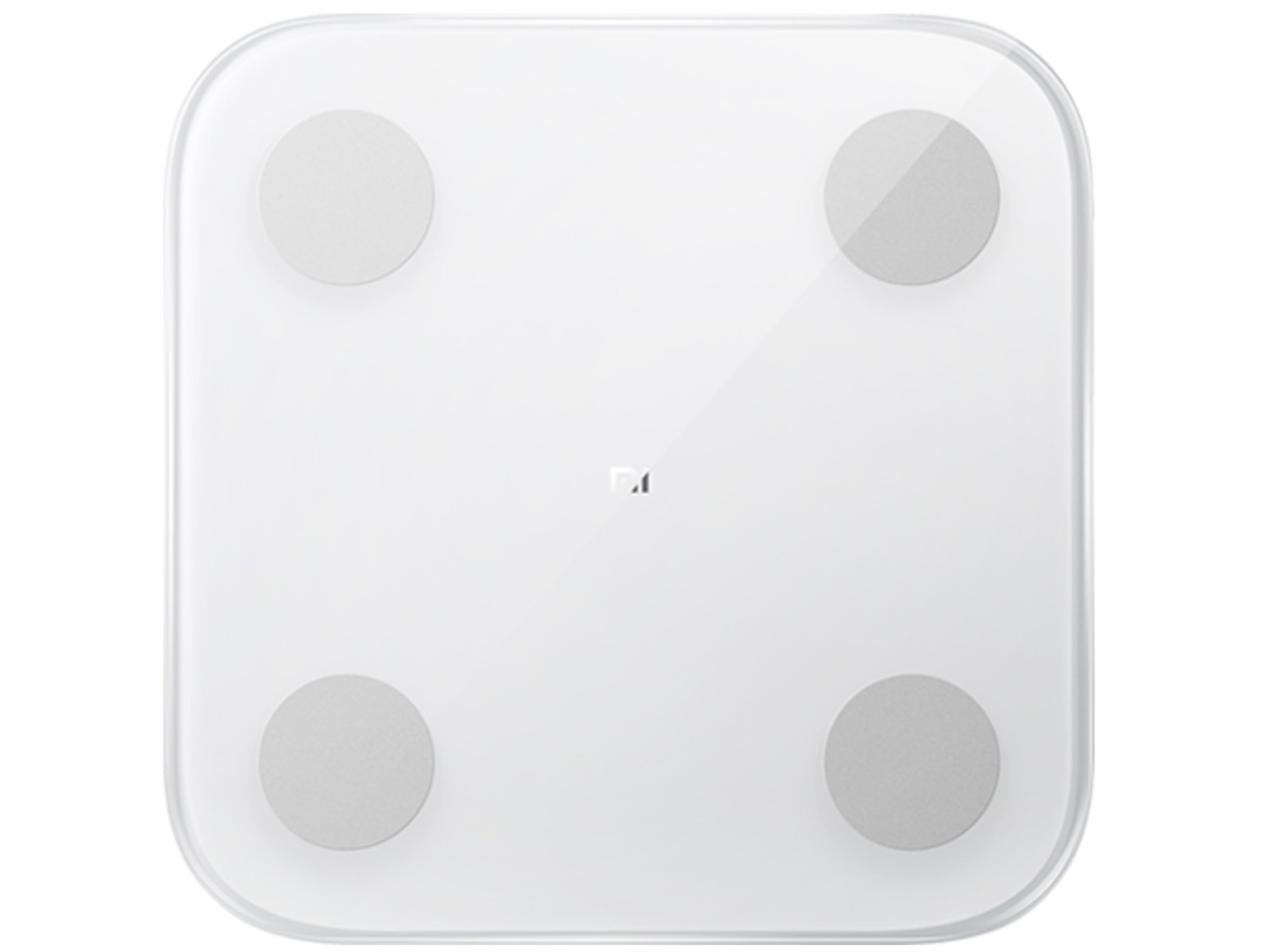
Xiaomi Mi Body Composition Scale 2
Best price-per-metric in this comparison: body fat, BMI, muscle mass, bone mass, and metabolic rate estimates via clean Bluetooth sync to Mi Fitness. The body fat trend data is useful despite the wide accuracy margin. Weakness: Bluetooth-only requires phone nearby during measurement; two-electrode foot-to-foot BIA gives the widest accuracy margin in this comparison; Mi Fitness data export is restricted; Xiaomi has a track record of discontinuing products and apps without long transition periods, which is a legitimate concern for multi-year data tracking.
At its budget price, the Xiaomi Mi Body Composition Scale 2 delivers body fat trend data that is genuinely useful despite the wide accuracy margin — the direction of change over weeks is reliable even when the absolute number is not. Bluetooth-only means your phone must be nearby during measurement, and Xiaomi's track record of app discontinuation without long transition periods is a legitimate multi-year data risk.
Pros
- ✓Body fat, BMI, muscle mass, bone mass at a budget price
- ✓Clean Bluetooth sync to Mi Fitness
- ✓Body fat trend tracking works despite wide error margin
Cons
- ✗Bluetooth-only — phone must be nearby during weigh-in
Score breakdown
| Metrics | Weight, BMI, body fat %, muscle mass, body water %, protein %, visceral fat rating, bone mass, basal metabolism (13 body-composition metrics) |
| Connectivity | Bluetooth 5.0 |
| Max capacity | 150 kg (range 100 g – 150 kg) |
| App | Mi Fit / Zepp Life |
| User profiles | Up to 16 users |
| Power source | 4 × AAA (1.5 V) batteries (up to ~12 months) |
No partner store here — this opens an Amazon search.
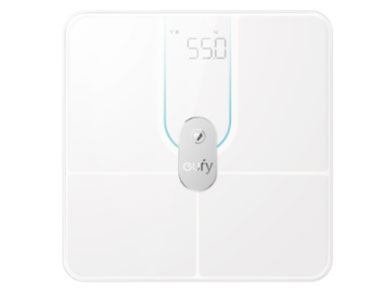
Anker Eufy Smart Scale P2 Pro
The pragmatic middle pick: Wi-Fi sync (no phone-nearby requirement), Apple Health and Google Fit integration, 16 metrics, and a clean app at one-quarter the price of the Withings and Tanita options. Anker has a strong Japan service presence (retail stores, direct customer service) that Xiaomi lacks. Weakness: 16 metrics sounds comprehensive but most additional metrics beyond weight, body fat, and BMI are derived from the same two-electrode foot-to-foot BIA signal through different regression equations, not independent measurements; Eufy Life app is less mature than Withings Health Mate; the brand does not carry Tanita's clinical trust in Japan.
The Anker Eufy Smart Scale P2 Pro hits the pragmatic sweet spot: Wi-Fi sync (no phone-nearby requirement), Apple Health and Google Fit integration, and 16 body metrics at one-quarter the cost of the Withings and Tanita options. Most of those 16 metrics are derived from the same 2-electrode foot-to-foot BIA signal — not independent measurements — but for the typical fitness tracker, weight and body fat trend data is what matters.
Pros
- ✓Wi-Fi sync — no phone needed nearby during measurement
- ✓Apple Health and Google Fit integration at a mid-range price
- ✓Anker's Japan service network is strong (physical stores, direct support)
Cons
- ✗16 metrics mostly derived from same BIA signal — not independent measurements
Score breakdown
| Metrics | Weight, body fat, heart rate, BMI, muscle mass, bone mass, water, protein, BMR, visceral fat, body fat mass, lean body mass, body age, body type, skeletal muscle mass, subcutaneous fat (16 measurements) |
| Connectivity | Wi-Fi + Bluetooth (dual-mode) |
| Max capacity | 180 kg (397 lb) |
| App | EufyLife |
| User profiles | Unlimited users |
| Power source | 4 × AAA batteries (included) |
No partner store here — this opens an Amazon search.
Which one is right for you?
For cardiovascular health monitoring
Withings Body Comp
Pulse wave velocity (vascular age) is available nowhere else at the consumer level — it adds a cardiovascular dimension that pure BIA scales cannot provide.
For Garmin watch users
Garmin Index S2
Body composition data appears in Garmin Connect alongside your activities and HRV without any workaround or bridge app.
For users working with a personal trainer
Tanita RD-906
Japanese personal trainers and sports medicine professionals use Tanita reference data — segmental readings on the RD-906 align with what your trainer measures professionally.
For budget body fat tracking
Xiaomi Mi Body Composition Scale 2
At its budget price, the weekly trend data is useful. Use it for direction over months, not for absolute readings on any given day.
For most households without a Garmin
Anker Eufy Smart Scale P2 Pro
Wi-Fi sync, Apple Health integration, and Anker's Japan service presence deliver the best feature-to-price ratio when you don't need Garmin or clinical BIA.
How we compared
We did not run DXA cross-validation. Meaningful body composition accuracy comparison requires recruiting participants across a range of body types, ages, and hydration states; measuring each participant with a clinical DXA scanner (the reference) and each scale on the same day under identical pre-measurement conditions (fasted, morning, voided bladder, no exercise in the prior 12 hours); and comparing the results statistically to calculate mean absolute error and bias for each device. That protocol requires medical facility access, IRB approval, and 80–100 participants to produce meaningful data. We did not run it.
What we did: read the published BIA electrode specifications and measurement frequency for each scale; cross-referenced current pricing from major online retailers as of May 2026; read the clinical BIA validation literature (general device-class studies from JPEN, ESPEN, and obesity medicine journals) to establish the accuracy envelope for consumer 2-electrode vs 4-electrode foot-to-foot BIA; and read several hundred long-term owner reviews per model, paying particular attention to complaints that cluster consistently — readings that change implausibly between measurements, app connectivity failures after software updates, and cases where the same person measures twice in five minutes and sees different body fat percentages.
The five comparison axes we used: (1) BIA electrode configuration and measurement current — how many electrodes, at what frequency, and what body segments are actually measured vs estimated. (2) Body fat percentage accuracy envelope — what the published validation literature says about consumer BIA error margins, and how to use the numbers intelligently. (3) Ecosystem integration — where the data goes after you step off the scale, and whether you can export it if you change platforms. (4) Segmental body composition — whether measuring arms, legs, and trunk separately gives you more actionable information or whether it is a specification differentiator with limited practical meaning. (5) Long-term data utility — app stability, data export options, and what happens to your historical records if the company stops supporting the product.
BIA technology — what smart scales actually measure
All five scales use bioelectrical impedance analysis (BIA): they pass a small alternating electrical current through the body and measure the opposition (impedance) to that current. Body fat has higher impedance than lean tissue (muscle, bone, water), so the scale can estimate the ratio of fat to lean mass from the impedance reading combined with your height, weight, age, and sex. This is the fundamental principle. What differs between scales is how many electrodes they use, where those electrodes are placed, and what body segments actually see the current.
Foot-to-foot BIA (both feet on metal pad electrodes, current travels foot-to-foot through the lower body): this is the configuration used by Xiaomi Mi Body Composition Scale 2, Anker Eufy P2 Pro, and Garmin Index S2. The current path from one foot to the other passes primarily through the lower body — legs, pelvis, and lower abdomen. The upper body impedance is not directly measured; instead, the device estimates total body composition using population-based regression equations. This estimation works reasonably well for people with typical body proportions, but it introduces meaningful error for people with unusual fat distribution patterns (high upper-body fat with lean legs, or heavily muscled legs with typical torso composition).
Four-electrode BIA with hand and foot contacts (current path travels from hands through arms, through the trunk, and through the legs to feet): the Tanita RD-906 uses this configuration. By measuring impedance through the full body — not just the lower half — four-electrode whole-body BIA reduces the estimation error from upper-body composition and measures the trunk segment directly rather than via regression. The practical result: Tanita's segmental output (separate body fat percentages for left arm, right arm, left leg, right leg, and trunk) is based on actual measurements of those segments, not population equations.
Withings Body Comp uses a foot-to-foot electrode configuration for weight and the standard body composition metrics, but adds a separate measurement for vascular age (pulse wave velocity) via additional sensors that measure the speed at which the pulse travels through the arterial system — a cardiovascular health indicator that BIA alone does not measure. This is a meaningfully different metric from body fat and one that no other scale in this comparison offers.
Single-frequency vs multi-frequency BIA: most consumer scales use a single current frequency (typically 50 kHz). Medical-grade BIA devices (like the InBody 770 used in clinical settings) use multiple frequencies (1 kHz to 1 MHz) because different frequencies penetrate cell membranes differently, allowing separate measurement of intracellular and extracellular water. The Tanita RD-906 uses InBody-licensed technology, which includes multi-frequency measurement at the electrode locations — a specification advantage over the single-frequency devices in this comparison. Whether this single specification difference translates to meaningfully more accurate output in practice depends on the individual user and their measurement conditions.
Body fat percentage accuracy — which numbers to trust
Consumer BIA scales carry a typical error margin of ±3–8 percentage points compared to DXA for body fat percentage, depending on hydration status, time of day, recent exercise, and individual body geometry. This means that if your true body fat (as measured by DXA) is 20%, a consumer scale might read anywhere from 12% to 28% on any given measurement. The ±3% end of that range applies to well-hydrated, same-time-of-day, fasted measurements on a quality four-electrode scale. The ±8% end applies to measurements taken after exercise, after a large meal, in a different hydration state, or on a two-electrode foot-to-foot scale.
The error margin is why treating any single body fat reading as a clinical fact is the wrong approach. The correct interpretation of consumer BIA data: use the trend, not the absolute number. If your body fat percentage on this scale reads 24.0% today and 22.3% in three months, you have likely lost body fat — the direction is reliable even when the absolute number is not. The magnitude of change is less reliable: a 1.7 percentage point drop might be real or might be within the noise of hydration variation. A 4–5 percentage point change sustained over multiple measurements in the same conditions is more meaningful.
Daily hydration variation is the dominant noise source for all BIA scales. Body water affects impedance directly and significantly. Measuring after intense exercise (dehydrated) will read higher fat percentage than the same person measured the next morning after rehydrating. This is not a scale defect — it is physics. The practical protocol that reduces hydration noise: measure at the same time every day (morning, after using the bathroom, before eating or drinking), in the same state (no recent exercise), and use weekly averages rather than daily readings as your tracking unit.
Menstrual cycle phase affects BIA readings measurably. Body water retention during the luteal phase (days 15–28) can increase apparent body fat percentage by 1–3 percentage points compared to the follicular phase, even with no actual change in fat mass. Users who menstruate should be aware that their readings will vary predictably across the cycle and that month-to-month comparison at the same cycle phase is more meaningful than week-to-week variation.
Ecosystem integration — Garmin vs Apple Health vs Google Fit
Where your body composition data lives after you step off the scale determines whether it remains useful over a multi-year period. The five scales in this comparison each route data to a different primary ecosystem: Withings Body Comp routes to Health Mate (Withings' own app), with official integrations to Apple Health, Google Fit, and MyFitnessPal; Garmin Index S2 routes to Garmin Connect, with optional sync to Apple Health via the Health Sync intermediary app; Tanita RD-906 routes to the Health Planet app (Tanita's own platform), with Apple Health integration and limited third-party export; Xiaomi Mi Body Composition Scale 2 routes to Mi Fitness, with Apple Health integration on iOS and Google Fit integration on Android; and Anker Eufy P2 Pro routes to the Eufy Life app, with Apple Health and Google Fit sync.
The most important ecosystem question for long-term data is not which app looks best today, but what happens if you change your phone platform, the company discontinues the app, or you want to move your historical data. Withings Health Mate offers CSV export of historical measurements and documented API access for developers — the most open data policy in this comparison. Garmin Connect also supports data export. Tanita Health Planet is the most closed: export functionality is limited and the app is Japan-focused, which means long-term English-language support is not guaranteed. Mi Fitness has export limitations and Xiaomi's track record of discontinuing products and apps without long transition periods is a legitimate concern for data longevity.
Garmin Index S2 has a specific advantage for people who already use Garmin devices (watches, cycling computers, GPS units): body composition data from the Index S2 appears in the same Garmin Connect dashboard as your activities, sleep, and HRV data, creating a single platform view of overall health trends. If you use a Garmin watch and want to see how body composition correlates with training load and recovery over time, the Index S2's tight Garmin Connect integration is genuinely distinctive. Non-Garmin users do not get this benefit.
Apple Health as a central health data repository: both Withings Body Comp and Anker Eufy P2 Pro sync to Apple Health, as do Garmin Connect (via third-party bridge), Tanita Health Planet, and Mi Fitness. Apple Health provides a reasonable archival format for iPhone users — data stored in Apple Health is not deleted when you change apps or scales. If you use an iPhone and plan to track body composition long-term across potentially different scale brands, treating Apple Health as the canonical data store (and backing it up via iCloud) is a practical data preservation strategy. This option is not available for Android users, for whom Google Fit and its successors serve a similar but less comprehensive role.
Where each fits
Withings Body Comp is the pick for users who want the broadest health picture from a single device. No other scale in this comparison measures vascular age (pulse wave velocity), and Withings Health Mate's long-term data quality, open export policy, and integration with both Apple Health and Google Fit give it the best data longevity profile in this comparison. The weaknesses are real: foot-to-foot BIA with the same accuracy limitations as any non-segmental scale; it is expensive for a scale; and Health Mate's user interface is polished but Withings as a company has had ownership changes (Nokia Health, back to Withings, various restructurings) that create legitimate long-term software support uncertainty despite the current product quality.
Garmin Index S2 is the right pick if you already use a Garmin device and want body composition data in Garmin Connect alongside your activity and recovery data. The 16-user support is a genuine differentiator for households with multiple Garmin users. The honest weakness: if you do not use a Garmin watch, the Index S2's ecosystem advantage disappears and it becomes a foot-to-foot BIA scale with the same accuracy class as the cheaper Anker Eufy — the premium is justified only by the Garmin Connect integration.
Tanita RD-906 is the pick for users who want the highest-quality BIA measurement available in a consumer scale, particularly for segmental body composition. The InBody-licensed multi-frequency four-electrode configuration is a genuine technical differentiator. In Japan specifically, Tanita has clinical credibility that no foreign brand currently matches — hospitals, clinics, and sports training facilities use Tanita professional equipment, and the domestic trust for the brand means the RD-906 is the default recommendation for personal trainers advising Japanese clients. The weakness: the Health Planet app is Japan-focused and less polished than Withings Health Mate or Garmin Connect for international use; the segmental measurement feature requires holding the handle electrodes correctly during each measurement (a step that foot-only scales do not require); and the price is high for a scale that lacks vascular age measurement.
Xiaomi Mi Body Composition Scale 2 is the pick when the primary requirement is body fat trend tracking at minimal cost. At its low price, it delivers body fat percentage, BMI, muscle mass, bone mass, and metabolic rate estimates via a clean Bluetooth connection to Mi Fitness. The honest weaknesses: Bluetooth-only (no Wi-Fi) means you must have your phone nearby when you weigh; foot-to-foot BIA with a two-electrode configuration gives it the widest accuracy margin in this comparison; Mi Fitness app history and data export are more restricted than Withings or Garmin; and Xiaomi's track record of product and app discontinuation without long transition periods is a legitimate concern if you plan to track data over multiple years.
Anker Eufy Smart Scale P2 Pro offers Wi-Fi sync (no phone-nearby requirement), Apple Health and Google Fit integration, and 16 body metrics at one-quarter the price of the Withings and Tanita options. For users who want more than a basic Bluetooth scale but cannot justify the premium tier, the P2 Pro is the pragmatic middle option. The weaknesses: 16 metrics sounds comprehensive but most of the additional metrics beyond body fat, weight, and BMI are derived from the same two-electrode foot-to-foot BIA signal through different regression equations — they are not independent measurements; the Eufy Life app ecosystem is less mature than Withings Health Mate or Garmin Connect; and Anker's consumer electronics focus means the Eufy brand does not carry the clinical trust that Tanita has in Japan.
The clinical credibility context
Tanita's position in clinical settings is categorically different from its position as a consumer brand. Tanita has been a dominant body composition scale brand in clinical use for over 30 years. Tanita scales are used in hospitals, sports medicine clinics, corporate health management programs, and school physical examinations. When a personal trainer recommends a body composition scale, they often recommend Tanita. When a clinic wants to track a patient's body composition over a diet or rehabilitation program, they use Tanita equipment. This institutional credibility is not marketing — it is the result of decades of product presence in clinical settings and the specific regulatory recognition that Tanita scales have received from health authorities.
The practical implication: the Tanita RD-906 is more likely to produce a reading that matches what a sports medicine clinic or hospital would measure than any of the other options in this comparison, simply because much clinical reference data is built on Tanita measurements. Whether this matters for a consumer tracking personal fitness goals is debatable — the accuracy envelope of consumer BIA is wide enough that brand-specific clinical validation is less important than consistent measurement conditions. But for users who are using their scale in conjunction with medical monitoring (post-surgery body composition tracking, dialysis patient fluid monitoring, sports medicine program compliance), Tanita's clinical ecosystem alignment matters.
Import warranty and after-sales service: Withings Body Comp and Garmin Index S2 are sold through major online retailers and typically have local warranty coverage, but their dedicated service networks are smaller than Tanita's. Xiaomi Mi Body Composition Scale 2 is widely available at budget prices, but warranty and after-sales support for Xiaomi products typically flows through online marketplace sellers rather than a branded service centre — standard for budget import electronics, but worth knowing. Anker has a strong retail and customer service presence (physical retail stores and a direct customer service line), which is meaningfully better after-sales infrastructure than Xiaomi's.
Our pick and honest caveats
For most users who want a capable smart scale and do not have a specific Garmin or clinical-accuracy requirement, Anker Eufy Smart Scale P2 Pro delivers the best balance of features, ecosystem openness (Apple Health + Google Fit), and price. Wi-Fi sync eliminates the phone-proximity requirement. The accuracy envelope is the same BIA class as all non-segmental scales in this comparison, which means the absolute body fat number is a rough estimate — but at its price, the cost of that limitation is proportionate.
If you use a Garmin watch and track fitness data in Garmin Connect, Garmin Index S2 is the coherent pick. The premium over the Eufy is justified solely by ecosystem integration — if you do not already use Garmin, there is no reason to pay the premium.
If you are a serious fitness or health monitoring user who wants the most rigorous consumer BIA available in Japan, and particularly if you work with a personal trainer or sports medicine professional who uses Tanita reference data, Tanita RD-906 is the defensible choice. The segmental measurement is the one feature no other scale in this comparison offers. Accept the Health Planet app limitations.
Withings Body Comp is the pick if vascular age monitoring matters to you alongside body composition — it is the only scale in this comparison that measures pulse wave velocity. The price is the same as the Tanita RD-906 but the measurement technology is different (foot-to-foot BIA vs segmental four-electrode). Which is 'better' depends on whether segmental composition or cardiovascular vascular age is the metric you most want to track.
Xiaomi Mi Body Composition Scale 2 needs no justification when budget is the constraint. The body fat trend data it produces is useful. The absolute numbers carry the widest error margin in this comparison.
Using trend data correctly — why daily fluctuation is noise
The single most common mistake with smart scale data is treating daily body fat readings as meaningful signal. A 24.0% reading Monday morning, a 25.8% reading Tuesday morning, and a 23.1% reading Wednesday morning does not mean you gained and then lost body fat — it means your hydration status, meal timing, and bathroom schedule differed slightly across those three mornings. Body fat percentage from BIA scales does not move 1–2 percentage points in 24 hours from actual fat mass change; those swings are measurement noise from hydration variation.
The correct framework: record your weight and body fat reading every morning under identical conditions (same time, same pre-measurement state: after waking, after using the bathroom, before eating or drinking, barefoot and without heavy clothing). Do not track day-to-day. Track 7-day rolling averages or monthly averages. A 1 percentage point change in your monthly average body fat is a meaningful signal. A 2 percentage point swing between Tuesday and Wednesday is noise.
Weight and body fat can move in opposite directions due to muscle gain. If you are starting a strength training program and eating at or near maintenance calories, it is common to see scale weight hold steady or increase slightly while body fat percentage trends downward. This is the expected pattern for body recomposition — gaining lean mass while losing fat mass. BIA scales are sensitive enough to detect this trend over a 6–8 week period, but only if you are tracking weekly averages rather than reacting to individual daily readings.
For users tracking body composition in conjunction with a caloric deficit (intentional fat loss), the expected rate of measurable BIA change is roughly 0.5–1.0 percentage points of body fat per month under a moderate caloric deficit (300–500 kcal/day). Faster apparent changes are likely noise; slower apparent changes over multiple months are likely genuine but within the scale's error envelope. The practical takeaway: a 3-month trend showing a consistent downward direction in body fat percentage is more valuable information than any single reading, regardless of which scale you use.
Frequently asked questions
How accurate are smart scales for body fat percentage?▼
Should I weigh myself every day?▼
Can pregnant women use smart scales?▼
Is Withings Body Comp really clinical-grade accuracy?▼
What does segmental body composition actually tell you?▼
Which scale works best with Apple Health or Google Fit?▼
Prices change. Check the retailer for the current price.
Comments & questions
Discussion happens on nattzy, our community forum. Sign in with Google to post — it takes a second.