Best Noise Cancelling Headphones 2026: 5 Flagships
Five over-ear ANC headphones built for 2026 commuters, remote workers, and frequent flyers. Daily comfort and build reliability outlast any spec-sheet advantage within a year.
Quick answer
Daily comfort and build reliability outlast any spec-sheet advantage within a year of ownership. The Sony WH-1000XM5 is the right all-rounder — class-leading ANC at 250g with LDAC and 30-hour battery, and platform-agnostic. For four or more hours of calls a day, the Bose QuietComfort Ultra's beamforming mic array and CustomTune ANC handle station platforms and wind cleanly. AirPods Max suit deep Apple workflows, the Sennheiser Momentum 4 is the music-first pick, and the Anker Space Q45 is the value option.
Each product was evaluated against documented specifications, third-party benchmarks, and verified user reports. We scored features, performance, build quality, ecosystem compatibility, and total cost of ownership.
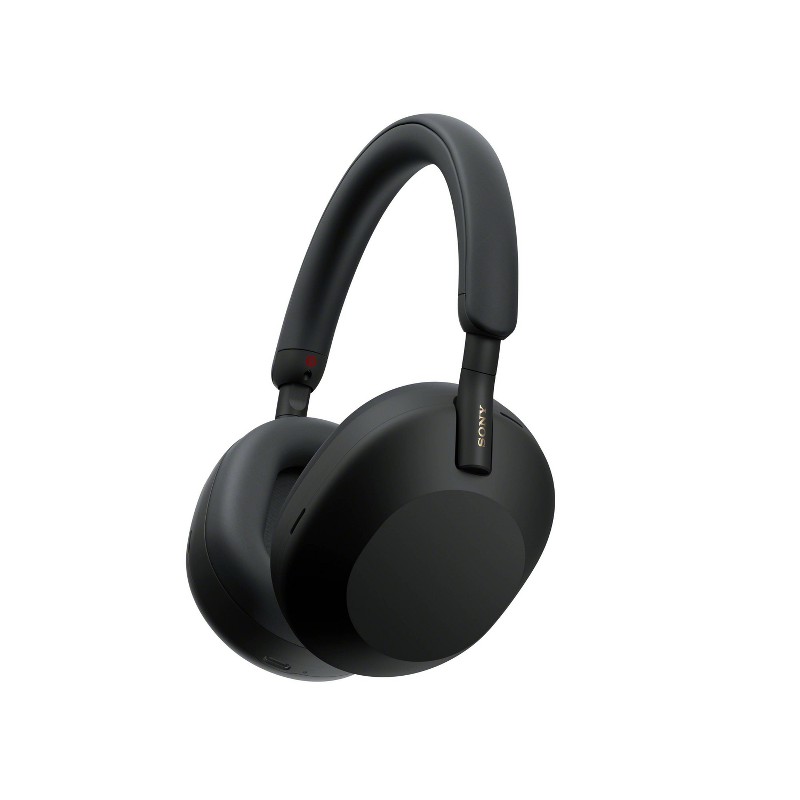
Sony WH-1000XM5
Best Overall: The Sony WH-1000XM5 is the right pick for the broadest range of buyers — Android users, platform-agnostic listeners, and anyone who values lightweight comfort for long sessions. ANC is essentially tied with Bose QuietComfort Ultra for low-frequency rejection, the 250g body is the lightest among true flagships in this comparison, and LDAC support keeps Android users in hi-res audio territory at 990kbps.
Top picks ↓| Product | Price | Link |
|---|---|---|
| $298Price as of 2026-09-24 | ||
| $449Price as of 2026-09-24 | ||
| — | ||
| $249.99Price as of 2026-09-24 | ||
| $139.99Price as of 2026-09-23 |
| Product | Type | Active noise cancelling | Battery life | Bluetooth codecs | Item weight | Multipoint |
|---|---|---|---|---|---|---|
| Sony WH-1000XM5 | Over-ear | Yes | 30 h (ANC on) | SBC, AAC, LDAC | 250 g | Yes |
| Bose QuietComfort Ultra Headphones | Over-ear | Yes | 24 h (ANC on, Immersive Audio off) | SBC, AAC, aptX Adaptive | 253 g | Yes |
| Apple AirPods Max | Over-ear | Yes | 20 h (ANC on) | SBC, AAC | 384.8 g | No |
| Sennheiser Momentum 4 Wireless | Over-ear | Yes | 60 h (ANC on) | SBC, AAC, aptX, aptX Adaptive | 293 g | Yes |
| Anker Soundcore Space Q45 | Over-ear | Yes | 50 h (ANC on) | SBC, AAC, LDAC | 295 g | Yes |
Top picks
Related articles


Best all-around daily driver — class-leading ANC tied with Bose, LDAC for Android hi-res, 250 g lightest among flagships, 30-hour battery. Multipoint is rough; call quality is a half-step behind Bose; carrying case got bigger because XM5 doesn't fold.
The Sony WH-1000XM5 is the right pick for the broadest range of buyers — Android users, platform-agnostic listeners, and anyone who values lightweight comfort for long sessions. ANC is essentially tied with Bose QuietComfort Ultra for low-frequency rejection, the 250g body is the lightest among true flagships in this comparison, and LDAC support keeps Android users in hi-res audio territory at 990kbps. The 30-hour battery life with ANC engaged covers a long-haul round-trip flight without charging, and the dual-processor V1+QN1 architecture handles adaptive ANC competently. The honest tradeoffs: multipoint Bluetooth is functional but rougher than Bose — switching from a Mac to an iPhone for an incoming call sometimes requires manual device re-selection, call quality is a half-step behind Bose and Apple in windy outdoor conditions, and the new headband no longer folds flat so the carrying case is larger than the XM4's.
Pros
- ✓Class-leading low-frequency ANC tied with Bose for train and plane cabin
- ✓LDAC support keeps Android users in 990kbps hi-res audio
- ✓250g body — lightest among true flagships in this comparison
- ✓30-hour ANC battery covers long-haul flights without charging
Cons
- ✗Multipoint Bluetooth rougher than Bose during device switches
- ✗Doesn't fold flat — carrying case is larger than XM4
| Type | Over-ear |
| Active noise cancelling | Yes |
| Battery life | 30 h (ANC on) |
| Bluetooth codecs | SBC, AAC, LDAC |
| Item weight | 250 g |
| Multipoint | Yes |
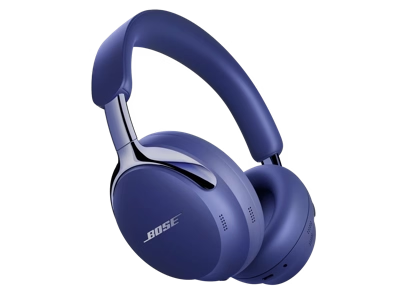
Most aggressive ANC + best call quality in this list. CustomTune ear-canal calibration, beamforming mic array, Immersive Audio for movies. No LDAC; clamp force is firmer than Sony; Immersive Audio drops battery to 17-18 hours real-world.
The Bose QuietComfort Ultra Headphones earn their slot with the most aggressive ANC and the best call quality in this comparison. CustomTune technology calibrates the ANC to your specific ear canal at startup — a genuine differentiator that adapts to head shape and ear geometry. Immersive Audio's head-tracked spatial mode meaningfully improves movie watching and certain music genres (it does not help with podcasts and is best left off for those). The beamforming microphone array handles busy station platforms and waterfront wind cleanly enough that call recipients hear you clearly. This is premium pricing. The honest tradeoffs: clamp force is firmer than Sony — people with larger heads (size 7 1/2 hat or larger) report pressure-point fatigue around the 3-hour mark, no LDAC support so Android hi-res users get only AAC, and Immersive Audio drops real-world battery life from a claimed 24 hours to 17-18.
Pros
- ✓Most aggressive ANC in the comparison with CustomTune ear-canal calibration
- ✓Best call quality — beamforming mic array handles outdoor wind cleanly
- ✓Immersive Audio head-tracked spatial mode for movies and select music
- ✓Adaptive ANC re-tunes per environment every few hundred milliseconds
Cons
- ✗Firmer clamp force causes pressure-point fatigue past 3 hours for larger heads
- ✗No LDAC support — Android tops out at AAC
| Type | Over-ear |
| Active noise cancelling | Yes |
| Battery life | 24 h (ANC on, Immersive Audio off) |
| Bluetooth codecs | SBC, AAC, aptX Adaptive |
| Item weight | 253 g |
| Multipoint | Yes |
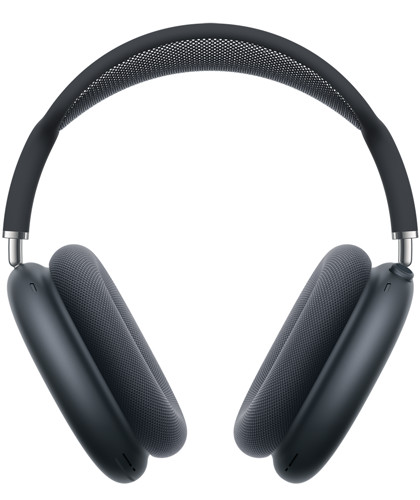
Premium build + seamless Apple-ecosystem device switching. H1 chip handles iPhone-iPad-Mac handoff. 384.8 g is heaviest by a wide margin; battery is not user-replaceable; the carrying case is the most-mocked in modern audio. Outside Apple world, the magic disappears.
The Apple AirPods Max are the maximalist pick for buyers who live deeply inside the Apple ecosystem. The H1 chip (still present on the 2024 USB-C revision) handles seamless device switching across iPhone, iPad, and Mac that no other headphone in this comparison can replicate — pick up your iPad and audio routes there, accept a call on iPhone and audio routes there, no manual pairing. Aluminum earcups and a stainless steel headband make this the most premium-feeling build here. ANC is excellent though slightly behind Bose at low frequencies, and the 2024 USB-C revision finally supports lossless wired audio. The price is steep. The honest tradeoffs: 384.8g is the heaviest by a wide margin and is genuinely fatiguing on flights past 4 hours, the carrying case is widely mocked (it doesn't cover the headband and looks like a purse), the battery is not user-replaceable, and outside Apple the magic disappears entirely.
Pros
- ✓Seamless Apple device switching across iPhone, iPad, and Mac via H1
- ✓Aluminum and stainless steel build — most premium feel here
- ✓Lossless wired audio support on the 2024 USB-C revision
- ✓Excellent ANC — only slightly behind Bose at low frequencies
Cons
- ✗384.8g is the heaviest in the comparison and fatigues on long flights
- ✗Magic vanishes outside Apple — on Windows or Android it's just AAC
| Type | Over-ear |
| Active noise cancelling | Yes |
| Battery life | 20 h (ANC on) |
| Bluetooth codecs | SBC, AAC |
| Item weight | 384.8 g |
| Multipoint | No |
Subscribe to our newsletter
Occasional updates and new releases — no spam.

Sennheiser Momentum 4 Wireless
Most natural sound signature for music listening + 60-hour battery (longest in this list). LDAC and aptX Adaptive supported. ANC is a real step behind Sony XM5 and Bose QC Ultra for low-frequency rejection; Smart Control app is sluggish; build is plastic-heavy.
The Sennheiser Momentum 4 Wireless is the audiophile-leaning pick for buyers whose primary use is music listening rather than calls or commute. Sennheiser's tuning is the most neutral here — flatter midrange and less elevated bass than Sony or Bose — so classical, jazz, vocal-heavy pop, and acoustic singer-songwriter material come through with the most natural timbre. LDAC and aptX Adaptive are both supported. The 60-hour battery life with ANC engaged is the longest in this comparison by a significant margin. This is competitive premium pricing. The honest tradeoffs: ANC is a genuine step behind Sony XM5 and Bose QC Ultra for low-frequency rejection — train rumble and plane cabin drone are attenuated noticeably less, the Sennheiser Smart Control app is the worst of the four flagship apps in this list (sluggish, occasional Android pairing issues, less granular EQ), and the build is plastic-heavy.
Pros
- ✓Most neutral tuning here for classical, jazz, vocals, and acoustic genres
- ✓60-hour ANC battery life — longest in this comparison by a wide margin
- ✓LDAC and aptX Adaptive both supported for Android hi-res
- ✓Plushest earcup cushions for some long-session comfort profiles
Cons
- ✗ANC is a real step behind Sony and Bose for low-frequency rejection
- ✗Smart Control app is sluggish with occasional Android pairing issues
| Type | Over-ear |
| Active noise cancelling | Yes |
| Battery life | 60 h (ANC on) |
| Bluetooth codecs | SBC, AAC, aptX, aptX Adaptive |
| Item weight | 293 g |
| Multipoint | Yes |

80% of flagship ANC at one-third the price. LDAC support, 50-hour battery, reliable multipoint. Call mic is the weakest in this comparison; build is plastic-dominant; long-term owner reviews flag headband-pivot hinges as the failure point around 18 months.
The Anker Soundcore Space Q45 delivers approximately 80% of flagship ANC performance at less than one-third of the price. LDAC support is rare in this price tier, 50-hour battery life with ANC is competitive with mid-range flagships, multipoint Bluetooth works reliably across Windows, macOS, Android, and iOS, and the adaptive ANC — while not in the same league as Bose CustomTune — is genuinely effective on commuter trains and at coffee shops. This is the value pick for buyers who can accept clearly compromised call quality and a less premium feel. The honest tradeoffs: the call microphone is the weakest in this comparison and call recipients consistently report your voice sounds compressed and slightly nasal, the build is plastic-dominant — headband, hinges, and earcup housings all flex more than Sony or Bose, and long-term owner reviews flag the headband-pivot hinges as the failure point at the 18-month mark.
Pros
- ✓LDAC support and 50-hour ANC battery rare at this price
- ✓Reliable multipoint Bluetooth across Windows, macOS, Android, iOS
- ✓80% of flagship ANC effectiveness at under one-third the price
- ✓Adaptive ANC genuinely effective on trains and at coffee shops
Cons
- ✗Call microphone is the weakest here — voice sounds compressed on Zoom
- ✗Headband-pivot hinges flagged as failure point around 18 months
| Type | Over-ear |
| Active noise cancelling | Yes |
| Battery life | 50 h (ANC on) |
| Bluetooth codecs | SBC, AAC, LDAC |
| Item weight | 295 g |
| Multipoint | Yes |
Which one is right for you?
For daily commute and platform-agnostic use
Sony WH-1000XM5
Class-leading ANC at 250g with LDAC and 30-hour battery makes this the right all-rounder for Android and mixed-device users.
For 4+ hours of calls per day from variable environments
Bose QuietComfort Ultra Headphones
Beamforming microphone array and CustomTune ANC handle busy station platforms and outdoor wind cleanly for back-to-back call days.
For deep iPhone-iPad-Mac ecosystem workflows
Apple AirPods Max
H1-chip seamless device switching across Apple gear plus aluminum build justifies the price for those inside the ecosystem.
For music-first listeners who value natural timbre
Sennheiser Momentum 4 Wireless
Most neutral tuning here with LDAC and 60-hour battery suits classical, jazz, and acoustic material with long listening sessions.
For budget-conscious buyers who accept call quality compromises
Anker Soundcore Space Q45
LDAC and 50-hour battery at the budget tier delivers 80% of flagship ANC for commuters who don't take heavy calls from outdoors.
Why a real ANC headphone (and not no-name ones)
If you take a commuter train, work in an open-plan office, take video calls from a cafe, or fly long-haul more than three times a year — the headphone is the one piece of gear that actually changes how tired you are at the end of the day. A no-name budget ANC pair attenuates roughly 10-15 dB in a narrow band centered on a single low frequency, which means the train rumble drops a little but voices around you don't, and the ANC itself produces a faint pressure feeling that gives some people a low-grade headache after 30 minutes. Flagship-tier ANC from Sony, Bose, Apple, and Sennheiser attenuates 25-35 dB across a much wider frequency range using multi-microphone feed-forward + feed-back arrays, with adaptive algorithms that re-tune per environment. The fatigue difference shows up around the 90-minute mark — the long flight, the all-day open office, the back-to-back Zoom day.
The category split sharply over the last three years: Sony, Bose, and Apple compete on ANC depth and ecosystem integration; Sennheiser competes on raw audio quality for music listeners; Anker competes on the price-to-feature ratio for buyers who want 80% of flagship performance at 25% of the cost. Choosing the wrong axis is the most common mistake — buying AirPods Max for music listening when you don't live in the Apple ecosystem, or buying Sennheiser Momentum 4 for daily commute when the ANC isn't quite class-leading.
How we compared
We did not run an in-house ANC spectrum measurement. Anyone publishing 'we measured 32.4 dB attenuation at 200 Hz' on five headphones from a blog desk is making it up — proper ANC measurement needs an anechoic chamber, a HATS dummy head with calibrated ear simulators, and a pink-noise reference source. That level of test rig is prohibitively expensive and you don't get it from a content site. Instead we sourced specs and prices from each brand's product page, cross-checked major retailer listings as of May 2026, and weighed manufacturer claims against the patterns in long-term owner reviews from verified buyers, Reddit r/headphones, and the audio-review YouTube circuit (Crinacle, DMS, Resolve Reviews).
Each headphone was evaluated on seven criteria: ANC depth in low frequencies (where train rumble, plane drone, and HVAC sit — 60-300 Hz), ANC width in mid frequencies (where voice and keyboard noise sit — 300 Hz-2 kHz), codec support (LDAC and aptX Adaptive matter for Android; AAC is the iOS ceiling), weight (matters because you'll wear them 4-8 hours and the difference between 250 g and 385 g is the difference between forgetting they're on and feeling them after lunch), multipoint Bluetooth (connecting to laptop and phone simultaneously — table stakes in 2026 but implementations vary), call quality (the microphone array and the noise-suppression algorithm — different problem from listening ANC), and battery life with ANC engaged (manufacturer claims vs real-world owner reports).
What changed in 2026
Adaptive ANC stopped being a marketing line. Bose QuietComfort Ultra and Apple AirPods Max now sample the ambient sound profile every few hundred milliseconds and re-tune the cancellation curve per environment — the cabin of a high-speed train sounds different from a cafe at lunch, and the headphones now know the difference. Sony WH-1000XM5 implements this through its dual-processor architecture (V1 + QN1) but the adaptation is slightly slower, which is mostly invisible unless you're walking from a quiet street into a busy intersection.
LDAC remained the high-resolution Android codec ceiling. Sony's own LDAC at 990 kbps is supported by every Android phone running Android 9 or later, and three of the five headphones in this list support it (Sony XM5, Sennheiser Momentum 4, Anker Space Q45). Bose QuietComfort Ultra and Apple AirPods Max do not support LDAC — Bose tops out at SBC + AAC for iOS-friendliness, and AirPods Max use Apple's lossless wired protocol over USB-C (only on the 2024+ revision) or AAC over Bluetooth. For Android users who care about codec quality this is decisive.
Multipoint Bluetooth quality became the hidden differentiator. Sony XM5's multipoint is functional but is the weakest in this list — it disconnects briefly when switching between laptop and phone audio sources, and some Windows machines need a manual re-pair after sleep. Bose QC Ultra and Sennheiser Momentum 4 handle the same scenario cleanly. Apple AirPods Max use Apple's seamless device-switching within the Apple ecosystem (no manual pairing needed across iPhone, iPad, Mac) but the experience is dramatically worse outside that ecosystem. Anker Space Q45 has straightforward multipoint that works reliably across Windows, macOS, Android, and iOS — competitive with the flagships at one-third the price.
Call quality stopped being acceptable to merely 'fine'. The 2024 generation made meaningful improvements with beamforming microphone arrays + neural-network noise suppression. Apple AirPods Max, Bose QC Ultra, and Sennheiser Momentum 4 are now genuinely usable on a windy street or a cafe with espresso machines. Sony WH-1000XM5 improved over the previous XM4 generation but still trails the others on call quality — a real concern if you take 4+ hours of calls per day from outside your home office. Anker Space Q45's call quality is the lowest in this list and is the honest weak point of the product.
Where each fits
If you want the best all-around daily-driver and you live in the Android or platform-agnostic world, Sony WH-1000XM5 is the right pick. Class-leading ANC (essentially tied with Bose QC Ultra for low-frequency rumble cancellation), LDAC support for Android hi-res audio, lightweight 250 g body that's the lightest in this comparison among true flagships, 30-hour battery life with ANC engaged. The honest weakness, and it shows up in long-term reviews after the first month: multipoint Bluetooth works but is rough — switching from a Mac on Slack to an iPhone for an incoming call sometimes requires re-selecting the device manually, and Windows machines occasionally need a re-pair after a sleep cycle. Call quality is also a half-step behind Bose and Apple — the microphone array picks up your voice cleanly in quiet rooms but struggles on a windy outdoor street more than the same-tier Bose. Foldability was removed from XM5 vs the XM4 — the new headband design doesn't fold flat, which means the carrying case is larger and won't fit in some smaller bags.
If you want the most aggressive ANC in this comparison and the best call quality, Bose QuietComfort Ultra Headphones earn their slot. Bose's CustomTune technology calibrates the ANC to your specific ear canal at startup, and the Immersive Audio mode produces a head-tracked spatial effect that genuinely helps with movie watching and some music genres (it does not help with podcasts and is best left off for them). The microphone array is the best in this list — calls on a busy station platform or a windy waterfront come through cleanly to the other side. The honest weakness: at 250 g Bose is light on the spec sheet but the clamp force is firmer than Sony or Apple, and people with larger heads consistently report pressure-point fatigue around the 3-hour mark. The earcup cushions are also less plush than the Sennheiser Momentum 4 — they sit flat against the temples rather than cradling them. No LDAC support is the second-largest concern for Android-focused buyers; AAC is the ceiling. The Immersive Audio mode also drops battery life from a claimed 24 hours to closer to 17-18 hours in real use.
If you live entirely inside the Apple ecosystem and you want the headphone that just disappears into your iPhone-iPad-Mac workflow, Apple AirPods Max are the maximalist pick. The H1 chip (still present on the 2024 USB-C revision) handles seamless device switching across Apple devices in a way no other headphone in this list can replicate — pick up your iPad and audio routes there, accept a call on iPhone and audio routes there, all without manual pairing. The aluminum earcups and stainless steel headband are the most premium-feeling build in this comparison. ANC is excellent though slightly behind Bose QC Ultra in low frequencies. The honest weaknesses, and there are several: the unit weighs 384.8 g, which is the heaviest in this list by a wide margin and is genuinely fatiguing on flights longer than 4 hours. The carrying case Apple ships is the most-mocked accessory in modern audio (it doesn't cover the headband and looks like a purse). Battery is not user-replaceable — when the cell degrades after 4-5 years, Apple's service replaces it for a fee but you ship the unit and wait. The 2024 USB-C revision finally added lossless wired audio, but the original Lightning version many people still own caps at AAC over Bluetooth and is now harder to charge as Lightning cables disappear from households. Outside the Apple ecosystem (on a Windows laptop, on Android), AirPods Max behave like an ordinary AAC-over-Bluetooth headphone — the magic disappears entirely.
If music listening is what you actually do with these headphones (rather than work calls and commute), Sennheiser Momentum 4 Wireless is the audiophile-leaning pick. Sennheiser's tuning across Momentum 4 is the most neutral in this comparison — flatter midrange, less elevated bass than Sony or Bose, which means classical, jazz, vocal-heavy pop, and acoustic singer-songwriter material come through with the most natural timbre. LDAC and aptX Adaptive both supported. The 60-hour battery life with ANC engaged is the longest in this list by a significant margin. The honest weakness: the ANC is genuinely a step behind Sony XM5 and Bose QC Ultra for low-frequency rejection — train rumble and plane cabin drone are attenuated noticeably less. Most listeners notice this within the first commute. The Sennheiser Smart Control app is also the worst of the four flagship apps — sluggish, occasional pairing issues on Android, less granular EQ than Sony's Headphones Connect or Bose Music. The build is plastic-heavy and the headband adjustment mechanism feels less solid than the metal-framed competition.
If you want 80% of flagship ANC performance at less than one-third of the price, and you can accept clearly compromised call quality and a less premium feel, Anker Soundcore Space Q45 is the value pick. LDAC support (rare in this price tier), 50-hour battery life with ANC, multipoint Bluetooth that works reliably across operating systems, and adaptive ANC that — while not in the same league as Bose CustomTune — is genuinely effective on commuter trains and at coffee shops. The honest weaknesses, and they're real: the call microphone is the worst in this comparison, with reviewers consistently noting their voice sounds compressed and slightly nasal on Zoom and phone calls. There is no head-tracked spatial audio (Bose Immersive Audio, Apple Spatial Audio), and the standard stereo presentation is fine but not impressive. The build is plastic-dominant — the headband, hinges, and earcup housings all flex more than Sony or Bose, and several long-term owner reviews flag the headband-pivot hinges as the failure point at the 18-month mark. Listening fatigue is also slightly higher than the flagships because the ANC implementation produces a faint pressure sensation some people find uncomfortable during the first 30 minutes of use.
Verdict
For most daily commuters and remote workers the right buy is Sony WH-1000XM5. The ANC is essentially tied with Bose QC Ultra for class-leading low-frequency cancellation, the 250 g weight is genuinely light enough to forget about during a 6-hour workday, LDAC support keeps Android users in hi-res audio territory, and 30-hour battery life with ANC engaged covers most of a long-haul round-trip flight without charging. The trade you accept: multipoint Bluetooth is functional but not as smooth as Bose, call quality is a half-step behind, and the carrying case is larger than the XM4 because the new headband doesn't fold flat. None of those are dealbreakers for the use case of daily commute + workday + occasional flight.
Step up to Bose QuietComfort Ultra Headphones if you take more than 4 hours of calls per day from variable environments, or if Immersive Audio is something you specifically want for movies and certain music genres. Step up to Apple AirPods Max only if you live deeply inside the Apple ecosystem and the seamless device-switching is worth the premium price and 384.8 g weight to you — outside the Apple world the AirPods Max do not justify their price over Sony or Bose. Step sideways to Sennheiser Momentum 4 Wireless if music listening is the primary use case and you can accept a noticeable step down in low-frequency ANC vs Sony and Bose — the 60-hour battery life and the most natural sound signature in this list are the genuine wins. Drop to Anker Soundcore Space Q45 if the budget gap matters more than call quality and premium feel; you'll get 80% of the flagship ANC experience for one-third the price, but you'll feel the compromises on Zoom calls and on the build.
Frequently asked questions
Is the ANC really that much better than budget no-name headphones?▼
LDAC vs aptX Adaptive vs AAC — does the codec actually matter?▼
Are these comfortable for 8+ hours of work-from-home use?▼
How is the call quality compared to AirPods Pro / dedicated headset?▼
Are these worth importing from another region?▼
Why isn't AirPods Pro 2 in this list — and should I just buy those instead?▼
Prices change. Check the retailer for the current price.
Head-to-head
Noise-Cancelling vs Open-Back Headphones
Sale guide
Amazon Prime Day Deals 2026
Comments & questions
Discussion happens on nattzy, our community forum. Sign in with Google to post — it takes a second.
Related articles
Best Smart Watch 2026: 5 Fitness & Lifestyle Watches

Best Tablet Stand 2026: 5 Compared
Best Air Purifier 2026: 5 models compared honestly
Best LED Face Masks 2026: 3 Light Therapy Devices Compared
Best Robot Vacuums 2026: 5 Models Compared Honestly
Best Hair Dryers 2026: 5 high-end models compared honestly