Best Smart Rings 2026: Oura vs Leep vs Galaxy Ring
Smart rings now account for over 75% of US wearable ring sales growth, and 2026 is the first year the category has real price competition: the British newcomer Leep Ring 1 undercuts Oura by half while skipping subscription fees entirely. We compared five rings across sleep accuracy, battery life, comfort and what they actually cost over three years — because the sticker price is only half the story.
Quick answer
Oura Ring 4 remains the most complete smart ring, with the most validated sleep staging, genuinely actionable readiness scores and hardware refined across four generations, though the $5.99 monthly membership pushes three-year cost to roughly $565. The Leep Ring 1 delivers sleep accuracy close to premium rivals at $199 with no subscription and a 60-day charging case, RingConn Gen 2 runs 10 to 12 days and detects sleep apnea, Ultrahuman Ring Air weighs 2.4 grams with metabolic tools, and the Samsung Galaxy Ring suits Galaxy owners.
This comparison is desk research. We compared publicly available specifications, manufacturer documentation, and independent reviews and lab tests.

Oura Ring 4
Best Overall: Still the most complete smart ring: the most validated sleep algorithm, the best readiness guidance, and hardware refined across four generations. The membership requirement is the honest asterisk — $349 becomes ~$565 over three years, and without paying, the ring withholds most of what makes it good.
Top picks ↓| Product | Price | Link |
|---|---|---|
| $349〜$499Reference price | ||
| $199Reference price | ||
| $349Reference price | ||
| $299Reference price | ||
| $399Reference price |
| Product | Price | Subscription | Battery | Weight | Material | Water resistance | Compatibility | Thickness |
|---|---|---|---|---|---|---|---|---|
| Oura Ring 4 | $349-499 | $5.99/mo (required) | 5-7 days | 3.3-5.2g | Titanium | 100m | iOS / Android | — |
| Leep Ring 1 | £169 / $199 | None | 8 days + 60-day case | — | Titanium, hypoallergenic inner | 50m | iOS / Android | 2.6mm |
| Ultrahuman Ring Air | $349 | None (paid add-ons optional) | 4-6 days | 2.4g | Titanium | 100m | iOS / Android | — |
| RingConn Gen 2 | $299 | None | 10-12 days | 2-3g | Titanium | 100m | iOS / Android | — |
| Samsung Galaxy Ring | $399 | None | 6-7 days | 2.3-3g | Titanium | 100m / IP68 | Android only (best with Samsung) | — |
Related articles

The category benchmark, four generations deep. Recessed sensors solved the comfort complaints, the app's readiness guidance is the best in class, and size/finish selection (4-15, multiple finishes) is the widest available. Budget for the $5.99/month membership as part of the real price — without it the hardware is deliberately hobbled. Workout tracking remains an afterthought. Buy it if you want the most polished, most validated experience and the subscription doesn't bother you.
Still the most complete smart ring: the most validated sleep algorithm, the best readiness guidance, and hardware refined across four generations. The membership requirement is the honest asterisk — $349 becomes ~$565 over three years, and without paying, the ring withholds most of what makes it good.
Pros
- ✓Most validated sleep staging in the category
- ✓Readiness score guidance is genuinely actionable
- ✓Widest size (4-15) and finish selection
- ✓Recessed sensors — no comfort bump
Cons
- ✗$5.99/month membership required for nearly all insights
- ✗Highest three-year cost here (~$565)
- ✗Workout tracking remains weak
Score breakdown
| Price | $349-499 |
| Subscription | $5.99/mo (required) |
| Battery | 5-7 days |
| Weight | 3.3-5.2g |
| Material | Titanium |
| Water resistance | 100m |
| Compatibility | iOS / Android |

The 2026 disruptor: £169/$199, titanium, 2.6mm thin, 8-day battery, a charging case with 60+ days of backup power that nobody else offers, 50m water resistance, and no subscription ever. Sleep and stress tracking punch far above the price — this is a sleep-first device built with a sleep coach, and it shows in the app's plain-language advice. Trade-offs are a young ecosystem, basic activity tracking and three finishes. If sleep is why you're buying a ring, this is the value pick of the year.
The ring that broke the category's pricing in 2026. Sleep and stress tracking verified by independent reviewers to hang with rings twice the price, a charging case no rival offers, and zero subscription — for $199. The app ecosystem is young and activity tracking is basic, but as a sleep-first purchase it's the easiest recommendation in this list.
Pros
- ✓£169/$199 — half the price of every rival
- ✓No subscription, ever
- ✓8-day battery plus 60-day charging case
- ✓Sleep accuracy verified close to premium rivals
- ✓2.6mm thin titanium — disappears on the finger
Cons
- ✗Brand launched January 2026 — young app ecosystem
- ✗Basic activity/workout tracking
- ✗Few third-party integrations yet
Score breakdown
| Price | £169 / $199 |
| Subscription | None |
| Battery | 8 days + 60-day case |
| Material | Titanium, hypoallergenic inner |
| Thickness | 2.6mm |
| Water resistance | 50m |
| Compatibility | iOS / Android |
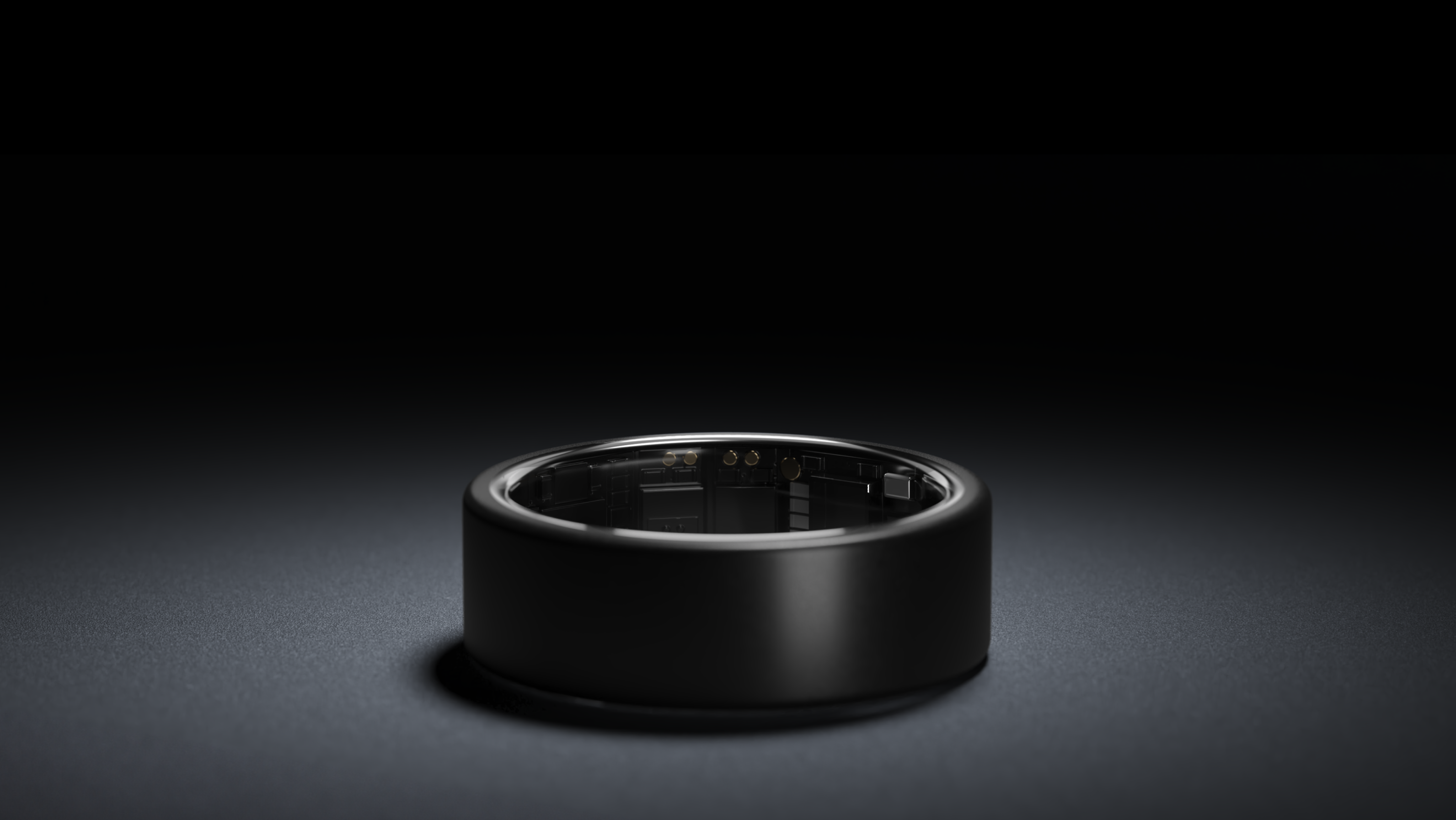
The lightest ring in the comparison at 2.4 grams and the only one with a metabolic focus: caffeine-timing windows, circadian alignment prompts and food-response tools. No mandatory subscription, though some advanced modules are paid PowerPlug add-ons. Battery is the weakest here at 4-6 days and the app can feel like a cockpit when you wanted a coach. For biohackers and data-dense users, it's the obvious choice; for everyone else it's more instrument than assistant.
At 2.4 grams you forget you're wearing it, and no rival touches its metabolic toolkit — caffeine windows, circadian phase, food-response experiments. The cost is a 4-6 day battery, an app that buries signal in density, and PowerPlug add-ons that reintroduce payment friction the no-subscription pitch implied you'd escaped.
Pros
- ✓Lightest ring available (2.4g)
- ✓Unique metabolic and circadian tools
- ✓No mandatory subscription
- ✓Strong HRV and recovery analytics
Cons
- ✗Weakest battery here (4-6 days)
- ✗App is dense and cluttered
- ✗Some features are paid PowerPlug add-ons
Score breakdown
| Price | $349 |
| Subscription | None (paid add-ons optional) |
| Battery | 4-6 days |
| Weight | 2.4g |
| Material | Titanium |
| Water resistance | 100m |
| Compatibility | iOS / Android |
Subscribe to our newsletter
Occasional updates and new releases — no spam.
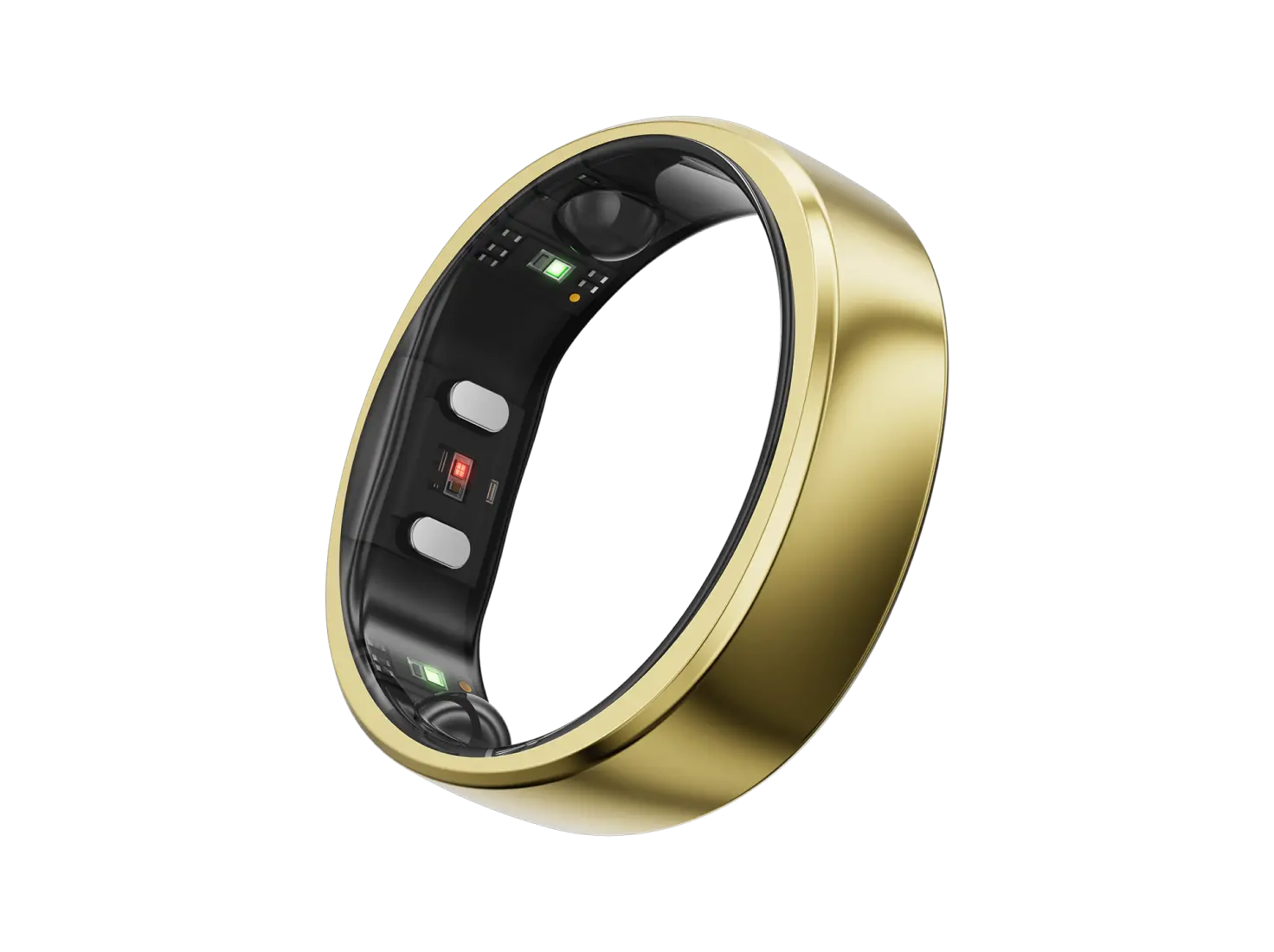
The battery champion — 10-12 real-world days per charge, roughly triple Oura's runtime — plus sleep apnea detection the others lack, for $299 with no subscription. The squircle cross-section stops it rolling off nightstands and sits comfortably between fingers. The app reports cleanly but interprets less than Oura or Leep; you get accurate numbers and make your own calls. Ideal for people who resent charging routines or want apnea screening without a sleep lab.
Ten to twelve days per charge ends the charging-anxiety conversation, and sleep apnea detection is a feature the premium brands still don't offer. The app gives you clean, accurate data and leaves interpretation to you — fine for self-directed users, thin for people who want coaching.
Pros
- ✓10-12 day battery — best in category
- ✓Sleep apnea detection
- ✓No subscription, $299
- ✓Squircle shape resists rolling
Cons
- ✗App reports more than it interprets
- ✗No auto workout detection
- ✗Support response can be slow
Score breakdown
| Price | $299 |
| Subscription | None |
| Battery | 10-12 days |
| Weight | 2-3g |
| Material | Titanium |
| Water resistance | 100m |
| Compatibility | iOS / Android |

The ecosystem play: titanium, 6-7 day battery, Energy Score, cycle tracking and gesture controls, all woven directly into Samsung Health. Paired with a Galaxy phone it's the most seamless experience in the category — no separate app silo, and your watch and ring data merge. But it's Android-only with zero iOS support, several features require a Samsung phone specifically, and at $399 it's the most expensive no-subscription option. Galaxy owners: excellent. Everyone else: look elsewhere.
Inside the Galaxy ecosystem this is the frictionless choice — ring, watch and phone data all land in Samsung Health, gestures control your camera, and the Energy Score is a credible readiness rival. Outside that ecosystem it simply doesn't exist: no iOS app, Samsung-exclusive features, and the highest no-subscription price at $399.
Pros
- ✓Deepest phone-ecosystem integration in the category
- ✓No subscription
- ✓Gesture controls and cycle tracking
- ✓Data merges with Galaxy Watch in Samsung Health
Cons
- ✗Android only — no iOS app at all
- ✗Key features require a Samsung phone
- ✗$399 — priciest no-subscription option
Score breakdown
| Price | $399 |
| Subscription | None |
| Battery | 6-7 days |
| Weight | 2.3-3g |
| Material | Titanium |
| Water resistance | 100m / IP68 |
| Compatibility | Android only (best with Samsung) |
Which one is right for you?
For first-time smart ring buyers
Leep Ring 1
The lowest-risk entry into the category: $199 flat, no subscription, and sleep tracking verified to compete with rings at twice the price. If you're not sure a ring fits your life, risk $199 — not $565.
For the deepest insights and coaching
Oura Ring 4
Four generations of algorithm refinement and the most actionable readiness guidance in the category — if you'll actually use the depth, the membership pays for itself.
For people who hate charging things
RingConn Gen 2
10-12 days per charge means you charge it roughly when you change your sheets, and less frequent cycling also slows long-term battery aging.
For metabolic and performance optimizers
Ultrahuman Ring Air
Caffeine-timing windows, circadian phase tools and food-response experiments no other ring offers, in the lightest package available.
For Samsung Galaxy phone owners
Samsung Galaxy Ring
Ring, watch and phone data unified in Samsung Health with gesture controls on top — the obvious pick inside the ecosystem, and only inside it.
Why a ring instead of a watch for sleep tracking
A wearable you take off at night can't track your sleep, and most people find a watch on the wrist genuinely uncomfortable in bed — the strap traps heat and the screen lights up at every twitch. Rings solve both problems. They weigh 2-5 grams, have no screen to glow at 3 a.m., and the finger offers a stronger optical signal for heart rate and blood oxygen than the wrist, because the skin is thinner and capillary density is higher.
That optical advantage is not marketing. Validation studies comparing finger-worn PPG sensors against polysomnography consistently show tighter heart-rate variability agreement than wrist-worn equivalents, particularly during deep sleep phases when wrist sensors suffer from positional artifacts. Every ring in this comparison tracks sleep stages, resting heart rate, HRV, blood oxygen and skin temperature — the differences are in accuracy, interpretation and what the companion app does with the data.
The subscription question changes the real price
Oura Ring 4 costs $349 upfront but locks most insights — readiness score details, sleep staging history, stress tracking — behind a $5.99/month membership. Over three years that is roughly $565 total. The other four rings in this comparison charge no mandatory subscription: Leep Ring 1 ($199 total), RingConn Gen 2 ($299), Samsung Galaxy Ring ($399) and Ultrahuman Ring Air ($349, though some advanced 'PowerPlug' modules are paid add-ons).
This is the single most important buying decision in the category. If you keep a smart ring for three years, the cheapest option (Leep) costs about a third of the most expensive path (Oura with membership). Whether Oura's software advantage justifies that gap is the core question of this comparison — for some people it does, and the verdict below says so.
How these rings were compared
We weighted sleep tracking accuracy most heavily, because sleep is what rings are demonstrably best at and the reason most people buy one. We assessed accuracy against published third-party validation work and multi-device wear tests, battery life in real use rather than spec-sheet claims, comfort across ring profiles and weights, app quality including whether insights are actionable or just charts, and three-year cost of ownership including subscriptions.
We did not weight step counting or workout tracking heavily. No ring matches a watch with GPS for exercise, and every manufacturer quietly knows it — rings are recovery and sleep devices first. If workout tracking is your priority, buy a watch and stop reading.
Oura Ring 4 — the reference point everyone else is chasing
Four generations in, Oura's sleep staging algorithm is the most validated in the category, and Ring 4's recessed sensor design fixed the protruding-bump comfort complaint of earlier models. The readiness score has become the template the whole industry copies: it blends HRV trend, temperature deviation, sleep debt and activity load into one number that is genuinely useful for deciding whether to push or rest.
The catch is the membership. Without $5.99/month, the ring shows you three bare scores and hides nearly everything else — which makes the $349 hardware effectively a $565 three-year commitment. Sizes 4-15 and multiple finishes are the widest range here, but you pay for the polish at every step. Workout detection remains mediocre, and there is no gesture control or payment feature to offset the price.
Leep Ring 1 — the price disruptor that actually delivers on sleep
Leep launched in January 2026 at £169/$199 with a pitch that sounded too good: Oura-grade sleep tracking, titanium build, no subscription ever. Independent reviews have been consistently surprised — worn alongside established trackers, Leep's sleep stage and HRV data tracks remarkably close, and its stress tracking is more robust than the price implies. The company built the product around sleep coaching methodology developed with James Wilson, a sleep coach who has worked with elite athletes, and the app's advice reads like a coach rather than a dashboard.
The honest trade-offs: this is a five-month-old brand with a young app ecosystem — integrations are thin compared to Oura or Samsung, activity tracking is basic, and there are only three finishes (the gold one arrived in April). The 8-day battery beats Oura, and the charging case holding 60+ days of backup power is unique in the category — nobody else ships one. At half the price of every rival, those trade-offs are easy to accept if sleep is what you care about.
Ultrahuman, RingConn and Samsung — the specialists
Ultrahuman Ring Air is the lightest ring here at 2.4 grams — you genuinely forget it exists — and its metabolic angle is unique: caffeine-timing windows, circadian phase alignment and food-response tools that no rival offers. The app is dense to the point of clutter, battery is a weaker 4-6 days, and while there is no mandatory subscription, some features sit behind paid PowerPlug add-ons, which feels like a subscription wearing a costume.
RingConn Gen 2 is the battery champion: 10-12 real-world days, plus sleep apnea detection that others lack, at $299 with no subscription. Its squircle cross-section resists rolling on flat surfaces and wears more comfortably between fingers than you'd expect. The app presents data cleanly but interprets less — you get numbers where Oura gives you guidance.
Samsung Galaxy Ring is the obvious pick if you live in the Galaxy ecosystem and a non-starter otherwise: there is no iOS app at all, and features like gesture camera control and the Energy Score work best paired with a Samsung phone. Within that ecosystem it is excellent — titanium build, 6-7 day battery, and the ring extends Samsung Health rather than fragmenting your data into another app.
Accuracy: what rings measure well and what they guess
All five rings measure resting heart rate, HRV, skin temperature trend and blood oxygen well enough for trend analysis — the finger is a good site and the hardware has matured. Sleep staging (deep vs REM vs light) is where marketing outruns physics: no consumer wearable matches lab polysomnography, and accuracy for stage classification across the industry sits around 60-80% depending on the night and the person. Treat stages as directional, not diagnostic.
What matters more is night-to-night consistency, because trends drive every useful insight. Here Oura and Leep come out ahead — both produce stable baselines that make deviations meaningful. If a ring tells you your temperature deviated 0.4°C above baseline, that consistency is what makes the signal worth acting on, whether the cause is an oncoming cold or a late glass of wine.
Sizing, comfort and living with a ring
Every manufacturer ships a free plastic sizing kit before the real ring, and you should actually wear the sizer for two full days including a workout and a night's sleep — fingers swell at night and shrink in cold weather, and a ring that spins freely ruins optical sensor contact. Smart ring sizes do not match jewelry sizes; never guess from an existing ring.
Daily-life notes from extended wear: titanium shells (all five rings here) shrug off most abuse, but lifting weights with any ring scratches it against the bar — take it off or accept the patina. All five are waterproof enough for showers and swimming (Leep and most rivals rate 50m or 100m). Width differences of a millimeter sound trivial and are not; if you have slim fingers, the 2.6mm-thin Leep and the 2.4g Ultrahuman disappear in a way the chunkier Galaxy Ring does not.
Which ring should you actually buy
For most people buying their first smart ring in 2026, the value calculation points at Leep Ring 1: it does the core job — accurate, consistent sleep tracking with coaching that plain-language explains what to change — at $199 flat, when the incumbent costs nearly three times that over three years. The young ecosystem is a real limitation, but sleep tracking is not a category where you need twenty integrations.
Pay for Oura Ring 4 if you want the deepest insight engine and the most validated algorithm and you're comfortable with the membership — it remains the best overall product, just no longer the best deal. Choose RingConn Gen 2 if charging anything weekly annoys you or you want apnea screening. Choose Ultrahuman if you're deep into metabolic optimization. Choose Galaxy Ring only if you carry a Samsung phone — and skip it entirely on iPhone.
Frequently asked questions
Are smart rings accurate enough to be worth it?▼
Do I need a subscription for a smart ring?▼
Which smart ring works with iPhone?▼
How do I get the right ring size?▼
Can I wear a smart ring in the shower or pool?▼
How long do smart ring batteries last before the ring is dead for good?▼
Is the Leep Ring legit? The price seems too low.▼
Prices change. Check the retailer for the current price.
Comments & questions
Discussion happens on nattzy, our community forum. Sign in with Google to post — it takes a second.
Related articles
Best Smart Home Hub 2026: Zigbee, Z-Wave, Thread & Matter
Best Smart Displays 2026: Echo Show 8 vs Nest Hub vs Show 15
Best Coffee Grinders 2026: Five mills side-by-side

Best Electric Toothbrush 2026: 5 models compared honestly
Best Air Purifier 2026: 5 models compared honestly
Best LED Face Masks 2026: 3 Light Therapy Devices Compared