Best Cycling Helmets 2026: MIPS, Ventilation, and Fit
Head protection is the one piece of cycling gear where 'good enough' is the wrong standard. The five helmets in this comparison cover distinct riding contexts. Fit and waterproof rating for your specific climate type matter most.
Quick answer
For most road cyclists, the Giro Syntax MIPS is the pick — Wind Tunnel ventilation, Roc Loc 5 Air fit, and a 5-star Virginia Tech rating without paying for aero. The Smith Trace MIPS saves 30–60 seconds an hour above 35 km/h, the Bell Super Air R converts between gravel and road with a removable chin bar, and the Specialized Align II delivers genuine MIPS and 4 stars at about $75.
This comparison is desk research. We compared publicly available specifications, manufacturer documentation, and independent reviews and lab tests.
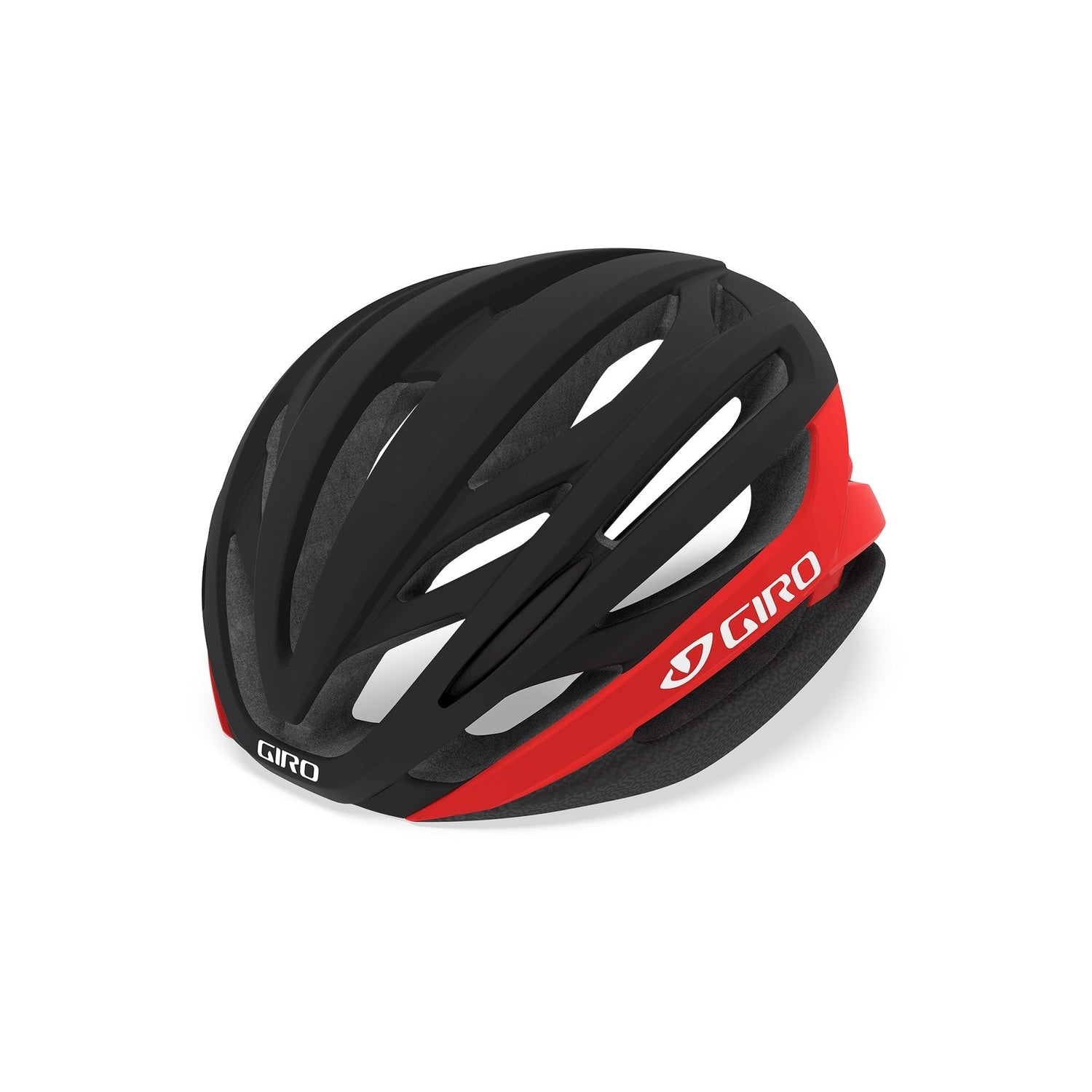
Giro Syntax MIPS
Best Overall: The Giro Syntax MIPS is the most balanced road cycling helmet in this comparison and the easiest recommendation for cyclists training in warm weather. Twenty-five vents arranged in Giro's Wind Tunnel ventilation system pull air through the helmet from front to back, and the Roc Loc 5 Air fit dial allows independent vertical and circumference adjustment without removing the helmet mid-ride.
Top picks ↓| Product | Price | Link |
|---|---|---|
| $112.99Reference price | ||
| $285.00Reference price | ||
| $250Reference price | ||
| $50Reference price | ||
| $69.99Reference price |
Top picks
Related articles


Best all-round road cycling helmet for training and sportive use. 25-vent Wind Tunnel ventilation, Roc Loc 5 Air fit system, 5-star Virginia Tech rating. The right pick for road cyclists who ride hard in warm weather and want precise fit without paying for aerodynamics they don't need.
The Giro Syntax MIPS is the most balanced road cycling helmet in this comparison and the easiest recommendation for cyclists training in warm weather. Twenty-five vents arranged in Giro's Wind Tunnel ventilation system pull air through the helmet from front to back, and the Roc Loc 5 Air fit dial allows independent vertical and circumference adjustment without removing the helmet mid-ride. It carries a 5-star Virginia Tech rating and meets both CPSC and CE EN 1078 standards. At around $150 it sits in the price band where you get a premium fit system and genuine ventilation engineering without paying for aerodynamic features that only matter above 35 km/h. For sportive and training use, the Syntax is the reference pick.
Pros
- ✓25 vents with Wind Tunnel airflow channels handle hot-weather riding
- ✓Roc Loc 5 Air dial allows independent vertical and circumference tuning
- ✓5-star Virginia Tech rating with CPSC and CE EN 1078 certification
- ✓Mid-range price avoids paying for unused aero features
Cons
- ✗Shallow road profile gives less side coverage than gravel helmets
- ✗Two-size sizing offers less initial precision than three-size lineups
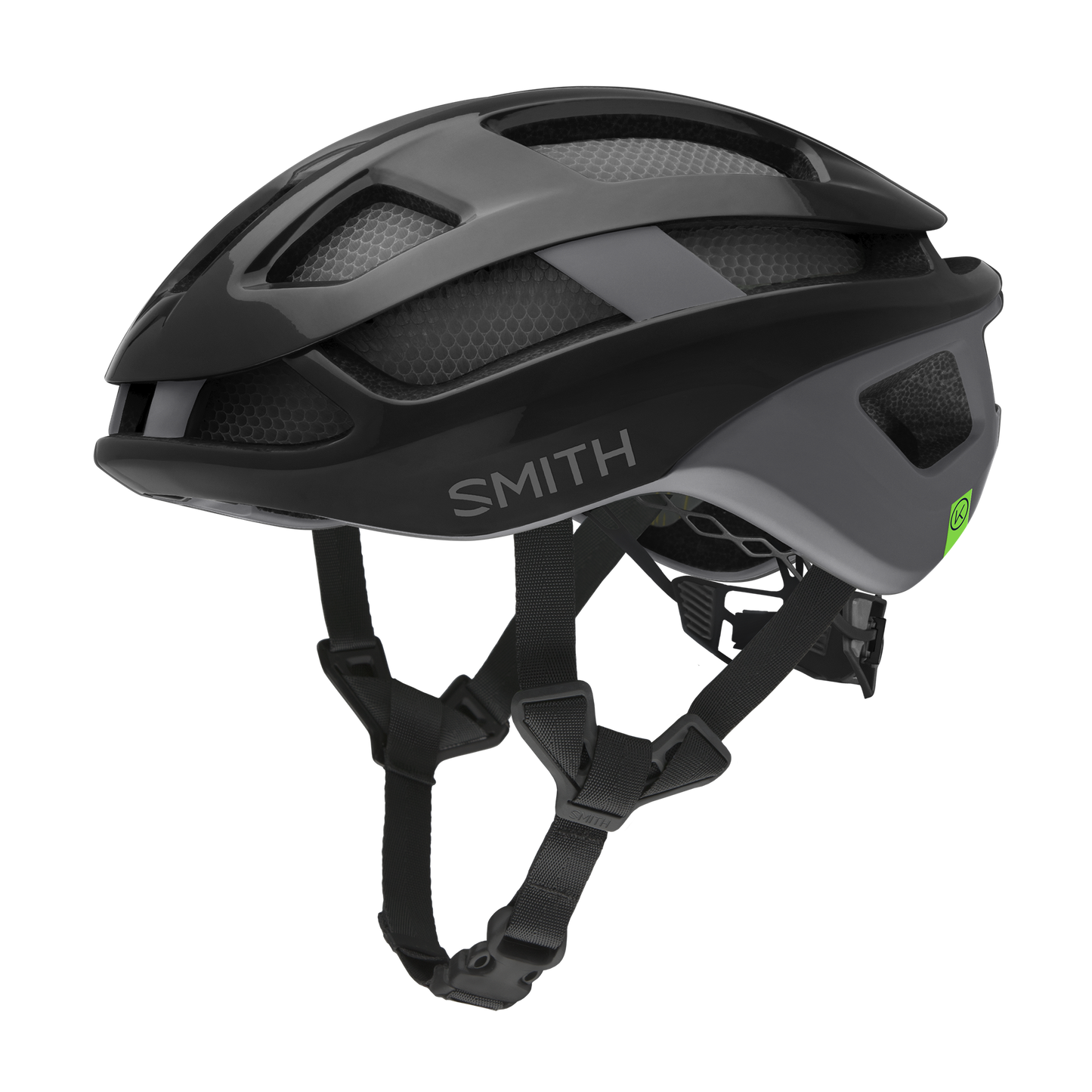
Best aerodynamic road helmet in this comparison. Koroyd structure plus MIPS, 5-star Virginia Tech rating, and a profile designed for riding above 30 km/h. Choose this if aerodynamic efficiency is a training or racing priority; accept reduced ventilation versus the Giro Syntax at lower speeds.
The Smith Trace MIPS is the aero helmet pick in this comparison. The teardrop-inspired profile and Koroyd material — an array of co-polymer tubes bonded together that allows air to pass through the structure itself — produce both genuine aerodynamic advantage above 35 km/h and reasonable ventilation despite the closed-shell appearance. Twenty-one vents balance drag with airflow. Smith's wind tunnel testing shows 30-60 seconds saved per hour at race pace versus a standard road helmet. The VaporFit retention dial is precise and the three-size sizing (S, M, L) gives slightly better initial fit coverage than two-size lineups. 5-star Virginia Tech rating. Accept the reduced ventilation versus the Syntax at slower speeds as the trade.
Pros
- ✓Aerodynamic profile saves 30-60 seconds per hour above 35 km/h
- ✓Koroyd structure delivers airflow through the material itself
- ✓5-star Virginia Tech rating with proven rotational protection
- ✓Three-size sizing improves initial fit coverage
Cons
- ✗21 vents lag the Syntax for slow climbing in still air
- ✗Aero advantage shrinks substantially below 30 km/h
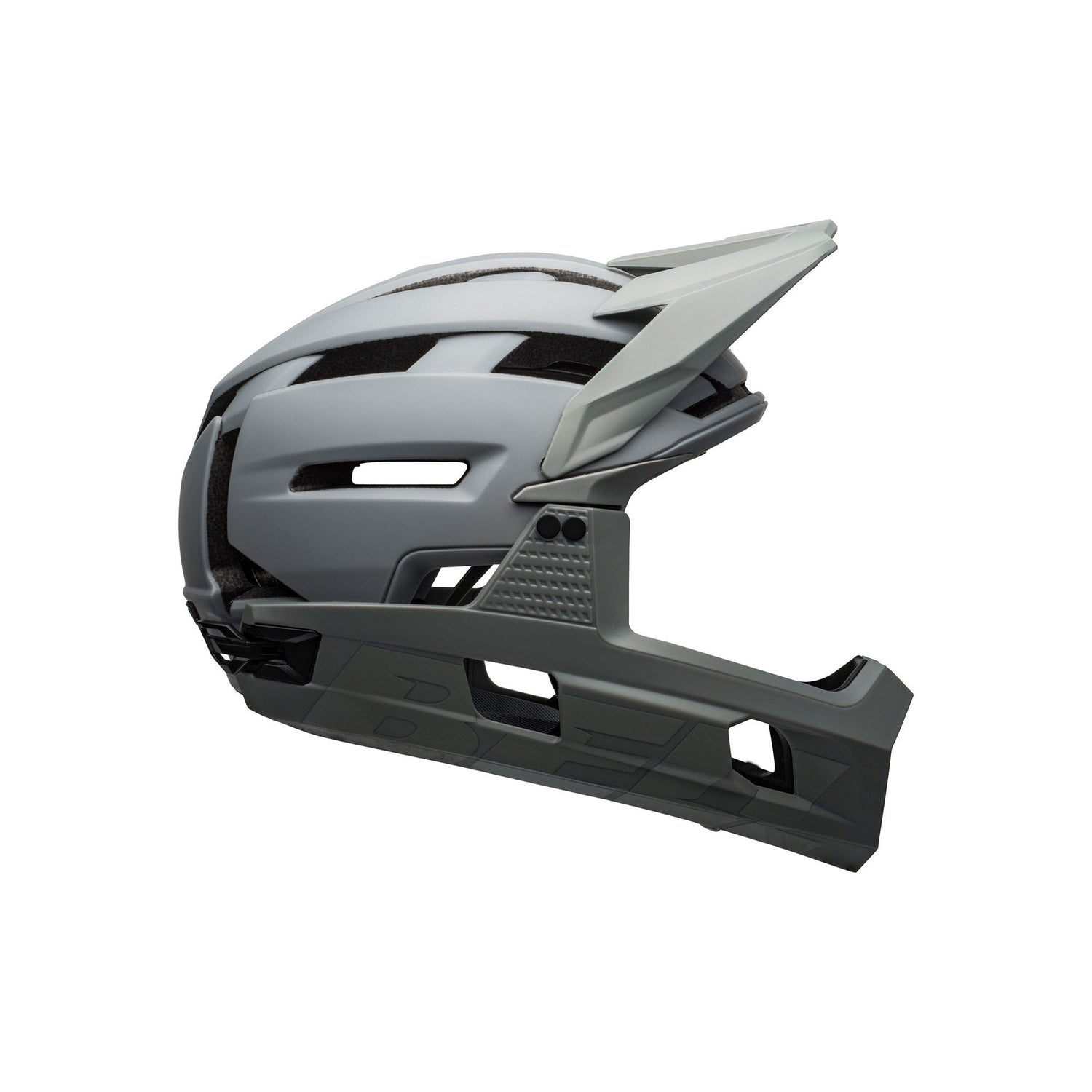
Best helmet for gravel and mixed-terrain riders who want one helmet to cover road, gravel, and technical descents. The Boa retention dial is excellent. The removable chin bar adds versatility; the weight penalty is real. Heavier than pure road helmets, justified only if you actually use the convertible function.
The Bell Super Air R MIPS occupies a unique position: with the chin bar removed, it functions as a capable gravel and road helmet; with the chin bar installed, it becomes a full-face helmet for technical MTB descents. The Float Fit system with Boa retention dial is the best fit mechanism in this comparison — single-handed micro-adjustment with consistent tension distribution. Coverage extends further down over the temples and ears than the Syntax or Trace, providing better side impact protection for off-road conditions. Weight runs roughly 350g without the chin bar and 450g with it — meaningfully heavier than pure road helmets, justified only if you genuinely use the convertible function. 5-star Virginia Tech rating.
Pros
- ✓Removable chin bar covers road, gravel, and technical descent use
- ✓Boa retention dial is the best fit mechanism here
- ✓Deeper coverage protects temples and ears for off-road crashes
- ✓5-star Virginia Tech rating across the convertible design
Cons
- ✗350-450g weight runs heavier than pure road helmets
- ✗Chin bar mass and complexity only pays off if you actually use it
Subscribe to our newsletter
Occasional updates and new releases — no spam.
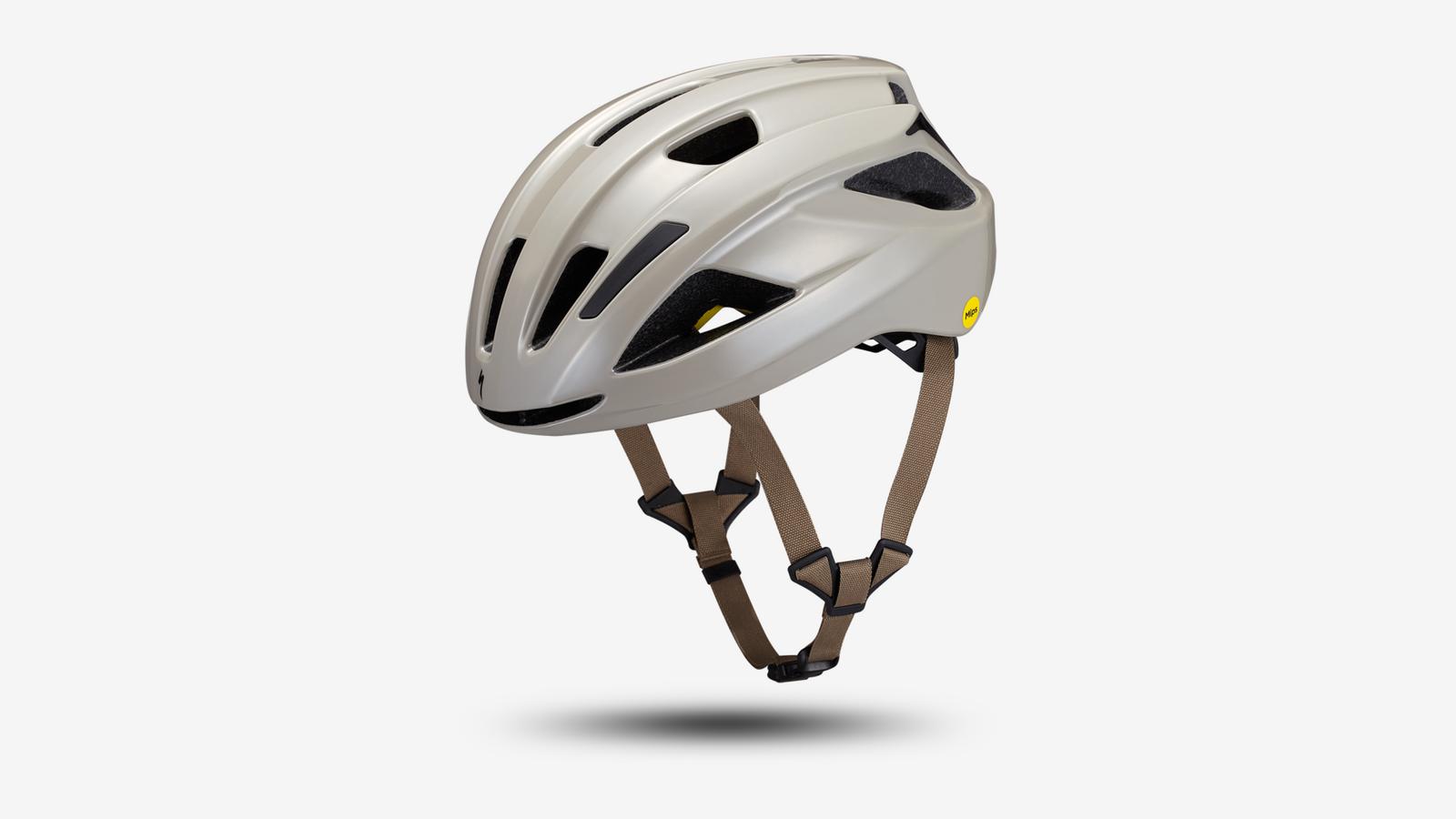
Best value MIPS helmet in this comparison. 4-star Virginia Tech rating, CPSC/CE certified, genuine MIPS liner, at $75. The simplified fit system and ventilation are the tradeoffs versus pricier options. The right first upgrade for cyclists moving up from a basic non-MIPS helmet.
The Specialized Align II MIPS is the value pick in this comparison. At around $75 you get a genuine MIPS liner, CPSC and CE certification, and a 4-star Virginia Tech rating — meaningfully ahead of most non-MIPS helmets at higher prices. The Headset MX fit system is a simple dial cradle without the independent vertical adjustment of the Syntax's Roc Loc 5 Air, and the 18-vent design uses a simpler channel layout than the Wind Tunnel system. For recreational cyclists who ride several times a week for fitness and commute occasionally, the Align II delivers the right protection at a price that makes it accessible as a first serious helmet upgrade.
Pros
- ✓Genuine MIPS liner at the lowest price in this comparison
- ✓4-star Virginia Tech rating with CPSC and CE EN 1078 certification
- ✓18 vents provide adequate ventilation for recreational road use
- ✓Simple Headset MX dial holds position well for set-and-forget riders
Cons
- ✗Headset MX lacks independent vertical adjustment
- ✗Channel ventilation is shallower than Wind Tunnel designs
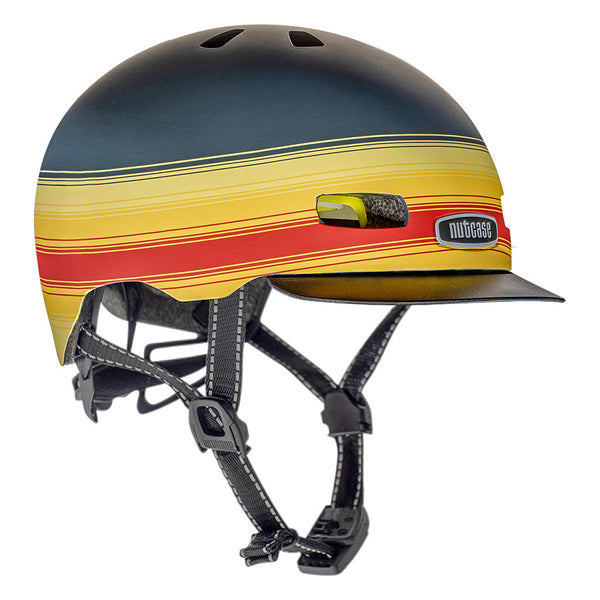
Best helmet for urban commuters and city cyclists. Deep coverage, rounded profile designed for style and side-impact protection, MIPS liner, available in multiple colors. Not the right helmet for road training rides or long aerobic efforts — designed for the cyclist who wears it every day and wants to actually like how it looks.
The Nutcase Street MIPS is the urban commuter pick. The rounded in-mold polycarbonate shell extends deeper over the ears and temples than road helmets, which is meaningful for urban riders where car-door and side impacts are common crash vectors. Twelve vents — adequate for the 5-15 km urban riding context, not built for sustained aerobic effort. The twist-dial retention system works one-handed and the rounded shell fits a wider range of head shapes than aerodynamic road helmets. MIPS liner inside, with a 4-star Virginia Tech rating range. For the cyclist who needs a helmet they actually wear every day rather than leaving at home because it looks out of place with street clothes, the Nutcase hits a sweet spot.
Pros
- ✓Deeper coverage protects temples and ears for urban side impacts
- ✓Rounded profile fits a wider range of head shapes
- ✓Available styles and patterns suit commuting with street clothes
- ✓MIPS liner with 4-star Virginia Tech rating range
Cons
- ✗12 vents produce noticeable heat buildup on hot summer rides
- ✗Lifestyle-tuned profile is not aerodynamic for road training
Which one is right for you?
For most road cyclists
Giro Syntax MIPS
Wind Tunnel ventilation, Roc Loc 5 Air fit, and a 5-star rating cover hot-weather training without paying for aero features.
For racers and fast group rides
Smith Trace MIPS
Aero profile saves 30-60 seconds per hour above 35 km/h, with Koroyd airflow keeping ventilation reasonable.
For gravel and mixed-terrain riders
Bell Super Air R MIPS
Removable chin bar and deeper coverage handle road, gravel, and technical descents on the same bike.
For first serious helmet upgrade
Specialized Align II MIPS
Genuine MIPS and a 4-star Virginia Tech rating at $75 deliver real protection at an accessible price.
For urban commuters
Nutcase Street MIPS
Deeper ear and temple coverage plus street-clothes-friendly styling means the helmet actually gets worn daily.
MIPS: what the liner actually does and when it matters
MIPS (Multi-directional Impact Protection System) is a low-friction layer inside the helmet that allows the helmet shell to rotate independently of the head by 10–15mm during an oblique impact. The mechanism addresses rotational forces — the kind of acceleration your brain experiences when the impact comes at an angle rather than straight down. Most real cycling crashes involve oblique impacts: you go over the bars and your helmet hits the pavement at an angle, or you clip a car door and tumble sideways. Straight-on, vertical impacts are actually the minority of crash scenarios.
All five helmets in this comparison include MIPS. The distinction between them is not whether MIPS is present but how the implementation affects internal fit, ventilation path, and the feel of the helmet on your head. The MIPS liner adds a small amount of height to the interior, which can affect whether a helmet fits a head that sits right at the upper edge of a size range. On the Giro Syntax MIPS and Smith Trace MIPS, the MIPS liner is thin enough that this effect is minimal. On the Bell Super Air R MIPS, the MIPS layer is integrated alongside a removable chin bar, which means the fit engineering is more complex.
Independent testing of MIPS effectiveness by the Virginia Tech Helmet Lab (which publishes a 5-star rating system for cycling helmets) consistently shows that MIPS-equipped helmets outperform comparable non-MIPS helmets in their rotational energy transfer scores. All five helmets in this comparison have been rated by Virginia Tech, and all score in the 4–5 star range. If you are comparing a MIPS helmet to a non-MIPS helmet at similar price points, the MIPS version offers measurably better rotational impact mitigation in independent testing.
One nuance: MIPS is not the only rotational protection system. Smith uses its own Koroyd material in addition to MIPS on the Trace, and Bell has developed the Float Fit system which changes how the fit pads interact with the head during impact. Giro uses MIPS across most of its lineup without a proprietary parallel system. For this comparison, the practical conclusion is straightforward: all five helmets have MIPS and all have strong independent safety ratings — the differences come down to fit, ventilation, and riding context.
Ventilation: vent count, channel design, and real airflow differences
The Giro Syntax MIPS has 25 vents arranged in a Wind Tunnel ventilation system that channels air through the helmet from front to back. At road cycling speeds (20–30 km/h+), the Syntax delivers strong airflow across the top and sides of the head. The vent openings are large enough to be effective without significantly compromising structural integrity — Giro's channel design separates the incoming air into parallel streams that exhaust through the rear vents, pulling heat away from the scalp. For hot-weather road riding, the Syntax is the best ventilated helmet in this comparison by objective vent count and channel surface area.
The Smith Trace MIPS takes a different approach: it is an aerodynamic helmet with a more aggressive profile than the Syntax, with 21 vents positioned to balance aerodynamic drag with airflow. The Koroyd material — an array of co-polymer tubes bonded together — contributes to airflow by allowing air to pass through the material itself rather than only around it. This means the Trace delivers reasonable ventilation despite its aerodynamic shape. At the speeds where aerodynamics meaningfully affect cycling performance (30+ km/h), the Trace is the pick here. Below those speeds, the reduced vent count relative to the Syntax translates to a noticeably warmer helmet in still air or slow climbing.
The Bell Super Air R MIPS is designed for gravel and trail cycling where the rider needs a helmet that can handle mixed conditions — extended climbs, technical descents, and city connections. It has 18 vents with an open channel design that provides solid airflow for the effort levels typical of gravel riding, where you spend more time at moderate intensity than at race pace. The removable chin bar adds versatility but also adds mass (approximately 100g) and reduces airflow when installed. For gravel century rides and bikepacking, the ventilation without the chin bar is adequate. For technical mountain bike descents where the chin bar goes on, accept the tradeoff.
The Specialized Align II MIPS has 18 vents and a simple channel design. It is not as sophisticated as the Syntax's Wind Tunnel system, but it provides adequate ventilation for recreational road riding and fitness cycling. At the Align II's price point ($75), the ventilation design represents a genuine value — you are getting MIPS protection and functional airflow rather than a full premium shell engineering. The trade is that the channels are shallower and the airflow management is less directional than on the Giro or Smith.
The Nutcase Street MIPS is an urban commuter helmet with a rounded, in-mold polycarbonate shell designed for coverage and style rather than ventilation optimization. It has 12 vents — adequate for urban cycling speeds and commuter use, which rarely involves sustained aerobic effort at road racing intensity. For a cyclist riding 5–15 km to work or around the city, the Nutcase's ventilation is entirely sufficient. For anyone using this helmet on a 3-hour summer endurance ride, the heat buildup becomes uncomfortable above moderate effort. Know your use case.
Fit systems: BOA, Roc Loc, Float Fit, and retention dial comparison
The Giro Syntax MIPS uses Giro's Roc Loc 5 Air fit system — a dial-adjustable rear cradle that independently adjusts vertical position and circumference. The Roc Loc 5 Air allows precise micro-adjustments and can be fine-tuned while riding without removing the helmet. Giro's fit systems are consistently praised in independent reviews for holding their position across long rides without requiring mid-ride readjustment. The Syntax is available in two sizes (S/M and L/XL) and the Roc Loc 5 Air system covers a meaningful range within each size.
The Smith Trace MIPS uses an adjustable VaporFit retention system with a dial at the rear. It is functional and precise but slightly less refined than Giro's Roc Loc in terms of micro-adjustment range. The Trace's internal pad system is comfortable and the retention dial provides a secure, custom feel. The helmet is offered in three sizes (S, M, L), which provides slightly better initial sizing coverage than Giro's two-size system.
The Bell Super Air R MIPS uses Bell's Float Fit system with a Boa dial at the rear. The Float Fit system is designed to allow the helmet to move slightly with the head during impact, complementing the MIPS liner's rotational slip. The Boa dial mechanism is among the best retention dial implementations in cycling helmets — it offers single-handed micro-adjustment with consistent tension distribution around the head. For riders who frequently adjust fit mid-ride or switch between wearing a cap and riding without one, the Boa system on the Super Air R is the most convenient in this comparison.
The Specialized Align II MIPS uses Specialized's Headset MX fit system — a simple dial-adjustable cradle. It is functional and holds position well, but it does not offer the refined micro-adjustment or independent vertical/circumference tuning of the Roc Loc 5 Air or Boa systems. For recreational cyclists who set their fit once and leave it, this is a non-issue. For cyclists who regularly fine-tune fit between sessions or ride with different hair styles/caps, the simpler system becomes more noticeable.
The Nutcase Street MIPS uses a twist-dial retention system that adjusts circumference. The system is effective for urban helmet use and is easy to operate with one hand. The Nutcase's rounded shell is designed to fit over a wider range of head shapes than aerodynamic road helmets — the deeper coverage profile means that the shell positions consistently across different head shapes rather than requiring precise front-to-back positioning like a shallow road helmet. For commuters who want a secure, predictable fit without calibration, the Nutcase system works well.
CE EN 1078, CPSC, and safety certifications: what the stamps mean
All five helmets meet the relevant safety certifications for their primary markets. The CPSC (Consumer Product Safety Commission) standard governs helmets sold in the United States and requires that a helmet survive a specific drop test onto a flat anvil, a hemispherical anvil, and a curbstone anvil from specified heights. The CE EN 1078 standard governs helmets sold in Europe and involves similar drop tests with slightly different impact management requirements. Both standards are minimum-threshold certifications — they establish a floor for protection, not a ceiling.
Virginia Tech's 5-star helmet rating system is the most useful independent evaluation tool available to consumers because it tests for rotational energy transfer (which CPSC and CE EN 1078 do not directly measure) in addition to linear impact. Scores are published at helmet.beam.vt.edu. The Giro Syntax MIPS, Smith Trace MIPS, and Bell Super Air R MIPS all carry 5-star Virginia Tech ratings. The Specialized Align II MIPS carries a 4-star rating. The Nutcase Street MIPS has been tested and rates in the 4-star range. None of these are poorly rated helmets — the distinction between 4 and 5 stars in this context means the 5-star helmets have demonstrated slightly lower energy transfer in rotational impact conditions.
One practical note on certification versus fit: a 5-star helmet that does not fit your head correctly is less protective than a 4-star helmet that fits precisely. Helmet protection depends on the helmet staying in the correct position during impact. A loose-fitting helmet can rotate out of position before or during a crash. For all five helmets, get your head measured (circumference in centimeters at the widest point) before selecting a size, and confirm the fit with the retention system snug and the helmet level on your head.
Aero vs comfort: when each profile choice actually matters
The Smith Trace MIPS is the only helmet in this comparison designed explicitly for aerodynamic advantage. Its teardrop-inspired profile and smooth external shell reduce drag at speeds above approximately 35 km/h. Wind tunnel testing by Smith shows time savings of 30–60 seconds per hour of riding at race pace versus a standard road helmet. For road cyclists who race or ride regularly above 35 km/h, this matters. For cyclists whose average speed is 25–30 km/h, the aerodynamic advantage shrinks to under 10 seconds per hour — not nothing, but not worth the ventilation compromise if you are riding in hot weather.
The Giro Syntax MIPS prioritizes ventilation over aerodynamics. Its open channel design and high vent count make it the better choice for long hot-weather rides, climbing-heavy routes, or any riding where managing heat is more important than minimizing drag. The Syntax is a road cycling helmet, not a commuter or trail helmet — its shallow profile, large vents, and road geometry make it best suited to road and sportive use.
The Bell Super Air R MIPS occupies a unique position as a convertible helmet. Without the chin bar, it is a capable gravel/road helmet with solid ventilation. With the chin bar attached, it becomes a full-face helmet suitable for technical MTB descents and gravel racing. The coverage area of the Super Air R shell extends further down over the temples and ears than either the Giro Syntax or Smith Trace, providing better side impact protection for off-road conditions. The weight penalty (approximately 350g without chin bar, 450g with) is real but accepted by riders who value single-helmet versatility.
The Specialized Align II MIPS is a generalist road and recreation helmet. It does not excel at ventilation, aerodynamics, or terrain versatility — it offers solid protection at a low price point. For cyclists who ride several times a week for fitness, commute occasionally, and do not compete, the Align II is the pragmatic choice. You get MIPS protection and a CE/CPSC-certified shell for $75. The premium you pay for the Syntax or Trace buys genuine performance gains that matter for serious training — if your riding is recreational, those gains are not proportional to the cost.
The Nutcase Street MIPS is a lifestyle helmet. Its rounded design, deep coverage, and available color patterns are intentional choices for an urban rider who wants to wear the helmet on the bike and not look like a racing cyclist at the cafe or office. The deeper shell provides better ear and temporal coverage than shallow road helmets, which is meaningful for urban riders where side impacts (from car doors, other cyclists) are common crash vectors. If your primary use is commuting, short recreational rides, or city cycling, the Nutcase hits a sweet spot that road helmets do not.
Verdict
For road cyclists who train regularly and want the best combination of MIPS protection and ventilation at a reasonable price, the Giro Syntax MIPS is the reference pick. The Wind Tunnel ventilation, Roc Loc 5 Air fit system, and 5-star Virginia Tech rating make it the most well-rounded road cycling helmet in this comparison for recreational to competitive training use. At $150, it sits in a price band where you get a premium fit system and genuine ventilation engineering without paying for aerodynamic features that only matter above 35 km/h.
Choose the Smith Trace MIPS if you race road events, complete regularly with a group above 30 km/h, or place aerodynamic efficiency as a priority. The Koroyd structure, aero profile, and 5-star Virginia Tech rating make it the top pick for performance-oriented road cyclists. Accept the reduced ventilation versus the Syntax as the tradeoff.
Choose the Bell Super Air R MIPS if you ride gravel, mixed-terrain routes, or want a helmet that can transition from road/trail riding to technical descents with the chin bar installed. The Boa retention dial is the best fit mechanism in this comparison, and the convertible design is genuinely useful for riders who cover varied terrain on the same bike.
Choose the Specialized Align II MIPS if you want certified MIPS protection at the lowest price in this comparison. The 4-star Virginia Tech rating is strong for the price, and the Headset MX fit system is adequate for non-competitive use. The $75 price makes it accessible as a first serious helmet upgrade from a basic big-box store option.
Choose the Nutcase Street MIPS if your riding is primarily urban commuting or short recreational rides in a city context. The deeper coverage, rounded profile, and available styles make it the helmet cyclists are most likely to actually wear consistently rather than leaving it at home because it looks out of place with street clothes.
We did not independently crash-test these helmets. Safety ratings are drawn from Virginia Tech's published helmet ratings database, manufacturer certifications, and third-party cycling media testing. Fit varies significantly by head shape — if possible, try helmets in person before purchasing, as a helmet that fits well in person is always preferable to one ordered online based on size alone.
Frequently asked questions
Does the helmet price correlate with better safety protection?▼
How often should I replace my cycling helmet?▼
Is a $75 helmet like the Specialized Align II actually safe for serious riding?▼
Can I use the Bell Super Air R MIPS as a road cycling helmet without the chin bar?▼
What is the difference between MIPS and WaveCel or SPIN technology?▼
Prices change. Check the retailer for the current price.
Comments & questions
Discussion happens on nattzy, our community forum. Sign in with Google to post — it takes a second.
Related articles
Best Gym Bag 2026: Wet/Dry, Backpack vs Duffel, Sizing
Best Water Bottle 2026: Stanley vs Hydro Flask vs Thermos

Best Electric Toothbrush 2026: 5 models compared honestly
Best Air Purifier 2026: 5 models compared honestly

ConoHa WING review (2026): setup, speed and pricing
Best JP rental server 2026: 5 hosts ranked