Best Fishing Kayak 2026: 5 Pedal and Paddle Kayaks Compared
Fishing kayaks are bought on features and regretted on weight. The rod holders and track systems matter less than two questions: can you fish hands-free, and can you get the boat onto the water alone?
Quick answer
The Old Town Sportsman PDL 120 is the fishing kayak to buy if you can stretch to a pedal drive: its propeller drive goes forward and reverse, keeps your hands free for the rod, and the hull is stable enough to stand and cast, at a price well below the Hobie. The Hobie Mirage Outback is the premium pedal benchmark for shallow water; the Perception Pescador Pro 12.0 is the best paddle kayak; the Pelican Catch Mode 110 is the lighter paddle option; and the Lifetime Tamarack Angler 100 is the budget starting point.
We did not paddle, pedal or fish from any of these kayaks ourselves. A fair comparison would need the same angler, the same water and measured speed and stability for each boat, and we do not have that. What we did instead: collected the published specifications — length, width, hull weight, rated capacity, drive type and seat design — from each manufacturer's product pages and manuals, checked current pricing at major US retailers, and read owner reviews in volume, focusing on repeated complaints such as drive-unit problems, seat discomfort, cracked scupper areas and boats too heavy to car-top, rather than first-trip impressions. Weights and capacities are manufacturer figures unless we say otherwise.
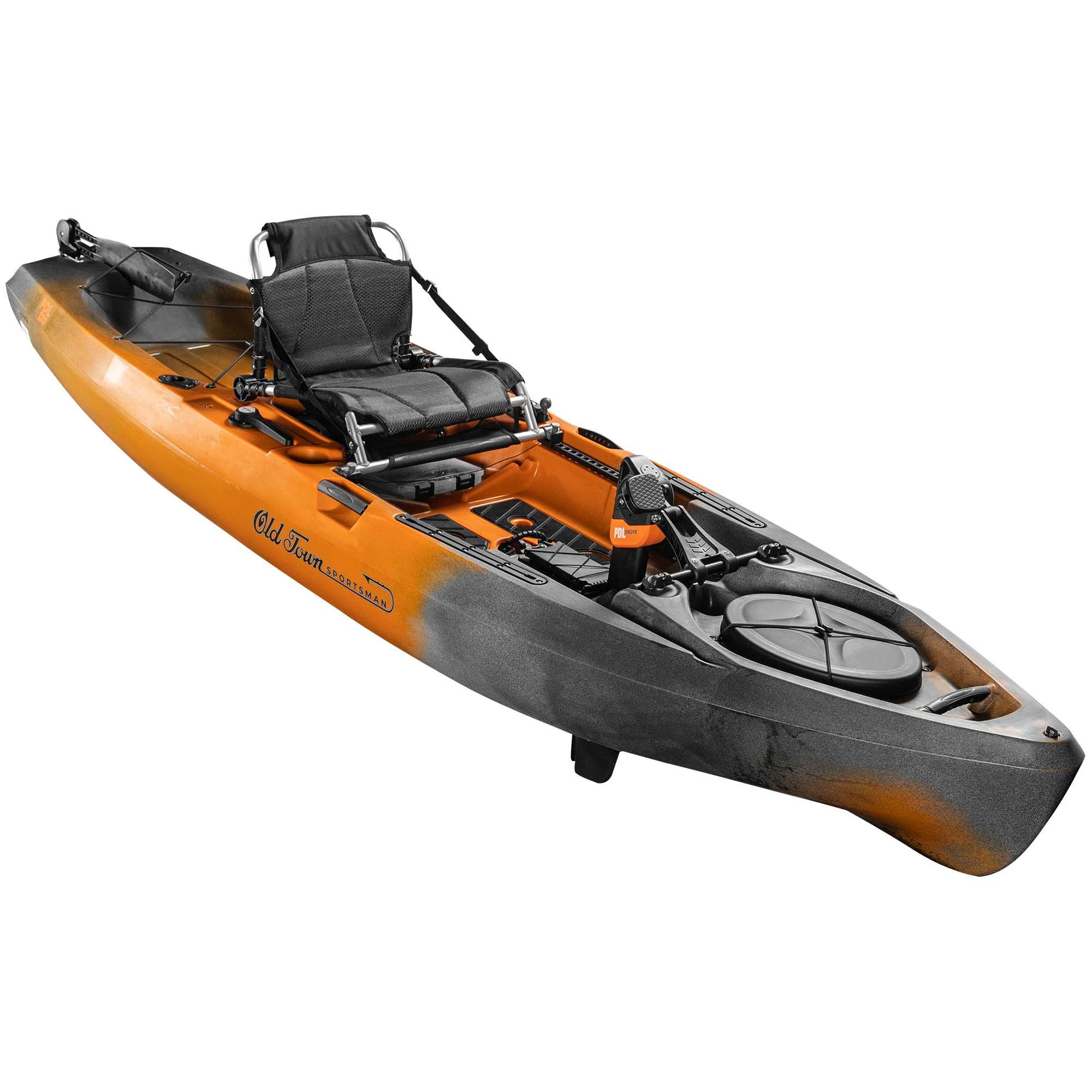
🏆 Best overall: The Sportsman PDL 120 brings the pedal-drive advantage to a price well below Hobie's flagship boats. Its propeller drive pushes forward and reverse with the same pedals, which makes holding position and backing off snags simple, and the wide hull is stable enough to stand.
Top picks ↓| Product | Price | Link |
|---|---|---|
| $2,400〜$3,200Reference price | ||
| $3,500〜$4,500Reference price | ||
| $850〜$1,100Reference price | ||
| $700〜$900Reference price | ||
| $300〜$450Reference price |
Top picks
Related articles


Old Town also sells the Sportsman PDL 106 and the Sportsman BigWater PDL; this pick is the 120.
The Sportsman PDL 120 brings the pedal-drive advantage to a price well below Hobie's flagship boats. Its propeller drive pushes forward and reverse with the same pedals, which makes holding position and backing off snags simple, and the wide hull is stable enough to stand. It is heavy and needs a cart or a helper to launch, and the propeller must be lifted in shallow weeds. For anglers ready to go hands-free, it is the best balance of capability and cost.
Pros
- ✓Hands-free pedal drive with easy reverse
- ✓Stable enough to stand and sight-cast
- ✓Comfortable framed seat
Cons
- ✗Heavy to car-top alone
- ✗Propeller needs depth; lift it in weeds and shallows

Model years differ in drive generation (MirageDrive 180 vs older versions); check which drive is fitted.
The Outback is the boat most pedal kayaks are compared against. Hobie's MirageDrive uses fins rather than a propeller, and they kick up when they touch bottom, which makes it the better choice for shallow flats and weedy water. Current versions add reverse. The build, resale value and dealer network are excellent. The price is the highest here by a clear margin.
Pros
- ✓Fin drive works in shallow water
- ✓Excellent build quality and resale value
- ✓Strong dealer and parts support
Cons
- ✗Most expensive boat here
- ✗Heavy with the drive installed

Perception Pescador Pro 12.0
The Pescador Pro also comes in 10-foot length; the 12.0 is the better tracker.
The Pescador Pro 12.0 is the paddle kayak to buy if you want a serious fishing platform without pedal-drive prices. Its 12-foot hull tracks and paddles efficiently, the raised framed seat is comfortable for full days, and the deck has space for rod holders and a crate. It is not as stable for standing as the widest boats, but it is much easier to paddle into wind than they are.
Pros
- ✓Efficient, straight-tracking 12-foot hull
- ✓Comfortable raised framed seat
- ✓Excellent value for its features
Cons
- ✗Less stable for standing than wide pedal boats
- ✗Paddle not included
Subscribe to our newsletter
Occasional updates and new releases — no spam.

Pelican sells several Catch models; the Catch Mode 110 is distinct from the Catch 100 and Catch 120.
The Catch Mode 110 is for anglers who fish alone and transport the boat themselves. It is lighter than most fishing kayaks with a framed seat, has a flat standing deck and enough rigging points for a basic setup. The shorter hull turns easily on small water but gives up speed and tracking on big lakes.
Pros
- ✓Relatively light for a framed-seat fishing kayak
- ✓Adjustable seat with good support
- ✓Easy to turn on small water
Cons
- ✗Slower and less straight-tracking on open water
- ✗Less storage than 12-foot boats

Often sold in two-packs at warehouse clubs — a cheaper option if you paddle with a partner.
The Tamarack Angler 100 is the cheapest reasonable way into kayak fishing: a stable 10-foot sit-on-top with rod holders, and a paddle in the box. Its moulded seat and basic backrest are the main limitation on longer outings, and it is slow compared with the longer boats. For ponds, calm lakes and finding out whether you like kayak fishing, it is hard to argue with.
Pros
- ✓Very low price with a paddle included
- ✓Stable, forgiving hull
- ✓Easy to carry and store
Cons
- ✗Basic seat is uncomfortable on long days
- ✗Slow and limited storage
Pedal drive or paddle: the decision that sets the budget
A pedal drive is the biggest upgrade in kayak fishing because it frees your hands. You can hold position against wind or current, work a bank while casting and keep a lure moving at a steady speed while trolling — none of which is easy with a paddle in your lap. Legs are also stronger than arms, so long days are less tiring.
The cost is money, weight and draft. Pedal kayaks cost several times as much as paddle models, the drive adds weight, and the unit hangs below the hull. Hobie's MirageDrive uses flapping fins that kick up when they hit bottom, which suits shallow flats; propeller drives such as Old Town's PDL give easy reverse but need more depth and should be lifted in weeds and shallows.
If you fish mostly small ponds and slow rivers, a good paddle kayak is enough. If you fish big lakes, tidal water or anywhere with wind, the pedal drive earns its price.
Stability and standing: width, hull shape and deck space
Every boat in this comparison is a sit-on-top, which is the right choice for fishing: easy re-entry after a fall, self-draining scupper holes and room to move your feet. Within that category, stability comes mostly from width and a flat or pontoon-style hull. Wide boats let you stand to sight-cast, but they are slower and harder to paddle into wind.
Standing is where manufacturers' claims need the most caution. 'Stand-up fishing' means the boat can support a steady adult on calm water, not that it will in a boat wake. Practise near the shore, keep a hand on the rail when you rise, and sit down before you land a fish.
Seats, storage and rigging
Seat comfort is the most common reason owners sell a fishing kayak. The framed, raised seats on the Old Town, Hobie, Perception and Pelican models keep you dry and support your back through a full day; the moulded seat on budget boats is the main compromise. A seat that adjusts between high and low positions is worth having — high for casting, low for stability in chop.
Look for flush-mount rod holders behind the seat, accessory tracks in front of you for a fish finder or rod holder, and a rear tank well large enough for a crate. Rigging can be added later, but a hull without tracks or a flat mounting area limits what you can do.
Weight, transport and safety on the water
Fishing kayaks are heavy, and pedal models are the heaviest of all. Check the hull weight before you check the features: if you cannot lift it onto a roof rack alone, you will need a trailer, a truck bed or a kayak cart, and a boat that is hard to launch gets used less. The Pelican and Lifetime boats are the easiest here to handle alone.
Wear a PFD, not just carry one — fishing-specific vests with a high back fit behind framed seats. Cold water is the main risk: dress for immersion when the water is cold, even on a warm day. Fishing kayaks sit high and catch wind, so avoid offshore winds, and tell someone where you are launching and when you expect to return.
Frequently asked questions
Is a sit-on-top or sit-inside kayak better for fishing?▼
Is a pedal fishing kayak worth the money?▼
Can I stand up in a fishing kayak?▼
What length fishing kayak should I buy?▼
Prices change. Check the retailer for the current price.
Comments & questions
Discussion happens on nattzy, our community forum. Sign in with Google to post — it takes a second.
Still deciding? Ask the community your own question — Post a question on nattzy ↗