Best Inflatable Paddle Board 2026: 5 iSUPs Compared
Almost every inflatable paddle board looks the same in the listing photos. The ones owners regret are the ones that flex in the middle, and you cannot see that in a picture.
Quick answer
The iRocker All Around 11' is the inflatable paddle board to buy for most people: a wide, stable shape that beginners can stand on, a stiff build for the price and a complete kit, so nothing needs to be bought separately. Pay more for the Red Paddle Co Ride 10'6" if you want the stiffest ride and the best pump, choose the BOTE Breeze Aero for gear-carrying and family use, the Atoll 11' for a strong mid-price alternative, and the Bluefin Cruise if you want the lowest price for a full package.
We did not stand on, inflate or measure any of these boards ourselves. A fair test would mean the same rider, the same water and a controlled flex measurement at the same pressure for every board, and we do not have that set-up. What we did instead: collected the published dimensions, recommended pressure, construction details and kit contents from each brand's product pages and manuals, checked current pricing across major US retailers, and read owner reviews in volume, looking for repeated complaints — boards bending in the middle, fin boxes breaking, valves leaking, pumps failing — rather than first-day impressions. Dimensions and pressure ratings are manufacturer figures unless we say otherwise.

🏆 Best overall: The iRocker All Around 11' wins because it gets the fundamentals right at a price most people will pay: a wide, stable outline that makes the first stand-up easy, a stiffer build than typical budget boards, and a bundle that includes a usable pump, paddle, leash and bag. The kayak-seat option makes it a flexible family board.
Top picks ↓| Product | Price | Link |
|---|---|---|
| $500〜$800Reference price | ||
| $1,000〜$1,500Reference price | ||
| $700〜$1,000Reference price | ||
| $450〜$650Reference price | ||
| $350〜$550Reference price |
Top picks
Related articles


iRocker has updated the board over several generations; check the listing is for the current version.
The iRocker All Around 11' wins because it gets the fundamentals right at a price most people will pay: a wide, stable outline that makes the first stand-up easy, a stiffer build than typical budget boards, and a bundle that includes a usable pump, paddle, leash and bag. The kayak-seat option makes it a flexible family board. It is not the lightest or the fastest, but it is the one we would recommend to someone buying their first and only board.
Pros
- ✓Stable, beginner-friendly outline
- ✓Stiffer than most boards at the price
- ✓Complete bundle with kayak-seat option
Cons
- ✗Heavier than premium boards
- ✗Packed bag is bulky
Packages with and without a paddle are sold under the same name — confirm what is included.
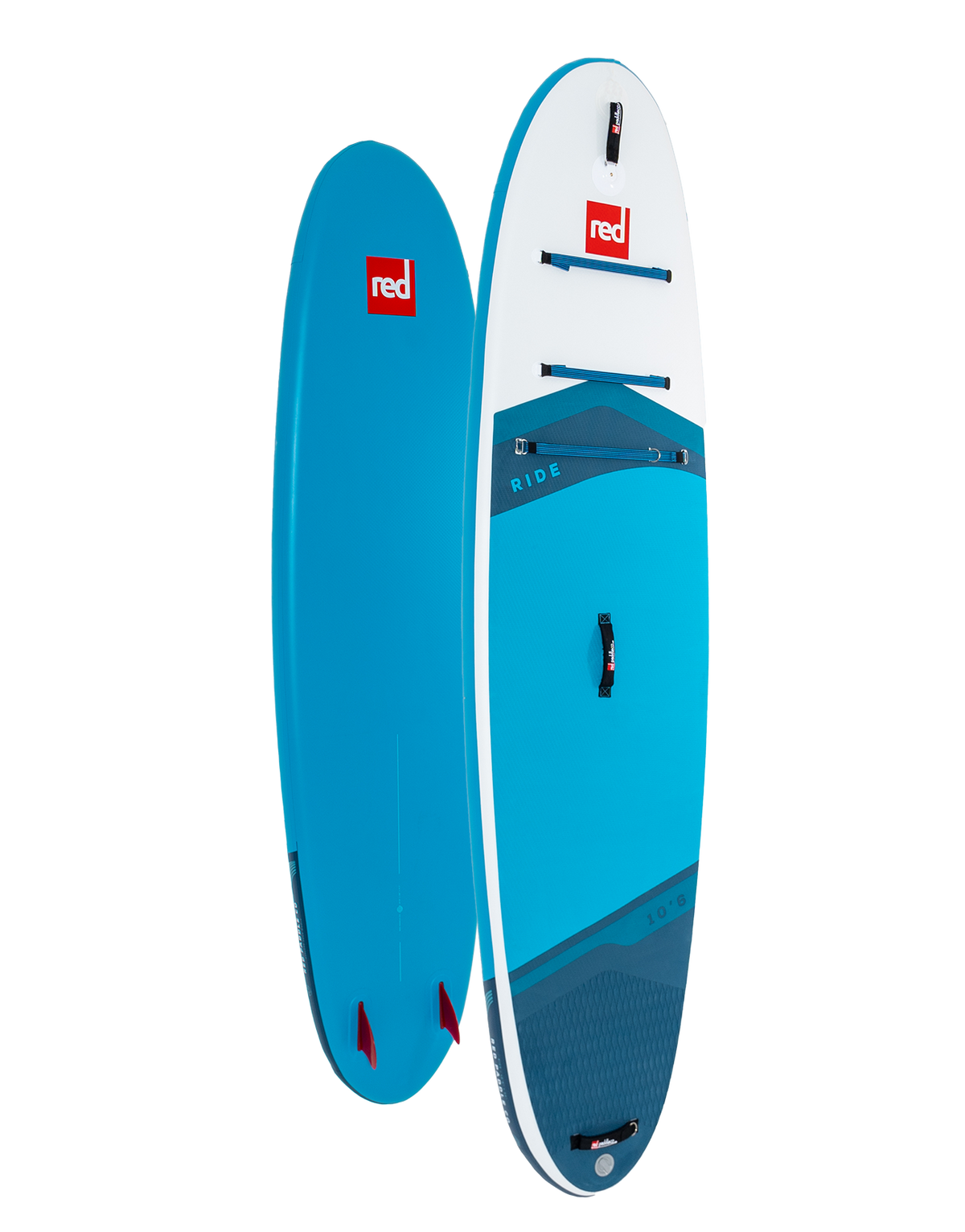
Red Paddle Co is the benchmark brand for inflatable boards, and the Ride 10'6" is its core all-rounder. The stiffening battens along the rails keep the board flatter under load than conventional builds, and the pump and backpack are better than the bundled equivalents elsewhere. It costs roughly twice as much as the iRocker. If stiffness and long-term build quality are the priority, the premium is justified.
Pros
- ✓Very stiff for an inflatable
- ✓Excellent pump and carry bag
- ✓Strong long-term reputation
Cons
- ✗Around twice the price of the top pick
- ✗Paddle not always included in the base package
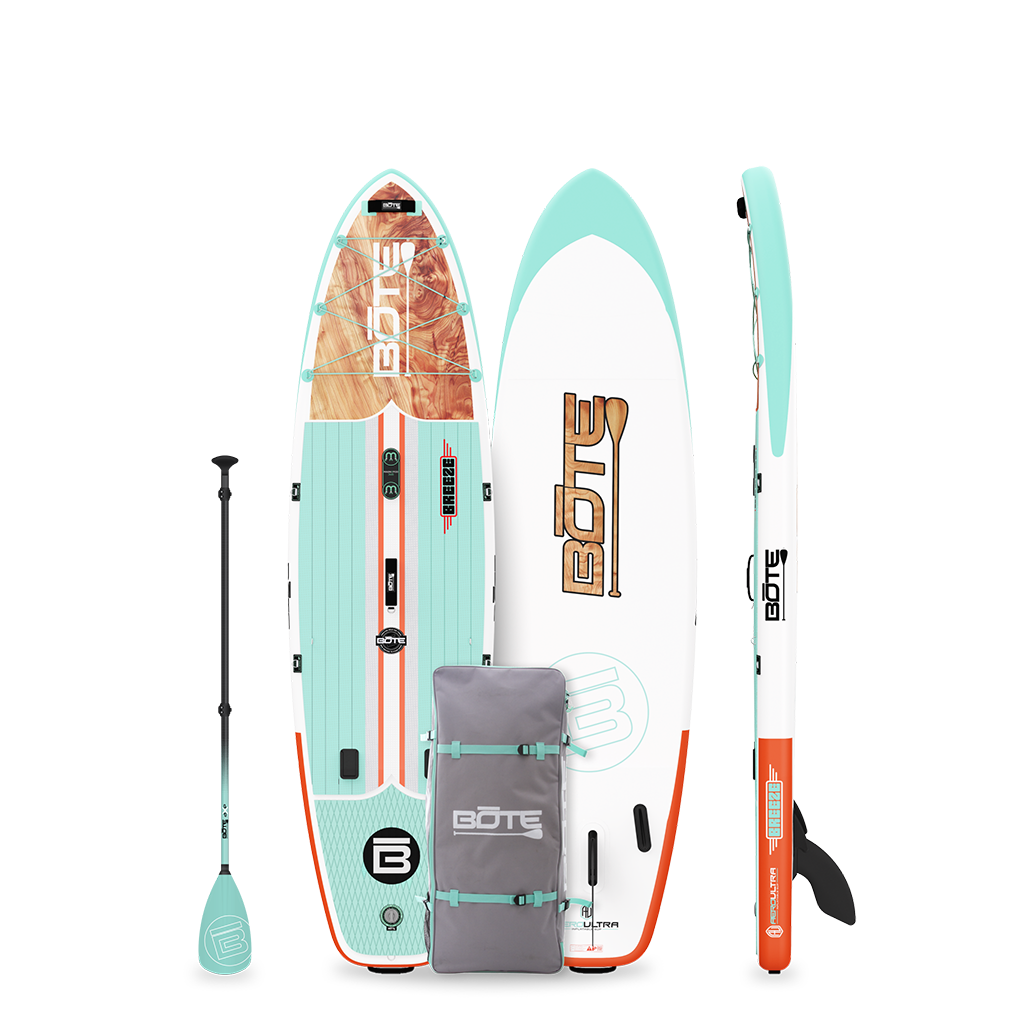
The Breeze Aero comes in more than one length; the longer version suits heavier riders.
The Breeze Aero is designed as a platform: generous bungee storage, mounting points for BOTE's accessories and a stable shape that handles a child or dog on the nose. It is the board for people who treat paddling as a day out rather than a workout. The accessory ecosystem is a strength and also a way to spend a lot more than the board's price.
Pros
- ✓Very stable platform
- ✓Lots of storage and mounting points
- ✓Good for carrying a passenger
Cons
- ✗Slower than narrower boards
- ✗Accessories add up quickly
Subscribe to our newsletter
Occasional updates and new releases — no spam.

Atoll 11' Foot Inflatable SUP
Atoll also sells a 10'6" board; this pick is the 11' version.
Atoll built its reputation on direct sales and a board that feels stiffer than its price suggests. The 11' is a sensible all-round shape, and the kit is practical rather than flashy. It is a close alternative to the iRocker; buy whichever is cheaper on the day, or choose the Atoll if you prefer its simpler deck layout.
Pros
- ✓Stiff build for the money
- ✓Clean, practical all-round shape
- ✓Strong owner satisfaction
Cons
- ✗Fewer accessory options
- ✗Stock paddle is basic
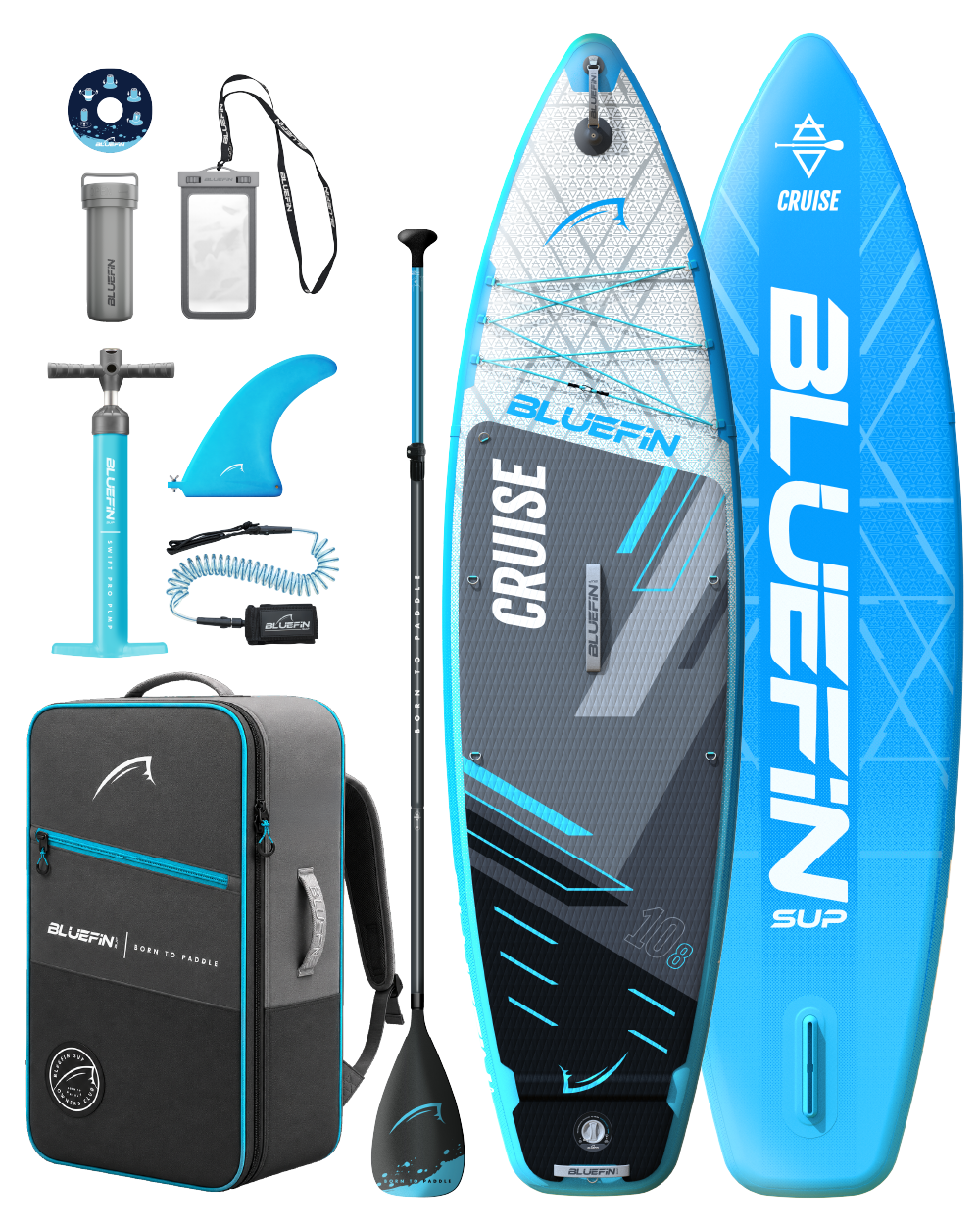
The kayak seat conversion is sold as a separate package on some listings.
The Bluefin Cruise is the cheapest route to a full, working kit from an established brand: board, paddle, pump, leash and bag, with an optional kayak conversion. The board is less stiff than the iRocker or Atoll, which you notice with heavier riders. For occasional summer use by lighter paddlers, it is the value pick.
Pros
- ✓Full bundle at a low price
- ✓Kayak conversion option
- ✓Good beginner stability
Cons
- ✗Softer underfoot than the mid-price boards
- ✗Bundled paddle and pump are basic
Stiffness is what separates good boards from cheap ones
All inflatable SUPs use drop-stitch cores: thousands of threads tying the deck to the hull so the board can be pumped hard and stay flat. The differences are in the outer layers. Budget boards typically use a single layer of PVC over the core; better boards laminate or fuse extra layers, and some add stiffening battens along the rails. Those layers are what stop the board from sagging under your feet.
A soft board is more than a comfort issue. When the middle bends, the nose and tail lift, the board pushes water instead of gliding, and balance becomes harder because the platform moves under you. Owner reviews that mention a board feeling 'bouncy' or 'like a waterbed' are describing exactly this.
Pressure matters as much as build. Most boards are designed to be run at around 12 to 15 PSI, and many owners under-inflate because reaching the top of that range with a hand pump is hard work. A board run below its recommended pressure will feel soft whatever it is made of.
Width, length and stability: sizing for your first season
For flatwater all-round use, a board of roughly 10'6" to 11' long and around 32 inches wide is the comfortable default: stable enough for a beginner to stand up in minutes and long enough to hold a line. Narrower boards are faster but less forgiving; wider boards are steadier but slower and catch more wind.
Check the rated rider weight against your own weight plus anything you plan to carry — a child, a dog, a cooler. A board loaded near its rating sits low and feels sluggish. Heavier riders and anyone carrying a passenger should favour the 11-foot boards here over the 10'6" ones.
Fins, tracking and the kit in the box
Fin set-up decides how straight the board goes between strokes. A three-fin arrangement with a larger removable centre fin tracks well on flat water and in light chop; tiny fixed fins are cheaper to make but let the board spin. A standard US-style fin box also means you can replace a lost fin cheaply, which is not true of some proprietary designs.
Nearly every board ships as a bundle, but the quality of the pieces varies more than the boards do. The most common review complaints are about the pump and the paddle, not the board. A double-action pump makes reaching full pressure much easier, and a lighter paddle makes a bigger difference to a long session than most people expect. When comparing prices, compare the whole kit.
Safety: leash, flotation and wind
Always wear the leash. If you fall, an inflatable board can blow away faster than you can swim, and the board is your flotation. On flat water a coiled ankle leash is standard; on moving water, use a quick-release waist leash instead, because an ankle leash can snag.
Many jurisdictions treat paddle boards as vessels and require a personal flotation device on board; a slim waist-belt PFD is the practical choice for most riders. Plan to paddle into the wind first so the return is easier, avoid offshore winds entirely, and dress for the water temperature, not the air.
Frequently asked questions
Is an inflatable paddle board as good as a hard board?▼
What PSI should I inflate my paddle board to?▼
How long does it take to inflate a SUP?▼
Can I use a paddle board as a kayak?▼
Prices change. Check the retailer for the current price.
Comments & questions
Discussion happens on nattzy, our community forum. Sign in with Google to post — it takes a second.
Still deciding? Ask the community your own question — Post a question on nattzy ↗