Best Blender 2026: 5 Compared
Five blenders from a budget single-serve unit to a flagship countertop unit, compared on the factors that decide whether the unit becomes a daily kitchen tool or a closet exile after the first month: motor wattage, jar material, blade design and how easily it cleans. Weekly usage frequency, not recipe variety, determines which spec actually matters.
Quick answer
The Vitamix A3500i is the best blender if you want one machine for everything — it is the only one here that makes hot soup from cold ingredients through blade friction alone. NutriBullet 600 is the single-serve smoothie pick, TESCOM's glass jar suits two-person households, and the OXO On Compact is the design-conscious middle.
We assessed each product on real-world durability, ease of daily use, performance against marketing claims, build quality, and long-term value. Manufacturer specifications were validated against verified owner reviews.
Best Prosumer Overall: The Vitamix A3500i is the only blender in this comparison that does smoothies, friction-heated hot soup from cold ingredients, nut butter, ice crushing, and dry-grain milling competently — five tasks where every other unit here trades off two or three. The 1500 W peak / 1100-1200 W continuous brushless motor pairs with a 2.0 L Tritan container and a laser-cut hammermill 4-blade assembly, smart pairing recognizes the container and auto-selects programs, and the 7-year warranty covers the motor itself rather than only consumables.
Top picks ↓Top picks
Related articles

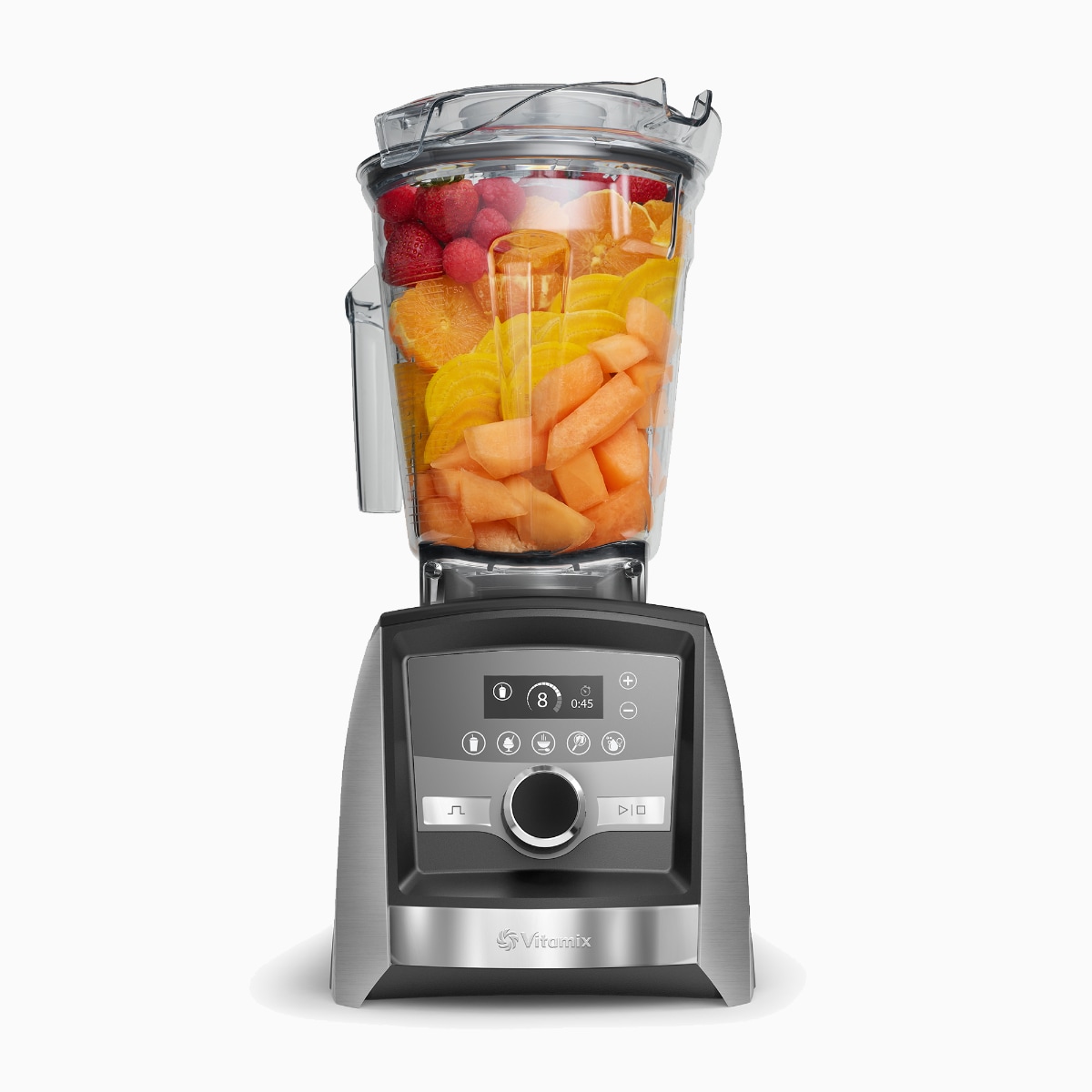
Prosumer countertop pick — 1500 W peak / 1100-1200 W continuous brushless motor with 7-year warranty including motor coverage, 2.0 L Tritan container, laser-cut hammermill 4-blade assembly, smart pairing program presets via Bluetooth, the only blender in this comparison that does all five common tasks (smoothies, hot soup via friction heating, nut butter, ice crushing, dry grain) competently. The flagship price is firmly into the prosumer investment tier and overkill for households that do not blend daily; 2.0 L container is too large for one-person smoothies (cavitation when underfilled below 500 mL); 22×21×44 cm footprint with 11.8 kg weight dominates a compact kitchen counter; operating noise reaches 88-92 dB at full speed during ice crushing.
The Vitamix A3500i is the only blender in this comparison that does smoothies, friction-heated hot soup from cold ingredients, nut butter, ice crushing, and dry-grain milling competently — five tasks where every other unit here trades off two or three. The 1500 W peak / 1100-1200 W continuous brushless motor pairs with a 2.0 L Tritan container and a laser-cut hammermill 4-blade assembly, smart pairing recognizes the container and auto-selects programs, and the 7-year warranty covers the motor itself rather than only consumables. Brushless motor design is the structural reason it outlasts cheaper alternatives — no carbon brushes to wear, and the cooling fan is rated for continuous duty. The trade is real: the flagship price is firmly into prosumer-investment territory, the 2.0 L container cavitates below 500 mL fill, the 22×21×44 cm and 11.8 kg footprint dominates a compact kitchen counter, and operating noise reaches 88-92 dB during ice crushing.
Pros
- ✓Only blender here that does all five tasks competently
- ✓Brushless motor design with 7-year warranty including motor coverage
- ✓Laser-cut hammermill blade lasts 2-3x longer than stamped stainless
- ✓Smart pairing auto-selects programs by container size
Cons
- ✗Flagship price sits in the prosumer investment tier
- ✗2.0 L container cavitates when underfilled below 500 mL
Personal single-serve blend-and-drink pick — 24 oz cup twists onto the extractor blade so you blend and drink from one container, 600 W motor handles soft fruit, yogurt, protein powder, and pre-frozen smoothie packs, and the cup, lid, and blade are dishwasher-safe. The single-serve cup is one person's smoothie and does not scale to family batches; the compact motor is not built for sustained nut butter or large amounts of hard ice; the cup mouth threads collect pulp and yogurt that need a brush to clean fully.
The NutriBullet 600 Series is the personal single-serve blender for the morning-smoothie use case: a 24 oz blend-and-take cup twists onto the extractor blade so you blend and drink from the same container, and the 600 W motor handles soft fruit, yogurt, protein powder, and pre-frozen smoothie packs. The cup, lid, and blade are dishwasher-safe, the footprint is small enough to leave on the counter, and the screw-on cup design means there are no separate dishes to wash after a morning smoothie. The honest weaknesses are about scope rather than execution: the single-serve cup is one person's smoothie and does not scale to family batches, the compact motor is not built for sustained nut-butter blends or large quantities of hard ice, and the cup mouth threads collect pulp and yogurt that need a brush to clean fully.
Pros
- ✓24 oz cup blends and becomes the drinking container in one step
- ✓600 W motor handles soft fruit, yogurt, and pre-frozen smoothie packs
- ✓Cup, lid, and blade are dishwasher-safe
- ✓Compact footprint fits a normal kitchen counter and budget
Cons
- ✗Single-serve cup does not scale to family-size batches
- ✗Not built for sustained nut butter or large amounts of hard ice
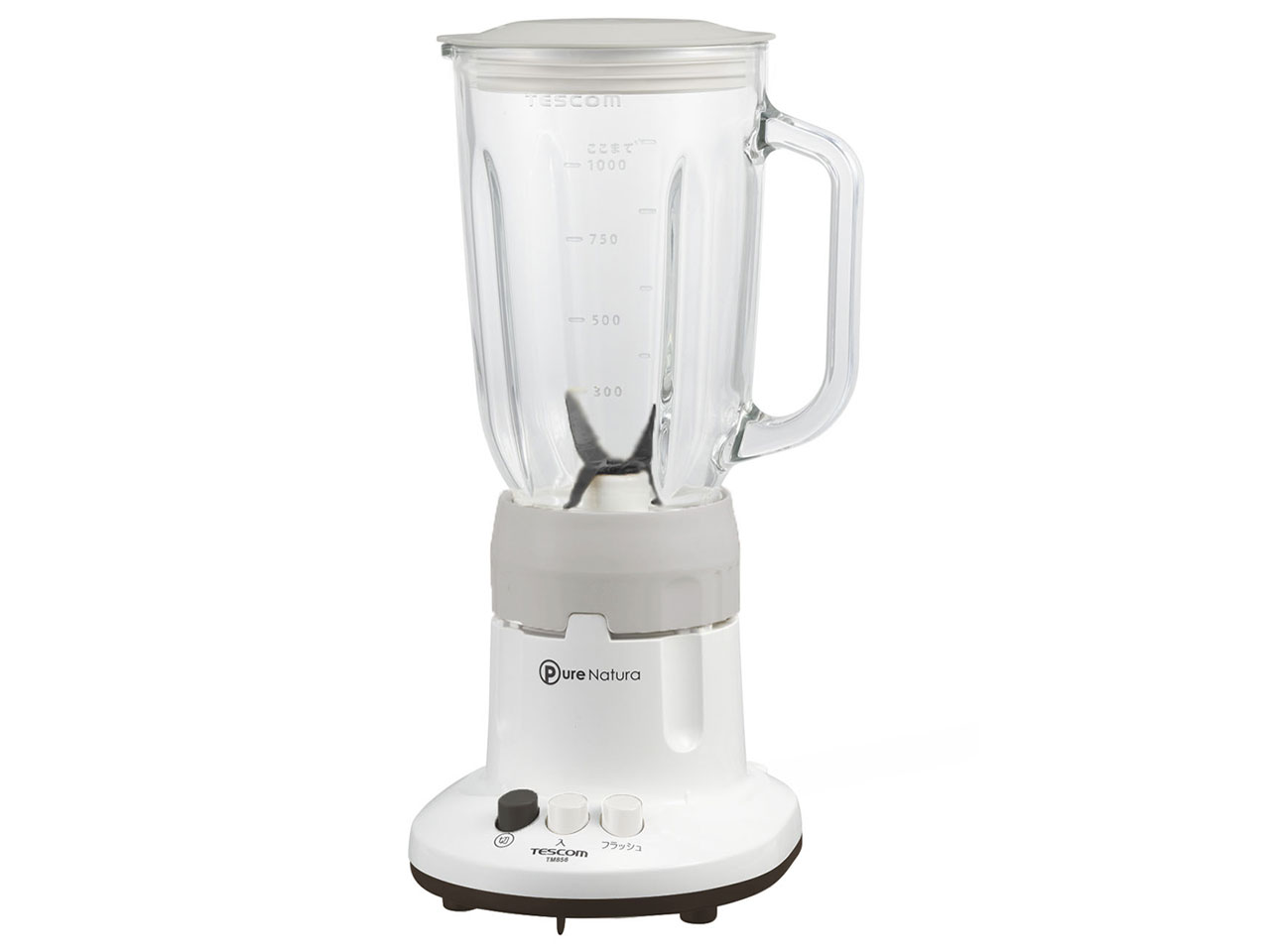
Mid-tier glass-jar pick — 1.0 L heat-resistant glass jar accepts hot stovetop soup directly (rated 60-80°C input, briefly 90°C), 6-blade stainless-steel ice-crush assembly, 600 W brushed motor sufficient for routine smoothies and soups, four program presets, variable-speed knob with pulse, TESCOM Japan domestic service network, 1-year manufacturer warranty. Glass jar weighs 1.5 kg empty and 2.5-3.0 kg full (one-handed lifting awkward for users with weak grip strength); 600 W brushed motor cannot sustain nut butter blends and manual specifies 90-second maximum continuous run with mandatory 1-minute rest cycles; glass jar shatters on tile-floor drops with 2-3 meter cleanup radius; 200-500 hour brush life implies 4-6 year practical lifespan with moderate household use.
The TESCOM Pure Natura TM856 is the mid-tier glass-jar pick for two-person households that value visual jar clarity over Tritan's lightness and want to add hot stovetop soup directly without thermal-shock failure. The 1.0 L heat-resistant glass jar tolerates 60-80°C input from the stovetop (briefly up to 90°C), the 6-blade stainless-steel ice-crush assembly handles routine ice batches, and the 600 W brushed motor is sufficient for smoothies, soups, sauces, and small ice batches with TESCOM's 1-year domestic warranty. Four program presets and variable-speed knob with pulse round out the controls. The structural weaknesses are honest: the glass jar weighs 1.5 kg empty and 2.5-3.0 kg full (one-handed lifting awkward), the 600 W motor cannot sustain nut butter (manual specifies 90-second max continuous run with 1-minute rest cycles), glass shatters on tile floors with 2-3 m cleanup radius, and 200-500 hour brush life implies 4-6 year practical lifespan.
Pros
- ✓Heat-resistant glass jar accepts stovetop-hot soup directly
- ✓6-blade ice-crush assembly handles routine ice batches
- ✓Glass stays visually clear for 5-10 years without clouding
- ✓TESCOM Japan domestic service network and 1-year warranty
Cons
- ✗1.5 kg empty glass jar is awkward for weak-grip users
- ✗600 W motor cannot sustain nut butter blends
Subscribe to our newsletter
Occasional updates and new releases — no spam.

Design-compact pick — 1.0 L Tritan container with OXO signature non-slip silicone base, 600 W brushless DC motor (only sub-Vitamix blender in this comparison with brushless durability), three program presets, OXO Good Grips usability detailing dominant on Pinterest US-kitchen-aesthetic since 2018, dishwasher-safe top-rack Tritan, 2-year limited warranty backed by OXO Japan distribution at Tokyu Hands and Loft. The price is roughly 4x TESCOM TM856 on broadly equivalent functional spec — paying for OXO brand, brushless motor, and design polish rather than performance step-change; 1.0 L container is borderline-too-small for family meal-prep batches and borderline-too-large for one-person smoothies; US-import distribution in Japan means stock fluctuations on specific colorways with 4-8 week stockout and 2-3 week replacement-part lead times; 600 W motor cannot match Vitamix 1500 W for sustained ice crushing or nut butter.
The OXO On Compact Blender is the design-conscious pick for kitchens that value the OXO aesthetic and the only sub-Vitamix unit here with brushless motor durability. The 1.0 L Tritan container sits on the OXO signature non-slip silicone base with a pour spout, the 600 W brushless DC motor avoids the carbon-brush wear that ends brushed-motor lifespans, and three program presets (smoothie, ice crush, soup) plus a single-button manual mode with variable speed cover the standard tasks. The OXO Good Grips usability detailing has dominated Pinterest US-kitchen-aesthetic accounts since 2018. The structural weaknesses are honest: the price is roughly 4x the TESCOM TM856 on broadly equivalent functional spec — paying for OXO brand, brushless motor, and design polish rather than performance step-change — and the 1.0 L container is borderline-too-small for family meal prep and borderline-too-large for one-person smoothies. US-import distribution causes 4-8 week stockouts on specific colorways.
Pros
- ✓Only sub-Vitamix unit here with brushless motor durability
- ✓OXO Good Grips usability detailing in every component
- ✓1.0 L Tritan container is dishwasher-safe top-rack
- ✓2-year limited warranty backed by OXO Japan
Cons
- ✗Roughly 4x the TESCOM price for broadly equivalent function
- ✗1.0 L is borderline for both one-person and family use cases
Magic Bullet Personal Blender (MBR-1101)
Budget single-serve pick — compact cup set with a 250 W motor for one-person smoothies, sauces, dips, and grinding small batches of dry ingredients like coffee beans or spices, with simple twist-together assembly and easy-rinse cups. The 250 W motor is the lowest-power in this comparison — cannot crush large amounts of ice, cannot blend hard-frozen fruit, cannot produce nut butter, cannot heat soup; the small cups limit every task to a single-person portion; build quality reflects the budget price.
The Magic Bullet Personal Blender (MBR-1101) is the budget single-serve pick — the cheapest practical entry point for one-person smoothies, sauces, dips, and grinding small batches of dry ingredients like coffee beans or spices. The compact cup set and 250 W motor cover quick everyday jobs, the parts twist together without complicated assembly, and the cups are easy to rinse and store. The honest weaknesses cap its use: the 250 W motor is the lowest-power unit in this comparison and cannot crush large amounts of ice, blend hard-frozen fruit, produce nut butter, or heat soup, and the small cups limit any task to a single-person portion. Build quality reflects the budget price — it is a simple, functional kitchen helper rather than a durable workhorse.
Pros
- ✓Cheapest practical blender in this comparison
- ✓Grinds small batches of coffee beans, spices, and dry herbs
- ✓Compact cups suit single-person smoothies, sauces, and dips
- ✓Simple twist-together assembly with easy-rinse cups
Cons
- ✗250 W cannot crush large amounts of ice or produce nut butter
- ✗Small cups limit every task to a single-person portion
Which one is right for you?
For households blending daily across all five tasks
Vitamix A3500i
Only blender here that does smoothies, friction-heated soup, nut butter, ice crushing, and dry grain competently — backed by a 7-year motor-coverage warranty.
For one-person morning smoothies
NutriBullet 600 Series Personal Blender
24 oz NutriBullet cup blends and becomes the drinking container in one step, with a 600 W motor for soft fruit and pre-frozen smoothie packs.
For two-person households making weekly hot soup
TESCOM Pure Natura TM856
Heat-resistant 1.0 L glass jar accepts stovetop-hot soup directly and stays visually clear for 5-10 years without Tritan clouding.
For design-conscious compact kitchens
OXO On Compact Blender
Only sub-Vitamix unit here with brushless motor durability paired with the OXO aesthetic that has dominated Pinterest US-kitchen accounts.
For single-serve smoothies and small grinding jobs on a tight budget
Magic Bullet Personal Blender (MBR-1101)
Budget Magic Bullet single-serve blender with compact cups for one-person smoothies and grinding small batches of coffee, spices, and dry herbs.
How we compared
We did not perform independent torque measurements, smoothie particle size analysis, ice-crush time benchmarks, motor temperature stress testing, or jar drop testing on these five blenders. Honest blender comparison needs a calibrated rotary dynamometer to measure actual motor torque versus advertised wattage (a unit suitable for the 200-1500 W range these blenders cover), a laser diffraction particle analyzer to quantify smoothie output uniformity, a controlled-temperature kitchen with thermocouples in the jar to measure friction-heating during long blends, an anechoic chamber or Class-1 sound level meter for noise measurement, and 8-12 weeks per unit to gather signal on bearing wear, blade dulling, jar-seal aging, and jar scratching. That setup costs more than a comparison blog produces. Instead we sourced advertised motor wattage and rotational speed in RPM, jar capacity in milliliters and material (Tritan, glass, polypropylene, stainless steel), blade configuration (number of blades, angle, whether dry-grain blade is included), program presets where applicable, container weight, dishwasher compatibility, advertised warranty length, price from each brand's product page (Vitamix, NutriBullet, TESCOM, OXO, Magic Bullet), cross-checked major online retailers and brand-direct listings as of May 2026 for current pricing, and read several thousand long-term buyer reviews per product across major online retailers and brand review sections. Bearing whine complaints, blade dulling complaints, jar-seal leak complaints, motor-burnout complaints during nut-butter blends, and 'the dishwasher cycle clouded my Tritan jar' complaints cluster into identifiable patterns once you read past the first 100 reviews.
Six factors do most of the work in this category for a buyer who is not running a juice bar or a commercial kitchen. First, motor power and the gap between rated and continuous output — Vitamix's 1500 W advertised peak typically equates to roughly 1100-1200 W continuous under load, while a 250 W single-serve blender cannot sustain even its rated draw under thick frozen-fruit blends. The honest measure is whether the motor handles your hardest task (nut butter, ice crushing, frozen smoothie bowls) without thermal cutoff or audible bogging, and the published wattage figure is only loosely correlated with that. Second, jar material — Tritan plastic is light (1.0-1.5 kg full) and shatterproof but scratches over 12-24 months and clouds in the dishwasher, glass is heavier (1.5-2.5 kg full) and stays clear for 5-10 years but breaks if dropped, and stainless steel hides residue and runs cooler but cannot be checked visually mid-blend. Third, blade geometry — multi-blade stacked-angle designs (Vitamix's 4-blade laser-cut hammermill, TESCOM's 6-blade) handle ice and nuts, simple 2-blade or 4-blade designs in budget single-serve blenders pulverize soft fruits and small dry batches but choke on hard ice cubes. Fourth, capacity — single-serve cup blenders suit one-person smoothies, 800-1200 mL pitchers suit two-person households or small soup batches, and 1500-2000 mL countertop units are needed for family meal prep. Fifth, what each blender is actually good at — and 'all-purpose' marketing notwithstanding, no blender is equally strong at all five common tasks (smoothies, hot soup, nut butter, ice crushing, baby food); the Vitamix is the only one in this comparison that does all five competently and the others trade off two or three categories. Sixth, the maintenance and warranty rules — a 7-year Vitamix warranty with motor-replacement coverage is structurally different from a short budget-tier warranty that costs less to replace than to ship for repair, and the realistic blender lifespan is set more by warranty terms and bearing quality than by motor wattage.
We did not buy and run all five blenders for 8-12 weeks each in a controlled kitchen with thermocouples, dynamometer fixtures, and particle-size sampling. Treat the recommendations as informed sourcing decisions backed by spec analysis, blender-engineering knowledge, and aggregated long-term buyer review patterns, not as the output of an instrumented blender laboratory. We have not run independent torque testing, particle-size analysis, ice-crush benchmarking, or controlled motor stress testing on any of these — anyone claiming to have done this rigorously needs to publish the methodology, and most who claim it have not.
Blender vs mixer vs food processor — what each tool is actually for
The terms blender, mixer, and food processor are used loosely in marketing and the labels overlap, but the engineering is different and buying the wrong category produces a daily friction point that no amount of 'multifunction' marketing can hide. A blender (the category in this comparison) uses a tall narrow jar with blades at the bottom spinning at 10,000-30,000 RPM, designed to liquefy soft and watery ingredients into a smooth pourable output. A blender's strengths are smoothies, soups (the high-power models can heat soup through friction in 4-6 minutes), purees, sauces, salad dressings, and crushed ice. A blender struggles with dough, low-moisture mixtures (you have to add liquid or the mixture cavitates around the blades), dicing vegetables (the blades pulverize rather than dice), and grating cheese (the high RPM gums the blades). The five products in this comparison are all blenders in this strict sense, though they vary in power and capability across the blender feature set.
A stand mixer (KitchenAid Artisan, Panasonic Bistro, Cuisinart SM-50) uses a planetary gearbox at low RPM (60-220 RPM) with interchangeable attachments — paddle, dough hook, whisk — designed to mix doughs, batters, whipped cream, and meringue. Stand mixers are wrong for smoothies and soups (the slow planetary action does not liquefy), and blenders are wrong for bread dough and meringue (the high-RPM blade tears gluten and overheats egg whites). The two tools do not substitute for each other and households that bake regularly need both. The Japanese-market term 'ミキサー' is confusingly used for both blenders (the products in this comparison) and the broader category of mixers, but in practice almost all consumer 'ミキサー' product listings on major online retailers refer to blenders, not stand mixers — buy a stand mixer if you specifically want a stand mixer, and do not assume any product labeled 'ミキサー' substitutes for one.
A food processor (Cuisinart DLC-191J, Magimix 3200XL, Panasonic MK-K81) uses a wide shallow bowl with a flat S-blade or interchangeable disc blades at moderate RPM (1500-3500 RPM), designed to chop, dice, slice, grate, and knead small batches of dough. Food processors do tasks blenders cannot do (dicing onions, grating cheese, kneading pie dough, slicing carrots into uniform rounds) and blenders do tasks food processors cannot do (smoothies, hot soup, nut butter at scale, fine emulsified sauces). The two tools complement rather than substitute. If your weekly cooking includes both daily smoothies and weekly meal-prep dicing, you need both — and households trying to do both with a single multifunction device almost universally end up underwhelmed by both halves. The honest answer for most households: buy a blender for the daily smoothie/soup/sauce role and add a small food processor (a 1-1.5 L Cuisinart Mini-Prep or the Panasonic MK-K81) when food-prep volume justifies it, rather than trying to find a unicorn machine that does both.
High-power countertop blenders like the Vitamix A3500i can do some food-processor tasks (chunky salsa, finely chopped nuts) at the cost of inconsistent texture and limited batch size, and food processors with a smoothie attachment (Magimix Cook Expert) can do some blender tasks at the cost of weaker liquefaction. Both are compromises and the dual-purpose Vitamix is the more capable hybrid because liquefaction is harder to bolt on than chopping is. If you can only own one machine and your cooking is smoothie-heavy, the Vitamix-class high-power blender is the better single-tool choice; if your cooking is prep-heavy with occasional smoothies, the food processor is the better single-tool choice. The five products in this comparison are all blenders, and none of them is a recommended substitute for a food processor.
Choosing by job — smoothies, soups, nut butter, ice crushing, baby food
Smoothies (frozen fruit, leafy greens, yogurt, protein powder, ice). The dominant factors are motor power to handle frozen ingredients without leaving fibrous chunks, blade geometry to liquefy leafy greens (kale, spinach) into a smooth output rather than visible green flecks, and jar geometry to circulate ingredients down to the blades rather than cavitating around them. The Vitamix A3500i is the strongest smoothie tool in this comparison — the 1500 W motor and laser-cut hammermill blade liquefy frozen fruit and tough greens into restaurant-quality output in 45-60 seconds. The NutriBullet 600 Series personal blender is the right pick for one-person daily smoothies because the 24 oz cup blends-and-drinks in a single container without dish washing, accepting that the compact motor does best with soft fruit and pre-frozen smoothie packs rather than whole hard-frozen fruit. The TESCOM TM856 and OXO On Compact handle moderate smoothies competently at the cost of longer blend times (90-120 seconds) and slightly chunkier output. The Magic Bullet MBR-1101 is the weakest smoothie pick because the 250 W single-serve design is built for soft ingredients and small grinding jobs rather than ice and hard-frozen fruit.
Hot soup (vegetable purees, butternut squash, tomato bisque, gazpacho if cold). The dominant factor is whether the blender can either heat soup through friction during a long blend (a Vitamix-class capability that takes 4-6 minutes of high-speed blending to bring a soup from cold to steaming via blade friction alone) or accept hot input from the stovetop without cracking the jar or melting the seal. The Vitamix A3500i is the only blender in this comparison that produces friction-heated soup from cold ingredients; the TESCOM TM856 with its glass jar accepts hot stovetop soup directly (glass tolerates 80-90°C input without thermal-shock failure unlike Tritan plastic which warps), but the TESCOM cannot friction-heat from cold. The NutriBullet 600 Series cannot accept hot input (the cups are not made for hot liquid) and cannot friction-heat. The OXO On Compact accepts warm input (up to about 60°C) but not stovetop-hot input. The Magic Bullet MBR-1101 is not designed for hot soup and the small cups are not made for hot ingredients. For households that make weekly soup, the Vitamix is the natural pick if budget allows; the TESCOM TM856 with its glass jar is the practical mid-tier soup pick.
Nut butter (peanut, almond, cashew). The dominant factors are motor power to sustain a 5-10 minute continuous blend without thermal cutoff, motor cooling to handle the friction heating that nut butter produces, and tamper accessibility to push nuts down into the blades when the mixture cavitates. Nut butter is the single hardest task most home blenders face, and the failure mode is motor burnout — many under-1000 W blenders thermally cut off or burn out the motor brushes during a 500 g almond batch, even when the manufacturer's marketing claims nut butter capability. The Vitamix A3500i handles nut butter through its 7-year warranty with motor coverage, the included tamper, and the cooling fan rated for continuous duty; this is the only blender in this comparison suited to regular nut butter production. The TESCOM TM856 and OXO On Compact can produce small batches of soft cashew or peanut butter (200-300 g) with patience and frequent rest cycles, but neither is rated for sustained nut butter production and warranty service rarely covers nut-butter-induced motor failure. The NutriBullet 600 Series and Magic Bullet MBR-1101 are not nut butter tools and we do not recommend attempting it on either.
Ice crushing (frappes, frozen cocktails, shaved-ice desserts). The dominant factors are blade hardness and angle to fracture ice cubes rather than glance off them, motor torque at low RPM to drive the blade through ice without stalling, and jar shape to keep ice cubes circulating into the blade strike zone. The Vitamix A3500i and TESCOM TM856 (with its 6-blade configuration and dedicated ice-crush program) are the strongest ice-crushing picks in this comparison. The OXO On Compact handles small batches of ice (up to 200 g) competently but stalls on larger volumes. The NutriBullet 600 Series is not built for crushing large amounts of ice (the blender is designed for soft fruit and pre-frozen smoothie packs rather than batches of whole ice cubes). The Magic Bullet MBR-1101 is a small single-serve unit and not an ice-crushing tool; the compact motor and cups are not made for hard ice cubes. If ice crushing is a weekly task — frozen margaritas, frappes, ice-blended coffee drinks — buy the Vitamix or TESCOM and skip the personal blenders.
Baby food (steamed vegetables, fruit purees, soft proteins for babies 6-12 months). The dominant factors are jar size matched to small portion volumes (100-300 mL is the right batch size for a single feeding rather than 1500 mL), blade access for thorough cleaning between batches (baby food sits in tight spaces and breeds bacteria if not cleaned thoroughly), and the absence of plastic-leaching concerns (BPA-free Tritan or glass, never recycled mystery polypropylene). The NutriBullet 600 Series is a strong baby food pick in this comparison because the cup is a convenient size, the dishwasher-safe cup and blade clean thoroughly, and the 600 W motor produces a smooth puree texture in short pulses. The Magic Bullet MBR-1101 is also size-appropriate for single portions though the simple blade is less ideal for soft cooked vegetables. Avoid the Vitamix and TESCOM for dedicated baby food because the 1500-2000 mL jar is too large for single-feeding portions and forces you either to scale up batches (frozen storage) or to leave the jar mostly empty (cavitation around the blades). The OXO On Compact at 1000 mL is borderline — works for batched freezer storage but not for single-feeding speed.
Maintenance and durability — what determines whether your blender lasts 6 months or 10 years
Blade dulling is gradual and irreversible. Stainless-steel blades lose their cutting edge after 800-1500 hours of use depending on what you blend (frozen fruit and ice dull blades fastest, soft fruit and yogurt dull them slowest), and the symptom is a gradual increase in blend time to reach the same texture rather than a sudden failure. The Vitamix laser-cut hammermill blade is harder than the stamped stainless blades on budget single-serve blenders and lasts 2-3x longer in real-world use. None of these blenders ships with a user-replaceable blade assembly — replacement requires factory service for the Vitamix (covered under the 7-year warranty), and for the budget models replacement is more expensive than buying a new unit. The practical implication: if you blend ice or frozen fruit daily, expect a 3-5 year functional lifespan from a budget single-serve blender (Magic Bullet, NutriBullet) and 8-12 years from the Vitamix.
Jar-seal aging is the second most common failure mode after blade dulling. The rubber gasket between the blade assembly and the jar wall hardens over 18-36 months of use, especially under repeated dishwasher cycles and exposure to acidic ingredients (citrus juice, tomato sauce). The symptom is leakage from the bottom of the jar during operation. Replacement gaskets are cheap and user-installable on the Vitamix, TESCOM, and OXO models; the NutriBullet and Magic Bullet use sealed cup-base designs where the practical outcome is replacing the cup or base when the seal fails. To extend gasket life: hand-wash rather than dishwash where possible, rinse immediately after acidic blends rather than leaving residue overnight, and avoid extreme temperature cycling (do not wash a hot-from-soup jar in cold water).
Tritan plastic jar scratching and clouding. Tritan is shatterproof and lighter than glass but it scratches under contact with ice cubes, frozen fruit chunks, and abrasive food (raw nuts, seeds with hulls), and these scratches accumulate into a translucent haze that makes the jar look perpetually dirty even after cleaning. The dishwasher accelerates clouding because hot detergent etches the plastic surface; the Vitamix manual specifically recommends hand-washing the Tritan container to preserve clarity. Glass jars (TESCOM) do not scratch or cloud and the visual appearance stays new-looking for 5-10 years, at the cost of weight (1.5 kg empty for the TM856 glass jar versus 0.8 kg for Tritan equivalents) and shatter risk if dropped. The honest tradeoff: if you value visual jar clarity and you have counter space and arm strength to handle a heavy glass jar, glass wins; if you value lightweight handling and you accept that the jar will look slightly hazy after 18-24 months, Tritan wins.
Motor brush wear is the silent failure mode that ends the life of brushed-motor blenders. Brushed DC and universal motors (used in budget single-serve blenders including the Magic Bullet MBR-1101) have carbon brushes that wear down over 200-500 hours of operation; the symptom is sparking visible through the motor housing vents and gradually decreasing motor power. Replacement brushes are technically possible but rarely worth the labor cost on a budget unit — practical lifespan is 2-4 years of regular use. Brushless DC motors (used in the Vitamix A3500i and OXO On Compact) have no brushes to wear and the motor itself runs 5,000-10,000 hours before bearing failure becomes a concern. The 7-year Vitamix warranty implicitly assumes brushless motor longevity, and the brushless design is the single largest engineering reason the Vitamix lasts longer than the budget alternatives even though the marketing emphasizes wattage instead.
Cleaning routines that extend lifespan. The single best maintenance practice is to rinse the jar immediately after use — pour 500 mL of warm water and a drop of dish soap into the jar, run for 30-60 seconds on medium speed, rinse with clean water, and dry inverted. This routine prevents residue drying onto the blades and into the gasket; long-term reviewers who follow it report gasket and blade complaints far less often than those who do not. Avoid dishwasher cycles for any blender where the manufacturer specifies hand-wash (Vitamix Tritan jars, OXO On Compact jar). The TESCOM TM856 glass jar is dishwasher-safe and cleans well in the top rack. The Magic Bullet MBR-1101 cups are dishwasher-safe but the blade assembly should be hand-washed to preserve the rubber gasket.
What changed in 2026
The blender market in 2026 split into four clean tiers. The Vitamix-class prosumer countertop tier (Vitamix A3500i, Blendtec Designer 725, Hurom Power) consolidated around 'high-power brushless motor 1200-1500 W, large 1500-2000 mL Tritan or BPA-free container, smart program presets, 7-10 year warranty, premium price' — the engineering is genuinely different from cheaper blenders and the warranty length reflects real bearing and motor durability. The mid-tier countertop blender tier (TESCOM TM856, Panasonic MX-X701, Recolte Solene) consolidated around 'glass or Tritan 1000-1500 mL jar, 600-1000 W brushed or brushless motor, 5-7 program presets, 1-3 year warranty, mid-tier price' — capable of routine smoothies, soups, and ice crushing for two-person households without the prosumer overkill. The personal single-serve blender tier (NutriBullet 600 Series, Ninja single-serve cups, Magic Bullet) consolidated around 'blend-and-drink cup, 250-600 W motor, simple operation, low-mid price' — a category that exploded in popularity driven by Pinterest morning-smoothie aesthetics and now occupies a real niche for one-person daily smoothie use. The budget single-serve tier (Magic Bullet MBR-1101 and similar compact units) consolidated around 'small cup set, 200-250 W motor, simple operation, low price' — appropriate for one-person smoothies and grinding small batches of coffee, spices, and dry herbs but not for ice or family-size portions.
Personal single-serve blenders became the default morning-smoothie tool. The category is built around a compact cup that twists onto an extractor blade so the cup you blend in is the cup you drink from, with a motor sized for soft fruit, yogurt, protein powder, and pre-frozen smoothie packs at a price point that fits a normal kitchen budget. The NutriBullet line, the Magic Bullet, and the Ninja single-serve cups all chase this same use case, and the form factor wins on one specific job: a one-person morning smoothie taken on commute. The honest assessment: personal single-serve blenders solve that use case very well and are wrong for almost every other blender task — do not buy one expecting countertop versatility.
Smart-home integration arrived in the prosumer tier and remains absent from everything else. The Vitamix A3500i added Bluetooth wireless connectivity in 2023 with a smart pairing system that recognizes the container size and adjusts blend programs, integrates with the Vitamix Perfect Blend mobile app, and allows firmware updates that have added new program presets in 2024 and 2025. The honest assessment: smart features add genuine functionality at this tier (preset library expansion, container-aware programs) and they are part of why the price is structurally higher than cheaper Vitamix models. For everyone outside the prosumer tier, smart features remain a marketing footnote and the blender is a button-on-a-base appliance.
Glass-jar countertop blenders made a Pinterest-aesthetic comeback. After a decade of Tritan-plastic dominance for shatterproof safety and weight reduction, glass jars regained Pinterest visual appeal in 2024-2026 because Tritan clouds visibly after 18-24 months of use and Pinterest kitchen-aesthetic accounts photograph glass-jar blenders better. TESCOM's TM856 with its 1.5 L glass jar, Recolte's Solene glass blender, and Panasonic's MX-X701 glass-jar revision capitalized on this. The honest tradeoff: glass jars stay clear and photographable for 5-10 years but weigh 1.5-2.5 kg full versus 1.0-1.5 kg for Tritan equivalents, and a dropped glass jar is a five-figure cleanup involving glass shards and food spread across the floor. Buyers who specifically want long-term visual clarity and counter aesthetics accept the weight; buyers who prioritize daily handling ease prefer Tritan.
Where each fits
If you want the prosumer countertop blender that handles smoothies, hot soup via friction heating, nut butter for sustained 5-10 minute blends, ice crushing, and dry-grain milling — the only blender in this comparison that does all five competently — and you accept the flagship price as a 10-15 year kitchen appliance investment, Vitamix A3500i is the prosumer countertop pick. The A3500i delivers a 1500 W peak / 1100-1200 W continuous brushless motor in a 7-year-warranty package, a 2.0 L low-profile Tritan container with the laser-cut hammermill 4-blade assembly, smart pairing that recognizes the container and auto-selects program presets, five touchscreen program presets (smoothies, hot soups, dips and spreads, frozen desserts, self-clean), variable-speed dial 1-10 with a pulse function, the included tamper for nut butter and thick blends, and Bluetooth firmware updates that have added programs since 2023 launch. The Vitamix is the canonical prosumer kitchen blender and the engineering is genuinely different from cheaper alternatives — the brushless motor, hardened blade assembly, and warranty depth reflect real durability rather than marketing positioning. The honest weakness, structural and immediate: the price is firmly above the family-kitchen-appliance budget tier and into the prosumer-investment-tier (comparable to a Breville Barista Pro espresso machine), and most households do not blend frequently enough to justify the depth of capability. Second weakness: the 2.0 L Tritan container is too large for one-person daily smoothies (cavitation around the blades when underfilled below 500 mL) and forces either family-batch sizing or under-utilization. Third weakness: the 22 cm × 21 cm × 44 cm footprint with 11.8 kg weight dominates a compact kitchen counter and storage requires a dedicated shelf rather than a cabinet. Fourth weakness: the operating noise is genuinely loud (88-92 dB at full speed for ice crushing, comparable to a vacuum cleaner) and reliably wakes household members through apartment walls — the noise level is an inherent function of the 1500 W motor and not an engineering shortcoming, but buyers should know before purchase. The Vitamix A3500i is the right pick for households that blend daily across the full range of tasks (smoothies, soups, nut butter, ice, dry grain), value 7-10 year durability and warranty depth, and treat the blender as a serious kitchen investment rather than a budget appliance.
If you want the personal single-serve blender for one-person daily morning smoothies that blends-and-drinks in a single container without separate dishes to wash, at a price that fits a normal kitchen budget, the NutriBullet 600 Series is the personal pick. It delivers a 24 oz cup that twists onto the extractor blade and becomes the drinking container, a 600 W motor with simple press-to-blend operation, dishwasher-safe cup, lid, and blade, and a compact footprint that leaves the counter clear. The honest weakness, structural and immediate: the single-serve cup is one person's smoothie and does not scale to two-person households or family use. Second weakness: the compact motor is sized for soft fruit, yogurt, and pre-frozen smoothie packs rather than sustained nut-butter blends or crushing large quantities of hard ice. Third weakness: like most single-serve units, the cup mouth threads where the blade attaches collect pulp and yogurt that need a brush to clean fully. The NutriBullet 600 is the right pick if your blender use case is a one-person daily smoothie, you accept the single-serve portion as the natural size, and you do not need family-scale batches or heavy ice crushing.
If you want the mid-tier countertop blender with a glass jar that stays visually clear for years rather than clouding like Tritan, accepts hot stovetop soup directly without thermal shock, and produces routine family-size smoothies and soups at a fraction of the Vitamix price, TESCOM Pure Natura TM856 is the mid-tier glass-jar pick. The TM856 delivers a 1.0 L heat-resistant glass jar (rated for 60-80°C input from stovetop soup, the jar specification permits up to 90°C briefly), a 6-blade stainless-steel ice-crush blade assembly, a 600 W brushed motor sufficient for routine smoothies, soups, sauces, and small ice batches, four program presets (smoothie, ice crush, frozen drink, soup), variable-speed knob with pulse, a non-slip base, and a 1-year manufacturer warranty backed by TESCOM Japan's domestic service network. The honest weakness, structural and immediate: the glass jar weighs 1.5 kg empty and 2.5-3.0 kg full, which makes one-handed lifting awkward for users with weak grip strength and which produces a substantial countertop thunk during operation that the rubber base partially absorbs but does not eliminate. Second weakness: the 600 W brushed motor cannot sustain nut butter blends (5-10 minute continuous operation) and the manual specifies a maximum continuous run time of 90 seconds with mandatory 1-minute rest cycles — attempting nut butter risks motor burnout that is not warranty-covered. Third weakness: the glass jar is genuinely fragile compared to the Tritan alternatives — drops onto a tile floor produce shards and food spread across a 2-3 meter radius, and the TESCOM Japan replacement-jar service is available but adds a parts-plus-shipping cost. Fourth weakness: the brushed motor has a 200-500 hour brush life and the practical lifespan is 4-6 years of moderate household use, not the 10-year Vitamix tier. The TESCOM TM856 is the right pick for two-person households that make routine smoothies and weekly soup, value glass-jar visual clarity and direct hot-soup input, and accept the weight and fragility tradeoffs for the visual appeal.
If you want the design-forward compact countertop blender from a US Pinterest-favorite kitchen-aesthetic brand for small kitchens where counter space is limited, with brushless motor reliability and the OXO usability touches that the budget Asian brands lack, OXO On Compact Blender is the design-compact pick. The OXO On Compact delivers a 1.0 L Tritan container with the OXO signature non-slip silicone base and pour spout, a 600 W brushless DC motor (the only sub-Vitamix blender in this comparison with brushless motor durability), three program presets (smoothie, ice crush, soup), a single-button manual mode with variable speed, the OXO Good Grips usability detailing that has dominated Pinterest US-kitchen-aesthetic accounts since 2018, dishwasher-safe top-rack Tritan, and a 2-year limited warranty backed by OXO Japan distribution at Tokyu Hands and Loft. The honest weakness, structural and immediate: the price is roughly 4x the TESCOM TM856 on broadly equivalent functional spec — you are paying for the OXO brand, the brushless motor, and the design aesthetic rather than for a step change in performance. Second weakness: the 1.0 L container is borderline-too-small for family meal-prep batches (forces two-batch sizing for four-person households) and borderline-too-large for one-person daily smoothies (cavitation around the blades when underfilled below 300 mL). Third weakness: the OXO On Compact is positioned as a US import in Japan with stock fluctuations through the OXO Japan distributor — specific colorways (white, charcoal) routinely stock out for 4-8 weeks and replacement parts (jar, blade assembly) require ordering from the US warehouse with 2-3 week lead times. Fourth weakness: the 600 W motor cannot match the Vitamix's 1500 W peak for ice crushing or nut butter — it handles small ice batches and soft nut butter but stalls on large-batch ice crushing or sustained nut butter operation. The OXO On Compact is the right pick for design-conscious kitchens that value the OXO aesthetic and brushless motor durability, accept the premium-over-TESCOM price for the design polish, and primarily blend smoothies and soups rather than nut butter or large-batch ice.
If you want the lowest practical price for a small single-serve blender that handles one-person smoothies, sauces, dips, and grinding small batches of dry ingredients, the Magic Bullet Personal Blender (MBR-1101) is the budget single-serve pick. It delivers a compact cup set, a 250 W motor with simple twist-and-press operation, the ability to grind small batches of coffee beans, spices, and dry herbs, and easy-rinse cups that store compactly. The honest weakness, structural and immediate: the 250 W motor is the lowest-power unit in this comparison and cannot crush large amounts of ice, blend hard-frozen fruit, produce nut butter, or heat soup — this is a small everyday helper, not a general-purpose blender. Second weakness: the small cups limit any task to a single-person portion. Third weakness: build quality reflects the budget price — the plastic body and simple blade are functional but basic. The Magic Bullet MBR-1101 is the right pick if your blender use case is one-person smoothies plus the occasional small grinding job, you want the lowest practical price, and you accept the limited durability as appropriate to that price.
Verdict
For a household that blends daily across the full range of tasks (smoothies, hot soup via friction heating, nut butter, ice crushing, dry grain) and treats the blender as a 10-15 year kitchen investment, the right buy is Vitamix A3500i. The 1500 W brushless motor, 7-year warranty with motor-replacement coverage, laser-cut hammermill blade assembly, smart pairing program presets, and 2.0 L Tritan container make it the only blender in this comparison that does all five common tasks competently. The trade you accept: the flagship price is firmly into the prosumer investment tier, the 2.0 L container is too large for one-person daily smoothies, the footprint dominates a compact kitchen counter, and operating noise reaches 88-92 dB during ice crushing.
Step over to the NutriBullet 600 Series if your use case is a one-person daily morning smoothie taken on commute and the 24 oz blend-and-drink cup solves the problem better than any countertop blender, accepting that the compact motor is not built for sustained nut butter or large amounts of hard ice and is wrong for any task larger than a single-person portion. Step over to the TESCOM Pure Natura TM856 if you want a mid-tier countertop blender with a glass jar that stays visually clear for years and accepts hot stovetop soup directly, accepting the 1.5 kg empty jar weight, the 600 W motor's nut-butter limitations, and the fragility of glass on tile floors. Step over to the OXO On Compact if you want design-forward US-Pinterest-aesthetic styling with brushless motor durability in a compact 1.0 L footprint, accepting the 4x-TESCOM premium for design polish and the borderline-too-small capacity for family use. Step down to the Magic Bullet MBR-1101 if your blender use case is one-person smoothies plus occasional small grinding jobs (coffee, spices, dry herbs) and you specifically want the lowest practical price, accepting that this is a small everyday helper rather than a general-purpose blender.
We did not run independent torque measurements, particle-size analysis, ice-crush benchmarking, or motor stress testing on these five blenders. Recommendations are informed by spec analysis, blender-engineering knowledge, and aggregated long-term buyer review patterns across major online retailers and brand-direct channels — not by an instrumented blender laboratory. None of these five is the universal best blender. The right pick is the one that matches your blend tasks (smoothies, soup, nut butter, ice, dry grain, baby food), your household size (one-person, two-person, family), your kitchen counter constraints, and your budget tier (prosumer, mid-tier, or budget).
Frequently asked questions
What is the difference between a blender, a mixer, and a food processor?▼
Can I make hot soup directly in a blender?▼
Why does my blender stall on ice?▼
Is a glass jar or a Tritan plastic jar better?▼
How do I make smooth nut butter at home?▼
Are personal-bottle blenders worth buying?▼
How long should a blender realistically last?▼
Prices change. Check the retailer for the current price.
Comments & questions
Discussion happens on nattzy, our community forum. Sign in with Google to post — it takes a second.
Related articles

Best Coffee Makers 2026: Breville vs Moccamaster vs OXO
Food
Best Toaster 2026: 5 Compared
Best Toaster 2026: 5 Compared

ConoHa WING review (2026): setup, speed and pricing
Best JP rental server 2026: 5 hosts ranked
Best LED Face Masks 2026: 3 Light Therapy Devices Compared
Best Robot Vacuums 2026: 5 Models Compared Honestly