Best Candles 2026: Diptyque vs Yankee vs Byredo
Five candles — Diptyque Baies 190g, Yankee Candle Clean Cotton, Byredo Bibliothèque, HARNN Jasmine Rice 185g, and Kuumba International incense sticks — compared on wax type, stated burn time per gram, and how far the scent actually carries. The decision comes down to one or two factors — the rest is noise.
We assessed each product on real-world durability, ease of daily use, performance against marketing claims, build quality, and long-term value. Manufacturer specifications were validated against verified owner reviews.

Diptyque Baies Candle 190g
Best Luxury Statement: Diptyque Baies in the 190g jar is the founding fragrance of the French luxury candle category — blackcurrant leaf and Bulgarian rose, sharp and green-edged on cold throw, softening to rose as heat builds. The cold throw on a shelf is among the strongest in this comparison and lingers at room temperature.
Top picks ↓| Product | Price | Link |
|---|---|---|
| $90.00 | View deal → | |
| $32.49 | View deal → | |
| — | View deal → | |
| $24 | View deal → | |
| — | View deal → |
Top picks
Related articles
Diptyque Baies Candle 190g
Diptyque's founding fragrance in the 190g glass jar — blackcurrant leaf and Bulgarian rose, sharp and green at cold throw, softening to rose as it burns. The brand's wax formula is paraffin-based in most market versions with minor regional variation. Hot throw fills rooms up to approximately 12m² well but is not the room-dominating performance that the price tier might suggest. The jar is a recognized design object and the cold throw on the shelf is among the strongest in this comparison. Burn time of 50–60 hours makes this a fast-consuming candle at daily use. the highest cost per burn hour in this comparison depending on burn-time realization; hot throw is present but mild relative to the price and to mass-market alternatives; the wick size trends large and benefits from trimming to 4–5mm to reduce soot; tunneling risk is high if first-burn discipline is poor, which at this price is a costly mistake.
Diptyque Baies in the 190g jar is the founding fragrance of the French luxury candle category — blackcurrant leaf and Bulgarian rose, sharp and green-edged on cold throw, softening to rose as heat builds. The cold throw on a shelf is among the strongest in this comparison and lingers at room temperature. Hot throw is present but mild relative to the price, which makes Baies more suitable for rooms up to about 12m² than for large open spaces. Stated burn time is 50-60 hours, which works out to the highest cost per burn hour here at its premium retail price. The wick tends generous and benefits from trimming to 4-5mm before each burn to control soot.
Pros
- ✓Strongest cold throw on the shelf — distinctive blackcurrant-rose signature
- ✓Recognized design-object status for the glass jar and wax colour
- ✓Consistent fragrance formulation across decades with minor regional adjustments
- ✓Suits small to medium rooms (up to ~12m²) where the scent reads cleanly
Cons
- ✗Highest cost per burn hour in this comparison
- ✗Hot throw is mild relative to price for buyers expecting room-filling performance

Yankee Candle Clean Cotton Large Jar
Yankee Candle's Clean Cotton fragrance in the large 623g jar — fresh linen, light cotton musk, mild powdery soft notes. Paraffin-based formula engineered for maximum hot throw; this is the candle in this comparison that most reliably fills a 15–20m² room with consistent, identifiable scent while burning. Burn time of 110–150 hours on the large jar gives the best cost-per-burn-hour value in this comparison. The fragrance is synthetic-clean by design — it smells like laundry and fabric softener because it is formulated to evoke that. Widely available at department stores and online. the fragrance profile is entirely synthetic with no natural ingredient pretension — buyers who find synthetic clean-musk scents generic or cloying will not enjoy this; paraffin base produces more soot than soy alternatives, particularly if the wick is untrimmed; the large jar format is awkward for gifting; no design value.
Yankee Candle Clean Cotton in the 623g large jar is the price-performance pick — paraffin-based formula engineered for aggressive hot throw, 110-150 hours of stated burn time, and a fragrance profile (fresh linen, light cotton musk, soft powdery notes) that reliably fills a 15-20m² room. At its budget retail price this works out to, by some margin, the cheapest cost per burn hour in this comparison. The synthetic-clean profile is exactly what it is designed to be — laundry products and fabric softener — and works because it masks competing background smells effectively. Paraffin base produces more soot than soy alternatives, so trim the wick to 5mm and avoid drafts.
Pros
- ✓Cheapest cost per burn hour in this comparison by a significant margin
- ✓Aggressive hot throw fills 15-20m² rooms reliably — paraffin-driven
- ✓Long 110-150 hour burn time on the large jar
- ✓Synthetic-clean profile masks household odors effectively
Cons
- ✗Paraffin base produces more soot than soy candles if the wick is untrimmed
- ✗No design-object value — 623g jar is awkward for gifting

Byredo Bibliothèque Candle 240g
Byredo Bibliothèque in the 240g jar — peach skin and plum top, violet and iris middle, vetiver, sandalwood, and vanilla musk base. The fragrance is the closest in this comparison to the 'smell of old books' reference in its name: warm, papery, slightly sweet, with a woody underpinning that makes it distinctive in the niche fragrance space. Cold throw is rich and complex; hot throw is ambient and enveloping rather than assertive. Works best as a background presence in reading rooms and bedrooms rather than a room-defining statement. The jar and wax presentation are premium. the highest per-unit price in this comparison; hot throw underperforms relative to price for buyers expecting room-filling scent; fragrance complexity reads better at close range than at distance; the vanilla-musk base can read as sweetness-heavy in warm rooms; limited availability outside specialty fragrance retailers and department stores.
Byredo Bibliothèque in the 240g jar is the niche-fragrance pick — peach skin and plum top opening to violet and iris, with a base of vetiver, sandalwood, and vanilla musk that reads as the 'smell of old books' the name promises. Cold throw is rich and complex; hot throw is ambient and enveloping rather than assertive, which suits reading rooms, studies, and bedrooms more than living rooms where you want a definitive scent statement. Stated burn time around 60 hours gives the highest cost per burn hour here, at its flagship per-unit price. Byredo candles are bought primarily for the fragrance complexity and the object itself; the price reflects niche-house premium positioning, not burn-performance superiority.
Pros
- ✓Distinctive 'smell of old books' fragrance accord with literary warmth
- ✓Rich cold throw with complex top-middle-base progression
- ✓Suits reading rooms and studies where ambient warmth is preferred
- ✓Niche-house design object with collector appeal
Cons
- ✗Highest per-unit price in this comparison
- ✗Hot throw is muted relative to the price for room-filling expectations
Subscribe to our newsletter
Occasional updates and new releases — no spam.
HARNN Jasmine Rice Candle 185g
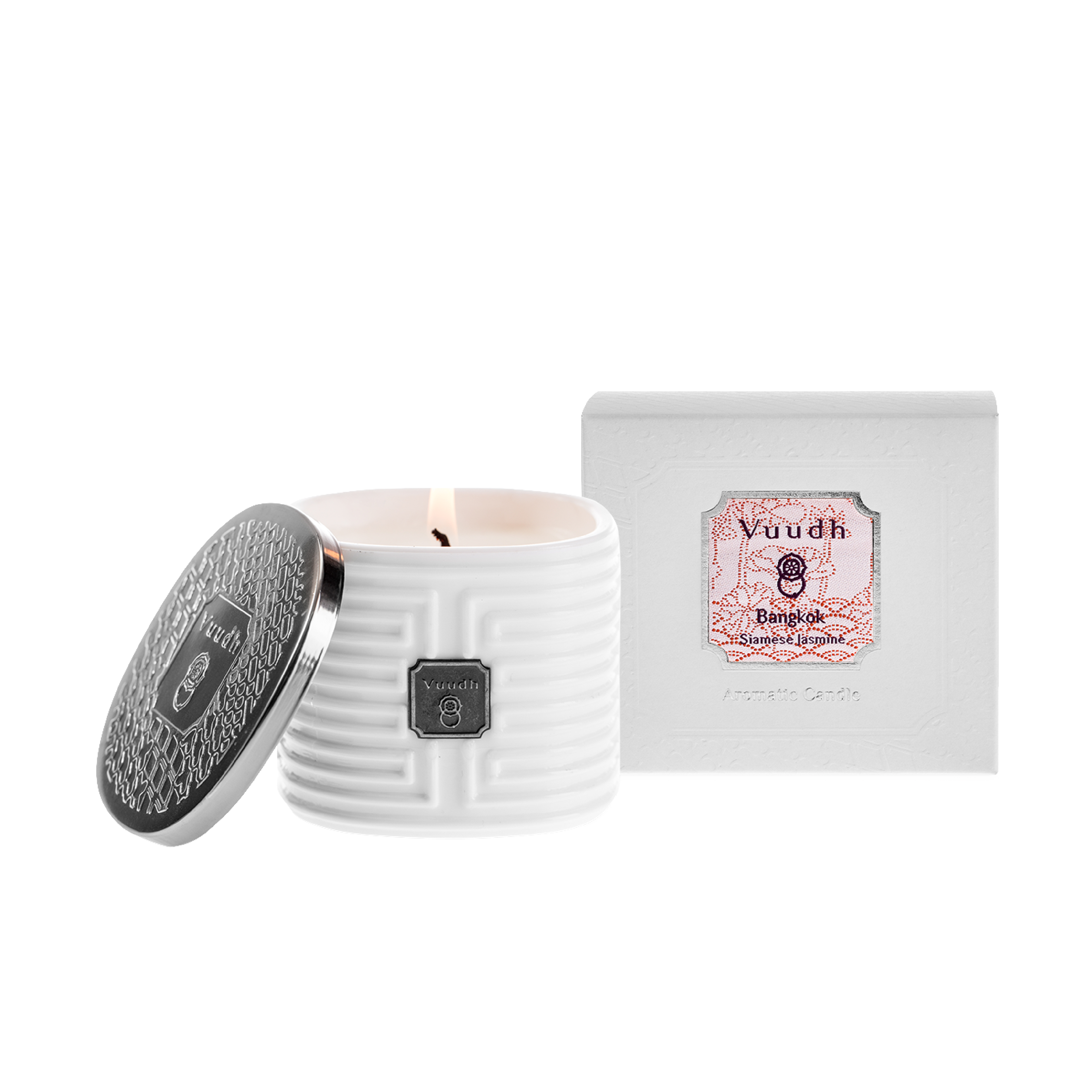
HARNN Jasmine Rice 185g — rice milk, jasmine sambac, and light white floral accord on a soy-coconut wax base. The fragrance is clean without being synthetic-soapy: the rice milk adds a soft creaminess to the jasmine that prevents it from being overly floral. The soy-coconut blend produces a relatively clean burn with good cold throw and adequate hot throw for rooms up to 14m². The brand's Thai heritage and spa aesthetic translate well to minimalist interior contexts. burn time of 45–50 hours is the shortest in this comparison on a per-gram basis; jasmine sambac is a polarizing top note — people who dislike jasmine will not enjoy this candle and sampling before a full purchase is worth doing; limited international availability makes replacement purchases difficult outside Southeast Asia; the fragrance profile, while distinctive, may not perform well in competition with strong kitchen or pet odors.
HARNN Jasmine Rice 185g is the Asian-luxury pick — Thai brand with a Southeast Asian botanical fragrance heritage, rice milk and jasmine sambac and light white florals on a soy-coconut wax base. The rice milk gives a soft creaminess that prevents the jasmine from being overly floral, and the result reads cleanly in minimalist spaces without the synthetic-detergent quality of Western 'clean' candles. Hot throw fills a 10-14m² room well. Burn time around 45-50 hours gives a mid-range cost per burn hour with a fragrance profile no Western luxury brand here covers. Widely available via major retailers and department stores, but limited international availability makes replacement purchases impractical outside Southeast Asia.
Pros
- ✓Distinctive Southeast Asian botanical fragrance unique to this comparison
- ✓Soy-coconut wax base produces a relatively clean burn with good cold throw
- ✓Spa-aesthetic packaging fits minimalist interior contexts naturally
- ✓Widely available via major retailers and department stores
Cons
- ✗Limited availability outside Southeast Asia for replacement purchases
- ✗Jasmine sambac is polarizing — sample before committing at this price

Kuumba International Incense Sticks
Kuumba International incense sticks — California-based brand with deep cultural connections to Japanese streetwear and lifestyle culture, stocked at select shops alongside premium fashion and craft goods. The stick fragrance range includes Japanese-influenced wood and resin profiles (hinoki, cedar, agarwood) and sweeter floral-musk blends. Each stick burns 20–30 minutes, delivering concentrated scent in a directional smoke cloud rather than the slow ambient diffusion of a candle. The brand's cultural positioning is part of its value proposition — owning Kuumba is a taste signal in certain communities in the same way that owning Diptyque is in others. incense smoke is inappropriate for households with asthma, respiratory conditions, or young children, and produces visible smoke that deposits on ceilings and surfaces over time; burn time per pack is much shorter than any candle in this comparison; availability is limited to select retailers and the brand's own channels — not available at major pharmacy or home goods chains; the experience is fundamentally different from a candle and not a substitute for sustained ambient scent.
Kuumba International incense sticks are the focused-session pick — California brand with deep ties to Japanese streetwear and lifestyle culture, stocked at select shops alongside premium fashion and craft goods. Each stick burns 20-30 minutes and delivers concentrated scent in a directional smoke cloud rather than the slow ambient diffusion of a candle. The fragrance range covers Japanese-influenced wood and resin profiles (hinoki, cedar, agarwood) and sweeter floral-musk blends. The cultural positioning is part of the value — owning Kuumba is a taste signal in specific communities. Entry-level pack pricing keeps the upfront cost low, though cost per hour varies depending on stick count. Not a candle substitute for sustained ambient scent, and the smoke is inappropriate for households with respiratory sensitivities or young children.
Pros
- ✓Directional smoke delivery suits focused sessions — meditation, reading, pre-sleep
- ✓Distinctive Japanese-forest and resin fragrance profiles
- ✓Cultural positioning carries taste-signal value in specific communities
- ✓Lower upfront cost per pack than buying a luxury candle
Cons
- ✗Incense smoke is inappropriate for households with asthma or young children
- ✗Limited to select retailers — not stocked at pharmacy or home goods chains
Which one is right for you?
For a luxury statement piece in a small to medium room
Diptyque Baies Candle 190g
The Baies cold throw and recognized jar design carry the design-object value, with hot throw best suited to rooms up to 12m².
For reliable room-filling scent in a larger living room
Yankee Candle Clean Cotton Large Jar
Paraffin-driven hot throw fills 15-20m² rooms reliably at the lowest cost per burn hour in this comparison.
For a reading room or study where warmth and complexity win
Byredo Bibliothèque Candle 240g
The 'old books' accord with vetiver-sandalwood-vanilla base reads as ambient warmth rather than an assertive statement.
For minimalist interiors and East Asian botanical scents
HARNN Jasmine Rice Candle 185g
Rice milk and jasmine sambac on soy-coconut wax is a fragrance palette no Western luxury brand here covers.
For focused 20-30 minute scent sessions and cultural taste-signal value
Kuumba International Incense Sticks
Directional smoke delivery suits meditation, reading, and pre-sleep wind-down rather than sustained ambient use.
How we compared
We did not conduct independent gas chromatography to identify or rank fragrance compounds, did not measure burn rates under laboratory-controlled airflow and temperature conditions, did not independently verify any brand's claims about natural wax content, fragrance concentration, or sustainable sourcing, and did not run controlled scent-throw distance tests. Honest candle evaluation at the analytical level would require standardized room volumes, controlled air exchange rates, calibrated olfactometry, and fragrance-concentration measurement — we did not do any of that.
Instead, we sourced product specifications from each brand, cross-referenced fragrance house documentation and wax supplier disclosures where publicly available, reviewed aggregated long-term user reviews on major online retailers and international fragrance-community forums (Fragrantica, Basenotes, Reddit r/candlemakingandbuying), and assessed user-reported burn performance and scent longevity patterns. We call out the explicit weakness on every product because a premium candle that tunnels because of your wick-lighting habits, performs poorly in a high-airflow room, or delivers a scent that does not read in real space the way its top notes suggest is a waste regardless of the brand's prestige.
Three questions do the most sorting work in this category. First: does the candle's scent profile suit your room's size and ventilation — a heavy resinous candle that fills a small room beautifully will disappear into a high-ceilinged living room with recirculating air conditioning. Second: what wax type is this candle, and what does that mean for how the fragrance releases — soy burns cooler and cleaner but throws less aggressively; paraffin throws harder and farther but produces more soot; coconut blend offers a middle path but at higher cost. Third: what is the actual burn time per gram after discounting the final 1cm of wax you should never burn — and is the brand's stated burn time honest?
Cold throw vs hot throw — what the difference means in practice
Cold throw is how a candle smells unlit, typically when you hold it close or when the lid is off on your shelf. Hot throw is the scent that fills the room once the candle has been burning for 30–45 minutes and the wax pool has reached the jar walls. They are different sensory experiences produced by different mechanisms, and a candle with an impressive cold throw can underperform badly on hot throw — and vice versa.
Cold throw is produced primarily by the fragrance oil volatilizing at room temperature. High-volatility top notes (citrus, green, light florals) tend to produce strong cold throw because they evaporate readily. Base notes (musks, woods, resins, vanilla) are less volatile at room temperature and produce weaker cold throw — which is why you will often notice that a candle smells different — lighter and fresher — in the shop than it does once you burn it for an hour at home. This is not a product defect; it is chemistry.
Hot throw depends on fragrance load (what percentage of the wax weight is fragrance oil — typical luxury candles run 8–12%, mass-market candles 5–8%), the fragrance oil's flash point relative to the wax melt temperature, and the wick's ability to maintain a large enough melt pool without sooting. Soy wax melts at lower temperatures than paraffin, which means soy-based candles typically produce less aggressive hot throw but also less soot. A candle that smells extraordinary at cold throw but produces weak hot throw in a 15m² room is genuinely disappointing — and this is one of the most consistent complaints in long-term user reviews of ultra-luxury candles in oversized jars.
The practical implication: if you are buying for a consistently-used living room or bedroom where you want scent to fill the space while the candle burns, prioritize hot throw over cold throw. If you are buying for ambient display, gifting, or occasional use in a small room, cold throw and cold-throw longevity on the shelf matter more. Both Diptyque Baies and Byredo Bibliothèque have been cited more for cold throw presence than hot throw room-filling — HARNN Jasmine Rice and Yankee Clean Cotton reverse that pattern.
Wax type: soy vs paraffin vs coconut blend
The wax type determines how the fragrance releases, how the candle burns, what the surface looks like after cooling, and how much soot the candle produces. Most luxury candles do not disclose their exact wax blend publicly, and 'natural wax' claims cover a wide range of formulations — from fully natural coconut-paraffin blends to soy-paraffin blends with varying ratios.
Paraffin wax is a petroleum derivative, has a higher melt temperature than soy, and produces more aggressive hot throw because the hotter melt pool releases fragrance molecules more efficiently. It also produces more soot than soy, particularly if the wick is over-sized or the candle is burned in a draft. Paraffin is used in most mass-market candles including the Yankee Candle range — the aggressive scent throw that Yankee is known for is partly the result of paraffin's hot-throw characteristics. The soot concern is real but manageable: trimming the wick to 5mm before each burn and avoiding drafts reduces soot significantly.
Soy wax is derived from soybean oil and burns cooler and cleaner than paraffin. The trade-off is a softer, less aggressive hot throw. Soy candles also have a natural tendency to develop 'frosting' (white crystalline patches on the surface) and 'wet spots' (where the wax pulls slightly from the glass), neither of which affects performance but which look imperfect — which is why luxury brands often use soy-paraffin blends rather than pure soy. Soy wax requires a larger wick to maintain adequate melt pool size, and if under-wicked, soy candles tunnel badly.
Coconut wax blends are increasingly used in premium candles as a marketing-friendly 'natural' alternative. Coconut wax has a lower melt point than soy, produces a creamy, dense-looking wax pool, and holds fragrance well. It tends to produce a strong cold throw. The cost is higher than soy or paraffin, which is why it appears primarily in the premium price tier. Most brands that use coconut wax blend it with soy or paraffin to achieve the right burn characteristics — a candle marketed as 'coconut wax' may be 60–80% coconut with soy or paraffin blend components.
Diptyque's wax formula is proprietary and not publicly disclosed; the brand has historically used a paraffin-based formula in most market candles though formulations vary by region. Yankee Candle uses paraffin for the bulk of its range. Byredo uses a proprietary blend. HARNN uses a soy-coconut blend formula that the brand discloses on packaging. Kuumba International incense sticks are a different product category — wood-pulp, bamboo, and resin binder — wax type is not applicable.
Burn time per gram — doing the math
Stated burn times on candle packaging are typically measured under controlled laboratory conditions: no draft, standard room temperature, first burn after manufacturing, with a freshly trimmed wick. Real-world burn times are consistently shorter than stated times for users who burn in air-conditioned rooms, near open windows, or who do not trim wicks between burns. The more useful metric is burn hours per gram of wax — it normalizes for jar size and lets you compare actual fragrance delivery across price tiers.
Diptyque Baies 190g: the 190g jar is stated at 50–60 hours. That yields 0.26–0.32 burn hours per gram. At its premium retail price, this is the highest cost per burn hour in this comparison — which is accurate to state plainly. The value proposition for Diptyque is not cost-per-hour but the fragrance quality and the brand presentation.
Yankee Candle Clean Cotton large jar (623g): stated at 110–150 hours, yielding 0.18–0.24 burn hours per gram. At its budget retail price, this is the lowest cost per burn hour in this comparison by a significant margin. The fragrance volume is more modest per gram than Diptyque — but the value arithmetic is unmistakably in Yankee's favor for buyers who want consistent, reliable scent in a larger space.
Byredo Bibliothèque 240g: stated at approximately 60 hours, yielding 0.25 burn hours per gram. At its flagship retail price, this is the highest price per burn hour in this comparison. Byredo candles are purchased primarily for the fragrance complexity and the object itself — the price is a niche fragrance house premium, not a burn-performance premium.
HARNN Jasmine Rice 185g: stated at approximately 45–50 hours, yielding 0.24–0.27 burn hours per gram. At its mid-range retail price, this is a mid-range cost per burn hour with a fragrance profile that resonates strongly with East Asian buyers — rice milk and jasmine is a distinctly regional palette that the Western luxury brands do not cover.
Kuumba International incense sticks: pricing by the pack (typically 12–20 sticks per pack, each stick burning 20–30 minutes). The entry-level pack price gives a low cost per session, though cost per hour varies depending on stick count and burn duration. Incense sticks are a different use model — shorter, more concentrated scent delivery rather than sustained room-filling — and cost-per-hour comparisons with candles are not directly equivalent. They are included here because they occupy a related ambient fragrance niche and serve similar home-use occasions.
Tunneling: why it happens and how to prevent it
Tunneling is when a candle burns down the center without fully melting the wax to the jar walls, leaving a ring of unmelted wax that traps fragrance and eventually makes the candle unusable. It is the most common complaint in long-term candle user reviews and is almost entirely a user behavior problem rather than a product defect — though some candles are more tunneling-prone than others.
The cause is wax memory. On the first burn, the melt pool establishes the pattern for all subsequent burns. If you extinguish the candle before the melt pool reaches the jar walls — which typically takes 1–2 hours for a 190g candle and 2–3 hours for a 600g+ jar — the wax just outside the melt pool solidifies at a slightly lower level than the surrounding wax, creating a ring. On the next burn, the candle follows that ring, melting only to the established edge rather than the full diameter. The tunnel deepens with each burn.
Prevention is simple: burn the candle for long enough on each occasion that the melt pool reaches the jar walls before you extinguish it. For a Diptyque Baies 190g, this means at least 2 hours of continuous burn on the first light. For a Yankee large jar, allow 3–4 hours. Never extinguish before the wax edge is fully liquid. If you regularly burn candles for 30-minute intervals because you are busy, buy a smaller candle with a narrower diameter — a tea light or a votive rather than a 190g luxury jar.
If a candle has already tunneled, you can sometimes recover it by using a hair dryer to gently melt the outer wax ring until it is level with the center, then burning normally from that point. This works when the tunnel is shallow. Deep tunneling (more than 1.5cm) is generally not recoverable without significant wax rearrangement. Premium candles like Diptyque and Byredo are particularly vulnerable to tunneling damage because their per-burn-hour cost makes wasted wax costly.
Wick trimming is related but distinct. An un-trimmed wick (longer than 5–6mm) burns with a large, dancing flame that generates more heat, produces more soot, causes uneven melt pools, and can overheat the jar. Trim the wick to 5mm before every burn using wick trimmers or nail scissors. This is not optional advice — it materially affects burn quality, hot throw, and how long the candle lasts.
Product deep-dives
Diptyque Baies 190g: Diptyque's founding fragrance and the candle that established the French luxury candle category internationally. The scent is blackcurrant leaf and Bulgarian rose — sharp, green-edged, slightly tart at top, softening to rose as the heat builds. The cold throw from the glass jar is distinctive and lingers at room temperature; the hot throw is present but not aggressive, making Baies better suited to smaller, well-ventilated rooms (up to about 12m²) than large open-plan spaces. The glass jar and wax color are immediately recognizable. The fragrance has been consistent for decades with minor regional formula adjustments. Burn quality depends heavily on first-burn discipline and wick trimming — Diptyque's wick tends toward the generous side and benefits from trimming to 4–5mm. At 190g this is not a long-burn candle: 50–60 hours disappears quickly if you burn it daily. the highest cost per burn hour in this comparison; hot throw is present but underwhelming for large rooms; the price point means tunneling due to short burns is an expensive mistake; performance difference between Diptyque and well-made mid-tier candles is real but narrower than the price gap suggests.
Yankee Candle Clean Cotton: the most commercially successful candle fragrance profile in this comparison — Clean Cotton (fresh linen, light musk, soft powdery cotton) is the synthetic-clean archetype that defines supermarket candle departments globally. The Yankee large jar at 623g delivers consistent, reliable hot throw in rooms up to 20m² with the paraffin-driven throw that the brand is engineered for. This is a candle that actually fills a room while burning — not a subtle background presence but a genuine ambient scent layer. The burn time at 110–150 hours on the large jar makes it the best cost-per-hour value in this comparison. Soot is real at this price tier if you do not trim the wick — the paraffin base and the larger wick size make soot management more important here than with soy candles. the fragrance is synthetic-forward with no pretension to natural ingredients — it smells like laundry products and fabric softener, which is exactly what it is designed to do; paraffin base produces more soot than soy alternatives; the large jar format makes sampling or gifting awkward; no meaningful design object value.
Byredo Bibliothèque: Byredo's most recognized candle, and the fragrance that made niche candles a conversational object. The scent profile is warm and literary: peach skin and plum top notes opening into violet and iris, base anchored by vetiver, sandalwood, and vanilla musk. The name refers to the smell of old books — and the reference is surprisingly legible in the wax, particularly at cold throw. Hot throw is more muted and ambient than Diptyque's Baies — Bibliothèque fills a room with warmth rather than a definitive scent statement. It works best in reading rooms, studies, or bedrooms where an enveloping rather than assertive fragrance is appropriate. The 240g jar at its flagship price is a significant object investment with corresponding performance expectations that do not always match the price in user reviews. the highest per-unit price in this comparison; hot throw is underwhelming relative to cost for buyers expecting room-filling performance; the fragrance complexity that makes it interesting at cold throw becomes ambiguous at distance; the niche fragrance house premium is real but does not translate into a proportionally better burn experience.
HARNN Jasmine Rice 185g: a Thai luxury brand with a fragrance heritage rooted in Southeast Asian botanical traditions — rice milk, jasmine sambac, and light white florals create a scent that is clean without the synthetic-detergent quality of Western 'clean' fragrances. The jasmine sambac is recognizable and present without being overwhelming; the rice milk base gives it a soft, almost powdery creaminess that sits comfortably in minimalist spaces. HARNN's soy-coconut wax blend produces good cold throw and a relatively clean burn. Hot throw fills a 10–14m² room well. The brand is widely available via major retailers and department stores, and the packaging — spa-white with minimal Thai script — fits a minimalist aesthetic idiom well. not widely available outside Southeast Asia, making replacement purchases impractical for international buyers; burn time at 45–50 hours is shorter than competitors at a comparable price tier; the jasmine sambac accord will divide opinion — jasmine-averse buyers should test before committing at this price.
Kuumba International incense sticks: Kuumba International is a California-based incense brand with a following in streetwear and lifestyle communities in Japan — it is regularly stocked at select shops alongside brands like visvim, Fragment Design adjacents, and similar cultural touchstones. The incense sticks use Japanese-influenced wood-pulp and resin binders with fragrance profiles that range from Japanese forest (hinoki, pine, cedarwood) to sweeter floral-musk blends. Burn duration per stick is 20–30 minutes, making them appropriate for focused sessions — meditation, reading, pre-sleep winding down — rather than sustained ambient use. The scent delivery is more concentrated and directional than a candle: the smoke carries the fragrance actively into the room rather than radiating from a melt pool. This produces a distinctly different olfactory experience — more immediate, more changeable as the stick burns down, and shorter. incense smoke is not appropriate for households with asthma, respiratory sensitivities, or young children; burn time per pack is significantly shorter than any candle in this comparison; the subcultural brand positioning means availability is limited to select retailers rather than mass-market channels; not a substitute for a candle in terms of sustained ambient scent.
Scent families and room matching
The five products in this comparison span three broadly different scent families: floral-fruity (Diptyque Baies, HARNN Jasmine Rice), woody-ambery (Byredo Bibliothèque, Kuumba International forest variants), and clean-fresh (Yankee Clean Cotton). Matching scent family to room function and room size is the most practical buying decision framework — it bypasses the brand prestige question and focuses on what actually works in your home.
Floral-fruity scents (Baies, HARNN Jasmine Rice) tend to work well in bedrooms, bathrooms, and entry halls — spaces where a clear, identifiable fragrance is pleasant but where the scent does not need to fill a large volume. They are generally appropriate for 8–15m² rooms with moderate ventilation. In larger or highly ventilated rooms, the top-note brightness that makes these scents appealing becomes too diffuse to read.
Woody-ambery scents (Byredo Bibliothèque, Kuumba wood variants) work well in studies, libraries, and living rooms where a warm background scent is appropriate. The base notes in these profiles — vetiver, sandalwood, cedar, vanilla musk — are persistent and low-volatility, meaning they release slowly and linger after the candle is extinguished. They suit evening use and relaxed, static environments. They are less appropriate for kitchens or high-traffic spaces where cooking smells compete.
Clean-fresh scents (Yankee Clean Cotton) are the most versatile room match — they work in living rooms, bedrooms, and shared spaces where a neutral, pleasant fragrance is wanted without a strong character statement. The synthetic-clean family also tends to mask household odors most effectively because it is formulated to read over competing background smells — which is why this fragrance family dominates in supermarket and mass-market candles. The trade-off is that 'clean' candles have less fragrance personality and do not create a distinctive home-scent signature.