Best Cast Iron Pan 2026: Lodge vs Le Creuset vs Staub
Five cast iron pans from budget to premium — a pre-seasoned American foundry workhorse, two enameled French brands, a Japanese nambu ironware skillet, and a family-size Lodge. Weekly usage frequency, not recipe variety, determines which spec actually matters.
Quick answer
The Lodge L8SK3 is the cast iron pan to buy first: pre-seasoned, cheap enough to risk, and at 2.1 kg the lightest American-foundry option to live with daily. Cooks working with tomato, wine, and citrus should take Le Creuset's enameled 26 cm instead, which won't pick up metallic flavor. Staub sears deepest, and the Iwachu nambu skillet is the lightest 26 cm.
We assessed each product on build quality and materials, how it performs in everyday kitchen use, cleaning and maintenance burden, durability over years of use, and value for the price. Manufacturer specifications were cross-checked against verified owner reviews.

Lodge Cast Iron Skillet L8SK3 10.25"
Best Overall Value: The Lodge L8SK3 is the cast iron pan most cooks should start with. It ships pre-seasoned so you can cook on it the day it arrives, the 26 cm cooking surface fits two steaks or a stack of pancakes, and at this price the entry cost is low enough that you can decide whether cast iron suits your cooking before spending real money.
Top picks ↓| Product | Diameter | Item weight | Material | Preseasoned | Oven safe | Induction compatible |
|---|---|---|---|---|---|---|
| Lodge Cast Iron Skillet L8SK3 10.25" | 10.25 in | 5.34 lb (2.42 kg) | cast iron | yes (foundry seasoned, 100% vegetable oil) | Yes (bare cast iron; seasoning stable to ~650°F) | yes |
| Le Creuset Enameled Cast Iron Skillet 26cm | 10.25 in (26 cm) | ~5.8 lb (2.6 kg) | enameled cast iron | no (enamel; requires no seasoning) | 500°F | yes |
| Staub Frying Pan 26cm | 26 cm (10.25 in) | 2.20 kg (4.85 lb) | enameled cast iron (black matte enamel interior) | no (enameled; no seasoning required) | 500°F (260°C) | yes |
| Iwachu Iron Skillet 26cm | 23.5 cm inner (26 cm outer width) | ~2.2 kg (4.85 lb) | cast iron (Nambu / Nanbu ironware, silicon baked finish) | no (silicon baked finish; user seasoning recommended) | Yes (bare cast iron, no stated temperature limit) | yes |
| Lodge Cast Iron Skillet L10SK3 12" | 12 in | ~8 lb (3.6 kg) | cast iron | yes (foundry seasoned, 100% vegetable oil) | Yes (bare cast iron; seasoning stable to ~650°F) | yes |
Top picks
Related articles
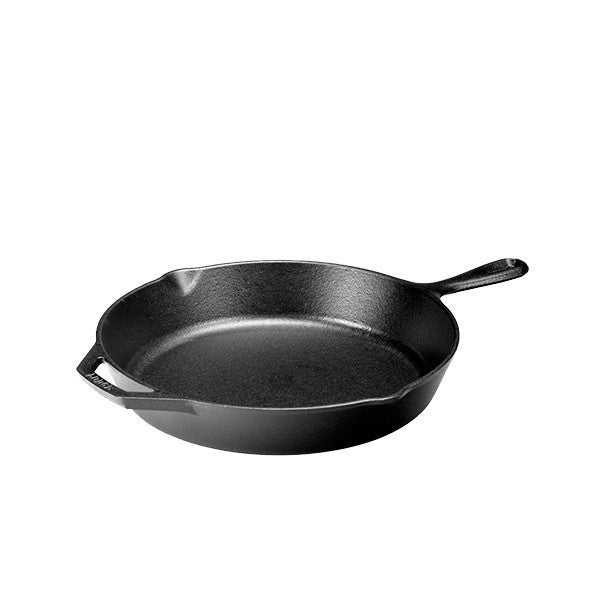
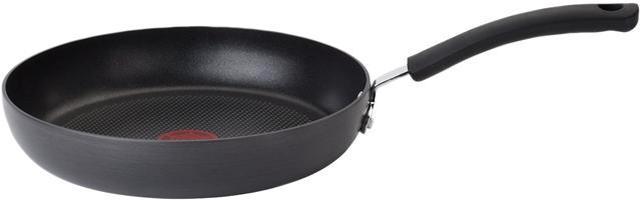

Lodge Cast Iron Skillet L8SK3 10.25"
Pre-seasoned American cast iron, oven-safe to 260°C, induction compatible. Surface texture is rough from the foundry and takes 50+ cooks to smooth — this is the tradeoff for the budget price point.
The Lodge L8SK3 is the cast iron pan most cooks should start with. It ships pre-seasoned so you can cook on it the day it arrives, the 26 cm cooking surface fits two steaks or a stack of pancakes, and at this price the entry cost is low enough that you can decide whether cast iron suits your cooking before spending real money. The foundry-finished surface is noticeably rough at first compared with a polished Iwachu, but after 50 or so cooks it smooths out and approaches non-stick. Weight at around 2.1 kg is manageable one-handed for most adults. Induction and oven safe across the full home range.
Pros
- ✓Pre-seasoned and cookable out of the box
- ✓Genuinely low price for a lifetime pan
- ✓Manageable 2.1 kg weight for daily one-handed use
- ✓Works on induction, gas, electric and in the oven
Cons
- ✗Foundry surface is rough until broken in
- ✗Bare iron will stain from acidic foods
| Diameter | 10.25 in |
| Item weight | 5.34 lb (2.42 kg) |
| Material | cast iron |
| Preseasoned | yes (foundry seasoned, 100% vegetable oil) |
| Oven safe | Yes (bare cast iron; seasoning stable to ~650°F) |
| Induction compatible | yes |
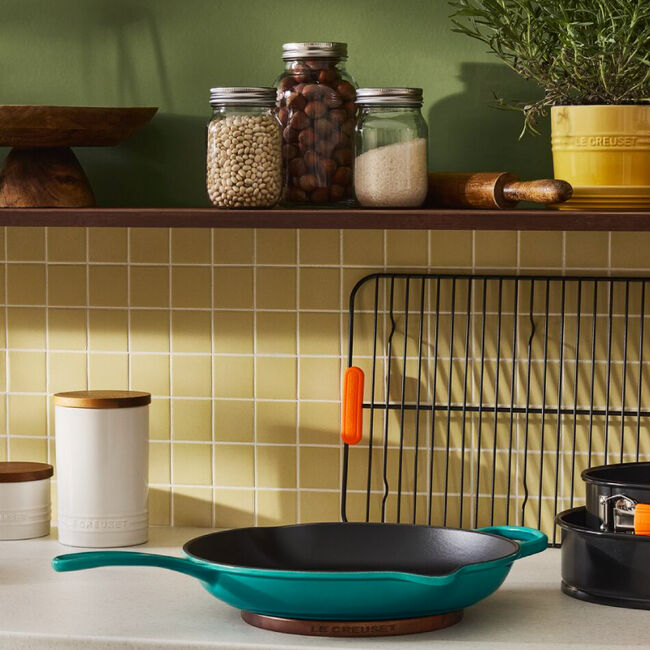
Enameled cast iron — no seasoning required, handles acidic foods, rust-proof. Enamel chips permanently if dropped on hard surfaces; it is the most expensive pan in this comparison.
The Le Creuset 26 cm enameled skillet is the pan to buy if you regularly cook tomato sauces, wine braises or anything acidic, and you do not want to think about seasoning. The enamel surface needs no maintenance beyond washing, accepts acidic foods without picking up metallic flavor, and looks presentable enough to bring straight to the table. Heating is even and the lid-less skillet format is noticeably lighter than the brand's Dutch ovens. Drop it on a tile floor and the enamel will chip, which is the one real downside. Resale value is unusually strong, which softens the high initial price.
Pros
- ✓No seasoning ever required
- ✓Handles tomato, wine and citrus without flavor or surface damage
- ✓Even heating across the cooking surface
- ✓Lifetime warranty and strong resale value
Cons
- ✗Enamel chips permanently if dropped on hard surfaces
- ✗Highest price in this comparison
| Diameter | 10.25 in (26 cm) |
| Item weight | ~5.8 lb (2.6 kg) |
| Material | enameled cast iron |
| Preseasoned | no (enamel; requires no seasoning) |
| Oven safe | 500°F |
| Induction compatible | yes |

Matte black enamel interior develops browning patina over time; professional kitchen preferred over Le Creuset for searing. It sits at the top of the enameled price band.
The Staub 26 cm frying pan is the enameled cast iron you choose when you want darker, more aggressive browning. The matte black interior enamel is rougher and darker than Le Creuset's light surface, which absorbs more heat into the food contact zone and pushes proteins toward a more intense crust. The same enamel develops a subtle patina over time the way bare iron does, but without any seasoning maintenance. French professional kitchens reach for Staub more than Le Creuset for stovetop work and this is why. Pricing sits just above Le Creuset, and the cooking difference is real but small in everyday home use.
Pros
- ✓Matte black interior delivers more aggressive sear than light enamel
- ✓No seasoning needed and acid-safe
- ✓Develops a subtle patina with use
- ✓Used heavily by professional kitchens
Cons
- ✗Slightly more expensive than Le Creuset
- ✗Same enamel chipping risk as any enameled pan
| Diameter | 26 cm (10.25 in) |
| Item weight | 2.20 kg (4.85 lb) |
| Material | enameled cast iron (black matte enamel interior) |
| Preseasoned | no (enameled; no seasoning required) |
| Oven safe | 500°F (260°C) |
| Induction compatible | yes |
Subscribe to our newsletter
Occasional updates and new releases — no spam.
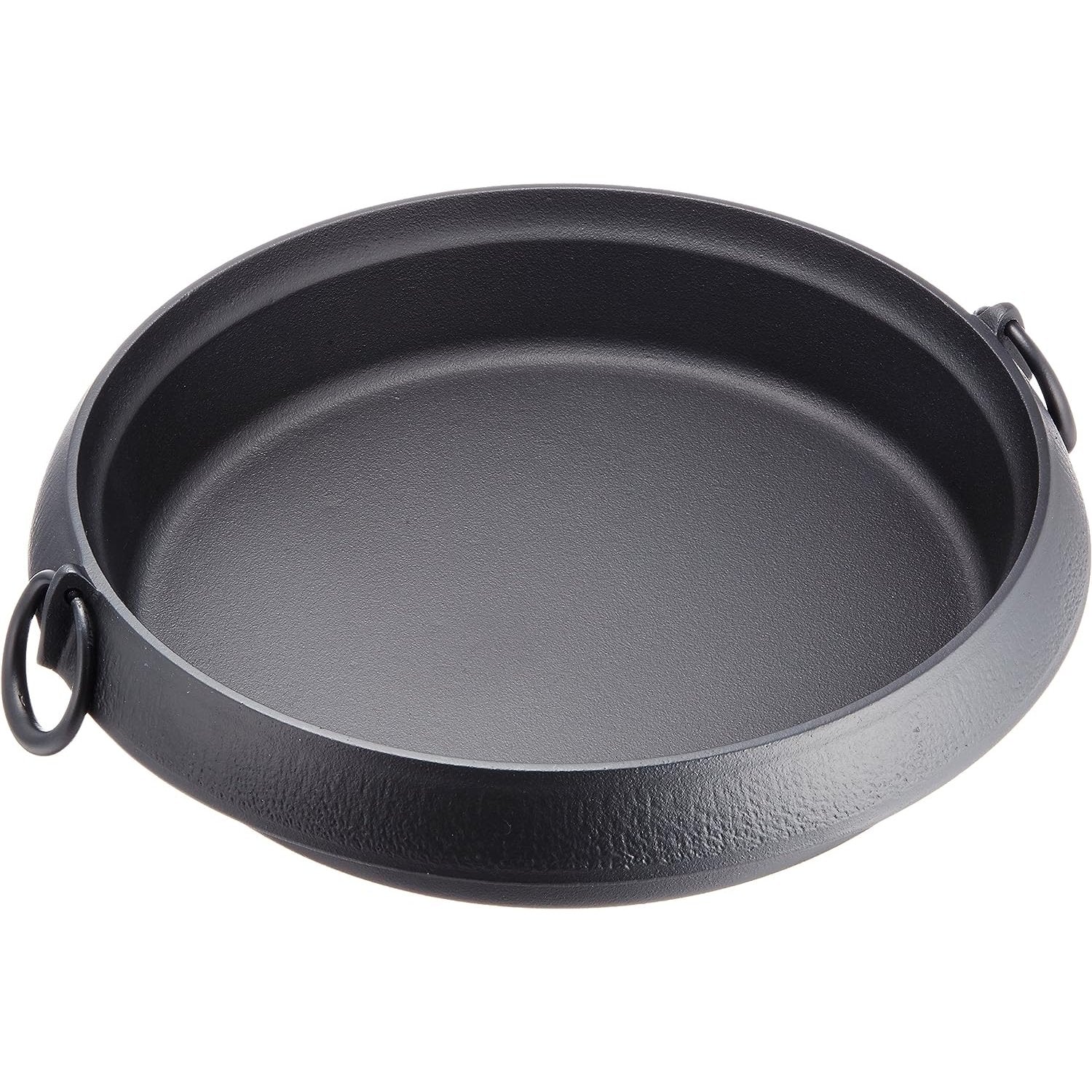
Morioka nambu ironware, thinner casting at around 1.4 kg for 26cm. Iron supplementation benefit documented. Requires same rust-prevention care as raw cast iron despite premium positioning.
Iwachu's 26 cm nambu ironware skillet is cast thinner than American foundry pans, landing at around 1.4 kg — roughly 700 to 900 grams lighter than a comparable Lodge. That difference does not sound dramatic on paper but is immediately obvious when you lift the pan one-handed to plate food. The Morioka craft tradition is genuine rather than marketing dressing, the surface is smoother than Lodge from the foundry, and iron does measurably leach into food for those who care about iron intake. It still rusts like any bare iron pan, so it needs the same dry-and-oil routine after washing.
Pros
- ✓Significantly lighter than American cast iron at the same diameter
- ✓Smoother foundry surface than Lodge
- ✓Authentic Morioka nambu ironware heritage
- ✓Iron leaches into food in measurable amounts
Cons
- ✗Needs the same rust-prevention care as any bare cast iron
- ✗Price premium hard to justify on cooking performance alone
| Diameter | 23.5 cm inner (26 cm outer width) |
| Item weight | ~2.2 kg (4.85 lb) |
| Material | cast iron (Nambu / Nanbu ironware, silicon baked finish) |
| Preseasoned | no (silicon baked finish; user seasoning recommended) |
| Oven safe | Yes (bare cast iron, no stated temperature limit) |
| Induction compatible | yes |
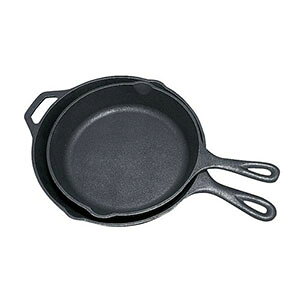
Lodge's 12-inch format for 3+ person households. 3.2 kg empty — check that you can comfortably manage the weight before committing. Same pre-seasoned foundry quality as L8SK3 in a larger format.
The Lodge L10SK3 is the 12-inch (30 cm) version of the L8SK3, sized for households of three or more. The bigger surface fits a spatchcocked chicken, a 6-egg frittata, or five to six pork chops in one batch, which is the right capacity once you stop cooking for one or two. Same pre-seasoned foundry construction as the smaller Lodge, same oven and induction compatibility, same finish. The catch is weight — 3.2 kg empty makes one-handed work a real workout, and full of food it becomes a two-handed lift. Honest about this up front: if that weight will mean the pan lives in the cupboard, the L8SK3 will get used more often.
Pros
- ✓Fits whole chickens or large batches in one pan
- ✓Same proven Lodge construction and pricing as L8SK3
- ✓Works on induction, gas, electric, and in the oven
- ✓Foundry pre-seasoning means it cooks day one
Cons
- ✗3.2 kg empty is genuinely heavy in daily use
- ✗Too large for most single-person cooking
| Diameter | 12 in |
| Item weight | ~8 lb (3.6 kg) |
| Material | cast iron |
| Preseasoned | yes (foundry seasoned, 100% vegetable oil) |
| Oven safe | Yes (bare cast iron; seasoning stable to ~650°F) |
| Induction compatible | yes |
Which one is right for you?
The cast iron beginner
Lodge Cast Iron Skillet L8SK3 10.25"
Pre-seasoned, cheap enough to risk, and the 2.1 kg weight is the lightest American-foundry option to live with daily.
The acid-heavy cook
Le Creuset Enameled Cast Iron Skillet 26cm
Enameled surface handles tomato, wine and citrus without picking up metallic flavor or stripping seasoning.
The serious sear hunter
Staub Frying Pan 26cm
Matte black enamel pushes a deeper crust on steaks and chops than any other pan here, with no seasoning maintenance.
The cook with wrist or weight concerns
Iwachu Iron Skillet 26cm
Thinner nambu casting makes it the lightest 26 cm option, so the pan actually gets used instead of staying in the cupboard.
The 3+ person household
Lodge Cast Iron Skillet L10SK3 12"
The 30 cm cooking surface fits a whole chicken or family-size batch in one go without sacrificing Lodge's price-to-quality ratio.
Raw cast iron vs enameled: the seasoning question
Seasoning is the thin layer of polymerized oil that builds up on raw cast iron through regular cooking. When you fry bacon, cook eggs in butter, or sauté vegetables in oil in a cast iron pan, the fat molecules bond to the iron at high temperature and form a hard, slightly slick polymer layer. Over 20-30 cooks this layer visibly darkens the surface; over 50-100 cooks it approaches genuinely non-stick performance. This happens by cooking normally — you don't manage it consciously.
The one real limitation of raw cast iron is acidic foods. Tomatoes, wine, citrus, and vinegar-based sauces strip seasoning from raw cast iron, leaving metallic flavor in acidic dishes and requiring re-seasoning afterward. If you regularly make French braises, tomato-based sauces, or wine reductions, an enameled pan (Le Creuset or Staub) handles these without any concern. If your cooking runs to seared proteins, fried eggs, cornbread, and roasted vegetables, raw cast iron is fine and the seasoning concern is overstated.
Enameled cast iron never needs seasoning, handles acidic foods without issue, looks good on a table as a serving vessel, and can go in a dishwasher (though hand-washing extends the enamel life). The tradeoff: enamel chips if you drop the pan on tile or strike it against something hard. A chipped enamel surface cannot be repaired — that's the end of that pan as food-safe cookware.
Maintenance differences are larger than most people expect before owning both types. Raw cast iron: wash with hot water and a stiff brush (a small amount of dish soap is fine — the soap-destroys-seasoning rule applies to old lye-based soaps, not modern dish detergent), dry immediately and completely, apply a thin oil coat if storing for more than a few days. Enameled cast iron: wash with hot soapy water, done. No oil, no rust risk.
Weight and practical daily use
Cast iron weight is the most underestimated specification before you own one. Lodge L8SK3 at 2.1 kg feels manageable in a store until you're holding it one-handed over a pot to pour off fat while the handle is hot and you're wearing an oven mitt. The real daily scenario: pick up the pan, tilt it to check browning, slide it in and out of the oven. At 2.1 kg this is manageable for most adults. At 3.2 kg — the Lodge L10SK3 — it's a two-handed job or a demanding one-handed lift.
The Iwachu advantage here is real. At around 1.4 kg for the 26cm model, traditional nambu ironware is cast thinner than American foundry cast iron. The 0.8-0.9 kg difference from a comparable Lodge doesn't sound significant but is very noticeable in daily use. For older cooks, people with wrist conditions, or anyone who found a heavier Lodge difficult to work with, Iwachu's lighter construction is a practical reason to pay the premium.
Le Creuset and Staub 26cm skillets fall between raw iron and the heavier Lodge sizes at around 1.8-2.0 kg. The enamel adds weight compared to a bare iron casting at the same diameter, but the skillet format is significantly lighter than their Dutch oven cousins.
Induction compatibility and heat performance
All five pans in this comparison work on induction burners. Cast iron is ferromagnetic and couples with induction coils without any adaptation. This is one of the practical advantages of cast iron over copper or older aluminum cookware: when you switch from gas to induction, your cast iron pans move with you without replacement. In kitchens with induction-only cooktops, this matters.
Heat retention is cast iron's signature advantage over thin stainless steel or aluminum. A properly preheated cast iron skillet maintains its temperature when you add cold food — the thermal mass absorbs the cold rather than the pan temperature dropping, which is exactly what you want when searing a steak or frying chicken. This retention also works against you: cast iron heats slowly and maintains temperature after the burner is off, so you need to plan for carryover cooking. Take food off the heat 30-60 seconds before you think it's done.
One induction caveat: very old, warped, or uneven cast iron may heat unevenly because induction requires consistent close contact between the pan bottom and the cooking zone. New pans are machined flat. If you're buying vintage cast iron at a flea market, check the bottom flatness before assuming smooth induction performance.
How to season a new cast iron pan, and how to maintain it
New raw cast iron pans benefit from a few oven-seasoning sessions before first use. The standard method: wash the pan to remove the factory coating, dry it completely, apply a very thin film of neutral oil (flaxseed, vegetable, or grapeseed) with a paper towel, then wipe off nearly all of it so the surface feels almost dry. A thick oil layer produces a sticky, uneven result rather than proper seasoning. Place the pan upside-down in a 230-260°C oven for one hour with a foil sheet on the lower rack to catch drips. Repeat two or three times.
After the initial seasoning, cooking builds it. Cast iron used regularly develops seasoning faster than pans used occasionally. The fastest seasoning-builder is fat — bacon, butter, lard, duck fat — at medium-high heat. Avoid sustained water-based cooking (boiling, steaming) in a new pan, as it doesn't contribute to seasoning and can inhibit the process. Within 20-30 regular cooks, the surface will be noticeably more non-stick.
Removing rust: rust on raw cast iron is surface oxidation, not structural damage, and is fully reversible. Scrub with steel wool or coarse sandpaper until you reach bare gray metal. Wash with hot water and dish soap, dry thoroughly (a 10-minute session in a warm oven at 120°C removes moisture that towel-drying misses), apply a thin oil coat, and re-season in a hot oven. Pans left wet for weeks and appearing hopelessly neglected typically come back excellent after this process.
Enameled cast iron care focuses on protecting the enamel from thermal shock and impact. Heat gradually — don't put a cold enameled pan directly onto a high-heat burner. Don't stack enameled pans without protective cloth between them. Keep gas burner flame within the pan bottom diameter. Hand-washing is recommended even for dishwasher-safe enamel, as the thermal cycles and harsh detergent of dishwashers accelerate enamel dulling over time.
Where each pan fits: the honest recommendation by use case
Lodge L8SK3 is the right starting point for anyone who wants cast iron without overthinking it. Pre-seasoning means it's cookable the day it arrives. The surface feels rough compared to polished Iwachu or enameled Le Creuset, but after 50 cooks they converge. At its budget price it costs less than one dinner at a mid-range restaurant, which changes what 'getting it wrong' means — if you discover cast iron doesn't work for you, the exit cost is low.
Le Creuset Enameled Skillet 26cm is the right pick if you cook acidic dishes regularly or want a pan that serves at the table without any maintenance concern. The cooking performance difference from Lodge at equal temperatures is negligible for non-acidic foods — you're paying for no-seasoning convenience, acid compatibility, beauty, and lifetime warranty. Le Creuset also holds resale value remarkably well; a used 26cm skillet in good condition fetches a strong share of its original price on the resale market.
Staub Frying Pan 26cm is the professional kitchen choice among enameled cast iron. The matte black interior browns proteins slightly more aggressively than Le Creuset's lighter enamel and develops a patina over time. French restaurant kitchens use Staub more than Le Creuset for stovetop cooking for this reason. The price premium over Le Creuset is small; the cooking difference is also small — for everyday home cooking, either brand produces the same meals.
Iwachu Iron Skillet 26cm is the right pick if you want Japanese craft heritage and lighter weight in a raw cast iron skillet. The 1902 Morioka provenance and nambu ironware tradition are real — this isn't just marketing. The iron-supplement benefit is documented in Japanese nutrition guidance: iron leaches measurably into food cooked in raw iron, especially acidic and high-moisture foods. The mid-range price premium over Lodge is hard to justify on pure cooking performance, but spread over a 30-year ownership it amounts to very little per year.
Lodge L10SK3 12-inch is the right pan for households of three or more who want to cook cast-iron-style meals in a single batch. 30cm diameter accommodates a whole spatchcocked chicken, a large frittata, or five to six pork chops. The 3.2 kg weight is a genuine daily-use consideration — if that will become a reason the pan lives in the cabinet, the L8SK3 at 2.1 kg sustains better.
Frequently asked questions
Can I use soap on my cast iron pan?▼
Are all cast iron pans induction compatible?▼
What temperature can I use in the oven?▼
How do I remove rust from a cast iron pan?▼
Is Le Creuset worth the price versus Lodge?▼
How do I season a new cast iron pan?▼
Prices change. Check the retailer for the current price.
Comments & questions
Discussion happens on nattzy, our community forum. Sign in with Google to post — it takes a second.
Related articles
Best Air Fryer 2026: 5 Models Compared Honestly

Best Coffee Makers 2026: Breville vs Moccamaster vs OXO

Best Electric Toothbrush 2026: 5 models compared honestly
Best Air Purifier 2026: 5 models compared honestly

ConoHa WING review (2026): setup, speed and pricing
Best JP rental server 2026: 5 hosts ranked