Best Facial Cleansers 2026: 5 Picks for Every Skin Type
The cleanser you use twice a day has more effect on your skin barrier than almost any serum you apply afterward. Ingredient concentration and formulation compatibility matter more than brand reputation.
Quick answer
For dry, compromised, or post-retinoid skin, the CeraVe Hydrating Cleanser is the pick — three ceramides delivered through its MultiVesicular Emulsion system support a stripped barrier better than anything else here. Choose La Roche-Posay Toleriane for reactive or rosacea-prone skin, with selenium-rich thermal water and a short ingredient list; Cetaphil Gentle for post-procedure use on a 70-year track record; and Paula's Choice RESIST for oily skin needing SLS-free surfactant power.
We evaluated each product on ingredient transparency, dermatological track record, real-user outcome consistency, packaging quality, and value per use.
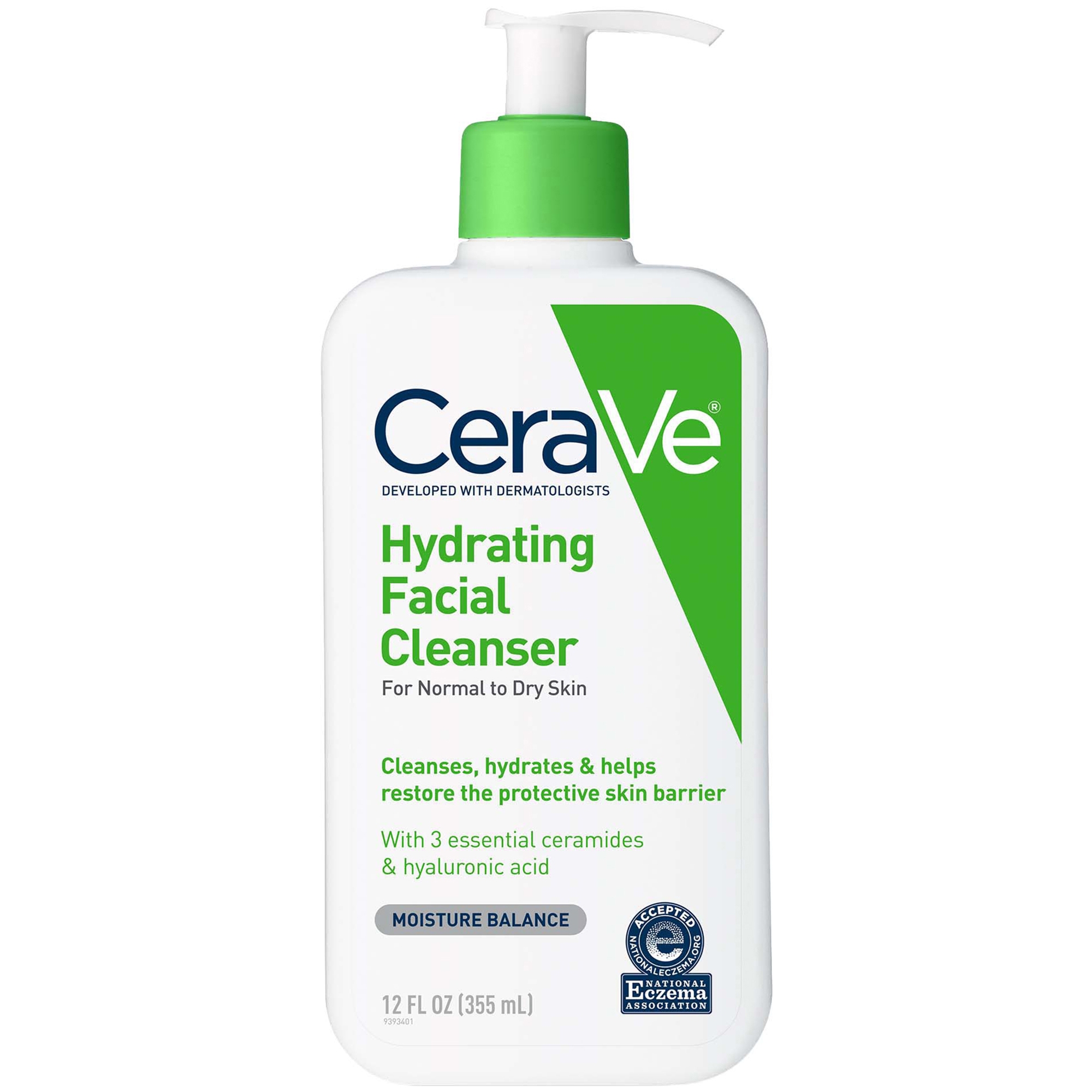
CeraVe Hydrating Facial Cleanser
Best for Dry and Compromised Skin: CeraVe Hydrating Cleanser is the dermatology-default cream cleanser for dry, normal, or barrier-compromised skin. The formula uses a mild surfactant base at near-neutral pH and delivers three essential ceramides (NP, AP, EOP) plus hyaluronic acid through a MultiVesicular Emulsion system that deposits the lipids onto skin rather than rinsing them down the drain.
Top picks ↓Top picks
Related articles


CeraVe Hydrating Facial Cleanser
Best for dry and normal skin — ceramide delivery system deposits lipids while cleansing, not just after. The one dermatologists reach for first.
CeraVe Hydrating Cleanser is the dermatology-default cream cleanser for dry, normal, or barrier-compromised skin. The formula uses a mild surfactant base at near-neutral pH and delivers three essential ceramides (NP, AP, EOP) plus hyaluronic acid through a MultiVesicular Emulsion system that deposits the lipids onto skin rather than rinsing them down the drain. Low-concentration niacinamide supports barrier recovery. No fragrance, no sulfates, no essential oils — the ingredient list reads like a calming exercise for anyone who reacts to common cosmetic irritants. The 236 mL pump bottle lasts most users 3-4 months at twice-daily use. Texture is a milky lotion that does not foam, which is exactly right for the format.
Pros
- ✓Three ceramides (NP, AP, EOP) deposited via MultiVesicular Emulsion system
- ✓Fragrance-free, sulfate-free, non-comedogenic formula
- ✓Near-skin pH preserves the acid mantle through twice-daily use
- ✓Dermatologist-default pick across dry, normal, and post-procedure skin
Cons
- ✗Does not foam — feels insufficient for heavy sunscreen or makeup without a first oil cleanse

La Roche-Posay Toleriane Gentle Cleanser
Top pick for sensitive and rosacea-prone skin — prebiotic thermal water formula preserves the skin microbiome. Fragrance and paraben free.
La Roche-Posay Toleriane Hydrating Gentle Cleanser is the right pick for sensitive, reactive, or rosacea-prone skin where ingredient minimalism is part of the prescription. The formula is built on La Roche-Posay's selenium-rich thermal spring water and a short ingredient list calibrated to preserve the resident skin microbiome rather than blast it clean. Fragrance-free, paraben-free, soap-free, and tested on hyper-reactive skin in the brand's clinical protocol. The cream-gel texture rinses without the squeaky-tight aftermath that triggers rosacea flares, and the pH sits comfortably in the skin's natural range. The 400 mL bottle is among the larger sizes in this comparison and the price-per-mL ends up competitive even though the per-bottle price reads premium.
Pros
- ✓Selenium-rich thermal spring water base supports microbiome preservation
- ✓Fragrance-free, paraben-free, soap-free — calibrated for reactive skin
- ✓Short ingredient list reduces the surface area for allergic contact dermatitis
- ✓Generous 400 mL bottle extends value over the price-per-mL math
Cons
- ✗Minimal cleansing power on heavy sunscreen — better as a second cleanse after an oil cleanser

The 70-year classic — ultra-mild formula that works even on post-procedure skin. No frills, but the consistency is why it's still on hospital shelves.
Cetaphil Gentle Skin Cleanser has been on hospital shelves for roughly 70 years because the formula is exactly mild enough to use on post-procedure skin, infants, and patients with severe contact dermatitis. The ingredient list is short, the surfactants are low-concentration and non-ionic, and the formula works whether you rinse with water or wipe off with a cotton pad — the latter is how it earned its hospital reputation. The trade-off is honest: no actives, no ceramides delivered via emulsion, no hero ingredients. This is a cleanser that does one thing well (mild cleansing without barrier disruption) and asks for nothing else from your routine. The 591 mL bottle is the largest among the comparison and the per-mL value is hard to beat.
Pros
- ✓70-year track record on post-procedure skin, infants, and severely reactive patients
- ✓Works with water rinse or cotton pad wipe-off — flexible for travel and post-procedure
- ✓Largest bottle size in this comparison at 591 mL
- ✓No fragrance, no actives, nothing to react to
Cons
- ✗No hero ingredients — pure cleansing with no skincare benefits beyond barrier preservation
- ✗Less effective on heavy SPF50 sunscreens than a dedicated oil-cleanse first step
Subscribe to our newsletter
Occasional updates and new releases — no spam.

Best for oily and combination skin — SLS-free foam that removes excess oil without the tight feeling. Pairs well with BHA exfoliants.
Paula's Choice RESIST Perfectly Balanced Foaming Cleanser is the right pick for oily or combination skin that needs surfactant power without the SLS-driven barrier disruption that defines most foaming cleansers. The formula uses milder amphoteric and non-ionic surfactants that lift sebum effectively without raising skin pH into the 8-9 range where the acid mantle suffers, and the formulation pairs cleanly with the brand's BHA exfoliants which is part of the design intent. No fragrance, no SLS, no SLES. The foam is moderate rather than aggressive — it cuts sebum without leaving the tight, stripped feeling that signals over-cleansing. The honest trade-off is that this is the wrong cleanser for dry or sensitized skin where even mild foaming agents are unnecessary friction.
Pros
- ✓SLS-free and SLES-free foaming formula that removes sebum without barrier disruption
- ✓Pairs cleanly with Paula's Choice BHA exfoliants in the same routine
- ✓Moderate foam removes sebum and SPF without the squeaky-tight aftermath
- ✓Fragrance-free formulation suits oily-but-reactive skin where most foaming cleansers fail
Cons
- ✗Wrong format for dry or sensitized skin where any foaming agent is unnecessary
- ✗Premium price for a foaming cleanser when CeraVe or Cetaphil cost less per use

Luxury milky texture with rice bran brightening — the pick if cleanser enjoyment drives your routine compliance. Performs well, but the price reflects the brand.
Tatcha The Rice Wash is the pick for buyers whose routine compliance is driven by sensory experience as much as by spec sheet. The formula uses Japanese rice bran (a traditional Japanese cleansing ingredient with a naturally slightly acidic profile), hyaluronic acid, and a gentle non-ionic surfactant base in a texture that starts gel-like and rinses to a milky finish without the squeaky-tight feeling. The fragrance profile is light and pulled from natural extracts rather than synthetic compounds, which matters for buyers who normally avoid scent but want something more pleasant than a clinical Cetaphil. The honest trade-off is the price: at roughly five times the per-mL cost of CeraVe or Cetaphil, the formula performance is comparable to the dermatology-default picks and you are paying for brand, packaging, and the experiential element.
Pros
- ✓Japanese rice bran base supports a naturally slightly acidic cleanse
- ✓Gel-to-milk texture rinses without the squeaky-tight aftermath
- ✓Light natural-extract fragrance for buyers who want pleasant scent without synthetics
- ✓Strong sensory experience supports routine compliance for users who need it
Cons
- ✗Roughly 5x the per-mL price of CeraVe or Cetaphil for comparable cleansing performance
- ✗Premium pricing reflects brand and packaging more than active ingredient differentiation
Which one is right for you?
For dry, compromised, or post-retinoid skin
CeraVe Hydrating Facial Cleanser
Three ceramides delivered through the MultiVesicular Emulsion system support a stripped barrier in a way no other cleanser in this comparison matches.
For sensitive, reactive, or rosacea-prone skin
La Roche-Posay Toleriane Gentle Cleanser
Selenium-rich thermal spring water and a short ingredient list calibrated to preserve the microbiome address the root mechanism of reactive skin rather than just symptoms.
For post-procedure or extreme-sensitivity use
Cetaphil Gentle Skin Cleanser
A 70-year hospital-shelf track record on the most reactive skin types makes this the safest possible cleanser to default to when in doubt.
For oily or combination skin that needs real surfactant power
Paula's Choice RESIST Foaming Cleanser
SLS-free foaming chemistry removes sebum and heavy sunscreen without raising skin pH out of the acid mantle range, and it pairs cleanly with BHA exfoliants.
For routine-compliance buyers who want sensory pleasure
Tatcha The Rice Wash
Japanese rice bran texture and light natural fragrance turn cleansing into a routine you actually look forward to — which matters more than spec sheets when adherence is the limiting factor.
Foaming, cream, and gel: matching format to skin type
Foaming cleansers produce lather via surfactants — usually sodium lauryl sulfate (SLS) or sodium laureth sulfate (SLES) — and are genuinely effective at dissolving sebum and sunscreen. The tradeoff is that the same surfactants that cut oil also disrupt the lipid bilayer of the stratum corneum. If you have oily or combination skin and aren't prone to sensitivity, a well-formulated foaming cleanser like Paula's Choice RESIST works without leaving skin tight. If you have dry, normal, or sensitized skin, that lather is working against you.
Cream and lotion cleansers — CeraVe Hydrating, La Roche-Posay Toleriane, Cetaphil — use milder surfactant blends at lower concentrations. They don't remove heavy silicone sunscreens as completely as foaming cleansers, which is why double cleansing exists: an oil-based first cleanse handles sunscreen and makeup, and the gentle second cleanser finishes without stripping. For people who aren't wearing heavy SPF or makeup, a cream cleanser used once is often enough.
Gel cleansers sit in the middle — they have some lather but less than traditional foaming formulas. Tatcha The Rice Wash falls closer to a milky lotion despite its gel-like initial texture; it produces minimal foam and rinses clean without the squeaky-tight feeling that signals barrier disruption.
pH balance and what 'tight after cleansing' actually means
The skin surface sits at pH 4.5–5.5. This slightly acidic environment is maintained by the acid mantle — a mix of sebum, sweat, and natural moisturizing factors — and is critical for keeping the enzyme caspase-14 active. That enzyme processes filaggrin into the amino acids that make up the natural moisturizing factor (NMF) network. Disrupt the pH and you slow down that process.
Most bar soaps run at pH 9–10. Traditional foaming cleansers often hit pH 7–8. The squeaky-clean 'tight' feeling you get after washing with them isn't cleanliness — it's the acid mantle temporarily disrupted and the skin trying to rebalance. This rebalancing takes roughly 30–90 minutes. For most people in most climates, skin recovers. For people with eczema, rosacea, or dry-dehydrated skin, that repeated twice-daily disruption compounds into visible sensitivity over weeks.
All five cleansers reviewed here are formulated to stay in or near the skin's natural pH range. CeraVe, La Roche-Posay, and Cetaphil have all published pH data or been independently tested at pH 5.0–6.5. Paula's Choice RESIST, despite being a foaming cleanser, is formulated without SLS and at a lower pH than typical drugstore foaming cleansers. Tatcha's rice bran base is naturally slightly acidic.
How often to cleanse — and what 'over-cleansing' looks like
The standard recommendation of cleansing twice daily — morning and evening — comes from dermatology consensus, but it's not a universal rule. At night, cleansing is non-negotiable: sunscreen, environmental pollutants, and makeup left overnight do clog pores and slow skin cell turnover. In the morning, the stakes are lower. You've been lying in a clean pillowcase (ideally changed weekly) producing some sebum overnight. A gentle rinse with water alone, or a single pass with a cream cleanser, is sufficient for most skin types.
Signs you're over-cleansing: skin feels tight immediately after washing, you notice increased redness in the first two weeks after starting a new cleanser, you need more moisturizer than usual, or you're experiencing unusual breakouts on skin that wasn't previously acne-prone. The last point surprises people — a disrupted barrier triggers an inflammatory response and increased sebum production as a repair mechanism, which can look exactly like acne.
If you're using a physical SPF50 in the morning, double cleansing at night makes sense. If you're using a lightweight chemical SPF30 with no makeup, a single cream cleanser pass at night is enough.
Double cleansing — when it's worth doing
Double cleansing was systematized in Japanese skincare, where SPF50+ sunscreens with dense UV-filter systems are standard year-round. The two-step sequence makes chemical sense: oil dissolves oil (the first cleanse removes lipid-based sunscreen and sebum-embedded pollution), and a water-based second cleanser then removes the oil cleanser residue and any remaining water-soluble debris.
The practical threshold: if you're wearing mineral sunscreen, liquid foundation, or an SPF above PA+++, a second cleanse is worth it. Below that threshold — lightweight tinted moisturizer, chemical SPF30, no foundation — a single cream cleanser used with lukewarm water and gentle massage is sufficient and avoids the compounded barrier disruption of two cleansers.
If you choose to double cleanse, the oil cleanse should come first. Apply to dry skin, massage for 30–60 seconds to emulsify with the sunscreen, then add water to help it rinse, then follow with your regular second cleanser. Doing it in the wrong order — water-based cleanser first, then oil — doesn't make sense mechanically because you've already disrupted the lipid layer before the oil cleanser can bind to the sunscreen.
Ingredients to look for — and what to skip
Look for ceramides (ceramide NP, AP, EOP), cholesterol, and fatty acids in cleansers, especially if you have dry or compromised skin. CeraVe's formulation includes all three in its MultiVesicular Emulsion delivery system, which means they're not just rinsed off — they're deposited as you cleanse. Niacinamide at low concentrations (CeraVe and La Roche-Posay both use it) reduces transepidermal water loss at the barrier level.
Prebiotic or postbiotic ingredients — La Roche-Posay Toleriane uses thermal spring water with selenium, and its Toleriane series has moved toward preserving the skin's resident microbiome. This matters for people with rosacea or seborrheic tendencies where an altered microbiome is part of the condition mechanism, not just a symptom.
Skip: sodium lauryl sulfate if you have dry or sensitized skin — it's a proven irritant at the concentrations used in cleansers. Skip: denatured alcohol (ethanol, SD alcohol) listed high in ingredients. Skip: synthetic fragrance entirely if you're prone to contact dermatitis or rosacea — 'unscented' is not the same as 'fragrance-free'; unscented products may contain masking fragrance. All five cleansers reviewed here are fragrance-free.
Fitting your cleanser into the rest of your routine
Cleanser order in the routine is first, but its effects carry through everything that follows. A cleanser that strips the barrier means that whatever you apply next absorbs differently — sometimes more aggressively, sometimes less effectively because the skin triggers a defensive response. Retinoids applied to a freshly stripped face irritate more than retinoids applied to well-maintained skin.
Cleansing and then immediately applying vitamin C (L-ascorbic acid) can be effective because the low pH of a well-formulated vitamin C serum (pH 2.5–3.5) works better on skin that hasn't had its acid mantle raised by a high-pH cleanser. This is the rationale behind 'don't neutralize with toner between cleanser and vitamin C serum' advice — you want the slightly acidic post-cleanse environment.
For the morning routine, if you use AHAs or BHAs (exfoliating acids), apply them after cleansing on a dry face, wait 30 seconds for them to absorb, then continue with SPF. Using an exfoliating acid immediately after cleansing on damp skin raises the skin surface pH (water is neutral) and reduces the acid's effectiveness. Small detail, but if you're already spending on Paula's Choice BHA, it's worth getting the application right.
Frequently asked questions
Can a cleanser cause breakouts even if it's labeled non-comedogenic?▼
Is a morning cleanse necessary, or can I just rinse with water?▼
Is micellar water a substitute for a proper cleanser?▼
What's the best cleanser for acne-prone skin?▼
How long should I actually be cleansing?▼
For double cleansing, does the oil cleanser go first or after the regular cleanser?▼
Prices change. Check the retailer for the current price.
Comments & questions
Discussion happens on nattzy, our community forum. Sign in with Google to post — it takes a second.
Related articles
Best Skincare Fridge 2026: 5 Mini Cosmetic Fridges

Best Shampoo 2026: 5 Compared

ConoHa WING review (2026): setup, speed and pricing
Best JP rental server 2026: 5 hosts ranked
Best Robot Vacuums 2026: 5 Models Compared Honestly
Food
Best Rice Cookers 2026: 5 Top Models Compared
Best Rice Cookers 2026: 5 Top Models Compared