Best Instant Pots 2026: Duo vs Pro vs Ninja Foodi
Tuesday at 6pm: you remembered the chicken was still frozen. Weekly usage frequency, not recipe variety, determines which spec actually matters.
Quick answer
For most households, the Instant Pot Duo 7-in-1 is the pick — pressure cooking, slow cooking, rice, sauté, steam, yogurt and warming with proven reliability and universal parts. The Pro 10-in-1 adds higher sauté temperatures for genuine Maillard browning plus sous vide, the Ninja Foodi's TenderCrisp gives a real air-fried finish after pressure cooking, and the COSORI matches Duo pressure performance 20-30% cheaper.
Each multicooker was evaluated on pressure build time, seal reliability as reported by long-term owners, sauté browning performance, ease of cleaning the inner pot and lid, and whether marketed features (sous vide, air frying) perform comparably to dedicated devices.

Instant Pot Duo 7-in-1 Electric Pressure Cooker 6qt
Best Overall: The Duo 7-in-1 is the correct default for most households — it handles pressure cooking, slow cooking, rice, sautéing, steaming, yogurt, and warming with proven reliability across millions of units. It's the most affordable Instant Pot that does everything most people actually need.
Top picks ↓| Product | Price | Link |
|---|---|---|
| $109.99Price as of 2026-09-24 | ||
| $188.77Price as of 2026-09-24 | ||
| — | ||
| — | ||
| $151.29Price as of 2026-09-23 |
| Product | Capacity | Functions | Max pressure | Inner pot | Sauté temp | Dimensions | Pressure release | Sous vide | Air fryer lid | TenderCrisp | App | Dehydrate |
|---|---|---|---|---|---|---|---|---|---|---|---|---|
| Instant Pot Duo 7-in-1 Electric Pressure Cooker 6qt | 6 quarts | 7-in-1 | 15 PSI | Stainless steel | Medium-high | 33 × 31 × 32 cm | — | — | — | — | — | — |
| Instant Pot Pro 10-in-1 Pressure Cooker 6qt | 6 quarts | 10-in-1 | 15 PSI | — | — | 34 × 32 × 33 cm | Dial-style | Yes | — | — | — | — |
| Ninja FD401 Foodi 8-Quart 9-in-1 Deluxe XL | 8 quarts | 9-in-1 | 15 PSI | — | — | 41 × 36 × 36 cm | — | — | Dedicated crisping lid | Yes | — | — |
| COSORI 6Qt Electric Pressure Cooker 9-in-1 | 6 quarts | 9-in-1 | 15 PSI | Non-stick | — | 32 × 30 × 30 cm | — | — | — | — | COSORI app (iOS/Android) | — |
| Instant Pot Duo Crisp 11-in-1 Air Fryer | 6 quarts | 11-in-1 | 15 PSI | — | — | 35 × 33 × 33 cm | — | — | Integrated pressure/crisp lid | — | — | Yes |
Top picks
Related articles


Instant Pot Duo 7-in-1 Electric Pressure Cooker 6qt
The baseline multicooker for most households — seven essential functions at the most competitive price in the category. Widely available parts and accessories make long-term ownership practical.
The Duo 7-in-1 is the correct default for most households — it handles pressure cooking, slow cooking, rice, sautéing, steaming, yogurt, and warming with proven reliability across millions of units. It's the most affordable Instant Pot that does everything most people actually need. The sealing ring and accessories are universally available, and the control interface is intuitive within two uses. The one real limitation: the sauté function tops out at a temperature that produces steaming as often as browning in a crowded pot.
Pros
- ✓Covers 7 essential functions at the most accessible price in the lineup
- ✓Millions of units in the field — the most tested reliability record
- ✓Sealing rings and accessories universally available
Cons
- ✗Sauté function struggles to brown meat in a full pot — heat ceiling too low
Score breakdown
| Capacity | 6 quarts |
| Functions | 7-in-1 |
| Max pressure | 15 PSI |
| Inner pot | Stainless steel |
| Sauté temp | Medium-high |
| Dimensions | 33 × 31 × 32 cm |
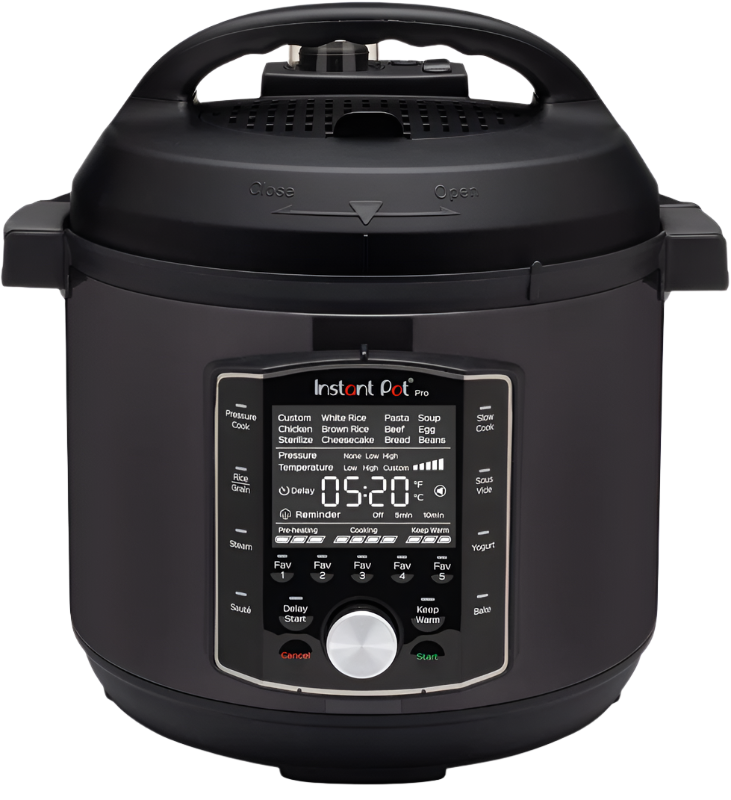
Instant Pot Pro 10-in-1 Pressure Cooker 6qt
The Pro's higher sauté temperature and sous vide mode are meaningful upgrades for households that brown meat before braising or cook proteins to precise temperatures regularly.
The Pro earns its price premium with three meaningful additions over the Duo: higher sauté temperatures that produce genuine Maillard browning on a full pot of meat, a sous vide mode for precise protein cooking without a separate circulator, and a dial-style pressure release valve that prevents starchy foods from foaming and clogging during rapid release. If you regularly sear before braising, cook proteins to precise temperatures, or steam-release beans and risotto, these differences show up in every meal. For straightforward pressure cooking only, the Duo is sufficient.
Pros
- ✓Higher sauté temp produces real browning, not steaming
- ✓Sous vide mode eliminates need for a separate immersion circulator
- ✓Dial pressure release prevents foam-clogs on starchy dishes
Cons
- ✗A real price jump over the Duo for features some households won't use
Score breakdown
| Capacity | 6 quarts |
| Functions | 10-in-1 |
| Max pressure | 15 PSI |
| Pressure release | Dial-style |
| Sous vide | Yes |
| Dimensions | 34 × 32 × 33 cm |

The best choice if air frying is a genuine requirement — TenderCrisp pressure-then-crisp produces textures neither a standalone air fryer nor standard pressure cooker can match alone.
TenderCrisp technology — pressure cook first, switch to crisping lid for a genuine air-fried finish — is the Foodi's defining capability. The 8-quart capacity and dedicated crisping lid produce more even browning than any Instant Pot air fryer configuration, and the airflow is meaningfully stronger than the Duo Crisp's lid. The Foodi costs roughly twice the Duo and takes more counter space. The trade-off is justified if air frying is a regular requirement; if it's an occasional add-on, the Duo Crisp is sufficient.
Pros
- ✓TenderCrisp produces textures neither a standalone air fryer nor pressure cooker can match alone
- ✓8-quart capacity handles full racks of ribs and large batch air frying
- ✓Higher airflow than comparable Instant Pot air fryer models
Cons
- ✗Significantly larger and heavier than 6-quart Instant Pot — requires dedicated counter space
Score breakdown
| Capacity | 8 quarts |
| Functions | 9-in-1 |
| Air fryer lid | Dedicated crisping lid |
| Max pressure | 15 PSI |
| TenderCrisp | Yes |
| Dimensions | 41 × 36 × 36 cm |
Subscribe to our newsletter
Occasional updates and new releases — no spam.
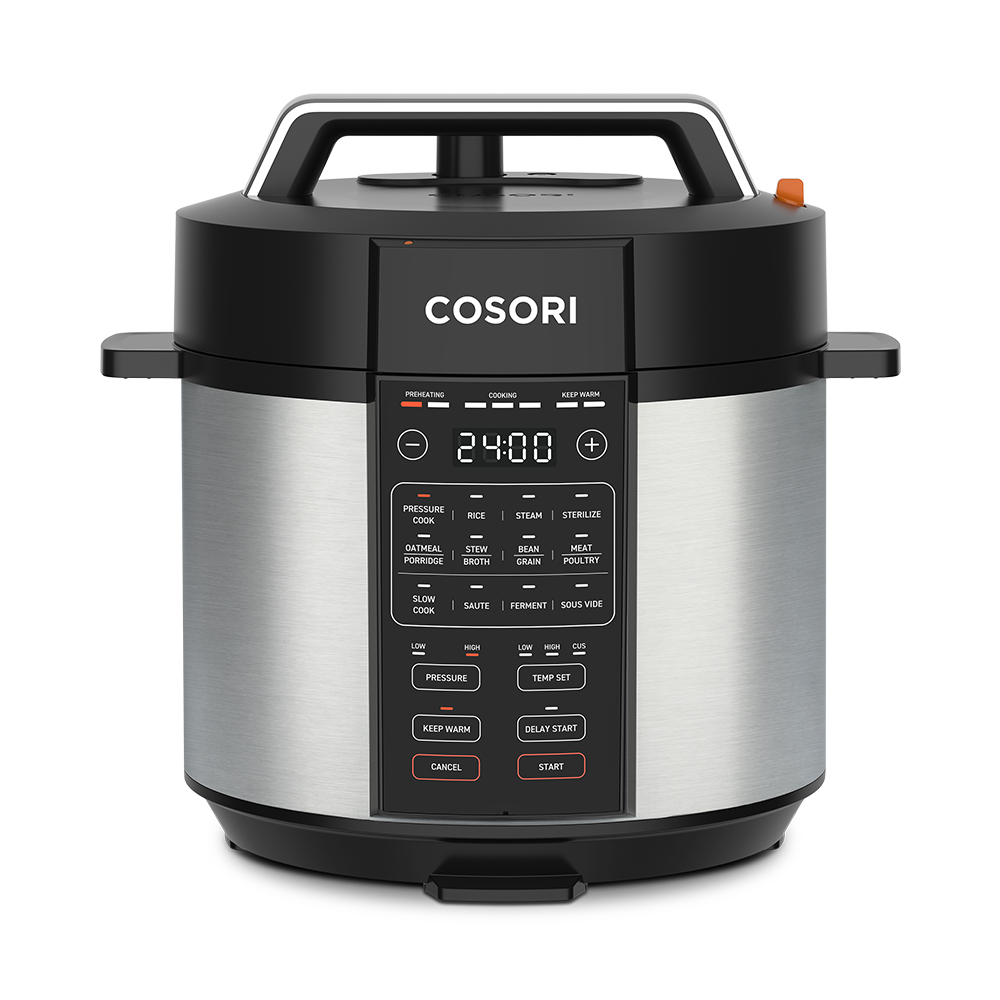
The budget-friendly 9-in-1 alternative with strong app connectivity for guided recipes — functional and reliable at a price 20-30% below comparable Instant Pot models.
COSORI delivers 9-in-1 multicooker performance comparable to the Instant Pot Duo in pressure cooking tests, at a price 20–30% below. The differentiator is app connectivity: a guided recipe library that downloads full cooking programs directly to the unit, which lowers the learning curve for new multicooker users. The dependency on COSORI's app support is the long-term risk — if COSORI discontinues the service, the guided-recipe feature disappears. Core pressure cooking and slow cooking functions operate independently of the app.
Pros
- ✓20–30% cheaper than comparable Instant Pot models
- ✓App-guided recipes lower the learning curve for beginners
- ✓9-in-1 functionality covers all standard multicooker use cases
Cons
- ✗App dependency means guided features could disappear if COSORI drops support
Score breakdown
| Capacity | 6 quarts |
| Functions | 9-in-1 |
| App | COSORI app (iOS/Android) |
| Max pressure | 15 PSI |
| Inner pot | Non-stick |
| Dimensions | 32 × 30 × 30 cm |
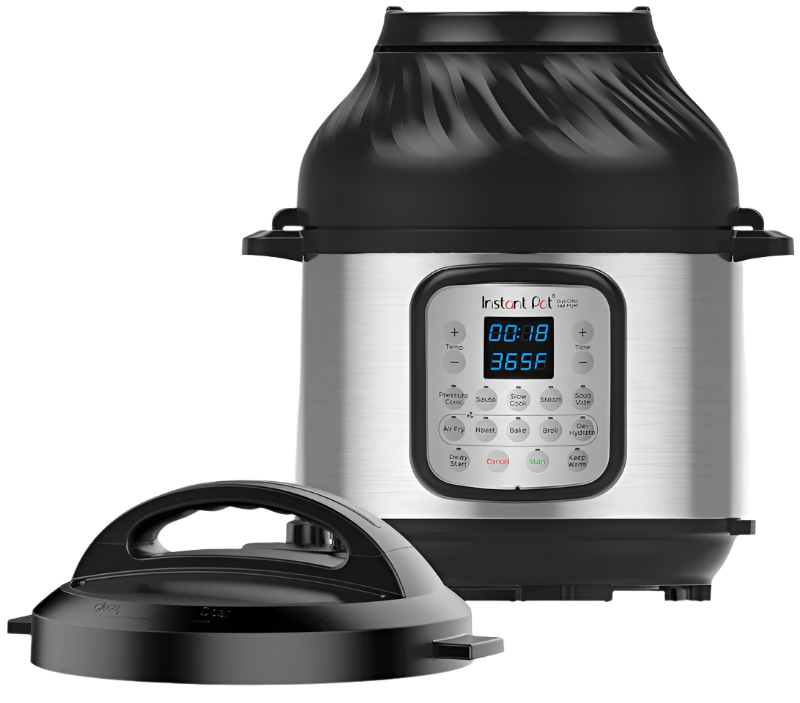
Instant Pot Duo Crisp 11-in-1 Air Fryer
Adds a dedicated air frying lid to the Duo's proven pressure cooking base — the right choice if you want both capabilities in the Instant Pot ecosystem rather than switching to Ninja.
The Duo Crisp adds an air frying lid to the proven Duo pressure cooking base — 11-in-1 functions including air fry, broil, bake, roast, and dehydrate. It stays within the Instant Pot accessory ecosystem, which means all Duo sealing rings and inner pots remain compatible. Air frying performance is solid for one-to-two-person portions but lags behind the Foodi on larger batches due to lower airflow. The right choice if you want both capabilities without committing to Ninja's heavier, larger format.
Pros
- ✓Adds air frying to Duo's proven pressure cooking without changing ecosystems
- ✓Stays compatible with all 6qt Instant Pot accessories
- ✓More compact than the Ninja Foodi
Cons
- ✗Air frying airflow lower than Ninja Foodi — less even crisping on larger portions
Score breakdown
| Capacity | 6 quarts |
| Functions | 11-in-1 |
| Air fryer lid | Integrated pressure/crisp lid |
| Max pressure | 15 PSI |
| Dehydrate | Yes |
| Dimensions | 35 × 33 × 33 cm |
Which one is right for you?
For first-time multicooker buyers
Instant Pot Duo 7-in-1 Electric Pressure Cooker 6qt
Proven reliability, universal parts, and a simple interface — the safest starting point for any household.
For serious weeknight cooks
Instant Pot Pro 10-in-1 Pressure Cooker 6qt
Higher sauté temps and sous vide mode produce noticeably better results for browning-before-braising and precise protein cooking.
For air frying priority
Ninja FD401 Foodi 8-Quart 9-in-1 Deluxe XL
TenderCrisp technology delivers the best air-fried finish from a pressure cooker — no standalone air fryer comparison comes close.
For budget-conscious buyers
COSORI 6Qt Electric Pressure Cooker 9-in-1
Comparable pressure performance at 20–30% below Instant Pot pricing — especially good for beginners who'll use the guided recipe app.
For Instant Pot loyalists who want air frying
Instant Pot Duo Crisp 11-in-1 Air Fryer
Adds air frying without leaving the Instant Pot ecosystem — keeps accessory compatibility while expanding functionality.
Instant Pot Duo 7-in-1: the one to buy if you're not sure yet
The Duo 7-in-1 is the Instant Pot most people should buy. In the 6-quart size, it handles pressure cooking, slow cooking, rice, steaming, sautéing, yogurt, and warming — which covers the overwhelming majority of everything anyone actually does with a multicooker. The Duo's pressure cooking seals and mechanisms have been iterated through millions of units, and reliability at this price point is genuinely high.
The control interface is a dial-and-button layout that makes sense within two uses. Pressure level (high or low), cook time, and keep warm are the three decisions you make for most meals. The sealing ring — the component most likely to need replacement after heavy use — is a standard part that's widely available and inexpensive. After 18 months of weekly use, it's the first thing to swap.
The 6-quart size handles a 1.5kg chicken, a full pork shoulder, or soup for six people with room to spare. The 8-quart version exists for larger households but the 6-quart is the right starting point for most households — it's the size that appears in virtually every Instant Pot recipe you'll find online, so quantities translate directly without adjustment.
One honest limitation: the steam release handle is plastic and positioned where your hand naturally reaches when opening the lid. Releasing pressure from the valve requires pointing the steam away from cabinets and your face — it's not dangerous if you read the manual, but it requires a deliberate habit. The newer sealing position eliminates much of the spray if you remember to use it.
Instant Pot Pro 10-in-1: the upgrade that earns its price difference
The Pro 10-in-1 adds sous vide, sterilization, and a more refined pressure release valve over the Duo. The price difference is real — but the sous vide function is the reason to pay it. If you cook proteins to precise temperatures (62°C chicken breast, 54°C medium-rare beef), having the Instant Pot handle that without a separate immersion circulator removes one device from the counter.
The Pro also has a wider sauté surface and higher sauté temperatures than the Duo. The practical difference is visible when you're browning meat before pressure cooking — the Pro can get hot enough to produce actual Maillard browning in a reasonable time, while the Duo's sauté function at maximum heat produces steaming as often as it produces browning in a crowded pot. For dishes where the sear matters — short ribs, beef stew, chicken thighs — the Pro's higher sauté heat produces a better result before the lid goes on.
The steam release valve on the Pro uses a turn-dial rather than a flip-switch, which gives more control over steam release speed. A slow, controlled release is better for dishes with high starch content (risotto, mashed potatoes, beans) where a rapid release causes the food to foam and clog the valve. The dial lets you release in stages — a meaningful practical difference if you cook starchy dishes regularly.
The additional functions (sterilization for baby bottles and canning jars, sous vide) are legitimately useful for specific households rather than being spec padding. If you have an infant or do home canning, the sterilization function alone could justify the price difference from the Duo.
Ninja Foodi FD401: when air frying is not optional
The Ninja FD401 Foodi 8-quart 9-in-1 is the right pick when you want both pressure cooking and a full air fryer in a single unit — and you want them to work as well as dedicated devices. The Foodi's TenderCrisp technology pressure cooks first to tenderize, then switches to the crisping lid to brown and crisp the surface. Pulled pork with a caramelized bark in two hours without touching the oven. Chicken wings that are cooked through and genuinely crispy. This workflow has no good equivalent in the Instant Pot lineup.
The 8-quart capacity is larger than the standard 6-quart Instant Pot, and the pot is wider, which means better air circulation for crisping. The difference in air frying results between the Foodi and the Instant Pot Duo Crisp is measurable: the Foodi's air frying lid covers the entire top surface and the fan has higher airflow, producing more consistent crisping across a full batch of food rather than concentrating browning at the center.
The tradeoff is size and weight. The Foodi 8-quart is significantly larger than a 6-quart Instant Pot — it occupies meaningfully more counter space and weighs around 7kg. If counter space is genuinely limited, the Foodi may not fit where you planned to put it. Measure before purchasing. The 6.5-quart Foodi is available as an alternative if the 8-quart is impractical.
Price is the other consideration: the Foodi costs approximately twice the Duo. If you already own an air fryer you're satisfied with, the Foodi adds little over the Duo Crisp. If you're choosing your first multicooker and know you'll want air frying capability, the Foodi eliminates the need for a separate air fryer and the combined footprint of two devices.
How to choose: size, functions, and the air fryer question
The single most useful question to ask before buying: do you want to air fry with it? If yes, the choice narrows to the Ninja Foodi FD401 or the Instant Pot Duo Crisp. If you only want pressure cooking and slow cooking functionality, any of the Instant Pot options deliver that reliably — the question becomes feature count versus price.
For households of one to three people, the 6-quart capacity is the right default. It handles a whole chicken, a 1kg pork loin, or a pot of soup without the unit being oversized. The 8-quart Foodi is worth the extra size if you regularly cook for four or more, batch cook for the week, or want to air fry larger quantities — a full rack of ribs, a large batch of wings — in a single session.
The COSORI 6-quart is the budget alternative for households where the Instant Pot brand premium is not worth paying. The COSORI delivers 9-in-1 functionality including pressure cooking, slow cooking, rice, yogurt, and sauté in a unit that performs comparably to the Instant Pot Duo in basic pressure cooking tests. The app connectivity is COSORI's differentiator — it has a larger recipe library of guided step-by-step recipes that download cooking programs directly to the device — but the app dependency means the experience degrades if COSORI discontinues support.
Whichever model you choose, the sealing ring is the maintenance item to track. After 12-18 months of regular use, rings absorb odors and can affect seal quality. Keep a second ring for sweet dishes (yogurt, desserts) and a separate ring for savory cooking — it's the most commonly reported quality-of-life improvement among long-term users.
Frequently asked questions
What's the actual difference between the 7-in-1 Duo and the 10-in-1 Pro?▼
What size Instant Pot should I buy — 6-quart or 8-quart?▼
Is the Instant Pot actually safe? I've heard stories about pressure cooker accidents.▼
Prices change. Check the retailer for the current price.
Comments & questions
Discussion happens on nattzy, our community forum. Sign in with Google to post — it takes a second.
Related articles
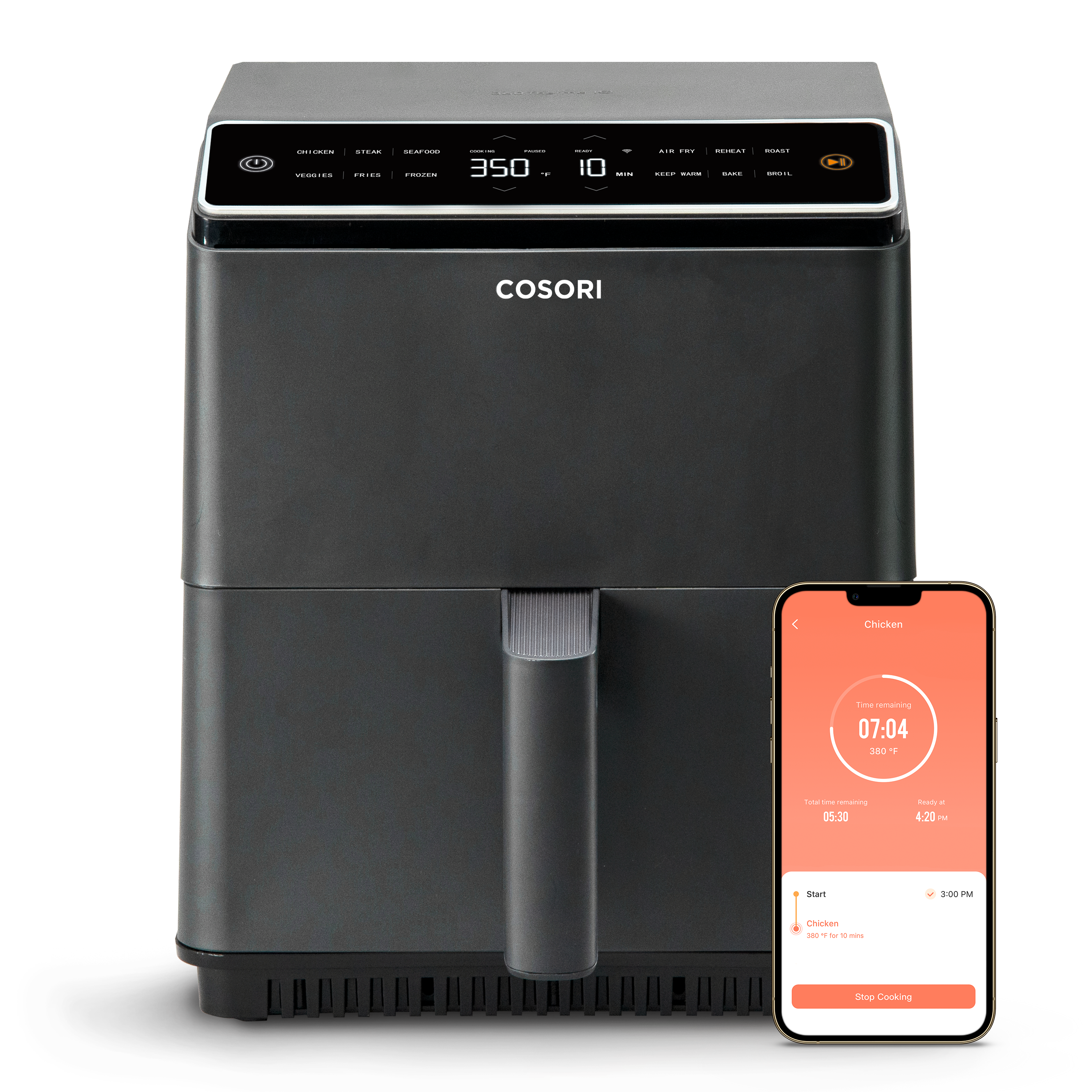
Best Air Fryer 2026: 5 Models Compared Honestly

Best Coffee Makers 2026: Breville vs Moccamaster vs OXO
Best Air Purifier 2026: 5 models compared honestly

ConoHa WING review (2026): setup, speed and pricing
Best JP rental server 2026: 5 hosts ranked

Best LED Face Masks 2026: 3 Light Therapy Devices Compared