Best Mattresses for Back Pain 2026: Firm Support, Good Sleep
The mattress that relieves back pain and the mattress that feels comfortable when you first lie down are often different mattresses — and confusing the two is why most people's back pain stays exactly the same after a new bed.
Quick answer
For back sleepers with pain, the Saatva Classic Firm is the pick — a dual innerspring hybrid with pocketed micro-coils over a tempered Bonnell core, firm at 8/10 where lumbar support actually comes from. TEMPUR-ProAdapt Firm uses denser slower-response material for chronic pressure points, Purple Restore Plus suits combination sleepers via its GelFlex grid, DreamCloud Premier has the longest trial, and Bear Elite targets athletic recovery.
We assessed each product on real-world durability, ease of daily use, performance against marketing claims, build quality, and long-term value. Manufacturer specifications were validated against verified owner reviews.
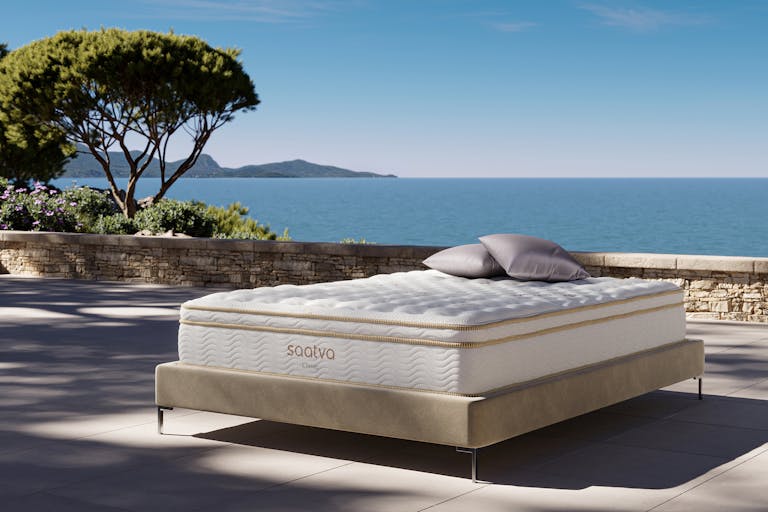
Saatva Classic (Firm)
Best for Back Sleepers: The Saatva Classic in Firm (8/10) is a dual innerspring hybrid — pocketed micro-coils in the comfort layer over a tempered Bonnell coil support core — and it is one of the few luxury beds that delivers genuine lumbar support without the punishing flatness of a traditional firm innerspring. At 14.5 inches tall with a Euro pillow top, the surface softens the initial contact while the coil-on-coil foundation keeps the lower back level for back sleepers.
No partner store here — this opens an Amazon search.
| Product | Price | Link |
|---|---|---|
| $1,795Reference price | No partner store here — this opens an Amazon search. | |
| $2379.77Price as of 2026-09-24 | ||
| $2,699Reference price | ||
| $1,099Reference price | ||
| $29.95Price as of 2026-09-24 |
| Product | Type | Firmness | Height | Trial period | Warranty | Cooling features |
|---|---|---|---|---|---|---|
| Saatva Classic (Firm) | innerspring | Firm 8/10 | 11.5 in (also offered in 14.5 in) | 365 nights | Lifetime warranty | Organic cotton cover; dual coil-on-coil construction promotes airflow; Guardin botanical antimicrobial treatment |
| Tempur-Pedic ProAdapt Firm | foam | Firm 7/10 | 12 in | 90 nights | 10-year limited warranty | SmartClimate Dual Cover System (zip-off, cool-to-touch cover with heat-absorbing fibers); ventilated TEMPUR comfort layer |
| Purple Restore (Firm) | hybrid | Firm | 12 in | 100 nights | 10-year limited warranty | Purple GelFlex Grid with open-air channels (temperature-neutral); breathable cover; coil support layer adds airflow |
| DreamCloud Premier | hybrid | Medium-Firm 6/10 | 13 in | 365 nights | Lifetime warranty ("Forever Warranty") | CloudQuilt euro-top cover with cooling fibers for airflow; gel-infused memory foam (2x the cooling fibers/foam of the DreamCloud Classic Hybrid) |
| Bear Elite Hybrid | hybrid | Firm | 14 in | 120 nights | Lifetime warranty | Cool-to-touch Phase Change Material (PCM) cover option (vs. Celliant cover); gel/copper-infused memory foam for heat dissipation; coil layer promotes airflow |
Top picks
Related articles


Dual innerspring hybrid, Euro pillow top, Firm (8/10), 14.5" tall, white-glove delivery. $1,795-2,595 queen. Best for back sleepers needing strong lumbar support — coil-on-coil construction, genuine firmness with surface comfort. 365-night trial, $99 return fee.
The Saatva Classic in Firm (8/10) is a dual innerspring hybrid — pocketed micro-coils in the comfort layer over a tempered Bonnell coil support core — and it is one of the few luxury beds that delivers genuine lumbar support without the punishing flatness of a traditional firm innerspring. At 14.5 inches tall with a Euro pillow top, the surface softens the initial contact while the coil-on-coil foundation keeps the lower back level for back sleepers. Saatva ships via white-glove delivery with old-mattress removal, which matters at this price point ($1,795–2,595 queen). The honest weaknesses are that the full Firm creates hip and shoulder pressure for side sleepers (the Luxury Firm 6/10 variant suits them better), the Euro pillow top is non-removable so spot care is your only option, and the 365-night trial carries a $99 return fee — generous time, but not the fully free returns the rest of the category now offers.
Pros
- ✓Coil-on-coil construction holds the lumbar level for back sleepers
- ✓Euro pillow top softens initial contact without losing support
- ✓White-glove delivery with old-mattress removal included
- ✓Durable Bonnell coil base resists long-term sag
Cons
- ✗Full Firm creates hip/shoulder pressure for side sleepers
- ✗365-night trial carries a $99 return fee — not fully free
| Type | innerspring |
| Firmness | Firm 8/10 |
| Height | 11.5 in (also offered in 14.5 in) |
| Trial period | 365 nights |
| Warranty | Lifetime warranty |
| Cooling features | Organic cotton cover; dual coil-on-coil construction promotes airflow; Guardin botanical antimicrobial treatment |
No partner store here — this opens an Amazon search.

Tempur-Pedic ProAdapt Firm
Dense TEMPUR memory foam, slow response contouring, Firm configuration, SmartClimate cover. $3,199+ queen. Best for chronic pressure-point pain — TEMPUR conforms more precisely than standard foam. 90-night trial; heavier investment.
TEMPUR-ProAdapt Firm uses Tempur-Pedic's higher-density, slower-response TEMPUR material — denser than generic memory foam and responsive to body heat and weight over a span of minutes rather than seconds. For chronic pressure-point pain that wakes you up stiff at the sacrum, coccyx, or sacroiliac joints, no other technology in this lineup conforms as precisely. The slow-response foam re-shapes when you shift positions, which matters for chronic-pain sleepers who change posture often through the night. The SmartClimate dual cover reduces surface heat versus older TEMPUR generations. The honest weaknesses are heat retention (TEMPUR's dense structure still traps body heat more than latex or coils — hot sleepers may need the more expensive TEMPUR-Breeze line), the 90-night trial which is the shortest in this group and only leaves 4–6 weeks of evaluation after the typical adjustment period, and the queen starting at $3,199 — the most expensive option here.
Pros
- ✓TEMPUR material conforms more precisely than generic memory foam
- ✓Re-shapes when you shift positions during the night
- ✓SmartClimate cover reduces surface heat retention
- ✓Four firmness options (Soft / Medium / Medium Hybrid / Firm)
Cons
- ✗Still sleeps warmer than coils or latex — Breeze line costs more
- ✗90-night trial is the shortest in this group
| Type | foam |
| Firmness | Firm 7/10 |
| Height | 12 in |
| Trial period | 90 nights |
| Warranty | 10-year limited warranty |
| Cooling features | SmartClimate Dual Cover System (zip-off, cool-to-touch cover with heat-absorbing fibers); ventilated TEMPUR comfort layer |

GelFlex Grid + coil hybrid, pressure-adaptive firmness, medium-firm feel. $2,399-2,799 queen. Best for combination sleepers — grid auto-adjusts to pressure without manual zoning. 120-night trial, free returns.
Purple Restore Plus pairs Purple's hyper-elastic GelFlex polymer grid with a coil core, and the grid's mechanics are the genuinely novel piece in this lineup — it collapses under pressure points like the shoulder and hip while staying firm where the body is flatter at the lumbar region, creating differential firmness without explicit zoning. The Restore Plus specifically thickens the grid layer and adds a coil base for stronger lumbar engagement than entry Purple beds. For combination sleepers who roll between side and back through the night, the grid adapts to whatever position you land in without requiring you to align with a fixed zone. The 120-night trial with free returns is mid-tier in this group. The honest weaknesses are queen pricing at $2,399–2,799 (premium for the technology), the grid feel that some users describe as 'sitting on a Lego raft' for the first few nights of adjustment, and the heavier-than-expected mattress weight that makes setup a two-person job.
Pros
- ✓GelFlex Grid auto-adjusts firmness by applied pressure
- ✓Works without requiring fixed-zone alignment
- ✓Thicker grid layer plus coil base for stronger lumbar support
- ✓120-night trial with free returns
Cons
- ✗Grid feel takes a few nights to adapt to
- ✗Heavier than expected — setup is a two-person job
| Type | hybrid |
| Firmness | Firm |
| Height | 12 in |
| Trial period | 100 nights |
| Warranty | 10-year limited warranty |
| Cooling features | Purple GelFlex Grid with open-air channels (temperature-neutral); breathable cover; coil support layer adds airflow |
Subscribe to our newsletter
Occasional updates and new releases — no spam.

Cashmere cover, gel foam + wrapped coils, medium-firm (6.5/10). $1,899-2,199 queen. Best trial period — 365 nights with free returns makes it low-risk for back pain experimentation. Lifetime warranty.
DreamCloud Premier is a medium-firm (6.5/10) hybrid with a cashmere-blend cover, gel memory foam comfort layer, and individually wrapped coils — the most forgiving construction in this group for buyers genuinely uncertain which firmness suits their back pain. The foam top handles surface pressure relief while the wrapped coil core keeps the lumbar level. The headline is the 365-night trial with free returns and lifetime warranty, which is the most generous combination in the industry — and for back-pain decisions where it takes 4–8 weeks of adaptation to evaluate clearly, that extended window genuinely matters. Queen pricing at $1,899–2,199 is mid-tier for hybrids. The honest weaknesses are that 'medium-firm and forgiving' means it does not specifically excel at either deep pressure relief (Tempur-Pedic does that better) or strict lumbar firmness (Saatva Firm does that better), and the cashmere cover requires care attention to maintain over multiple years.
Pros
- ✓365-night trial with free returns and lifetime warranty
- ✓Medium-firm (6.5/10) covers most back-pain use cases
- ✓Cashmere-blend cover handles surface feel
- ✓Wrapped coils isolate partner motion well
Cons
- ✗Does not specifically excel at extreme pressure relief or strict firmness
- ✗Cashmere cover requires careful maintenance over years
| Type | hybrid |
| Firmness | Medium-Firm 6/10 |
| Height | 13 in |
| Trial period | 365 nights |
| Warranty | Lifetime warranty ("Forever Warranty") |
| Cooling features | CloudQuilt euro-top cover with cooling fibers for airflow; gel-infused memory foam (2x the cooling fibers/foam of the DreamCloud Classic Hybrid) |

Celliant cover, copper foam + zoned coils, targeted lumbar zone. $1,895-2,195 queen. Best for active people with exercise-related back pain — explicit lumbar zoning, Celliant recovery claims. 120-night trial.
Bear Elite Hybrid is designed around athletic recovery — the cover uses Celliant fibers (FDA-cleared for improved local blood flow and oxygen circulation during sleep), the comfort layer uses copper-infused foam, and the coil core uses zoned firmness with firmer coils in the center third for lumbar support and softer coils at the shoulder and leg zones. For active people whose back pain stems from training load, deadlifts, or post-workout recovery rather than from chronic spinal conditions, the design intent aligns well and the lumbar zone is more deliberate than the DreamCloud's or Saatva's. Queen pricing at $1,895–2,195 sits in the mid-tier. The honest weaknesses are that zoned support requires correct positioning on the mattress to benefit (combination sleepers and diagonal-positioners get less from the zones), Celliant effect size varies by individual despite the regulatory clearance, and the 120-night trial is shorter than DreamCloud's or Saatva's for a back-pain evaluation period.
Pros
- ✓Explicit lumbar-zone coils targeted for back-sleeper support
- ✓Celliant cover has FDA-cleared circulation claims
- ✓Copper-infused foam for thermal management
- ✓Aligned with athletic-recovery use cases
Cons
- ✗Zoning requires correct positioning to benefit
- ✗120-night trial shorter than DreamCloud or Saatva
| Type | hybrid |
| Firmness | Firm |
| Height | 14 in |
| Trial period | 120 nights |
| Warranty | Lifetime warranty |
| Cooling features | Cool-to-touch Phase Change Material (PCM) cover option (vs. Celliant cover); gel/copper-infused memory foam for heat dissipation; coil layer promotes airflow |
Which one is right for you?
For back sleepers with lumbar back pain
Saatva Classic (Firm)
Coil-on-coil construction holds the lumbar level under load while the Euro pillow top softens initial contact — the cleanest answer for back-sleeper-style swayback pain.
For chronic pressure-point pain at sacrum or SI joint
Tempur-Pedic ProAdapt Firm
TEMPUR material conforms more precisely than any other foam in this lineup and re-shapes as you change positions during the night.
For combination sleepers who roll between back and side
Purple Restore (Firm)
The GelFlex Grid adapts firmness to applied pressure without requiring you to stay in a fixed zone — the most position-tolerant pick here.
For buyers who want the longest evaluation runway
DreamCloud Premier
365-night trial plus free returns and lifetime warranty give you the 4–8 weeks of adaptation plus months of clear-headed evaluation that back-pain decisions actually need.
For active people with exercise-related back pain
Bear Elite Hybrid
Explicit lumbar-zone coils plus Celliant recovery cover are aligned with training-load back pain rather than chronic spinal conditions.
Spine alignment vs pressure relief: why this tradeoff matters
Back pain during sleep is usually caused by one of two things: the spine falling out of neutral alignment (often in side sleepers on a mattress that's too firm, causing the shoulder and hip to resist sinking and the spine to bow sideways) or inadequate support at the lumbar region (often in back sleepers on a mattress that's too soft, letting the lower back sink and creating a swayback position). A mattress that fixes one problem can worsen the other if it's wrong for your sleep position.
Pressure relief refers to how well the mattress conforms to the body's contours to distribute weight — particularly at high-pressure points like hips and shoulders. Memory foam excels at this. Spine alignment support refers to the mattress maintaining a neutral spinal position under load — preventing the lower back from sinking into a C-shape or the side-sleeper's spine from curving laterally. Innerspring and hybrid cores with zoned support excel at this.
The practical implication: side sleepers with back pain usually need more pressure relief than back sleepers — their shoulders and hips are wider than their waist, and a mattress that doesn't conform to those contours will push against them and cause the spine to curve. Back sleepers with back pain usually need firmer lumbar support — their back and hips should stay at roughly the same height, and a soft mattress lets the heavier hips sink too far. A mattress review that says 'this is firm and great for back pain' is only useful information if it's also saying who tested it and in which position.
Weight matters significantly to mattress firmness in practice. A 130 lb person sleeping on a 'medium-firm' mattress will experience substantially less sinkage than a 220 lb person on the same mattress — what reads as medium-firm to one person feels soft to another. Mattress firmness ratings (1-10 scales) are typically calibrated for an average body weight around 150-180 lbs. If you're outside that range, adjust your target firmness accordingly: heavier sleepers need firmer mattresses for equivalent spine alignment support.
Saatva Classic (Firm): innerspring support with luxury feel
The Saatva Classic is a dual innerspring hybrid — it uses a coil-on-coil construction with pocketed micro-coils in the comfort layer over a tempered steel Bonnell coil support core. In Firm (8/10 firmness) configuration, the Saatva is one of the few luxury mattresses that provides genuinely strong lumbar support without the pressure-inducing hardness of a traditional firm innerspring. The Euro pillow top adds conforming comfort at the surface while the coil foundation maintains the structural support underneath.
At 14.5 inches tall, the Saatva is among the taller luxury mattresses. The Euro pillow top is non-removable. The Saatva is delivered via white-glove service — delivery team sets up the bed and removes old mattress — which is notably different from the roll-in-a-box experience. Delivery is available in most major US markets. The Saatva is not a compressed foam-in-a-box mattress and cannot be ordered, compressed, and shipped via standard carrier.
For back sleepers with lumbar back pain: the Saatva Firm is genuinely one of the best options at this price point ($1,795-2,595 for queen). The coil-on-coil construction keeps the lumbar region supported while the micro-coil comfort layer provides enough surface conforming to prevent pressure point buildup at the sacrum. It's one of the few firm mattresses that doesn't feel punishing — the pillow top softens the initial contact without compromising the underlying support.
For side sleepers: the Saatva Luxury Firm (medium-firm, 6/10) is more appropriate than the Firm. The full Firm may create pressure points at the hip and shoulder for side sleepers, particularly those of average to lighter build. The Luxury Firm provides the Saatva's structural support advantages with enough surface conformability for hip and shoulder pressure relief. The 365-night sleep trial and $99 return fee (vs the typical free returns industry trend) is worth noting — you get ample time to assess, but returns aren't completely free.
Tempur-Pedic ProAdapt: memory foam contouring for chronic pain
Tempur-Pedic's TEMPUR material is a higher-density, slower-response memory foam than the generic memory foam used in most foam mattresses. It conforms to body shape under body heat and weight over several minutes — slower than latex, faster than sleeping on it all night. The ProAdapt line offers four firmness options (Soft, Medium, Medium Hybrid, Firm), and the Firm (TEMPUR-ProAdapt Firm) provides a dense, conforming feel unlike any traditional firm mattress.
For back pain stemming from pressure buildup — the kind that wakes you up stiff and sore at specific points — TEMPUR material provides a level of point-specific conforming that hybrid coil mattresses don't match. The slow response means the foam shapes precisely to your body position rather than immediately bouncing back. This is particularly valuable for people with chronic pain who shift positions frequently during the night — the foam re-conforms as you move.
The limitations of TEMPUR foam for back pain: heat retention. TEMPUR material's dense structure retains body heat more than latex or open-cell foam. This is addressed in the ProAdapt with a cooling cover and SmartClimate dual cover system, but it doesn't fully eliminate the warmth issue for hot sleepers. If you already sleep warm or live in a humid climate, the ProAdapt may cause sleep disruption from heat even while it helps with pain. The TEMPUR-Breeze line addresses heat more aggressively but at significantly higher cost.
Price: the ProAdapt queen starts at $3,199, making it the most expensive option in this group. Tempur-Pedic offers a 90-night trial (shorter than most competitors in 2026) and free returns within that period. Given the price, 90 nights is on the shorter end for building confidence — most adjustment periods for memory foam take 4-6 weeks, leaving you 8-10 weeks to evaluate with full adjustment. Factor this into your timeline if you're comparing trial periods.
Purple Restore Plus, DreamCloud Premier, and Bear Elite Hybrid
Purple Restore Plus ($2,399-2,799 queen) uses Purple's GelFlex Grid — a hyper-elastic polymer grid that sits on top of the foam layers. The grid collapses under pressure points (shoulders, hips) while maintaining firmness where the body is flatter (lumbar region). This is the closest thing to automatic zoned support without explicit zoning — the material's physics create differential firmness based on applied pressure. The Restore Plus specifically adds a thicker grid layer and coil support for better lumbar engagement than the entry Purple mattresses. For back pain sufferers who want pressure relief and support simultaneously without choosing a compromise, the Purple grid's behavior is genuinely different from any foam or coil technology.
DreamCloud Premier ($1,899-2,199 queen) is a hybrid with a cashmere-blend cover, gel memory foam comfort layer, and individually wrapped coils. It sits at medium-firm (6.5/10) and covers a wide range of back pain needs — the foam top handles pressure relief while the coil core maintains lumbar support. DreamCloud offers a 365-night trial with free returns and lifetime warranty, which is among the most generous in the industry. For people who want extended time to assess whether a mattress helps their back pain, the trial period alone makes DreamCloud worth considering — significant back pain improvement often takes 2-3 months to attribute clearly to a mattress change.
Bear Elite Hybrid ($1,895-2,195 queen) is designed specifically with athletic recovery in mind — it uses Celliant-infused covers (certified to improve blood flow and oxygen circulation during sleep) and copper-infused foam comfort layers with targeted zone support for the lumbar region. The zoned coil system uses firmer coils in the center third of the mattress (lumbar zone) and softer coils at the shoulder and leg zones. For active people whose back pain is exercise-related, the Bear's design intentions align well. The Celliant claims are supported by FDA-cleared research, though the magnitude of effect varies by individual.
The Bear Elite Hybrid's lumbar zone support is more deliberate than the DreamCloud or Saatva — the zoning means the mattress actively provides different firmness levels where your body needs it most. The trade-off: zoned mattresses require correct positioning on the mattress to benefit from the zones. If you sleep diagonally, curl into a non-standard position, or share the bed with a partner whose zones don't align with yours, the zoning provides less benefit than it would for a straight-spined back sleeper in the center of the mattress.
Side sleepers vs back sleepers: different needs, different picks
Side sleepers with back pain: the spine needs to stay horizontal while the shoulder and hip sink enough to relieve pressure. The best options in this group are the Purple Restore Plus (the grid self-adjusts to shoulder and hip depth) and the DreamCloud Premier (the gel foam conforms adequately without the full sinkage of traditional memory foam). The Saatva Classic in Luxury Firm (not the firmest version) also works for average to lighter side sleepers. The Bear Elite Hybrid's zoned support can work for side sleepers but requires the shoulder zone to align correctly with your position.
Back sleepers with back pain: lumbar support is the priority. The coil core maintains flat lumbar alignment while the comfort layer provides enough cushioning at the sacrum and upper back to prevent pressure buildup. Best options: Saatva Classic Firm (coil-on-coil construction keeps the lumbar level), Bear Elite Hybrid (explicit lumbar zone), and DreamCloud Premier (medium-firm hybrid that handles most back sleeper needs without over-softening). The Tempur-Pedic ProAdapt Firm is the strongest option for back sleepers who specifically need the conforming pressure relief of dense memory foam — particularly those with sacroiliac joint issues or coccyx pain.
Combination sleepers who shift between back and side: the DreamCloud Premier is the most forgiving pick — medium-firm and responsive enough to handle position changes without requiring specific zone alignment. The Purple Restore Plus also handles combination sleeping well because its grid mechanics adapt to pressure regardless of position. Highly zoned mattresses (Bear Elite) and very firm options (Saatva Firm, ProAdapt Firm) are less forgiving for combination sleepers.
Stomach sleepers with back pain: stomach sleeping puts the spine in hyperextension and is difficult to optimize around — even the best mattress is fighting an uphill battle against the position itself. If you primarily sleep on your stomach, the firmer options (Saatva Classic Firm, ProAdapt Firm) at least prevent the hips from sinking into a deeper hyperextended position. A pillow under the pelvis can help. The more impactful intervention for stomach sleepers with chronic back pain is addressing the sleep position itself — a body pillow alongside the torso encourages side sleeping over time.
Flippable vs non-flippable and long-term durability
None of the five mattresses in this group are double-sided / flippable. This is now standard for luxury mattresses — the comfort layer is specifically designed for the top surface and flipping would put the coil or foam base facing up. Rotating head-to-foot is possible and recommended every 3-6 months for even wear distribution. Failing to rotate an asymmetric-use mattress (couple sleeping on one side) accelerates body impressions on the heavier sleeper's side.
Body impressions are the primary long-term durability concern for back pain sufferers. When the mattress develops a body impression — the dip that forms where you consistently sleep — the support geometry changes. A mattress that provided good lumbar support at purchase will provide less as the impression deepens. TEMPUR-Pedic's dense foam is more resistant to permanent impression than most standard memory foams. Hybrid coils generally compress less than all-foam over 5-7 years of use. Saatva's Bonnell coil core is among the most durable base structures.
Warranty claims for body impressions typically require impressions exceeding 0.75 to 1.5 inches (varies by manufacturer). Most mattresses develop shallower impressions (0.25-0.5 inches) that affect comfort and support without technically triggering a warranty replacement. The practical advice: if your back pain returns or worsens after 3-5 years on a mattress that previously helped, the mattress has likely compressed significantly. Don't attribute the pain return to 'getting used to the mattress' — check the mattress surface with a straightedge.
Trial periods matter more for back pain purchases than for general mattress purchases because the timeline for assessing back pain relief is longer. Two weeks is not enough — most people need 4-8 weeks to fully adapt to a new sleep surface and observe whether their pain pattern changes. DreamCloud's 365-night trial and Saatva's 365-night trial are the most generous in this group. Tempur-Pedic's 90-night trial is the most restrictive. Bear and Purple offer 120-night trials. Factor this into your decision if there's any uncertainty about which firmness is right for you.
Buying process and what to avoid
Don't buy a mattress based on 5-minute showroom testing. The showroom environment — fluorescent lighting, other customers, the salesperson waiting — creates pressure to make a decision without adequate information. In-store testing is useful for identifying obvious comfort preferences (foam vs coil feel, surface texture, general firmness preference) but won't tell you how your back responds over a full night, or how the mattress performs when your back pain is at its worst after a long day.
The online mattress trial system was designed for exactly this problem. Use it. Buy from a company with at least a 120-night trial and free returns, and commit to sleeping on the mattress consistently for at least 6-8 weeks before deciding. The first few nights are often the most uncomfortable as your body adjusts — this is not a reliable signal that the mattress is wrong. Back pain specifically may worsen initially as your spine adjusts to a new support geometry before improving.
Mattress firmness adjustability is available in some options not covered here (Sleep Number, Saatva adjustable bases, FLUF air-adjustable systems) and is worth considering if you and a partner have significantly different firmness needs, or if you're genuinely uncertain which firmness level is right for you. Adjustable air beds cost more but eliminate the firmness mismatch problem entirely.
Foundation and bed frame matter. A sagging or improperly supported box spring will undermine any mattress — an $1,800 hybrid on a 15-year-old box spring with a broken slat is providing less support than a $600 mattress on a proper platform foundation. Check your foundation before attributing back pain to the mattress. For hybrid and innerspring mattresses, a solid platform or foundation with slats no more than 3 inches apart is required. All-foam mattresses can use most bed frames but do better on solid platforms than on widely spaced slats.
Frequently asked questions
Is firm or soft better for back pain?▼
How long until a new mattress helps back pain?▼
What firmness level is best for back sleepers?▼
Should I get a mattress topper to add softness if my back hurts on a firm mattress?▼
Can a mattress cause back pain that wasn't there before?▼
Prices change. Check the retailer for the current price.
Comments & questions
Discussion happens on nattzy, our community forum. Sign in with Google to post — it takes a second.
Related articles
Best Air Purifier 2026: 5 models compared honestly
Best Robot Vacuums 2026: 5 Models Compared Honestly
Best Coffee Grinders 2026: Five mills side-by-side

Best Electric Toothbrush 2026: 5 models compared honestly

ConoHa WING review (2026): setup, speed and pricing
Best JP rental server 2026: 5 hosts ranked