Best Sparkling Water 2026: 5 Picks From Light to Max Fizz
Sparkling water has quietly taken over the fridge shelf where soda used to live. Temperature retention time and lid seal determine daily usability more than capacity.
Quick answer
Liquid Death is the pick if you want carbonation that actually lasts, sharper and more sustained than most rivals and still biting on the last sip, sourced from the Austrian Alps in an aluminum can that recycles at higher rates than plastic. Topo Chico's high, tight bubbles hold through a mezcal or tequila highball, Perrier sits at medium carbonation for food pairing, La Croix stays light enough to drink in volume across 20-plus flavors, and Spindrift uses real squeezed fruit juice.
Each sparkling water was evaluated on carbonation intensity and bubble persistence through the last third of an open container, mineral content and its effect on palate neutrality, ingredient list integrity (no citric acid, no sweeteners, no concentrates), value per ounce across standard retail pack sizes, and suitability as a cocktail base based on carbonation retention after pouring over ice.
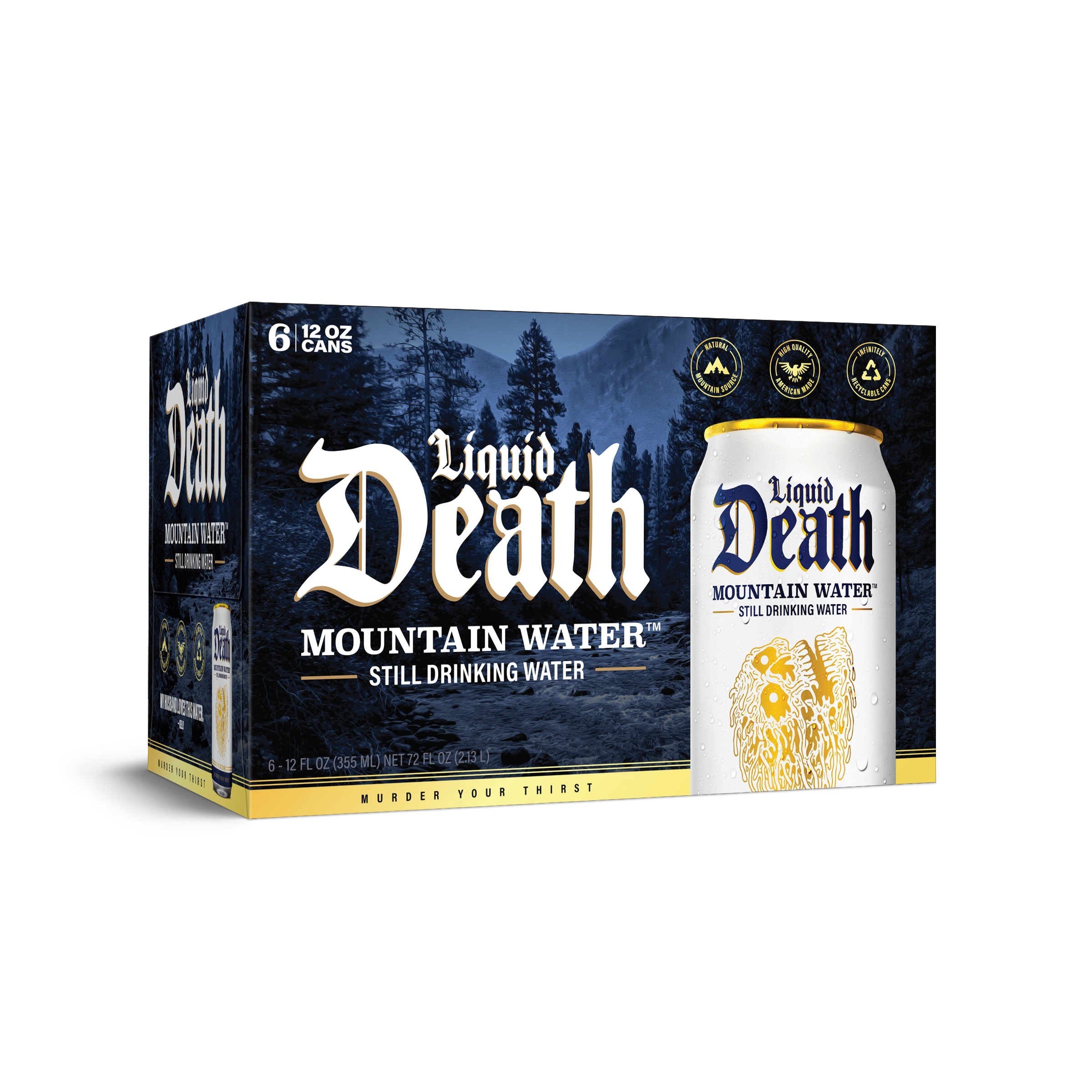
Liquid Death Mountain Water
Best Overall: Liquid Death's aggressive carbonation is noticeably sharper and more sustained than most competitors — it holds its bite through the last sip in a way that lighter sparkling waters do not. Sourced from the Austrian Alps and canned in aluminum, it positions itself as the carbonation-forward option for people who find Topo Chico and Perrier too mild.
Top picks ↓| Product | Price | Link |
|---|---|---|
| $1.99Reference price | ||
| $2.49Reference price | ||
| $2.49Reference price | ||
| $6.49Reference price | ||
| $9.99Reference price |
| Product | Source | Carbonation | Format | Calories | Sodium | Available flavors | Minerals | Sweeteners | Juice content |
|---|---|---|---|---|---|---|---|---|---|
| Liquid Death Mountain Water | Austrian Alps | Very high (forced) | 16.9 oz aluminum can | 0 | ~10mg per can | Plain + flavored sparkling lines | — | — | — |
| Topo Chico Mineral Water | Monterrey, Mexico (spring) | High (naturally carbonated + infused) | Glass bottle / limited can format | 0 | — | Plain + Twist of Lime | Calcium, magnesium, sodium | — | — |
| Perrier Sparkling Water | Vergèze, France (natural spring) | Medium (CO2 recaptured and reinfused) | Glass bottle / aluminum can / plastic | 0 | — | Plain + lime, lemon, grapefruit, strawberry | Calcium, magnesium, sodium | — | — |
| La Croix Sparkling Water | Municipal water (carbonated) | Light | Slim aluminum can | 0 | — | 20+ natural essence varieties | — | None | — |
| Spindrift Sparkling Water | Municipal water (carbonated) | Medium-light | Standard aluminum can | 9–17 per can (flavor-dependent) | — | Lemon, Grapefruit, Raspberry Lime, Strawberry, others | — | — | Real squeezed fruit juice |
Top picks
Related articles

Ships in 12-can packs. Best value when purchased in bulk cases.
Liquid Death's aggressive carbonation is noticeably sharper and more sustained than most competitors — it holds its bite through the last sip in a way that lighter sparkling waters do not. Sourced from the Austrian Alps and canned in aluminum, it positions itself as the carbonation-forward option for people who find Topo Chico and Perrier too mild. Price per ounce runs higher than grocery-brand sparkling water, but bulk case purchases bring it closer to reasonable.
Pros
- ✓Most aggressive and sustained carbonation in this comparison
- ✓Aluminum can recycles at higher rates than plastic
- ✓Works as a premium cocktail mixer where bubble persistence matters
Cons
- ✗Highest price per ounce — requires bulk purchasing to approach reasonable value
Score breakdown
| Source | Austrian Alps |
| Carbonation | Very high (forced) |
| Format | 16.9 oz aluminum can |
| Calories | 0 |
| Sodium | ~10mg per can |
| Available flavors | Plain + flavored sparkling lines |

Glass bottle version preferred for flavor. Wide availability at major retailers.
Topo Chico has been the bartender's go-to mixer since long before it became widely available, and the high, tight carbonation — small persistent bubbles rather than large soft ones — is what makes it work so well with mezcal and tequila highballs. The natural mineral content gives it a slight savory depth that adds body to spirit-and-water drinks. The glass bottle version is the one worth buying; the heavy bottle is impractical for portability.
Pros
- ✓High tight carbonation holds through an entire mixed drink
- ✓Natural mineral content adds savory depth to cocktails
- ✓Bottled at the same Monterrey spring since 1895 — formula unchanged after Coca-Cola acquisition
Cons
- ✗Heavy glass bottle impractical for portability or outdoor use
Score breakdown
| Source | Monterrey, Mexico (spring) |
| Carbonation | High (naturally carbonated + infused) |
| Format | Glass bottle / limited can format |
| Calories | 0 |
| Minerals | Calcium, magnesium, sodium |
| Available flavors | Plain + Twist of Lime |

Available in glass, can, and plastic. Flavored varieties recommended.
Perrier's medium carbonation profile — more than La Croix, less than Topo Chico or Liquid Death — makes it the most versatile option for pairing with food: strong enough to cleanse the palate between courses, gentle enough not to dominate. The iconic green glass bottle remains the standard format, and the flavored lines (lime, lemon, grapefruit) use genuine fruit flavor without added sweeteners or citric acid.
Pros
- ✓Medium carbonation works as palate cleanser between courses
- ✓Flavored lines use real flavor without sweeteners or citric acid
- ✓Globally recognised bottle is appropriate for table service
Cons
- ✗Carbonation dissipates faster than Topo Chico or Liquid Death in an open container
Score breakdown
| Source | Vergèze, France (natural spring) |
| Carbonation | Medium (CO2 recaptured and reinfused) |
| Format | Glass bottle / aluminum can / plastic |
| Calories | 0 |
| Minerals | Calcium, magnesium, sodium |
| Available flavors | Plain + lime, lemon, grapefruit, strawberry |
Subscribe to our newsletter
Occasional updates and new releases — no spam.

Variety packs available — ideal for households with mixed preferences.
La Croix's light carbonation is a feature, not a flaw, for users trying to hit daily hydration targets — the gentleness means you can drink large volumes without feeling bloated. Over 20 natural essence flavors cover mixed-preference households, and case pricing is consistently among the most competitive in the sparkling water category. It's the least exciting water on this list, but the most practical as a daily driver.
Pros
- ✓Light carbonation allows high-volume drinking without bloating
- ✓20+ flavor varieties including variety packs for mixed-preference households
- ✓Consistently competitive case pricing
Cons
- ✗Carbonation goes flat quickly in a mixed drink — not suitable as a cocktail mixer
Score breakdown
| Source | Municipal water (carbonated) |
| Carbonation | Light |
| Format | Slim aluminum can |
| Calories | 0 |
| Sweeteners | None |
| Available flavors | 20+ natural essence varieties |

Contains real fruit juice — 9–17 calories per can depending on flavor.
Spindrift is the outlier in this comparison: real squeezed fruit juice in every can produces flavor that tastes unmistakably like actual fruit rather than an approximation. The lemon variant in particular is notably honest — it tastes like someone squeezed a lemon into sparkling water, because that's essentially what happened. The slight calorie count (9-17 per can) disqualifies it as a zero-calorie option, which is the only meaningful trade-off.
Pros
- ✓Real squeezed fruit juice — the most honest flavor in this comparison
- ✓Short ingredient list: carbonated water, fruit juice, sometimes puree
- ✓Best option alongside breakfast where fruit acid pairs with food
Cons
- ✗9-17 calories per can — not zero-calorie despite minimal sugar content
Score breakdown
| Source | Municipal water (carbonated) |
| Carbonation | Medium-light |
| Format | Standard aluminum can |
| Calories | 9–17 per can (flavor-dependent) |
| Juice content | Real squeezed fruit juice |
| Available flavors | Lemon, Grapefruit, Raspberry Lime, Strawberry, others |
Which one is right for you?
For maximum carbonation satisfaction
Liquid Death Mountain Water
If you find other sparkling waters too gentle, Liquid Death's aggressive carbonation delivers the sharpest bite and it holds through the last sip.
For cocktail mixing
Topo Chico Mineral Water
Small, persistent bubbles and natural mineral depth hold up through a full mixed drink — the reason bartenders chose this before it became mainstream.
For food pairing at the table
Perrier Sparkling Water
Medium carbonation cleanses the palate between courses without dominating, and the bottle presents well at a dinner table.
For daily high-volume hydration
La Croix Sparkling Water
Light bubbles, 20+ flavors, and competitive case pricing make it the most practical choice when you're drinking multiple cans per day.
For real fruit flavor without artificial additives
Spindrift Sparkling Water
Real squeezed juice produces genuinely honest fruit flavor — the only option in this comparison that resolves the 'artificial flavor' complaint entirely.
Liquid Death Mountain Water — The High-Carbonation Cult Can
Liquid Death's whole pitch is that water doesn't have to be boring, and the can delivers on that. The carbonation is noticeably aggressive — sharper and more sustained than most competitors, with a bite that holds through the last sip. It's sourced from the Austrian Alps and comes in a 16.9 oz aluminum can that's become a cultural artifact at concerts and skate parks. The environmental angle (aluminum recycles at higher rates than plastic) genuinely matters to the brand's audience.
The plain Mountain Water (unflavored) has a clean mineral taste without any artificial notes, which makes it work as a mixer for spirits or just as a punchy standalone drink. If you've been bouncing between La Croix and Topo Chico looking for something stronger, this lands closer to Topo Chico on the fizz spectrum, possibly stronger. The brand also makes flavored sparkling lines and sparkling iced teas, but the original Mountain Water is what built the reputation.
Price per ounce runs higher than grocery-brand sparkling water, but the 12-can packs from Amazon bring it closer to reasonable. If you're buying it for the social signal as much as the water, that's fine — the carbonation quality is real regardless.
Topo Chico Mineral Water — The Bartender's Default
Topo Chico has been bottled at a spring in Monterrey, Mexico since 1895, and its reputation in cocktail culture is well-earned. The carbonation is high and tight — small, persistent bubbles rather than the large-bubble softness you get from sodastream machines. The natural mineral content (calcium, magnesium, sodium in moderate amounts) gives it a slight savory depth that makes it work particularly well with mezcal or tequila highballs.
The glass bottle version is the one bartenders swear by, and there's a real argument that the glass preserves carbonation better than plastic up to the moment you open it. Coca-Cola acquired Topo Chico in 2017 and has expanded distribution significantly, which means you can find it at most major grocery chains now — but it hasn't changed the formula. The Twist of Lime variant is genuinely good if you want a hint of citrus without switching to a fully flavored water.
One honest downside: the bottle shape makes it awkward to hold cold in one hand, and the heavy glass adds weight if you're packing it for hiking. For home use and bars, it's near-ideal. For portability, Liquid Death's cans have a practical edge.
Perrier Sparkling Water — The Classic That's Still Earning Its Place
Perrier has been around since 1863, and its carbonation profile sits in the medium range — more than La Croix, less than Topo Chico or Liquid Death. The bubbles are medium-sized and the fizz dissipates a bit faster than the harder sparkling waters, which some people prefer for all-day drinking. The source is a spring in southern France, and the water is naturally carbonated; Nestlé (now Nestlé Waters) recaptures and reinfuses the natural CO2 during bottling.
The iconic green glass bottle is the standard format, but Perrier also comes in aluminum cans and plastic bottles depending on market. The flavored lines — lime, lemon, grapefruit, strawberry — are clean without being sweet, which sets them apart from brands that use flavor oils that can leave an aftertaste. For office drinking, dinner parties, or anyone who wants a refined-looking bottle on the table, Perrier remains the shorthand for sparkling water globally.
The mineral taste is lighter than Topo Chico's, making it more neutral as a palate cleanser between courses. If you're pairing it with food rather than using it as a mixer, Perrier's quieter profile is often the right choice.
La Croix Sparkling Water — Light, Inoffensive, and Everywhere
La Croix became a phenomenon around 2015 and hasn't really slowed down. The carbonation is lighter than the other four brands here — it reads more as 'lightly sparkling' than 'carbonated water', which is either a feature or a drawback depending on your taste. That gentleness makes it easy to drink large volumes without feeling bloated, which is why it's become the default hydration choice for people trying to hit daily water goals.
The flavor range is wide — over 20 varieties including Pamplemousse (grapefruit), Mango, Coconut, and seasonal options. None of them contain actual fruit juice; the flavor comes from natural essences, which keeps every variety at zero calories and zero sweetness. The flavor is subtle to the point where some people describe it as a light hint rather than a distinct taste, which is accurate for most flavors.
La Croix comes in tall slim cans that are easy to grab from the fridge, and cases are priced competitively — often less per can than comparable options. If you're buying sparkling water for a household where tastes vary, La Croix's variety pack covers the most ground without anyone complaining. It's not the most exciting water on this list, but it's the most practical.
Spindrift Sparkling Water — Real Fruit, Real Calories, Actually Worth It
Spindrift is the outlier here: it uses real squeezed fruit juice in every can, which means a small calorie count (typically 9–17 calories per can depending on flavor) and a flavor that tastes unmistakably like actual fruit rather than an approximation. The ingredient list is short — carbonated water, fruit juice, sometimes a touch of fruit puree. No artificial flavoring, no sweeteners, no concentrates.
The Lemon flavor is the standout: it tastes like someone squeezed a lemon into sparkling water, because that's essentially what happened. The Grapefruit and Raspberry Lime are close behind. The carbonation level lands between La Croix and Topo Chico — present enough to feel like a real sparkling water but not sharp enough to compete with the heavy-hitters on fizz.
The slight calorie count disqualifies Spindrift as a zero-calorie option, which matters to some consumers. But for anyone who gave up on flavored sparkling water because the flavor always tasted fake, Spindrift resolves that complaint entirely. It's also the best of these five options as a morning drink alongside breakfast, where the natural fruit acid pairs well with food rather than sitting oddly like plain carbonated water sometimes does.
Frequently asked questions
Is sparkling water bad for your teeth?▼
What's the difference between mineral water and sparkling water?▼
Can I use sparkling water in cocktails?▼
Prices change. Check the retailer for the current price.
Comments & questions
Discussion happens on nattzy, our community forum. Sign in with Google to post — it takes a second.
Related articles

Best Pet Water Fountain 2026: 5 compared

Best Water Flossers 2026: Waterpik vs Cordless vs Philips
Best Backpacking Water Filters 2026: 5 Options

Best Kids Water Bottles 2026: Leak-Proof and Easy to Clean
Best Coffee Grinders 2026: Five mills side-by-side
Food
Best Rice Cookers 2026: 5 Top Models Compared
Best Rice Cookers 2026: 5 Top Models Compared