Best Weight Benches 2026: 5 Compared
A weight bench is the most foundational piece of equipment for dumbbell and barbell training. The performance difference between a $100 bench and a $400 bench comes down to two things. Weight range and build quality determine long-term value far more than feature lists.
Quick answer
The REP Fitness AB-5000 wins on frame: 11-gauge steel and a 1000 lb rated capacity that stays dead steady through heavy incline dumbbell sets, plus seven back positions and a 3-inch DuraFirm pad. The Rogue Monster Utility Bench is the commercial-grade 3x3 flat option with 4-inch firm foam for Rogue rack owners, the Fitness Reality 1000 Super Max bridges the gap at $150-200, the Flybird folds flat under $120, and the Prime Fitness flat bench fits inside a power rack.
This comparison is desk research. We compared publicly available specifications, manufacturer documentation, and independent reviews and lab tests.

REP Fitness AB-5000 Adjustable Bench
Best Overall: The REP AB-5000's 11-gauge steel and 1000 lb rated capacity hold steady through heavy incline dumbbell sets without the wobble that undermines cheaper adjustable benches. Seven back positions and a 3-inch DuraFirm pad cover every pressing angle.
Top picks ↓| Product | Price | Link |
|---|---|---|
| $350Reference price | ||
| $245Reference price | ||
| $100Reference price | ||
| $150Reference price | ||
| $100Reference price |
| Product | Type | Weight capacity | Back pad positions | Item weight | Pad dimensions | Warranty |
|---|---|---|---|---|---|---|
| REP Fitness AB-5000 Adjustable Bench | FID (flat/incline/decline) | 1,000 lb | 7 (0°–90°) | 117 lb | 38.25 in L × 12 in W × 2.25 in thick (back pad) | Limited lifetime (frame) |
| Rogue Monster Utility Bench | flat (utility / non-adjustable) | 1,000+ lb | 1 (fixed flat) | 68 lb (with standard pad) | 47 in L × 12 in W × 2.25 in thick (standard pad) | Limited lifetime (frame & welds); limited warranty on pad/wear items |
| Flybird Adjustable Weight Bench | adjustable FID (flat/incline/decline) | 800 lb | 8 (90° to -30°) | 28.5 lb | 30 in L × 10 in W (backrest), 1.8 in high-density foam | 1 year (frame); 30 days (pad) |
| Fitness Reality 1000 Super Max Bench | adjustable (flat/incline/decline) | 800 lb | 12 (-20° to +80°) | 35 lb | ~44 in L × 12 in W × 1.75 in thick (backrest) | 1 year limited |
| PRIME Fitness Adjustable Bench | adjustable FID (flat/incline/decline) | 1,000 lb (flat); 600 lb (incline) | 10 (0°–85°) | 94 lb | 50.75 in L × 10 in W (back pad) | — |
Top picks
Related articles


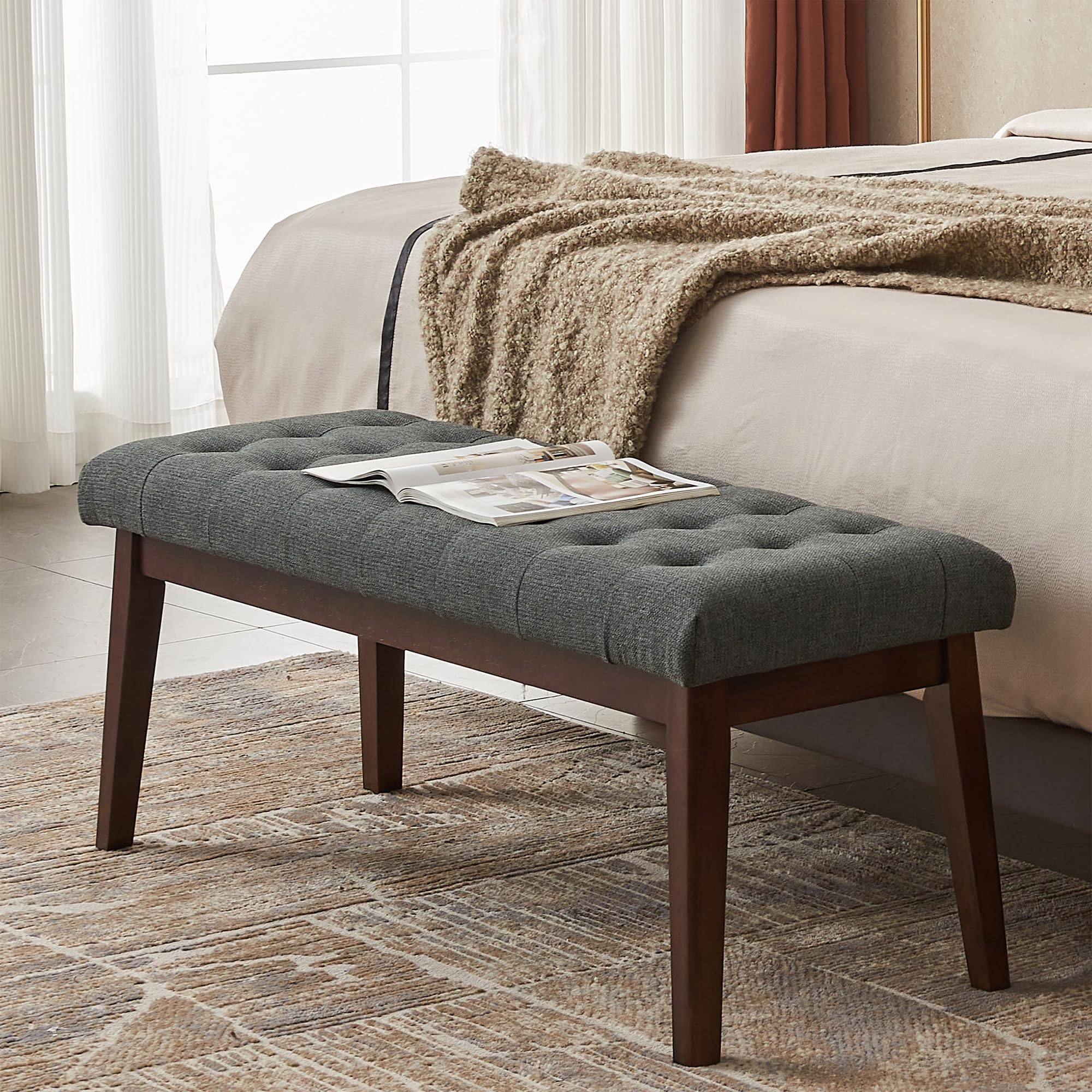
11-gauge steel, 7 back positions, DuraFirm 3-inch pad, 1000 lb capacity. $350-400. Best adjustable bench overall — stable through heavy incline sets, pad quality holds under load. Recommended for athletes pressing 60+ lb dumbbells regularly.
The REP AB-5000's 11-gauge steel and 1000 lb rated capacity hold steady through heavy incline dumbbell sets without the wobble that undermines cheaper adjustable benches. Seven back positions and a 3-inch DuraFirm pad cover every pressing angle. The bench for athletes loading 60+ lb dumbbells.
Pros
- ✓11-gauge steel frame — no wobble under heavy incline loads
- ✓Seven back positions plus flat and decline
- ✓DuraFirm 3-inch pad stays firm under sustained pressing
Cons
- ✗$350+ price is serious money for a home gym bench
Score breakdown
| Type | FID (flat/incline/decline) |
| Weight capacity | 1,000 lb |
| Back pad positions | 7 (0°–90°) |
| Item weight | 117 lb |
| Pad dimensions | 38.25 in L × 12 in W × 2.25 in thick (back pad) |
| Warranty | Limited lifetime (frame) |

3x3 11-gauge steel, flat only, 4-inch foam, 1000 lb capacity. $245-320. Best flat bench — commercial-grade stability, Rogue rack compatible. Correct choice if training is primarily flat barbell press. No incline adjustment.
Rogue's 3×3 11-gauge steel frame delivers commercial-gym stability on a flat bench. The 4-inch foam holds firm under barbell loads that would compress cheaper pads. Designed to pair with Rogue racks — the obvious pick for anyone already in the Rogue ecosystem.
Pros
- ✓Commercial-grade 3×3 11-gauge steel — zero flex at any load
- ✓4-inch firm foam pad holds shape through years of use
- ✓Compatible with all Rogue rack systems
Cons
- ✗Flat only — no adjustability for incline or decline work
Score breakdown
| Type | flat (utility / non-adjustable) |
| Weight capacity | 1,000+ lb |
| Back pad positions | 1 (fixed flat) |
| Item weight | 68 lb (with standard pad) |
| Pad dimensions | 47 in L × 12 in W × 2.25 in thick (standard pad) |
| Warranty | Limited lifetime (frame & welds); limited warranty on pad/wear items |

Folding design, 7 back positions, 3 seat positions. $100-140. Budget adjustable bench — adequate for light to moderate loading. Noticeable wobble at incline angles with heavy dumbbells. Correct entry point for new lifters under 50 lb per hand.
The Flybird folds for storage and offers 7 back positions at under $120. Wobble becomes noticeable with 40+ lb dumbbells at incline. A sensible entry point for new lifters, but experienced athletes pressing heavier will feel its limits within months.
Pros
- ✓Folds flat for compact storage
- ✓7 back positions + 3 seat positions at entry-level price
- ✓Lightweight at 29 lb for repositioning
Cons
- ✗Noticeable wobble with 40+ lb dumbbells at incline — the key limitation
Score breakdown
| Type | adjustable FID (flat/incline/decline) |
| Weight capacity | 800 lb |
| Back pad positions | 8 (90° to -30°) |
| Item weight | 28.5 lb |
| Pad dimensions | 30 in L × 10 in W (backrest), 1.8 in high-density foam |
| Warranty | 1 year (frame); 30 days (pad) |
Subscribe to our newsletter
Occasional updates and new releases — no spam.

Higher-gauge steel, 1000 lb capacity, adjustable. $150-200. Mid-tier adjustable bench — meaningfully more stable than Flybird. Useful stepping stone before AB-5000 price point. Good for lifters loading 40-70 lb dumbbells.
The Fitness Reality 1000 steps meaningfully above budget adjustable benches in rigidity and capacity. Noticeably more stable than the Flybird under 50+ lb dumbbell loads. At $150-200 it fills the gap between budget and premium without reaching either extreme.
Pros
- ✓Meaningfully more stable than budget folding benches
- ✓1000 lb capacity covers most home gym loading scenarios
- ✓Mid-range price without budget-quality feel
Cons
- ✗Still some wobble evident at maximum incline with heavy loads
Score breakdown
| Type | adjustable (flat/incline/decline) |
| Weight capacity | 800 lb |
| Back pad positions | 12 (-20° to +80°) |
| Item weight | 35 lb |
| Pad dimensions | ~44 in L × 12 in W × 1.75 in thick (backrest) |
| Warranty | 1 year limited |
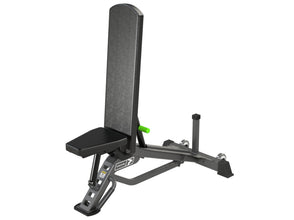
Commercial-style flat bench, 1000+ lb capacity, 2.5-inch firm foam. $100-150. Best flat bench for the price — outperforms budget adjustable benches in flat pressing stability. Narrow footprint fits inside power racks. No incline.
The Prime Fitness flat bench delivers commercial-style stability at entry-level pricing — it outperforms budget adjustable benches for flat pressing because it does not share the wobble inherent to folding/adjustable designs. Narrow footprint fits inside power racks.
Pros
- ✓Commercial-style stability for flat pressing at entry-level price
- ✓Narrow footprint fits inside most power rack footprints
- ✓1000+ lb capacity rated — solid base for heavy barbell work
Cons
- ✗Flat only — no incline or decline adjustment
Score breakdown
| Type | adjustable FID (flat/incline/decline) |
| Weight capacity | 1,000 lb (flat); 600 lb (incline) |
| Back pad positions | 10 (0°–85°) |
| Item weight | 94 lb |
| Pad dimensions | 50.75 in L × 10 in W (back pad) |
Which one is right for you?
For heavy dumbbell pressers
REP Fitness AB-5000 Adjustable Bench
11-gauge steel and DuraFirm pad hold stable through 60+ lb dumbbell sets — the wobble-free adjustable bench.
For barbell-focused athletes
Rogue Monster Utility Bench
Rogue's commercial-grade flat bench eliminates wobble entirely and pairs with any Rogue rack.
For new lifters on a budget
Flybird Adjustable Weight Bench
Folds for storage, 7 back positions, and works fine for lighter loading up to ~40 lb dumbbells.
For mid-range home gyms
Fitness Reality 1000 Super Max Bench
A meaningful step up in stability over budget folding benches at $150-200.
For power rack users needing flat only
PRIME Fitness Adjustable Bench
Narrow profile fits inside most rack footprints; commercial-grade stability at entry-level price.
Flat bench vs adjustable bench: the foundational decision
Flat benches (Prime Fitness, standard commercial-style) do one thing: provide a stable flat surface for bench press, dumbbell rows, and seated exercises. They're structurally simpler — no folding mechanism, no adjustment joints — which means they're inherently more stable and can handle higher loads with less frame flex. If your training is 80% flat bench work and you have a dedicated barbell + rack setup, a flat bench with a 1,000+ lb capacity is the right tool.
Adjustable benches (REP AB-5000, Flybird, Fitness Reality) add incline and decline positions to the flat position — typically 4-7 incline positions from flat to 85° upright. Incline dumbbell press, incline barbell press, chest-supported dumbbell rows, and overhead press with back support all require an adjustable bench. For home gyms without a cable machine, an adjustable bench is the single most versatile piece of equipment — it enables upper chest development, rear deltoid work, and supported unilateral movements that a flat bench alone cannot.
The critical trade-off: adjustable benches have more components and adjustment mechanisms that can wobble or flex, especially at steep incline angles with heavy loads. A cheap adjustable bench at 60° incline with 80 lb dumbbells per hand will wobble. A quality adjustable bench (REP AB-5000 class) at the same load will not. This stability difference is the primary reason the price gap between budget and premium adjustable benches is meaningful.
REP Fitness AB-5000: the adjustable bench standard
REP Fitness AB-5000 ($350-400) is the adjustable bench most commonly recommended by strength training communities for home gym use. 11-gauge steel frame, 7 back pad positions (flat, 15°, 30°, 45°, 60°, 75°, 85°), 2 seat positions (flat and incline), 1000 lb rated capacity. The pad is 3-inch thick high-density foam with DuraFirm cover — it doesn't compress significantly under 100+ lb loading. Weight is approximately 72 lbs, which limits portability but contributes to stability.
The AB-5000 addresses the typical failure mode of mid-range adjustable benches: the back pad adjustment mechanism. Lesser benches use laddered pop-pin systems that allow the pad to rock forward and back when loaded — the adjustment tolerance creates play that translates to instability under load. REP's ladder mechanism has tighter tolerance, and the bench is designed so the pad locks firmly at each position.
At $350-400, the AB-5000 is the threshold at which adjustable benches stop being a liability during heavy sets. Budget benches under $200 wobble enough to affect pressing mechanics during serious loading. The AB-5000 is widely reported to be stable through sets with 90-100 lb dumbbells per hand at any incline angle.
Rogue Monster Utility Bench: commercial-grade flat
Rogue Monster Utility Bench 2.0 ($245-320) is a commercial-grade flat bench with Rogue's standard 3x3 inch 11-gauge steel construction, stainless hardware, and 4-inch high-density foam pad. It's not adjustable — flat bench only — but the structural quality is significantly higher than any adjustable bench in the same price range. Rated capacity is 1,000 lb. Weight is approximately 63 lbs.
The Monster Utility Bench integrates with Rogue Monster and S-series rack systems — the footprint is compatible with being positioned inside a power rack for barbell bench press. For athletes whose primary compound movements are flat barbell bench press and heavy dumbbell work, the flat bench's stability advantage at full loading is meaningful. You won't feel any flex or rock during sets with any weight a home gym athlete is likely to use.
At $245-320 for flat-only, the Monster Utility Bench is the right choice if your training is primarily flat bench work with heavy barbells. If you want incline work, the fixed flat position is a limitation — you'd need a second adjustable piece or acceptable incline from the floor with your feet elevated.
Flybird, Fitness Reality, and Prime Fitness: the value range
Flybird Adjustable Weight Bench ($100-140) is the most popular budget adjustable bench. Folding design, 7 back pad positions, 3 seat positions. The folding mechanism is the weakness: the hinge and adjustment joints have enough play that the bench wobbles noticeably at incline angles under 70+ lb dumbbells per hand. Adequate for bodyweight and light dumbbell work, and for new lifters who won't yet load heavy enough to stress the frame. The weight limit is stated at 620 lb, but the practical stability limit under dynamic loading is lower.
Fitness Reality 1000 Super Max ($150-200) improves on the Flybird with higher-gauge steel and a higher stated 1,000 lb capacity. Stability is meaningfully better than Flybird under comparable loading — the frame is stiffer and the adjustment mechanism has less play. At $150-200 it's in a useful mid-tier for lifters who want incline capability without the AB-5000 price point, and who aren't yet loading 80+ lb dumbbells.
Prime Fitness flat bench ($100-150) is a commercial-style flat bench designed for high-volume use — 1,000+ lb capacity, 2.5-inch firm foam, 11-gauge steel. No incline adjustment. For lifters who use only flat position and want maximum stability at minimum cost, this outperforms any budget adjustable bench in the same price range for the flat pressing use case. The narrow footprint (approximately 10 inches wide) is also useful for positioning inside a power rack.
Frequently asked questions
What bench angle is best for upper chest development?▼
How much does a weight bench matter compared to the dumbbells themselves?▼
Can you use an adjustable bench for squats and other exercises beyond pressing?▼
Prices change. Check the retailer for the current price.
Comments & questions
Discussion happens on nattzy, our community forum. Sign in with Google to post — it takes a second.