Best Weight Vest 2026: 5 Picks for Rucking and Pull-Ups
A weight vest changes the math on bodyweight training. Weight range and build quality determine long-term value far more than feature lists.
Quick answer
The Titin Force Weighted Shirt is the default pick because its hydro-gel inserts spread 8 lbs across 14 pockets on chest, back and shoulders, so it wears under normal clothing with full range of motion for pull-ups and push-ups. The Hyperwear Hyper Vest PRO laces corset-style to near-zero bounce for running at 10-20 lbs, the 5.11 TacTec carries SAPI plates to 30 lbs for rucking, the CAP Barbell vest adjusts to 40 lbs cheaply, and the Rogue Dog Collar loads Olympic plates for weighted pull-ups.
This comparison is desk research. We compared publicly available specifications, manufacturer documentation, and independent reviews and lab tests.

Titin Force Weighted Shirt
Best Overall: Hydro-gel pockets distribute 8 lbs across 14 points on chest, back, and shoulders — the most natural weight distribution in this comparison. Wears under regular clothing for low-profile daily use.
Top picks ↓| Product | Price | Link |
|---|---|---|
| $189Reference price | ||
| $20Reference price | ||
| $239.95Reference price | ||
| — | ||
| $140Reference price |
| Product | Weight | Distribution | Weight type | Profile | Use case | Sizes | Material | Price | Loading | Construction | Back clearance | Brand | Weight range | Closure | Bounce | Weight capacity | Plate type | Waist | Attachment |
|---|---|---|---|---|---|---|---|---|---|---|---|---|---|---|---|---|---|---|---|
| Titin Force Weighted Shirt | 8 lbs / 3.6 kg fixed | 14 pockets: chest, back, shoulders | Hydro-gel | Compression shirt | Pull-ups, push-ups, daily wear | S-XXL | Compression fabric | $189 | — | — | — | — | — | — | — | — | — | — | — |
| Rogue Dog Collar Weight Vest | — | — | Olympic plates (10-45 lb) | — | Weighted pull-ups, dips | Adjustable belt | — | $20 | Front plate loaded | Steel | Full | Rogue | — | — | — | — | — | — | — |
| Hyperwear Hyper Vest PRO | — | — | Steel shot pockets | — | Running, HIIT, sprints | XS-XL | Nylon + elastic | $239.95 | — | — | — | — | 10-20 lbs | Corset-style side lacing | Near-zero | — | — | — | — |
| CAP Barbell Adjustable Weighted Vest | — | — | Iron sand pockets | — | Bodyweight strength training | One size adjustable | Fabric | ~$40-60 | — | — | — | — | Up to 40 lbs / 18 kg adjustable | Buckle straps | Moderate (not for running) | — | — | — | — |
| 5.11 Tactical TacTec Plate Carrier Vest | — | — | — | — | Rucking, loaded hiking | S-XL | Military-grade nylon | $140 | — | — | — | — | — | — | — | Up to 30 lbs / 13.5 kg | Standard SAPI | Cummerbund | MOLLE-compatible |
Top picks
Related articles


Runs snug intentionally — size up one from your usual shirt size.
Hydro-gel pockets distribute 8 lbs across 14 points on chest, back, and shoulders — the most natural weight distribution in this comparison. Wears under regular clothing for low-profile daily use. Range of motion is unchanged versus unloaded for pull-ups and push-ups. The limit: 8 lbs total is non-adjustable.
Pros
- ✓14-point hydro-gel weight distribution — most natural feel in this comparison
- ✓Wears under normal clothing — zero bulk profile
- ✓Full range of motion for pull-ups, push-ups, and daily movement
Cons
- ✗8 lb total weight is fixed — cannot add more as you get stronger
Score breakdown
| Weight | 8 lbs / 3.6 kg fixed |
| Distribution | 14 pockets: chest, back, shoulders |
| Weight type | Hydro-gel |
| Profile | Compression shirt |
| Use case | Pull-ups, push-ups, daily wear |
| Sizes | S-XXL |
| Material | Compression fabric |
| Price | $189 |
Plates sold separately. Use bumper plates for noise reduction if training at home.
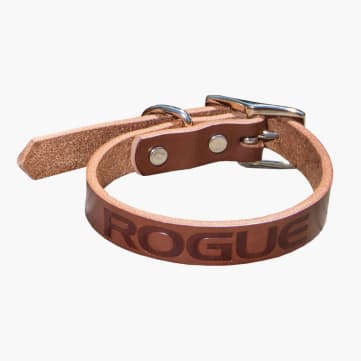
The Dog Collar is not a vest — it is a plate-loaded shoulder harness designed for exactly one purpose: attaching Olympic plates for weighted pull-ups and dips. Front plate position keeps the back completely free. Steel construction built for commercial gym volume. Nothing else in this comparison does this specific job better.
Pros
- ✓Front-loaded plate position keeps back fully clear for pull-up movement
- ✓Holds 10-45 lb Olympic plates — unlimited weight progression
- ✓Commercial-grade steel built for daily gym volume
Cons
- ✗Single use case — pull-ups and dips only, not for running or general carry
Score breakdown
| Weight type | Olympic plates (10-45 lb) |
| Loading | Front plate loaded |
| Construction | Steel |
| Use case | Weighted pull-ups, dips |
| Sizes | Adjustable belt |
| Back clearance | Full |
| Brand | Rogue |
| Price | $20 |
Check Hyperwear's chest sizing chart before ordering — returns are possible but slow.
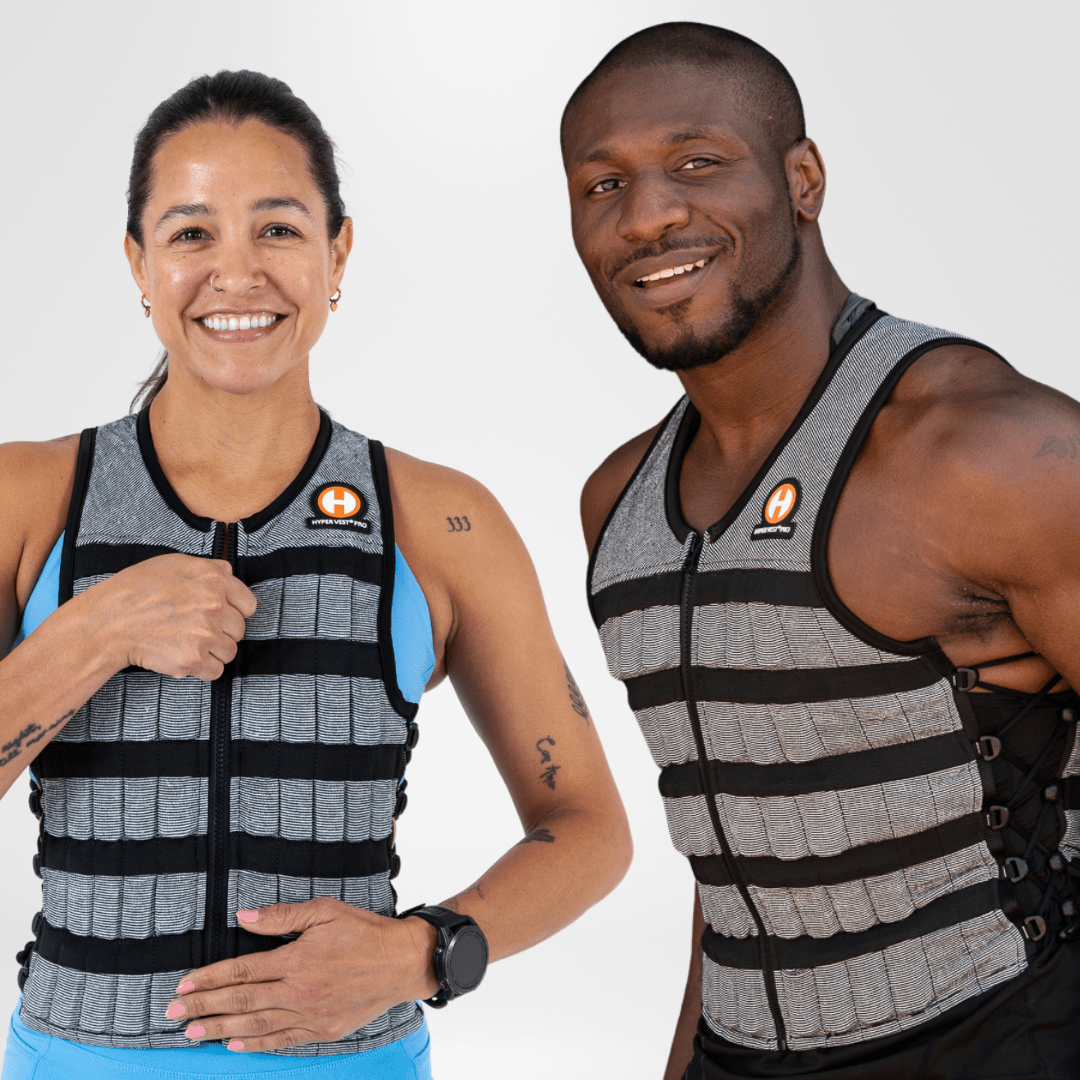
Corset-style side lacing cinches the vest against the torso to near-zero bounce — the defining feature for running and HIIT. Steel shot weight pockets keep load close to the body. Available 10-20 lbs. The vest that actually works for sprints without the bouncing that kills form.
Pros
- ✓Corset lacing achieves near-zero bounce during running
- ✓Steel shot weight stays close to body for natural movement
- ✓Purpose-built for high-movement cardio use cases
Cons
- ✗Higher price than generalist vests
- ✗Weight range limited to 10-20 lbs
Score breakdown
| Weight range | 10-20 lbs |
| Weight type | Steel shot pockets |
| Closure | Corset-style side lacing |
| Bounce | Near-zero |
| Use case | Running, HIIT, sprints |
| Sizes | XS-XL |
| Material | Nylon + elastic |
| Price | $239.95 |
Subscribe to our newsletter
Occasional updates and new releases — no spam.
Best value under $60. Keep weight pockets dry to prevent the iron sand from hardening.
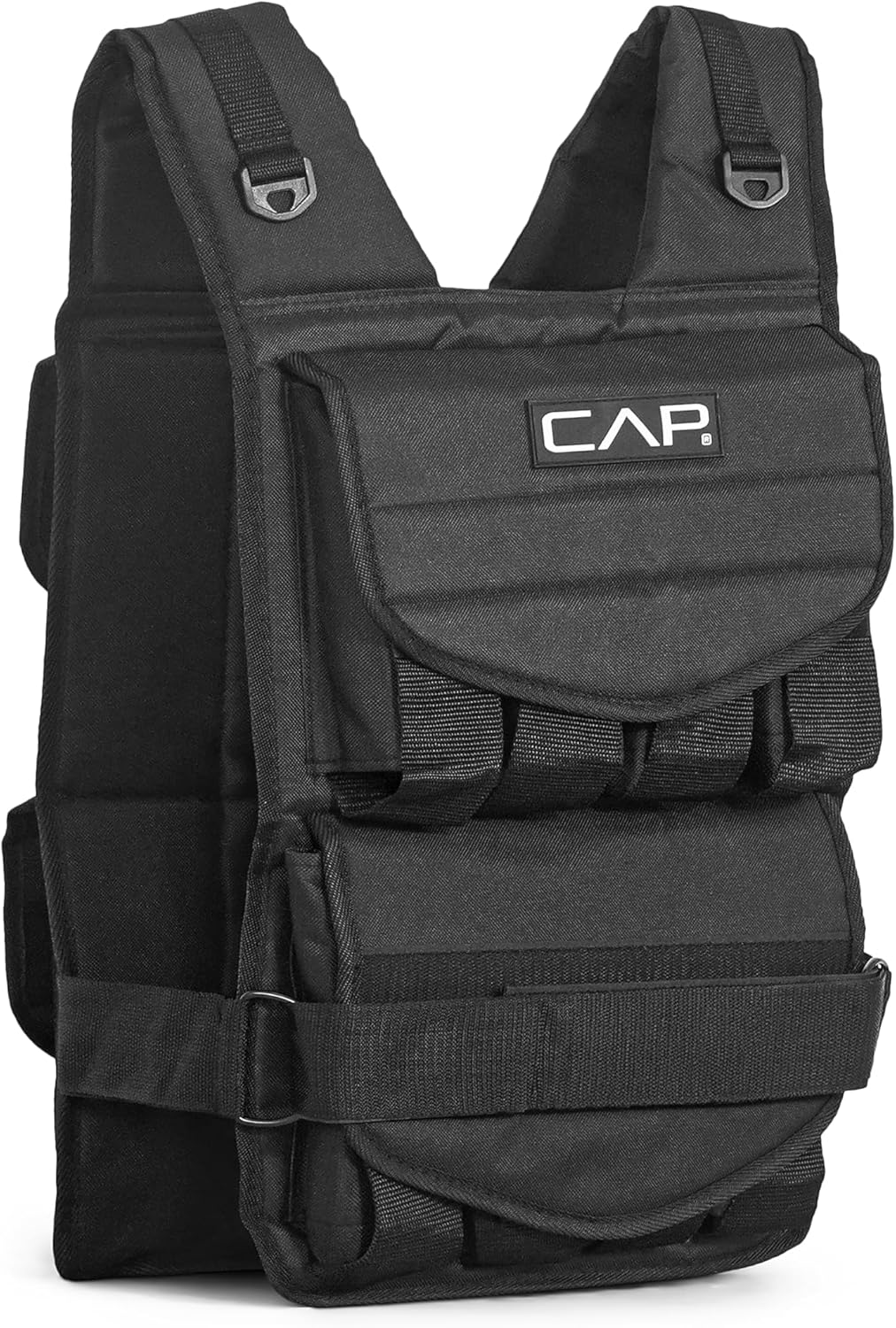
Iron sand pockets adjust up to 40 lbs in increments — the widest weight range in this comparison for the price. Fabric construction holds up through bodyweight strength circuits. Not ideal for running due to bounce, but for push-ups, dips, squats, and step-ups it delivers solid loading at entry price.
Pros
- ✓Up to 40 lbs adjustable — widest range at this price point
- ✓Iron sand pockets allow fine-grained weight increments
- ✓Solid for bodyweight strength exercises
Cons
- ✗Noticeable bounce during running — not a running vest
Score breakdown
| Weight range | Up to 40 lbs / 18 kg adjustable |
| Weight type | Iron sand pockets |
| Closure | Buckle straps |
| Bounce | Moderate (not for running) |
| Use case | Bodyweight strength training |
| Sizes | One size adjustable |
| Material | Fabric |
| Price | ~$40-60 |
Compatible with most standard SAPI-cut plates. The vest alone ships without plates.
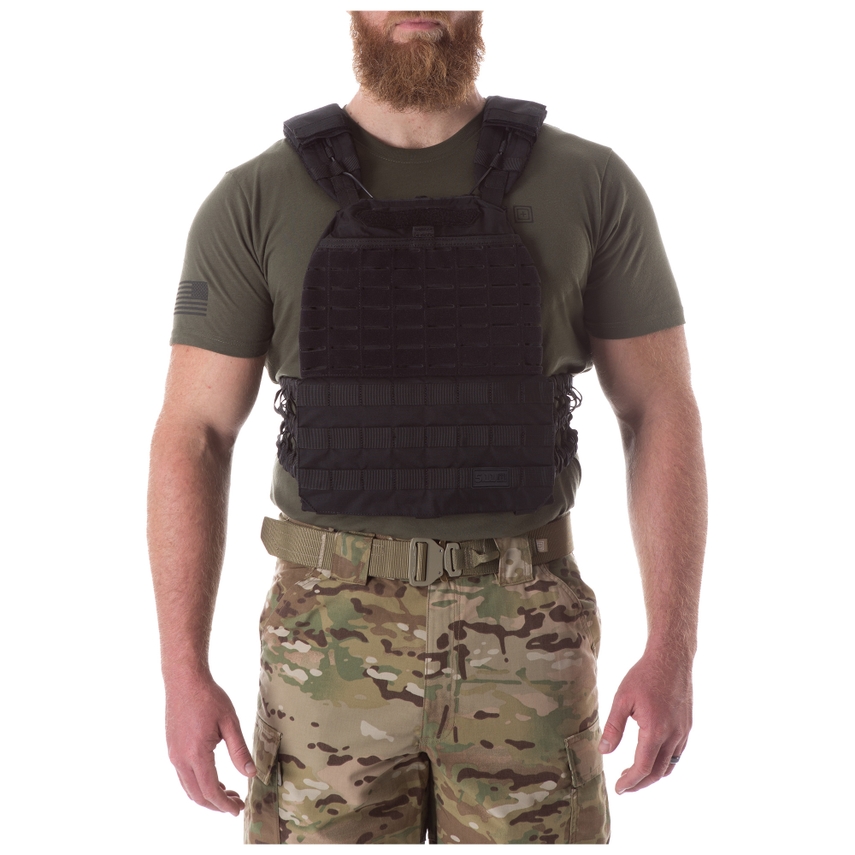
Military plate carrier design with padded shoulder straps and cummerbund waist distribution — built for sustained loaded movement over hours, not sprint intervals. MOLLE compatibility allows attachment of gear for functional training or rucking. Holds standard SAPI plates up to 30 lbs.
Pros
- ✓Cummerbund waistband distributes load for sustained movement
- ✓MOLLE-compatible for attaching additional gear
- ✓Military-grade durability built for multi-year outdoor use
Cons
- ✗Bulky design not suited for gym exercises like pull-ups or push-ups
Score breakdown
| Weight capacity | Up to 30 lbs / 13.5 kg |
| Plate type | Standard SAPI |
| Waist | Cummerbund |
| Attachment | MOLLE-compatible |
| Use case | Rucking, loaded hiking |
| Sizes | S-XL |
| Material | Military-grade nylon |
| Price | $140 |
Which one is right for you?
For daily movement and bodyweight training
Titin Force Weighted Shirt
Wears under clothes, 14-point hydro-gel distribution — the only weighted vest you can forget you're wearing.
For runners and HIIT athletes
Hyperwear Hyper Vest PRO
Corset lacing achieves near-zero bounce at running pace — the only vest here that doesn't destroy your form at speed.
For rucking and loaded hiking
5.11 Tactical TacTec Plate Carrier Vest
Military cummerbund design distributes load over hours of sustained movement without hotspots.
For budget-first buyers
CAP Barbell Adjustable Weighted Vest
40 lbs adjustable at entry price — the most weight range per dollar in this comparison.
For pull-ups and dips only
Rogue Dog Collar Weight Vest
Front-plate loading keeps back fully clear — the right tool for one specific job at $20.
Titin Force Weighted Shirt — Best for Low-Profile Everyday Wear
The Titin Force doesn't look like a weight vest because it isn't — it's a compression shirt with gel-weighted inserts sewn into 14 pockets across the chest, back, and shoulders. Total weight sits at 8 lbs loaded. The hydro-gel technology means the weights conform slightly to your torso rather than sitting as rigid blocks.
The low profile is the main selling point. You can wear this under a jacket during a commute, do an entire gym session, and nobody notices. The compression fabric also functions as mild muscle activation support — though that's secondary to the load.
The ceiling is 8 lbs. If your training demands 20+ lbs, this isn't your vest. But for weighted pull-ups, push-ups, or any movement where a bulky vest limits range, the Titin delivers resistance without the mechanical constraints. Washing requires removing the gel inserts — slightly fiddly but straightforward.
Rogue Dog Collar — Best Plate-Loaded Option for CrossFit
The Rogue Dog Collar is essentially a shoulder harness that holds standard Olympic weight plates — 10s, 25s, or 45s — in a frame that distributes across your traps and collarbone. It's the preferred setup for weighted pull-ups in CrossFit because the plates load in front, keeping your back free for a full range.
Load is theoretically unlimited provided you can balance the plates, but most people stay under 45–70 lbs for dynamic movements. The steel construction is built for commercial gym punishment. There's nothing to adjust other than which plates you load.
The tradeoff: you cannot run with this. The plates swing if you move fast. It's a pull-up and dip tool, not a cardio tool. The harness contact points can dig into the collarbone without a shirt underneath. Know the use case before buying.
Hyperwear Hyper Vest PRO — Best Snug Fit for Running and HIIT
The Hyper Vest PRO is the only vest on this list designed specifically for high-movement cardio. The small steel shot weights are distributed across a tight mesh body, and the vest laces at the sides like a corset — letting you dial in an almost zero-bounce fit. Available in weights from 10 to 20 lbs.
For trail running with added load, stair climbs, or HIIT circuits where bouncing would throw off every rep, this is the answer. The mesh construction breathes acceptably well. The side lacing takes about 30 seconds to adjust and holds position reliably once set.
Sizing matters here more than with any other vest on this list — Hyperwear publishes detailed chest measurement charts. Order wrong and the snug fit becomes either sloppy or constricting. The price reflects the engineering: expect to pay roughly three times what the CAP costs.
CAP Barbell Adjustable Weighted Vest — Best Value for Home Training
The CAP Barbell vest loads iron sand weights in individual pockets, adjustable up to 40 lbs in small increments. The cost is a fraction of competition vests, and the design works for most strength-focused movements: push-ups, dips, bodyweight squats, step-ups.
The fit is looser than the Hyper Vest and will bounce during anything faster than a brisk walk. The iron sand weights eventually compress and harden in the pockets if stored damp — keep them dry. The vest itself runs warm because the coverage is solid fabric rather than mesh.
If your budget is tight and your training is bodyweight strength rather than running, the CAP handles the job at a price that makes sense. It's the logical entry point before committing to a $150+ vest.
5.11 Tactical TacTec Plate Carrier — Best for Rucking and Military-Style Training
The TacTec is a plate carrier vest designed for military and law enforcement training that's been adopted widely for rucking and loaded hikes. It fits standard SAPI plates (sold separately) up to 30 lbs total. The padded shoulder straps and cummerbund waistband distribute load for sustained movement over miles.
The build quality is MOLLE-compatible and rated for hard outdoor use. The vest system holds its position during movement without additional cinching. Plates ride flat against the torso — there's minimal bouncing even at running pace with moderate loads.
This is overkill for a gym pull-up session. Its purpose is time-under-load outdoors: ruck marches, loaded hikes, stair climbs. The 5.11 brand commands a price premium, but the vest has a multi-year lifespan under heavy outdoor use where cheaper carriers fail at the stitching.
How to Match a Vest to Your Training
Weight range and adjustability determine long-term usefulness. A vest you'll max out in a month becomes expensive gear sitting in a closet. The CAP's 40 lbs and the TacTec's 30 lbs offer room to grow. The Titin caps at 8 lbs — buy it for the specific use case, not as a general training vest.
Fit type matters more than weight for dynamic training. A vest that moves independently from your body reduces effective load and adds fatigue from compensation. The Hyper Vest's lacing system and the TacTec's cummerbund both address this. The Rogue Dog Collar sidesteps it entirely because it's designed for hanging from a bar.
Exercise compatibility: running demands bounce-free security (Hyper Vest, TacTec). Pull-ups and dips need no interference at shoulder rotation (Titin, Rogue Dog Collar). HIIT circuits benefit from a vest that works across both (Hyper Vest, Titin for lighter loads). Rucking favors load distribution over time (TacTec).
Frequently asked questions
How heavy should a weight vest be for beginners?▼
Can I use a weight vest for running?▼
What's the difference between rucking and weight vest training?▼
Is a weight vest good for pull-ups?▼
Do weight vests build muscle or just cardio?▼
Prices change. Check the retailer for the current price.
Comments & questions
Discussion happens on nattzy, our community forum. Sign in with Google to post — it takes a second.