Best Weightlifting Belt 2026: 5 Compared
A weightlifting belt doesn't make you stronger — it gives your core something to brace against, which lets you express the strength you've already built. Weight range and build quality determine long-term value far more than feature lists.
Quick answer
The Inzer Forever Lever Belt is the benchmark: 10 mm single-ply vegetable-tanned leather, 4 inches wide, with a lever that snaps to the identical fit every set once you set it, IPF approved and backed by a lifetime guarantee. The Rogue Ohio Lifting Belt trades that for prong flexibility you can tighten toward a max, the SBD Lever Belt runs the IPF-maximum 13 mm for competition, Dark Iron Fitness costs $50-70 with minimal break-in, and the Harbinger Foam Core suits Olympic front rack work.
This comparison is desk research. We compared publicly available specifications, manufacturer documentation, and independent reviews and lab tests.
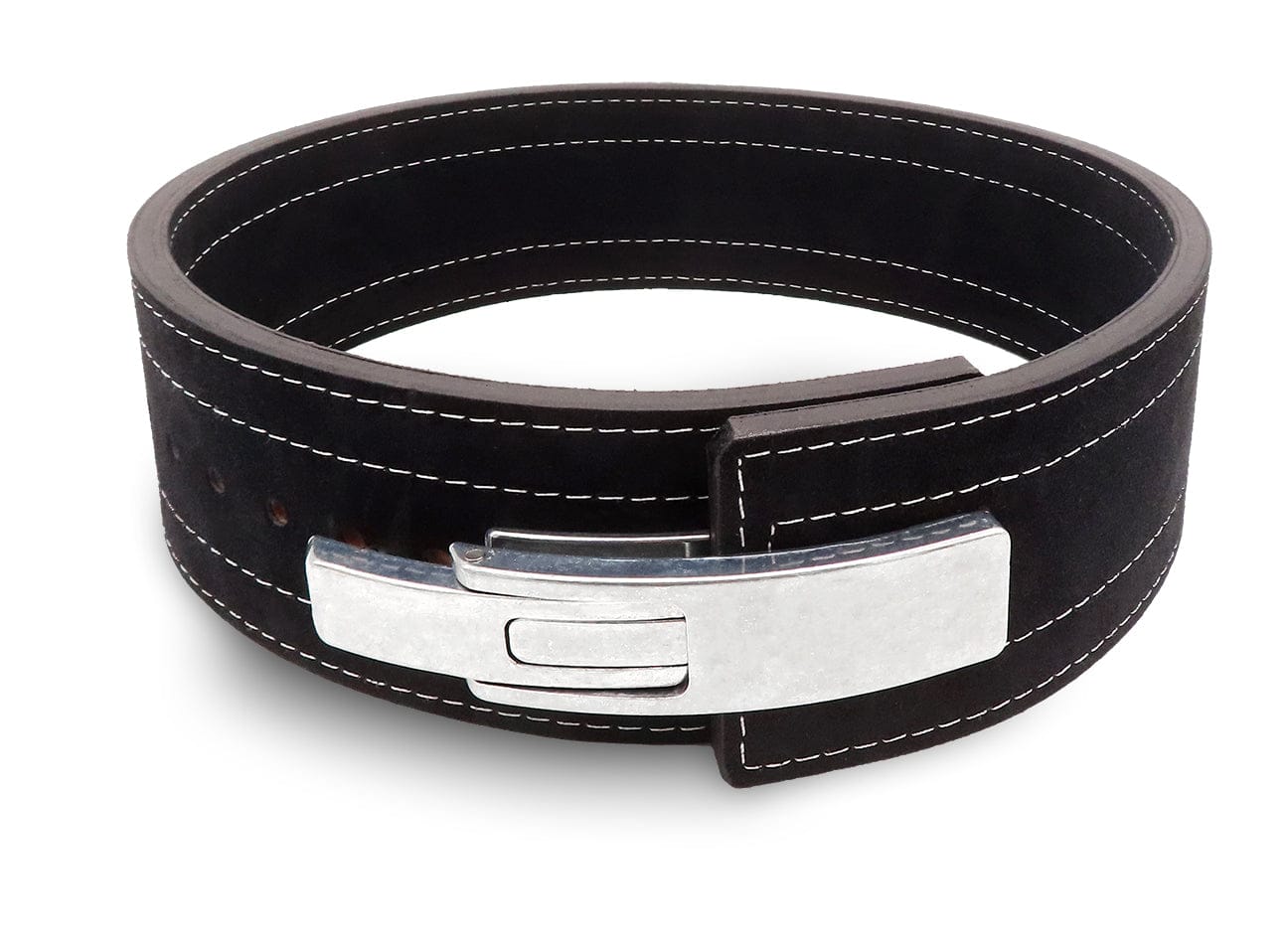
Inzer Advance Designs Forever Lever Belt (10mm)
Best Overall: The Forever Lever is the benchmark against which every other powerlifting belt is measured. Single-ply vegetable-tanned leather at 10 mm thick and 4 inches wide, with a lever buckle that snaps shut with a satisfying click and releases with a single thumb press.
Top picks ↓| Product | Price | Link |
|---|---|---|
| $129.95Reference price | ||
| $145Reference price | ||
| $310.00Reference price | ||
| $49.99Reference price | ||
| $21.99Reference price |
Top picks
Related articles

Inzer Advance Designs Forever Lever Belt (10mm)
IPF approved, lever buckle, lifetime guarantee
The Forever Lever is the benchmark against which every other powerlifting belt is measured. Single-ply vegetable-tanned leather at 10 mm thick and 4 inches wide, with a lever buckle that snaps shut with a satisfying click and releases with a single thumb press. Once you set the lever to your waist size at home, every session starts with the same tight, consistent fit — no fumbling with prongs between heavy sets. The belt is IPF approved for competition use, made in the USA, and backed by a lifetime guarantee. The 10 mm thickness suits most raw powerlifters: thick enough for serious bracing, not so rigid that it interferes with squat depth or hip flexion. Expect a real 4–6 week break-in period before the leather softens and molds to your torso — uncomfortable at first, perfectly contoured after.
Pros
- ✓Lever closure delivers identical fit every set
- ✓IPF approved for competition
- ✓Lifetime guarantee and US manufacturing
- ✓10 mm thickness suits most raw lifters
Cons
- ✗Long 4–6 week break-in period
- ✗Lever adjustment requires unscrewing the buckle
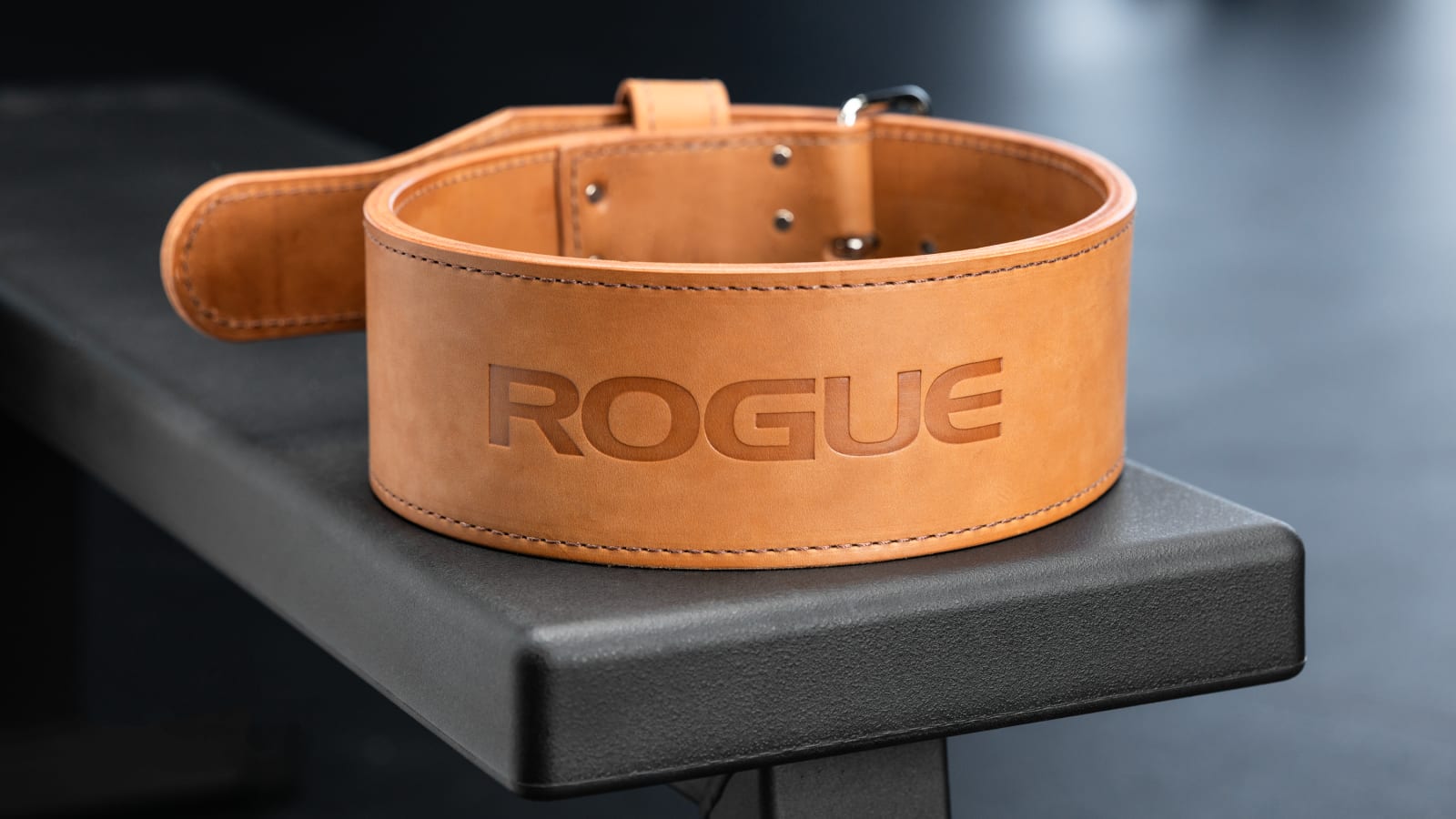
Single or double prong, made in USA
The Rogue Ohio Lifting Belt is 10 mm thick leather with a single or double prong buckle, 4 inches wide, and the most commonly used non-lever belt in serious strength gyms. The prong closure gives more fit flexibility than a lever — you can run a looser hole during warm-ups and tighten progressively toward a max attempt, which matters during long sessions where waist circumference changes with food and hydration. Rogue stitches the belt in Columbus, Ohio using reinforced thread at all load-bearing edges, and the steel roller buckle stays put under load rather than rotating loose. Break-in is moderate at about 2–4 weeks before the leather stops feeling like cardboard. Single-prong is faster between sets and is the daily-training default for most lifters; double-prong adds redundancy at the cost of setup time.
Pros
- ✓Single or double prong fit flexibility
- ✓Reinforced stitching at load-bearing edges
- ✓Faster break-in than competition lever belts
- ✓Steel roller buckle stays seated under load
Cons
- ✗Not IPF approved in all configurations
- ✗Prong setup slower than lever between heavy sets

13mm, IPF competition standard, 7 sizes
The SBD Lever Belt is 13 mm thick — the maximum allowed in IPF competition — made from stiff single-ply leather with the lever mechanism integrated directly into the belt body rather than mounted on top. It's the most widely worn belt at IPF World Championships and international raw powerlifting meets for good reason: at 13 mm, the bracing surface against the core under maximal loads is noticeably more substantial than 10 mm options, and elite lifters consistently report measurable performance gains on max attempts. Day-to-day training is less comfortable than the Inzer — this belt doesn't break in so much as it breaks you in. Many serious lifters keep a softer belt for accessory work and reserve the SBD for competition prep and max attempts. Available in 7 sizes for proper fit rather than a one-size-fits-most approach.
Pros
- ✓13 mm provides maximum legal bracing surface
- ✓Integrated lever sits flatter than mounted designs
- ✓Standard at IPF World Championships
- ✓Seven sizes for proper fit
Cons
- ✗Premium pricing over $200
- ✗Less comfortable for daily training than 10 mm
Subscribe to our newsletter
Occasional updates and new releases — no spam.

10mm genuine leather, no competition approval needed
Dark Iron Fitness Genuine Leather Belt uses cowhide leather at 10 mm thickness, 4 inches wide, with a double-prong roller buckle. It's not IPF approved and the leather is noticeably softer than the Inzer or SBD from day one — which means it's more comfortable immediately but provides slightly less bracing surface under maximum loads. For general strength training at 70–90% intensity (squats, deadlifts, overhead pressing in normal training ranges), the bracing support is more than adequate, and the softer leather skips most of the multi-week break-in pain that competition belts demand. The double-prong takes longer to fasten than a lever, but the steel prongs are thick enough that they don't bend over time, which is a common failure point on truly budget belts. Right pick for lifters who aren't competing and want genuine leather without the premium price.
Pros
- ✓Genuine leather at $50–70 price point
- ✓Minimal break-in required
- ✓Steel prongs thick enough to resist bending
- ✓Adequate for sub-competition intensity training
Cons
- ✗Not IPF approved for competition
- ✗Softer leather provides less max-effort bracing surface

Foam core, best for beginners and Olympic lifting
The Harbinger Foam Core Belt is built differently from leather belts entirely — a nylon exterior with closed-cell foam core padding and a steel buckle, 4 inches wide, soft from the moment you put it on with zero break-in required. It's not a powerlifting belt — there's no rigid leather core to brace against at maximum loads — but it provides genuine lumbar support for general gym training and is appropriate for Olympic lifting, where the front of the belt needs to be thin enough not to block the front rack catch in cleans. Leather belts at their full 4-inch width can interfere with the clean catch position; the Harbinger's foam compresses slightly and stays out of the way. At under $30, it's the entry point for belt training and lets beginners develop bracing technique before committing to a rigid competition belt.
Pros
- ✓Soft foam construction needs zero break-in
- ✓Doesn't block front rack catch in Olympic lifts
- ✓Under $30 entry price
- ✓Lumbar support for general gym work
Cons
- ✗Insufficient rigidity for max-effort powerlifting
- ✗Needs replacement once you lift heavier loads
Which one is right for you?
For powerlifters who want one belt forever
Inzer Advance Designs Forever Lever Belt (10mm)
Lever-locked consistent fit, IPF approval, and a lifetime guarantee make this the safest pick for someone committing to serious lifting long-term.
For lifters who change tightness session to session
Rogue Ohio Lifting Belt (10mm)
The prong closure lets you run looser warm-up holes and tighten progressively toward maxes, useful when waist circumference fluctuates during long sessions.
For elite powerlifting competition
SBD Lever Belt (13mm)
13 mm at the IPF legal maximum delivers more bracing surface against the core for measurable gains on max-effort attempts in tested federation meets.
For non-competing strength athletes on a budget
Dark Iron Fitness Genuine Leather Belt
Genuine 10 mm leather at $50–70 with minimal break-in covers 70–90% intensity training without paying the competition-grade premium.
For beginners and Olympic lifters
Harbinger Foam Core Belt (4-Inch)
Zero break-in foam construction supports the lumbar without blocking the front rack catch position required in cleans and jerks.
Inzer Advance Designs Forever Lever Belt (10mm) — Best Overall
Inzer's Forever belt is the benchmark against which other powerlifting belts are measured. It's 10mm thick single-ply vegetable-tanned leather, 4 inches wide, and uses a lever buckle that snaps shut with a satisfying click and releases with a single thumb press. For competition use, it's IPF-approved.
The lever closure means setup is fast between sets — no threading a prong, no adjusting to find the right hole. Once you've set the lever to your waist size at home, you get the same tight fit every session without thinking about it. The break-in period is real: expect 4-6 weeks of stiff, uncomfortable use before the leather softens and molds to your torso shape.
It's made in the USA and sold with a lifetime guarantee. The 10mm thickness suits most raw powerlifters — thick enough for serious bracing, not so rigid it limits movement for squat depth. If you compete in the IPF or USAPL, this belt meets all federation standards.
Rogue Ohio Lifting Belt (10mm) — Best Prong Belt
Rogue's Ohio belt is 10mm thick leather with a single stainless steel prong buckle, 4 inches wide, and available in both single-prong and double-prong configurations. It's not IPF-approved in all configurations, but it's one of the most commonly used belts in strength gyms for its build quality and durability.
The prong closure gives more adjustability than a lever — you can fine-tune the fit hole by hole depending on whether you're warming up loose or going tight for a max attempt. The trade-off is time between sets. Single-prong is faster than double, and most lifters settle on single for daily training.
Rogue stitches the belt in Columbus, Ohio using reinforced thread at all load-bearing edges. The steel roller buckle doesn't rotate under load, which prevents the belt from loosening mid-set. Break-in is moderate — about 2-4 weeks before it stops feeling like cardboard. A good choice if you want the reliability of Rogue's manufacturing without committing to a lever.
SBD Lever Belt (13mm) — Best for Competition
SBD's lever belt is 13mm thick — the maximum allowed in IPF competition — made from stiff single-ply leather with an integrated lever mechanism that attaches directly to the belt body rather than sitting above it. It's the most widely worn belt at IPF World Championships and international raw powerlifting meets.
At 13mm it's noticeably more rigid than 10mm options. That extra rigidity translates directly into bracing surface for your core at maximal loads, which is why elite lifters choose it for competition. Day-to-day training is less comfortable — this belt doesn't break in as much as it breaks you in. Many lifters keep a softer belt for accessory work and reserve the SBD for heavy attempts.
The lever releases with a firm press at the side rather than at the buckle center, which some lifters find faster than traditional lever designs. Available in 7 sizes to fit properly rather than adjusting around a one-size approach. Price is significant — over $200 — but it's the last belt most serious powerlifters ever buy.
Dark Iron Fitness Genuine Leather Belt — Best Budget Leather
Dark Iron's leather belt uses genuine cowhide leather at 10mm thickness, 4 inches wide, with a double-prong roller buckle. It's not IPF-approved and the leather is softer than the Inzer or SBD from day one, which means it's more comfortable immediately but provides slightly less bracing surface under maximum loads.
For general strength training — deadlifts, squats, and overhead pressing in the 70-90% intensity range — the bracing support is more than adequate. The softer leather skips most of the break-in pain. You'll feel it contouring to your torso within the first few sessions rather than the multi-week process required by stiffer competition belts.
The double-prong buckle takes longer to fasten than a lever, but the steel prongs are thick enough that they don't bend over time, which is a common failure point on truly budget belts. Price is in the $50-70 range, making it the most accessible genuine leather option here for lifters who aren't planning to compete.
Harbinger Foam Core Belt (4-Inch) — Best for Beginners
Harbinger's foam core belt is built differently from leather belts: it uses a nylon exterior with closed-cell foam core padding and a steel buckle. It's 4 inches wide, soft from the moment you put it on, and requires zero break-in. It's not a powerlifting belt — there's no rigid leather core to brace against — but it provides genuine lumbar support for general gym training.
The foam construction makes it appropriate for Olympic lifting, where the front of the belt needs to be thin enough to not block the catch position in clean and jerk. Leather belts with their full 4-inch width can interfere with the front rack — the Harbinger's flexible foam compresses slightly and stays out of the way.
At under $30 it's the entry point for belt training. For beginners learning to brace properly, a softer belt that doesn't restrict movement helps develop the technique before committing to a rigid leather competition belt. Once you're handling heavier loads or planning to compete, you'll want to transition to leather — but this belt will last years of consistent training before that becomes necessary.
Frequently asked questions
Should I get a 10mm or 13mm weightlifting belt?▼
Lever belt vs prong belt — which is better?▼
When should I start using a weightlifting belt?▼
Prices change. Check the retailer for the current price.
Comments & questions
Discussion happens on nattzy, our community forum. Sign in with Google to post — it takes a second.