Best Wireless Charger 2026: 5 chargers compared
Five wireless chargers — Apple MagSafe Charger USB-C 2m (Apple's official 15W MagSafe with magnetic alignment, MFi-certified, requires 20W+ adapter sold separately), Anker MagGo 3-in-1 Charging Statio. Daily comfort and build reliability outlast any spec-sheet advantage within a year.
Quick answer
Apple's MagSafe Charger USB-C is the reference pick: a guaranteed 15W on iPhone 12 and later, the most precise magnetic alignment here, and a 2m cable, though the 15W rate needs a 20W-plus PD adapter sold separately. The Anker MagGo 3-in-1 charges iPhone, Apple Watch, and AirPods from one cable, the Belkin BoostCharge Pro matches it in fabric and aluminium, the Anker 313 is the budget Qi pad at 10W Android and 7.5W iPhone, and the ESR HaloLock folds to credit-card size.
Each charger was evaluated on real-world charge speed (accounting for adapter inclusion and thermal throttling), ecosystem compatibility, heat generation under sustained use, travel portability, and total cost of ownership including required adapters.
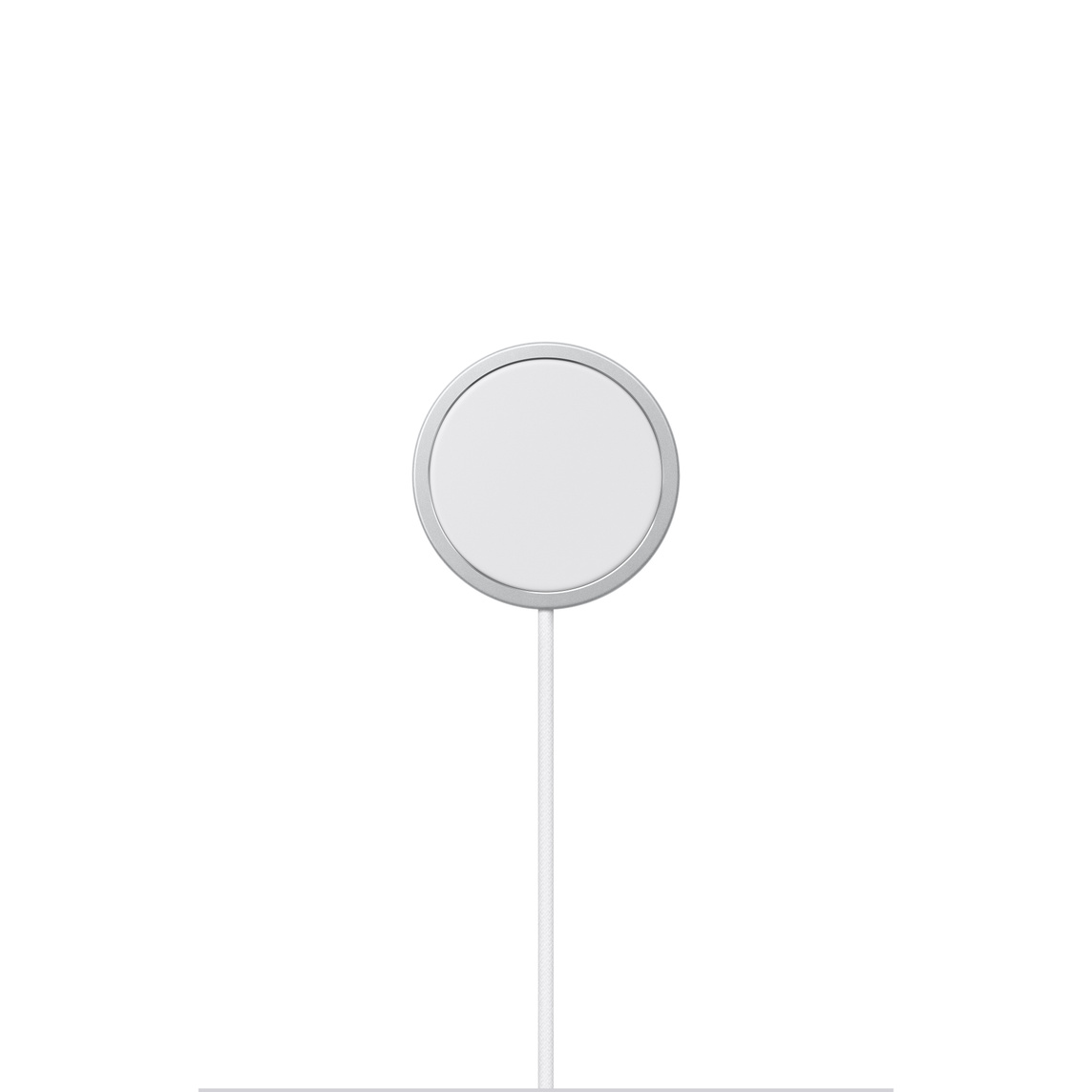
Apple MagSafe Charger (USB-C, 2m)
Best Overall: Apple's own MagSafe Charger is the reference implementation: 15W guaranteed on iPhone 12+, precise magnetic alignment, and a 2m cable that most desk setups benefit from. The catch is that the marketed 15W rate requires a 20W+ USB-C PD adapter sold separately — budget for it at purchase time.
Top picks ↓| Product | Price | Link |
|---|---|---|
| $37.99Price as of 2026-09-24 | ||
| $79.99Price as of 2026-09-24 | ||
| $76.34Price as of 2026-09-24 | ||
| $18.99Price as of 2026-09-24 | ||
| $10.34Price as of 2026-09-24 |
| Product | Max output | Qi standard | Devices charged | Cable included | AC adapter included | Form factor |
|---|---|---|---|---|---|---|
| Apple MagSafe Charger (USB-C, 2m) | 25 W (with 30 W USB-C adapter) | Qi2 (MagSafe) | 1 (iPhone, or AirPods with wireless case) | Yes (attached 2 m USB-C cable) | No | Puck / pad |
| Anker MagGo 3-in-1 Charging Station | 15 W phone (25 W total) | Qi2 certified (MagSafe-compatible) | 3 (iPhone, Apple Watch, AirPods/earbuds) | Yes (5 ft / 1.5 m USB-C to USB-C) | Yes (40 W USB-C) | Foldable station / pad |
| Belkin BoostCharge Pro 3-in-1 | 15 W phone (5 W AirPods; fast-charge Apple Watch) | Qi2 certified (15 W) | 3 (iPhone, Apple Watch, AirPods) | Yes (5 ft / 1.5 m braided USB-C) | Yes (36 W USB-C) | Stand (3-in-1) |
| Anker 313 Wireless Charger (Qi, 10W) | 10 W (Samsung); 7.5 W (iPhone); 5 W others | Qi (not Qi2 / not MagSafe magnetic) | 1 | Yes (4 ft Micro-USB cable) | No | Pad |
| ESR HaloLock 2-in-1 Magnetic Wireless Charger (iPhone + AirPods) | 7.5 W (iPhone); 5 W (AirPods) | MagSafe-compatible (not Qi2-certified) | 2 (iPhone, AirPods) | Yes | Yes (18 W fast-charge adapter) | Stand (2-in-1, CryoBoost active-cooling) |
Top picks
Related articles


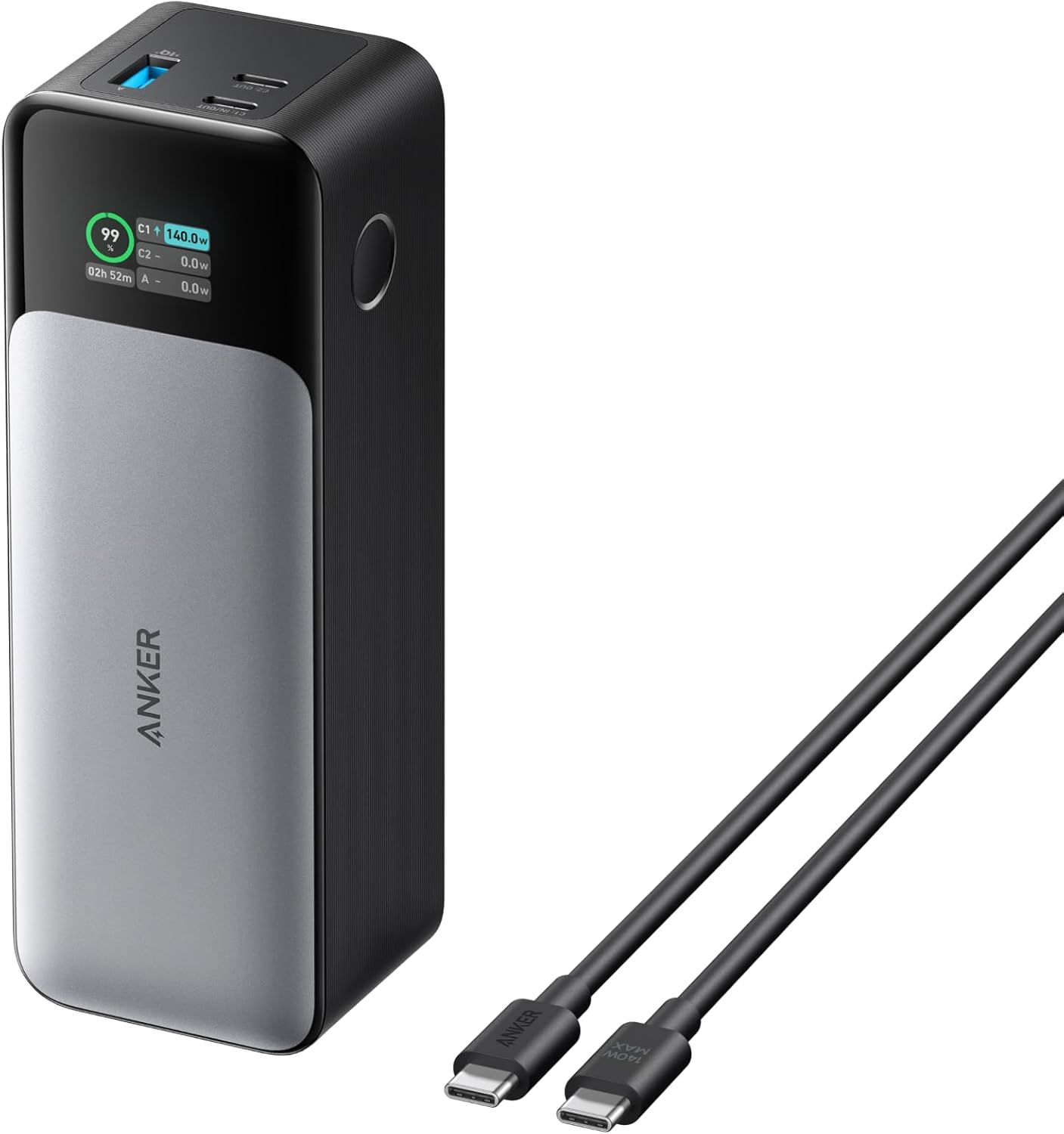
Apple's official MagSafe Charger with USB-C connector and 2m cable — the reference implementation of MagSafe, 15W on iPhone 12 and later with a 20W+ USB-C PD adapter, magnetic alignment ring for reliable coil coupling, MFi-certified. Available from major online retailers and directly from Apple. ships with cable only, no adapter — reaching the marketed 15W rate requires a 20W+ USB-C PD adapter purchased separately; charges only one device; delivers only 7.5W Qi to non-iPhone or non-MagSafe devices; it is more expensive per watt than third-party Qi2 alternatives that deliver the same 15W iPhone speed.
Apple's own MagSafe Charger is the reference implementation: 15W guaranteed on iPhone 12+, precise magnetic alignment, and a 2m cable that most desk setups benefit from. The catch is that the marketed 15W rate requires a 20W+ USB-C PD adapter sold separately — budget for it at purchase time.
Pros
- ✓Guaranteed 15W on iPhone 12+ with 20W+ adapter
- ✓2m cable length genuinely useful for desk routing
- ✓Most precise MagSafe magnetic alignment
Cons
- ✗No adapter included — 15W needs 20W+ PD adapter (extra cost)
Score breakdown
| Max output | 25 W (with 30 W USB-C adapter) |
| Qi standard | Qi2 (MagSafe) |
| Devices charged | 1 (iPhone, or AirPods with wireless case) |
| Cable included | Yes (attached 2 m USB-C cable) |
| AC adapter included | No |
| Form factor | Puck / pad |
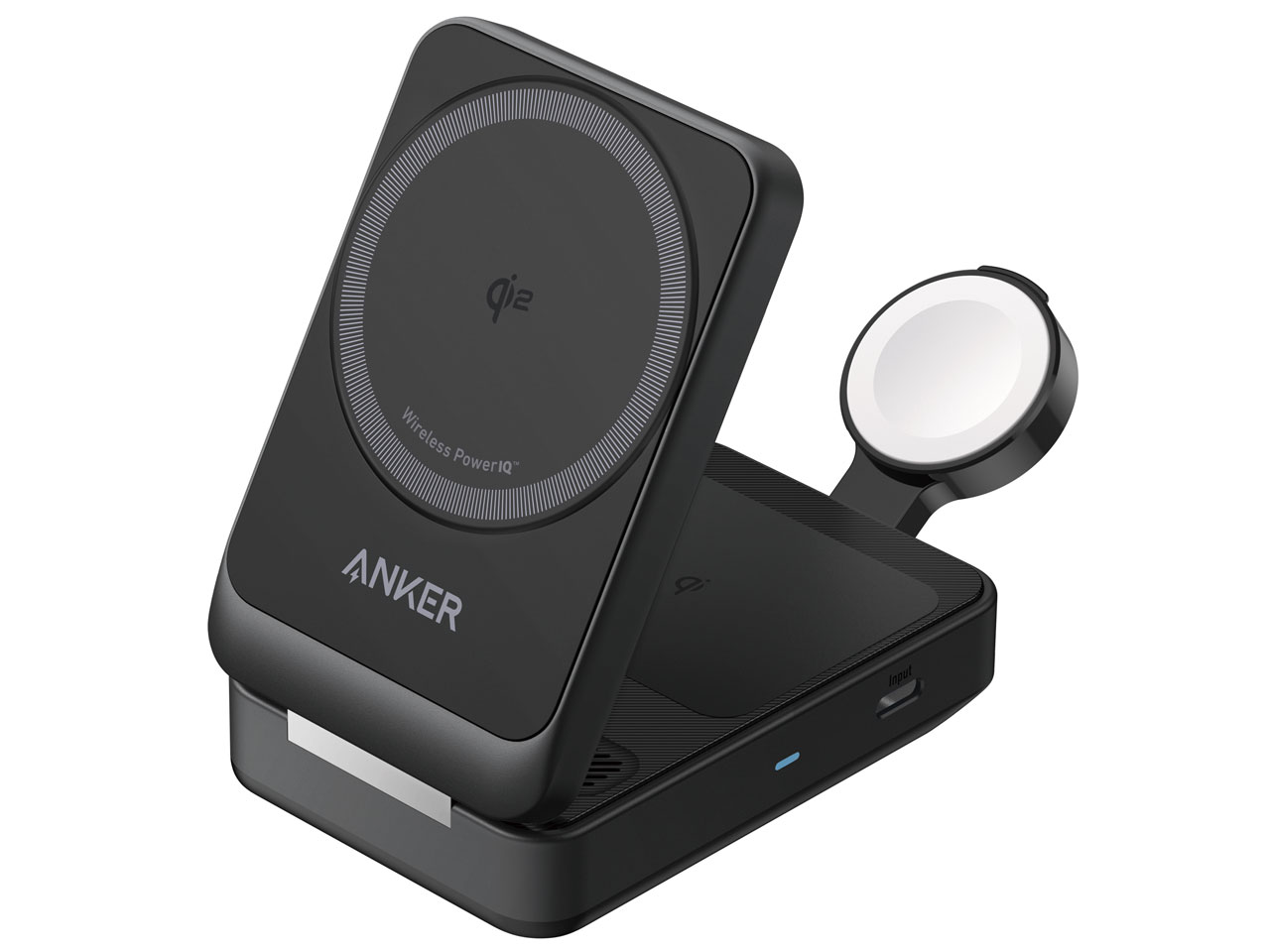
Anker's MagSafe-certified 3-in-1 charging station with foldable design — simultaneous 15W MagSafe iPhone charging, MFi-certified Apple Watch fast charge, and 5W AirPods Qi pad, collapsible to desk or travel form factor. Available from major online retailers. the 30W USB-C PD adapter required for full simultaneous three-device charging at rated speed is not included in standard packaging, adding to the effective purchase price; non-Apple ecosystem devices charge at basic Qi rates without magnetic alignment; folded size is still larger and heavier than the ESR HaloLock for travel; Apple Watch charging arm is fixed-angle, which may not suit all watch-wearing preferences for Nightstand mode.
The Anker MagGo charges iPhone (15W MagSafe), Apple Watch (MFi fast charge), and AirPods (5W Qi) simultaneously from one cable — the foldable design keeps the desk tidy. The 30W USB-C adapter required for full simultaneous charging is not included and adds to the effective cost.
Pros
- ✓Simultaneous iPhone + Apple Watch + AirPods charging
- ✓MagSafe-certified 15W iPhone spot
- ✓Foldable design for desk or travel
Cons
- ✗30W adapter not included — adds to real price
Score breakdown
| Max output | 15 W phone (25 W total) |
| Qi standard | Qi2 certified (MagSafe-compatible) |
| Devices charged | 3 (iPhone, Apple Watch, AirPods/earbuds) |
| Cable included | Yes (5 ft / 1.5 m USB-C to USB-C) |
| AC adapter included | Yes (40 W USB-C) |
| Form factor | Foldable station / pad |
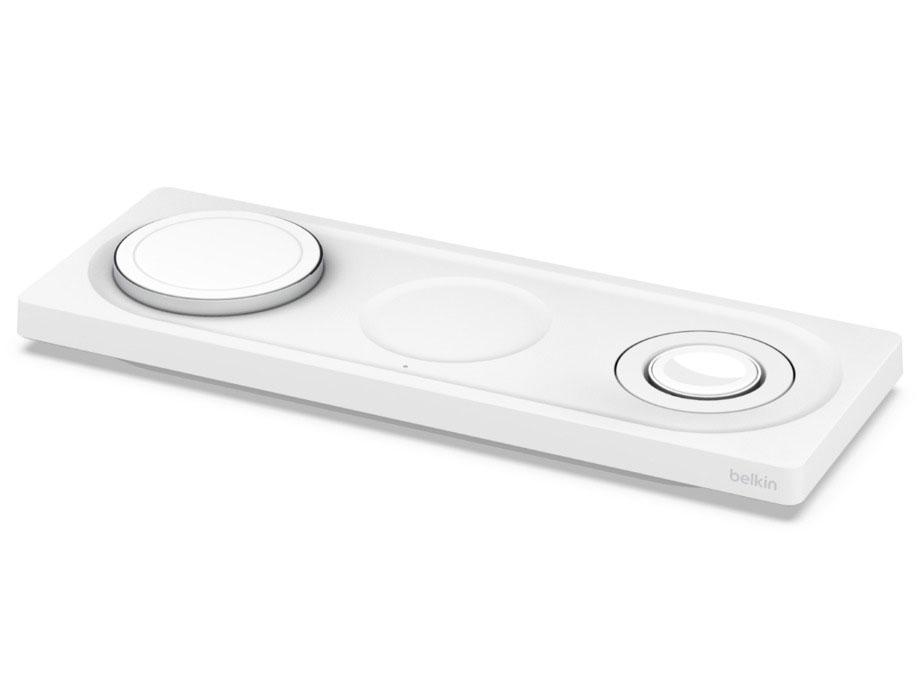
Belkin's MFi MagSafe 3-in-1 charging station — 15W MagSafe iPhone, MFi Apple Watch fast charge arm (5W, Series 7+), 5W AirPods Qi pad, premium fabric-wrap and aluminium build. Available from major online retailers. it is the most expensive charger in this comparison by a significant margin; the Apple Watch charging arm protrudes upward at a fixed angle that makes packing for travel cumbersome compared to the Anker MagGo's folding arm; no USB-C pass-through port for simultaneously charging additional devices; the price premium over the Anker MagGo 3-in-1 is primarily build quality and industrial design — the charging speeds and MFi certifications are essentially identical, so the price difference depends on how much premium feel matters to you.
Belkin's BoostCharge Pro matches the MagGo on MagSafe speed and Apple Watch fast charge but wraps it in fabric and aluminium construction that feels noticeably more premium. It is the most expensive charger in this comparison — the price premium over the Anker MagGo is build quality, not charging performance.
Pros
- ✓Premium fabric-wrap aluminium build quality
- ✓MFi MagSafe + Apple Watch fast charge (Series 7+)
- ✓Best-integrated Apple Watch arm position
Cons
- ✗Most expensive option; Apple Watch arm makes travel packing awkward
Score breakdown
| Max output | 15 W phone (5 W AirPods; fast-charge Apple Watch) |
| Qi standard | Qi2 certified (15 W) |
| Devices charged | 3 (iPhone, Apple Watch, AirPods) |
| Cable included | Yes (5 ft / 1.5 m braided USB-C) |
| AC adapter included | Yes (36 W USB-C) |
| Form factor | Stand (3-in-1) |
Subscribe to our newsletter
Occasional updates and new releases — no spam.

Anker's budget Qi wireless charging pad — 10W for compatible Android, 7.5W for iPhone, 5W universal Qi, flat pad with USB-A cable included, minimalist black rubber surface, LED charging indicator. Available from major online retailers. Qi only with no magnetic alignment — the phone must be positioned carefully within the coil coupling zone (typically a 30–40mm diameter sweet spot) for reliable charging, and moving the phone slightly while grabbing notifications can break the connection without an audible alert; no MagSafe, no Qi2; 7.5W for iPhone is the slowest iPhone wireless charge rate in this comparison; flat pad design with no stand angle makes glancing at a charging phone less comfortable than a stand-style charger; no Apple Watch charging capability.
The Anker 313 is the no-frills Qi pad that covers Android (10W) and iPhone (7.5W) at a budget price. There is no magnetic alignment — you must position the phone precisely over the coil — and 7.5W is the slowest iPhone wireless rate in this comparison. For Android users or pre-iPhone-12 owners where MagSafe doesn't apply, this is the correct budget choice.
Pros
- ✓Most affordable wireless option here
- ✓10W Qi for compatible Android devices
- ✓USB-A cable included (rare at this price)
Cons
- ✗No magnetic alignment — phone must be placed precisely; 7.5W iPhone is slowest in comparison
Score breakdown
| Max output | 10 W (Samsung); 7.5 W (iPhone); 5 W others |
| Qi standard | Qi (not Qi2 / not MagSafe magnetic) |
| Devices charged | 1 |
| Cable included | Yes (4 ft Micro-USB cable) |
| AC adapter included | No |
| Form factor | Pad |

ESR HaloLock 2-in-1 Magnetic Wireless Charger (iPhone + AirPods)
ESR's foldable MagSafe-compatible 2-in-1 travel wireless charger — MagSafe magnet ring for iPhone alignment snap, secondary 5W Qi AirPods pad, folds flat to credit-card footprint at ~12mm, USB-C input, budget price tier. Available from major online retailers. 7.5W maximum iPhone charge speed, not full 15W MagSafe — ESR HaloLock uses MagSafe-compatible magnets without full Qi2 certification, so it aligns like MagSafe but charges at 7.5W; the AirPods pad is 5W Qi only with no MagSafe alignment for AirPods; no Apple Watch charging spot, requiring a separate Apple Watch cable on travel; build finish is noticeably less premium than Belkin or Anker MagGo; the price is competitive but third-party Qi2-certified options at similar prices have begun to appear in 2026 that deliver the full 15W rate.
The ESR HaloLock folds to credit-card footprint (~12mm thick) with MagSafe-compatible magnets for iPhone alignment and a secondary 5W Qi pad for AirPods. It is the best value-to-portability trade in this comparison. The 7.5W iPhone ceiling (MagSafe-compatible magnets without Qi2 certification) is the only real limitation for travel use.
Pros
- ✓Folds to credit-card footprint — lightest travel option here
- ✓MagSafe-compatible magnetic alignment for iPhone
- ✓AirPods Qi pad on same fold
Cons
- ✗7.5W iPhone only (not full 15W MagSafe — no Qi2 cert); no Apple Watch spot
Score breakdown
| Max output | 7.5 W (iPhone); 5 W (AirPods) |
| Qi standard | MagSafe-compatible (not Qi2-certified) |
| Devices charged | 2 (iPhone, AirPods) |
| Cable included | Yes |
| AC adapter included | Yes (18 W fast-charge adapter) |
| Form factor | Stand (2-in-1, CryoBoost active-cooling) |
Which one is right for you?
For iPhone desk charging at full speed
Apple MagSafe Charger (USB-C, 2m)
Reference MagSafe implementation with 2m cable — buy the 20W adapter at the same time.
For full Apple ecosystem desk setups
Anker MagGo 3-in-1 Charging Station
iPhone + Apple Watch + AirPods from one cable; better value than Belkin at similar charging specs.
For Android or pre-iPhone-12 budget charging
Anker 313 Wireless Charger (Qi, 10W)
10W Qi covers most Android fast wireless scenarios at the lowest price in this comparison.
For travel with iPhone and AirPods
ESR HaloLock 2-in-1 Magnetic Wireless Charger (iPhone + AirPods)
Credit-card footprint with MagSafe-compatible alignment — accept the 7.5W ceiling in exchange for packing minimalism.
For premium desk aesthetics
Belkin BoostCharge Pro 3-in-1
Fabric-wrap aluminium build justifies the premium if Anker's construction feels unsatisfying — charging performance is identical.
How we compared
We did not run independent charge-time tests. We did not measure peak wattage draw with a USB power meter under controlled ambient temperature and starting battery state-of-charge conditions. We did not conduct thermal imaging to map coil and device temperatures during sustained charging. We did not test EMF output levels. Rigorous charge-speed testing requires standardised conditions — ambient temperature, cable gauge, adapter quality, phone case presence, starting state of charge — that vary enough in real use to make margin-level wattage comparisons unreliable without the controlled setup. We are not equipped to produce those numbers at a standard that would make them trustworthy.
Instead: we sourced manufacturer specification sheets and Apple's MFi program documentation for each product, cross-referenced published iFixit teardown analyses where available, reviewed the Wireless Power Consortium's published Qi2 specification, read aggregated long-term user reviews across major online retailers and international consumer electronics communities including Reddit's r/applehelp and r/AndroidQuestions, and built a comparison framework around the questions that determine real-world fit: adapter inclusion (hidden cost), actual versus marketed wattage, ecosystem compatibility constraints, portability, and heat generation patterns under extended daily use. We call out the explicit weakness on every product because a wireless charger that requires a separate adapter to reach its rated speed, or that only achieves its 15W maximum with one specific phone model, or that generates enough heat to trigger charge-rate throttling in a thick case — that charger's marketed wattage is not the number that describes your charging experience.
The most important framing for this category: wireless charging is always slower than wired charging at equivalent power because energy conversion efficiency in wireless power transfer is lower than in direct contact, and because most wireless chargers throttle charge rate when thermal thresholds are hit. The right question is not 'which wireless charger is fastest' but 'which wireless charger fits a desk or travel workflow well enough to get used every day' — a charger that ends up coiled in a drawer is slower than a pad that is in constant use.
MagSafe vs Qi2 vs Qi — the real differences
MagSafe is Apple's proprietary magnetic wireless charging system, introduced with iPhone 12 in 2020. It uses a ring of magnets in the iPhone to align with a corresponding ring in the charger coil, enabling reliable coil alignment and — because misaligned coils lose efficiency and generate more heat — allowing the charging rate to be raised safely to 15W. MagSafe is Apple-certified through the MFi (Made for iPhone) program. Non-MFi chargers with magnets can align to iPhone 12 and later, but they charge at Qi's maximum of 7.5W for iPhone, not 15W. The MagSafe name and the 15W rate both require Apple's certification.
Qi2 is the Wireless Power Consortium's 2023 open standard that incorporates the same magnetic alignment ring design that Apple developed for MagSafe, licensed to the WPC. Qi2-certified chargers can deliver 15W to Qi2-compatible devices — which includes iPhone 13 and later with iOS 16+ — without paying Apple's MFi certification tax. In practice, Qi2 is MagSafe-level charging speed without the Apple certification overhead. The ESR HaloLock in this comparison is Qi2-compatible (MagSafe-compatible magnets) but operates at 7.5W for iPhone rather than full 15W — it uses MagSafe-compatible magnets without full Qi2 certification, which is a meaningful distinction at the spec sheet level.
Qi is the original Wireless Power Consortium standard, now in version 1.3. Basic Qi does not use magnetic alignment. The charger and phone coils must be manually placed close enough to couple — typically within 5mm — and misalignment reduces efficiency and rate. Qi maximum for iPhone is 7.5W. Qi maximum for Android varies by manufacturer: up to 10W for most Android phones on a 10W Qi pad, but some Samsung phones support 15W or 25W Samsung Fast Wireless Charging which is a proprietary extension on top of Qi (not MagSafe, not Qi2). The Anker 313 in this comparison is Qi only: 10W for compatible Android, 7.5W for iPhone, no magnetic alignment. Bottom line: MagSafe = Apple proprietary magnetic + 15W on certified devices; Qi2 = open standard using MagSafe magnetic tech, 15W on compatible devices, no Apple certification required; Qi = basic, 5–10W (sometimes more for proprietary fast-charge), no magnet.
Wattage marketing vs actual charge speed
15W MagSafe is the headline number Apple and MagSafe-certified charger makers use. What that number means in practice: an iPhone 15 Pro charging from 0% to 100% on Apple's own MagSafe Charger takes approximately 2 hours under ideal conditions — room temperature, no case, phone idle on the pad, 20W+ USB-C Power Delivery adapter. Wired 30W USB-C fast charging takes approximately 1.5 hours for the same journey. The wireless charging takes 25% longer than wired even at its maximum rated speed. This is not a criticism specific to any charger — it is a fundamental property of wireless power transfer efficiency, which maxes out at roughly 85–90% for Qi2/MagSafe compared to near-100% for direct contact.
The adapter situation compounds the speed story. Apple's MagSafe Charger ships with a USB-C cable. No adapter is included. To reach 15W, you need a 20W+ USB-C Power Delivery adapter — Apple's own 20W adapter is sold separately. The marketed 15W rate is technically accurate, but the total cost of reaching that rate is the charger price plus the adapter if you do not already own one. Anker's MagGo 3-in-1 requires a 30W adapter to power three simultaneous devices; it ships without one. Belkin's BoostCharge Pro includes an adapter in most regional configurations but not all — confirm before purchasing.
Heat throttling is the other wattage marketing issue. When a phone's temperature exceeds its charge-rate management threshold — typically around 35°C on iPhone — iOS reduces the charge rate to protect battery chemistry. This happens faster in a thick case, in a warm room, or when the phone is running a processor-intensive app during charging. A 15W MagSafe charger in a 3mm thick leather case at 28°C ambient may deliver an effective average charge rate of 10–11W because the phone throttles to prevent overheating. The pad is not defective; the system is working as designed. But the 15W spec-sheet number does not describe your actual charge session in those conditions.
Multi-device stations: do they make sense?
Three-in-one charging stations — Anker MagGo and Belkin BoostCharge Pro in this comparison — charge iPhone, AirPods, and Apple Watch from a single unit. The case for them: one cable to the wall, no three separate pads and cables cluttering the desk or nightstand, and the Apple Watch charger arm positions the watch in Nightstand mode for the alarm display. For a desk that sees the same devices every day, this is genuinely convenient.
The case against: three-in-one stations require more total wattage to run all three devices simultaneously. The Anker MagGo specifies a 30W adapter requirement for full-speed operation of all three charging spots. A 30W USB-C PD adapter is an added cost if you do not have one. The station itself sits in the mid-range price tier for the Anker MagGo. Compare that to Apple's MagSafe Charger plus a 20W adapter for a single pad that charges your iPhone faster than the AirPods spot on a 3-in-1 station charges AirPods. The math depends on how many devices you need to charge and whether desk tidiness has a value to you.
For travel, three-in-one stations are harder to justify. The Anker MagGo is foldable, which reduces its footprint significantly, but it still requires its 30W adapter, and the whole package occupies more bag space than a single-device solution. ESR's HaloLock 2-in-1 — iPhone plus AirPods on a foldable pad — is the better travel compromise, and the Anker 313 Qi pad is the lightest option if you travel with an Android phone or an older iPhone that does not prioritise MagSafe.
Heat and battery health
Wireless charging generates more heat than wired charging at the same power level because the energy conversion process in inductive coil coupling is less efficient — typically 80–90% — compared to direct contact, and the heat generated by conversion inefficiency is deposited in the coil and dissipated through the phone body and charger surface. At 15W MagSafe, most iPhones will be noticeably warm to the touch after 30 minutes on the pad in a room-temperature environment. At 7.5W Qi, the same phone will be cooler.
Battery health is the long-term consequence. Lithium-ion battery capacity degrades faster at elevated temperatures — the Arrhenius relationship in electrochemistry means that a sustained 10°C increase in operating temperature roughly doubles the rate of capacity loss. Charging your phone to 100% daily and leaving it on the wireless pad topped off — common overnight charging behaviour — combines two battery-stress factors: high state of charge (the most chemically stressful state for lithium-ion) and elevated temperature from the wireless coil maintaining charge. Tips to extend battery longevity: avoid charging to 100% daily (iOS Optimised Battery Charging does this automatically if your schedule is consistent); remove a thick case during charging if the phone feels hot; and prefer a lower-wattage charger like the Anker 313 Qi pad (7.5W iPhone) for overnight charging rather than the full 15W MagSafe if you are leaving the phone on the pad for 6–8 hours.
The Apple MagSafe Charger (USB-C) and the Belkin BoostCharge Pro both implement Apple Watch fast charge on the watch charging spot (5W for Apple Watch Series 7 and later with MFi-certified fast-charge pads). Apple Watch fast charge raises the watch from 0% to 80% in approximately 45 minutes versus approximately 90 minutes on a standard 2.5W magnetic charger. This is MFi certification-dependent — third-party chargers without MFi certification for Apple Watch fast charge will charge the watch at the slower 2.5W rate regardless of what the product page says.
What changed in 2026
Qi2 is now the default standard at mid-range price points. In 2024, Qi2 chargers were concentrated in the mid-range price tier; by early 2026, Qi2-certified options exist at entry-level prices, and the price premium over basic Qi pads has narrowed to the point where buying a Qi-only pad for an iPhone user is difficult to justify unless budget is the sole constraint. The ESR HaloLock occupies this space — MagSafe-compatible magnets at an entry-level price, though at 7.5W rather than full 15W because it lacks Qi2 certification.
Apple Watch Series 10 introduced a further refinement to fast charging in late 2024: the Series 10 supports up to 5W fast charge via MFi-certified pads, and Apple's published figure for that pairing is 0% to 80% in under 40 minutes. The MFi fast-charge requirement is unchanged — non-certified pads charge the Series 10 at 2.5W. The Anker MagGo 3-in-1 and Belkin BoostCharge Pro both include MFi-certified Apple Watch pads; the ESR HaloLock 2-in-1 does not include an Apple Watch spot.
Samsung 25W wireless fast charging has become more widely accessible in 2026. Samsung's proprietary 25W wireless standard — which requires both a compatible Galaxy phone and a Samsung EP-series or certified third-party 25W wireless charger — was previously limited to the ultra-premium Galaxy S series. With the Galaxy S25 line, 25W wireless support has broadened across the range. This comparison does not include a Samsung 25W charger because this comparison is aimed at iPhone and mixed-ecosystem readers, but it is worth noting for Android-primary readers that the Qi2 15W ceiling does not apply to Samsung's ecosystem — Samsung's proprietary fast-charge extension sits above it.
Where each fits
Daily desk iPhone charging, fastest possible wireless speed, MagSafe alignment reliability: Apple MagSafe Charger (USB-C, 2m). Apple's own charger is the reference implementation of MagSafe — it has the longest cable of any charger in this comparison (2m, useful for desk routing), the magnetic alignment is precise, and it delivers 15W reliably on iPhone 12 and later. The 2m cable length is genuinely useful. Available from major online retailers and from Apple directly. it only charges one device; the 15W rate requires a 20W+ USB-C PD adapter that is not included (an additional cost); it delivers only 7.5W to non-iPhone devices; for a cable-only accessory it is expensive for what it is, and third-party Qi2 chargers at the same price point will match the 15W speed for iPhone 13+.
Desk or nightstand with full Apple ecosystem (iPhone plus AirPods plus Apple Watch), convenience over portability: Anker MagGo 3-in-1 Charging Station. The foldable design is neater on a desk than three separate chargers, the MagSafe-certified 15W iPhone spot delivers the fastest wireless charge in this comparison for iPhone 12+, and the Apple Watch arm positions the watch correctly for Nightstand mode. the 30W adapter required for full three-device simultaneous charging is not included and adds to the effective purchase price; non-Apple devices charge at Qi-standard speeds (5W for AirPods, 2.5W–5W for Apple Watch), so the station is primarily optimised for Apple ecosystem users; the folded footprint is still larger than a single pad, and it is heavier than the ESR HaloLock for travel.
Premium desk or nightstand, Apple ecosystem, Apple Watch fast charge is a priority, prefer an established brand: Belkin BoostCharge Pro 3-in-1. Belkin's build quality is consistently more premium than Anker's at the comparable price, the Apple Watch charging arm with MFi-certified fast charge (5W, Series 7+) is the best-integrated Apple Watch spot of any unit in this comparison, and the AirPods pad position is well thought out for desk placement. it is the most expensive unit in this comparison by a significant margin; the Apple Watch charger arm protrudes in a way that makes packing for travel cumbersome; there is no USB-C pass-through port for charging a fifth device, which matters if you want to top up a laptop simultaneously; value-per-dollar comparison with the Anker MagGo requires the Belkin to deliver enough of a quality premium to justify the price difference, which is not a given for everyone.
Budget wireless charging, Android-primary user, or older iPhone without MagSafe (pre-iPhone 12): Anker 313 Wireless Charger (Qi, 10W). It is the most affordable wireless charging option in this comparison. The 10W Qi output is competitive with mid-range Android fast wireless charging, the USB-A cable is included (rare at this price), and the flat pad design works reliably for any Qi-compatible device. Qi only — no MagSafe, no Qi2, no magnetic alignment, so you must place the phone precisely for reliable coupling; 7.5W for iPhone is slower than even basic MagSafe; the flat pad design provides no stand angle, which makes glancing at notifications while charging less comfortable than a stand-style charger; no visual or audible confirmation that the phone is placed correctly and charging.
Travel-first, iPhone plus AirPods, compact footprint, moderate speed is acceptable: ESR HaloLock 2-in-1 Travel Wireless Charger. It is the best value-to-portability ratio in this comparison. The foldable design collapses to roughly the footprint of a credit card at 12mm thick, the MagSafe-compatible magnets snap the iPhone into alignment reliably, and the AirPods Qi pad on the bottom pad is at the right position for most AirPods cases. 7.5W maximum iPhone charge speed — not full MagSafe 15W because ESR HaloLock uses MagSafe-compatible magnets without full Qi2 certification; the AirPods pad is 5W Qi only; build quality is noticeably less premium than Belkin or even Anker MagGo; it does not include an Apple Watch spot, so Apple Watch users need a separate cable for overnight travel charging.
Verdict
For a pure iPhone desk charger where 15W speed and magnetic alignment matter and you already own a compatible adapter: Apple MagSafe Charger (USB-C, 2m). The 2m cable, the guaranteed 15W rate on iPhone 12+, and Apple's own implementation of MagSafe make this the no-ambiguity reference choice. Buy the 20W adapter at the same time if you do not have one.
For a full Apple ecosystem desk or nightstand charging setup: Anker MagGo 3-in-1. Better value than the Belkin BoostCharge Pro for most users — the 15W iPhone spot is identical, the Apple Watch fast charge is present, and the price difference between it and the Belkin rarely translates into a tangible daily-use difference. Budget for the 30W adapter.
For the premium desk setup where Belkin's build quality and the premium Apple Watch arm integration justify the price: Belkin BoostCharge Pro 3-in-1. It earns its price if you find the Anker's build quality unsatisfying and the BoostCharge Pro's tighter design a better match for your desk. Do not buy it for travel.
For Android, budget, or iPhone without MagSafe: Anker 313 Wireless Charger. There is no cheaper reliable wireless charging option in this comparison, and the 10W Qi output covers most Android mid-range fast wireless scenarios.
For travel: ESR HaloLock 2-in-1. Accept the 7.5W ceiling and the lack of an Apple Watch spot in exchange for the smallest packed footprint and MagSafe-compatible alignment. If you always charge the watch separately on travel anyway, the HaloLock is the right compromise. If your overnight travel kit must include Apple Watch charging, the Anker MagGo's foldable design is the next-best option, with the understanding that it is heavier and requires its own 30W adapter.
One note that applies to all five: wireless charging convenience comes at a speed cost versus wired, and a heat cost versus both slower wireless and wired options. If you charge overnight and wake up to a full phone regardless of charge speed, the speed difference between 7.5W and 15W wireless does not affect your life — any of these chargers will fill an iPhone 15 from 0% to 100% in well under the 7–8 hours of typical overnight charging. The meaningful differences between them are desk setup (single vs multi-device), travel portability, ecosystem compatibility, and adapter cost. Choose on those axes, not on the wattage number.
Frequently asked questions
Will any of these chargers work through a phone case?▼
Is it safe to charge my phone wirelessly overnight, every night?▼
Do these chargers work with Android phones, not just iPhone?▼
Do any of these chargers include an adapter, or do I need to buy one separately?▼
Can I use any of these at airports or in other countries?▼
What is the difference between Apple Watch fast charge and standard Apple Watch charging on these pads?▼
Is MagSafe charging bad for my iPhone battery long-term?▼
Prices change. Check the retailer for the current price.
Comments & questions
Discussion happens on nattzy, our community forum. Sign in with Google to post — it takes a second.