Best Wrist Wraps for Lifting 2026: Schiek vs Rogue vs SBD
Three sets into a heavy bench press session and your wrists start drifting into extension — that's the moment wrist wraps earn their place. Weight range and build quality determine long-term value far more than feature lists.
Quick answer
The Schiek 1100WRP leads on the stiffness-to-flexibility ratio: its cotton/elastic blend locks the wrist neutral under heavy pressing while preserving bar-path mechanics, and the angled thumb loop stitching stops bunching between sets. Harbinger 20-inch polypropylene wraps go on and off fastest at the lowest price, Titan Signature Gold and SBD are the IPF-approved competition options — SBD in 45cm and 60cm — and Rogue 18-inch wraps flex enough for cleans and front squats.
Each wrap was evaluated on stiffness-to-flexibility ratio under heavy pressing loads, velcro closure durability as reported by long-term users, wrap length coverage, IPF compliance, and break-in period before the wrap conforms to wrist shape.

Schiek Sports Model 1100WRP Wrist Wraps 24"
Best Overall: Schiek's 1100WRP has the most dialed-in stiffness-to-flexibility ratio of any wrap in this comparison — the cotton/elastic blend locks the wrist into neutral under load while still allowing correct bar-path mechanics in the bench press. The angled thumb loop stitching prevents bunching between sets, a small but meaningful detail at heavy weights.
Top picks ↓| Product | Price | Link |
|---|---|---|
| $24.95Price as of 2026-09-24 | ||
| $13.95Reference price | ||
| $36.99Reference price | ||
| $15.00Reference price | ||
| $42.50Reference price |
| Product | Length | Stiffness | Material | Closure | IPF approved | Use type |
|---|---|---|---|---|---|---|
| Schiek Sports Model 1100WRP Wrist Wraps 24" | 24 in (61 cm) | stiff | Extra-heavyweight cotton elastic | Thumb loop + extra-wide hook-and-loop (Velcro) closure | no | Weightlifting / general strength training |
| Harbinger Unisex Polypropylene Wrist Wraps 20" | 20 in (51 cm) | flexible | Polypropylene / synthetic medium-weight elastic | Thumb loop + hook-and-loop (Velcro) closure | no | Weightlifting / general strength training |
| Titan Signature Gold Wrist Wrap | Multiple lengths ~12 in to 36 in (e.g. 20 in, 24 in, 36 in; 36 in is IPF max) | stiff | — | Thumb loop (3/4 in elastic) + 2 in Aplix hook-and-loop (Velcro-type) closure | yes | Powerlifting / competition (bench, overhead, heavy upper-body) |
| Rogue Fitness Wrist Wraps | 12 in / 18 in / 24 in (30 / 45 / 60 cm) | flexible | 50% cotton, 40% elastic, 10% polyester | Thumb loop + hook-and-loop (Velcro) closure | no | Weightlifting / powerlifting / strongman |
| SBD Wrist Wraps (Competition) | 40 cm (S) / 60 cm (M) / 100 cm (L); max 8 cm width | Available in stiff and flexible | Proprietary wide elastic | Thumb loop (left/right specific) + VELCRO Brand hook-and-loop closure | yes | Powerlifting competition |
Top picks
Related articles

Schiek Sports Model 1100WRP Wrist Wraps 24"
24-inch cotton/elastic blend, moderate-to-stiff, not IPF-approved — the all-around benchmark for serious gym training and bodybuilding competition prep.
Schiek's 1100WRP has the most dialed-in stiffness-to-flexibility ratio of any wrap in this comparison — the cotton/elastic blend locks the wrist into neutral under load while still allowing correct bar-path mechanics in the bench press. The angled thumb loop stitching prevents bunching between sets, a small but meaningful detail at heavy weights. Not IPF-approved, which only matters if you compete in tested federation events.
Pros
- ✓Best stiffness-to-flexibility ratio for heavy pressing
- ✓Angled thumb loop prevents bunching under load
- ✓Decades of proven reliability for gym and bodybuilding use
Cons
- ✗Not IPF-approved — ineligible for IPF federation competition
Score breakdown
| Length | 24 in (61 cm) |
| Stiffness | stiff |
| Material | Extra-heavyweight cotton elastic |
| Closure | Thumb loop + extra-wide hook-and-loop (Velcro) closure |
| IPF approved | no |
| Use type | Weightlifting / general strength training |
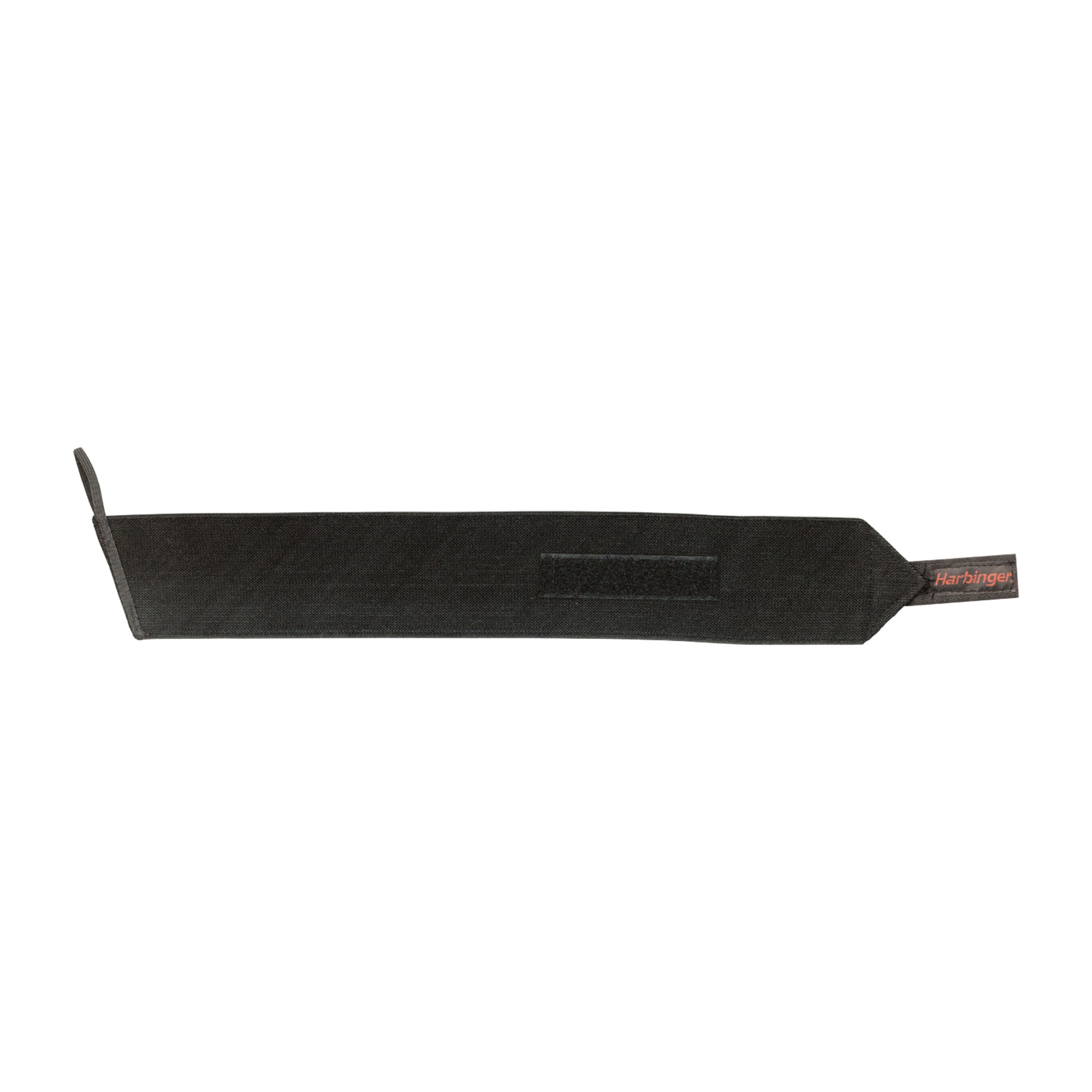
Harbinger Unisex Polypropylene Wrist Wraps 20"
20-inch polypropylene, fast to apply and remove, best value option for intermediate lifters who need real wrist support without paying competition prices.
Harbinger's 20-inch polypropylene wraps are the correct recommendation for intermediate lifters who need functional wrist support without competition-wrap pricing. The shorter length means faster on-and-off between pressing variations, and polypropylene gives useful rigidity at lower wrap width than cotton. These won't give you the rigid lockout of competition wraps — which is fine if you're training at 70–85% of max.
Pros
- ✓Fastest to apply and remove — useful in pressing circuits
- ✓Polypropylene stiff per unit thickness vs cotton alternatives
- ✓Most affordable option with real wrist support
Cons
- ✗20-inch length provides less coverage than 24-inch competition wraps
Score breakdown
| Length | 20 in (51 cm) |
| Stiffness | flexible |
| Material | Polypropylene / synthetic medium-weight elastic |
| Closure | Thumb loop + hook-and-loop (Velcro) closure |
| IPF approved | no |
| Use type | Weightlifting / general strength training |
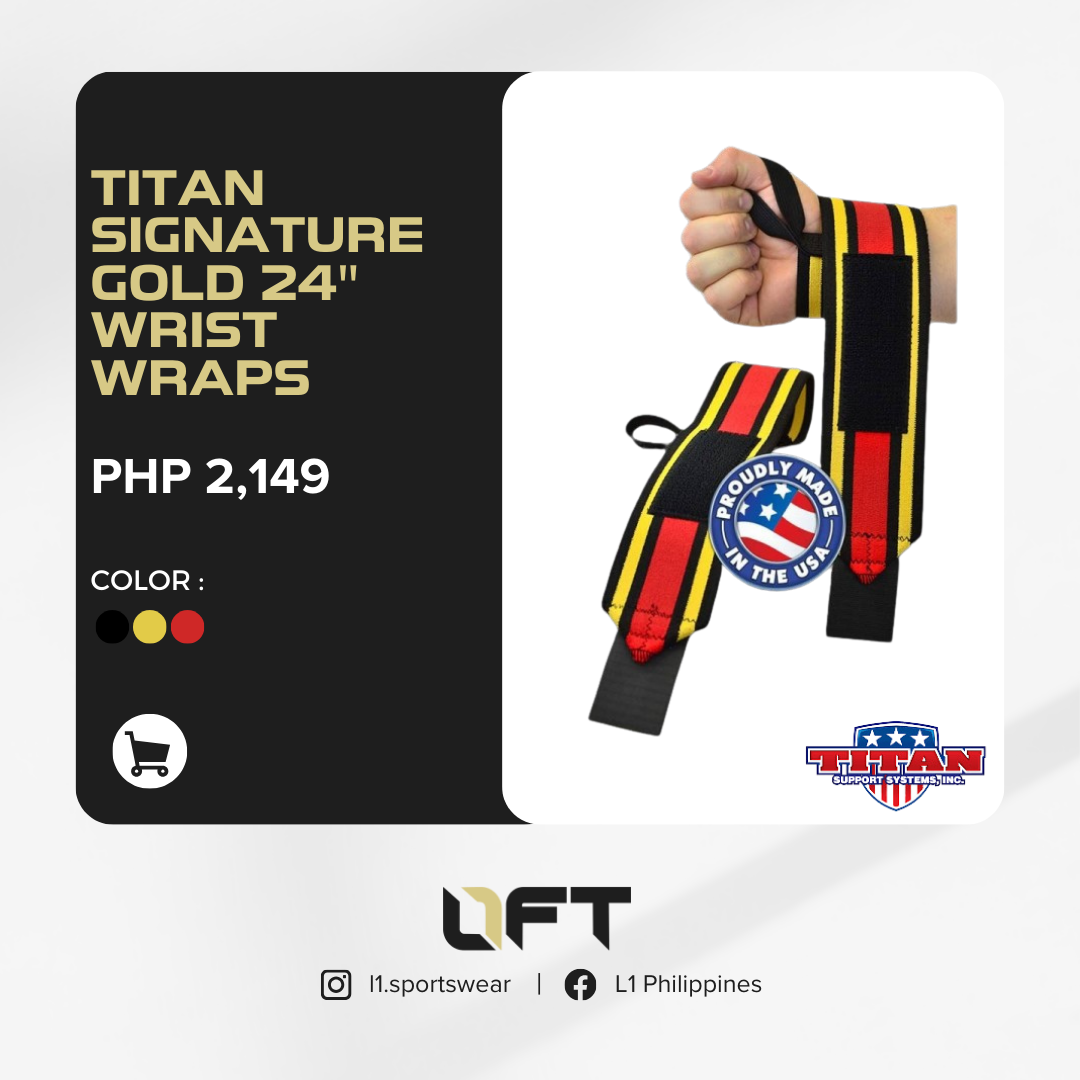
Titan Signature Gold Wrist Wrap
24-inch maximum-stiffness cotton, IPF-approved, non-slip velcro — built for competition bench press where absolute wrist lockout is the priority.
Titan's Signature Gold is built for one thing: maximum wrist extension restriction on maximum-effort bench press attempts. The denser cotton blend and non-slip velcro hold tension across an entire session without creeping loose — the main failure point on cheaper wraps. The stiffness makes them impractical for general training warm-up sets, so most lifters reserve them for top-set work only.
Pros
- ✓IPF-approved for raw and equipped divisions
- ✓Non-slip velcro holds tension without creeping across a full session
- ✓Maximum wrist extension restriction for competition bench press
Cons
- ✗Too stiff for general warm-up sets — slows setup at moderate intensity
Score breakdown
| Length | Multiple lengths ~12 in to 36 in (e.g. 20 in, 24 in, 36 in; 36 in is IPF max) |
| Stiffness | stiff |
| Closure | Thumb loop (3/4 in elastic) + 2 in Aplix hook-and-loop (Velcro-type) closure |
| IPF approved | yes |
| Use type | Powerlifting / competition (bench, overhead, heavy upper-body) |
Subscribe to our newsletter
Occasional updates and new releases — no spam.
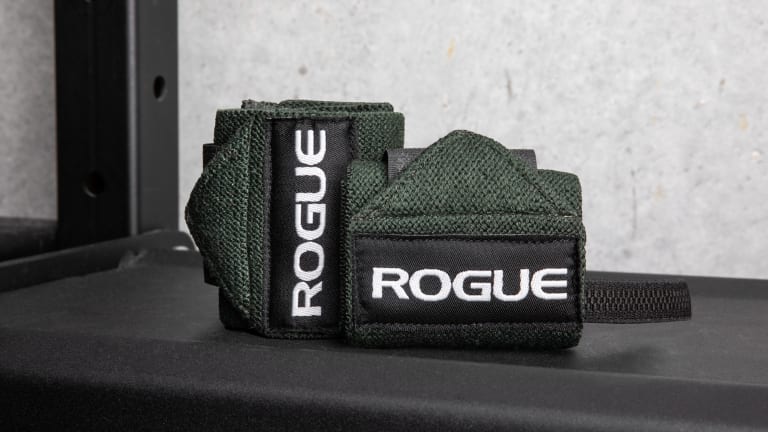
18-inch moderate-stiffness cotton/elastic, made in USA, practical across both powerlifting-style pressing and Olympic-derived overhead movements.
Rogue's 18-inch moderate-stiffness wraps are the most versatile option for lifters who rotate between powerlifting-style pressing and Olympic-derived movements. The shorter length and more pliable cotton/elastic blend allow wrist range of motion in front squats and cleans where competition-spec wraps would restrict too much. Made in Columbus, Ohio, with Rogue's standard quality control.
Pros
- ✓Versatile across bench press, overhead press, and Olympic lifting
- ✓Shorter 18-inch length works well for training variety
- ✓Made in USA with Rogue's consistent QC
Cons
- ✗18-inch length provides less coverage than 24-inch wraps for maximum-effort pressing
Score breakdown
| Length | 12 in / 18 in / 24 in (30 / 45 / 60 cm) |
| Stiffness | flexible |
| Material | 50% cotton, 40% elastic, 10% polyester |
| Closure | Thumb loop + hook-and-loop (Velcro) closure |
| IPF approved | no |
| Use type | Weightlifting / powerlifting / strongman |

45cm or 60cm, IPF-approved woven cotton, consistent tension from closure to end — the choice for IPF athletes who need reliable performance at competition conditions.
SBD's woven cotton blend maintains consistent tension throughout the length of the wrap — tight at the closure and still firm mid-wrap, which matters at meets where handlers cannot re-wrap between attempts. Available in 45cm and 60cm, both IPF-approved. The real break-in period (five to six sessions of unnaturally rigid feel) is the only friction point; they conform to your wrist shape and become significantly easier to apply correctly after that.
Pros
- ✓More IPF World Championship bench press appearances than any other wrap
- ✓Consistent tension from closure end to far end (no looser mid-wrap)
- ✓Available in 45cm and 60cm to match meet requirements
Cons
- ✗5–6 session break-in period before they conform and apply easily
Score breakdown
| Length | 40 cm (S) / 60 cm (M) / 100 cm (L); max 8 cm width |
| Stiffness | Available in stiff and flexible |
| Material | Proprietary wide elastic |
| Closure | Thumb loop (left/right specific) + VELCRO Brand hook-and-loop closure |
| IPF approved | yes |
| Use type | Powerlifting competition |
Which one is right for you?
For serious gym lifters
Schiek Sports Model 1100WRP Wrist Wraps 24"
Best all-around stiffness balance for heavy gym pressing without the rigidity overhead of competition-spec wraps.
For intermediate lifters on a budget
Harbinger Unisex Polypropylene Wrist Wraps 20"
Real wrist support at the lowest price in this comparison — fast on and off between sets.
For IPF powerlifters (raw or equipped)
SBD Wrist Wraps (Competition)
Consistent tension throughout the wrap makes them the meet-day choice when handlers cannot re-wrap between attempts.
For general strength + Olympic lifting
Rogue Fitness Wrist Wraps
Moderate stiffness at 18 inches works across pressing and Olympic movements without swapping wraps.
For competition bench specialists
Titan Signature Gold Wrist Wrap
Maximum extension restriction with non-slip velcro — IPF-approved and built specifically for competition bench press lockout.
Schiek Sports 1100WRP 24" — Best Overall
Harbinger Polypropylene 20" — Best Budget Pick
Titan Signature Gold — Best for Competition Powerlifting
Rogue Fitness Wrist Wraps — Best All-Rounder
SBD Wrist Wraps (Competition) — Best for IPF Athletes
Frequently asked questions
How tight should wrist wraps be for bench press?▼
What length wrist wrap should I get?▼
Do wrist wraps help with wrist pain during pressing?▼
Prices change. Check the retailer for the current price.
Comments & questions
Discussion happens on nattzy, our community forum. Sign in with Google to post — it takes a second.
Related articles
Best Gym Bag 2026: Wet/Dry, Backpack vs Duffel, Sizing
Best Water Bottle 2026: Stanley vs Hydro Flask vs Thermos
Best Air Purifier 2026: 5 models compared honestly

ConoHa WING review (2026): setup, speed and pricing
Best JP rental server 2026: 5 hosts ranked
Best LED Face Masks 2026: 3 Light Therapy Devices Compared