Meilleurs jouets de dentition 2026 : matériaux sûrs
WriterPickly Éditorial
Mis à jour le 2026-06-13
Nuby IcyBite, zones dure et souple pour incisives et molaires, ou Sophie la Girafe en caoutchouc naturel pour petites mains. À vérifier : sans BPA, taille.
En bref
Le Nuby IcyBite est le meilleur anneau de dentition pour la plupart des bébés : ses parties dure et souple conviennent aussi bien aux dents de devant qu'aux molaires, et il est assez bon marché pour en acheter deux afin d'en avoir toujours un au frais. Sophie la Girafe, en caoutchouc naturel, convient mieux aux petites mains. Vérifiez que tout anneau de dentition est indiqué sans BPA et sans phtalates, et contrôlez sa taille au regard des recommandations sur le risque d'étouffement.
📋Notre méthode de comparaison
Cette comparaison repose sur une recherche documentaire : spécifications publiées, documentation constructeur, tests et avis indépendants.

Meilleur globalement: Le Nuby IcyBite est l'anneau de dentition le plus pratique de cette liste — le design à double zone avec une section à picots durs et une section en silicone souple répond à plusieurs étapes de dentition et positions de dents dans un seul jouet qui coûte moins de 5 $. Le silicone de qualité alimentaire est conforme CPSC, sans phtalates, et sans BPA, réussissant tous les contrôles de sécurité standards.
Ce bouton ouvre des résultats de recherche Amazon, et non la page d’un produit précis.
Ce bouton ouvre des résultats de recherche Amazon, et non la page d’un produit précis.
- 2
 Sophie la Girafe Natural Rubber TeetherAMeilleur caoutchouc naturel classique$22〜28prix de référence aux États-Unis
Ce bouton ouvre des résultats de recherche Amazon, et non la page d’un produit précis.
- 3
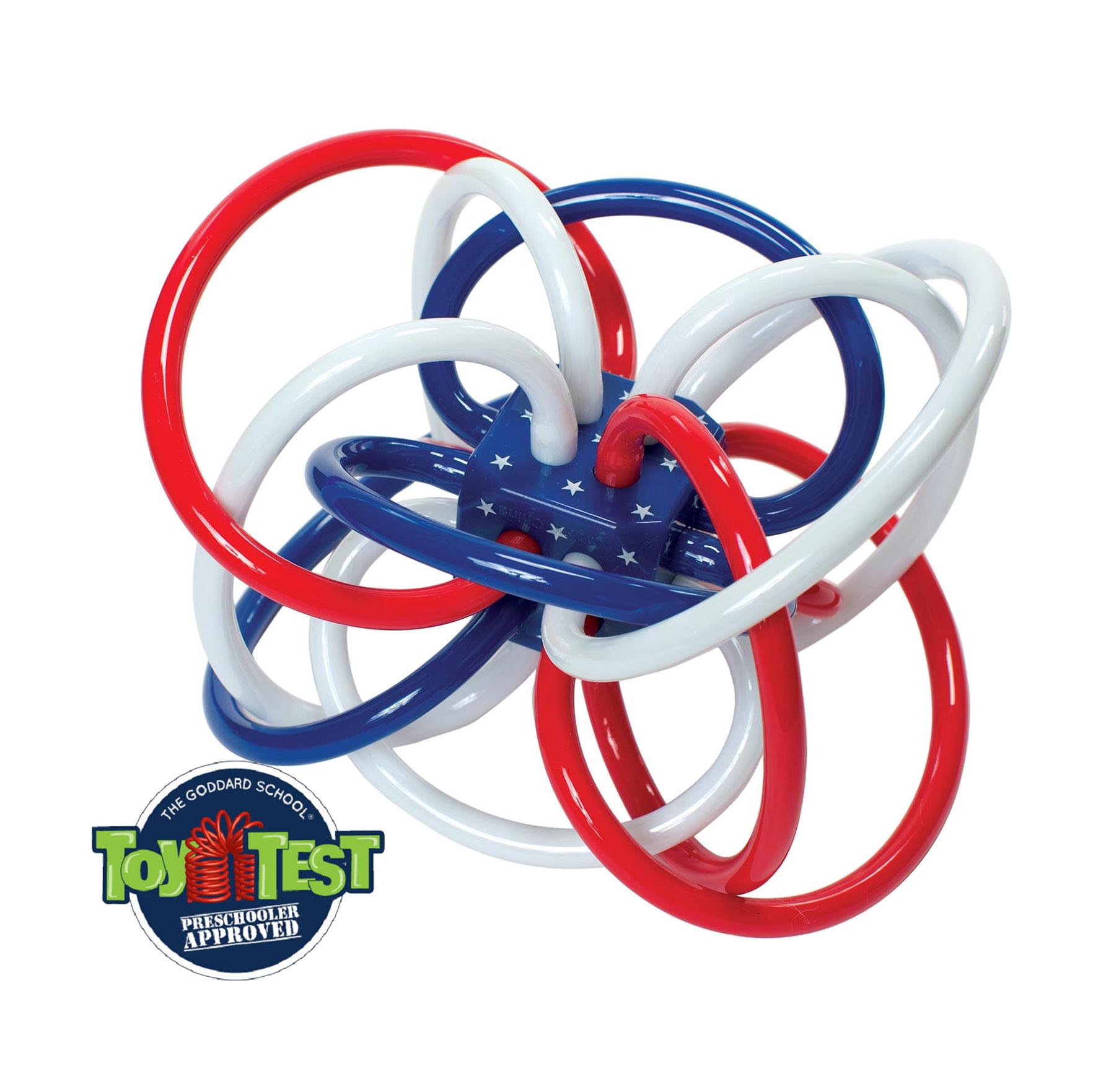 Manhattan Toy Winkel Rattle and Sensory TeetherAMeilleur pour les petites mains (3-5 mois)$14〜19prix de référence aux États-Unis
Ce bouton ouvre des résultats de recherche Amazon, et non la page d’un produit précis.
- 4
 Bam & Boo Natural Rubber Baby Teether ToyB+Meilleur matériau naturel$12〜18prix de référence aux États-Unis
Aucune boutique partenaire ici — ceci ouvre une recherche Amazon.
- 5

Aucune boutique partenaire ici — ceci ouvre une recherche Amazon.
Articles connexes


1★ Best PickA+Meilleur globalementNuby IcyBite Hard Soft Teether Ring
Le Nuby IcyBite est l'anneau de dentition le plus pratique de cette liste — le design à double zone avec une section à picots durs et une section en silicone souple répond à plusieurs étapes de dentition et positions de dents dans un seul jouet qui coûte moins de 5 $. Le silicone de qualité alimentaire est conforme CPSC, sans phtalates, et sans BPA, réussissant tous les contrôles de sécurité standards. Froid du réfrigérateur (pas congelé), il offre un soulagement significatif des gencives que les nourrissons recherchent activement.
Points forts
- ✓Les doubles zones dure/molle répondent à plusieurs étapes de dentition dans un seul jouet
- ✓Silicone de qualité alimentaire conforme CPSC avec certification sans BPA et sans phtalates
- ✓Assez abordable pour en garder plusieurs au frigo et dans le sac à langer en même temps
Points faibles
- ✗Design plus simple que Sophie ou Winkel — engagement sensoriel moins novateur pour les nourrissons plus âgés
- ✗La section dure peut sembler trop ferme pour les débutants en dentition à 4 mois
Ce bouton ouvre des résultats de recherche Amazon, et non la page d’un produit précis.
2AMeilleur caoutchouc naturel classiqueSophie la Girafe Natural Rubber Teether
Sophie la Girafe est faite de caoutchouc 100 % naturel depuis 1961, et la surface variée — longues jambes, cou, tête, et corps tous avec des textures différentes — offre une couverture complète des gencives pour les dents de devant, les dents latérales, et les molaires à mesure qu'elles émergent à différentes étapes. La taille est adaptée à la préhension à 4-8 mois, et le son de couinement fournit un engagement sensoriel qui prolonge l'intérêt au-delà de la dentition purement tactile. Une note d'entretien critique : ne pas submerger Sophie dans l'eau ni la mettre au lave-vaisselle — le liquide entre par le trou du couineur et permet le développement de moisissures à l'intérieur, qui ne peuvent pas être nettoyées.
Points forts
- ✓Caoutchouc 100 % naturel avec plus de 60 ans d'historique de sécurité
- ✓Plusieurs textures de surface couvrent différentes positions de dents à mesure que la dentition progresse
- ✓Taille et poids optimisés pour le développement de préhension à 4-8 mois
Points faibles
- ✗Ne peut pas être submergée dans l'eau pour le nettoyage — risque de moisissure si l'humidité entre par le trou du couineur
- ✗Latex de caoutchouc naturel — non adapté aux familles avec allergie au latex
Ce bouton ouvre des résultats de recherche Amazon, et non la page d’un produit précis.
3AMeilleur pour les petites mains (3-5 mois)Manhattan Toy Winkel Rattle and Sensory Teether
L'intuition de design du Winkel est simple et efficace : un enchevêtrement de tubes souples et interconnectés signifie que peu importe comment un bébé de 3-5 mois le saisit — et la préhension est encore maladroite à ce stade — il tient quelque chose de mâchable. Les tubes en polyéthylène souple sont sans BPA et ont des anneaux de texture en relief qui offrent une pression douce sur les gencives. Le mécanisme de hochet à l'intérieur fournit une récompense auditive. Il ne remplacera pas un anneau une fois qu'un bébé a une préhension fiable à 6+ mois, mais comme option dédiée 3-5 mois, il est uniquement adapté à cette étape de développement.
Points forts
- ✓Le design en boucles interconnectées assure une préhension réussie à 3-5 mois quand la coordination est limitée
- ✓Les tubes en polyéthylène sans BPA sont sûrs et faciles à nettoyer complètement
- ✓Le hochet à l'intérieur fournit un retour audio qui prolonge l'engagement
Points faibles
- ✗Moins de variété texturale que Sophie ou Nuby pour les bébés en dentition plus âgés
- ✗La grande taille devient moins pratique une fois qu'un bébé développe une meilleure préhension sélective
Ce bouton ouvre des résultats de recherche Amazon, et non la page d’un produit précis.
Abonnez-vous à la newsletter
Nouveautés et actualités occasionnelles, sans spam.
4B+Meilleur matériau naturelBam & Boo Natural Rubber Baby Teether Toy
L'anneau Bam & Boo est le bon choix pour les familles qui veulent spécifiquement des matériaux naturels vérifiés — la certification caoutchouc latex 100 % naturel est étayée par de la documentation, pas juste une revendication d'étiquette. Le design à trois anneaux offre différentes zones de pression et est facile à tenir à plusieurs angles. La texture de surface est similaire à Sophie mais avec des bosses en relief plus délibérées pour le massage des gencives dans la zone des molaires pendant la phase d'éruption de 7-12 mois. Contrairement à Sophie, celui-ci peut être rincé sous l'eau courante sans risque de moisissure puisqu'il est en caoutchouc plein sans cavités creuses.
Points forts
- ✓Caoutchouc latex 100 % naturel vérifié — aucun ajout synthétique
- ✓La construction pleine permet un rinçage complet à l'eau sans risque de moisissure
- ✓Le design à trois anneaux offre des points de préhension et zones de texture distincts
Points faibles
- ✗Latex naturel — non adapté aux familles allergiques au latex
- ✗Forme plus simple que Sophie offre moins de variété de surface à travers les étapes de dentition
5B+Meilleur silicone économiqueMunchkin Twisty Figure 8 Teether
Le Munchkin Twisty Figure 8 Teether regroupe plusieurs textures — côtés lisses, crêtes bosselées, et picots en relief — dans une forme en huit qui donne aux petites mains deux positions de préhension confortables. Le silicone souple et flexible est sans BPA et réussit les certifications de sécurité standards. Se réfrigère bien et procure un soulagement froid. Le design en huit est ergonomiquement meilleur que les anneaux à barre droite pour les bébés qui ont tendance à laisser tomber les objets car il s'auto-oriente et n'a pas de « mauvaise » extrémité à saisir. À son prix, c'est l'anneau de secours rationnel à garder dans le sac à langer.
Points forts
- ✓Plusieurs zones de texture dans une forme simple — bosses, crêtes, et silicone lisse en une pièce
- ✓Le design en huit n'a pas de mauvaise orientation — plus facile pour les bébés d'auto-corriger leur prise
- ✓Le prix économique en fait un achat sensé pour le sac à langer ou la maison des grands-parents
Points faibles
- ✗La fermeté du silicone est moyenne — pas aussi douce que Sophie pour les débutants en dentition
- ✗Marque moins reconnaissable signifie plus difficile de trouver un remplacement en cas de perte
Ce qu'il faut rechercher dans un jouet de dentition
La sécurité des matériaux n'est pas négociable — évitez tout anneau de dentition qui n'indique pas clairement sans BPA, sans phtalates, et fait de matériaux de qualité alimentaire. Tout le reste (texture, forme, aptitude à la réfrigération) est secondaire. Un anneau de dentition confortable mais fait de matériaux douteux est pire qu'un jouet à texture rugueuse fait de caoutchouc certifié sûr.
Sécurité des matériaux : silicone vs caoutchouc vs plastique
Le silicone de qualité alimentaire et le caoutchouc 100 % naturel sont les matériaux les plus sûrs pour les anneaux de dentition. Le silicone de qualité alimentaire est stable, non poreux, et n'absorbe pas les bactéries. Le caoutchouc naturel est doux, flexible, et offre une excellente variance de texture pour le soulagement des gencives — mais vérifiez les revendications « latex 100 % naturel », car de nombreux produits « caoutchouc naturel » contiennent des ajouts synthétiques. Les anneaux en plastique dur peuvent offrir une surface de mastication différente mais nécessitent une certification stricte sans BPA ni phtalates.
Variété de texture pour le soulagement des gencives
Différentes textures apaisent différentes étapes de la dentition. Les surfaces lisses apaisent l'inconfort léger ; les crêtes fermes offrent une contre-pression pour la phase d'éruption ; les picots bosselés massagent activement les gencives. Les meilleurs anneaux offrent 3-4 zones de texture distinctes dans un seul jouet. La préférence d'un bébé change semaine après semaine à mesure que différentes dents percent — un anneau avec plusieurs zones maintient son utilité plus longtemps qu'un design à texture unique.
Sécurité au congélateur
Les anneaux froids offrent un vrai soulagement des gencives en réduisant l'inflammation. Cependant, la FDA et l'AAP déconseillent les anneaux qui peuvent être congelés durs — le plastique ou caoutchouc congelé dur est trop rigide et peut blesser le tissu gingival. L'approche sûre est le froid du réfrigérateur (pas congelé), qui procure un soulagement engourdissant sans durcir. La plupart des anneaux de qualité précisent « réfrigérer, ne pas congeler ».
Considérations de taille et de risque d'étouffement
Tous les anneaux de dentition devraient être trop grands pour entrer complètement dans la bouche d'un nourrisson (réussir le test du cylindre de 4,4 cm). Vérifiez que les picots texturés ou extensions ne peuvent pas être mordus séparément — testez en appliquant une pression manuelle soutenue sur toute protubérance. Pour les âges 4-6 mois où le contrôle moteur est limité, des formes plus larges et plus faciles à saisir réduisent significativement la frustration.
Comment ces cinq se comparent
Le Nuby IcyBite gagne sa position de tête par sa pure praticité — les sections duales dur/mou répondent à la fois au besoin de soulagement froid réfrigéré et à plusieurs zones de texture dans un seul produit, il est assez abordable pour en avoir plusieurs éparpillés dans la maison, et le silicone de qualité alimentaire conforme CPSC réussit chaque contrôle de sécurité des matériaux. Sophie la Girafe est un classique pour une bonne raison : le caoutchouc naturel a une surface distincte et variée qui offre une variété de texture complète dans une forme que les bébés trouvent vraiment facile à tenir à 4-6 mois quand la préhension se développe encore.
Le Winkel de Manhattan Toy est le choix incontournable spécifiquement pour le groupe d'âge 3-5 mois quand la préhension du bébé est encore faible — l'enchevêtrement de boucles de tubes souples signifie qu'il y a toujours une section à saisir avec succès, ce qui compte énormément pour un nourrisson frustré par la dentition. L'anneau Bam & Boo est pour les parents engagés uniquement dans les matériaux naturels — la certification caoutchouc 100 % naturel est authentique et vérifiable. Le Munchkin Twisty Figure 8 est le choix silicone économique : plusieurs textures, taille appropriée, matériaux certifiés, prix raisonnable.
En résumé
Le Nuby IcyBite est la recommandation par défaut — achetez-en deux et gardez-en un au frigo. Ajoutez Sophie la Girafe pour la variété de texture et la longévité de marque. Le Winkel est spécifiquement la bonne réponse pour les bébés de moins de 5 mois qui n'ont pas développé une préhension fiable. Le Bam & Boo est pour les familles privilégiant les matériaux naturels. Le Munchkin Twisty Figure 8 est le choix économique à mettre dans le sac à langer.
Questions fréquentes
Quand les bébés commencent-ils à faire leurs dents ?▼
Devrais-je mettre les jouets de dentition au réfrigérateur ou au congélateur ?▼
Les colliers de dentition en ambre sont-ils sûrs ?▼
Comment nettoyer les jouets de dentition en toute sécurité ?▼
Quand devrais-je remplacer un jouet de dentition ?▼
Détails des produits présentés dans cet article
- Nuby IcyBite Hard Soft Teether Ring$4〜8prix de référence aux États-Unis
Ce bouton ouvre des résultats de recherche Amazon, et non la page d’un produit précis.
- Sophie la Girafe Natural Rubber Teether$22〜28prix de référence aux États-Unis
Ce bouton ouvre des résultats de recherche Amazon, et non la page d’un produit précis.
- Manhattan Toy Winkel Rattle and Sensory Teether$14〜19prix de référence aux États-Unis
Ce bouton ouvre des résultats de recherche Amazon, et non la page d’un produit précis.
- Bam & Boo Natural Rubber Baby Teether Toy$12〜18prix de référence aux États-Unis
Aucune boutique partenaire ici — ceci ouvre une recherche Amazon.
- Munchkin Twisty Figure 8 Teether$6〜10prix de référence aux États-Unis
Aucune boutique partenaire ici — ceci ouvre une recherche Amazon.
Les prix changent. Vérifiez le prix actuel chez le vendeur.
Commentaires et questions
La discussion se passe sur nattzy, notre forum. Connectez-vous avec Google pour participer.
Encore hésitant ? Posez votre propre question à la communauté — Poser une question sur nattzy ↗