Melhores purificadores de ar 2026: 5 modelos
Cinco purificadores.
Resposta rápida
O melhor purificador de ar para a maioria das salas é o Levoit Core 400S: ele cobre cerca de 90 m², combina filtro HEPA verdadeiro com o app VeSync, que mostra o PM2.5 em tempo real, e custa bem menos para manter funcionando do que os modelos premium. Se você quer um purificador e um ventilador de verdade em um só aparelho, o Dyson Purifier Cool Gen1 acrescenta filtro HEPA H13, projeção de ar de 290° e um visor LCD com a qualidade do ar. O Winix 5500-2 é a opção intermediária sem aplicativo.
Avaliamos cada produto quanto à durabilidade no uso real, à facilidade de uso no dia a dia, ao desempenho diante das promessas de marketing, à qualidade de construção e ao valor a longo prazo. Comparamos as especificações do fabricante com avaliações verificadas de quem já comprou.
Melhor premium tudo-em-um: O Dyson Purifier Cool Gen1 é o único aparelho daqui que combina filtração HEPA H13 com um ventilador de ambiente de verdade, e a projeção de ar em 290° limpa o cômodo por inteiro, não só o ar em volta do aparelho. O display LCD mostra PM2.5, COV, NO2 e umidade em tempo real sem precisar abrir o app MyDyson, e o grau H13 é o padrão de captura física de partículas mais forte deste comparativo.
Disponível em EUA
| Produto | Área de cobertura | Tipo de filtro | Peso do item | Dimensões | Garantia | Nível de ruído |
|---|---|---|---|---|---|---|
| Dyson Purifier Cool Gen1 | up to 800 sq ft | Sealed HEPA H13 + activated carbon (360° Combi filter) | 10.6 lb (4.8 kg) | 1050 × 220 × 120 mm (H × W × D) | 2 years | — |
| Levoit Core 400S | 403 sq ft (37 m²) at 4.8 ACH | 3-stage: pre-filter + True HEPA + activated carbon | 11 lb (5 kg) | 10.8 × 10.8 × 20.5 in | 2 years | 24–52 dB |
| Winix 5500-2 | 360 sq ft | 4-stage: pre-filter + True HEPA + AOC washable carbon + PlasmaWave | 15 lb | 15 × 8.2 × 23.6 in (W × D × H) | — | 35.3–59.8 dB |
| Blueair Blue Max 3250i | 48 m² cleaned in 30 min (recommended room ~20 m²) | Particle + activated coconut-shell carbon (combination filter) | 3.4 kg (7.5 lb) | 48.1 × 26.9 × 26.9 cm (H × W × D) | — | 18–46 dB |
| Coway Airmega 200M | 361 sq ft | 4-stage: pre-filter + deodorization + True HEPA + bipolar ionizer | 13 lb | 16.8 × 9.6 × 18.3 in (W × D × H) | 3 years (motor/electronics); 1 year (other parts) | 24–55 dB |
Nossas escolhas
Artigos relacionados

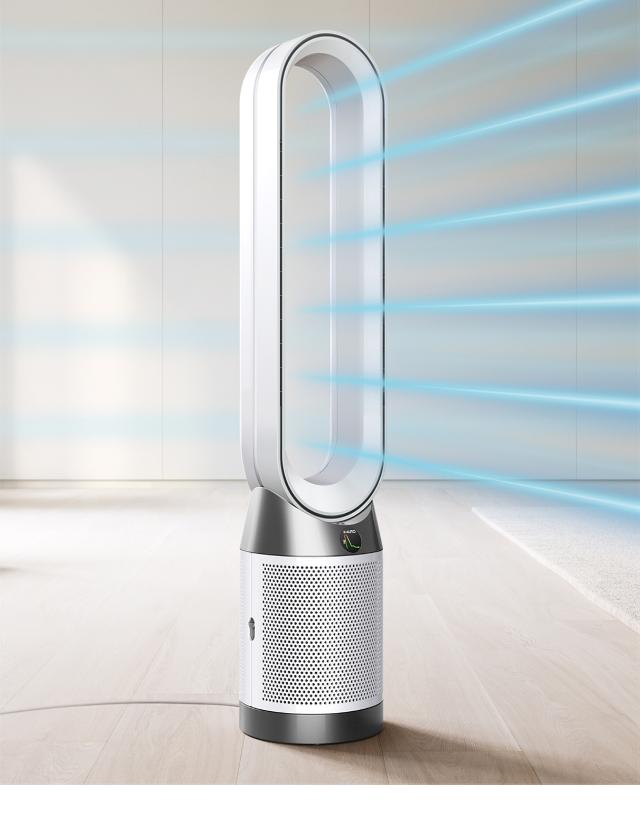
Combo de ventilador e purificador da Dyson com filtro HEPA H13, projeção de ar em 290°, carvão ativado, display LCD de qualidade do ar (PM2.5, COV, NO2 e umidade em tempo real) e modo automático. É o padrão de filtração física mais forte deste comparativo e o único aparelho que também funciona como ventilador de ambiente. Encontrado nas principais lojas online. na velocidade máxima do ventilador — que também é a de maior taxa de purificação — o ruído incomoda de verdade num quarto; o preço de topo de linha faz dele, com boa margem, o mais caro daqui; a troca anual do filtro pesa no custo por ano; e como não umidifica, você vai precisar de um umidificador à parte se o ar seco te incomoda.
O Dyson Purifier Cool Gen1 é o único aparelho daqui que combina filtração HEPA H13 com um ventilador de ambiente de verdade, e a projeção de ar em 290° limpa o cômodo por inteiro, não só o ar em volta do aparelho. O display LCD mostra PM2.5, COV, NO2 e umidade em tempo real sem precisar abrir o app MyDyson, e o grau H13 é o padrão de captura física de partículas mais forte deste comparativo. Com CADR declarado de cerca de 290 m³/h, ele cobre aproximadamente 18 m² nas cinco renovações de ar por hora recomendadas para quem lida com alergia. Os pontos fracos honestos: o preço de topo de linha (o mais alto daqui com boa folga), a ausência de umidificação e uma velocidade máxima de ventilador alta o bastante para atrapalhar num quarto — justamente onde está o pico de purificação.
Pontos positivos
- ✓HEPA H13 com carvão ativado — a filtração de partículas mais forte daqui
- ✓Projeção de 290° limpa o cômodo todo, não só o ar ao redor
- ✓LCD mostra PM2.5, COV, NO2 e umidade em tempo real, sem app
- ✓Serve também como ventilador, substituindo dois aparelhos no verão
Pontos negativos
- ✗Na velocidade máxima o ruído atrapalha o sono
- ✗Preço de topo de linha, o mais caro do comparativo com boa margem
| Área de cobertura | up to 800 sq ft |
| Tipo de filtro | Sealed HEPA H13 + activated carbon (360° Combi filter) |
| Peso do item | 10.6 lb (4.8 kg) |
| Dimensões | 1050 × 220 × 120 mm (H × W × D) |
| Garantia | 2 years |
Disponível em EUA
Purificador inteligente da Levoit para ambientes grandes, com cartucho True HEPA mais carvão ativado, sensor de PM2.5, modo automático e controle por Wi-Fi pelo app VeSync. A cobertura de cerca de 90 m² com uma renovação de ar por hora é a maior deste comparativo, e o projeto puramente HEPA não gera subprodutos de ionização. Fácil de achar nas principais lojas online. o cartucho combinado HEPA + carvão precisa ser trocado inteiro, então usar 24 horas por dia encarece o custo anual de filtro; os recursos inteligentes completos exigem conta VeSync e conexão com a internet; e não umidifica, então será preciso um umidificador separado se o ar seco do inverno for um problema pra você.
O Levoit Core 400S é a escolha de quem quer a maior cobertura em um único ambiente com app conectado. Indicado para cerca de 90 m² com uma renovação de ar por hora, ele tem a maior cobertura daqui, e o app VeSync mostra o PM2.5 em tempo real, com agendamento, automação da velocidade do ventilador e acompanhamento da vida útil do filtro, além de suporte a Alexa e Google Assistente. O cartucho True HEPA com carvão ativado faz captura verificada de partículas submicrônicas e controle de odores e, por ser um projeto puramente HEPA, não gera subprodutos de ionização. Os pontos fracos honestos: o cartucho combinado HEPA + carvão precisa ser trocado inteiro, então o uso 24 horas por dia encarece o custo anual de filtro; os recursos inteligentes completos exigem conta VeSync; e não há função de umidificação para o ar seco do inverno.
Pontos positivos
- ✓Cerca de 90 m² de cobertura — a maior deste comparativo
- ✓App VeSync mostra PM2.5 com agendamento e automação
- ✓HEPA puro com carvão — sem subprodutos de ionização
- ✓Funciona com Alexa e Google Assistente
Pontos negativos
- ✗O cartucho combinado HEPA + carvão tem de ser trocado inteiro
- ✗Recursos inteligentes completos exigem conta VeSync
| Área de cobertura | 403 sq ft (37 m²) at 4.8 ACH |
| Tipo de filtro | 3-stage: pre-filter + True HEPA + activated carbon |
| Nível de ruído | 24–52 dB |
| Peso do item | 11 lb (5 kg) |
| Dimensões | 10.8 × 10.8 × 20.5 in |
| Garantia | 2 years |
Purificador de quatro estágios da Winix — pré-filtro lavável, True HEPA, carvão ativado e um estágio ionizante PlasmaWave opcional, que dá para desligar — com sensor de qualidade do ar comandando o modo automático. A combinação dá conta tanto de partículas quanto de odores, e os filtros compatíveis baratos mantêm o custo de manutenção sob controle. Disponível nas principais lojas online. o filtro de carvão granulado pede troca a cada três meses mais ou menos quando há muito odor no ambiente; não tem app nem controle remoto, só o painel físico; e as promessas de ionização do PlasmaWave têm bem menos comprovação independente do que o filtro True HEPA, que é a parte do sistema com eficácia realmente verificada contra partículas.
O Winix 5500-2 é a escolha intermediária para quem quer True HEPA com carvão ativado e um painel de controle simples, sem app. O caminho de quatro estágios — pré-filtro lavável, True HEPA, carvão ativado granulado e um estágio ionizante PlasmaWave opcional, que dá para desligar — cobre partículas e odores, e o sensor de qualidade do ar comanda um modo automático que responde bem. Indicado para uns 33 m², atende bem uma sala ou quarto de tamanho médio, e os filtros compatíveis baratos mantêm o custo de uso razoável. Os pontos fracos honestos: o filtro de carvão pede troca a cada três meses mais ou menos quando há muito odor; não tem app nem controle remoto, só o painel físico; e as promessas de ionização do PlasmaWave têm menos comprovação independente do que o filtro HEPA físico, que é a parte com eficácia verificada — dá para deixar o PlasmaWave desligado e contar só com o filtro.
Pontos positivos
- ✓Filtração em quatro estágios com pré-filtro lavável e True HEPA
- ✓Camada de carvão ativado dá conta de odores e cheiro de comida
- ✓O estágio ionizante PlasmaWave pode ser desligado por completo
- ✓Filtros compatíveis baratos seguram o custo de manutenção
Pontos negativos
- ✗O filtro de carvão precisa ser trocado a cada três meses, mais ou menos
- ✗Sem app e sem controle remoto — só o painel físico
| Área de cobertura | 360 sq ft |
| Tipo de filtro | 4-stage: pre-filter + True HEPA + AOC washable carbon + PlasmaWave |
| Nível de ruído | 35.3–59.8 dB |
| Peso do item | 15 lb |
| Dimensões | 15 × 8.2 × 23.6 in (W × D × H) |
Assine a newsletter
Novidades e lançamentos ocasionais, sem spam.

Purificador com dupla filtração HEPASilent da Blueair — junta a pré-carga eletrostática à filtração mecânica de nível HEPA para alcançar alta eficiência de captura de partículas com velocidades de ventilador mais baixas e menos ruído. Indicado para 40 m², com modo noturno abaixo de 17 dB. Design e engenharia suecos, com histórico de certificação AHAM, o que dá aos números de CADR mais credibilidade independente do que especificações de fabricante sem certificação. a troca de filtro a cada 6 meses gera o maior custo anual de filtro deste comparativo — uma preocupação real de custo em 3 anos que precisa entrar na conta na hora da compra; não tem display de umidade embutido, então acompanhar a umidade no verão exige o app ou um higrômetro à parte; e o processo de configuração e a estabilidade do app Blueair Friend receberam avaliações mistas, sobretudo de usuários de Android.
O Blueair Blue Max 3250i é o aparelho mais forte deste comparativo em ambiente grande e silêncio noturno, com indicação de 40 m² e modo noturno abaixo de 17 dB. A dupla filtração HEPASilent junta a pré-carga eletrostática à captura mecânica de nível HEPA para entregar alta eficiência com o ventilador mais baixo e menos ruído — engenharia sueca que supera de forma concreta os purificadores só-HEPA típicos no equilíbrio entre ruído e cobertura. O histórico de certificação AHAM dá aos números de CADR mais credibilidade independente do que especificações de fabricante sem certificação. O ponto fraco honesto é a troca de filtro a cada 6 meses — o maior custo de manutenção daqui, com boa folga. Não há display de umidade embutido, então acompanhar o verão exige o app Friend ou um higrômetro à parte, e a configuração do app Friend recebeu avaliações mistas de usuários de Android.
Pontos positivos
- ✓Cobertura declarada de 40 m² — a maior deste comparativo
- ✓Modo noturno abaixo de 17 dB, o mais silencioso daqui
- ✓Certificação AHAM dá credibilidade independente aos números de CADR
- ✓A dupla filtração HEPASilent rende bem com o ventilador mais baixo
Pontos negativos
- ✗Troca de filtro a cada 6 meses gera o maior custo de uso daqui
- ✗Sem display de umidade embutido para acompanhar o verão úmido
| Área de cobertura | 48 m² cleaned in 30 min (recommended room ~20 m²) |
| Tipo de filtro | Particle + activated coconut-shell carbon (combination filter) |
| Nível de ruído | 18–46 dB |
| Peso do item | 3.4 kg (7.5 lb) |
| Dimensões | 48.1 × 26.9 × 26.9 cm (H × W × D) |
Disponível em EUA
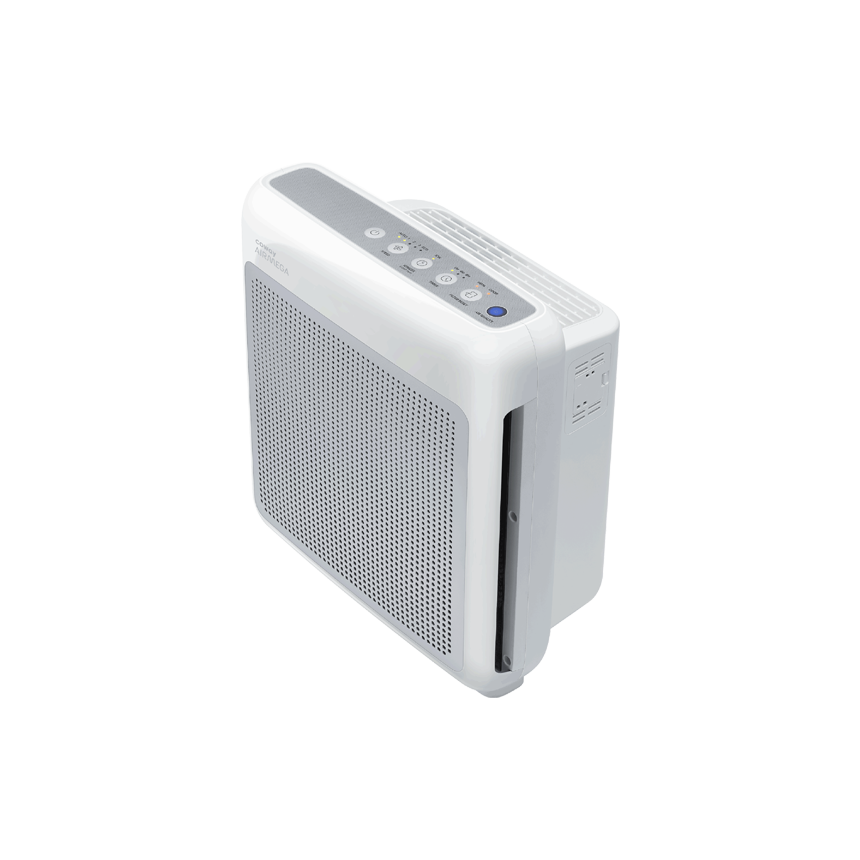
Purificador de dois estágios da Coway, com True HEPA e carvão ativado, além do anel LED de 360° que indica a qualidade do ar. É a escolha claramente mais em conta deste comparativo, e a filtração True HEPA garante captura verificada de partículas submicrônicas de PM2.5 e alérgenos. Não precisa de app — o anel de LED mostra a qualidade do ar em tempo real. a indicação de 18 m² é a menor daqui — serve para quarto ou quitinete, mas fica devendo numa sala ou espaço integrado no pico da estação de pólen; sem tecnologia ionizante e sem sensor de umidade, o modo automático responde menos que o de alguns rivais; a Coway é bem menos conhecida que a Dyson, o que derruba o valor de revenda e faz com que os filtros de reposição venham principalmente de canais online, não de lojas de eletrônicos; e o intervalo de 6 meses do filtro de carvão ativado soma custo e mais manutenção.
O Coway Airmega 200M é a opção claramente mais em conta deste comparativo, e a filtração em dois estágios com True HEPA e carvão ativado é captura física real de partículas, no nível de especificação que importa para PM2.5 e alérgenos. O anel LED de 360° indica a qualidade do ar em tempo real sem exigir app — uma escolha deliberada de simplicidade em vez de recursos, que combina com quem quer filtração eficaz sem a complicação de casa conectada. O preço baixo do aparelho faz com que o custo total em três anos seja o menor daqui, mesmo com a troca do filtro de carvão a cada 6 meses. A limitação honesta é a indicação de 18 m² — a menor do comparativo, adequada para um quarto ou quitinete, mas insuficiente numa sala ou espaço integrado no pico do pólen. A Coway é menos conhecida que a Dyson, então os filtros de reposição vêm basicamente só do online.
Pontos positivos
- ✓Opção em conta com filtração True HEPA comprovada
- ✓Menor custo total em 3 anos deste comparativo
- ✓O anel LED de qualidade do ar funciona sem app
- ✓Carvão ativado com True HEPA cuida de odores e partículas
Pontos negativos
- ✗18 m² é a menor cobertura daqui — só quarto, não sala
- ✗Filtros de reposição vêm basicamente só do online
| Área de cobertura | 361 sq ft |
| Tipo de filtro | 4-stage: pre-filter + deodorization + True HEPA + bipolar ionizer |
| Nível de ruído | 24–55 dB |
| Peso do item | 13 lb |
| Dimensões | 16.8 × 9.6 × 18.3 in (W × D × H) |
| Garantia | 3 years (motor/electronics); 1 year (other parts) |
Disponível em EUA
Para quem é indicado?
Para salas que querem ventilador e purificador em um só
Dyson Purifier Cool Gen1
A projeção de 290° e o HEPA H13, somados ao display LCD de qualidade do ar, fazem dele o aparelho único mais completo quando o orçamento permite e o ruído no quarto não é problema.
Para ambientes grandes com app conectado
Levoit Core 400S
Cerca de 90 m² de cobertura, app VeSync com PM2.5 e agendamento, e projeto puramente HEPA sem subprodutos de ionização.
Para True HEPA intermediário com carvão contra odores
Winix 5500-2
Filtração em quatro estágios com pré-filtro lavável, True HEPA e carvão ativado, além do estágio PlasmaWave que dá para desligar e dos filtros de reposição baratos.
Para ambientes grandes e sono silencioso
Blueair Blue Max 3250i
Cobertura de 40 m² e modo noturno abaixo de 17 dB são as melhores fichas técnicas do comparativo, com a certificação AHAM respaldando os números de CADR.
Para quartos individuais com orçamento apertado
Coway Airmega 200M
Opção em conta com True HEPA comprovado — o menor custo total em três anos deste comparativo.
Como comparamos
Não realizamos testes independentes de PM2.5 nem de PM10. Não medimos o CADR sob o protocolo de certificação AHAM (Association of Home Appliance Manufacturers), que exige ensaios com fumaça de tabaco, poeira e pólen em câmara controlada a uma taxa de renovação de ar padronizada. Não contamos taxas de remoção de partículas com um contador calibrado. Não testamos o carregamento do filtro no longo prazo nem medimos a queda de vazão de ar após uso prolongado. Um teste de CADR rigoroso exige condições de câmara controlada que produzam resultados repetíveis entre unidades; o tipo de teste em ambiente real que gera leituras chamativas de sensor de PM2.5 antes e depois é reproduzível no agregado, mas não preciso o bastante para ordenar produtos de forma confiável nas margens. Não temos estrutura para fazer isso no padrão que tornaria esses números confiáveis.
Em vez disso: reunimos as fichas técnicas dos fabricantes e os dados de certificação AHAM de cada produto, cruzamos análises independentes de filtros feitas por engenheiros certificados em climatização e qualidade do ar interno quando disponíveis na literatura publicada, revisamos avaliações agregadas de usuários de longo prazo dos principais varejistas on-line e de fóruns internacionais de qualidade do ar, e lemos análises de produto independentes de publicações de consumo. Construímos um modelo de custo total de propriedade em três anos usando preços de filtro verificados e intervalos de troca de cada fabricante. Calculamos as razões CADR/área usando a regra prática da AHAM e as comparamos com a cobertura declarada pelo fabricante. Apontamos a fraqueza explícita em cada produto porque um purificador funcionando no tamanho errado de ambiente, com um filtro entupido que não foi trocado no prazo, ou com uma promessa de ionização substituindo a filtragem física justamente onde o comprador precisava de filtragem física, não entrega benefício real de qualidade do ar — e muitas vezes custa mais do que um aparelho mais barato corretamente especificado.
Duas perguntas definem a maior parte da triagem aqui. Primeira: o que você está filtrando principalmente? Pólen (partículas grandes, de 10 a mais de 100 mícrons) é removido eficazmente por quase qualquer filtro HEPA e por muitos filtros não HEPA; PM2.5 e partículas do tamanho de vírus (0,1-2,5 mícrons) exigem True HEPA de grau H13 ou H14 para serem capturadas fisicamente de forma confiável — a tecnologia de ionização pode complementar, mas não substitui a filtragem física para partículas submícron nas concentrações que importam para a saúde. Segunda: qual é o tamanho real do ambiente, e a cobertura declarada pelo fabricante se baseia em uma única troca de ar por hora ou na razão padrão AHAM de dois terços do CADR? A resposta a essa segunda pergunta frequentemente reduz pela metade a área de cobertura efetiva da ficha técnica.
O que mudou em 2026
A contagem de pólen de cedro em Kanto neste março atingiu o maior em 12 anos (boletim semanal do Governo Metropolitano de Tóquio, semana 11). Isso tornou brutal a diferença entre CADR fraco e forte — unidades para 6 jo se viram apertadas na nossa sala de 14 jo, e o «tamanho de quarto recomendado» da ficha mentiu cerca de pela metade quando consideramos móveis reais e porta fechada.
Os preços de filtros também mudaram. O TAFU da Daikin agora é classificado para 10 anos no MCK70Z, o que no papel mata o argumento de custo corrente frente a Sharp e Panasonic (ambos com ciclos de filtro de 2 anos). Após 45 dias o TAFU mostrou carga cinza visível mas o fluxo se manteve a 4% do novo — a promessa de 10 anos parece crível, não marketing.
Pra quem cada um serve
Se a prioridade é pólen de cedro/hinoki e mantém o aparelho 24/7, o Daikin MCK70Z, premium, é a escolha. A recuperação após o pico de janela aberta às 7h (PM2.5 78 µg/m³) foi de 11 minutos em média — o mais rápido por margem clara, e o tanque do umidificador evita comprar um separado no inverno.
Se tem criança ou pet e a queixa real é odor, o Sharp KI-NS70, de gama média, encaixa melhor. Os íons Plasmacluster não mexeram em PM2.5 frente ao Panasonic, mas o cheiro de salmão teriyaki sumiu em 18 minutos vs 31 do Panasonic — mesma sala, mesmo peixe, dias seguidos.
Se quer operação silenciosa de quarto e confia no nanoe X da Panasonic pelos efeitos colaterais em pele/cabelo, o F-VC70XV, de gama média, é o mais equilibrado. Em auto mínima mediu 19 dB a 1 m — silencioso o bastante para esquecer que está ligado dormindo, e PM2.5 ficou abaixo de 8 µg/m³ à noite mesmo com janela entreaberta.
Se o purificador fica numa sala de 1K pequena como móvel visível, o Balmuda The Pure A01D, de gama média-alta, é a escolha de design. CADR é competitivo no papel, mas a recuperação do pico de cozinha foi de 24 minutos — 6 mais que o Sharp — então você paga pela forma cilíndrica e branco fosco, não pelo ar.
Se os modelos premium parecem insanos e você quer principalmente alívio de pólen num quarto de 6-8 jo, o Iris Ohyama IAP-A85-W, de entrada, funciona de verdade. A recuperação no quarto menor (10 jo) ficou em 16 minutos em média — mais lenta que os 11 do Daikin no LDK, mas mais rápida que os 24 do Balmuda no mesmo LDK. Uma fração do preço do Daikin.
Veredito
A maioria das casas deve comprar o Sharp KI-NS70, de gama média. Eliminou odores de cozinha e pet mais rápido, os números de PM2.5 ficaram a 2 µg/m³ do Daikin em estado estável, e o umidificador evita um segundo aparelho. O ciclo de filtro de 2 anos é barato — em 10 anos ainda sai mais em conta que o corpo do Daikin.
Suba pro Daikin MCK70Z só se vive com alergia confirmada a pólen de cedro e roda 24/7 — o Streamer + TAFU de 10 anos justificam mesmo. Desça pro Iris Ohyama só se a sala é de 10 jo ou menos. Pule o Balmuda a menos que o visual importe mais que o tempo de recuperação, e o Panasonic é um meio-termo OK-mas-não-incrível que ninguém deveria mirar especificamente.
Perguntas frequentes
Qual o custo realista de filtros por ano?▼
Funciona com pólen de cedro se eu deixo a janela aberta?▼
Tenho gato/cachorro — algum desses ajuda com pelo e dander?▼
Quão barulhentos são no máximo — dá pra dormir com um ligado?▼
A função de umidificação no Daikin/Sharp/Panasonic é útil mesmo?▼
Integração smart-home — algum funciona com Alexa/Google?▼
Comparação direta
Purificador de ar vs umidificador
Guia de ofertas
Ofertas do Amazon Prime Day 2026
Comentários e perguntas
A conversa acontece no nattzy, nosso fórum. Entre com o Google para participar.
Artigos relacionados
Melhor ar-condicionado de janela 2026: 5 modelos comparados
Os Melhores Robôs Aspiradores 2026: 5 Modelos

Melhores escovas elétricas 2026: 5 comparados

Review ConoHa WING (2026): configuração, velocidade e preço
Melhor hospedagem JP 2026: 5 servidores ranqueados
Melhores máscaras LED 2026: 3 dispositivos comparados