Os melhores cinturões de levantamento 2026
Um cinturão de levantamento não te deixa mais forte — ele dá ao seu core algo para pressionar, o que te permite expressar a força que você já desenvolveu. A faixa de peso e a qualidade de construção determinam o valor a longo prazo muito mais do que a lista de recursos.
Resposta rápida
O Inzer Forever Lever Belt é a referência: couro de curtimento vegetal em camada única de 10 mm, 4 polegadas de largura, com uma alavanca que, depois de ajustada, fecha exatamente na mesma medida em todas as séries, aprovado pela IPF e com garantia vitalícia. O Rogue Ohio Lifting Belt troca isso pela flexibilidade de uma fivela de pino que você pode apertar mais para uma carga máxima, o SBD Lever Belt tem os 13 mm máximos permitidos pela IPF para competição, o Dark Iron Fitness custa de 50 a 70 dólares e quase não exige amaciamento, e o Harbinger Foam Core é indicado para o trabalho de front rack no levantamento olímpico.
Esta comparação é baseada em pesquisa documental: especificações publicadas, documentação do fabricante e análises independentes.
Melhor no geral: O Forever Lever é o padrão pelo qual todo cinto de powerlifting é comparado. Couro curtido vegetal de uma camada, 10 mm de espessura e 10 cm de largura, com fivela de alavanca que trava com um clique gostoso e abre com um toque de polegar.
Disponível em EUA
Nossas escolhas
Artigos relacionados
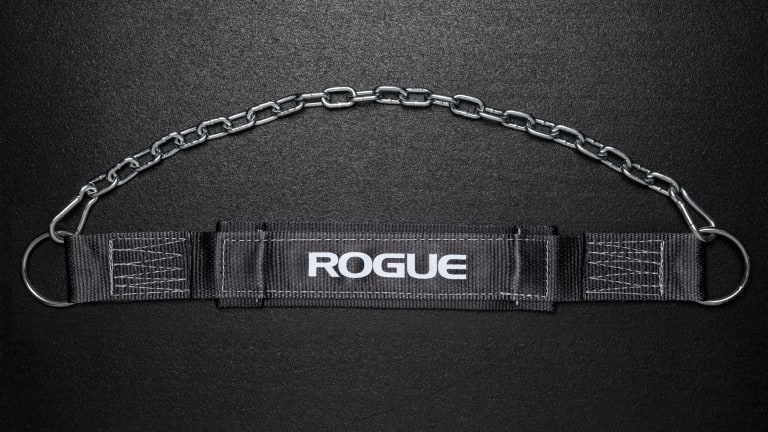

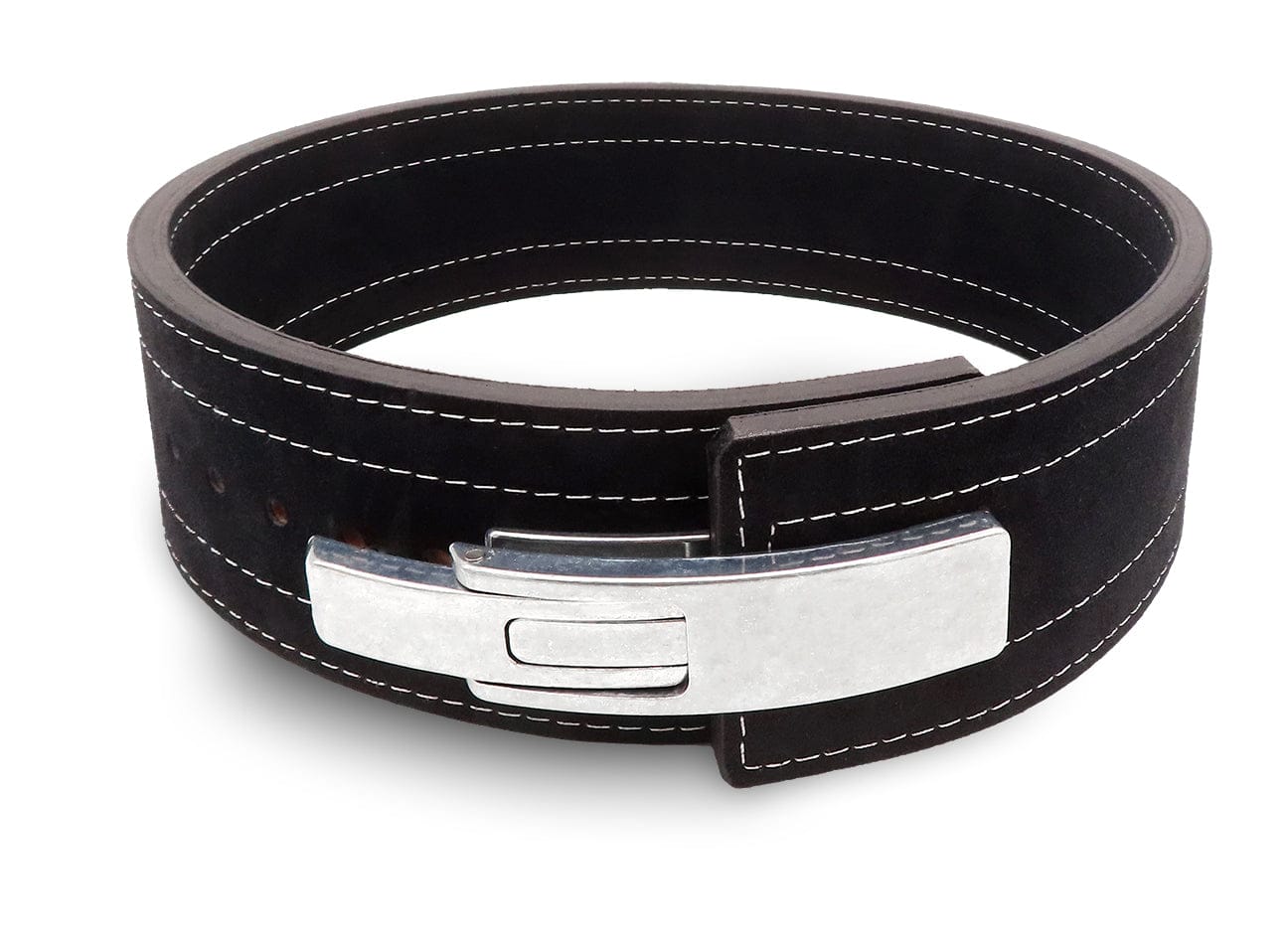
Aprovado pela IPF, fivela de alavanca, garantia vitalícia
O Forever Lever é o padrão pelo qual todo cinto de powerlifting é comparado. Couro curtido vegetal de uma camada, 10 mm de espessura e 10 cm de largura, com fivela de alavanca que trava com um clique gostoso e abre com um toque de polegar. Depois de ajustar a alavanca para a sua cintura em casa, toda sessão começa com o mesmo aperto, sempre igual — nada de ficar brigando com garras entre as séries pesadas. O cinto tem aprovação da IPF para competição, é feito nos EUA e vem com garantia vitalícia. Os 10 mm caem bem para a maioria dos powerlifters raw: grosso o bastante para uma pressão intra-abdominal séria, sem ficar tão rígido a ponto de atrapalhar a profundidade do agachamento ou a flexão do quadril. Conte com um amaciamento real de 4 a 6 semanas até o couro ceder e moldar no seu tronco — incômodo no começo, perfeitamente encaixado depois.
Pontos positivos
- ✓A alavanca entrega o mesmo aperto em toda série
- ✓Aprovado pela IPF para competição
- ✓Garantia vitalícia e fabricação nos EUA
- ✓10 mm atendem bem à maioria dos atletas raw
Pontos negativos
- ✗Amaciamento longo, de 4 a 6 semanas
- ✗Mudar o ajuste da alavanca exige desparafusar a fivela
Disponível em EUA
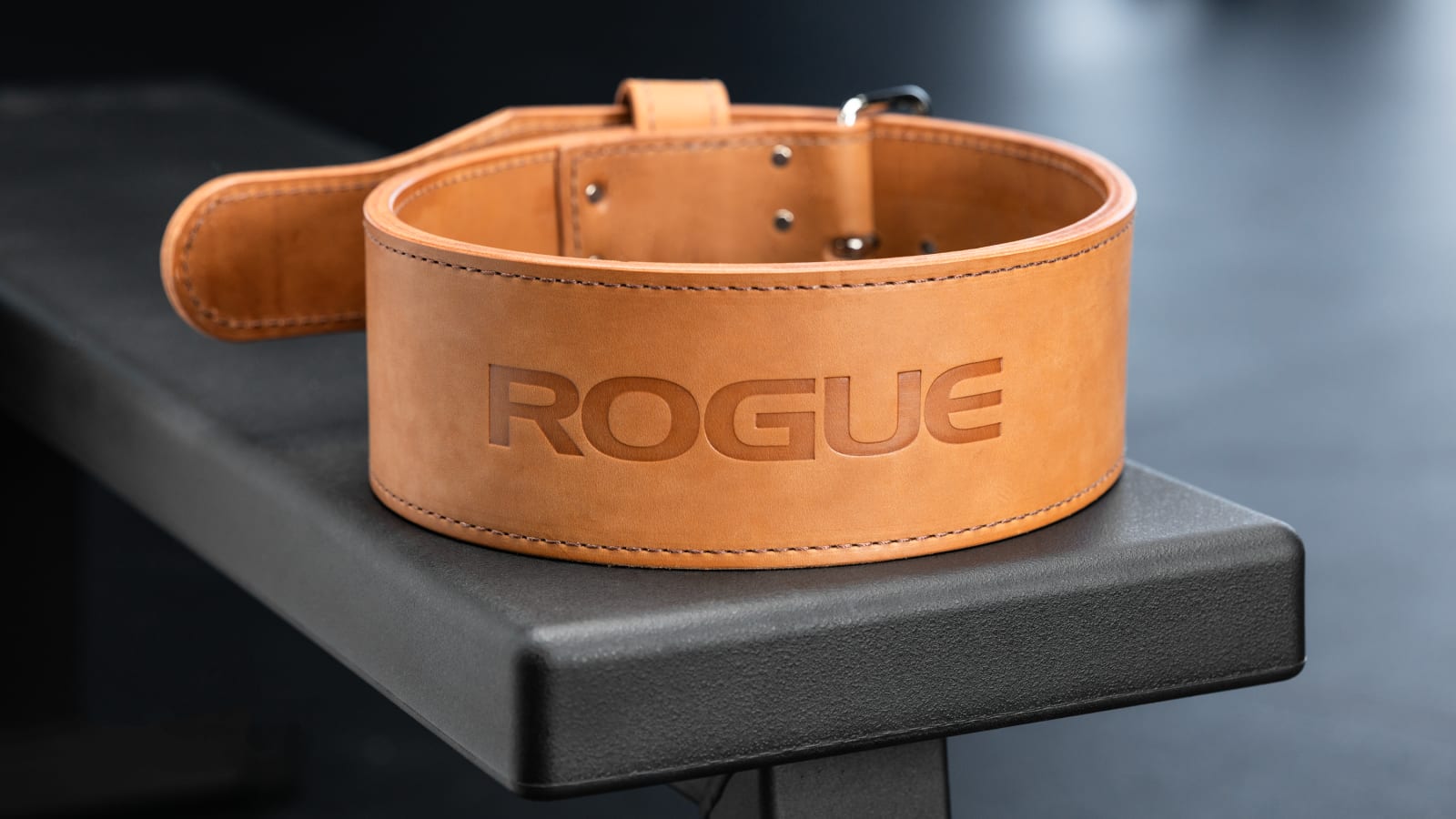
Pino único ou duplo, fabricado nos EUA
O Rogue Ohio Lifting Belt tem couro de 10 mm, fivela de uma ou duas garras e 10 cm de largura — é o cinto sem alavanca mais visto em academias de força de verdade. A garra dá mais flexibilidade de ajuste que a alavanca: dá para usar um furo mais folgado no aquecimento e ir apertando até a tentativa máxima, o que faz diferença em treinos longos, quando a circunferência da cintura muda conforme você come e bebe. A Rogue costura o cinto em Columbus, Ohio, com linha reforçada em todas as bordas que sofrem carga, e a fivela de rolete em aço fica firme sob carga em vez de girar sozinha. O amaciamento é moderado: cerca de 2 a 4 semanas até o couro parar de parecer papelão. A versão de uma garra é mais rápida entre as séries e é o padrão do treino diário para a maioria; a de duas garras dá redundância, mas custa tempo de ajuste.
Pontos positivos
- ✓Uma ou duas garras, com ajuste flexível
- ✓Costura reforçada nas bordas que sofrem carga
- ✓Amacia mais rápido que cintos de alavanca de competição
- ✓Fivela de rolete em aço não sai do lugar sob carga
Pontos negativos
- ✗Nem toda configuração é aprovada pela IPF
- ✗A garra é mais lenta que a alavanca entre séries pesadas
Disponível em EUA

13mm, padrão de competição IPF, 7 tamanhos
O SBD Lever Belt tem 13 mm de espessura — o máximo permitido em competição da IPF — em couro rígido de uma camada, com o mecanismo da alavanca integrado ao corpo do cinto em vez de montado por cima. É o cinto mais usado nos Mundiais da IPF e em campeonatos internacionais de powerlifting raw, e não é por acaso: com 13 mm, a superfície de apoio contra o core sob carga máxima é bem mais substancial que a das opções de 10 mm, e atletas de elite relatam ganhos mensuráveis nas tentativas máximas. No treino do dia a dia é menos confortável que o Inzer — esse cinto não amacia, ele te amacia. Muita gente séria mantém um cinto mais macio para o acessório e reserva o SBD para preparação de campeonato e tentativas máximas. Vem em 7 tamanhos, em vez da abordagem de tamanho único.
Pontos positivos
- ✓13 mm entregam a maior superfície de apoio permitida
- ✓Alavanca integrada fica mais rente que as montadas
- ✓Padrão nos Mundiais da IPF
- ✓Sete tamanhos para um caimento correto
Pontos negativos
- ✗Preço premium, acima de R$ 1.200
- ✗Menos confortável no treino diário que um de 10 mm
Disponível em EUA
Assine a newsletter
Novidades e lançamentos ocasionais, sem spam.

10mm couro genuíno, não precisa de aprovação para competição
O Dark Iron Fitness Genuine Leather Belt usa couro bovino de 10 mm de espessura e 10 cm de largura, com fivela de rolete de duas garras. Não é aprovado pela IPF e o couro é visivelmente mais macio que o do Inzer ou do SBD desde o primeiro dia — ou seja, é confortável de cara, mas oferece um pouco menos de superfície de apoio sob carga máxima. Para treino de força geral entre 70% e 90% da intensidade (agachamento, levantamento terra, desenvolvimento em faixas normais de treino), o suporte é mais que suficiente, e o couro mais macio poupa você de boa parte das semanas de amaciamento sofrido que os cintos de competição exigem. A fivela de duas garras demora mais para fechar que uma alavanca, mas as garras de aço são grossas o bastante para não entortar com o tempo — falha comum em cintos realmente baratos. Escolha certa para quem não compete e quer couro legítimo sem pagar preço premium.
Pontos positivos
- ✓Couro legítimo na faixa de R$ 300 a R$ 420
- ✓Praticamente não precisa de amaciamento
- ✓Garras de aço grossas o bastante para não entortar
- ✓Dá conta de treino abaixo da intensidade de competição
Pontos negativos
- ✗Não é aprovado pela IPF para competição
- ✗Couro mais macio apoia menos em esforços máximos
Disponível em EUA

Núcleo de espuma, melhor para iniciantes e levantamento olímpico
O Harbinger Foam Core Belt é construído de um jeito totalmente diferente dos cintos de couro — exterior em náilon com núcleo acolchoado de espuma de células fechadas e fivela de aço, 10 cm de largura, macio desde a primeira vez que você o veste, sem nenhum amaciamento. Não é um cinto de powerlifting — não existe núcleo rígido de couro para empurrar sob carga máxima —, mas dá suporte lombar de verdade para treino geral e funciona bem no levantamento olímpico, em que a frente do cinto precisa ser fina o bastante para não atrapalhar a recepção no rack frontal do clean. Cintos de couro nos 10 cm cheios podem incomodar nessa posição; a espuma do Harbinger comprime um pouco e sai do caminho. Por menos de R$ 180, é a porta de entrada para treinar com cinto e permite que o iniciante desenvolva a técnica de bracing antes de investir em um cinto rígido de competição.
Pontos positivos
- ✓Espuma macia dispensa qualquer amaciamento
- ✓Não atrapalha a recepção no rack frontal no olímpico
- ✓Preço de entrada abaixo de R$ 180
- ✓Suporte lombar para treino geral de academia
Pontos negativos
- ✗Rigidez insuficiente para powerlifting em esforço máximo
- ✗Vai precisar ser trocado quando as cargas subirem
Disponível em EUA
Para quem é indicado?
Para quem quer um único cinto pra vida toda
Inzer Advance Designs Forever Lever Belt (10mm)
Aperto sempre igual travado pela alavanca, aprovação da IPF e garantia vitalícia fazem dele a aposta mais segura para quem vai levar o treino a sério por muitos anos.
Para quem muda o aperto a cada sessão
Rogue Ohio Lifting Belt (10mm)
A garra permite usar furos mais folgados no aquecimento e ir apertando até as máximas, útil quando a cintura oscila ao longo de treinos longos.
Para competição de powerlifting de alto nível
SBD Lever Belt (13mm)
Os 13 mm no limite legal da IPF dão mais superfície de apoio contra o core, com ganhos mensuráveis nas tentativas máximas em campeonatos de federação testada.
Para atletas de força que não competem e querem economizar
Dark Iron Fitness Genuine Leather Belt
Couro legítimo de 10 mm por R$ 300 a R$ 420, com amaciamento mínimo, cobre treinos de 70% a 90% de intensidade sem pagar o preço de nível competição.
Para iniciantes e praticantes de levantamento olímpico
Harbinger Foam Core Belt (4-Inch)
A construção em espuma dispensa amaciamento e apoia a lombar sem travar a recepção no rack frontal exigida no clean e no jerk.
Inzer Advance Designs Forever Lever Belt (10mm) — Melhor no geral
O cinturão Forever da Inzer é o benchmark contra o qual outros cinturões de powerlifting são medidos. Tem 10mm de espessura de couro curtido a vegetal de camada única, 4 polegadas de largura e usa uma fivela de alavanca que fecha com um clique satisfatório e solta com uma única pressão do polegar. Para uso em competição, é aprovado pela IPF.
O fechamento de alavanca torna a preparação rápida entre séries — sem enfiar um pino, sem ajustar para encontrar o buraco certo. Uma vez que você ajustou a alavanca ao seu tamanho de cintura em casa, obtém o mesmo ajuste firme em cada sessão sem pensar. O período de break-in é real: espere 4-6 semanas de uso rígido e desconfortável antes que o couro amoleça e se molde ao formato do seu torso.
É fabricado nos EUA e vendido com garantia vitalícia. A espessura de 10mm serve para a maioria dos powerlifters sem equipamento — grosso o suficiente para suporte sério de bracing, mas não tão rígido que limite o movimento na profundidade do agachamento. Se você compete na IPF ou USAPL, este cinturão atende a todos os padrões da federação.
Rogue Ohio Lifting Belt (10mm) — Melhor cinturão de pino
O cinturão Ohio da Rogue tem 10mm de couro com uma fivela de pino único de aço inoxidável, 4 polegadas de largura e está disponível em configurações de pino único e duplo. Não é aprovado pela IPF em todas as configurações, mas é um dos cinturões mais usados em academias de força pela sua qualidade de construção e durabilidade.
O fechamento de pino oferece mais ajustabilidade do que uma alavanca — você pode ajustar o encaixe furo a furo dependendo de se está aquecendo frouxo ou apertando para uma tentativa máxima. A troca é o tempo entre séries. O pino único é mais rápido do que o duplo, e a maioria dos levantadores opta pelo único para o treino diário.
A Rogue costura o cinturão em Columbus, Ohio usando linha reforçada em todas as bordas de carga. A fivela de rolo de aço não gira sob carga, o que impede que o cinturão afrouxe no meio da série. O break-in é moderado — cerca de 2-4 semanas antes de parar de parecer papelão. Uma boa escolha se você quer a confiabilidade da fabricação da Rogue sem se comprometer com uma alavanca.
SBD Lever Belt (13mm) — O melhor para competição
O cinturão de alavanca da SBD tem 13mm de espessura — o máximo permitido na competição IPF — feito de couro rígido de camada única com um mecanismo de alavanca integrado que se fixa diretamente ao corpo do cinturão em vez de ficar acima dele. É o cinturão mais usado nos Campeonatos Mundiais da IPF e nos encontros internacionais de powerlifting sem equipamento.
A 13mm é visivelmente mais rígido do que as opções de 10mm. Essa rigidez extra se traduz diretamente em superfície de bracing para o seu core com cargas máximas, que é por isso que os levantadores de elite o escolhem para competição. O treino diário é menos confortável — este cinturão não faz break-in tanto quanto te condiciona. Muitos levantadores mantêm um cinturão mais macio para trabalho acessório e reservam o SBD para tentativas pesadas.
A alavanca solta com uma pressão firme na lateral em vez do centro da fivela, o que alguns levantadores acham mais rápido do que os designs de alavanca tradicionais. Disponível em 7 tamanhos para encaixar adequadamente em vez de ajustar em torno de uma abordagem de tamanho único. O preço é significativo — mais de US$200 — mas é o último cinturão que a maioria dos powerlifters sérios compra.
Dark Iron Fitness Genuine Leather Belt — Melhor couro econômico
O cinturão de couro da Dark Iron usa couro genuíno de vaca com 10mm de espessura, 4 polegadas de largura, com uma fivela de rolo de pino duplo. Não é aprovado pela IPF e o couro é mais macio do que o Inzer ou SBD desde o primeiro dia, o que significa que é mais confortável imediatamente mas oferece ligeiramente menos superfície de bracing sob cargas máximas.
Para treinamento de força geral — levantamento terra, agachamentos e desenvolvimento de ombros na faixa de intensidade de 70-90% — o suporte de bracing é mais do que adequado. O couro mais macio evita a maior parte da dor de break-in. Você vai sentir ele se contornando ao seu torso nas primeiras sessões em vez do processo de várias semanas necessário para os cinturões de competição mais rígidos.
A fivela de pino duplo demora mais para afivelar do que uma alavanca, mas os pinos de aço são grossos o suficiente para não dobrarem com o tempo, que é um ponto de falha comum em cinturões verdadeiramente econômicos. O preço está na faixa de US$50-70, tornando-o a opção de couro genuíno mais acessível aqui para levantadores que não planejam competir.
Harbinger Foam Core Belt (4 polegadas) — O melhor para iniciantes
O cinturão de núcleo de espuma da Harbinger é construído de forma diferente dos cinturões de couro: usa exterior de nylon com acolchoamento de núcleo de espuma de célula fechada e uma fivela de aço. Tem 4 polegadas de largura, é macio desde o momento em que você o coloca e não requer nenhum break-in. Não é um cinturão de powerlifting — não há núcleo rígido de couro para pressionar — mas fornece suporte lombar genuíno para o treino geral de academia.
A construção de espuma o torna apropriado para o levantamento olímpico, onde a frente do cinturão precisa ser fina o suficiente para não bloquear a posição de recepção no arremesso. Cinturões de couro com sua largura total de 4 polegadas podem interferir no rack frontal — a espuma flexível da Harbinger comprime ligeiramente e fica fora do caminho.
Por menos de US$30 é o ponto de entrada para o treino com cinturão. Para iniciantes aprendendo a contrair corretamente, um cinturão mais macio que não restringe o movimento ajuda a desenvolver a técnica antes de se comprometer com um cinturão rígido de couro de competição. Uma vez que você está lidando com cargas mais pesadas ou planejando competir, vai querer fazer a transição para couro — mas este cinturão durará anos de treino consistente antes que isso se torne necessário.
Perguntas frequentes
Devo pegar um cinturão de levantamento de 10mm ou 13mm?▼
Cinturão de alavanca vs cinturão de pino — qual é melhor?▼
Quando devo começar a usar um cinturão de levantamento?▼
Os preços mudam. Confira o preço atual na loja.
Comentários e perguntas
A conversa acontece no nattzy, nosso fórum. Entre com o Google para participar.