Best Home Gym Flooring 2026: Rubber, Foam & Rolls
Drop a 45-pound plate on bare concrete and you will hear the crack two rooms over — and find a chip in the floor by morning. The decision comes down to one or two factors — the rest is noise.
Quick answer
For most home gyms, 3/4-inch vulcanized rubber horse stall mats are the pick — the only material that survives repeated barbell drops without permanent damage, at a fraction of specialty flooring prices. BalanceFrom EVA puzzle tiles are the right cushioning for ab work and stretching, Rogue's Monster Matting rolls eliminate seams across large permanent installations, and SuperMats interlocking rubber tiles let you pull up and re-lay when the layout changes.
Each flooring option was evaluated on impact absorption for barbell drops, surface stability under heavy lifts, odor and off-gassing, coverage cost per square foot, and installation ease — not for looks or marketing claims.
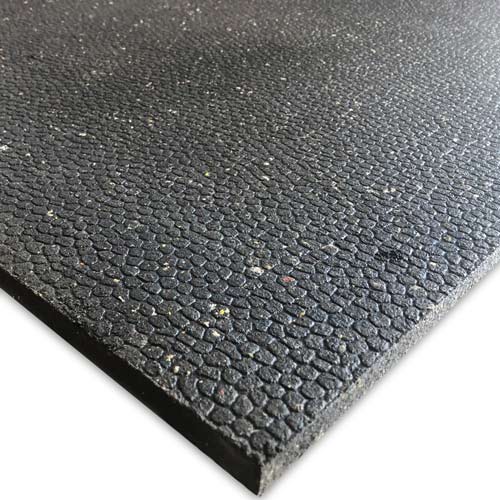
Rubber Flooring Inc 4x6 Horse Stall Mat (3/4 inch)
Best Overall: The 4x6-foot, 3/4-inch vulcanized rubber mat remains the home gym flooring standard for good reason: it handles barbell drops that destroy EVA foam, costs $40–50 per mat, and lasts 10+ years. Dense rubber absorbs and dissipates impact without bouncing the bar back or transmitting shock to the subfloor.
Top picks ↓| Product | Price | Link |
|---|---|---|
| $49.50Reference price | ||
| $28.19Price as of 2026-09-20 | ||
| $225Reference price | ||
| $119.28Price as of 2026-09-24 | ||
| $219.95Reference price |
| Product | Dimensions | Thickness | Weight | Material | Coverage cost | Coverage | Weight per tile | Price | Surface | Format | Installation | Tabs |
|---|---|---|---|---|---|---|---|---|---|---|---|---|
| Rubber Flooring Inc 4x6 Horse Stall Mat (3/4 inch) | 4x6 ft per mat | 3/4 in (19mm) | ~100 lb per mat | Vulcanized rubber | ~$2/sqft | — | — | — | — | — | — | — |
| BalanceFrom Puzzle Exercise Mat with EVA Foam | — | 3/4 in EVA foam | — | — | — | 24 sq ft set | Light | $35 | Non-slip texture | — | — | — |
| Rogue Monster Matting (per linear foot) | — | 3/4 in | — | High-density rubber | — | — | — | ~$225 (sample 10 linear ft) | — | 4 ft wide rolls, per linear ft | Adhesive or equipment weight | — |
| SuperMats Heavy Duty Rubber Mat 4x6 | 4x6 ft | — | — | Heavy-duty rubber | — | — | — | $45 | — | — | — | Interlocking for reconfiguration |
| Gorilla Mats Premium Large Exercise Mat 6x4 | 6x4 ft | 3/4 in | ~90 lb | Premium rubber compound | — | — | — | $219.95 | — | — | — | — |
Top picks
Related articles
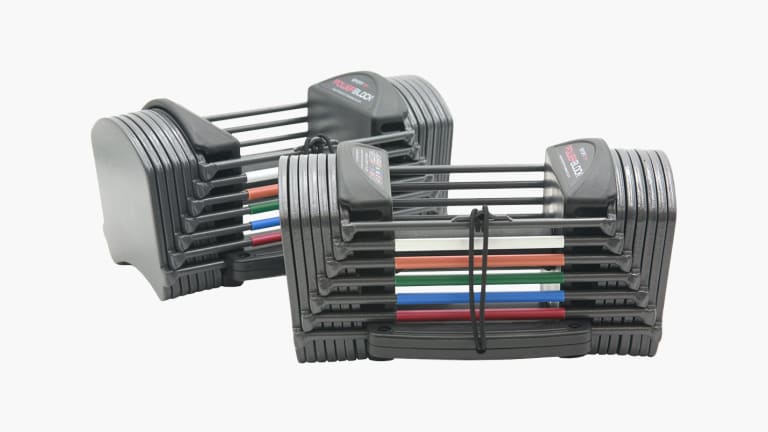


Rubber Flooring Inc 4x6 Horse Stall Mat (3/4 inch)
The 4x6-foot, 3/4-inch horse stall mat is the value benchmark for home gym flooring — dense vulcanized rubber handles barbell drops that foam tiles cannot, and the per-square-foot cost is lower than any purpose-built gym mat in this comparison. Ships directly without the inconvenience of farm store pickup. Expect a strong rubber odor for 2–6 weeks in enclosed spaces; air outdoors before installation.
The 4x6-foot, 3/4-inch vulcanized rubber mat remains the home gym flooring standard for good reason: it handles barbell drops that destroy EVA foam, costs $40–50 per mat, and lasts 10+ years. Dense rubber absorbs and dissipates impact without bouncing the bar back or transmitting shock to the subfloor. Consistent 3/4-inch thickness provides stable feedback during squats and deadlifts. Plan for 2–6 weeks of off-gassing in enclosed spaces — air outdoors before installation.
Pros
- ✓Handles barbell drops that permanently damage EVA foam tiles
- ✓Consistent 3/4-inch thickness for stable lifting surface
- ✓$40–50 per 4x6 mat — best cost-per-sqft for heavy barbell use
Cons
- ✗Strong rubber odor for 2–6 weeks in enclosed spaces — must air outdoors first
Score breakdown
| Dimensions | 4x6 ft per mat |
| Thickness | 3/4 in (19mm) |
| Weight | ~100 lb per mat |
| Material | Vulcanized rubber |
| Coverage cost | ~$2/sqft |

BalanceFrom Puzzle Exercise Mat with EVA Foam
Best for cardio zones and floor work — interlocking EVA foam tiles in 3/4-inch thickness provide cushioning for ab exercises, push-ups, stretching, and yoga that rubber mats cannot match for contact comfort. Easy to configure around irregular room shapes and store flat when not in use. Not suitable for barbell drop zones; permanent compression occurs under repeated heavy impact.
EVA foam tiles serve a different purpose than rubber mats — they're the right choice for ab work, push-ups, stretching, and any exercise where hands, knees, and back contact the floor directly. Interlocking design configures around irregular room shapes. Light, easy to store if you use a temporary workout area. Critical limitation: any barbell dropped on EVA foam creates permanent compression damage.
Pros
- ✓Cushioning for floor-based movements rubber mats can't match
- ✓Configures to irregular room shapes with interlocking tabs
- ✓Lightweight and easy to store for temporary workout spaces
Cons
- ✗Permanent compression damage from barbell drops — not suitable for lifting zones
Score breakdown
| Thickness | 3/4 in EVA foam |
| Coverage | 24 sq ft set |
| Weight per tile | Light |
| Price | $35 |
| Surface | Non-slip texture |
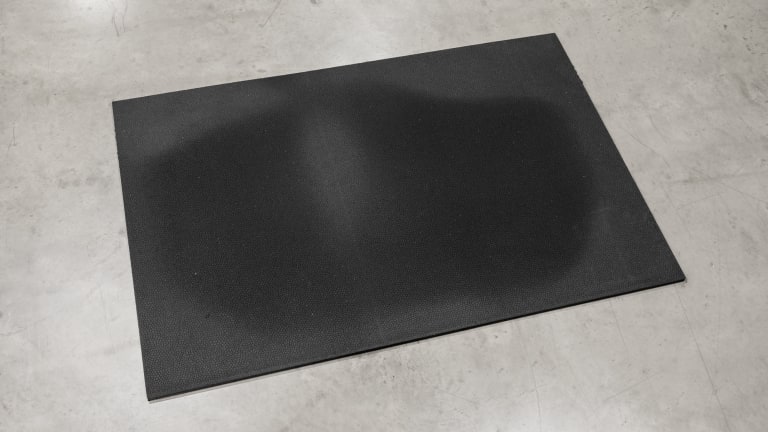
Rogue Monster Matting (per linear foot)
Purpose-built rubber rolls sold by the linear foot eliminate the seam problem of multiple butted mats — one piece covers the full width of a room with no edges to catch a toe. Denser and more consistent than horse stall mat material, with surface texture designed for athletic use rather than agricultural. The correct choice for a permanent, serious home gym where long-term quality and aesthetics matter alongside function.
Rogue's Monster Matting is sold by the linear foot in 4-foot-wide rolls — eliminating the seam problem of multiple butted mats across large spaces. Denser and more consistent than horse stall mat rubber, purpose-engineered surface texture for athletic use. At $3–5 per linear foot it costs more than stall mats, but the quality difference is real. Correct for a serious permanent home gym where long-term aesthetics and zero-seam continuity matter.
Pros
- ✓Roll format eliminates seams across large spaces
- ✓Denser and more consistent than horse stall mat rubber
- ✓Purpose-engineered surface for athletic foot contact
Cons
- ✗Higher cost per sqft than horse stall mats — premium justified only for permanent builds
Score breakdown
| Format | 4 ft wide rolls, per linear ft |
| Thickness | 3/4 in |
| Material | High-density rubber |
| Price | ~$225 (sample 10 linear ft) |
| Installation | Adhesive or equipment weight |
Subscribe to our newsletter
Occasional updates and new releases — no spam.
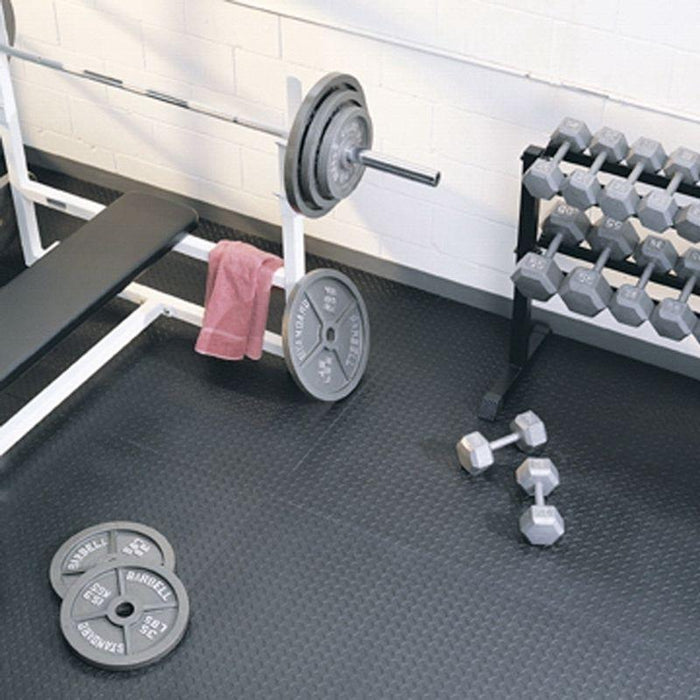
SuperMats Heavy Duty Rubber Mat 4x6
SuperMats 4x6 heavy-duty tiles offer a middle ground between horse stall mats and Rogue rolls — denser construction than EVA foam, interlocking tabs for easy installation and reconfiguration, and a surface finish oriented toward gym rather than agricultural use. Useful for mixed-use spaces where the layout may change or where rubber tiles need to be pulled up and stored periodically.
SuperMats heavy-duty rubber tiles bridge the gap between horse stall mats and Rogue rolls: denser than EVA foam, interlocking tabs for easy reconfiguration, gym-oriented surface finish. Useful when the gym layout may change or tiles need to be pulled up periodically. Not quite the density or consistency of horse stall mats under repeated heavy drops, but better than EVA for any weight zone.
Pros
- ✓Interlocking tabs allow easy reconfiguration when layout changes
- ✓Denser than EVA foam — handles moderate weight drops
- ✓Gym-oriented surface finish vs agricultural texture of stall mats
Cons
- ✗Below horse stall mat density under repeated heavy barbell drops
Score breakdown
| Dimensions | 4x6 ft |
| Material | Heavy-duty rubber |
| Price | $45 |
| Tabs | Interlocking for reconfiguration |
Gorilla Mats Premium Large Exercise Mat 6x4
The Gorilla Mats 6x4 single-piece mat eliminates seams entirely for smaller lifting areas — one mat covers the footprint of a power rack and immediate landing zone without any butted edges. The premium rubber compound is odor-reduced compared to standard stall mats and arrives ready to use with shorter off-gassing time. Correct pick if you want one mat that covers a complete lifting zone without coordinating multiple pieces.
The Gorilla Mats 6x4 single-piece mat eliminates seams for smaller lifting areas — one mat covers a power rack footprint and landing zone without any butted edges. The rubber compound off-gasses faster than standard stall mats, arriving closer to ready-to-use. At $220 it costs more than a comparable stall mat coverage area, but the single-piece advantage and faster off-gassing justify the premium for smaller setups.
Pros
- ✓Single piece eliminates seams entirely in smaller lifting areas
- ✓Faster off-gassing than standard horse stall mats
- ✓Covers a complete power rack footprint in one mat
Cons
- ✗$220 for 6x4 coverage — more expensive per sqft than stall mats
Score breakdown
| Dimensions | 6x4 ft |
| Thickness | 3/4 in |
| Material | Premium rubber compound |
| Price | $219.95 |
| Weight | ~90 lb |
Which one is right for you?
For barbell deadlifts and Olympic lifting
Rubber Flooring Inc 4x6 Horse Stall Mat (3/4 inch)
3/4-inch vulcanized rubber is the only material that handles repeated barbell drops without permanent damage
For cardio, stretching, and floor exercises
BalanceFrom Puzzle Exercise Mat with EVA Foam
EVA foam cushioning that rubber mats can't match — the right tool for floor-based movements
For a serious permanent home gym installation
Rogue Monster Matting (per linear foot)
Roll format eliminates seams across large spaces, denser and more consistent than stall mats
For a gym that may need to be reconfigured
SuperMats Heavy Duty Rubber Mat 4x6
Interlocking tabs let you pull up and re-lay tiles when layout changes
For a small lifting zone with no seams
Gorilla Mats Premium Large Exercise Mat 6x4
Single piece covers a complete power rack footprint with zero butted edges
Top pick: Rubber Flooring Inc 4x6 Horse Stall Mat — the classic value choice for barbell work
Horse stall mats have been the unofficial standard for home gym flooring for over a decade, and the reason is straightforward: a 4x6-foot, 3/4-inch rubber mat that weighs 100 pounds costs roughly $40–50 at a farm supply store and outperforms purpose-built gym mats at twice the price for heavy barbell use. The Rubber Flooring Inc version ships directly and maintains consistent 3/4-inch thickness across the full mat — thickness consistency matters because thinner sections compress differently under a loaded barbell, creating uneven feedback at the feet during a squat or deadlift.
The rubber compound is denser than foam-core alternatives, which is the specific property that matters for weightlifting. When you drop a loaded barbell from waist height, the energy needs to dissipate into a material that compresses without bouncing the bar back toward you or transferring the full shock to the concrete below. Dense vulcanized rubber does this; EVA foam does not. For deadlifts, Olympic lifting, and any movement where weight contacts the floor, the horse stall mat category has no peer at this price.
Coverage calculation is where the math gets practical. A standard 4x6 mat covers 24 square feet. A 10x10 power rack footprint needs roughly 5–6 mats depending on how far back you step during squats and how much buffer you want around the rack. Mats butt together without interlocking — they sit edge-to-edge, and the weight of the mats and equipment holds them in position. Light jumping movements can shift them; if you plan to do box jumps or jump rope on the same surface, add an interlocking edge trim or consider rubber tiles instead.
Odor is the primary complaint with horse stall mats. New mats off-gas a strong rubber smell for 2–8 weeks depending on ventilation in your space. Airing them out flat in a garage with good airflow before bringing them into a finished basement accelerates the process significantly. The odor is not a health hazard — it is the same vulcanization smell as new car tires — but it is genuinely unpleasant in an enclosed space for the first few weeks. Plan accordingly.
Budget pick: BalanceFrom Puzzle Exercise Mat — EVA foam tiles for cardio, stretching, and light training
EVA foam tiles fill a different use case than rubber mats and should not be evaluated as a cheaper alternative to them — they are a different product for different movements. The BalanceFrom Puzzle Exercise Mat tiles interlock like puzzle pieces, covering floor area in any shape, and their 3/4-inch EVA foam provides cushioning that rubber mats cannot match for floor-based movements: ab work, stretching, push-ups, yoga, and any exercise where your hands, knees, and back contact the surface directly.
The interlocking design means you can configure coverage to fit irregular room shapes, corridors, or partial flooring of a larger space. Each tile covers roughly 1 square foot, and the sets come in 24-piece and larger configurations. Edges and corners are included for a clean perimeter. The surface texture provides grip for bare feet and light footwear without being abrasive enough to cause friction burn during ground work.
What foam tiles cannot handle: any barbell work involving dropped weight. A loaded barbell dropped on EVA foam compresses it permanently in the impact zone, leaving a visible depression and compromising the tile's structural integrity. For a space that is strictly cardio — rowing machine, jump rope, kettlebell swings where the bell stays in hand — foam tiles are adequate and significantly lighter and cheaper than rubber alternatives. For a mixed-use space, use rubber where the barbell goes and foam tiles in the stretching zone.
BalanceFrom tiles are thinner and lighter than rubber mats, which makes them easy to roll up and store if you use a temporary workout area in a living room or bedroom. The interlocking tabs hold through moderate movement but will separate if someone catches a toe on an edge during a lunge or lateral shuffle. For dedicated permanent installations, the tabs are secure enough; for surfaces that get reconfigured frequently, expect to re-interlock the tiles periodically.
Premium pick: Rogue Monster Matting — purpose-built rubber rolls for permanent lifting spaces
Rogue's Monster Matting is sold by the linear foot in 4-foot-wide rolls and is designed for permanent installation in dedicated home gyms. The rubber compound is denser and more consistent than horse stall mat material, the surface texture is purpose-engineered for barbell contact (not tractor hooves), and the color options allow customization that farm supply mats do not. At roughly $3–5 per linear foot, it costs more than horse stall mats per square foot, but the quality difference is real.
The key advantage over stall mats is the roll format for large spaces. A stall mat installation in a 12x12 foot room requires six 4x6 mats, each weighing 100 pounds, creating six seams where the mats butt together. Rogue rolls can cover the full width of a room in a single piece, eliminating seams in the direction of travel — no edge to catch a toe, no gap where a 45-pound plate slides when it rolls sideways after being set down.
Installation requires adhesive for permanent bonding or heavy equipment placement to prevent shifting for semi-permanent setups. For a power rack, the rack's own weight usually suffices to anchor the matting. For open floor space around a barbell platform, perimeter adhesive or double-sided mat tape prevents walking the mat when doing sled pushes or other movements that drag the feet.
Rogue matting is the correct choice for a serious, permanent home gym where aesthetics and long-term durability matter alongside function. For a budget build or a setup that might need to relocate, the horse stall mat approach delivers 90% of the functional performance at 40% of the cost.
How to choose: thickness for weightlifting vs cardio, coverage area, and odor management
Thickness determines what the flooring can protect against. For deadlifts and Olympic lifting with plates dropped from height, a minimum of 3/4 inch (19mm) of dense rubber is the floor — thinner materials compress to the point where impact transmits to the subfloor and noise travels to lower levels of the building. For cardio equipment like treadmills and rowing machines, 3/8 inch (9.5mm) rubber or 1/2 inch (12.5mm) EVA foam provides adequate vibration damping. For floor-based bodyweight work and stretching, 3/4 inch EVA foam provides the most comfortable surface. The mistake is using foam tiles in a lifting zone or using 3/8-inch rubber under a barbell drop zone — either leads to subfloor damage or mat damage.
Coverage area planning starts with your rack footprint, not the room perimeter. A standard power rack or squat stand sits in a roughly 4x4-foot footprint, but the area where plates land during a missed lift or controlled descent extends 3–4 feet in front and to the sides. The minimum safe rubber coverage under and around a barbell rack is 6x8 feet (two 4x6 mats placed end-to-end, or one 4x8-foot rubber roll). Add additional coverage for the landing zone of dropped dumbbells and kettlebells. Then add a separate foam tile zone if you want a dedicated stretching or warm-up area adjacent to the lifting space.
Odor management is primarily a ventilation problem. All rubber flooring — horse stall mats, rubber tiles, and Rogue rolls — off-gasses during the first weeks after manufacture, with the intensity proportional to rubber density. Strategies that work: air mats outdoors for 48–72 hours before installation; run a fan across the surface during the first two weeks of use; baking soda spread across the mat surface overnight absorbs some of the volatile compounds. Strategies that do not work: sealing the rubber under plastic to contain the smell (it traps humidity and does not reduce off-gassing); using the mat immediately in a small enclosed space and hoping it resolves quickly. Plan for 2–4 weeks in a ventilated space before the smell is no longer noticeable during workouts.
Subfloor type affects the installation decision. Concrete subfloors benefit from any rubber flooring — the rubber provides thermal insulation (concrete draws heat from bare feet during winter sessions) and moisture buffering if the concrete is not fully sealed. Wood subfloor home gyms need to evaluate the point-load tolerance before installing heavy equipment — a loaded barbell rack on a 100-square-inch footprint concentrates significant weight per square inch, and some residential floor systems are not designed for this. Rubber flooring distributes load but does not eliminate structural concerns. If the floor bounces noticeably under your feet during walking, consult a contractor before placing a 500-pound barbell rack on it.
Frequently asked questions
How thick does flooring need to be for deadlifts and heavy barbell drops?▼
Are horse stall mats the same as purpose-built gym mats, and which is better?▼
How long does the rubber smell last, and is it harmful?▼
Prices change. Check the retailer for the current price.
Comments & questions
Discussion happens on nattzy, our community forum. Sign in with Google to post — it takes a second.
Related articles
Best Running Shoes 2026: 5 Compared

Best Water Bottle 2026: Stanley vs Hydro Flask vs Thermos
Best Coffee Grinders 2026: Five mills side-by-side

Best Electric Toothbrush 2026: 5 models compared honestly
Best Air Purifier 2026: 5 models compared honestly

ConoHa WING review (2026): setup, speed and pricing