Best Home Gym Setup Under $500 in 2026: What to Buy First
A $500 home gym built in the right order will outperform a $2,000 gym built without a plan — the question is never 'how much to spend' but 'which piece of equipment covers the most ground per dollar.'
Quick answer
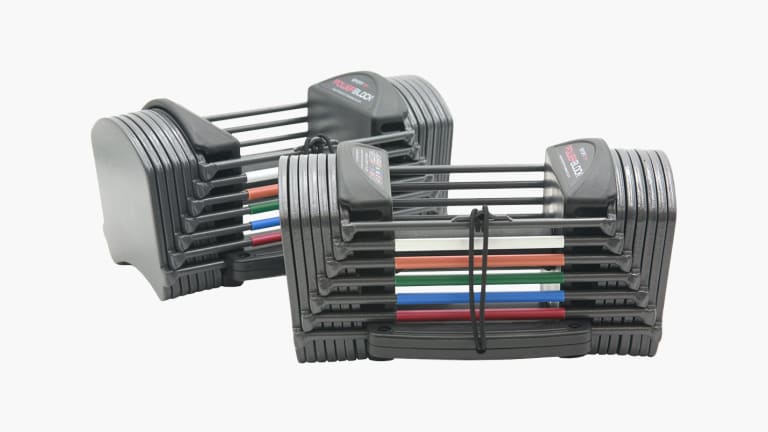
For most $500 builds, the PowerBlock Sport EXP 50 lb set is the pick — it replaces a full dumbbell rack in the footprint of two dumbbells, with 5-second pin-selector weight changes. The TRX HOME2 packs into a bag and mounts to any door frame for pulls and single-leg work, a CAP standard barbell set at $80-150 is the cheapest route into squats and deadlifts, and Rogue Monster Bands are the highest value per dollar at $75-120.
Each piece of equipment was evaluated on exercise-per-dollar coverage, space efficiency, build quality relative to price, and how long it remains useful as strength increases — budget home gym gear that becomes useless within a year scores poorly regardless of initial cost.
Key takeaways
- The prioritization framework: what to buy first — The single most useful concept for building a home gym on a budget is exercise-per-dollar …
- PowerBlock Sport EXP adjustable dumbbells: the space-efficient foundation — PowerBlock Sport EXP ($350-400 for the 50 lb set, $450-550 for the 70 lb set) replace a du…
- TRX HOME2 suspension trainer: the space-zero resistance option — The TRX HOME2 System ($150-200) is a set of adjustable nylon straps with handles and foot …
Contents
- 1The prioritization framework: what to buy first
- 2PowerBlock Sport EXP adjustable dumbbells: the space-efficient foundation
- 3TRX HOME2 suspension trainer: the space-zero resistance option
- 4CAP Barbell standard set and Rogue Monster Bands
- 5ProsourceFit flooring tiles: the purchase you'll be glad you didn't skip
- 6What you don't need to buy (the skip list)
- 7Sample $500 builds for different goals and spaces
Related articles
The prioritization framework: what to buy first
The single most useful concept for building a home gym on a budget is exercise-per-dollar coverage. Some equipment enables dozens of different movements across multiple muscle groups — a pair of adjustable dumbbells covers chest press, rows, curls, lateral raises, overhead press, goblet squats, Romanian deadlifts, Bulgarian split squats, and more. Other equipment is single-purpose — an ab wheel, a preacher curl pad, a leg press attachment. Under $500 total, you're building a foundation and every purchase should expand your exercise library, not narrow it.
Space constraints are the first real constraint, not budget. A 10x10 foot space is sufficient for a functional home gym if you plan carefully. A 6x8 foot space is workable with minimal equipment. Measure before you buy — an Olympic barbell at 7.2 feet long and a 5-foot rack footprint can make a small room nearly impossible to use. Adjustable dumbbells and suspension trainers are the space-efficient option; a barbell and plates are the space-demanding option that requires more commitment.
The correct buying order for a $500 budget: start with flooring if your floor is hard tile or concrete (injury prevention, equipment protection), then adjustable dumbbells or a barbell depending on your space, then resistance bands for mobility and supplemental exercises, then a suspension trainer if your space allows a mounting point. Don't buy a pull-up bar, ab equipment, or accessories before you have your primary resistance equipment — the body adapts fastest to compound movements, and all the accessories in the world don't replace a heavy pressing or rowing movement.
Cardio equipment under $500 tends to be low-quality treadmills and bikes that break quickly. Skip it at this budget tier. Running outside, a jump rope ($15), or stadium stair climbing covers cardio needs without any machine. If you have access to a pool, bike paths, or trails, you don't need an indoor cardio machine at all. The $500 budget is best spent entirely on resistance training equipment — the return on investment for muscle building and metabolic improvement is higher from resistance work than from low-quality cardio machines.
PowerBlock Sport EXP adjustable dumbbells: the space-efficient foundation
PowerBlock Sport EXP ($350-400 for the 50 lb set, $450-550 for the 70 lb set) replace a dumbbell rack from 5 to 50 lbs (or 70 lbs with the EXP expander) in a footprint the size of two standard dumbbells. The pin-selector mechanism changes weight in 2.5-5 lb increments without requiring you to slide plates on and off — you pull the selector pin, adjust the weight on the display ring, and re-insert. The weight change takes about 5 seconds.
Build quality of the Sport EXP is solid but not as refined as the PowerBlock Elite (which is the commercial-grade version). The plastic housing is the main compromise vs the Elite's more robust construction. Under normal home gym use — not commercial gym abuse — the Sport EXP holds up well and PowerBlock offers a 10-year warranty. For a home gym under $500, the Sport EXP at the 50 lb set occupies the sweet spot between budget adjustable dumbbells (which fail quickly) and the Elite (which costs $600-900).
The weight increments matter: 2.5-5 lb jumps are appropriate for upper body exercises but can be too large for exercises where you're near your maximum on a given muscle group. Some exercises progress better in 2.5 lb jumps — lateral raises, for instance, might stall at 15 lbs while 20 lbs is too heavy. Micro plates (small magnetic add-on weights in 1.25 and 2.5 lb increments) can be added to PowerBlocks for finer progression; they're sold separately for $20-30.
What the PowerBlock 50 lb set covers: every major upper body movement (chest press, shoulder press, rows, lateral raises, rear delt flyes, bicep curls, tricep extensions), lower body accessory work (goblet squats, Romanian deadlifts, split squats), and core work (weighted crunches, Russian twists). It does not cover heavy bilateral squats or deadlifts at meaningful loads for people past the beginner stage — a 100 lb goblet squat is awkward with a single dumbbell even if the weight is manageable. For lower body compound work at heavier loads, a barbell is better suited.
TRX HOME2 suspension trainer: the space-zero resistance option
The TRX HOME2 System ($150-200) is a set of adjustable nylon straps with handles and foot cradles that anchors to a door frame, a wall mount, a tree branch, or any overhead structure that can support your bodyweight. The TRX makes possible: rows (adjusting strap length and body angle changes difficulty), push-ups (suspended for instability, which recruits stabilizer muscles more than floor push-ups), single-leg squats, hamstring curls, pike exercises, and numerous core movements. The full exercise library from TRX is extensive.
The practical value of TRX for home gym setups: it takes up almost no space (rolls into a bag smaller than a gym bag), mounts in seconds, and provides meaningful resistance for upper body pulling movements that dumbbells alone can't replicate at the same quality. Rows with dumbbells require either a bench or an awkward floor position — TRX rows are a better mechanics alternative for many beginners and allow smooth resistance scaling by adjusting body angle.
TRX limitations: lower body compound loading is limited by your bodyweight. If you weigh 150 lbs and need more resistance for leg work than single-leg squats provide, the TRX can't add external load the way a barbell can. The TRX is excellent for pulling (rows), pushing variations, and core — but for someone whose primary goal is building significant lower body strength, it's a complement to weighted equipment rather than a standalone solution.
Door anchor vs ceiling mount: the included door anchor works for most exercises but creates a slight rearward pull during rows that changes the movement slightly from a ceiling-mounted version. For home gym use, the door anchor is sufficient for most people. Ceiling or wall mounting (via a TRX multi-mount or Rogue wall ball target attachment) provides the most versatile anchor position. If you have exposed beams or a pull-up bar, mounting options expand significantly. The HOME2 includes the basic anchor — additional mounting hardware is sold separately.
CAP Barbell standard set and Rogue Monster Bands
The CAP Barbell Standard Set ($80-150, varies by weight included) is a 1-inch standard barbell (not Olympic) with vinyl-coated plates. For a beginner under $500 total budget, this is the lowest-cost way to access barbell training — squats, deadlifts, bench press (with a bench), overhead press, and rows. The 1-inch standard bar is rated for 200-300 lbs depending on model, which is sufficient for early-intermediate training for most people.
The important caveat: standard barbell and weight equipment is designed for indoor use on flat, level surfaces and the vinyl coating on plates scratches floors. Flooring is essential before using this equipment on anything other than a thick rubber mat. A second caveat: the standard bar's 1-inch sleeve diameter means the plates can wobble slightly on the bar compared to Olympic equipment — for lighter loads this is acceptable; for anything heavy (200+ lbs) the Olympic bar system is significantly more secure. Most serious lifters eventually upgrade from standard to Olympic. If you're planning to progress beyond intermediate levels, starting with Olympic equipment ($150-300 for an entry-level Olympic bar and bumper plates) is the better long-term investment even if it costs more now.
Rogue Monster Resistance Bands ($15-30 per band, sets $60-120) are 41-inch loop bands in various resistance levels (from 13 lb up to 200 lb resistance). These are not the tube-with-handles bands that break after a few months — Rogue bands are thick, flat loops of natural latex that last years under heavy use. The exercise applications are extensive: banded deadlifts and squats (adding accommodating resistance that's harder at the top of the lift), pull-up assistance, shoulder activation, hip circles, mobility work, face pulls, and banded push-ups. A set of 3-4 bands ($80-120) covers the resistance range for most exercises.
For a home gym under $500, the band set is often the highest-value-per-dollar item: they take up zero space, provide meaningful resistance for assistance exercises, cover mobility work, can substitute for cable exercises (face pulls, tricep pushdowns), and the Rogue-quality versions last indefinitely under normal use. A beginner who hasn't tried banded pull-up assistance before will find a band set unlocks pull-up training immediately rather than waiting until they can do their first unassisted rep.
ProsourceFit flooring tiles: the purchase you'll be glad you didn't skip
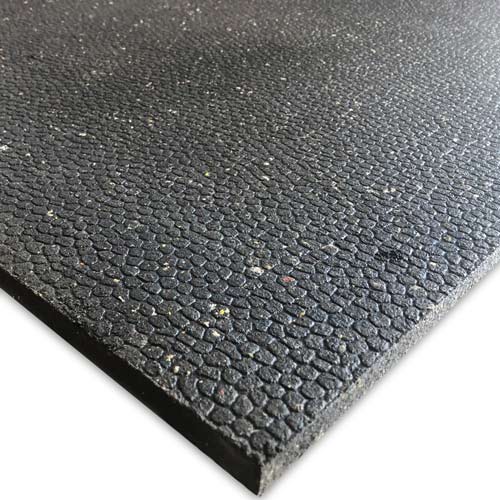
ProsourceFit 3/4-inch interlocking foam tiles ($40-60 for a 24 sq ft set) aren't exciting but they're probably the highest-consequence purchase decision in a home gym setup. Dropping a dumbbell on concrete or tile floors damages the floor, the dumbbell, and potentially feet. Doing exercises on hard floors creates pressure points at wrists, knees, and elbows during any ground-contact movement. Repeatedly slamming a jump rope on tile degrades the rope and the floor simultaneously.
The 3/4-inch thickness is the minimum useful depth for impact absorption. Some sources recommend 3/8-inch tiles, but the thinner options compress significantly under heavy loads and don't provide meaningful floor protection against dropped weights. For a space where you'll be using dumbbells up to 50 lbs, 3/4-inch rubber tiles (not foam — rubber is more durable) are the standard recommendation. ProsourceFit 3/4-inch tiles are foam; for rubber tiles with better durability and impact resistance, Rubber Flooring Inc and RubberFlooringExperts sell 3/4-inch rubber tiles at $2-3 per square foot.
Covering 100 square feet with 3/4-inch rubber tiles runs $200-300 — potentially more than some equipment purchases. For most apartment or small home gym situations, covering just the workout zone (the 6x8 to 8x10 feet where you actually move) with $60-100 of tiles covers the essential impact zones without spending on areas where you'll just stand. Prioritize floor coverage under and around where you'd drop dumbbells or a barbell.
Foam tiles compress and expand with temperature, which can cause edge separation in temperature-variable spaces (garages). If your home gym is in a garage, rubber tile or rubber roll flooring is more stable — foam tiles in garages often develop gaps over time from thermal expansion cycles. For climate-controlled spaces (spare bedrooms, basement), foam tiles work well and are significantly cheaper than rubber alternatives.
What you don't need to buy (the skip list)
Ab wheels: core training is adequately covered by plank variations, hollow body holds, TRX pike movements, and loaded carries — all of which you already have equipment for. An ab wheel adds one exercise to your repertoire at the cost of $15-25. At this budget, that $25 is better applied toward resistance bands or a second set of dumbbell plates.
Under-$200 treadmills and stationary bikes: these fail quickly. The bearings, belts, and motors in entry-level motorized cardio equipment are not built for daily use and commonly fail within 12-18 months. Budget treadmills at $200-400 have documented short lifespans in consumer reviews — common complaints include belt slipping, motor overheating, and frame cracking. Unless you're willing to spend $700+ on a treadmill or $500+ on an indoor bike (where quality becomes adequate), skip motorized cardio equipment entirely. A $15 jump rope handles cardio.
Curl bars, preacher curl pads, and isolation accessories: these are purchases for people who already have a complete home gym and want specialty equipment for specific exercises. A curl bar is strictly worse than a straight barbell for most exercises and marginally better for bicep curls — at this budget, it's not worth the space or cost. Preacher curl pads, cable attachments, and lat pulldown bars require machines that cost $500+ by themselves. Don't buy attachments for equipment you don't own.
Weight benches under $100: a sub-$100 flat bench is often unstable, has limited weight rating, and may not be adjustable to incline. A bench is genuinely useful equipment — if you add one to your setup, spend $150-200 on a basic adjustable bench (Rep Fitness AB-3000, Bowflex 3.1) that's stable enough for dumbbell press, incline work, and step-up exercises. A bad bench is a safety hazard. If the budget doesn't allow for a proper bench, dumbbell floor press is an effective substitute for chest training.
Sample $500 builds for different goals and spaces
Build A — Small apartment, strength + mobility focus ($490): PowerBlock Sport EXP 50 lb set ($350) + Rogue Monster Band set of 3 ($75) + ProsourceFit tiles 24 sq ft ($50) + jump rope ($15). This setup handles all major upper body movements, banded assistance for pulling and mobility, and cardio. No barbell, no bench — floor pressing and split squats cover lower body and chest work sufficiently for a beginner. Add a TRX or pull-up bar when the budget allows.
Build B — Garage or basement, strength focus with barbell ($495): CAP Barbell Standard Set with 110 lbs ($120) + weight bench basic flat ($100) + Rogue Monster Band set of 3 ($75) + ProsourceFit tiles 48 sq ft ($100) + jump rope ($15) + micro plates ($30). This build prioritizes heavy compound lifts — squat, deadlift, bench press, overhead press. The bands add mobility and assistance exercises. This is the build if your primary goal is strength and you have sufficient space (minimum 8x10 feet).
Build C — No dedicated space, travel or apartment flexibility ($360): TRX HOME2 ($180) + Rogue Monster Band set of 4 ($110) + ProsourceFit tiles 24 sq ft ($50) + jump rope ($15). The lightest and most packable option — everything fits in a bag and can be used anywhere with a door. Serious strength development is limited compared to Builds A and B, but for someone traveling frequently or in a small apartment, this covers more ground than no equipment at all. Add adjustable dumbbells ($350) when budget allows.
A frequently asked question is whether you should buy all the equipment at once or phase purchases. Phasing is almost always better — buy the single most useful piece first, train with it for 4-6 weeks, and then buy the next item based on what's actually limiting your progress. You'll have a clearer sense of what's missing after real training experience than you will from planning in advance. Starting with just the adjustable dumbbells and bands, then adding flooring and a bench later, is often more effective than buying everything simultaneously and then discovering which items don't fit your space or training style.
Where to buy
- PowerBlock Sport EXPBest Adjustable DumbbellsPR
5–90 lb adjustable dumbbell set in 2.5 lb increments — expandable to 90 lb with add-on kits.
Adjustable dumbbells 5-50 lbs (expandable to 70 lbs), pin-selector mechanism, 10-year warranty. $350-400 for 50 lb set. Best first purchase — covers more exercises per dollar than any other item. Correct for all beginners with limited space.
- TRX HOME2 SystemBest Suspension TrainerPR
Complete suspension training system — 300+ exercises, door anchor, outdoor strap, and app access.
Suspension trainer, door/ceiling/wall anchor options, travel bag included, 30-day trial. $150-200. Best for small spaces and travel — zero storage footprint, covers pulling and core movements well. Correct for people without space for dumbbells or those who travel frequently.
- CAP Barbell 110 lb Standard SetBest Budget Barbell KitPR
1-inch standard barbell with 110 lb of cast iron plates — budget entry point for barbell training.
1-inch standard barbell + vinyl plates, 110 lbs included. $80-150. Best for space-available strength focus — enables heavy compound lifts at low cost. Correct for garage or basement gyms with at least 8x8 feet. Plan to upgrade to Olympic bar eventually.
- Rogue Monster Resistance BandsBest Resistance BandsPR
41-inch loop bands in multiple resistance levels — used for pull-up assistance, barbell banded work, and mobility.
41-inch natural latex loop bands, multiple resistance levels, commercial-grade durability. $15-30 per band, sets $60-120. Best value-per-dollar in any home gym — pull-up assistance, mobility, accommodating resistance, banded exercises. Correct for every setup regardless of other equipment.
- ProsourceFit Puzzle Exercise Mat TilesBest Gym FlooringPR
3/4-inch interlocking EVA foam tiles — protects floors and reduces noise from dropped weights.
3/4-inch interlocking EVA foam tiles, 24 sq ft set. $40-60. Best floor protection for hard surfaces — prevents equipment and floor damage, reduces joint impact. Correct for anyone using heavy dumbbells or a barbell on tile or concrete floors.
Frequently asked questions
Can you actually build muscle with a $500 home gym?▼
What's the single best piece of home gym equipment to buy first?▼
Are adjustable dumbbells or a barbell better for beginners?▼
Do I need a pull-up bar for a home gym?▼
How do I build a complete workout routine with just dumbbells and bands?▼
Prices change. Check the retailer for the current price.
Comments & questions
Discussion happens on nattzy, our community forum. Sign in with Google to post — it takes a second.
Related articles
Best Running Shoes 2026: 5 Compared
Best Water Bottle 2026: Stanley vs Hydro Flask vs Thermos
Best Coffee Grinders 2026: Five mills side-by-side

Best Electric Toothbrush 2026: 5 models compared honestly
Best Air Purifier 2026: 5 models compared honestly

ConoHa WING review (2026): setup, speed and pricing