Best Knee Sleeves for Squats 2026: 5 Compared
Knee sleeves don't fix broken squat mechanics, and they won't save a knee that's genuinely injured. Weight range and build quality determine long-term value far more than feature lists.
Quick answer
For most lifters, SBD 7mm knee sleeves are the pick — IPF-approved double-layer neoprene used at more world-level meets than any other brand, with top and bottom double-stitching that prevents roll-down. Rehband's tapered anatomical cut stays centered and sells individually, Stoic's IPF-approved 7mm sleeves cost roughly half of SBD, and A7's 5mm silicone bar-grip pattern stops migration during CrossFit work.
This comparison is desk research. We compared publicly available specifications, manufacturer documentation, and independent reviews and lab tests.
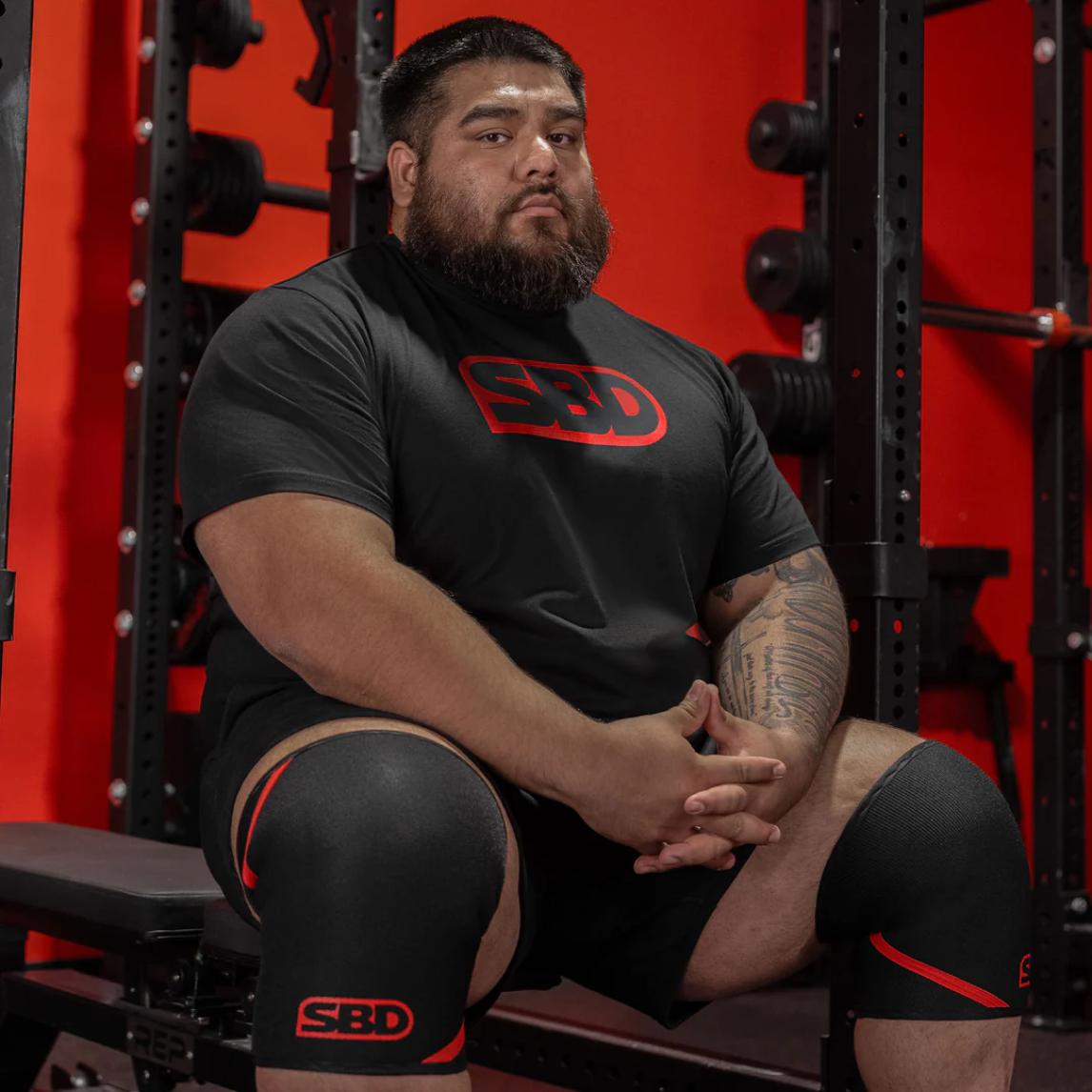
SBD Knee Sleeves (7mm)
Best Overall: SBD's 7mm double-layer neoprene is IPF-approved and used at more world-level meets than any other brand. The top and bottom double-stitching prevents roll-down, the most common failure mode of cheaper sleeves.
Top picks ↓| Product | Price | Link |
|---|---|---|
| $110.00Reference price | ||
| $49.99Reference price | ||
| $75Price as of 2026-09-24 | ||
| $60〜$70Reference price | ||
| $74.99Price as of 2026-09-24 |
| Product | Thickness | IPF approved | Sold | Sizing | Price | Cut | Exterior | Best for |
|---|---|---|---|---|---|---|---|---|
| SBD Knee Sleeves (7mm) | 7mm double-layer neoprene | Yes | Pairs | By thigh circumference | $110.00/pair | — | — | — |
| Rehband RX Knee Sleeve (7mm) | 7mm neoprene | No | Individually or pairs | — | $49.99 each | Tapered anatomical | — | — |
| Stoic Strength Knee Sleeves (7mm) | 7mm neoprene | Yes | Pairs | Runs small, size up | $67.00/pair | — | — | — |
| A7 Bar Grip Knee Sleeves (5mm) | 5mm neoprene | No | Pairs | — | $60–70/pair | — | Silicone bar-grip print | — |
| Rogue Knee Sleeves (5mm) | 5mm single-layer neoprene | No | Pairs | — | $60.00/pair | — | — | General strength training |
Top picks
Related articles


7mm, IPF approved, sold in pairs, size by thigh circumference
SBD's 7mm double-layer neoprene is IPF-approved and used at more world-level meets than any other brand. The top and bottom double-stitching prevents roll-down, the most common failure mode of cheaper sleeves. Sized by thigh circumference, not generic S/M/L — the fit chart matters, because a slightly loose 7mm sleeve delivers neither the compression nor the rebound that justifies the price over 5mm.
Pros
- ✓IPF-approved for competition
- ✓Double-stitched edges prevent roll-down
- ✓Best rebound out of the hole at 7mm
Cons
- ✗Too warm for warm-up sets, best reserved for 80%+ working sets
Score breakdown
| Thickness | 7mm double-layer neoprene |
| IPF approved | Yes |
| Sold | Pairs |
| Sizing | By thigh circumference |
| Price | $110.00/pair |

7mm, not IPF approved, sold individually or pairs, tapered cut
Rehband has made neoprene sleeves longer than most powerlifting brands have existed. The tapered anatomical cut — wider at top, narrower at the patella base — keeps the sleeve centered through deep squats better than straight-tube designs. Not IPF-approved, but compression and rebound are comparable to SBD for raw gym training. Sold individually, so you can trial one sleeve before buying a pair.
Pros
- ✓Anatomical tapered cut stays centered in deep squats
- ✓Sold individually for injured-knee testing
- ✓Warmer than average for cold gyms
Cons
- ✗Not IPF-approved for competition use
Score breakdown
| Thickness | 7mm neoprene |
| IPF approved | No |
| Sold | Individually or pairs |
| Cut | Tapered anatomical |
| Price | $49.99 each |

7mm, IPF approved, sold in pairs, best value competition sleeve
Stoic's 7mm IPF-approved sleeves deliver legitimate competition-grade compression at roughly half the price of SBD. The reinforced rear seam addresses where cheaper sleeves split after 6–12 months of heavy use. Sizing runs slightly small vs Rehband — size up if between sizes. Not as polished as SBD for fit retention over multiple cycles, but the performance gap doesn't justify the price gap for most lifters.
Pros
- ✓IPF-approved at roughly half SBD's price
- ✓Reinforced rear seam for long-term durability
- ✓Functional rebound with no multi-week break-in
Cons
- ✗Runs small — size up if between sizes
Score breakdown
| Thickness | 7mm neoprene |
| IPF approved | Yes |
| Sold | Pairs |
| Sizing | Runs small, size up |
| Price | $67.00/pair |
Subscribe to our newsletter
Occasional updates and new releases — no spam.

5mm, not IPF approved, silicone grip exterior, ideal for CrossFit
A7's 5mm sleeves print a silicone bar-grip pattern on the outer surface — the same grip technology from their squat shirts — preventing migration during repeated knee flexion in WODs, box jumps, and thrusters. At 5mm the neoprene is thin enough to allow unrestricted mechanics in wall balls and pistol squats where 7mm creates noticeable resistance. Designed for CrossFit, not IPF competition.
Pros
- ✓Silicone exterior prevents migration during dynamic movements
- ✓5mm allows full ROM for CrossFit movements
- ✓Sold in pairs
Cons
- ✗Not IPF-approved
- ✗15–20% price premium over plain 5mm sleeves
Score breakdown
| Thickness | 5mm neoprene |
| IPF approved | No |
| Sold | Pairs |
| Exterior | Silicone bar-grip print |
| Price | $60–70/pair |
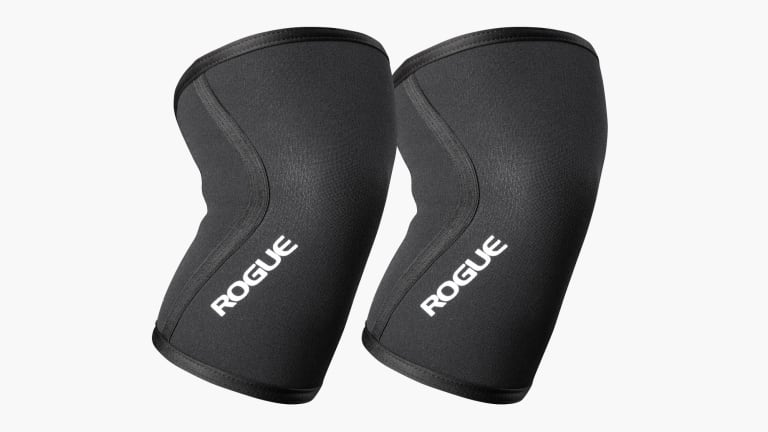
5mm, not IPF approved, sold in pairs, best for general training
Rogue's 5mm single-layer sleeves are the practical choice for athletes who squat, press, and pull in the same session without removing sleeves between movements. Less rebound than 7mm — intentionally so. Warmth is consistent across 60–90 minute sessions without becoming uncomfortable. For general strength training at sub-maximal intensity, these cover joint support without over-engineering the solution.
Pros
- ✓Practical for full-session wear without removal
- ✓Consistent warmth without overheating
- ✓Straightforward sizing matching Rogue apparel
Cons
- ✗Less rebound than 7mm — not suitable for max-effort powerlifting
Score breakdown
| Thickness | 5mm single-layer neoprene |
| IPF approved | No |
| Sold | Pairs |
| Best for | General strength training |
| Price | $60.00/pair |
Which one is right for you?
For IPF competition
SBD Knee Sleeves (7mm)
IPF-approved, used by world champions, reliable at meet-day intensity
For comfort-first lifters
Rehband RX Knee Sleeve (7mm)
Anatomical cut stays centered and sells individually so you can test one knee first
For budget powerlifters
Stoic Strength Knee Sleeves (7mm)
IPF-approved at half the price of SBD with adequate competition-grade compression
For CrossFit athletes
A7 Bar Grip Knee Sleeves (5mm)
Silicone grip prevents migration during box jumps, thrusters, and WOD-style knee cycling
For general gym training
Rogue Knee Sleeves (5mm)
Wearable for full sessions across all movements without needing to remove between sets
SBD Knee Sleeves (7mm) — Best Overall
Rehband RX Knee Sleeve (7mm) — Best for Comfort
Stoic Strength Knee Sleeves (7mm) — Best Value
A7 Bar Grip Knee Sleeves (5mm) — Best for CrossFit
Rogue Knee Sleeves (5mm) — Best for General Training
Frequently asked questions
Should I get 7mm or 5mm knee sleeves?▼
Are knee sleeves IPF-approved and does it matter?▼
How tight should knee sleeves be?▼
Prices change. Check the retailer for the current price.
Comments & questions
Discussion happens on nattzy, our community forum. Sign in with Google to post — it takes a second.
Related articles
Best Gym Bag 2026: Wet/Dry, Backpack vs Duffel, Sizing
Best Water Bottle 2026: Stanley vs Hydro Flask vs Thermos
Best Air Purifier 2026: 5 models compared honestly

ConoHa WING review (2026): setup, speed and pricing
Best JP rental server 2026: 5 hosts ranked
Best LED Face Masks 2026: 3 Light Therapy Devices Compared