Best Mushroom Coffee 2026: 5 Compared
Mushroom coffee is ground coffee blended with powdered functional mushrooms — most commonly lion's mane (Hericium erinaceus), chaga (Inonotus obliquus), reishi (Ganoderma lucidum), or cordyceps. The grind, water temp, and ratio matter far more than which brewer you choose.
Quick answer
Mushroom coffee is ground coffee blended with lion's mane, chaga, reishi, or cordyceps powder, and the question is dose transparency. Four Sigmatic's Think blend uses dual extraction on organic arabica and is the most reliable introduction. Ryze is the value pick at $1.50 a serving with 48mg caffeine, which makes it the sustainable daily habit for people cutting back. Om's Master Blend is the certified organic choice, Earth & Star labels per-species content, and pure lion's mane powder is the cheapest route to a clinical dose.
Each mushroom coffee was assessed on mushroom species used, per-serving dosage transparency, extraction method (dual-extract vs whole powder), caffeine level, flavor integration, and cost per serving relative to buying coffee and supplements separately.
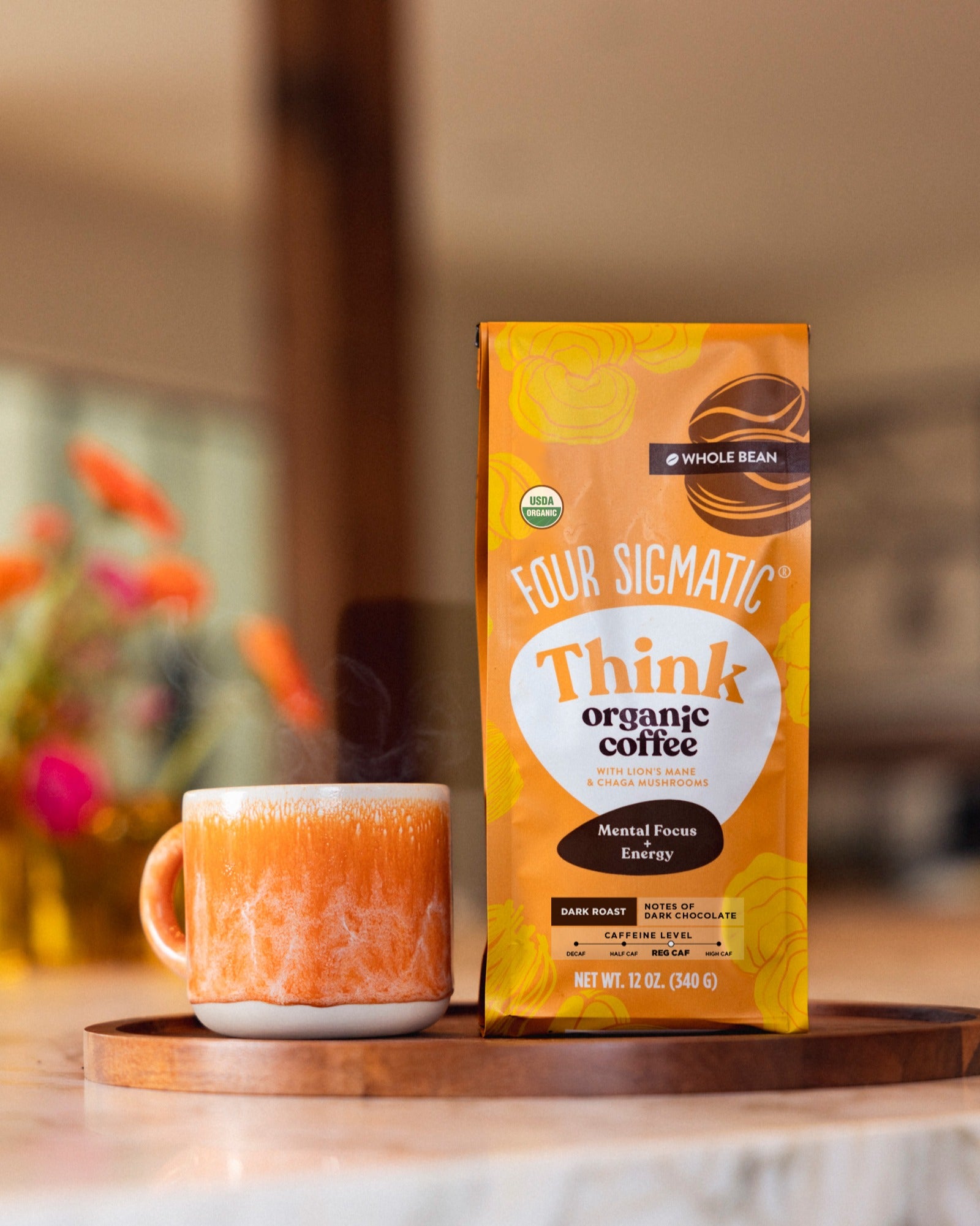
Four Sigmatic Think Coffee with Lion's Mane
Best Overall: Four Sigmatic pioneered mushroom coffee and remains the quality benchmark. The Think blend uses dual-extraction (hot water + alcohol) on organic Arabica, delivering 250mg lion's mane and 200mg chaga per serving with better bioavailability than raw powder products.
Top picks ↓| Product | Price | Link |
|---|---|---|
| $28.50Reference price | ||
| $45.00Reference price | ||
| $19.99Reference price | ||
| $24.99Reference price | ||
| $29.99Price as of 2026-09-24 |
| Product | Form | Mushrooms | Caffeine per serving | Organic | Servings per pack | Certifications |
|---|---|---|---|---|---|---|
| Four Sigmatic Think Coffee with Lion's Mane | instant coffee (single-serve packets) | Lion's Mane, Chaga | 50 mg | Yes | 10 packets | USDA Organic (CCOF, US-ORG-006) |
| Ryze Mushroom Coffee | instant coffee | 6-mushroom blend (Cordyceps, Reishi, King Trumpet, Shiitake, Turkey Tail, Lion's Mane), 2000 mg | 48 mg | Yes | 30 servings | USDA Organic |
| Om Mushroom Master Blend | mushroom extract powder (NOT a coffee) | 10-mushroom blend (incl. Lion's Mane, Reishi, Cordyceps, Chaga, King Trumpet, Turkey Tail, Maitake, Shiitake) plus ashwagandha | 0 mg (no coffee) | Yes | 40 servings | USDA Organic (Om brand-wide also: Non-GMO, vegan, gluten-free, kosher) |
| Earth & Star Mushroom Coffee | ground coffee | Lion's Mane, Chaga, Cordyceps, Reishi (+ L-theanine), 1200 mg per cup | — | Yes | — | — |
| Lion's Mane Mushroom Extract Powder | mushroom extract powder (NOT a coffee) | Lion's Mane (single mushroom) | 0 mg (no coffee) | — | — | — |
Top picks
Related articles


250mg lion's mane + 200mg chaga per serving, dual-extraction organic Arabica, 12 servings. $20-25. Most established brand — dual-extraction for bioavailability, good taste integration, available internationally. Best starting point for mushroom coffee newcomers.
Four Sigmatic pioneered mushroom coffee and remains the quality benchmark. The Think blend uses dual-extraction (hot water + alcohol) on organic Arabica, delivering 250mg lion's mane and 200mg chaga per serving with better bioavailability than raw powder products. Taste is genuinely coffee-forward with a mild earthy note — not medicinal. The 12-serving bag makes it the most expensive per-serving option, but the extraction quality justifies it for regular use.
Pros
- ✓Dual-extraction increases bioavailability of active compounds
- ✓250mg lion's mane + 200mg chaga per labeled serving
- ✓Best taste integration — earthy note present but not intrusive
Cons
- ✗$28.50 for 12 servings — most expensive per-serving option here
Score breakdown
| Form | instant coffee (single-serve packets) |
| Mushrooms | Lion's Mane, Chaga |
| Caffeine per serving | 50 mg |
| Organic | Yes |
| Servings per pack | 10 packets |
| Certifications | USDA Organic (CCOF, US-ORG-006) |

6-mushroom blend (2,000mg total), organic Arabica, 48mg caffeine per serving, 30 servings. $30. Most popular by sales — lower caffeine, proprietary blend ratio not disclosed. Best value per serving. Popular choice for those wanting lower caffeine coffee.
Ryze is the best-selling mushroom coffee by volume, and the $1.50/serving cost for 30 servings is the most competitive in this comparison. The 6-mushroom blend totals 2,000mg per serving, though individual mushroom doses are not disclosed. At 48mg caffeine per serving — roughly half of drip coffee — it is the right pick for anyone reducing caffeine while keeping a morning ritual. Trade-off: no transparency on per-mushroom dosing.
Pros
- ✓$1.50/serving — best cost-per-serving of full mushroom coffee blends
- ✓6-mushroom blend totals 2,000mg per serving
- ✓Low 48mg caffeine — good for caffeine-sensitive users
Cons
- ✗Individual mushroom doses not disclosed — can't assess per-species efficacy
Score breakdown
| Form | instant coffee |
| Mushrooms | 6-mushroom blend (Cordyceps, Reishi, King Trumpet, Shiitake, Turkey Tail, Lion's Mane), 2000 mg |
| Caffeine per serving | 48 mg |
| Organic | Yes |
| Servings per pack | 30 servings |
| Certifications | USDA Organic |
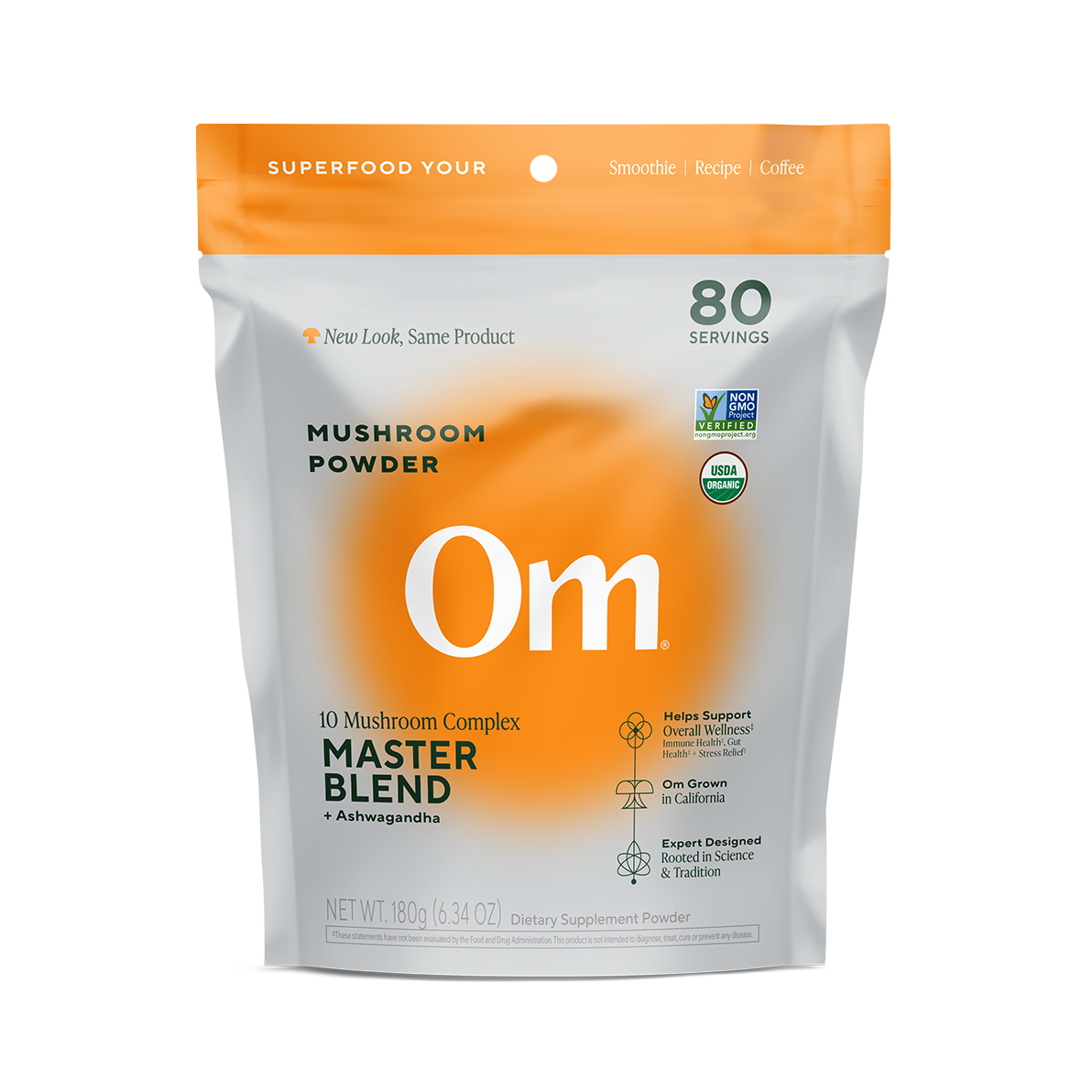
10 mushroom species, USDA organic, whole mushroom powder, third-party tested, 30 servings. $30-40. Best transparency and organic credentials — full-spectrum whole mushroom powder, not just extracts. Correct for quality-focused buyers.
Om's Master Blend is the most transparently certified option — USDA organic, full-spectrum whole mushroom powder (not just extract), third-party tested, and 10 mushroom species. The whole-powder vs dual-extract debate is real: whole powders preserve the full compound matrix including fiber and polysaccharides, while extracts concentrate active compounds more. At $19.99 for 30 servings, Om is also a strong value. The trade-off is that it is a pure mushroom powder added to your own coffee, not a ready-mixed product.
Pros
- ✓USDA organic certification and third-party testing
- ✓Full-spectrum whole mushroom powder — 10 species
- ✓Best value for certified organic mushroom quality
Cons
- ✗Not pre-mixed with coffee — requires your own separate coffee purchase
Score breakdown
| Form | mushroom extract powder (NOT a coffee) |
| Mushrooms | 10-mushroom blend (incl. Lion's Mane, Reishi, Cordyceps, Chaga, King Trumpet, Turkey Tail, Maitake, Shiitake) plus ashwagandha |
| Caffeine per serving | 0 mg (no coffee) |
| Organic | Yes |
| Servings per pack | 40 servings |
| Certifications | USDA Organic (Om brand-wide also: Non-GMO, vegan, gluten-free, kosher) |
Subscribe to our newsletter
Occasional updates and new releases — no spam.

Lion's mane + chaga + reishi, organic coffee, labeled per-serving mushroom content, 30 servings. $22-28. Good transparency on dosing — more honest labeling than many competitors. Also offers mushroom matcha and hot chocolate.
Earth & Star labels per-serving mushroom content for each species — lion's mane, chaga, and reishi — which is more honest than the proprietary-blend approach. Organic coffee base, pleasant mild flavor, and attractive packaging that makes it a reasonable gift option. Doses are labeled but not at clinical levels, so it is an honest, well-made product rather than a therapeutic-grade supplement.
Pros
- ✓Per-serving mushroom dose labeled for each species
- ✓Organic coffee base with mild, pleasant flavor
- ✓Offers mushroom matcha and hot chocolate variants
Cons
- ✗Mushroom doses below clinical research levels — more wellness product than supplement
Score breakdown
| Form | ground coffee |
| Mushrooms | Lion's Mane, Chaga, Cordyceps, Reishi (+ L-theanine), 1200 mg per cup |
| Organic | Yes |

Pure lion's mane extract powder, typically 500mg-1g per serving, 50-100 servings. $20-35. Best DIY approach — add to any coffee for precise dosing at clinical-relevant amounts. Most cost-effective for daily lion's mane supplementation.
Adding pure lion's mane extract powder to your existing coffee is the most cost-effective and dosage-controlled approach in this comparison. At 500mg–1g per serving and 50–100 servings per bag, you can hit the lower bound of doses studied in human research while choosing whatever coffee you actually prefer. Minimal flavor impact at doses up to 1,000mg. The trade-off is managing two separate products.
Pros
- ✓Precise dosing at 500mg–1g — closest to clinically studied amounts
- ✓50–100 servings per bag — most servings per dollar
- ✓No taste compromise — add to any coffee you already enjoy
Cons
- ✗Requires managing two separate products; not a single-purchase solution
Score breakdown
| Form | mushroom extract powder (NOT a coffee) |
| Mushrooms | Lion's Mane (single mushroom) |
| Caffeine per serving | 0 mg (no coffee) |
Which one is right for you?
For mushroom coffee first-timers
Four Sigmatic Think Coffee with Lion's Mane
Four Sigmatic's dual-extraction and good taste integration make it the most reliable introduction to the category — established quality with minimal adjustment period.
For daily drinkers cutting caffeine
Ryze Mushroom Coffee
At 48mg caffeine and $1.50/serving for 30 servings, Ryze is the most sustainable daily-habit option for those reducing caffeine without abandoning a morning coffee ritual.
For organic-only supplement buyers
Om Mushroom Master Blend
USDA organic, third-party tested, 10 species whole-mushroom powder — the most credentialed option for buyers who require certification and transparency.
For precision supplementers
Lion's Mane Mushroom Extract Powder
Pure extract powder lets you add a controlled 500–1,000mg dose to whatever coffee you already enjoy — the most cost-effective path to clinically relevant lion's mane intake.
What the research actually says about functional mushrooms
Lion's mane (Hericium erinaceus): the most researched mushroom in the cognitive category. Lion's mane contains hericenones and erinacines — compounds that have shown ability to stimulate nerve growth factor (NGF) synthesis in vitro and in animal studies. Human studies are limited and small-scale, but some suggest improvements in mild cognitive impairment and anxiety with daily doses of 500-3,000mg of lion's mane extract. The crucial detail: most mushroom coffee products contain 200-500mg of lion's mane per serving, often at the lower end of this range. Whether this achieves meaningful cognitive effects is unclear.
Chaga and reishi: chaga (Inonotus obliquus) contains high levels of antioxidants and beta-glucans. Reishi (Ganoderma lucidum) has been studied for immune modulation and has a long history in traditional Chinese medicine. Neither has strong human clinical evidence for the specific cognitive or energy benefits claimed in mushroom coffee marketing. Both are generally safe. The adaptogenic framing (helping the body 'adapt to stress') is used loosely — the clinical evidence for specific stress-reduction effects in coffee-compatible doses is not established.
Cordyceps (Cordyceps militaris): has some research suggesting improved oxygen utilization (VO2 max) in endurance athletes, primarily using doses of 1,000-4,000mg daily. The studies are small but more consistent than lion's mane cognitive research. Most mushroom coffee products contain 100-300mg cordyceps per serving. Whether this is physiologically meaningful is questionable. The practical takeaway: functional mushrooms are not fraudulent, but mushroom coffee is a product where you're primarily buying convenience and flavor rather than clinical-grade dosing.
Four Sigmatic and Ryze: the mainstream mushroom coffee brands
Four Sigmatic Think Coffee with Lion's Mane ($20-25 for 12 servings) is the brand that popularized mushroom coffee — their products are widely available internationally and have good brand credibility. The Think Coffee blend contains 250mg lion's mane and 200mg chaga per serving alongside organic Arabica coffee. Four Sigmatic uses dual-extraction mushroom extracts (both hot water and alcohol extraction) rather than raw mushroom powder, which increases bioavailability. The taste is good — it's recognizably coffee with a slightly earthy background note. Four Sigmatic also offers mushroom blends without coffee (their Calm and Boost mushroom elixirs) for those who want the mushrooms without caffeine.
Ryze Mushroom Coffee ($30 for 30 servings) is the most popular mushroom coffee brand by sales volume as of recent years. Ryze uses a blend of 6 mushrooms (lion's mane, cordyceps, reishi, shiitake, turkey tail, king trumpet) plus Arabica coffee at a lower caffeine level than standard coffee (48mg caffeine per serving vs ~95mg in drip coffee). The lower caffeine is intentional — Ryze markets this as providing energy without jitters. The mushroom proprietary blend totals 2,000mg per serving but the split between individual mushrooms isn't disclosed, making it difficult to assess if any single mushroom is at a meaningful dose.
Earth & Star Mushroom Coffee ($22-28 for 30 servings) uses a blend of lion's mane, chaga, and reishi with certified organic coffee. They're more transparent about dosage than many competitors — their per-serving mushroom content is labeled (though not at clinical doses). Taste is mild and pleasant. The packaging is appealing for gift purposes. They also offer mushroom hot chocolate and mushroom matcha, positioning as a broader functional beverage brand.
Om Master Blend and standalone lion's mane powder
Om Mushroom Master Blend ($30-40 for 30 servings) is produced by Om Organic Mushroom Nutrition, a company that focuses on certified organic mushroom cultivation. Their Master Blend contains 10 mushroom species and is available both as a standalone powder and as mushroom coffee when blended. Om distinguishes itself through USDA organic certification, full-spectrum whole mushroom powder (not just extract), and third-party testing. The whole mushroom powder vs. dual-extraction extract debate: extracts are more concentrated and generally higher in active compounds per gram; whole mushroom powders contain the full spectrum of compounds including fiber and polysaccharides.
Standalone lion's mane powder ($20-35 for 50-100 servings) is worth considering for anyone who wants flexible dosing. Adding lion's mane powder to regular coffee allows you to control dose precisely — 500-1,000mg per day, which is within the range studied in human research, without paying mushroom coffee premiums for coffee you can source separately. Pure lion's mane extract powder has minimal taste impact on coffee at doses up to 1,000mg. This DIY approach is cost-effective and gives you control over both mushroom dose and coffee quality.
Taste across brands: mushroom coffee brands vary in how prominent the earthy mushroom note is. Four Sigmatic has the most developed flavor — the mushrooms are present but integrated. Ryze is milder. Some generic brands taste flat or have a strong earthy aftertaste. If you're trying mushroom coffee for the first time, Four Sigmatic's established formulas are a more reliable starting point than unknown brands. The category has many low-quality products that simply grind raw mushroom powder into cheap instant coffee.
Making sense of mushroom coffee claims and dosing
What to look for on a label: the most important spec is whether mushroom content is listed per serving and whether it specifies extract vs. whole powder. Effective doses in research are 500-3,000mg lion's mane daily, 1,000-4,000mg cordyceps. If a product lists '200mg lion's mane' per serving but doesn't specify extraction ratio, you can't determine the equivalent dose of active compounds. Products that list beta-glucan content are providing more useful information — beta-glucans are the primary active polysaccharide fraction in most functional mushrooms.
Caffeine reduction: many mushroom coffee products contain less caffeine than regular coffee — 48-80mg per serving vs. 90-120mg in drip. This is sometimes framed as the mushrooms 'smoothing' caffeine's effect, but the simpler explanation is that less caffeine was added. If you want lower caffeine coffee with adaptogenic additions, mushroom coffee serves this purpose. If you're expecting mushroom coffee to eliminate caffeine jitters while maintaining full caffeine content, that's a claim not well-supported by the ingredients.
Value comparison: Four Sigmatic Think Coffee at $25 for 12 servings costs $2.08/serving. Ryze at $30 for 30 servings costs $1.00/serving. Compare to high-quality specialty coffee at $0.25-0.75/serving plus a standalone lion's mane supplement at $0.30-0.60/day. The mushroom coffee premium buys convenience — you don't have to manage separate supplements. Whether the convenience is worth $0.50-1.50 more per day than buying separately is a personal calculation.
Frequently asked questions
Does mushroom coffee actually work?▼
Is mushroom coffee safe?▼
How does mushroom coffee compare to adding lion's mane powder to regular coffee?▼
Does mushroom coffee taste like regular coffee, or does it taste like mushrooms?▼
How much caffeine is in mushroom coffee compared to regular coffee?▼
Who should avoid mushroom coffee or check with a doctor first?▼
What's the difference between mushroom extract and whole mushroom powder, and which should I buy?▼
How do I prepare mushroom coffee, and can I use it in my espresso machine?▼
Prices change. Check the retailer for the current price.
Comments & questions
Discussion happens on nattzy, our community forum. Sign in with Google to post — it takes a second.