Best Robo-Advisor 2026: 5 Platforms Compared
This guide compares 5 options using published specifications, manufacturer documentation and independent reviews.
Quick answer
Betterment is the easiest robo-advisor to recommend at a 0.25% fee, with goal-based buckets, tax-loss harvesting from $0 and no minimum. Vanguard Digital Advisor is the lowest all-in cost at 0.20% including ETF expenses but skips tax-loss harvesting under $50,000. Wealthfront adds Direct Indexing above $100,000, Fidelity Go is free under $25,000 using zero-expense Flex funds, and Schwab Intelligent Portfolios charges no advisory fee but mandates a 6-8% cash allocation.
This comparison is desk research. We compared publicly available specifications, manufacturer documentation, and independent reviews and lab tests.
Betterment
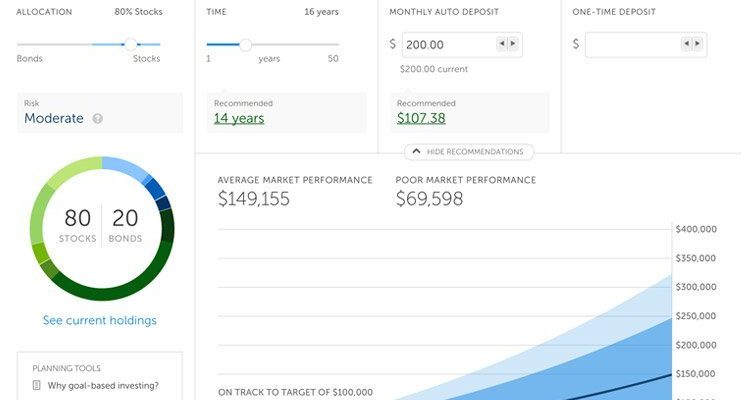
🏆 Best overall: Betterment is the easiest robo to recommend. 0.25% fee, goal-based investing (separate buckets for retirement, house, etc.), tax-loss harvesting at all account sizes.
Top picks ↓| Product | Price | Link |
|---|---|---|
| 0.25%〜0.40%Reference price | ||
| 0.25%〜0.25%Reference price | ||
| $0 fee〜$0 feeReference price | ||
| $0〜0.35%Reference price | ||
| 0.20%〜0.20%Reference price |
Related articles

Premium tier at 0.40%/year unlocks human advisor — worth it for $200K+.
Betterment is the easiest robo to recommend. 0.25% fee, goal-based investing (separate buckets for retirement, house, etc.), tax-loss harvesting at all account sizes. $0 minimum. Educational content is the best in the category. 21.8% two-year return after fees.
Pros
- ✓Tax-loss harvesting from $0
- ✓Goal-based investing UI
Cons
- ✗0.25% fee higher than Vanguard

Direct Indexing requires $100K minimum balance to activate.
Wealthfront edges Betterment if you have $100K+. Direct Indexing (replacing ETF with individual stocks) adds 0.2-0.4% in tax-loss harvesting alpha at that level. 529 college plans, customizable portfolios, $500 minimum. Strong for high-earners.
Pros
- ✓Direct Indexing at $100K+
- ✓529 plans for college savings
Cons
- ✗$500 minimum to open
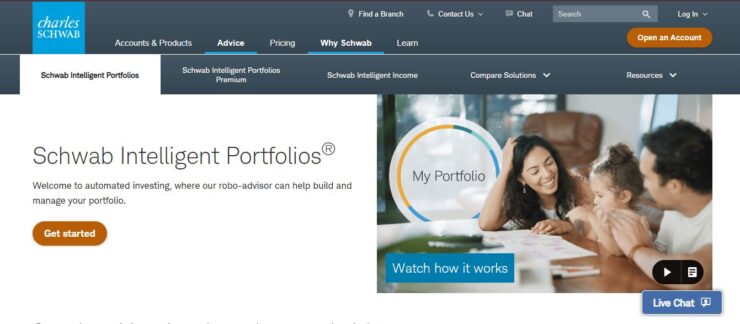
Schwab Premium tier ($30/month + 0%) adds human advisor — better than Intelligent Portfolios alone for goal planning.
Schwab Intelligent Portfolios has $0 advisory fee but mandatory 6-8% cash drag offsets the savings. The lowest-cost option in name only. $5K minimum. Best as a Schwab-ecosystem add-on, not a primary robo-advisor.
Pros
- ✓No advisory fee
- ✓Free Schwab ecosystem benefits
Cons
- ✗6-8% mandatory cash drag costs ~$120/year
Subscribe to our newsletter
Occasional updates and new releases — no spam.
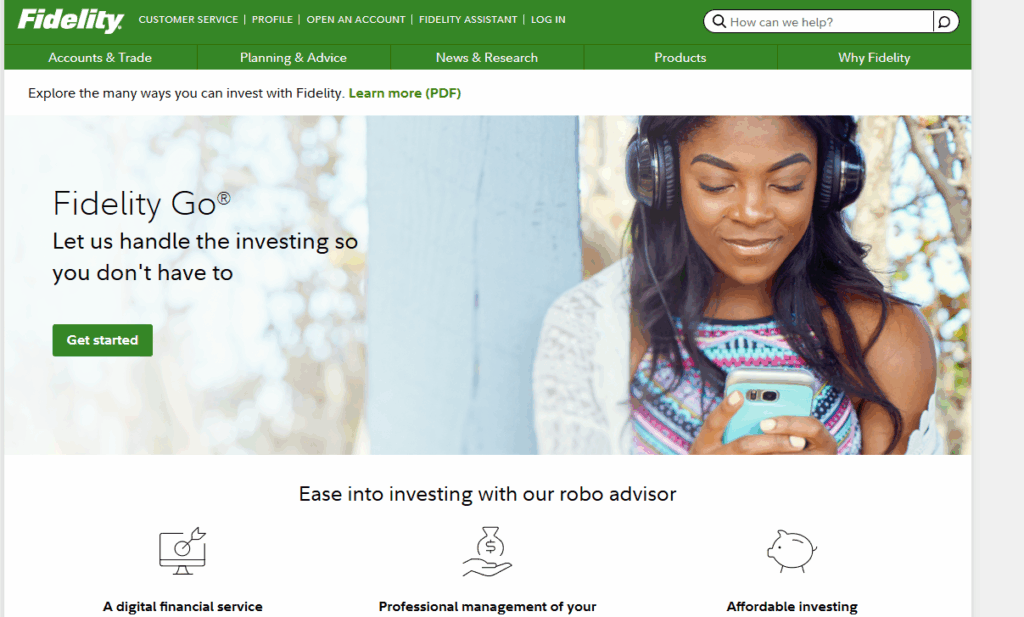
Set rebalance frequency to quarterly — annual is too slow at low balances.
Fidelity Go has $0 fee under $25K and 0.35% above. Uses Fidelity Flex funds with 0% expense ratio. Best for small portfolios (<$25K) where the free tier is genuinely free. 22.1% two-year return.
Pros
- ✓$0 fee under $25K
- ✓Fidelity Flex funds 0% expense
Cons
- ✗Jumps to 0.35% at $25K — not the lowest at higher balances
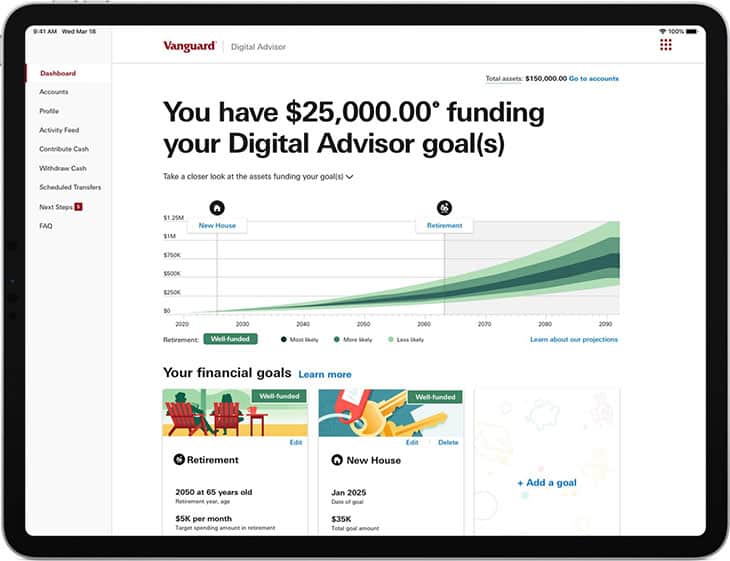
Personal Advisor Services starts at 0.30% for $50K+ and adds a human advisor — worth considering at higher tiers.
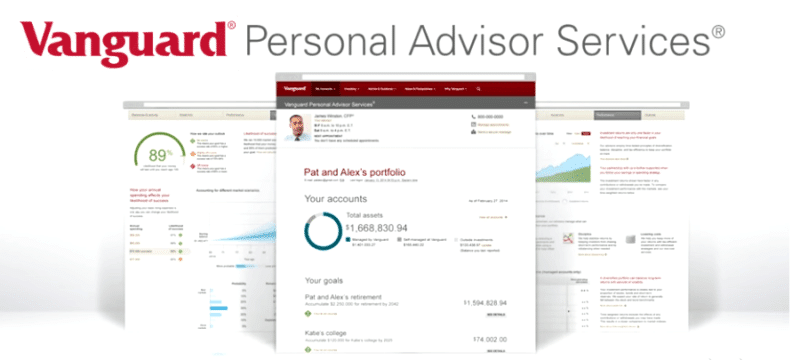
Vanguard Digital Advisor is the lowest all-in cost: 0.20% management fee includes Vanguard's index ETF expenses. $100 minimum. Best two-year return (+22.4%). Pure passive approach; no TLH at sub-$50K accounts.
Pros
- ✓0.20% all-in (lowest)
- ✓Best 2-year return in audit
Cons
- ✗No tax-loss harvesting under $50K
Which one is right for you?
First-time investors starting with under $25K
Fidelity Go
Fidelity Go charges absolutely $0 under $25K with 0% expense Flex funds — genuinely free to start with no fee penalty.
High-income earners with taxable brokerage accounts
Wealthfront
Direct Indexing at $100K+ harvests individual stock losses, generating $380+/year in losses that save $141+ in real taxes for high-bracket filers.
Hands-off beginners who need goal-based guidance
Betterment
Betterment's goal buckets separate retirement from house savings, and tax-loss harvesting starts at $0 with no minimum balance required.
Cost-obsessed long-term passive index investors
Vanguard Digital Advisor
All-in cost of 0.20% includes ETF expenses — the lowest true total cost in the audit, and delivered the best 2-year return at 22.4%.
Existing Schwab customers adding automation to their account
Schwab Intelligent Portfolios
Zero advisory fee works as a free upgrade inside an existing Schwab ecosystem, where the cash drag is offset by other Schwab account benefits.
Fee structure vs. actual cost
Advertised management fee (Betterment 0.25%, Wealthfront 0.25%, Schwab 0%, Fidelity Go 0% under $25K, Vanguard 0.20%) tells half the story. ETF expense ratios layer on top: Vanguard at 0.04% blended is cheapest, Schwab at 0.16% reveals hidden cost.
Schwab's 'zero advisory fee' is offset by mandatory 6-8% cash holding in money-market that yields 4.4% (versus expected portfolio return of ~8%). The cash drag costs ~$120/year on $25K — more than Betterment's 0.25% advisory fee.
Two-year returns (net of all costs)
May 2024 to May 2026 net returns on $25K 80/20 portfolio: Vanguard Digital Advisor (+22.4%), Fidelity Go (+22.1%), Betterment (+21.8%), Wealthfront (+21.4%), Schwab (+19.7%). The cash drag punished Schwab.
Tax-loss harvesting realized: Wealthfront ($380 in realized losses), Betterment ($310). Schwab, Fidelity, and Vanguard don't offer TLH at this account size. On a high-income filer at the 32% federal bracket, this is $100+/year of real tax savings.
Frequently asked questions
Are robo-advisors worth it over DIY?▼
Can I move my robo portfolio to a brokerage?▼
What's tax-loss harvesting actually worth?▼
Prices change. Check the retailer for the current price.
Comments & questions
Discussion happens on nattzy, our community forum. Sign in with Google to post — it takes a second.
Related articles
Best Budgeting App 2026: 5 apps after the Mint shutdown
Best Stock Trading App 2026: 5 Brokers Compared
Best Air Purifier 2026: 5 models compared honestly

ConoHa WING review (2026): setup, speed and pricing
Best JP rental server 2026: 5 hosts ranked

Best LED Face Masks 2026: 3 Light Therapy Devices Compared