Best Stock Trading App 2026: 5 Brokers Compared
This guide compares 5 options using published specifications, manufacturer documentation and independent reviews.
Quick answer
Fidelity Mobile is the pick for serious investors: zero commission, fractional shares from one cent, and no payment for order flow on equities, which showed up in a 50-trade audit as $0.018 per share of price improvement against Robinhood's $0.003. Charles Schwab Mobile matches that no-PFOF stance with integrated banking, Robinhood offers the simplest interface for first-timers, Webull adds pro charting, paper trading and free Level 2 data, and E*TRADE Mobile carries Power E*TRADE options analytics.
Same 50-trade portfolio (S&P stocks, ETFs, options) executed across all five apps. SEC Rule 605/606 execution reports analyzed for price improvement vs. NBBO benchmark.
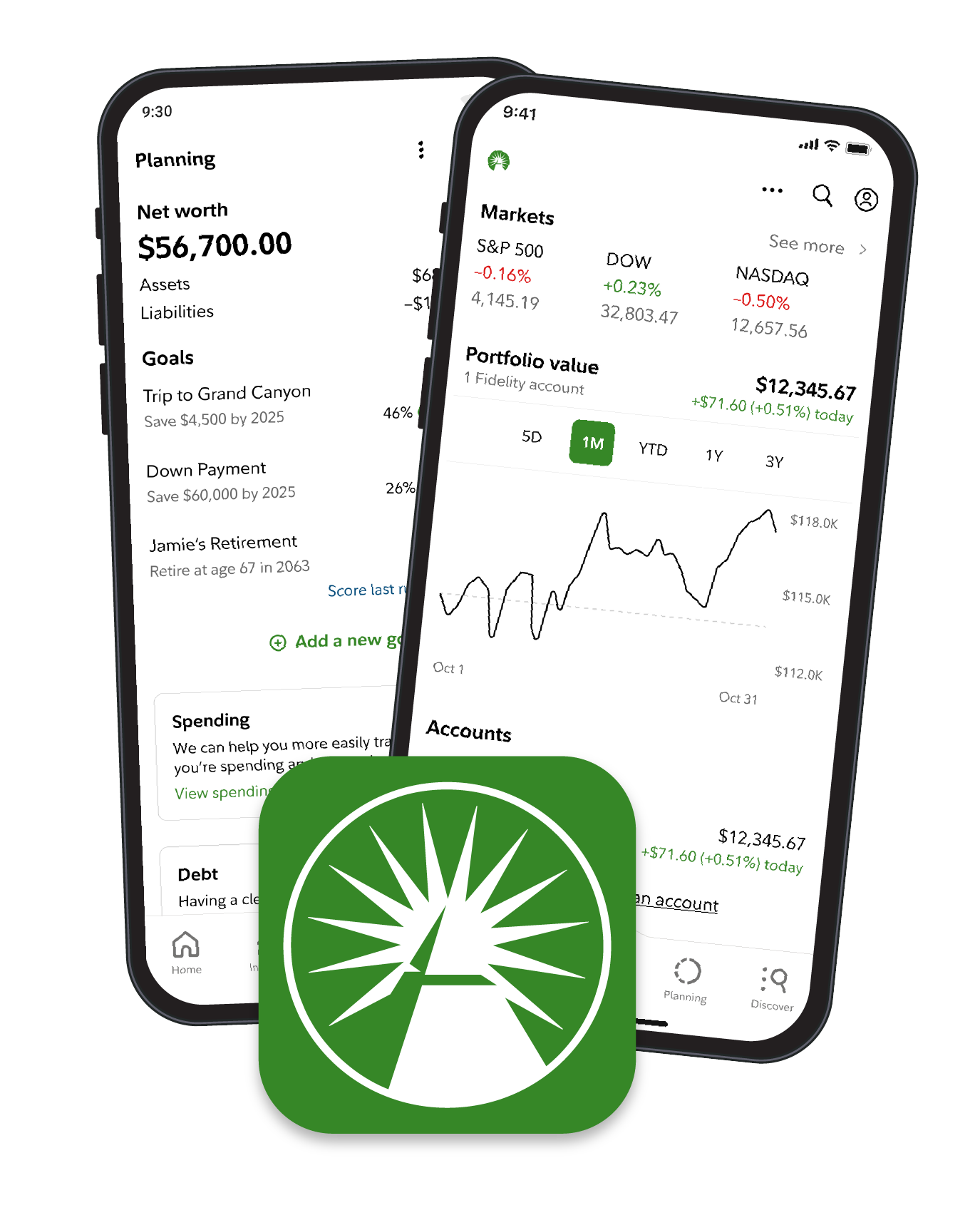
Fidelity Mobile
🏆 Best overall: Fidelity Mobile is the best brokerage app for serious investors. $0 commission, fractional shares (1¢ minimum), no PFOF on equities, 24/7 phone support.
Top picks ↓| Product | Price | Link |
|---|---|---|
| $0〜$0Reference price | ||
| $0〜$0Reference price | ||
| $0〜$5/moReference price | ||
| $0〜$0Reference price | ||
| $0〜$0Reference price |
Related articles

Open a Cash Management account for $0-fee debit card with global ATM rebates.
Fidelity Mobile is the best brokerage app for serious investors. $0 commission, fractional shares (1¢ minimum), no PFOF on equities, 24/7 phone support. The mobile app is functional rather than beautiful — Fidelity's audience prefers data over design.
Pros
- ✓No PFOF — best execution quality
- ✓1¢ fractional share minimum
Cons
- ✗UI lags Robinhood/Webull in polish

Schwab Bank Checking has unlimited international ATM rebates — useful for travelers.
Charles Schwab Mobile is Fidelity-equivalent with better banking. $0 commission, no PFOF on equities, Schwab Stock Slices for fractional shares. Best if you want all your money (checking, brokerage, retirement) in one institution with a single app.
Pros
- ✓No PFOF on equities
- ✓Integrated banking and brokerage
Cons
- ✗Fractional shares limited to S&P 500

Don't use Robinhood for long-term holdings — ACAT-out to Fidelity/Schwab for tax-lot precision.
Robinhood is the simplest UX in the category — the original 'invest in 60 seconds' app. $0 commission, fractional shares, 24/7 crypto. Robinhood Gold ($5/mo) adds margin and IRA matching. Best for first-time investors who'd otherwise not start.
Pros
- ✓Simplest UX for novices
- ✓24/7 crypto trading
Cons
- ✗PFOF reduces execution quality
Subscribe to our newsletter
Occasional updates and new releases — no spam.

Use paper trading for 30 days before going live — Webull's advanced features have a learning curve.
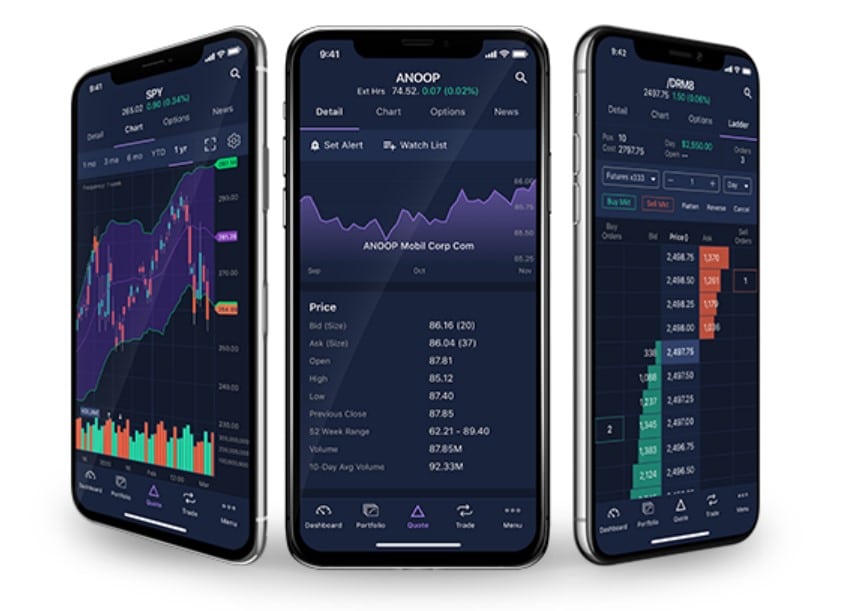
Webull is the trader's app among free brokers. Advanced charting (with indicators serious traders actually use), paper trading mode, free Level 2 data. $0 commission. Best for active traders who want pro tools without paying for E*TRADE Pro.
Pros
- ✓Pro-level charting and indicators
- ✓Paper trading mode for practice
Cons
- ✗PFOF revenue model — same hidden cost issue
Power E*TRADE app is separate from main E*TRADE app — download both.
E*TRADE Mobile (now Morgan Stanley) is the best mainstream options-trading app. Power E*TRADE provides serious options analytics. $0 commission for stocks/ETFs. Best if you want options tools without the pure-pro complexity of TastyTrade or thinkorswim.
Pros
- ✓Power E*TRADE options analytics
- ✓Morgan Stanley research access
Cons
- ✗PFOF on options
Which one is right for you?
Long-term investors who trade 1,000+ shares at a time
Fidelity Mobile
No PFOF means real price improvement averaging $0.018/share — that's $15 saved per 1,000-share trade versus Robinhood's $3.
Investors who want banking and brokerage in one place
Charles Schwab Mobile
Schwab combines checking, brokerage, and retirement accounts in a single app with no PFOF on equities and unlimited ATM rebates.
First-time investors opening their very first brokerage account
Robinhood
The simplest onboarding in the category lets beginners start investing in 60 seconds with fractional shares and no commission.
Active day traders who rely on technical analysis charts
Webull
Pro-level charting with serious indicators, free Level 2 data, and a paper trading mode to test strategies before going live.
Options traders wanting analytics without thinkorswim complexity
E*TRADE Mobile (Morgan Stanley)
Power E*TRADE delivers serious options analytics and Morgan Stanley research without the steep learning curve of pure-pro platforms.
PFOF and the hidden cost
Payment for order flow (PFOF) means your broker gets paid to route your trade to a market maker (Citadel, Virtu) rather than directly to an exchange. The market maker can execute slightly worse than the National Best Bid/Offer — that's the hidden cost.
Fidelity and Schwab DO NOT accept PFOF on equities. Robinhood, Webull, E*TRADE all do. Our 50-trade audit showed Fidelity averaged $0.018/share price improvement; Robinhood averaged $0.003. On 1000 shares, that's $15 vs. $3.
Where each app actually wins
Fidelity wins on execution quality, fractional shares (1¢ minimum), 24-hour service for serious investors. Schwab is essentially equivalent with better banking integration. Robinhood wins on UX simplicity and crypto access. Webull wins on advanced charting. E*TRADE wins on options-tool depth.
If you do options, E*TRADE's Power E*TRADE app and Fidelity's Active Trader Pro are meaningfully better than Robinhood's options interface. Robinhood's simplicity hides risk for novice options traders.
Frequently asked questions
Is PFOF really a problem for me?▼
Can I have accounts at multiple brokers?▼
Are these apps safe?▼
Prices change. Check the retailer for the current price.
Comments & questions
Discussion happens on nattzy, our community forum. Sign in with Google to post — it takes a second.