Best Online Brokerages 2026: Fidelity, Vanguard, Schwab
WriterPickly Editorial
Updated 2026-10-20
Commissions are $0 almost everywhere now, so the real choice is everything else.
Quick answer
For most US investors, Fidelity is the all-round pick: $0 minimum, $0 commissions, the 0% expense ratio FZROX index fund and 24/7 support. Vanguard suits patient buy-and-hold index investors (VTI at a 0.03% expense ratio), Schwab suits people who want banking and brokerage together, Robinhood has the cleanest mobile experience but thin research, and E*TRADE's Power E*TRADE platform is aimed at active and options traders. This is general information, not investment advice; fees and rates change, so confirm on each official site.
📋How we compared
Desk research only: we compared the product descriptions in our catalog, each provider's public materials and widely known features. We did not open accounts or trade. Fees, fund expense ratios and promotions change, so verify every figure on the official site before you decide. Nothing here is investment, tax or legal advice.
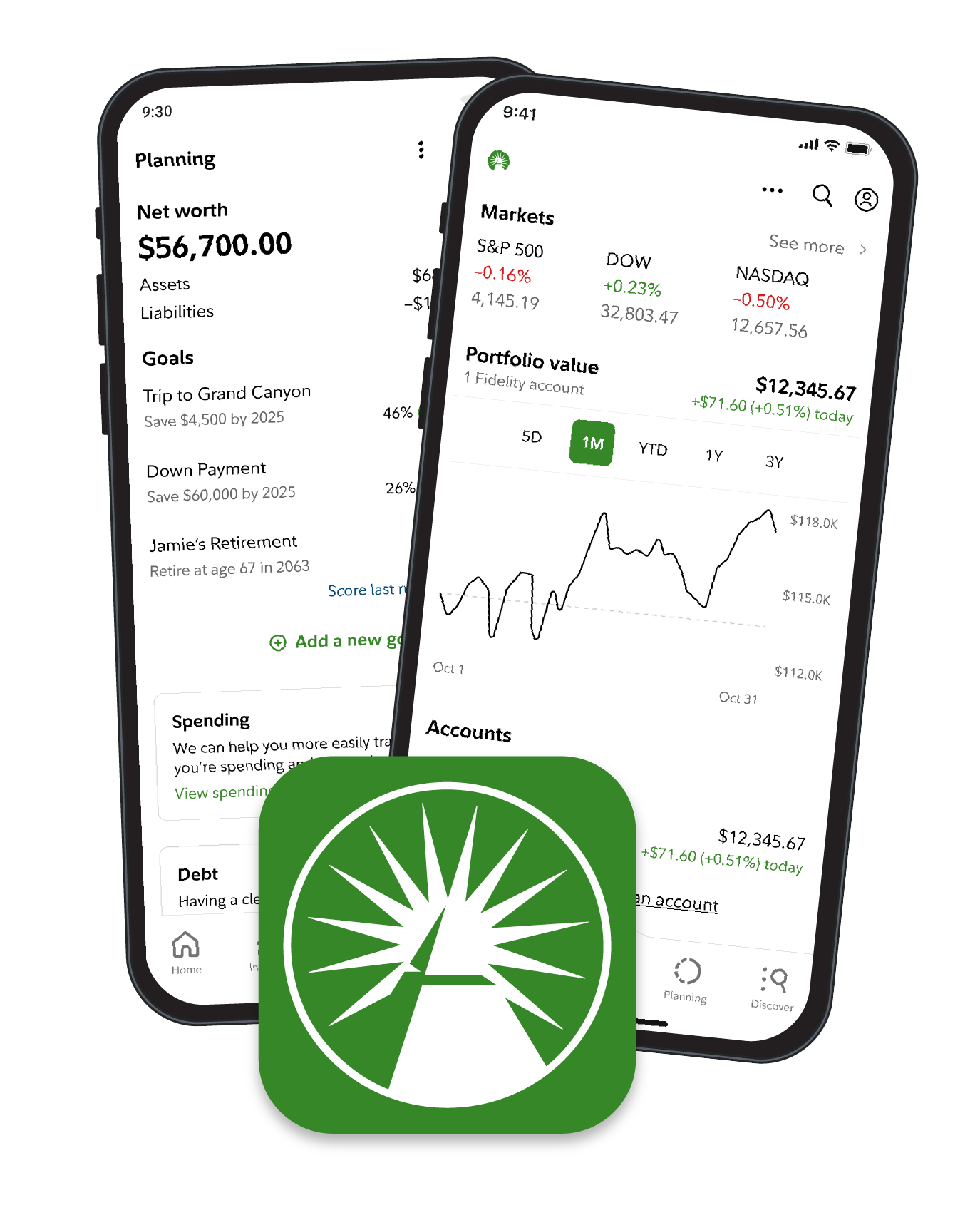
Best Overall: Fidelity pairs a $0 account minimum and $0 commissions with the FZROX index fund at a 0% expense ratio and 24/7 support. It covers the needs of a first-time investor and still has the research and account variety that experienced investors look for.
Top picks ↓Which one is right for you?
Related articles


1★ Best PickA+Best OverallFidelity
$0 minimum, $0 commissions, the 0% expense ratio FZROX fund and 24/7 support make it the most balanced starting point.
Fidelity pairs a $0 account minimum and $0 commissions with the FZROX index fund at a 0% expense ratio and 24/7 support. It covers the needs of a first-time investor and still has the research and account variety that experienced investors look for. The main compromise is that a platform this broad has more menus than a simple phone app. Confirm current terms on the official site.
Pros
- ✓$0 minimum and $0 commissions on US stocks and ETFs
- ✓FZROX index fund with a 0% expense ratio
- ✓24/7 customer support
Cons
- ✗More features means a busier interface than a minimalist app
Score breakdown
- Commissions
- $0 (US stocks and ETFs)
- Best for
- Most investors, long-term
- Standout
- FZROX at 0% expense ratio
- Watch out
- Check the full fee schedule
2ABest for Index InvestingVanguard
A very low-cost core index lineup (VTI at 0.03%) from the pioneer of indexing, best for buy-and-hold investors.
Vanguard pioneered index investing and offers some of the lowest fund costs in the industry, with VTI at a 0.03% expense ratio. Its structure, owned by its own funds, appeals to people who plan to hold for decades. The platform is plainer and its research and trading tools lighter than at Fidelity, Schwab or E*TRADE, so it fits people who want to buy a few broad funds and rarely log in.
Pros
- ✓VTI with a 0.03% expense ratio
- ✓Founder of index investing with a long-term-holder focus
- ✓Simple, low-temptation approach
Cons
- ✗Lighter research and trading tools than the other four
Score breakdown
- Commissions
- $0 (see official site)
- Best for
- Buy-and-hold index investors
- Standout
- VTI at 0.03%
- Watch out
- Plainer platform and tools
3ABest for Banking + BrokerageCharles Schwab

Integrated banking and brokerage, plus a free Intelligent Portfolios robo-advisor listed in the catalog. Check eligibility terms.
Charles Schwab brings a brokerage, integrated banking and the Intelligent Portfolios robo-advisor (listed as free in the catalog) under one login. It suits people who like keeping checking, savings and investments together and who may later want more advanced trading software. Check the robo-advisor's eligibility terms and any account requirements before relying on them.
Pros
- ✓$0 commissions with integrated banking
- ✓Free Intelligent Portfolios robo-advisor (see terms)
- ✓Strong tools for growing into more active investing
Cons
- ✗More than a pure index buyer needs
Score breakdown
- Commissions
- $0 (US stocks and ETFs)
- Best for
- Banking and brokerage together
- Standout
- Integrated banking plus robo-advisor
- Watch out
- Read robo-advisor terms
Subscribe to our newsletter
Occasional updates and new releases — no spam.
4BBest Mobile ExperienceRobinhood

Mobile-first, $0 commissions and fractional shares. Best phone experience of the five, but limited research tools.
Robinhood is mobile-first, with $0 commissions and fractional shares, which makes starting with a small amount easy. The catalog is candid about the trade-off: research tools are limited. It works well as a simple entry point or a small side account, and less well as the only home for a large, carefully researched portfolio.
Pros
- ✓Clean, mobile-first experience
- ✓$0 commissions
- ✓Fractional shares for small starting amounts
Cons
- ✗Limited research tools compared with the others
Score breakdown
- Commissions
- $0
- Best for
- Beginners and small accounts
- Standout
- Mobile design, fractional shares
- Watch out
- Limited research
5B+Best for Active TradersE*TRADE

Power E*TRADE targets active traders and is options-friendly, with $0 commissions on US stocks and ETFs.
E*TRADE, part of Morgan Stanley, offers the Power E*TRADE platform for active trading and is friendly to options traders, with $0 commissions on US stocks and ETFs. It rewards people who trade often and use analysis tools. For a passive index investor those strengths go unused, so choose it for the way you trade rather than for the headline price.
Pros
- ✓Power E*TRADE platform built for active trading
- ✓Options-friendly
- ✓$0 commissions on US stocks and ETFs
Cons
- ✗Trading-oriented tools are overkill for buy-and-hold
Score breakdown
- Commissions
- $0 (options fees apply, see site)
- Best for
- Active and options traders
- Standout
- Power E*TRADE platform
- Watch out
- Options contract fees
| Product | Commissions | Best for | Watch out | |
|---|---|---|---|---|
| Fidelity | $0 (US stocks and ETFs) | Most investors, long-term | FZROX at 0% expense ratio | Check the full fee schedule |
| Vanguard | $0 (see official site) | Buy-and-hold index investors | VTI at 0.03% | Plainer platform and tools |
| Charles Schwab | $0 (US stocks and ETFs) | Banking and brokerage together | Integrated banking plus robo-advisor | Read robo-advisor terms |
| Robinhood | $0 | Beginners and small accounts | Mobile design, fractional shares | Limited research |
| E*TRADE | $0 (options fees apply, see site) | Active and options traders | Power E*TRADE platform | Options contract fees |
What actually separates the big brokers in 2026
Stock and ETF commissions of $0 on US-listed securities are now the baseline at all five platforms, so the headline price no longer tells you much. The differences that matter sit elsewhere: the cost and breadth of the funds you can buy, the quality of research and charting, how good the mobile app is, whether banking is integrated, and how easy it is to reach a human when something goes wrong.
Other costs still exist even when commissions do not: fund expense ratios, margin interest, fees on certain transactions, and how uninvested cash is treated. These vary by account and change over time, so treat any number in a comparison as a starting point and check the provider's current fee schedule.
Think about the job first. A retirement account you will fund automatically for 25 years needs low-cost index funds and reliable support. A trading account you check daily needs charts, options tools and fast execution. The best platform for one is rarely the best for the other.
For index investors: Fidelity and Vanguard
Fidelity is the strongest all-rounder here. It has no account minimum, $0 commissions, 24/7 support, and its FZROX index fund carries a 0% expense ratio. It also offers solid research and a broad range of account types, which is why it works for beginners and for experienced investors who have outgrown a simple app.
Vanguard is the original index-investing company, and VTI, its total US market ETF, carries an expense ratio of 0.03%. Vanguard is owned by its funds and therefore, indirectly, by its investors, which is a big part of its long-term-holder appeal. The trade-off is that its platform is plainer than the competition, with lighter research and trading tools.
The cost gap between the two is a few hundredths of a percent a year on core index funds, which rarely decides the question. Pick Fidelity if you want more tools and support options under one roof; pick Vanguard if you intend to buy a few broad funds and leave them alone.
For banking, tools and active trading: Schwab and E*TRADE
Charles Schwab combines a brokerage with an integrated banking relationship, plus the Intelligent Portfolios robo-advisor, which the catalog lists as free. If you like having checking, savings and investments in one place, that is the main reason to choose it. Schwab is also known for its advanced desktop trading software, which suits people who want to grow beyond buying funds.
E*TRADE, part of Morgan Stanley, offers the Power E*TRADE platform for active trading and is friendly to options traders. It is the better fit if you place trades often and want analysis tools built around that style.
Both are more than a buy-and-hold investor needs. If you only ever buy index funds, you will be paying attention to features you never use, and the simpler platforms above may be easier to live with.
Robinhood, and how to choose
Robinhood is built around the phone. It offers $0 commissions and fractional shares, and it is the easiest of the five for a first-time investor to start using. The catalog also flags the downside: research tools are limited compared with Fidelity, Schwab and E*TRADE.
A simple way to decide: start from your goal. Long-term index investing points to Fidelity or Vanguard. Banking plus brokerage plus advanced tools points to Schwab. Active or options trading points to E*TRADE. A mobile-first start with small amounts points to Robinhood. Many people also use two accounts, for example a core index account at one firm and a small trading account at another.
Before you open anything, confirm which account types you need (taxable, retirement and so on), what the provider charges, and how it protects customer assets. US brokerages are generally members of SIPC, which covers missing assets if a firm fails but does not protect against investment losses. Investing involves risk, including loss of principal, and this article is general information rather than personal advice.
Frequently asked questions
Is $0 commission really free?▼
Can I use more than one brokerage?▼
Is this article investment advice?▼
Check the details of the products in this article
- Fidelity$0Reference price
- Vanguard$0Reference price
- Charles Schwab$0Reference price
- Robinhood$0Reference price
- E*TRADE$0Reference price
Prices change. Check the retailer for the current price.
Comments & questions
Discussion happens on nattzy, our community forum. Sign in with Google to post — it takes a second.
Still deciding? Ask the community your own question — Post a question on nattzy ↗
Related articles
Best Crypto Exchange 2026: 5 Compared on Fees & Security
Best Robo-Advisors 2026: 4 Top Platforms Compared

Best 401(k) Rollover IRA 2026: 5 Brokerages Compared

Best 529 Plans 2026: Utah, NY, Nevada, Illinois & CA

Best Tax Prep Service 2026: In-Person, Online & Free Options
Best International Money Transfer 2026: Wise vs Revolut