Best Robo-Advisors 2026: 4 Top Platforms Compared
WriterPickly Editorial
Updated 2026-10-20
A robo-advisor does the boring parts of investing for you, and the fee is the part you can compare today.
Quick answer
If your balance is small, Fidelity Go charges $0 under $25K. If you want the lowest all-in fee, Vanguard Digital Advisor is 0.20% with a $100 minimum. Betterment (0.25%, $0 minimum) suits goal-based investing and tax-loss harvesting, while Wealthfront (0.25%, $500 minimum) adds 529 college plans and customizable portfolios. Fees are as listed in our catalog; confirm on each official site.
📋How we compared
This is desk research based on each provider's published fee and feature information as recorded in our catalog and publicly available documentation. We did not test the accounts hands-on, and we do not rank returns. Fees and terms change, so confirm everything on the official site. This is not investment advice.
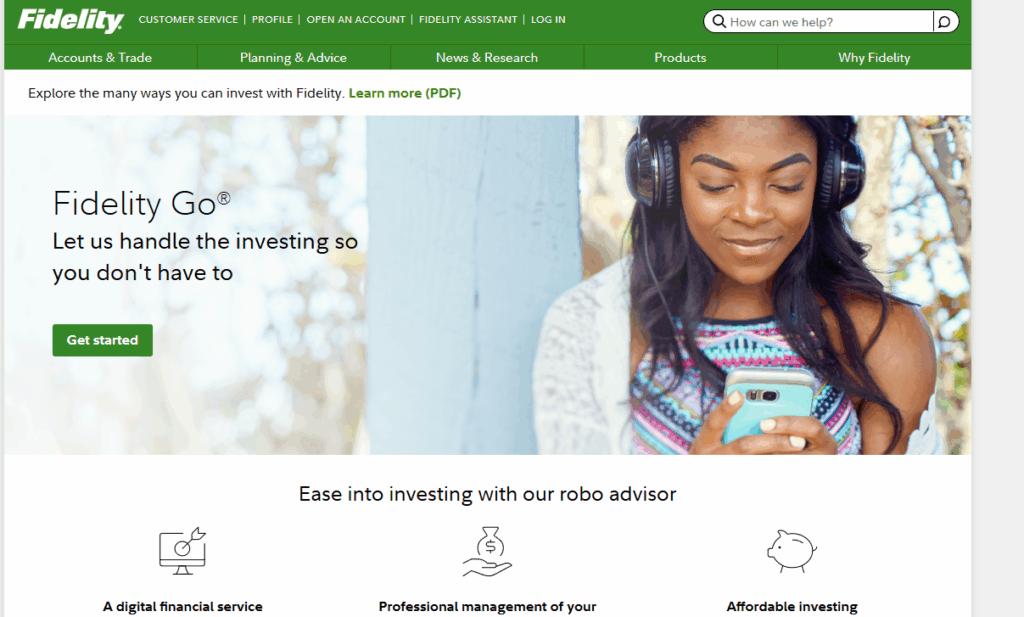
Best for Small Balances: Fidelity Go charges $0 under $25K and 0.35% above, which makes it the natural start for a small portfolio. It uses Fidelity Flex funds with a listed 0% expense ratio.
Top picks ↓Which one is right for you?
Related articles

1★ Best PickABest for Small BalancesFidelity Go
Best for smaller balances: no management fee under $25K, with Fidelity Flex funds listed at a 0% expense ratio.
Fidelity Go charges $0 under $25K and 0.35% above, which makes it the natural start for a small portfolio. It uses Fidelity Flex funds with a listed 0% expense ratio. The fee rises on larger balances, so revisit the math as you grow.
Pros
- ✓No management fee under $25K
- ✓Fidelity Flex funds listed at 0% expense ratio
Cons
- ✗0.35% above $25K is the highest rate here
2A-Lowest All-In FeeVanguard Digital Advisor
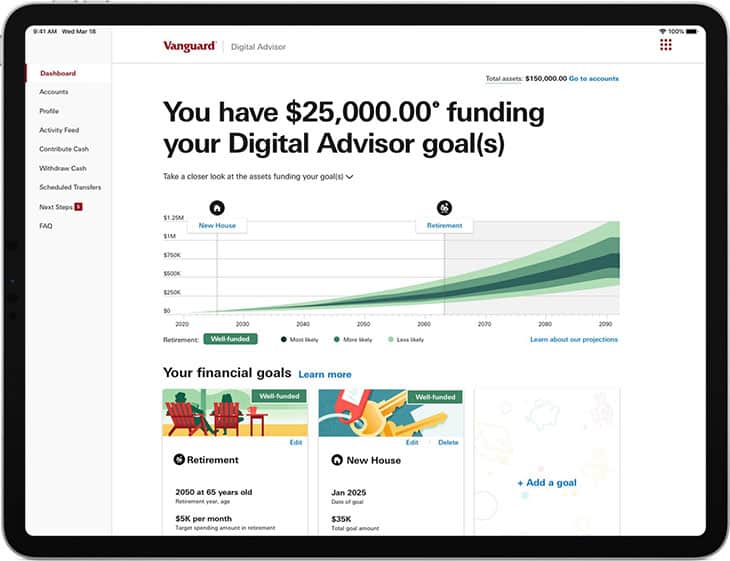
Lowest listed all-in fee at 0.20%, using Vanguard's low-cost index ETFs on a pure passive approach.
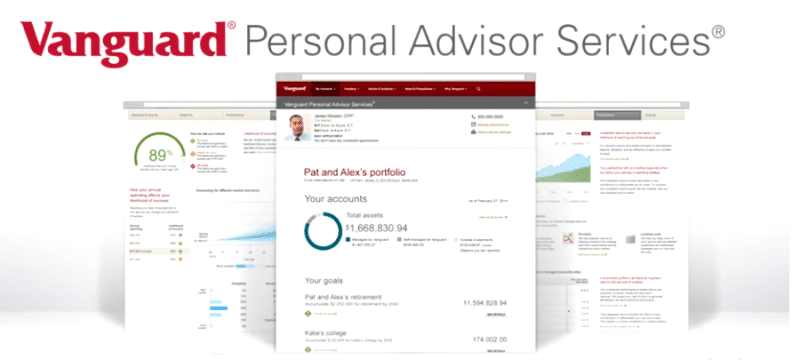
Vanguard Digital Advisor lists 0.20% all-in, including ETF expenses, with a $100 minimum. It uses Vanguard's low-cost index ETFs and a pure passive approach. It is the simple, low-cost pick if you do not need extras.
Pros
- ✓Lowest listed all-in fee (0.20%)
- ✓Uses Vanguard low-cost index ETFs
Cons
- ✗Pure passive approach leaves little room to customize
3B+Best for GoalsBetterment
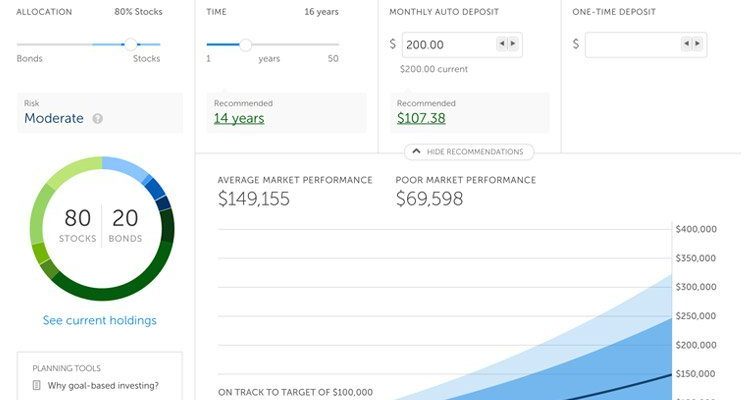
Goal-based investing with tax-loss harvesting and automatic rebalancing, with no minimum.
Betterment lists a 0.25% management fee, low-cost ETFs, tax-loss harvesting, automatic rebalancing and goal-based investing, with a $0 minimum. It is easy to start with and strong on goal planning. Higher tiers may cost more, so check its official page.
Pros
- ✓Tax-loss harvesting and automatic rebalancing
- ✓$0 minimum and goal-based tools
Cons
- ✗Fee is higher than Vanguard's all-in 0.20%
Subscribe to our newsletter
Occasional updates and new releases — no spam.
4B+Best for 529 and ControlWealthfront

Adds 529 college plans and customizable portfolios; the highest minimum here at $500.
Wealthfront lists a 0.25% management fee, 529 college plans, customizable portfolios and tax-loss harvesting, with a $500 minimum. It suits people who want a bit more control or plan to save for education.
Pros
- ✓529 college plans
- ✓Customizable portfolios
Cons
- ✗$500 minimum is the highest in this group
| Product | ||
|---|---|---|
| Fidelity Go | $0 (< $25K) / 0.35% | — |
| Vanguard Digital Advisor | 0.20% | $100 |
| Betterment | 0.25% | $0 |
| Wealthfront | 0.25% | $500 |
Fees are the main difference
All four use automated, index-style portfolios, so the biggest measurable gap is what you pay. Vanguard Digital Advisor lists 0.20% all-in, including ETF expenses. Betterment and Wealthfront list a 0.25% management fee. Fidelity Go charges $0 under $25K and 0.35% above that.
On a $10,000 balance, 0.25% is about $25 a year and 0.20% is about $20, so the gap is small at low balances. It grows with the size of the account, and it compounds over decades. Check whether each fee already includes the underlying fund costs and how a tiered fee is applied to your balance.
Minimums and who each one fits
Minimums differ: Betterment lists $0, Vanguard Digital Advisor $100 and Wealthfront $500. Fidelity Go is built around small portfolios, with no management fee under $25K and Fidelity Flex funds listed at a 0% expense ratio.
Pick by situation rather than by rank. Starting small favors Fidelity Go or Betterment. Wanting a pure passive Vanguard index approach favors Vanguard. Saving for college or wanting more control over the portfolio favors Wealthfront.
Features beyond the portfolio
Betterment lists goal-based investing, tax-loss harvesting and automatic rebalancing. Wealthfront lists tax-loss harvesting (see its official terms for the balance requirement), 529 college plans and customizable portfolios. These extras only matter if you will use them.
Fees, tax rules and eligibility change and depend on your situation. Nothing here is a recommendation to buy or sell any investment, and investing carries risk, including loss of principal. Check each provider's official fee schedule and disclosures, and consider a licensed professional for personal advice.
Frequently asked questions
Are robo-advisors worth it over doing it myself?▼
Which is cheapest?▼
Is my money safe and are returns guaranteed?▼
Check the details of the products in this article
- Fidelity Go$0〜0.35%Reference price
- Vanguard Digital Advisor0.20%Reference price
- Betterment0.25%〜0.40%Reference price
- Wealthfront0.25%Reference price
Prices change. Check the retailer for the current price.
Comments & questions
Discussion happens on nattzy, our community forum. Sign in with Google to post — it takes a second.
Still deciding? Ask the community your own question — Post a question on nattzy ↗
Related articles
Best ETFs for Beginners 2026: 5 Top Funds Compared

Best Roth IRA Accounts 2026: 5 Providers Compared
Best Stock Trading App 2026: 5 Brokers Compared
Best Crypto Exchange 2026: 5 Compared on Fees & Security

Best 529 Plans 2026: Utah, NY, Nevada, Illinois & CA

Best Crypto Hardware Wallets 2026: 5 Cold Storage Picks