Best ETFs for Beginners 2026: 5 Top Funds Compared
The right ETF for a beginner investor isn't the one with the highest recent return — it's the one you'll hold through a 30% drawdown without panic-selling. Expense ratios compound against you over decades, diversification determines how much a single sector crash hurts you, and understanding what you own makes it easier to stay invested. These five funds cover the most useful building blocks for a first portfolio: U.S. large-cap, tech-heavy growth, international stocks, and bonds.
Quick answer
For most beginners, VOO is the pick — it tracks the S&P 500 at a 0.03% expense ratio, and Vanguard's fund structure adds a structural tax advantage. Choose IVV if you reinvest often, since it matches the 0.03% ratio while paying dividends monthly rather than quarterly; QQQ for concentrated Nasdaq-100 tech exposure with about 45% in the top 10 holdings; and VXUS for roughly 8,500 non-U.S. stocks at 0.07%.
Each ETF was evaluated on expense ratio, index composition and concentration, 5-year and 10-year total return vs benchmark, annual volatility (standard deviation), maximum drawdown in the 2022 bear market, dividend yield and payment frequency, tax efficiency in taxable accounts, and suitability for investors with different time horizons and risk tolerances.

Vanguard S&P 500 ETF (VOO)
Best Overall: VOO tracks the S&P 500 at a 0.03% expense ratio — the lowest cost access to 500 of the largest U.S. companies available.
Top picks ↓| Product | Price | Link |
|---|---|---|
| $0.03〜0.03Reference price | ||
| $0.03〜0.03Reference price | ||
| $0.20〜0.20Reference price | ||
| $0.03〜0.03Reference price |
Top picks
Related articles


VOO tracks the S&P 500 at a 0.03% expense ratio — the lowest cost access to 500 of the largest U.S. companies available. Vanguard's unique fund structure provides a structural tax advantage in taxable accounts by eliminating capital gains distributions that standalone ETFs cannot shed. Over the 10 years ending 2025, VOO returned approximately 13.1% annualized, tracking its index within 0.01%.
Pros
- ✓0.03% expense ratio — among the lowest in the ETF universe
- ✓Tax-efficient structure eliminates capital gains distributions in taxable accounts
- ✓Tracks S&P 500 within 0.01% of the index over 10 years
Cons
- ✗Quarterly dividend payments vs monthly for some competitors
- ✗Heavy U.S. concentration — no international exposure

iShares Core S&P 500 ETF (IVV)
IVV matches VOO's 0.03% expense ratio and S&P 500 tracking accuracy while paying dividends monthly rather than quarterly — a minor compounding advantage for investors who reinvest. Managed by BlackRock with over $500 billion in assets, IVV is among the three most liquid ETFs in the world with daily trading volume exceeding $2 billion. Performance is functionally identical to VOO over any time horizon measured.
Pros
- ✓Monthly dividend payments for more frequent compounding
- ✓Exceptional liquidity — over $2 billion average daily volume
- ✓0.03% expense ratio matching VOO's lowest-tier cost
Cons
- ✗Lacks VOO's structural capital gains advantage in taxable accounts
- ✗U.S.-only exposure identical to VOO — same concentration risk
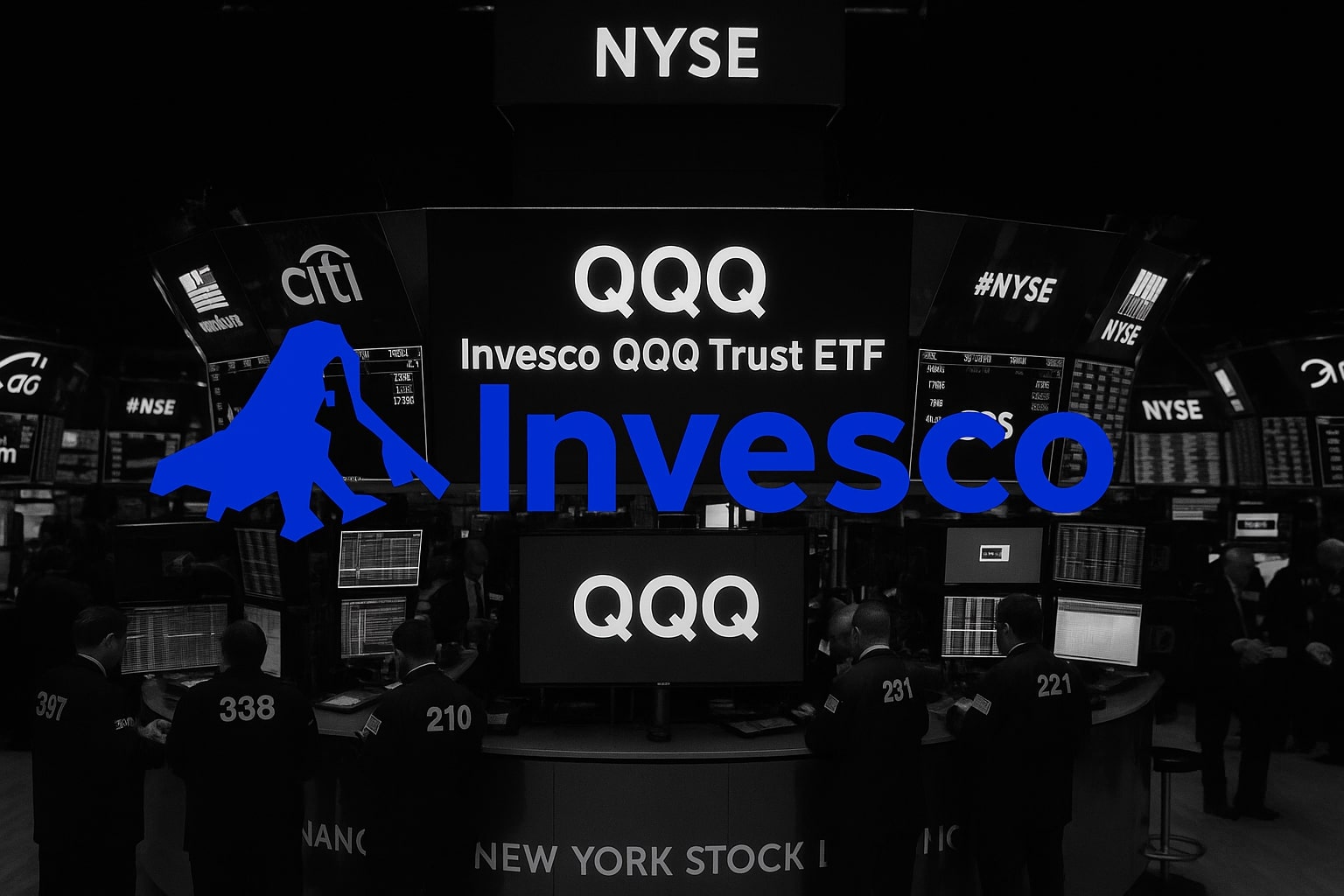
QQQ tracks the Nasdaq-100, holding the 100 largest non-financial Nasdaq-listed stocks with approximately 45% weighting in the top 10 holdings — heavily concentrated in Apple, Microsoft, Nvidia, Meta, and Amazon. The 0.20% expense ratio is higher than VOO/IVV but reflects a specialized index. QQQ returned approximately 18.4% annualized over the 10 years ending 2025, outperforming the S&P 500 by about 5 percentage points annually — with significantly higher volatility (fell 33% in 2022).
Pros
- ✓Highest 10-year historical return in this comparison — approximately 18.4% annualized
- ✓Direct exposure to dominant tech and consumer growth companies
- ✓Extremely liquid — over $10 billion daily trading volume
Cons
- ✗0.20% expense ratio — 6.7x higher than VOO/IVV
- ✗33% drawdown in 2022 — highest volatility in this group
Subscribe to our newsletter
Occasional updates and new releases — no spam.

Vanguard Total Bond Market ETF (BND)
BND holds over 10,000 U.S. bonds — government, investment-grade corporate, and mortgage-backed securities — at a 0.03% expense ratio. The fund pays monthly distributions at approximately 3.5% yield. BND fell about 13% in 2022 when interest rates rose sharply (the worst bond year in decades), but in typical equity bear markets it provides meaningful stability — during the 2020 COVID crash, BND rose slightly while stocks fell 34%. Best suited to tax-advantaged accounts where its ordinary income distributions aren't taxed annually.
Pros
- ✓~3.5% monthly yield — highest income distribution in this comparison
- ✓Provides portfolio stability during equity crashes when held alongside stocks
- ✓0.03% expense ratio for access to 10,000+ bonds
Cons
- ✗Fell 13% in 2022 — bond funds are not risk-free when rates rise sharply
- ✗Interest income taxed as ordinary income — less efficient in taxable accounts
How to evaluate an ETF as a beginner
Most beginner investors focus on past returns, which is the least useful metric — any fund that survived the last decade shows strong returns because markets trended up. The variables that actually determine your long-term outcome are expense ratio, index composition, and whether the risk profile matches your time horizon.
VOO vs IVV: two identical funds with one meaningful difference
VOO (Vanguard S&P 500 ETF) and IVV (iShares Core S&P 500 ETF) both track the S&P 500 index at a 0.03% expense ratio. Their long-term performance is functionally identical — both have tracked the index within 0.01% of each other over five and ten year periods. The practical difference: IVV pays dividends monthly while VOO pays quarterly. For investors doing dividend reinvestment, monthly compounding provides a very small mathematical advantage. More meaningfully, Vanguard's fund structure gives VOO a structural tax advantage in taxable accounts — its share class arrangement allows it to shed embedded capital gains that a standalone ETF like IVV cannot. In a Roth IRA or 401k this difference disappears; in a taxable brokerage account, VOO has a slight edge. Both are correct choices — pick the one available at your brokerage with no transaction fees.
Bottom line: building your first ETF portfolio
For most beginners, a single-fund starting point is VOO or IVV — you own 500 of the largest U.S. companies at rock-bottom cost, collect dividends quarterly, and can automate purchases. That alone outperforms the majority of actively managed funds over 15+ year periods. Adding VXUS alongside brings international exposure that reduces concentration in any single country's economic cycle; a common starting allocation is 70% U.S. (VOO/IVV) and 30% international (VXUS). QQQ makes sense as a satellite position for investors who want increased tech exposure and accept higher volatility — not as a core holding. BND becomes relevant when you're within 5-10 years of needing the money, acting as a volatility dampener as the time horizon shortens.
The order of operations matters more than fund selection: open a tax-advantaged account first (Roth IRA if eligible, then 401k to employer match), then taxable brokerage. Automate contributions. The best ETF is the one you buy consistently for decades without selling during crashes.
Frequently asked questions
Should a beginner just buy one ETF or several?▼
What's the difference between VOO and SPY?▼
Is QQQ too risky for a beginner?▼
Do ETFs pay dividends?▼
Can I lose all my money in an ETF?▼
Prices change. Check the retailer for the current price.
Comments & questions
Discussion happens on nattzy, our community forum. Sign in with Google to post — it takes a second.
Related articles

Best High-Yield Savings Account 2026: 5 banks compared
Best Robo-Advisor 2026: 5 Platforms Compared
Best Coffee Grinders 2026: Five mills side-by-side

Best Electric Toothbrush 2026: 5 models compared honestly

Best Air Purifier 2026: 5 models compared honestly

ConoHa WING review (2026): setup, speed and pricing