Best AeroPress Models 2026: 5 Compared
The AeroPress is a single-serve coffee brewer that uses pressure — applied manually by pressing a plunger through a cylinder — to extract coffee through a paper or metal filter. The grind, water temp, and ratio matter far more than which brewer you choose.
Quick answer
The best AeroPress for most people is the Original: it is the baseline every AeroPress recipe is calibrated against, it costs the least, and it survives being knocked off the counter. The AeroPress Go is the travel pick — the whole kit nests inside its own drinking mug. The Clear matches the Original exactly but in see-through Tritan, which helps if you like watching the brew.
We assessed each product on build quality and materials, how it performs in everyday kitchen use, cleaning and maintenance burden, durability over years of use, and value for the price. Manufacturer specifications were cross-checked against verified owner reviews.
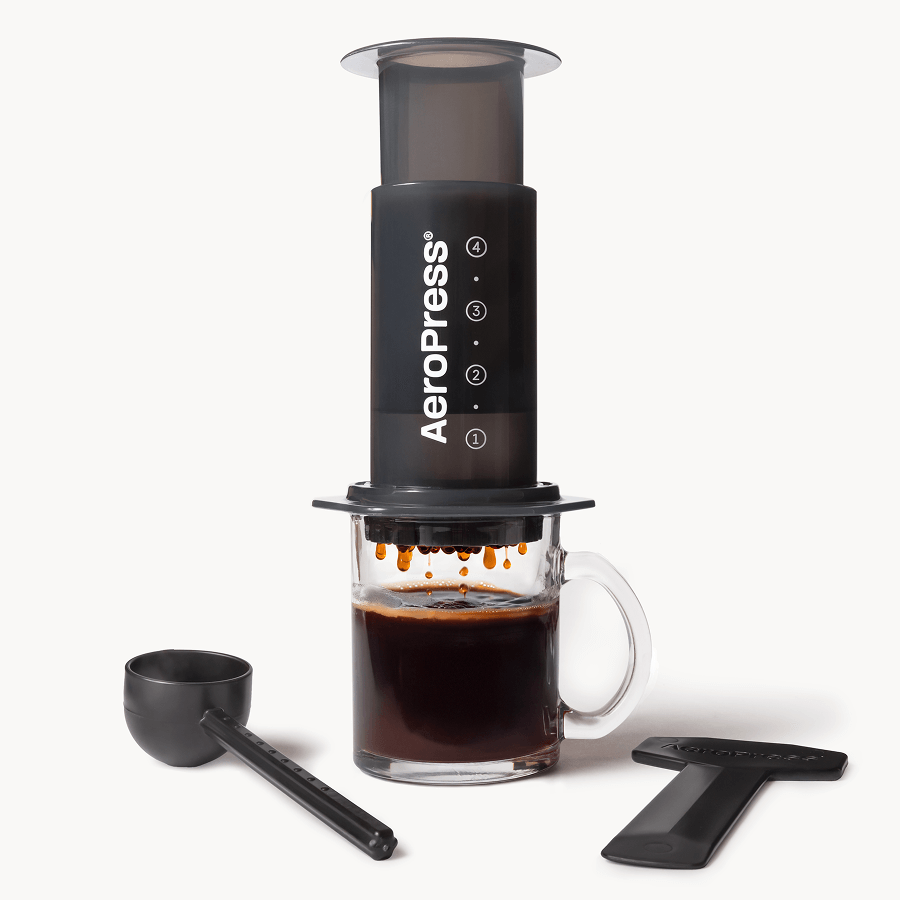
AeroPress Original Coffee Maker
Best Overall: The Original AeroPress is the baseline correct choice for single-serve specialty coffee and remains the brewer almost every AeroPress recipe is calibrated for. The polypropylene cylinder is BPA-free, dishwasher-safe, and shrugs off drops that would shatter ceramic.
Top picks ↓| Product | Price | Link |
|---|---|---|
| $39.95Price as of 2026-09-24 | ||
| $39.95Price as of 2026-09-24 | ||
| $40Reference price | ||
| $55Reference price | ||
| $25Reference price |
Top picks
Related articles

Polypropylene plastic, 1-3 cup capacity per press (40-250 ml), 350 paper filters included. $35-45. The baseline correct choice for single-serve specialty coffee. Inexpensive, durable, produces excellent coffee across multiple recipes.
The Original AeroPress is the baseline correct choice for single-serve specialty coffee and remains the brewer almost every AeroPress recipe is calibrated for. The polypropylene cylinder is BPA-free, dishwasher-safe, and shrugs off drops that would shatter ceramic. Capacity is 1-3 cups per press (roughly 40-250 ml), which covers espresso-style concentrate through long-format brews. The included 350 paper filters and scoop mean you can start brewing the day it arrives. What makes it the benchmark is consistency: the same recipe produces the same cup whether you brew at home, at the office, or on a kitchen counter on holiday.
Pros
- ✓Brews 1-3 cup capacity per press with the same hardware
- ✓Dishwasher-safe BPA-free polypropylene survives drops
- ✓Widely-available paper filters and huge recipe library
- ✓Cleanup is a single ejected puck
Cons
- ✗Single-serve only — two people means two brew cycles

Compact version that stores in included mug, 1-2 cup capacity. $35-45. Same price as Original — correct choice if travel and portability is the primary use case. Smaller brew volume than Original.
The AeroPress Go compresses the Original into a 12 oz drinking mug that doubles as the carrying case — plunger, chamber, filter cap, filters, and stirrer all nest inside. Capacity drops slightly to 1-2 cups per press and the filter cap is a bit shallower than the Original, but the brewing mechanism is identical. For camping, hotel rooms, and commute brewing, the Go solves the packing problem the Original doesn't address. Same $35-45 price tier as the Original makes it a sideways choice rather than an upgrade — pick it when portability matters more than maximum cup volume.
Pros
- ✓Whole brewer nests inside the included mug for travel
- ✓Identical brewing mechanism to the Original
- ✓Same paper filter ecosystem as the standard AeroPress
- ✓Compact footprint fits in a backpack pocket
Cons
- ✗Smaller 1-2 cup capacity vs the Original's 1-3

Clear Tritan plastic, same size and capacity as Original. $40-50. Identical brewing performance to Original — aesthetic and recipe-watching differentiation only. Slightly more expensive for visual transparency.
The AeroPress Clear matches the Original on dimensions, capacity, and brewing performance, swapping the opaque polypropylene for crystal-clear Tritan plastic. The brew is visible through the cylinder during steep, which is genuinely useful when you're dialing in a new recipe and watching how quickly the slurry darkens. At $40-50 it commands a small premium over the Original purely for the transparent body — the cup you pull out is indistinguishable. Worth it if you tinker with recipes or if the see-through aesthetic appeals to you; otherwise the Original delivers the same coffee for less.
Pros
- ✓Transparent Tritan lets you watch the steep and bloom
- ✓Same capacity and brewing performance as the Original
- ✓Useful learning tool when developing recipes
- ✓BPA-free and dishwasher safe
Cons
- ✗$5-10 premium over the Original for visual differentiation only
Subscribe to our newsletter
Occasional updates and new releases — no spam.
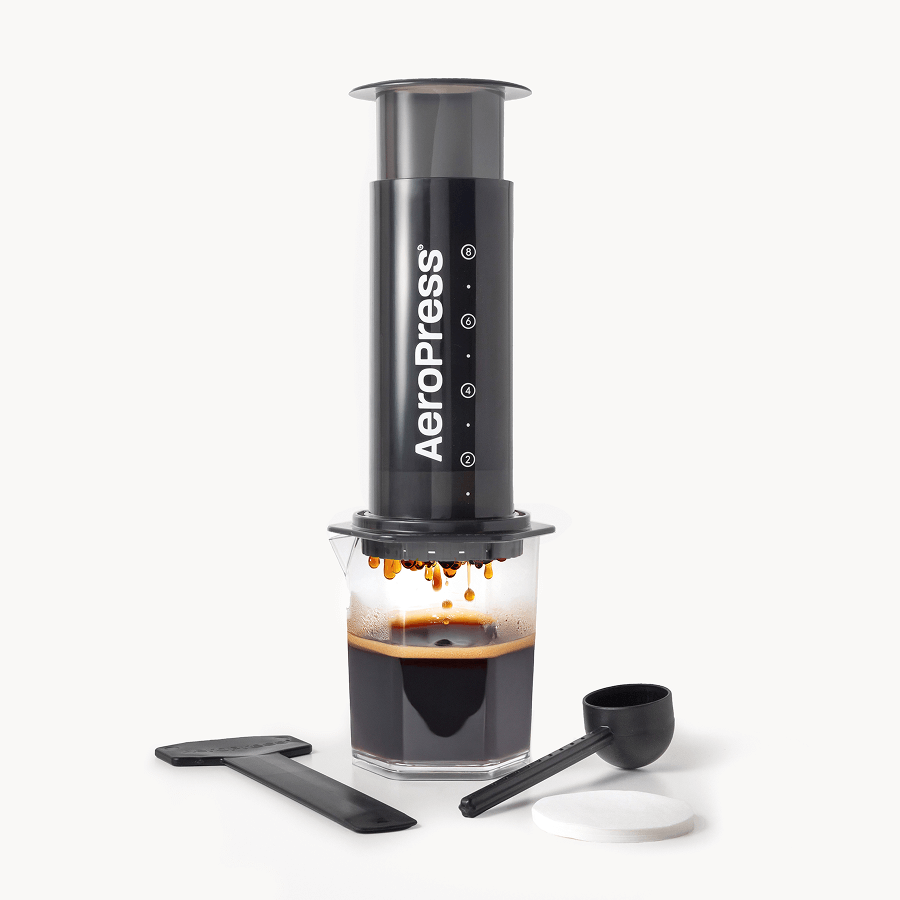
Larger cylinder, 2-3 cup capacity per press (500 ml). $55-65. Best for 2-person households — solves the Original's single-serve limitation. Same brewing mechanism, more volume per press.
Launched in 2024, the AeroPress XL doubles the Original's brew volume to roughly 500 ml in a single press, enough for two standard 8 oz cups. The wider cylinder uses XL-specific paper filters (the Original's filters don't fit) but the technique and recipe logic translate directly — most brewers scale their Original recipe by 2x and it works. The plunger is heavier to press through the longer travel, which is the trade for brewing a second cup without a second cycle. At $55-65 it costs noticeably more than the Original, but for two-person households it eliminates the back-to-back brew that defines mornings with the standard model.
Pros
- ✓Single press yields enough for two standard cups
- ✓Existing AeroPress recipes scale linearly
- ✓Same paper-filter clean-puck cleanup
- ✓Same pressure-extraction profile as the Original
Cons
- ✗Requires XL-specific paper filters, not Original size
- ✗Longer plunger stroke is more physically demanding
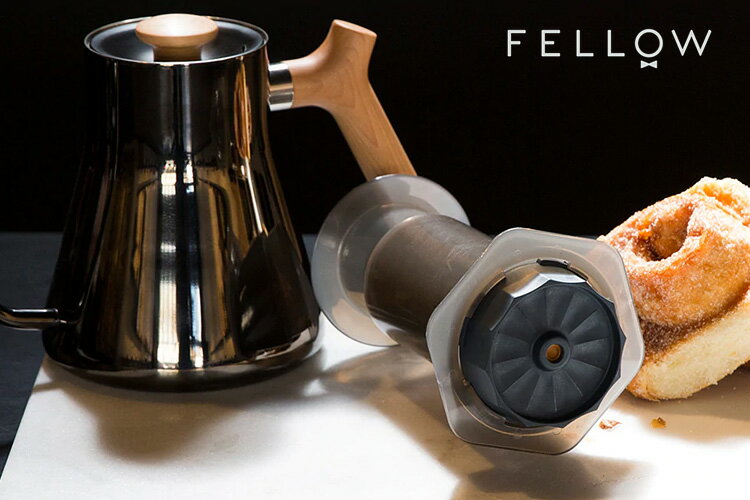
Replacement filter cap with pressure valve and metal filter. $25-35. Best espresso-style upgrade for AeroPress owners. Eliminates inverted method, allows oils through for fuller body. Requires existing AeroPress Original or Go.
The Fellow Prismo is a replacement filter cap that bolts onto the Original or Go and adds two things: a pressure-actuated valve that holds liquid in the chamber until you press, and a 0.2 mm stainless metal filter that passes more coffee oils than paper. The valve eliminates the inverted method — you can brew upright with any recipe — and the metal filter pushes the body closer to espresso or French press territory. With very fine grind and firm pressing you can pull a thicker, more concentrated shot than standard AeroPress allows, though it's not true 9-bar espresso. At $25-35 it's an accessory, not a standalone brewer, and only worth the cost if you already own an AeroPress.
Pros
- ✓Pressure-actuated valve removes the need for inverted brewing
- ✓Metal filter retains oils for a fuller-bodied cup
- ✓Enables espresso-style concentrate from an AeroPress
- ✓Drop-in replacement — no new brewer required
Cons
- ✗Accessory only — needs an existing AeroPress Original or Go
Which one is right for you?
For first-time specialty coffee brewers
AeroPress Original Coffee Maker
The Original covers every common recipe at the lowest entry price and survives a drop from the counter, which makes it the right place to start before deciding what to upgrade.
For commuters and frequent travelers
AeroPress Go Portable Coffee Maker
Everything nests inside the included drinking mug, so the entire brew kit fits in a backpack pocket alongside a small bag of beans.
For recipe developers and visual learners
AeroPress Clear Coffee Maker
Watching the slurry color shift through the transparent chamber gives you direct feedback when calibrating new grind sizes or steep times.
For two-person households
AeroPress XL Coffee Maker
The 500 ml single-press capacity covers two full cups in one cycle, which is the main limitation of the standard AeroPress for couples.
For AeroPress owners chasing espresso body
Fellow Prismo AeroPress Attachment
The pressure valve plus 0.2 mm metal filter combination delivers a concentrated, oil-rich pull that standard paper-filter AeroPress can't produce.
How AeroPress brewing works and why the variants exist
AeroPress brewing: ground coffee goes into a cylinder, water is added, steeped for 10-120 seconds depending on recipe, then the plunger is pressed to push the brew through a paper or metal filter. The pressure isn't espresso-level (1-2 bar maximum from manual pressing, versus 9 bar in an espresso machine) but is higher than drip or French press, which extracts coffee faster and produces a cleaner cup than immersion-only methods. The filter type matters: paper filters remove oils and fine particles for a cleaner, lighter body; metal filters allow oils through for a fuller, richer cup.
The inverted AeroPress method (placing the AeroPress upside-down during brewing to prevent drip-through before pressing) allows longer steep times without the brew draining through the filter. This is the standard method for most specialty coffee recipes because it gives more control over extraction time. The Fellow Prismo attachment adds a pressure-actuated valve that performs the same function without inverting — when you press, the valve opens; while brewing, the valve stays closed.
The key AeroPress variables: grind size (finer for more extraction, coarser for less), water temperature (80-96°C, lower is less acidic), steep time (15 seconds for espresso-style to 3+ minutes for immersion), and the pressing technique. AeroPress is more forgiving than espresso or pour-over because the variables interact with each other — a slightly coarser grind can be compensated with longer steep time, unlike espresso where small changes compound quickly.
AeroPress Original: the core product
The AeroPress Original (the standard model) produces 1-3 'AeroPress cups' (5-7 oz each, or approximately 40-60 ml espresso-style) per press, depending on how much water and coffee you use. The current model is made from polypropylene plastic — BPA-free, impact-resistant, and dishwasher safe. It includes 350 paper filters, a filter cap, a scoop, and a stirrer.
At $35-45, the AeroPress Original is one of the most cost-effective specialty coffee brewers available. It produces a consistent result across different recipes, is difficult to break, and uses widely-available paper filters. The plastic construction is a feature rather than a compromise: it doesn't retain heat the way ceramic brewers do (which is undesirable in AeroPress because you want the specific temperature to stay stable during the short brew), and it doesn't break when dropped.
For single-serve specialty coffee brewing at home or while traveling, the Original is the baseline correct choice. It produces better coffee than any drip machine under $200 and is more consistent than most French press setups when used with quality coffee and water.
AeroPress Go and AeroPress Clear: the travel and aesthetic variants
The AeroPress Go is a compact version of the Original that nests the plunger inside the brew chamber for travel — the entire device fits inside a 12 oz drinking mug that serves as both carrying case and brewing vessel. It produces a smaller volume (1-2 cups per press vs 1-3 for the Original) and uses a slightly different filter cap design. At $35-45 (same price as Original), the Go is the correct choice if portability is the primary use case — camping, travel, office.
AeroPress Clear is the same size and capacity as the Original but made from crystal-clear Tritan plastic instead of the standard opaque black/white polypropylene. The clear material lets you watch the brew process. Some users prefer it for recipe development (seeing how the coffee changes color during steep). At $40-50, it's slightly more expensive than the Original for aesthetic differentiation only — the brewing performance is identical.
AeroPress XL (launched in 2024) uses a larger cylinder that brews 2-3 standard 8 oz cups per press — the equivalent of 500 ml rather than the Original's 250 ml capacity. At $55-65, it solves the Original's primary limitation: a single AeroPress makes enough for one person, but two people using one AeroPress requires two brew cycles.
Fellow Prismo: the espresso-style attachment
The Fellow Prismo is a replacement filter cap for the AeroPress (Original and Go compatible) that adds a pressure-actuated valve and a metal filter. The valve prevents liquid from dripping through until you press — eliminating the need for the inverted method. The fine stainless metal filter (0.2 mm holes) allows more coffee oils through than paper, resulting in a body closer to espresso or French press.
The Prismo enables no-drip steeping (any recipe, any angle, no inversion required), produces a thicker-bodied cup than paper filter AeroPress (from the metal filter), and creates a small amount of espresso-style crema when used with very fine grind and firm pressing technique. It doesn't produce 9-bar espresso — the manual pressure is still only 1-2 bar — but the combination of finer grind, concentrated brew, and metal filter produces a result closer to espresso than standard AeroPress output.
At $25-35, the Prismo is a meaningful upgrade for users who want espresso-style output from their AeroPress and don't want to use the inverted method. It's an accessory rather than a standalone brewer, requiring ownership of an AeroPress Original or Go.
Frequently asked questions
How does AeroPress coffee compare to French press, pour-over, and espresso?▼
What's the best AeroPress recipe for beginners?▼
How do you clean an AeroPress?▼
Prices change. Check the retailer for the current price.
Comments & questions
Discussion happens on nattzy, our community forum. Sign in with Google to post — it takes a second.
Related articles
Food
Best Toaster 2026: 5 Compared
Best Toaster 2026: 5 Compared

Best Protein Powder 2026: 5 Compared

ConoHa WING review (2026): setup, speed and pricing
Best JP rental server 2026: 5 hosts ranked
Best LED Face Masks 2026: 3 Light Therapy Devices Compared
Best Robot Vacuums 2026: 5 Models Compared Honestly