Best Protein Powder 2026: 5 Compared
Five whey protein powders across the budget-to-premium range, compared on the factors that actually decide whether you keep using the tub past month two. Bioavailability and consistency of intake outperform ingredient quantity on the label.
Quick answer
Optimum Nutrition Gold Standard 100% Whey remains the daily driver to beat: 24g of protein per 30g scoop from an isolate, concentrate and peptide blend that digests faster than pure concentrate, with 5.5g of naturally occurring BCAAs and Informed Choice batch testing. Myprotein Impact Whey is the value pick at the lowest practical price per kilogram, at 20 to 21g per 25g scoop. MuscleTech Nitro-Tech suits high-intensity training with around 30g protein plus roughly 3g of added creatine per scoop.
Each powder is compared on protein per serving and amino acid profile, ingredient transparency and third-party testing, taste and mixability as reported by long-term users, and cost per serving.

Optimum Nutrition Gold Standard 100% Whey 2.27 kg
Best International Premium: Optimum Nutrition Gold Standard 100% Whey is the international-tier daily-driver that earned its reputation across 25 years of sport-nutrition retail. Each 30 g scoop delivers 24 g protein (80 percent by weight) from a blend of whey isolate, whey concentrate, and whey peptides — the isolate-included blend digests faster than pure concentrate.
Top picks ↓| Product | Price | Link |
|---|---|---|
| $102.81Price as of 2026-09-24 | ||
| $59.99Price as of 2026-09-24 | ||
| $77.61Price as of 2026-09-24 | ||
| $88.21Price as of 2026-09-24 | ||
| — |
| Product | Protein | Calories | Sugars | Type | Servings per container | Certifications |
|---|---|---|---|---|---|---|
| Optimum Nutrition Gold Standard 100% Whey 2.27 kg | 24 g | 120 kcal | 1 g | blend (whey isolate primary, plus whey concentrate & peptides) | 73 servings (2.27 kg / 5 lb) | Banned Substance Tested; gluten free |
| Myprotein Impact Whey Protein 2.5 kg | 21 g | 103 kcal | 1 g | whey concentrate | 100 servings (2.5 kg, 25 g serving) | Informed Choice / Informed Protein |
| MuscleTech Nitro-Tech Whey Protein | 24 g | 120 kcal | 2 g | blend (whey peptides & whey isolate) | 69 servings (2.27 kg / 5 lb, 33 g serving) | — |
| BSN Syntha-6 Whey Protein | 22 g | 200 kcal | 2 g | blend (multi-source: whey concentrate/isolate, micellar casein, calcium caseinate, milk protein isolate, egg albumin) | 48 servings (2.27 kg / 5 lb, 47 g serving) | — |
Top picks
Related articles
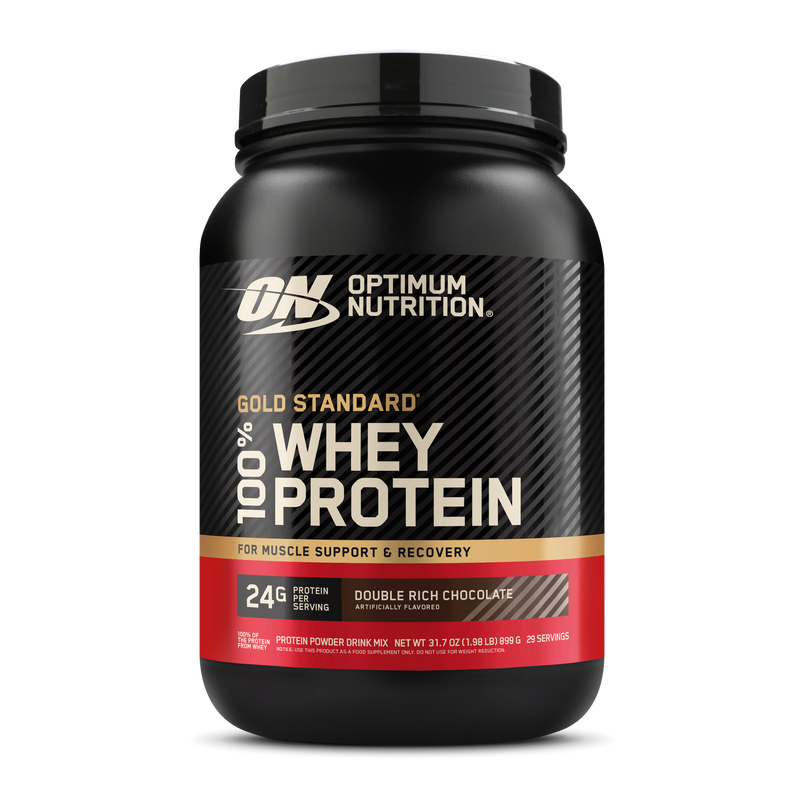


Optimum Nutrition Gold Standard 100% Whey 2.27 kg
International premium pick — 24 g protein per 30 g scoop (80% by weight), Informed Choice batch certification, 5.5 g naturally occurring BCAAs per scoop, 25-year sport-nutrition track record. Per-kilogram price is 30-40% more expensive than Myprotein on per-gram-of-protein basis; sucralose-plus-acesulfame-potassium sweetener combination is overly sweet for some palates; international supply means stock fluctuations through retail are routine.
Optimum Nutrition Gold Standard 100% Whey is the international-tier daily-driver that earned its reputation across 25 years of sport-nutrition retail. Each 30 g scoop delivers 24 g protein (80 percent by weight) from a blend of whey isolate, whey concentrate, and whey peptides — the isolate-included blend digests faster than pure concentrate. 5.5 g of naturally occurring BCAAs come from the whey itself rather than as a separate addition, 1 g of sugar and 3 g of total carbohydrate keep the calorie cost near 120 kcal, and the Informed Choice batch-level certification (the consumer-facing variant of Informed Sport) covers banned-substance verification for most non-elite athletes. Eight reliably stocked flavours through major online retailers. The honest weakness: the per-gram-of-protein cost runs 30-40 percent above Myprotein, and the sucralose-plus-acesulfame-potassium sweetener combination reads overly sweet to some palates.
Pros
- ✓24 g protein per scoop from an isolate/concentrate/peptide blend that digests faster than pure concentrate
- ✓5.5 g naturally occurring BCAAs per scoop from the whey itself
- ✓Informed Choice batch-level certification covers banned-substance verification
- ✓25-year sport-nutrition track record with reliable flavour catalogue
Cons
- ✗30-40 percent more per gram of protein than Myprotein
- ✗Sucralose plus acesulfame potassium sweetener combination reads overly sweet to some palates
| Protein | 24 g |
| Calories | 120 kcal |
| Sugars | 1 g |
| Type | blend (whey isolate primary, plus whey concentrate & peptides) |
| Servings per container | 73 servings (2.27 kg / 5 lb) |
| Certifications | Banned Substance Tested; gluten free |
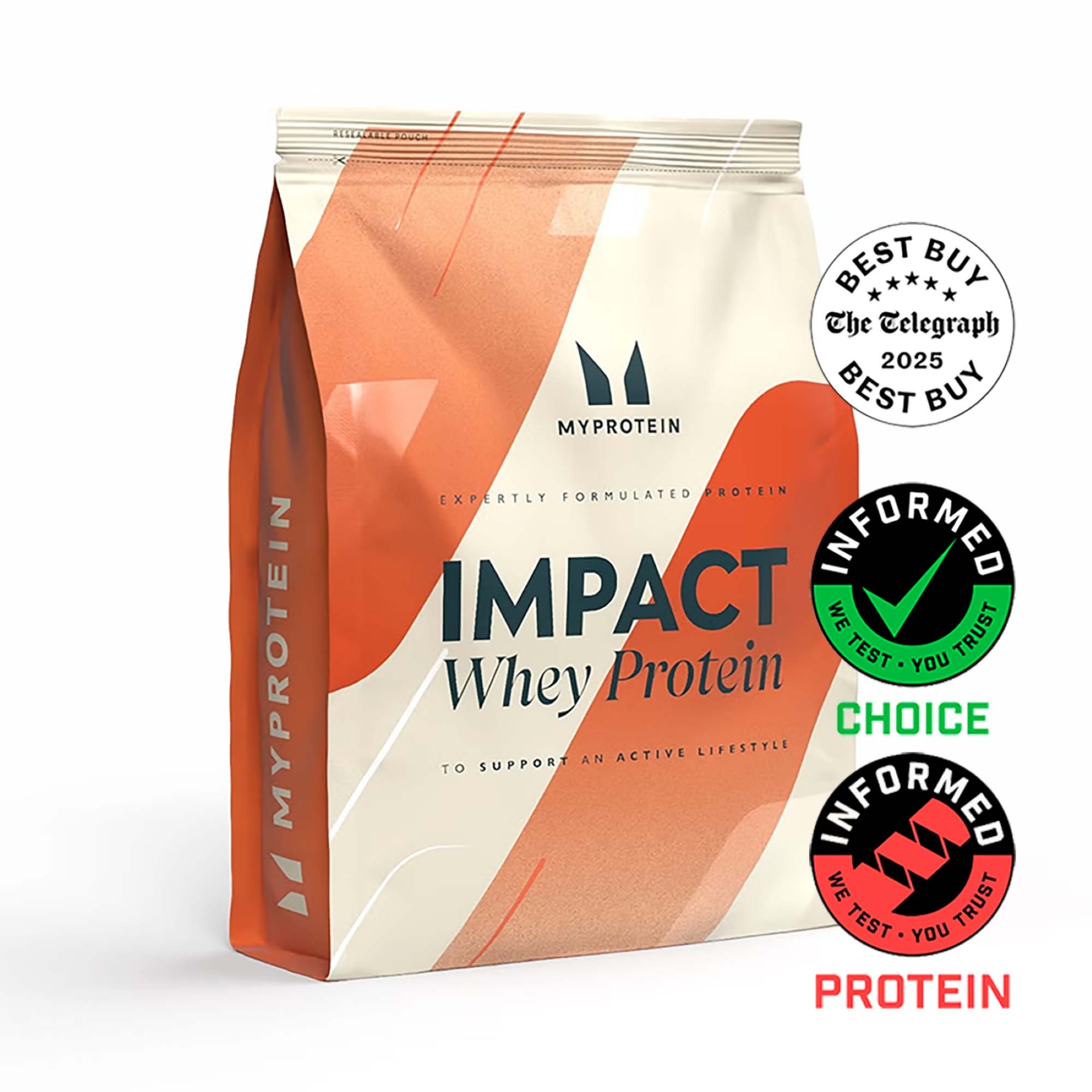
Myprotein Impact Whey Protein 2.5 kg
European value pick — 20-21 g protein per 25 g scoop (80-84% by weight), lowest practical per-kilogram price with frequent 40-50% off promotional pricing, Informed Sport certified for select flavours and batches. International shipping from UK warehouse takes 7-14 business days with intermittent stock-outs; mixability is grittier than ON or Syntha-6; only specific flavours and batches carry Informed Sport certification and athletes must verify per batch.
Myprotein Impact Whey is the value pick that runs the lowest practical per-kilogram price in this comparison and the right choice for buyers prioritizing protein per cost. Each 25 g scoop delivers 20-21 g protein (80-84 percent by weight — slightly higher concentration than ON despite the lower price), 1.9 g carbohydrate and 1.9 g fat per scoop, and 4.5 g naturally occurring BCAAs. Informed Sport certification covers select flavours and batches — Chocolate Smooth, Vanilla, and Strawberry Cream consistently — and athletes must verify the certification on the Myprotein lot-lookup tool before consumption. Promotional pricing during Myprotein's frequent 40-50 percent off events brings the per-kilogram price down to the cheapest tier in this comparison. The honest trade-off: shipping from the UK warehouse runs 7-14 business days, the mixability is grittier than ON or Syntha-6 (a steel-ball shaker plus 30 seconds of vigorous shaking is the practical fix), and only specific flavours carry Informed Sport batch certification.
Pros
- ✓Lowest practical per-kilogram price — the cheapest tier in this comparison on sale
- ✓20-21 g protein per scoop at 80-84 percent by weight, slightly higher than ON
- ✓Informed Sport certification on select flavours and batches for athletes who verify per batch
- ✓60+ flavour catalogue in the UK with roughly 30 reliably stocked
Cons
- ✗International shipping from UK warehouse runs 7-14 business days with intermittent stock-outs
- ✗Mixability is grittier than ON or Syntha-6 — needs a steel-ball shaker for consistent texture
| Protein | 21 g |
| Calories | 103 kcal |
| Sugars | 1 g |
| Type | whey concentrate |
| Servings per container | 100 servings (2.5 kg, 25 g serving) |
| Certifications | Informed Choice / Informed Protein |
MuscleTech Nitro-Tech Whey Protein
High-intensity training pick — around 30 g protein per scoop from a whey peptide and isolate blend with roughly 3 g added creatine monohydrate and a boosted BCAA and leucine content. Bundling creatine into the shake suits buyers who want one scoop to cover both; the added creatine means it is not a pure-protein product so per-gram-of-protein cost reads higher than plain whey, and it uses artificial sweeteners and flavoring.
MuscleTech Nitro-Tech is the athlete-focused pick built around a whey peptide and isolate blend with added creatine and a boosted amino acid load. Each scoop delivers around 30 g protein, roughly 3 g of creatine monohydrate, and an elevated BCAA and leucine content layered on top of the naturally occurring whey aminos, which makes it a single-scoop option for buyers who want their creatine bundled into the same shake. Flavors like Milk Chocolate and Vanilla are widely available worldwide. The honest trade-offs: the formula uses artificial sweeteners and flavoring, the added creatine means it is not a pure-protein product so the per-gram-of-protein cost reads higher than a plain whey, and the bundled creatine is something buyers can also purchase separately at lower per-gram cost if they prefer to dose it themselves.
Pros
- ✓Around 30 g protein per scoop from a whey peptide and isolate blend
- ✓Roughly 3 g of added creatine monohydrate bundled into each scoop
- ✓Elevated BCAA and leucine content for high-intensity training
- ✓Widely stocked worldwide in flavors like Milk Chocolate and Vanilla
Cons
- ✗Added creatine means it is not a pure-protein product — per-gram-of-protein cost reads higher than plain whey
- ✗Uses artificial sweeteners and flavoring that some buyers prefer to avoid
| Protein | 24 g |
| Calories | 120 kcal |
| Sugars | 2 g |
| Type | blend (whey peptides & whey isolate) |
| Servings per container | 69 servings (2.27 kg / 5 lb, 33 g serving) |
Subscribe to our newsletter
Occasional updates and new releases — no spam.
BSN Syntha-6 Whey Protein
Everyday milkshake-style pick — around 22 g protein per scoop from a multi-source whey and milk protein blend with added fiber for a thick, dessert-like texture in flavors such as Chocolate Milkshake and Vanilla Ice Cream. Easy to buy off the shelf with forgiving mixability; the serving is higher in calories, carbs, and fat than a lean isolate, digests more slowly, and the flavoring runs sweet.
BSN Syntha-6 is the everyday, dessert-flavored pick for buyers who care more about taste and mixability than maximizing grams of protein per scoop. Each scoop delivers around 22 g protein from a multi-source blend including whey concentrate, whey isolate, and milk protein, plus a few grams of added fiber, which gives it a thicker, milkshake-like texture in flavors such as Chocolate Milkshake and Vanilla Ice Cream. It is widely stocked at general retailers, which makes it easy to buy off the shelf. The honest trade-offs are structural: the 22 g protein per scoop comes inside a higher-calorie, higher-carb-and-fat serving than a lean isolate, so it is not the most protein-efficient option per calorie; the multi-source blend digests more slowly than a pure isolate; and the rich flavoring is sweeter than some buyers want for a daily shake.
Pros
- ✓Around 22 g protein per scoop from a multi-source whey and milk protein blend
- ✓Thick, dessert-like flavors such as Chocolate Milkshake and Vanilla Ice Cream
- ✓Easy to buy off the shelf at general retailers worldwide
- ✓Forgiving mixability and texture for buyers who dislike gritty powders
Cons
- ✗Higher calorie, carb, and fat per serving than a lean isolate — less protein-efficient per calorie
- ✗Multi-source blend digests more slowly than a pure isolate and the flavoring runs sweet
| Protein | 22 g |
| Calories | 200 kcal |
| Sugars | 2 g |
| Type | blend (multi-source: whey concentrate/isolate, micellar casein, calcium caseinate, milk protein isolate, egg albumin) |
| Servings per container | 48 servings (2.27 kg / 5 lb, 47 g serving) |

No-artificial-sweetener D2C pick — 20 g protein per 25 g scoop (80% by weight), 100% Hokkaido domestic raw-milk sourcing with batch traceability, no sucralose, acesulfame potassium, aspartame, or artificial flavours. Only 4-5 flavour SKUs available at any time (flavour fatigue at month 3-4); per-kilogram price is roughly 30-40% more expensive than international tier on per-gram-of-protein basis; no Informed Sport or NSF certification (not athlete-safe for WADA-tested sport).
Inputein Kamikatsu Whey Protein is the no-artificial-sweetener D2C pick built around 100 percent Hokkaido domestic raw-milk sourcing with batch traceability published on the brand's website. Each 25 g scoop delivers 20 g protein (80 percent by weight) with no sucralose, no acesulfame potassium, no aspartame, and no artificial flavours — sweetened only with cane sugar and natural flavour extracts in select flavours. The brand launched in 2024 from a Tokushima Prefecture upcycling community and has driven heavy Instagram and Pinterest organic reach with clean-aesthetic packaging aimed at the women's wellness market. The honest trade-offs: only 4-5 flavour SKUs stocked at any time (Plain, Cocoa, Matcha, Strawberry, Soy Milk) produces flavour fatigue at month 3-4 versus Myprotein's 30+ flavour catalogue; the per-kilogram price is roughly 30-40 percent above international-tier per-gram-of-protein cost; no Informed Sport or NSF certification means competitive athletes subject to WADA testing should not use this as a primary protein source; and the no-sweetener formulation has a milkier, less-sweet flavour profile some buyers prefer and others find bland.
Pros
- ✓100 percent Hokkaido domestic raw-milk sourcing with published batch traceability
- ✓No sucralose, acesulfame potassium, aspartame, or artificial flavours
- ✓20 g protein per 25 g scoop at 80 percent by weight
- ✓Clean-aesthetic packaging suits Pinterest and Instagram women's wellness market
Cons
- ✗Only 4-5 flavour SKUs at any time produces flavour fatigue at month 3-4
- ✗No Informed Sport or NSF certification — not athlete-safe for WADA-tested sport
Which one is right for you?
For consistent training with batch-level third-party certification
Optimum Nutrition Gold Standard 100% Whey 2.27 kg
Informed Choice batch certification, 24 g protein per scoop from an isolate/concentrate/peptide blend, and 5.5 g of naturally occurring BCAAs cover the body-recomposition and serious-training use case.
For the lowest practical per-kilogram price
Myprotein Impact Whey Protein 2.5 kg
Lowest per-kilogram price on sale with 20-21 g protein per scoop at 80-84 percent by weight — the strongest protein-per-cost ratio in this comparison.
For high-intensity training with creatine in the same scoop
MuscleTech Nitro-Tech Whey Protein
Around 30 g protein per scoop from a whey peptide and isolate blend with roughly 3 g of added creatine and an elevated BCAA and leucine content bundled into one shake.
For an everyday dessert-flavored shake that mixes easily
BSN Syntha-6 Whey Protein
Around 22 g protein per scoop from a multi-source blend with a thick, milkshake-like texture in flavors such as Chocolate Milkshake and Vanilla Ice Cream, easy to buy off the shelf.
For sucralose-sensitive users who want domestic raw-milk sourcing
Inputein Kamikatsu Whey Protein 1 kg
100 percent Hokkaido domestic raw-milk sourcing with batch traceability and no artificial sweeteners — the closest match in this comparison for buyers avoiding sucralose and acesulfame potassium.
How we compared
We did not perform independent protein content analysis or third-party lab testing on these five powders. Honest protein powder comparison needs a HPLC amino acid analyzer (a costly lab-grade unit) to verify protein-per-scoop against the label, an ICP-MS heavy metal screen (an even costlier unit that detects lead, cadmium, arsenic, and mercury at the parts-per-billion threshold the Clean Label Project uses), an Informed Sport or NSF Certified for Sport laboratory account (a recurring per-product testing fee) to verify banned-substance freedom for competitive athletes, a calibrated digestion-rate model to compare whey concentrate versus isolate versus hydrolysate absorption curves, and 6-12 weeks per product to gather statistical signal across mixability, taste degradation, and clumping behaviour. That setup runs into serious capital expense and is not what a comparison blog produces. Instead we sourced labelled protein-per-scoop in grams, scoop weight in grams, sweetener choice (sucralose, stevia, acesulfame potassium, or none), milk source country (US, EU, NZ, or JP), third-party certifications (Informed Sport, NSF Certified for Sport, Clean Label Project), added enzymes (lactase, protease, bromelain), added electrolytes (sodium, potassium), grams of carbs and fat per scoop, lactose content where disclosed, and price per kilogram from each brand's product page (Optimum Nutrition, Myprotein, MuscleTech, BSN, Inputein), cross-checked major online retailer listings as of May 2026 for current pricing, and read several thousand long-term buyer reviews per product. Mixability complaints, taste-after-month-two complaints, digestive-discomfort complaints, sweetener-aftertaste complaints, and weight-gain-despite-a-deficit complaints cluster into identifiable patterns once you read past the first 100 reviews.
Six factors do most of the work in this category for a buyer who is not a competitive athlete. First, protein-per-scoop after the marketing math — a 24 g scoop labelled '20 g protein' is 83% protein by weight, while a 30 g scoop labelled '20 g protein' is 67% protein by weight, and the difference is the carbohydrate and fat and flavour and sweetener filler that buyers do not always notice on the back label. Second, the sweetener — sucralose is the dominant choice in international whey because it survives heat processing and produces zero glycemic response, but a meaningful subset of buyers report digestive discomfort or simply do not like the flavour profile, and stevia or no-sweetener variants are increasingly available at slightly higher per-kilogram cost. Third, sourcing transparency — Optimum Nutrition uses US grass-fed-when-available dairy, Myprotein uses EU dairy with batch-traceable sourcing, MuscleTech uses a whey peptide and isolate blend with added creatine, BSN uses a multi-source whey and milk protein blend, Inputein uses 100% Japanese-domestic Hokkaido raw milk, and the price-per-kilogram differences track sourcing transparency more than they track protein content. Fourth, third-party doping certification — competitive athletes subject to WADA testing must use Informed Sport or NSF Certified for Sport powders, because non-certified powders carry a real (small but documented) risk of contamination with banned substances during shared-line manufacturing. Fifth, added digestive enzymes — lactase reduces the digestive load on lactose-intolerant users, protease and bromelain are marketing-mostly. Sixth, mixability and taste — measured by long-term review patterns rather than first-impression marketing.
We did not buy and consume all five powders for 8-12 weeks each in a controlled body-recomposition study. Treat the recommendations as informed sourcing decisions backed by label analysis, sourcing-transparency knowledge, and aggregated long-term buyer review patterns, not as the output of a sports-nutrition lab. We have not run protein-quality analysis, amino acid profiling, heavy metal screening, or controlled-digestion-rate measurement on any of these — anyone claiming to have done this rigorously needs to publish the methodology, and most who claim it have not.
Safety — read this before you buy
Whey protein powder is a food, not a medical supplement. It is not regulated by PMDA in Japan or by the FDA as a treatment for any condition, and the marketing copy that hints at 'muscle repair' or 'recovery acceleration' is doing legal acrobatics in most jurisdictions. With that framing, there is a specific list of situations and conditions where consuming concentrated protein powder daily causes real harm or requires medical clearance first.
Do not start daily whey protein supplementation without a doctor's input if you have: chronic kidney disease at any stage (CKD stage 1-5 — the kidney filters protein metabolism byproducts, and concentrated supplementation accelerates decline in a damaged kidney), reduced kidney function from diabetes or hypertension (even subclinical reduction matters), liver disease including hepatitis B, hepatitis C, fatty liver, or cirrhosis (the liver processes amino acid loads, and concentrated supplementation increases ammonia clearance demand that a damaged liver cannot meet), gout or hyperuricemia (whey protein increases purine load and worsens uric acid serum levels in susceptible individuals), severe lactose intolerance (whey concentrate retains 4-8% lactose by weight and can trigger persistent diarrhoea, gas, and bloating; whey isolate at under 1% lactose is the safer choice but is not zero), milk protein allergy (this is different from lactose intolerance — milk protein allergy is an immune response and whey protein triggers it; you need a plant protein alternative), pancreatitis or chronic pancreatic insufficiency, or active digestive disease including Crohn's, ulcerative colitis, or untreated H. pylori gastritis. If any of this applies, the answer is not 'use a smaller scoop' — it is 'discuss with your doctor first and ideally request a urinary albumin and serum creatinine baseline before starting.'
Pregnancy and breastfeeding require explicit medical clearance. Most whey protein powders are not formulated or tested for pregnant or breastfeeding consumers, and the artificial sweeteners (sucralose, acesulfame potassium), heavy metal trace levels (whey-source-dependent and not always disclosed), and concentrated protein loads on a kidney already working at 30-50% above baseline filtration during pregnancy are reasons to consult your obstetrician before continuing or starting. Pregnant athletes who used protein powder before pregnancy frequently switch to whole-food protein sources (eggs, fish, tofu, low-mercury seafood) for the duration. Some Japanese OB-GYN practices specifically advise against whey supplementation during the first trimester, others permit moderate use throughout. Get a personal answer from your doctor rather than relying on brand marketing or general guidance.
Overdose risk is real but specific. The realistic upper limit for protein intake without clinical concern is roughly 1.6-2.2 g per kg of body weight per day for a healthy adult with normal kidney function, sourced from any combination of whole food and supplementation. A 70 kg person therefore tops out at around 112-154 g of protein daily — this is reachable from food alone in most diets, and supplementation pushes the total higher only if your whole-food intake is already low. Sustained intake above 2.5 g per kg per day in healthy adults shows no acute harm in published meta-analyses but does increase urinary calcium excretion modestly and does increase digestive complaints. The real-world overdose scenario is not gradual chronic exposure but acute over-consumption — five scoops in a single sitting (around 100-125 g of protein in one meal) frequently produces immediate gastrointestinal distress (diarrhoea, gas, bloating, sometimes vomiting) regardless of underlying health, and this is the most common adverse event reported in long-term reviews. Spread protein intake across 3-5 meals or shakes rather than concentrating it.
Doping testing for competitive athletes requires Informed Sport or NSF Certified for Sport certification. Even brands with strong reputations have had occasional batch contamination with banned substances (testosterone precursors, stimulants, masking agents) when shared production lines run multiple SKUs, and only third-party batch testing prevents this. Of the five powders in this comparison, Optimum Nutrition Gold Standard 100% Whey is Informed Choice certified at the batch level (the consumer-facing variant of Informed Sport), Myprotein Impact Whey is Informed Sport certified for select flavours and batches, MuscleTech Nitro-Tech and BSN Syntha-6 do not currently carry Informed Sport or NSF certification, and Inputein does not currently carry Informed Sport or NSF certification. Athletes subject to WADA, NCAA, or Japanese national-team testing should buy Informed Sport certified products and verify the batch certification on the brand's lot-lookup tool before consumption — a non-certified product that triggers a positive test ends a career.
What changed in 2026
The protein powder market split into three clean tiers. The international premium tier (Optimum Nutrition Gold Standard, Dymatize ISO100, MuscleTech Nitro-Tech) consolidated around 'US-formulated whey blend with proven amino acid profile and Informed Choice batch certification' in the premium 2 kg bracket through major online retailers. The European value tier (Myprotein Impact Whey, BulkPowders, The Protein Works) consolidated around 'EU-formulated whey at the lowest practical per-kilogram price with frequent flavour rotation and 1-2 week international shipping' in the mid-range 2.5 kg bracket through Myprotein's own channel. The everyday and convenience tier (MuscleTech Nitro-Tech, BSN Syntha-6, and store-brand whey) consolidated around 'taste-led, easy-to-buy whey with creatine or fiber bundled in' in the 1-2 kg bracket through general retailers and big-box stores.
Sweetener-free and stevia-sweetened variants became a genuine subcategory. Inputein launched its Hokkaido raw-milk whey in 2024 explicitly marketed as 'no artificial sweeteners, no sucralose, no acesulfame potassium' as a response to the consumer push against artificial sweetener sensitivity. ULTORA, Beleg, and select Myprotein flavours (Stevia line) followed. The honest assessment from long-term reviews: stevia-sweetened whey has a meaningfully different flavour profile (mildly bitter aftertaste, less sweet than sucralose) that some buyers prefer and others actively dislike, and the per-kilogram price is 15-25% higher than sucralose-sweetened equivalents. If you have not specifically experienced sucralose digestive sensitivity or aftertaste complaints, the standard sucralose products are usually the better practical choice on price and palatability.
Domestic D2C protein brands grew fast on social media. Inputein, ULTORA, VALX, X-PLOSION, and Beleg all launched in 2020-2024 with direct-to-consumer own-site channels, no pharmacy or convenience-store distribution, and Pinterest and Instagram-heavy marketing aimed at women aged 25-40. The honest framing: these brands compete on flavour variety, sourcing transparency (Hokkaido raw milk, grass-fed sourcing claims), and aesthetic packaging design, and the per-kilogram price runs slightly above the mass-market commodity tier and slightly below the international premium tier. The protein content per gram is comparable across all of them — the differentiation is sourcing story and flavour profile, not nutritional substance.
Plant protein moved out of the niche-vegan category into mainstream cross-shopping. Pea-rice blend protein, soy isolate, and hemp protein are now stocked alongside whey in most pharmacy chains and online listings, and a meaningful subset of buyers cycle between whey and plant protein based on perceived digestive tolerance or ethical preference. Plant protein has a different amino acid profile (lower leucine content per gram, higher arginine), a different mixability behaviour (grittier texture, more flavour masking required), and a higher per-kilogram price than commodity whey. This comparison focuses on whey, but if you have specifically experienced milk protein allergy or you have switched to a plant-based diet, plant protein options exist and are not covered here.
Choosing by goal — body recomposition, dieting, athletes, seniors, pregnancy
Body recomposition (gaining muscle while losing fat at maintenance or slight deficit calories). The dominant factor is total daily protein intake hitting 1.6-2.2 g per kg body weight, and the powder serves as a gap-filler when whole food cannot reach the target. The right protein powder for body recomposition is the one with the highest protein-per-scoop ratio (87%+ by weight) and minimal carbs and fats, because you are using the powder to fit protein into a controlled calorie budget. Optimum Nutrition Gold Standard 100% Whey at 24 g protein per 30 g scoop (80% by weight) and Myprotein Impact Whey at 20 g protein per 25 g scoop (80% by weight) are the strongest picks here, because the carbohydrate and fat per scoop is below 3 g combined and the calorie cost is around 110-120 kcal per scoop. MuscleTech Nitro-Tech is workable at around 30 g protein per scoop, though the added creatine and other ingredients mean it is not a lean isolate. BSN Syntha-6 is the weakest of the five for tight calorie budgets because its higher carbohydrate and fat per scoop add calories you do not want when fitting protein into a controlled budget.
Dieting (sustained calorie deficit, fat loss, muscle preservation). The dominant factor is satiety per calorie and protein per calorie, because you are eating less overall and protein needs to displace carbohydrate and fat. Whey protein at 110-120 kcal per scoop and 20-24 g protein delivers roughly 5 kcal per gram of protein, which is close to the ceiling of efficiency for protein supplementation. The right protein powder for dieting is the one with the lowest carbohydrate per scoop and the highest protein-per-calorie ratio. Myprotein Impact Whey Isolate (a separate SKU from Impact Whey, not the one in this comparison) is the technical winner here, but Optimum Nutrition Gold Standard at 1 g sugar per scoop and Myprotein Impact Whey at 1.9 g carbohydrate per scoop are both strong dieting picks. MuscleTech Nitro-Tech is workable, though the added creatine and aminos add to the scoop. BSN Syntha-6, with its higher carbohydrate and fat per scoop, is the weakest dieting pick of the five, and Inputein at 4-5 g carbohydrate per scoop is also a weaker dieting pick because the no-artificial-sweetener formulation needs more milk solids for palatability.
Athletes (competitive lifting, endurance sport, team sport). The dominant factor is third-party doping certification first, then protein quality and digestion speed. Athletes subject to WADA, NCAA, or Japanese national-team testing must use Informed Sport or NSF Certified for Sport powders or risk a positive test from contamination during shared-line manufacturing. Optimum Nutrition Gold Standard 100% Whey carries Informed Choice batch certification (the consumer-facing variant of Informed Sport), Myprotein Impact Whey carries Informed Sport for select flavours and batches. MuscleTech Nitro-Tech, BSN Syntha-6, and Inputein do not currently carry Informed Sport or NSF certification and should not be used by athletes subject to WADA testing without independent batch verification. Beyond certification, post-workout digestion speed favours hydrolysed whey or whey isolate over whey concentrate — Optimum Nutrition Gold Standard is a blend of isolate, concentrate, and peptides (faster digestion than pure concentrate), MuscleTech Nitro-Tech is a whey peptide and isolate blend with added creatine, Myprotein Impact Whey is whey concentrate. The practical answer for most non-elite athletes: Optimum Nutrition Gold Standard with verified Informed Choice batch.
Seniors (age 60+, sarcopenia prevention, muscle mass maintenance). The dominant factor is leucine content per scoop, because older adults have age-related anabolic resistance and need a higher leucine threshold (around 2.5-3 g per serving) to trigger muscle protein synthesis. Whey protein is naturally high in leucine (around 10-12% by weight of total protein), which means a 25 g protein scoop delivers around 2.5-3 g of leucine — exactly the anabolic threshold for older adults. The right protein powder for seniors is the one with verified protein-per-scoop and good digestive tolerance, because age-related digestive enzyme decline (lactase, gastric acid, pancreatic enzymes) makes lactose-heavy whey concentrate harder to tolerate. Optimum Nutrition Gold Standard at 24 g protein per scoop is the strongest pick, and BSN Syntha-6 is a workable everyday option for seniors who value its forgiving mixability and milder, dessert-like flavors, accepting the higher carbohydrate and fat per serving. Inputein at 20 g protein per scoop with no artificial sweeteners is also workable. Avoid mass-gainer SKUs and high-carbohydrate formulations because they crowd out senior nutrition needs (vegetables, omega-3, fibre).
Pregnancy and post-pregnancy (first trimester through breastfeeding). The dominant factor is medical clearance before any supplementation. Most whey protein powders are not formulated or tested for pregnant or breastfeeding consumers, the artificial sweeteners are not always cleared by Japanese OB-GYN practices, and the concentrated protein load on a kidney already at 30-50% above baseline filtration during pregnancy is medically nontrivial. The right approach is to discuss with your obstetrician first, prefer whole-food protein sources (eggs, fish, tofu, low-mercury seafood, tofu, natto) for the duration of pregnancy and through breastfeeding, and only use protein powder if your doctor specifically clears it. If your doctor permits supplementation, prefer powders with no artificial sweeteners, no caffeine, no creatine, no herbal stimulants, and ideally Japanese-domestic milk sourcing for traceability. Inputein with Hokkaido raw milk and no artificial sweeteners is the closest match in this comparison, but the answer remains 'consult your doctor' and not 'pick from this list.'
Where each fits
If you train consistently and you want the international-tier whey blend with verified third-party batch testing and the most published amino acid profile, Optimum Nutrition Gold Standard 100% Whey in the premium 2.27 kg format (Double Rich Chocolate is the bestselling flavour) is the body-recomposition and athlete-grade pick. ON Gold Standard delivers 24 g protein per 30 g scoop (80% protein by weight) from a blend of whey isolate, whey concentrate, and whey peptides, 1 g sugar and 3 g total carbohydrate per scoop, 5.5 g BCAAs per scoop naturally occurring from the whey, Informed Choice batch-level certification (the consumer-facing variant of Informed Sport), 24 stable flavour SKUs in international markets and 8 reliably stocked through major online retailers, and a 25-year track record as the best-selling whey protein in international sport-nutrition retail. The honest weakness, structural and immediate: the per-kilogram price is 30-40% higher than Myprotein Impact Whey on a like-for-like 2-3 kg purchase and roughly double the per-kilogram price of Syntha-6 or Inputein. The premium pays for the brand and the certification rather than for higher protein content per gram. Second weakness: the powder uses sucralose plus acesulfame potassium plus natural and artificial flavours, which a meaningful subset of buyers report as overly sweet and producing a chemical aftertaste, particularly in the chocolate flavours where the chocolate masking is heaviest. Third weakness: international supply means stock fluctuations through retail are common, and the Japanese-language label is a sticker over the English label rather than a domestic-formulated product, which matters for buyers who want full Japanese-language nutrition disclosure and a domestic regulatory-cleared supply chain. ON Gold Standard is the right pick if you train competitively or seriously, you specifically value Informed Choice batch certification, and you accept the 30-40% per-kilogram premium for the brand and certification.
If you want the lowest practical per-kilogram price with strong brand reliability and you accept 1-2 week international shipping from the UK, Myprotein Impact Whey 2.5 kg (frequently discounted during Myprotein's promotional events; the non-sale list price is notably higher) is the European value pick. Myprotein Impact Whey delivers 20-21 g protein per 25 g scoop (80-84% by weight, slightly higher protein concentration than ON Gold Standard despite the lower price), 1.9 g carbohydrate and 1.9 g fat per scoop, 4.5 g BCAAs per scoop naturally occurring, Informed Sport certification on select flavours and batches (Chocolate Smooth, Vanilla, Strawberry Cream — verify on the Myprotein lot-lookup tool before purchase), over 60 flavour SKUs available in the UK and roughly 30 reliably stocked, and aggressive promotional pricing (Black Friday, Spring Sale, Summer Sale all reach 40-50% off list). The honest weakness, structural and immediate: shipping from the UK warehouse takes 7-14 business days even on the express option, and the bulk-ship pallet routes that replenish local stock are intermittent — order timing matters and stock-outs on specific flavours are routine. Second weakness: the powder mixability is noticeably grittier than ON Gold Standard or Syntha-6, particularly in cold milk or cold water; many long-term buyers switch to a shaker bottle with a stainless steel ball and add 30 seconds of vigorous shaking, which works but is friction. Third weakness: only specific flavours and batches carry Informed Sport certification, and athletes subject to WADA testing must verify the certification per batch through the Myprotein lot-lookup before consumption — buying off the shelf without verification is not athlete-safe. Myprotein Impact Whey is the right pick if you want the lowest practical per-kilogram price for body recomposition or general training, you accept the international shipping timeline and the grittier mixability, and you check Informed Sport batch certification if you compete.
If you train at a high intensity and want a whey that bundles creatine and a boosted amino acid load into the same scoop, MuscleTech Nitro-Tech is the athlete-focused pick. Nitro-Tech delivers around 30 g protein per scoop from a whey peptide and isolate blend, roughly 3 g of creatine monohydrate per scoop, and an elevated BCAA and leucine content layered on top of the naturally occurring whey aminos, which makes it a single-scoop way to cover both your protein and creatine in one shake. Flavors such as Milk Chocolate and Vanilla are stocked widely worldwide. The honest weakness, structural and immediate: the formula uses artificial sweeteners and flavoring, which a subset of buyers specifically avoid. Second weakness: because the scoop carries added creatine and other ingredients, it is not a pure-protein product, so the per-gram-of-protein cost reads higher than a plain whey — and the bundled creatine is something you can also buy separately at a lower per-gram cost if you prefer to dose it yourself. Third weakness: the heavier scoop and added ingredients make it less suited to buyers who simply want clean protein with nothing else added. Nitro-Tech is the right pick if you train at high intensity, you specifically value having creatine in the same shake, and you are comfortable with artificial sweeteners.
If you care more about taste and easy mixing than squeezing out the most grams of protein per scoop, BSN Syntha-6 is the everyday milkshake-style pick. Syntha-6 delivers around 22 g protein per scoop from a multi-source blend that includes whey concentrate, whey isolate, and milk protein, plus a few grams of added fiber, which gives it a thick, dessert-like texture in flavors such as Chocolate Milkshake and Vanilla Ice Cream. It is widely stocked at general retailers, so it is easy to buy off the shelf without ordering online. The honest weakness, structural and immediate: the 22 g protein per scoop comes inside a higher-calorie, higher-carb-and-fat serving than a lean isolate, so it is not the most protein-efficient option per calorie — buyers in a strict calorie deficit should account for the extra carbs and fat. Second weakness: the multi-source blend digests more slowly than a pure isolate, which is fine for an everyday or bedtime shake but less ideal for a fast post-workout window. Third weakness: the rich flavoring runs sweeter than some buyers want for a daily shake. Syntha-6 is the right pick if you prioritize taste and forgiving mixability for a daily protein habit, you do not mind the extra calories per serving, and you want something you can grab off a store shelf.
If you specifically want no artificial sweeteners, Hokkaido-domestic raw-milk sourcing, and a domestic D2C brand aimed at the women's wellness and Pinterest aesthetic market, Inputein Kamikatsu Whey Protein 1 kg is the no-sweetener D2C pick. Inputein delivers 20 g protein per 25 g scoop (80% by weight), 100% Hokkaido domestic raw-milk sourcing with batch traceability published on the Inputein website, no sucralose, no acesulfame potassium, no aspartame, no artificial flavours, no synthetic preservatives, sweetened only with cane sugar and natural flavour extracts in select flavours, and a clean-aesthetic packaging design that has driven heavy Instagram and Pinterest organic reach since the 2024 launch from a Tokushima Prefecture upcycling community. The honest weakness, structural and immediate: only 4-5 flavour SKUs are stocked at any given time (typically Plain, Cocoa, Matcha, Strawberry, Soy Milk), and several long-term buyers have noted flavour fatigue at month 3-4 because there is no large rotation to switch between, in contrast to Myprotein's 30+ flavour catalogue. Second weakness: the per-kilogram price is significantly higher than international tier on a like-for-like protein-per-gram basis (Myprotein delivers similar protein content at a much lower per-kilogram price on sale) — the no-artificial-sweetener and Hokkaido sourcing are real product positioning but the per-gram-of-protein cost premium is substantial. Third weakness: Inputein does not carry Informed Sport or NSF Certified for Sport certification, which means competitive athletes subject to WADA testing should not use this product as a primary protein source. Fourth weakness: the no-artificial-sweetener formulation has a noticeably less sweet, slightly milkier flavour profile that some buyers prefer and others find bland — review the flavour reviews carefully before committing to a 1 kg tub. Inputein is the right pick if you have specifically experienced sucralose digestive sensitivity or you specifically want Japanese-domestic raw-milk sourcing, you accept the 30-40% per-gram-of-protein cost premium, and you do not compete in WADA-tested sport.
Verdict
For a buyer who trains consistently, wants the international-tier whey blend with batch-level third-party certification, and accepts a 30-40% per-kilogram premium for brand and certification, the right buy is Optimum Nutrition Gold Standard 100% Whey in the premium 2.27 kg format. The 24 g protein per 30 g scoop, 5.5 g naturally occurring BCAAs, Informed Choice batch certification, and 25-year sport-nutrition track record make it the canonical pick for athletes and serious body-recomposition trainees. The trade you accept: the per-kilogram price is meaningfully more expensive than Myprotein on a per-gram-of-protein basis, the sucralose-and-acesulfame-potassium sweetener combination is overly sweet for some palates, and stock fluctuations through retail are routine.
Step over to Myprotein Impact Whey 2.5 kg if you want the lowest practical per-kilogram price and you accept 7-14 business days of international shipping from the UK warehouse — the per-gram-of-protein cost is roughly 30-40% lower than ON, the protein-per-scoop ratio is comparable, and the promotional pricing during Myprotein's frequent sale events brings the per-kilogram price down to the cheapest in this comparison. Step over to MuscleTech Nitro-Tech if you train at high intensity and specifically value having creatine and a boosted amino acid load bundled into the same scoop, accepting the artificial sweeteners and the fact that the added creatine makes it not a pure-protein product. Step over to BSN Syntha-6 if you care more about taste and easy mixing than maximizing grams of protein per scoop — the thick, dessert-like flavors and forgiving mixability suit a daily habit, accepting the higher calories, carbs, and fat per serving than a lean isolate. Step over to Inputein Kamikatsu Whey Protein 1 kg if you have specifically experienced sucralose sensitivity or you specifically want Japanese-domestic Hokkaido raw-milk sourcing with no artificial sweeteners, accepting the 30-40% per-gram-of-protein cost premium and the limited 4-5 flavour rotation.
We did not run independent protein content analysis, amino acid profiling, or heavy metal screening across these five powders. Recommendations are informed by label analysis, sourcing-transparency knowledge, third-party certification status, and aggregated long-term buyer review patterns from major retailers and brand-direct channels — not by an instrumented sports-nutrition lab. None of these five is the universal best protein powder. The right pick is the one that matches your goal (body recomposition, dieting, athletic competition, senior nutrition, pregnancy with medical clearance), your sweetener tolerance, your sourcing preference, your certification needs, and your per-kilogram budget.
Frequently asked questions
How much protein powder should I take per day?▼
Is whey protein safe for someone with a sensitive stomach or lactose intolerance?▼
Will protein powder damage my kidneys?▼
Can I take protein powder during pregnancy?▼
Is sucralose harmful?▼
Whey concentrate vs whey isolate vs whey hydrolysate — which should I buy?▼
Why is some protein powder so much more expensive per kilogram?▼
Prices change. Check the retailer for the current price.
Comments & questions
Discussion happens on nattzy, our community forum. Sign in with Google to post — it takes a second.
Related articles

Best Green Powder 2026: 5 Greens Ranked by Transparency
Best Plant-Based Protein Powder 2026: 5 Ranked
Best Air Purifier 2026: 5 models compared honestly

ConoHa WING review (2026): setup, speed and pricing
Best JP rental server 2026: 5 hosts ranked
Best LED Face Masks 2026: 3 Light Therapy Devices Compared