Best Greek Yogurt 2026: 5 High-Protein Picks
Greek yogurt earns its place on almost every nutrition short-list, but the category spans a wide range — from mild, creamy breakfast staples to dense, tart skyr-style cups with next to no sugar. Bioavailability and consistency of intake outperform ingredient quantity on the label.
Quick answer
Fage Total 0% is the best Greek yogurt overall: 18-19g of protein per 7 oz serving from just two ingredients. Chobani Plain Non-Fat is the everyday value pick, especially in the 32 oz tub. Siggi's is the lowest-sugar option at 17g protein and 6g carbs per cup, and Oikos Triple Zero is the flavored pick with zero added sugar.
Each yogurt was evaluated on protein content per serving, sugar levels (natural and added), ingredient list length and quality, texture consistency, taste profile, sourcing transparency, and price per gram of protein.
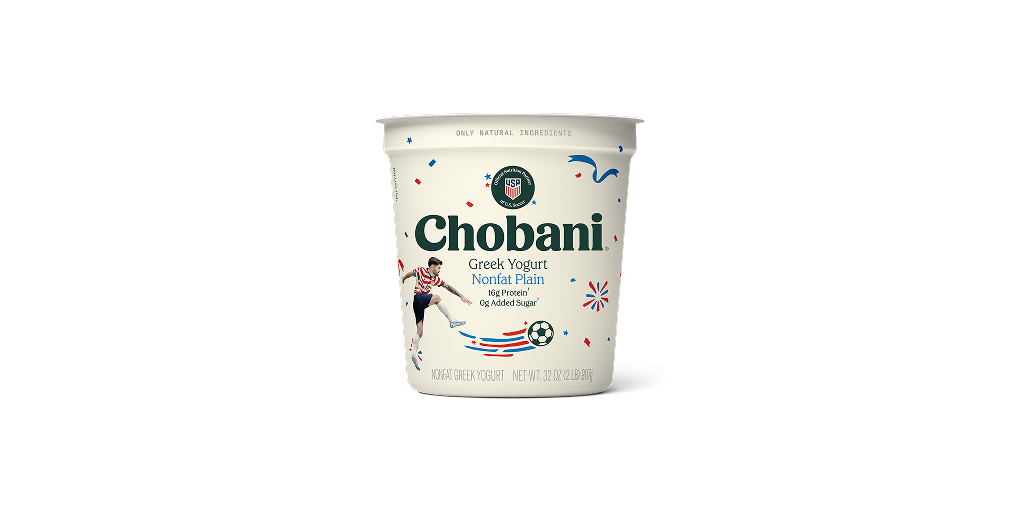
Chobani Plain Non-Fat Greek Yogurt
Best Everyday Value: Chobani Plain Non-Fat is the workhorse of the category — thick but not dense, clean tartness, and 15g protein per 5.3 oz cup with only 3 ingredients. The 32 oz tub is the best value per gram of protein in mainstream grocery.
Top picks ↓| Product | Price | Link |
|---|---|---|
| $6.98Reference price | ||
| $7.49Reference price | ||
| $1.49Reference price | ||
| $7.99Reference price | ||
| $6.49Reference price |
| Product | Serving | Protein | Fat | Sugar | Ingredients | Tub size | Price | Certifications | Carbs | Added sugar | Sweetener | Certification | Milk source | Probiotics | Total carbs | Style |
|---|---|---|---|---|---|---|---|---|---|---|---|---|---|---|---|---|
| Chobani Plain Non-Fat Greek Yogurt | 5.3 oz | 15g | 0% | ~6g natural | 3 | 32 oz available | ~$6.98 | — | — | — | — | — | — | — | — | — |
| Fage Total 0% Greek Yogurt | 7 oz | 18–19g | 0% | ~8g natural | 2 | — | ~$7.49 | Kosher | — | — | — | — | — | — | — | — |
| Oikos Triple Zero Greek Yogurt | 5.3 oz | 15g | 0% | — | — | — | ~$1.49 | — | 7g | 0g | Monk fruit | — | — | — | — | — |
| Stonyfield Organic Greek Yogurt | 5.3 oz | 14–15g | 0% | — | — | — | ~$7.99 | — | — | — | — | USDA Organic | Grass-fed | 5 named strains | — | — |
| Siggi's Icelandic-Style Yogurt (Skyr) | 5.3 oz | 17g | 0% | — | — | — | ~$6.49 | — | — | — | None (plain) | — | — | — | 6g | Icelandic skyr |
Top picks
Related articles

Best value in the 32 oz tub — around $0.18 per gram of protein
Chobani Plain Non-Fat is the workhorse of the category — thick but not dense, clean tartness, and 15g protein per 5.3 oz cup with only 3 ingredients. The 32 oz tub is the best value per gram of protein in mainstream grocery. The non-fat version has slightly more carbs than 2% due to fat removal concentrating milk sugars.
Pros
- ✓3-ingredient formula with no added sugar
- ✓32 oz tub delivers excellent protein cost-per-gram value
- ✓Genuinely versatile in cooking and smoothies
Cons
- ✗Non-fat version slightly higher carbs than 2% due to fat removal concentrating milk sugars
Score breakdown
| Serving | 5.3 oz |
| Protein | 15g |
| Fat | 0% |
| Sugar | ~6g natural |
| Ingredients | 3 |
| Tub size | 32 oz available |
| Price | ~$6.98 |
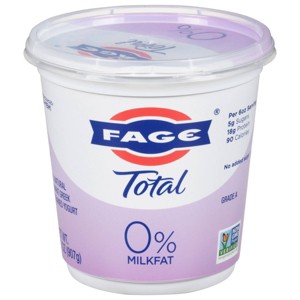
No thickeners — texture is entirely from straining
Fage Total 0% sets the standard for authentic Greek yogurt with 18–19g protein per 7 oz serving and only 2 ingredients — no thickeners, no pectin, texture entirely from straining. The flavor is sharper and more sour than American brands, which is a feature, not a bug, for those who want the real thing. The trade-off is a stronger tang that takes adjustment.
Pros
- ✓18–19g protein per 7 oz — highest non-fat protein in mainstream market
- ✓Only 2 ingredients, no thickeners or additives
- ✓Dense texture that holds shape when spooned
Cons
- ✗Sharper sour flavor may need adjustment for those used to milder brands
Score breakdown
| Serving | 7 oz |
| Protein | 18–19g |
| Fat | 0% |
| Sugar | ~8g natural |
| Ingredients | 2 |
| Certifications | Kosher |
| Price | ~$7.49 |
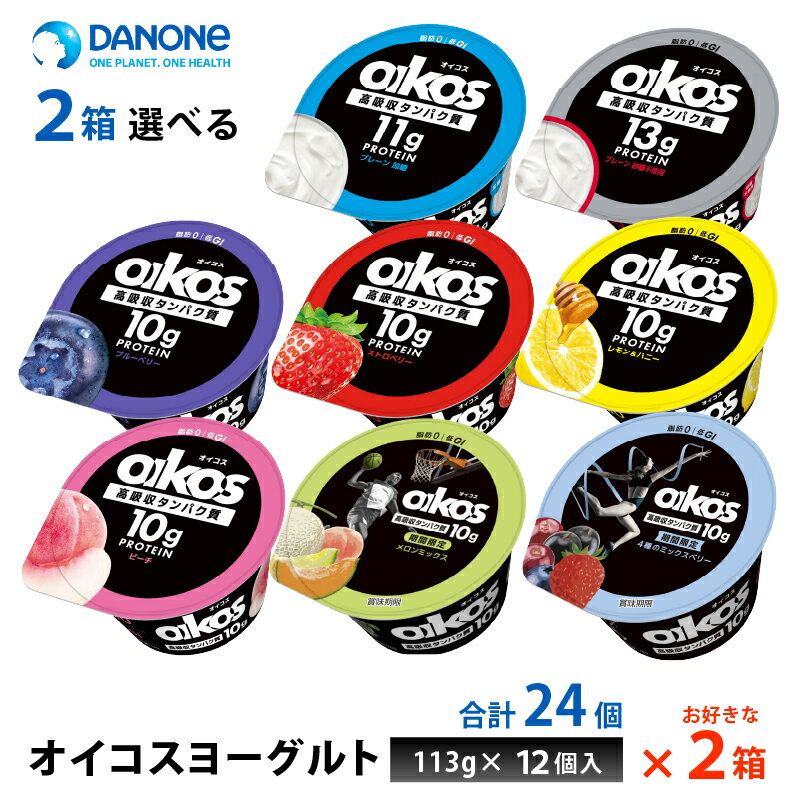
Zero added sugar and no artificial sweeteners in the flavored line
Oikos Triple Zero hits 15g protein at 90 calories with zero added sugar, zero artificial sweeteners, and zero fat — using monk fruit extract in flavored varieties. For macro-trackers who want flavored yogurt without stevia or sucralose, this is the only mainstream option. Some flavored varieties add chicory root fiber, which affects digestion for some people.
Pros
- ✓Zero added sugar, zero artificial sweeteners, zero fat in flavored line
- ✓Monk fruit sweetened — no stevia or sucralose
- ✓15g protein at 90 calories
Cons
- ✗Some flavored varieties include chicory root fiber (check label if sensitive)
Score breakdown
| Serving | 5.3 oz |
| Protein | 15g |
| Fat | 0% |
| Carbs | 7g |
| Added sugar | 0g |
| Sweetener | Monk fruit |
| Price | ~$1.49 |
Subscribe to our newsletter
Occasional updates and new releases — no spam.
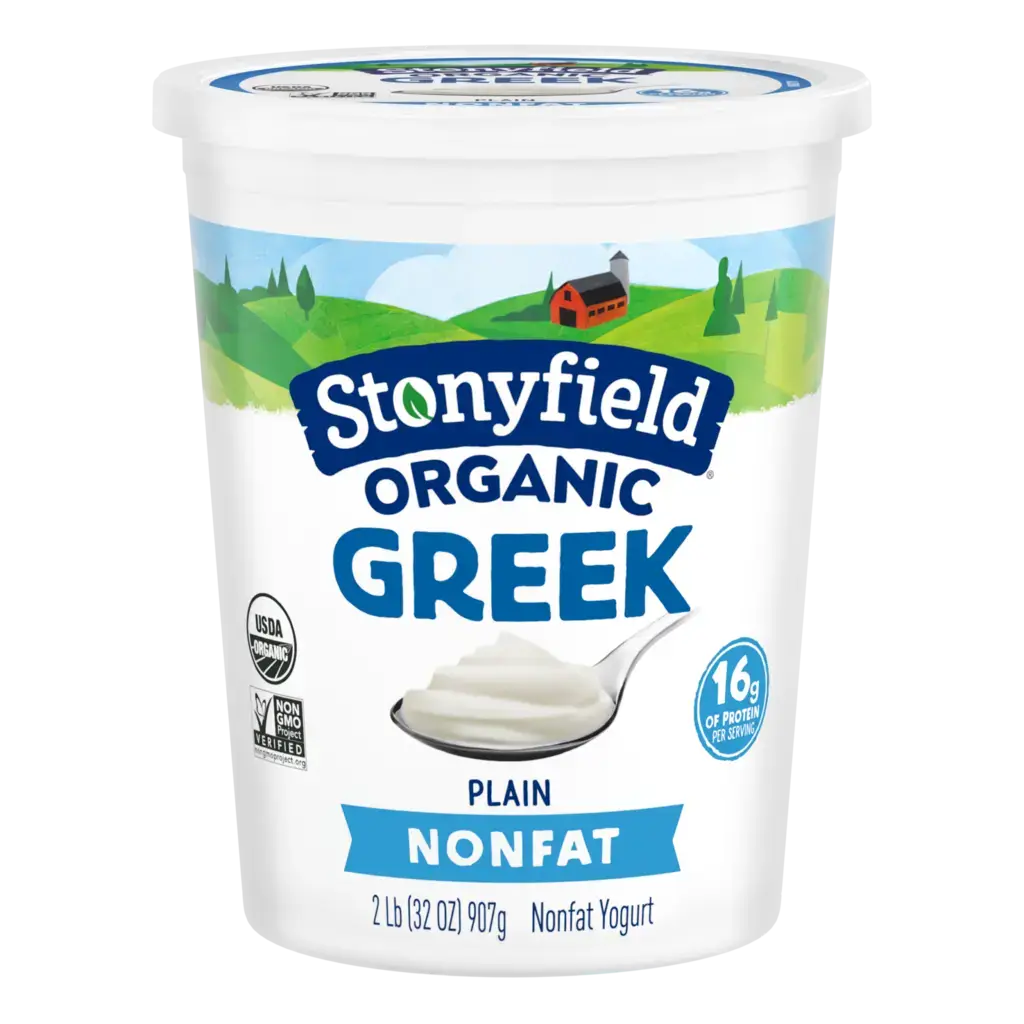
USDA organic, grass-fed milk sourcing
Stonyfield Organic is the pick when certification and sourcing matter: USDA organic, grass-fed milk, and five named live probiotic strains on the label. Protein at 14–15g per serving is slightly lower than Fage, and the flavor is milder — gentler tang that suits people who find Fage too sharp. Costs slightly more per ounce.
Pros
- ✓USDA certified organic with grass-fed milk sourcing
- ✓5 named live probiotic cultures listed on label
- ✓Mild flavor appeals to those who find Fage too tart
Cons
- ✗Slightly lower protein (14–15g) and higher cost per ounce than Chobani or Fage
Score breakdown
| Serving | 5.3 oz |
| Protein | 14–15g |
| Certification | USDA Organic |
| Milk source | Grass-fed |
| Probiotics | 5 named strains |
| Fat | 0% |
| Price | ~$7.99 |
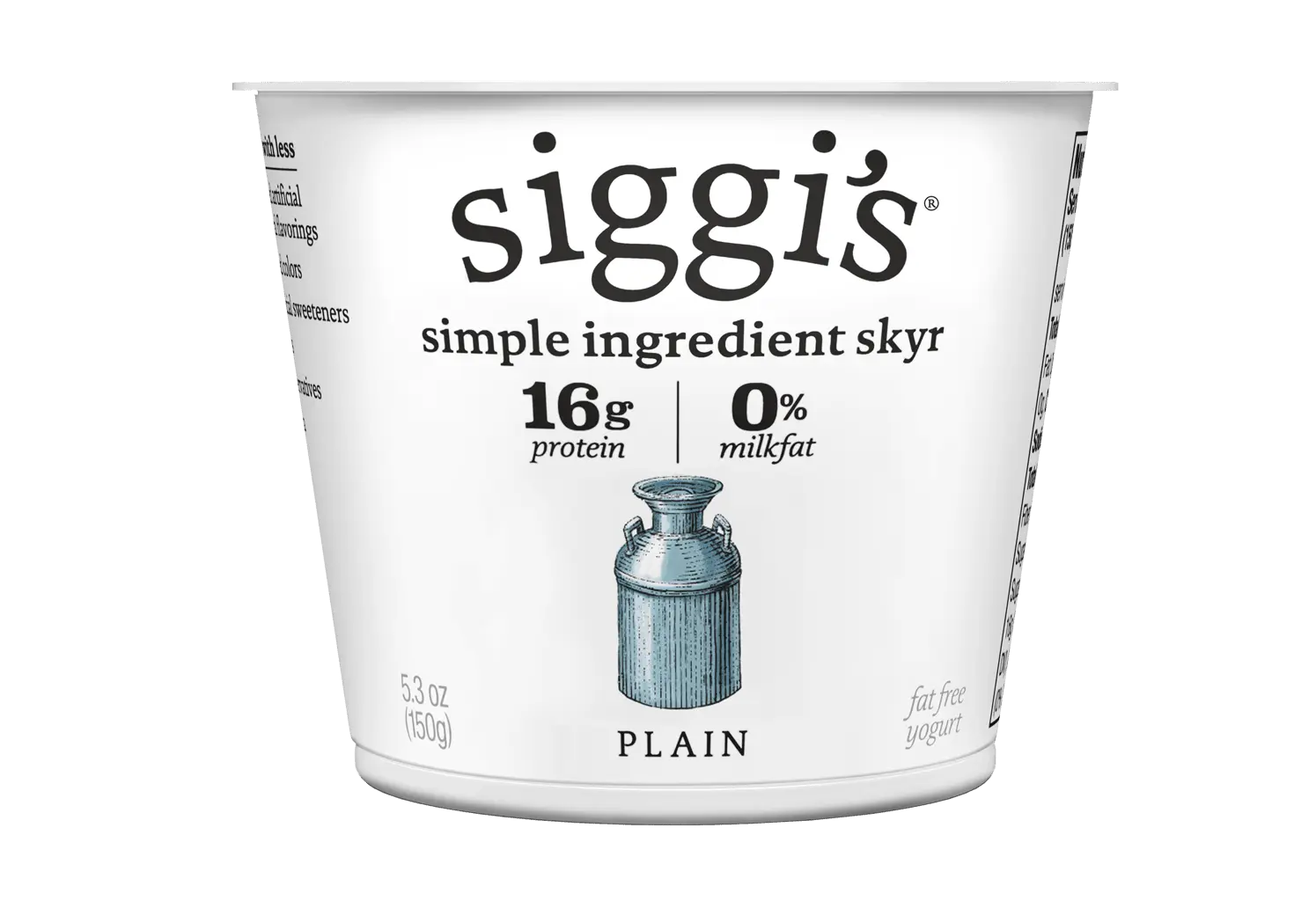
Skyr-style — denser and lower in sugar than most Greek yogurts
Siggi's skyr-style yogurt delivers 17g protein per 5.3 oz with only 6g carbs — the lowest sugar-to-protein ratio in this comparison. The texture is denser than Greek yogurt, almost spreadable, and the flavor is assertively sour. The flavored line keeps added sugar under 9g total, which is genuinely rare in the category.
Pros
- ✓Only 6g total carbs per 5.3 oz cup
- ✓17g protein with very low added sugar across the flavored line
- ✓Unique skyr density works as cream cheese substitute on toast
Cons
- ✗Assertively sour flavor is an acquired taste
Score breakdown
| Serving | 5.3 oz |
| Protein | 17g |
| Fat | 0% |
| Total carbs | 6g |
| Style | Icelandic skyr |
| Sweetener | None (plain) |
| Price | ~$6.49 |
Which one is right for you?
For maximum protein per serving
Fage Total 0% Greek Yogurt
18–19g protein per 7 oz with only 2 ingredients and no thickeners
For everyday cooking and value
Chobani Plain Non-Fat Greek Yogurt
Best cost-per-gram of protein in a 32 oz tub with clean 3-ingredient formula
For very low sugar intake
Siggi's Icelandic-Style Yogurt (Skyr)
Only 6g total carbs per serving with 17g protein — lowest sugar-to-protein ratio here
For flavored yogurt without artificial sweeteners
Oikos Triple Zero Greek Yogurt
Monk fruit sweetened with zero added sugar and no stevia or sucralose
For organic and grass-fed sourcing
Stonyfield Organic Greek Yogurt
USDA organic, grass-fed milk, and 5 named probiotic strains on the label
Chobani Plain Non-Fat Greek Yogurt — The Everyday Workhorse
Fage Total 0% — Thick, Authentic, Unapologetically Tart
Oikos Triple Zero — The Macro-Tracker's Pick
Stonyfield Organic Greek Yogurt — Certified Organic, Grass-Fed Milk
Siggi's Icelandic-Style Yogurt (Skyr) — Very Thick, Very Low Sugar
Frequently asked questions
What actually makes Greek yogurt different from regular yogurt?▼
How do you use plain Greek yogurt in cooking?▼
What's the difference between skyr and Greek yogurt?▼
Which Greek yogurt is best for weight loss or high-protein diets?▼
Does the live culture count matter, and which brand has the most?▼
Prices change. Check the retailer for the current price.
Comments & questions
Discussion happens on nattzy, our community forum. Sign in with Google to post — it takes a second.
Related articles
Food
Best Toaster 2026: 5 Compared
Best Toaster 2026: 5 Compared

Best Protein Powder 2026: 5 Compared

ConoHa WING review (2026): setup, speed and pricing
Best JP rental server 2026: 5 hosts ranked
Best LED Face Masks 2026: 3 Light Therapy Devices Compared
Best Robot Vacuums 2026: 5 Models Compared Honestly