Nespresso Vertuo vs Original 2026: Which Should You Buy?
Choosing the wrong Nespresso system locks you into a pod ecosystem for the life of the machine — and the two lines are more different than Nespresso's marketing suggests.
Quick answer
Original is the system to buy if pod cost drives the decision: third-party pods from Starbucks, Lavazza, Peet's and L'Or run $0.40 to $0.80 against Vertuo's proprietary $0.90 to $1.50, and the two pod formats are physically incompatible. The Essenza Mini is the smallest Original entry, the Pixie adds an 800ml tank and faster heat-up, and the Lattissima One integrates milk. On the Vertuo side, barcode extraction gives repeatability, and the Vertuo Plus is quieter than the Next.
Each machine was evaluated on capsule ecosystem breadth and third-party availability, crema and foam quality by extraction mechanism, brew size range, real pod cost over 3-year daily use, build quality, noise during extraction, and documented failure modes from owner reports.
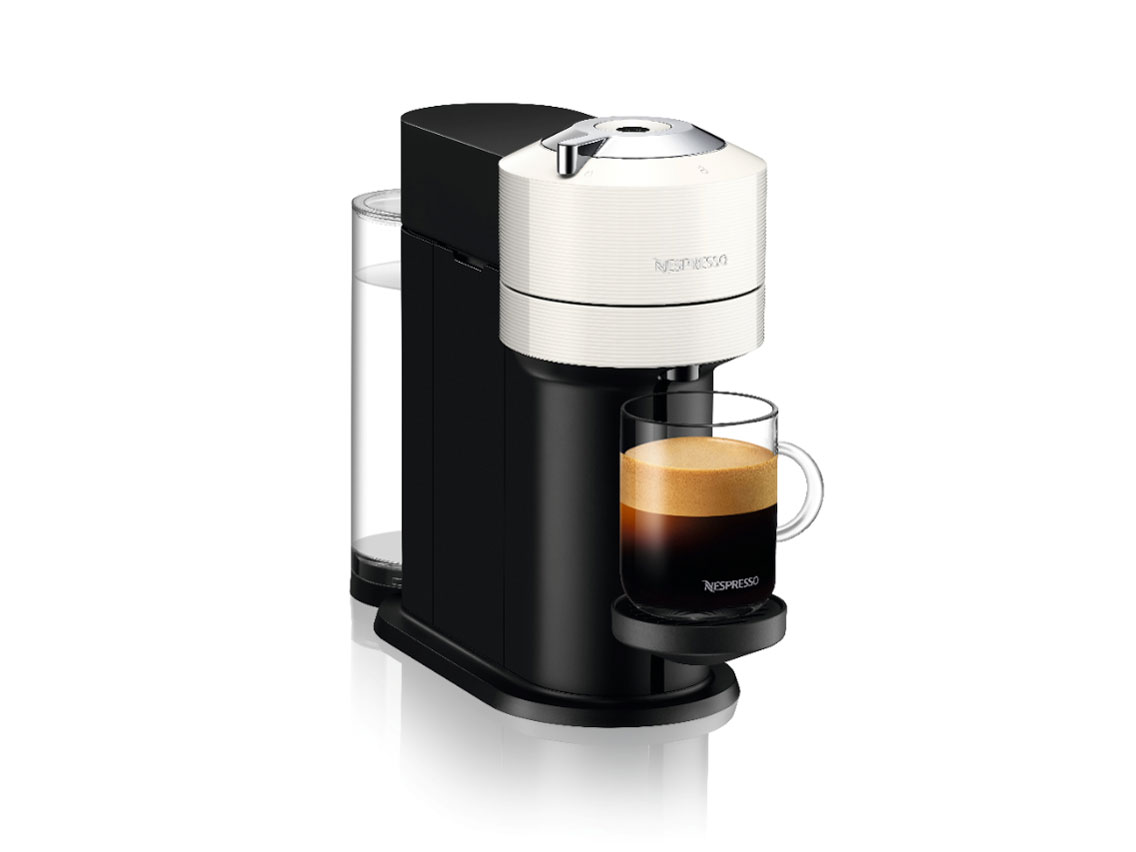
Nespresso Vertuo Next
Best Vertuo Entry: The Vertuo Next delivers barcode-guided extraction consistency that beats any Original machine for repeatability — every cup is as good as the last. The trade-off is noise: 7,000 rpm centrifusion spin is noticeably louder than any Original machine, and build quality feels budget for the price.
Top picks ↓| Product | Price | Link |
|---|---|---|
| $159Reference price | ||
| $159Reference price | ||
| $199Reference price | ||
| $149Reference price | ||
| $199Reference price | ||
| $299Reference price |
| Product | System | Water tank | Cup sizes | Heat up time | Dimensions | Milk frother |
|---|---|---|---|---|---|---|
| Nespresso Vertuo Next | Vertuo (Centrifusion) | 1.1 L | 5 sizes: Espresso 40 ml, Double Espresso 80 ml, Gran Lungo 150 ml, Mug 230 ml, Carafe 535 ml | 30 seconds | 14.2 × 42.9 × 31.4 cm (W × D × H) | none (built-in); Aeroccino sold separately on bundle SKUs |
| Nespresso Vertuo Next | Vertuo (Centrifusion) | 1.1 L | 5 sizes: Espresso 40 ml, Double Espresso 80 ml, Gran Lungo 150 ml, Mug 230 ml, Carafe 535 ml | 30 seconds | 14.2 × 42.9 × 31.4 cm (W × D × H) | none (built-in); Aeroccino sold separately on bundle SKUs |
| Nespresso Vertuo Plus | Vertuo (Centrifusion) | 1.2 L | 5 sizes: Espresso 40 ml, Double Espresso 80 ml, Gran Lungo 150 ml, Coffee 230 ml, Alto 414 ml | 20–30 seconds | 14.2 × 42.9 × 32.5 cm (W × D × H) | none (built-in); Aeroccino included only on bundle/Deluxe SKUs |
| Nespresso Essenza Mini | Original | 0.6 L | 2 programmable sizes: Espresso 40 ml, Lungo 110 ml | 25 seconds | 11.0 × 32.5 × 20.4 cm (W × D × H) | none |
| Nespresso Pixie | Original | 0.7 L | 2 programmable sizes: Espresso 40 ml, Lungo 110 ml | 25 seconds | 11.7 × 32.4 × 23.5 cm (W × D × H) | none |
| Nespresso Lattissima One | Original | 1.0 L | Espresso 40 ml, Lungo 150 ml, plus one-touch Cappuccino & Latte Macchiato (single-serve milk jug) | 25 seconds (40 seconds for milk recipes) | 15.4 × 32.4 × 25.6 cm (W × D × H) | built-in (integrated single-serve milk jug frother) |
Top picks
Related articles
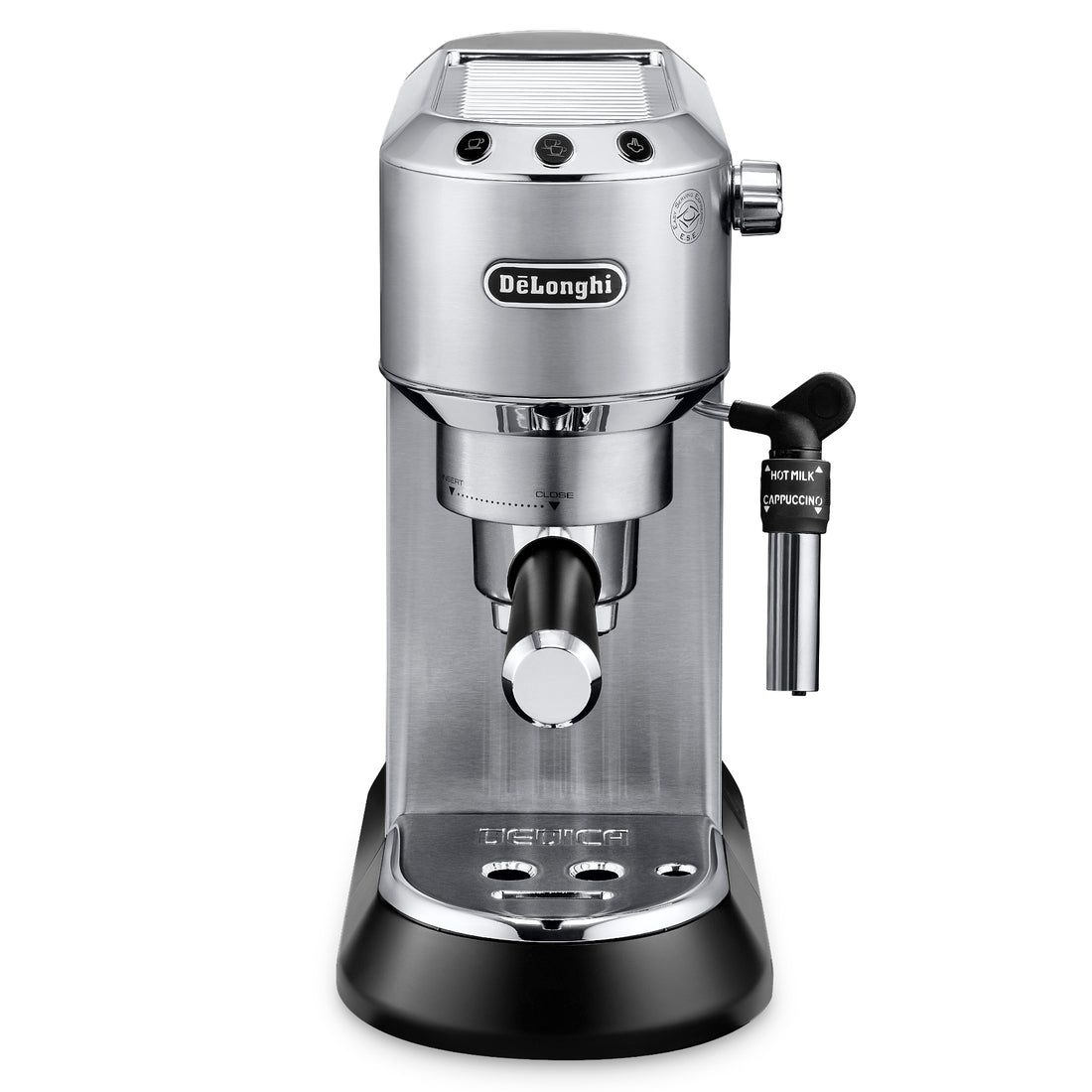

Entry Vertuo machine, fold-down pod head, 37oz tank, Bluetooth. $130-180. Noisier than Plus, plastic-heavy build. Functional but the Plus is worth the upgrade for daily use.
The Vertuo Next delivers barcode-guided extraction consistency that beats any Original machine for repeatability — every cup is as good as the last. The trade-off is noise: 7,000 rpm centrifusion spin is noticeably louder than any Original machine, and build quality feels budget for the price.
Pros
- ✓Barcode extraction removes user error — consistency beats Original machines
- ✓5 cup sizes from 40ml espresso to 414ml alto
- ✓Compact fold-down design fits small kitchens
Cons
- ✗Louder than Vertuo Plus at same extraction; pod ecosystem is proprietary and limited vs Original
Score breakdown
| System | Vertuo (Centrifusion) |
| Water tank | 1.1 L |
| Cup sizes | 5 sizes: Espresso 40 ml, Double Espresso 80 ml, Gran Lungo 150 ml, Mug 230 ml, Carafe 535 ml |
| Heat up time | 30 seconds |
| Dimensions | 14.2 × 42.9 × 31.4 cm (W × D × H) |
| Milk frother | none (built-in); Aeroccino sold separately on bundle SKUs |

Entry Vertuo machine, fold-down pod head, 37oz tank, Bluetooth. $130-180. Noisier than Plus, plastic-heavy build. Functional but the Plus is worth the upgrade for daily use.
The Vertuo Next delivers barcode-guided extraction consistency that beats any Original machine for repeatability — every cup is as good as the last. The trade-off is noise: 7,000 rpm centrifusion spin is noticeably louder than any Original machine, and build quality feels budget for the price.
Pros
- ✓Barcode extraction removes user error — consistency beats Original machines
- ✓5 cup sizes from 40ml espresso to 414ml alto
- ✓Compact fold-down design fits small kitchens
Cons
- ✗Louder than Vertuo Plus at same extraction; pod ecosystem is proprietary and limited vs Original
Score breakdown
| System | Vertuo (Centrifusion) |
| Water tank | 1.1 L |
| Cup sizes | 5 sizes: Espresso 40 ml, Double Espresso 80 ml, Gran Lungo 150 ml, Mug 230 ml, Carafe 535 ml |
| Heat up time | 30 seconds |
| Dimensions | 14.2 × 42.9 × 31.4 cm (W × D × H) |
| Milk frother | none (built-in); Aeroccino sold separately on bundle SKUs |

Mid-range Vertuo, lever-lift pod head, quieter, motorized closure. $160-220. Best everyday Vertuo pick — better ergonomics, quieter extraction, worth the premium over Next.
The Vertuo Plus corrects the biggest ergonomic complaints about the Vertuo Next: the motorized lever head is easier to operate one-handed than the fold-down mechanism, extraction noise is measurably lower, and build quality is better for the extra $30–40. For daily Vertuo use, the Plus is almost always the right choice over the Next.
Pros
- ✓Motorized lever head quieter and easier than Vertuo Next fold-down
- ✓Better build quality than Next — noticeably more premium feel
- ✓Auto-close lid mechanism saves a step every use
Cons
- ✗No built-in frother — Aeroccino needed for milk drinks at added cost
Score breakdown
| System | Vertuo (Centrifusion) |
| Water tank | 1.2 L |
| Cup sizes | 5 sizes: Espresso 40 ml, Double Espresso 80 ml, Gran Lungo 150 ml, Coffee 230 ml, Alto 414 ml |
| Heat up time | 20–30 seconds |
| Dimensions | 14.2 × 42.9 × 32.5 cm (W × D × H) |
| Milk frother | none (built-in); Aeroccino included only on bundle/Deluxe SKUs |
Subscribe to our newsletter
Occasional updates and new releases — no spam.

Smallest Original machine, 40ml espresso / 110ml lungo, compact footprint. $100-150. Best minimalist Original pick — no frills, genuine espresso crema, full third-party pod compatibility.
The Essenza Mini is the smallest Nespresso machine and the entry point for the Original ecosystem with full third-party pod compatibility. Espresso quality is identical to any Original machine — the pod does the work, not the machine. The case for Original in one sentence: third-party pods at $0.40–0.80 vs Vertuo's $0.90–1.50.
Pros
- ✓Full third-party pod compatibility — Peet's, Starbucks, Lavazza, L'Or all work
- ✓Smallest footprint in this comparison — ideal for small kitchens
- ✓Authentic CO2-driven crema on fresh pods
Cons
- ✗Only 40ml espresso and 110ml lungo — no mug or larger sizes
Score breakdown
| System | Original |
| Water tank | 0.6 L |
| Cup sizes | 2 programmable sizes: Espresso 40 ml, Lungo 110 ml |
| Heat up time | 25 seconds |
| Dimensions | 11.0 × 32.5 × 20.4 cm (W × D × H) |
| Milk frother | none |

Original Line, slightly larger tank than Essenza Mini, faster heat-up. $150-200. Good step up from Essenza Mini if tank size or aesthetics matter.
The Pixie sits between Essenza Mini and Lattissima One — a slightly larger water tank, faster heat-up, and a slim aluminum build that looks better on a counter. Espresso quality is the same as Essenza Mini since both use identical 19-bar pump extraction. Choose Pixie if aesthetics and tank size matter; skip it if you just want the cheapest Original machine.
Pros
- ✓Larger tank (800ml) than Essenza Mini means fewer refills
- ✓Faster heat-up than Essenza Mini — practical for daily speed
- ✓Slim aluminum design — better aesthetics than plastic-body machines
Cons
- ✗Same espresso output as cheaper Essenza Mini — premium is for form factor only
Score breakdown
| System | Original |
| Water tank | 0.7 L |
| Cup sizes | 2 programmable sizes: Espresso 40 ml, Lungo 110 ml |
| Heat up time | 25 seconds |
| Dimensions | 11.7 × 32.4 × 23.5 cm (W × D × H) |
| Milk frother | none |

Original Line with integrated milk system. $250-350. Best all-in-one for latte/cappuccino — avoids separate Aeroccino purchase, Original pod compatibility keeps pod options open.
The Lattissima One is the only machine in this comparison with an integrated milk system — and it uses the Original pod ecosystem, so full third-party pod access is preserved. For anyone who would buy an Aeroccino separately anyway, the Lattissima One's integrated convenience is worth the premium over mid-range Original machines.
Pros
- ✓Integrated one-touch milk frother — no separate Aeroccino purchase needed
- ✓Original pod format keeps full third-party pod ecosystem open
- ✓One-button latte and cappuccino — most convenient milk workflow in this comparison
Cons
- ✗Proprietary milk pod system adds another consumable cost alongside coffee pods
Score breakdown
| System | Original |
| Water tank | 1.0 L |
| Cup sizes | Espresso 40 ml, Lungo 150 ml, plus one-touch Cappuccino & Latte Macchiato (single-serve milk jug) |
| Heat up time | 25 seconds (40 seconds for milk recipes) |
| Dimensions | 15.4 × 32.4 × 25.6 cm (W × D × H) |
| Milk frother | built-in (integrated single-serve milk jug frother) |
Which one is right for you?
For espresso purists who want pod variety
Nespresso Essenza Mini
Original ecosystem's full third-party compatibility keeps pod costs at $0.40–0.80 vs Vertuo's $0.90–1.50 proprietary pricing.
For latte and cappuccino lovers
Nespresso Lattissima One
Only machine in this comparison with an integrated milk frother that keeps the full Original pod ecosystem open.
For larger cup sizes and extraction consistency
Nespresso Vertuo Plus
Barcode-guided centrifusion delivers mug and alto sizes with consistent foam every time — no user error possible.
The fundamental split: two incompatible systems
Nespresso has two completely separate product families that share a brand name and almost nothing else. Original Line machines (Essenza Mini, Pixie, Citiz, Creatista) use the same pod format that launched in 1986. Vertuo Line machines (Vertuo Next, Vertuo Plus, Vertuo Pop) use a different pod format introduced in 2014 with a barcode system that controls extraction. The pods are physically incompatible — you cannot put an Original pod in a Vertuo machine or vice versa.
This matters more than it sounds. The Original Line pod ecosystem includes pods from Nespresso, but also from dozens of third-party manufacturers including Starbucks, Lavazza, Peet's, L'Or, Gourmesso, and generic brands. You can find Original-compatible pods at grocery stores, on Amazon, and from specialty roasters worldwide. The Vertuo ecosystem is Nespresso proprietary — the barcode technology is patented and Nespresso has aggressively defended it, which means third-party Vertuo pods have been scarce, expensive, and limited in variety compared to Original.
Third-party Vertuo compatibility has been improving slowly since 2022, with some European brands gaining access to the barcode format, but as of 2026 the selection gap remains large. If you care about sourcing pods from specific roasters, experimenting with different origins, or keeping pod costs low through third-party options, Original Line wins by a wide margin. If you primarily buy from Nespresso's own range and prefer convenience over variety, Vertuo's catalog has grown substantially and the gap is narrowing.
Neither system is 'better' in an absolute sense — they're optimized for different coffee preferences. The more important question is which one makes the coffee you actually want to drink, then checking whether the pod costs and availability work for your usage pattern.
Vertuo's centrifusion technology and what it actually does
Vertuo machines use a centrifusion extraction system: the pod spins at up to 7,000 rpm during extraction, and a barcode on the pod rim tells the machine what spin speed, water temperature, and extraction volume to use for that specific pod. This means each Vertuo pod is matched to the machine's extraction profile — you can't under-extract or over-extract because the machine reads the instructions from the pod.
The practical result: Vertuo is significantly more consistent cup-to-cup than Original, especially for inexperienced users. With Original machines, the extraction is controlled by pump pressure (19 bars typically, though 9 bars is the specialty coffee standard). If you use the wrong cup size button or the pod isn't seated correctly, the shot pulls differently. With Vertuo, the barcode dictates extraction, so the outcome is more predictable. This consistency-by-design is genuinely useful if coffee quality isn't something you want to actively manage.
The centrifusion system also produces the thick, persistent foam layer that Vertuo is known for. This isn't traditional espresso crema in the technical sense — crema forms through CO2 released from freshly roasted coffee under pressure, and it's an indicator of freshness and proper extraction. Vertuo's foam is produced partly by the spinning mechanism, so it can look impressive even with older coffee or lighter roasts that wouldn't produce crema through traditional pressure extraction. Whether this matters to you depends on whether the visual is the point or the taste.
Vertuo machines brew in multiple sizes: espresso (40ml), double espresso (80ml), gran lungo (150ml), mug (230ml), and alto (414ml). This range is genuinely useful if you want both espresso-based drinks and longer filter-style coffee from one machine. Original machines are designed around espresso and lungo — they can technically fill a larger cup but the extraction isn't optimized for it, and the results in larger volumes are weak.
Original Line espresso: what pressure extraction gets right
Original Line machines extract using a standard pressure pump — Nespresso rates them at 19 bars, though specialty coffee consensus is that 9 bars is optimal for espresso. In practice this pressure discrepancy matters less than the pod design, since the coffee is pre-dosed and sealed. Original pods consistently produce genuine espresso with authentic crema formation from fresh pods — not foam from mechanical agitation, but actual CO2-rich crema that indicates freshness and correct extraction.
The Essenza Mini ($100-150) is the entry-level Original machine and the smallest Nespresso unit by physical size. It makes a proper 40ml espresso or 110ml lungo and has a compact footprint suitable for small kitchens. There are no frother or specialty settings — it's a pod in, coffee out machine. The Pixie ($150-200) adds a slightly larger water tank and faster heat-up time but is functionally similar. Both are solid machines for people who want single-serve espresso without any complexity.
The Lattissima One ($250-350) is Nespresso's integrated milk machine on the Original platform — it has a built-in milk frother fed by a refrigerated milk pod system, which is more convenient than a separate steam wand but means you're buying proprietary milk pods in addition to coffee pods. For lattes and cappuccinos without manual frothing, the Lattissima One simplifies the process significantly. The milk frothing quality is good for a fully automatic system at this price, though it doesn't match a manual steam wand.
The trade-off with Original is that the pod format is standardized, which means your brewing variables are limited. You can adjust shot volume by holding the button, and some machines let you adjust water temperature, but you're working within a narrower range than a standalone espresso machine. For people who want espresso quality improvement, an entry-level manual espresso machine (Breville Bambino, De'Longhi Dedica) at a similar price point will outperform any Nespresso on extraction quality and milk texture — but requires more skill and time.
Vertuo Next and Vertuo Plus: which machine to buy within the Vertuo line
Vertuo Next ($130-180) is the entry-level Vertuo machine and the one most people encounter first. It has a fold-down pod head, a 37oz water tank, and connects via Bluetooth for firmware updates. The Vertuo Next is noticeably noisier than the Vertuo Plus during extraction — the centrifusion spinning at 7,000 rpm creates a loud whirring sound that some users find annoying. Heat-up time is about 30 seconds. Build quality is plastic-heavy and feels budget relative to Original Line machines at the same price.
Vertuo Plus ($160-220) addresses most of the Vertuo Next's ergonomic problems. The lever-lift pod head is easier to use than the fold-down design, it runs quieter, and the build quality is noticeably better. Heat-up time is 20-25 seconds. The Vertuo Plus also has a motorized head that automatically closes after you insert a pod — a small convenience detail that adds up over daily use. If you're buying Vertuo, paying the extra $30-40 for the Plus is almost always worth it.
Vertuo Pop ($80-120) is the most affordable Vertuo option — simplified button interface, smaller water tank (19oz vs 37oz), and fewer size options (no alto). It's plastic and compact. For someone who wants Vertuo at the lowest possible entry cost and uses primarily espresso size pods, the Pop is functional. The tank size means daily refilling if you're a heavy user. Vertuo Pop machines go on sale frequently and can often be found bundled with pod credits, reducing the effective cost further.
None of the standard Vertuo machines include a built-in frother. Nespresso sells the Aeroccino 3 ($50) or Aeroccino 4 ($70) as separate accessories, or there's the Vertuo Lattissima for integrated milk. If you regularly make milk-based drinks, budget for an Aeroccino alongside your Vertuo machine — the cost adds up but the Aeroccino 3 is a reliable standalone frother that produces good results with both hot and cold milk.
Pod cost and long-term ownership math
Nespresso Original pods retail for $0.70-1.25 per pod depending on variety and where you buy them. Third-party Original-compatible pods run $0.40-0.80 — brands like Peet's, L'Or, Starbucks, and many private labels are widely available at Target, Costco, and Amazon. If you buy Original third-party pods at $0.50 each and drink two coffees daily, that's about $365 per year on pods. Nespresso's own Original pods at $1.00 each with the same usage run about $730 annually.
Vertuo pods retail for $0.90-1.50 per pod from Nespresso. The third-party Vertuo market has improved but still lags Original significantly — you're mostly locked into Nespresso's pricing unless you order from select European brands. At $1.20 per pod with two drinks daily, Vertuo pods cost about $875 per year. Over three years, the pod cost differential between Vertuo and Original (with third-party pods) is $1,500+ — more than the price of several machines.
Machine prices are close between lines: both Original and Vertuo entry machines start around $80-150 and the mid-range sits at $150-250. The machine itself isn't where the long-term cost diverges — it's the pods. If you're a high-volume user who buys primarily from Nespresso's catalog anyway, the cost gap narrows. If you'd use third-party pods for Original, the savings over time are meaningful.
Machine longevity is roughly equivalent between lines — both are designed with a 5-7 year lifespan under normal home use. Descaling every 2-3 months extends life. Original machines have a slightly longer track record given the line's age, but Vertuo machines that have been in use since 2014 have held up well for most users. Parts availability is better for Original given the larger installed base and third-party service market.
What happens when your Nespresso breaks
Nespresso machines are not designed to be repaired by users. There are no user-replaceable internal parts, and Nespresso's service model is to replace machines under warranty rather than repair them. The standard warranty is 2 years in most markets. Outside warranty, Nespresso offers a flat-rate replacement service in some regions, but cost varies and isn't always competitive with buying a new entry-level machine.
Third-party repair services exist for both lines, but parts sourcing is easier for Original given the longer market history. A skilled repair technician can fix common pump failures, thermoblock issues, and clogged extraction heads on Original machines. Vertuo's more complex electronics (Bluetooth, barcode reader, motorized components) make repairs harder and less cost-effective when compared to the machine's replacement cost.
The practical advice: if your Nespresso breaks outside warranty, compare the repair estimate against the current machine price before authorizing work. A $100 repair on a machine that costs $130 new isn't worth it. For mid-range machines ($200+), repair economics improve. Descaling regularly — Nespresso recommends every 300 uses or when the indicator light signals — is the best preventive measure since limescale buildup is the leading cause of pump failure and inconsistent extraction.
One quirk specific to Vertuo: the barcode reader can fail independently of the brewing mechanics. Symptoms include the machine refusing to recognize pods or flashing error lights with a correctly seated pod. This is a warranty claim if it happens within 2 years; outside warranty it's generally a machine-replacement situation since the barcode reader isn't a user-serviceable component. Original machines have no equivalent single-point-of-failure in the pod recognition system — they just accept any compatible pod size without electronic verification.
Which system to actually buy
Buy Original if: you drink primarily espresso and lungo, you want access to third-party pods and competitive pod pricing, you're interested in experimenting with different roasters and origins, or you're pairing with a Breville Barista Express or other machine and want Nespresso as a quick-shot option. The Essenza Mini is the pick for most people — compact, reliable, inexpensive, and the espresso quality is the same as any other Original machine.
Buy Vertuo if: you want larger drink sizes (mug, alto) regularly, you value extraction consistency over pod variety, you primarily buy from Nespresso's catalog and don't plan to seek out third-party alternatives, or you want the visual of thick foam on every drink regardless of roast. The Vertuo Plus is the better machine over the Next for the same reasons every time — pay the extra $30-40.
The Lattissima One deserves a specific mention for anyone who makes lattes and cappuccinos regularly. It's the most convenient fully-integrated milk machine at this price point in either ecosystem, and the Original pod compatibility gives you access to the full third-party market. If you'd spend $50 on an Aeroccino anyway, the Lattissima One at $250-350 is worth considering as an all-in-one.
Avoid making this decision based on marketing claims about 'barista-quality' or 'coffee shop experience' from either Nespresso line. Both systems produce consistently acceptable espresso-style coffee that's better than drip machines and worse than a properly dialed-in espresso machine with fresh beans. They succeed at being convenient, consistent, and fast — which is what most people actually want from a pod machine.
Frequently asked questions
Can you use Vertuo pods in an Original machine or vice versa?▼
Which Nespresso system makes better crema?▼
Is Vertuo worth the extra cost compared to Original?▼
Which Nespresso is best for lattes and cappuccinos?▼
What's the barcode on Vertuo pods for?▼
Prices change. Check the retailer for the current price.
Comments & questions
Discussion happens on nattzy, our community forum. Sign in with Google to post — it takes a second.
Related articles

Best Coffee Makers 2026: Breville vs Moccamaster vs OXO
Food
Best Toaster 2026: 5 Compared
Best Toaster 2026: 5 Compared

ConoHa WING review (2026): setup, speed and pricing
Best JP rental server 2026: 5 hosts ranked
Best LED Face Masks 2026: 3 Light Therapy Devices Compared
Best Robot Vacuums 2026: 5 Models Compared Honestly